Repot Prince of Orange Without Losing Orange New Growth
Repot Prince of Orange Without Losing Orange New Growth
Repot Prince of Orange Without Losing Orange New Growth
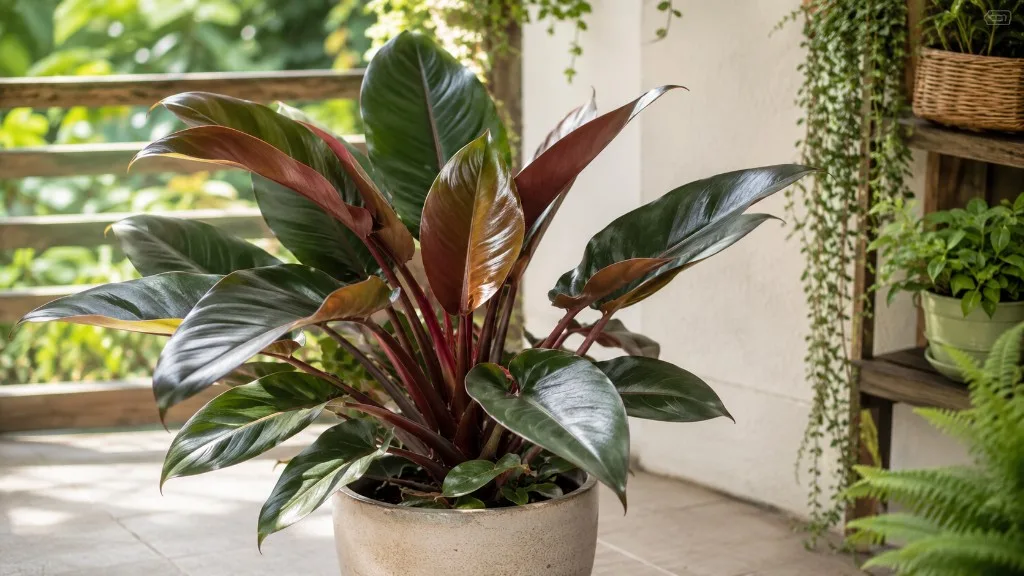
Philodendron Prince of Orange (Philodendron erubescens ‘Prince of Orange’) is a self-heading Florida hybrid in the Philodendron erubescens group — a compact upright rosette whose new leaves emerge orange, transition to copper, and mature deep green. It does not climb, does not need a moss pole, and shares breeding roots with Imperial Red and Pink Princess while behaving very differently at repot time. Where a vining Pink Princess repot often means resetting a moss pole and managing aerial roots along a stem, Prince of Orange is a single basal crown in a pot that fills symmetrically from below.
That architecture changes the stakes. One oversized container after repot can leave the entire plant sitting in wet peat for weeks because there is no secondary vine to compensate if the crown sulks. Done well, a spring repot refreshes drainage, replaces sour compacted mix, and gives the root ball room to support the copper-orange flush you bought the plant for. Done poorly — huge pot, bare-root shock, repotting in a dim winter room — you get limp leaves, dull green new growth, and a plant that looks fine in photos while roots stall underground for a month.
This guide covers when Prince of Orange actually needs a new container, how self-heading growth changes pot sizing and recovery signals, an eight-step repot you can execute on a kitchen counter, division at repot if your clump has multiple stems, and how to read the next unfurling crown leaf as proof the move succeeded.
Quick Answer — When to Repot Prince of Orange
Repot Philodendron Prince of Orange every one to two years, or sooner when roots circle drainage holes, water runs straight through without soaking the center, growth stalls despite good light and balanced feeding, or the mix smells sour. Spring through early summer is the safest window because active growth helps roots colonize fresh mix faster. Choose a pot only 2–5 cm (1–2 inches) wider than the current one, refresh with the perlite-amended blend from our soil guide, skip fertilizer for four to six weeks, and treat a firm new leaf with copper-orange colour at the crown as your best recovery signal. No moss pole is required — this is a non-vining self-header, not a climber.
Root-bound signs that justify a move
Penn State Extension lists classic pot-bound symptoms: mix that dries out unusually fast, roots visible from drainage holes, slowed foliage growth despite regular spring and summer feeding, and a root mass so dense you cannot see potting mix in the bottom third when you slide the plant out. NC Wayne County Extension adds yellowing lower leaves and spiralling roots at the pot base as clear go signals. On Prince of Orange, also repot when the pot stays heavy many days after watering because degraded peat has collapsed — that is a soil failure repot even if roots are not yet circling.
Routine interval vs rescue repot
A routine upgrade every one to two years in spring refreshes organic matter before peat turns hydrophobic. A rescue repot happens anytime you find brown mushy roots, sour smell, or a broken pot — season matters less, but keep the new container modest and temperatures above about 18°C (65°F). NC State notes that overwatering is a primary cause of root rot on P. erubescens; rescue repots trim damage and rebuild drainage rather than chasing a calendar date.
Why Prince of Orange Repotting Differs From Vining Philodendrons
Collectors familiar with Philodendron ‘Pink Princess’ or heartleaf types often reach for moss poles, long stem ties, and bare-root refreshes by habit. Prince of Orange repotting is simpler in equipment and trickier in judgment because the plant’s biology is different.
Self-heading rosette vs climbing habit
NC State Extension describes ‘Prince of Orange’ as a non-vining type with a compact, bushy habit — leaves emerge from a tight basal clump rather than elongating stems that root into vertical support. RHS lists it as an upright evergreen shrub, unlike scrambling philodendron varieties. Indoors that means roots spread evenly under one crown instead of concentrating along a buried runner. When you unpot, expect a symmetrical root ball, not a lopsided vine with most roots on one side.
No moss pole — and why that simplifies the job
Climbing philodendrons often get a moss pole installed during repot so adventitious roots have something moist to attach to. Prince of Orange does not benefit from a moss pole for leaf colour or structure — brighter filtered light drives the orange phase, not vertical support. Skipping the pole removes an entire failure mode: stabbed roots, wet sphagnum against a dry pot center, and repot sessions that turn into engineering projects. Your repot checklist is pot, mix, gentle root tease, same planting depth — finished.
Single crown and transplant shock risk
Self-heading philodendrons have one primary growth point at the soil line. Vining types can sometimes push a backup stem if one section sulks after repot. Prince of Orange cannot. If you bare-root aggressively, upsize dramatically, or repot into cold wet mix in winter, the entire plant shows stress — limp leaves, paused unfurling, temporarily greener new leaves if light also dropped. That is why conservative pot sizing and spring timing matter more here than on a forgiving golden pothos in a hanging basket.
When to Repot Philodendron Prince of Orange
Repotting should solve a root-zone or mix problem, not every cosmetic leaf change. Use this decision path before you unpot.
Visible root and growth signals
Repot when two or more of these appear together: roots emerging from drainage holes; water runs through in seconds without wetting the center; top 3–5 cm dries in one to two days repeatedly in summer; new leaves stay small or stop appearing for six to eight weeks in bright light; mix smells sour or grows persistent fungus gnats; plastic pot is visibly bulging or cracking. RHS advises repotting philodendrons in spring when roots become densely packed — typically every couple of years for healthy houseplants.
When one yellow leaf is not a repot reason
A single yellow lower leaf on an otherwise firm Prince of Orange often means normal ageing, brief underwatering, or overwatering in low light — not automatic root-binding. Clemson HGIC notes that yellowing of lower leaves can stem from too little light or overwatering. Fix watering rhythm and light before you disturb roots. Repotting a plant that only needed drier soil adds shock without solving the cause.
Routine vs root-rot rescue repot
Routine repot: healthy white roots, circling but firm, fresh mix refresh, modest upsize. Rescue repot: trim soft brown roots, downsize or match pot to remaining root mass, discard all old mix, hold fertilizer until new firm growth. If petioles are mushy at the crown and most roots are slime, consider division propagation from any firm side shoot rather than repotting the whole failing crown into a bigger pot.
When Not to Repot Prince of Orange
Timing a skip is as important as timing the move.
New nursery plants and first-month stability
Our overview guide recommends not repotting on day one unless mix is clearly failing or pests are obvious. Quarantine, learn dry-down speed for two to three weeks, and keep care boring while the plant adjusts to your home. A shop Prince of Orange stressed from shipping does not need simultaneous repot, fertilizer, and window moves.
Winter dormancy and low-light stretches
Avoid optional winter repots when growth has paused and the mix stays wet longer. RHS recommends keeping philodendrons above 15°C (59°F) and away from cold draughts; repotting into cold wet mix slows root function further. Winter repot only for emergencies — rot, broken pot, severe binding when you cannot keep the plant watered safely.
Chasing green new leaves with a bigger pot
If new leaves open green with no copper phase, the plant is usually too dim, not root-bound. Repotting will not restore orange crown colour; brighter filtered light will, as covered in our light guide. Judge the next one or two new leaves after any change — older leaves naturally green with age.
Best Season and Timing for Repotting
Spring through early summer active growth
Penn State Extension states the best time to repot is spring when houseplants naturally begin seasonal growth and roots grow into fresh mix while foliage expands. NC Wayne County Extension agrees spring gives the full growing season to establish. For Prince of Orange indoors, March through June in the Northern Hemisphere is the sweet spot — match repot to the week you see the first active unfurling leaf after winter slowdown.
Emergency winter repot exceptions
When rot or binding forces a winter repot, use a modest container, warm room above 18°C, bright indirect light, and cautious watering until spring growth returns. Skip fertilizer entirely until a new crown leaf opens firm.
Choosing the Right Pot Size
The 2–5 cm upsize rule
RHS recommends choosing a pot only a few centimetres larger than the rootball. Penn State Extension warns that containers too large look unbalanced and hold excess mix that stays wet. For Prince of Orange, moving from a 12 cm nursery pot to 14–15 cm, or 15 cm to 17–18 cm, is typical. Measure the old pot inside diameter and add roughly 2–5 cm, not double the volume.
Why oversized pots stall orange new growth
Excess wet mix around a small root system means slow oxygen exchange at the crown — exactly where P. erubescens hybrids are vulnerable to rot per NC State. Roots explore slowly while the center stays soggy; the plant pauses top growth and may push dull green leaves if light is merely adequate. Slightly tight roots in fast-draining mix often produce more predictable dry-down than a fresh repot into an oversized decorative pot.
Drainage holes and cachepot traps
Penn State Extension requires drainage holes or an inner nursery pot lifted from a cachepot after every watering. Prince of Orange in a hidden water pool at the bottom of an outer pot is a common post-repot failure — the grower thinks fresh mix will fix everything while roots sit anaerobic. Either drill holes or dump excess from the outer shell within thirty minutes of every soak.
Soil Mix to Use at Repot Time
Perlite-amended blend from our soil guide
NC State recommends moist, well-drained soil rich in organic matter and partial shade indoors. Match the recipe in our Philodendron Prince of Orange soil guide: standard potting mix plus 20–25 % perlite, targeting slightly acidic conditions around pH 5.5–6.5 as RHS philodendron guidance suggests for the genus.
Refreshing degraded peat entirely
Do not reuse sour peat from a root-bound ball. Break away the outer one-third to one-half of old mix, tease circling roots gently, and backfill with fresh blend. Leaving compacted water-repellent peat in the center defeats the purpose of repotting.
Step-by-Step: How to Repot Prince of Orange
Set aside thirty to forty-five minutes. Work on a tarp or old sheet — Philodendron sap can irritate skin.
Pre-repot prep and workspace setup
Water lightly one day before so the root ball slides out without snapping dry roots, but avoid soaking a already-wet plant. Gather a new pot with drainage, fresh mix, clean scissors, rubbing alcohol wipes, and gloves if you are sensitive to sap. Choose a warm room away from cold drafts.
Unpotting, root inspection, and gentle teasing
Slide the plant out while supporting the base. If stuck, run a knife around the pot wall once — do not yank the crown. Inspect roots: firm white to tan tissue is healthy; brown, black, or slimy sections need trimming back to solid tissue with sterilized scissors. Loosen circling outer roots with fingers — no need to bare-root a healthy plant.
Backfill, settle, and first watering
Place a shallow layer of mix in the new pot. Set Prince of Orange at the same depth as before — never bury the crown deeper to stabilize a tall plant. There is no moss pole to install. Fill around the sides, tap the pot to settle, and water once thoroughly until drainage runs clear. Empty the saucer. Wait until the top 3–5 cm dry before the next soak — fresh mix often holds moisture differently for two to three weeks.
Division at Repot Time
When splitting a multi-stem clump makes sense
Mature Prince of Orange clumps occasionally produce multiple basal stems you can separate if each division has its own roots and at least two healthy leaves. Spring repot is the natural window. Cut or gently pull sections apart only when roots are visible on each piece — forced splits on a single-crown plant are unnecessary.
Link to propagation aftercare
Follow our propagation guide for post-division humidity, light, and watering while new divisions root in. Treat divisions like freshly repotted plants: no fertilizer for four to six weeks.
Post-Repot Care and Recovery Timeline
Skip fertilizer and read the next crown leaf
Hold fertilizer for four to six weeks while roots heal. Mild wilt for three to seven days is normal transplant adjustment. Your clearest success signal is the next unfurling leaf at the crown: firm texture with copper-orange colour in adequate light means roots have reconnected. Temporary slight limpness on older leaves while the newest leaf is firm is acceptable; widespread mushy petioles are not.
Adjust watering for fresh mix dry-down
After repot, expect slower dry-down if the new pot is slightly larger or roots have not yet colonized fresh mix. Extend intervals and rely on finger checks at 3–5 cm depth and pot weight — do not resume a pre-repot calendar automatically. Conversely, a well-rooted plant repotted into appropriately sized mix with extra perlite may dry at a similar rate within two weeks.
Root Rot Rescue Repot
When inspection reveals mostly damaged roots, treat this as surgery, not a routine upgrade. Trim all mushy tissue, rinse lightly if mix is contaminated, and repot into fresh airy mix in a pot sized to the remaining root mass — often the same size or one size smaller than the old container. Water once lightly to settle, place in bright indirect light, and do not fertilize until a new firm leaf appears. Clemson HGIC emphasizes that root rot follows soil that does not drain quickly or overly frequent watering — fix the wet-cycle cause, not just the container.
Handling Prince of Orange Safely While Repotting
Gloves and sap irritation from oxalates
Philodendron Prince of Orange contains insoluble calcium oxalate crystals and is toxic to cats and dogs if chewed. Sap on skin can irritate sensitive people during trimming and repotting. Wear gloves, wash hands after handling cut roots, and keep tools away from pets and children until cleaned. This is a handling precaution at repot time, not a reason to avoid necessary root work.
Common Prince of Orange Repotting Mistakes
Repotting immediately after purchase. Let the plant acclimate unless mix is clearly failing.
Jumping two or three pot sizes for “future growth.” Wet unused soil invites rot on a single crown.
Installing a moss pole on a self-heading cultivar. It adds root damage risk with no colour benefit.
Repotting because one leaf yellowed without checking moisture, light, and root evidence.
Winter repot on a healthy plant in a dim cool room. Wait for spring unless rot forces your hand.
Fertilizing the same week to “help recovery.” Fresh roots need rest, not salts.
Leaving the inner pot in a full cachepot after the first post-repot soak.
Expecting repot to fix green new leaves. That is a light problem — move the plant, do not upsize the pot.
When to use this page vs other Philodendron Prince of Orange guides
- Philodendron Prince of Orange overview — Start here for whole-plant identity, buying checks, and first-month stability before you schedule a repot.
- Philodendron Prince of Orange watering — Use when post-repot dry-down feels unpredictable or when yellow leaves might mean wet roots rather than tight roots.
- Philodendron Prince of Orange soil — Escalate here for mix ratios, pH, and signs your current blend is too heavy before you repot into the same problem twice.
- Philodendron Prince of Orange light — Use when new leaves stay green after repot; light, not pot size, restores the orange phase.
- Philodendron Prince of Orange propagation — Use when division at repot or rot rescue requires splitting the clump into new plants.
Related Philodendron Prince of Orange guides
- Philodendron Prince of Orange overview
- Philodendron Prince of Orange watering
- Philodendron Prince of Orange light
- Philodendron Prince of Orange soil
- Philodendron Prince of Orange fertilizer
- Philodendron Prince of Orange propagation
Conclusion
Repotting Philodendron Prince of Orange is a root-zone maintenance task, not a calendar ritual or a shortcut to brighter leaf colour. This self-heading P. erubescens hybrid needs a modest 2–5 cm pot upsize, fresh perlite-amended mix, and spring timing far more than a moss pole or dramatic bare-root surgery. Repot when roots circle, mix fails, or growth stalls — not when a single lower leaf yellows or new foliage opens green in a dim corner. After the move, skip fertilizer, water cautiously while fresh mix dries on a new rhythm, and watch the next crown leaf: firm copper-orange tissue in good light tells you roots have settled. Conservative pot choice, drainage you can verify, and patience beat oversized containers every time on a plant with only one crown to lose.