How to Propagate Philodendron Prince of Orange
How to Propagate Philodendron Prince of Orange
How to Propagate Philodendron Prince of Orange
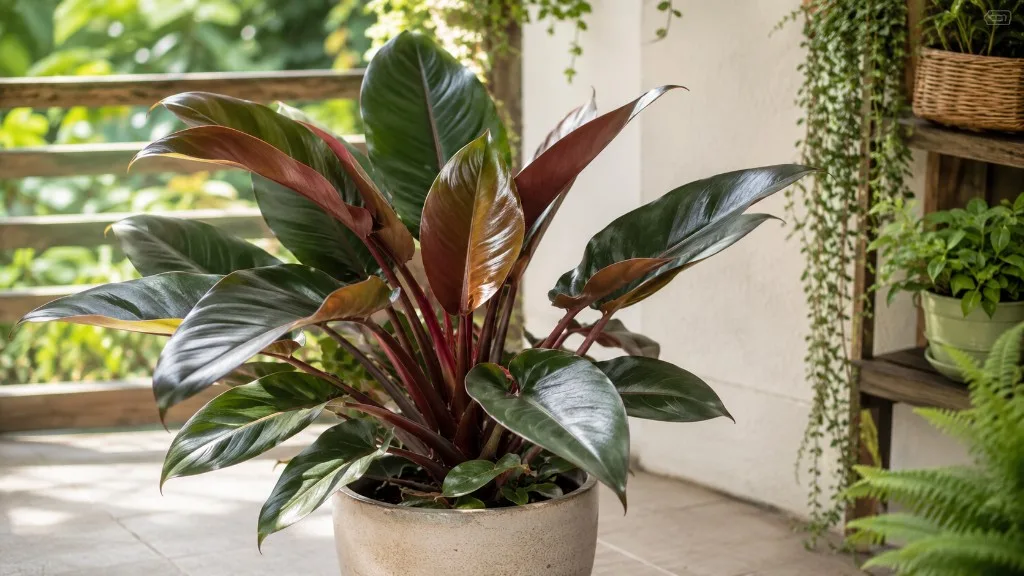
Philodendron Prince of Orange propagation at home means division at repotting when the plant has basal offsets or multiple crowns, or stem-tip and leaf-bud cuttings when you need a new plant from a short section of crown stem. Philodendron erubescens ‘Prince of Orange’ is a non-vining, compact self-header whose leaves emerge orange, transition to copper, and mature deep green — not a long vine you can chop into a dozen water jars like Philodendron Pink Princess. The reliable workflow: wait until the parent is healthy and actively growing, divide or cut with sterile tools, give new plants bright indirect light at roughly 18–29°C (65–85°F), and hold fertilizer until fresh growth resumes. Clemson HGIC notes that some philodendrons produce offsets and may be propagated from stem cuttings or by air layering; RHS lists stem-tip or leaf-bud cuttings specifically for this upright cultivar.
This guide covers why self-heading growth changes your method choice, division and cutting step-by-step, rooting options, weeks 1–8 aftercare, light rules for copper-orange new leaves on propagules, common failures, and how this page fits the rest of the Prince of Orange cluster.
Why Prince of Orange Propagation Is Different From Vining Philodendrons
If you have propagated a trailing heartleaf philodendron or Pink Princess, you may expect a metre of stem with nodes every few centimetres. Prince of Orange does not work that way. It is bred as a compact upright rosette — NC State describes ‘Prince of Orange’ as a non-vining type with a bushy habit. Clemson HGIC classifies self-headers as plants that send leaves from a heavy clump at the base rather than elongating stems up a support. RHS notes it is upright, unlike scrambling varieties.
That architecture shifts the best home methods. Division when multiple growth points share one root ball is faster and less risky than trying to force a single crown into water propagation. Stem-tip cuttings work when a short basal stem exposes nodes — but you will not get the long-vine cutting factory Pink Princess owners enjoy. There is also no chimeric variegation gamble: orange new-leaf colour is a light response on a stable cultivar, not a pink-sector lottery. Propagules from a well-lit parent will show the copper-orange phase if you give them enough brightness after rooting — covered in our light guide.
Self-Heading Growth and What That Means for Cuttings
On a self-heading philodendron, the central crown is the factory. All leaves emerge from one basal cluster. When you remove tissue, each division or cutting must carry roots plus leaves, or a node with an axillary bud — the joint where the next shoot activates. NC State Extension Gardener Handbook explains that leaf-bud cuttings use a leaf, petiole, and short stem piece with an attached axillary bud; division separates naturally occurring shoots once they have their own root system.
A leaf floating in water without node tissue will not produce a new Prince of Orange plant — the same rule that applies to vining philodendrons, but easier to miss when the colourful leaf itself looks like the prize. For cuttings, you need stem with at least one node, not foliage alone.
Best Propagation Methods for Prince of Orange
Two methods cover almost every home situation: division at repotting (fastest, highest success when offsets exist) and stem-tip or leaf-bud cuttings (when the plant is a single crown but has enough basal stem to cut). Air layering is possible on erubescens per Clemson HGIC but is rarely necessary on a compact self-header indoors. Seed is irrelevant — Prince of Orange is a cloned cultivar that will not come true from seed.
Division at Repotting (Primary Method)
Division is the method we recommend first. When a mature Prince of Orange has two or more crowns, basal pups, or clearly separable root sections at the soil line, you can split the plant during repotting and pot each section independently. Clemson HGIC states that some philodendrons will produce offsets and that overcrowded plants may be repotted at any season. NC State Extension Handbook notes that offsets at the base may be severed once they develop their own root system — the same logic as dividing a clumping houseplant.
Division wins because each section already has roots. You skip the two-to-six-week rooting gamble of cuttings. Success rate is high when each division retains healthy white roots, at least one growth point, and several leaves to fuel recovery. Pair division with fresh soil mix and one size-appropriate pot per section.
Stem-Tip and Leaf-Bud Cuttings (Secondary Method)
When the plant is a single crown with no offsets yet, stem-tip or leaf-bud cuttings are the path. RHS Prince of Orange lists this as the official propagation method for the cultivar. NC State P. erubescens recommends stem cutting at the species level.
Take a 7–10 cm (3–4 inch) section of basal stem with at least one node, one or two leaves attached above the node, and lower leaves removed so nothing sits underwater or buried in wet moss. The node is the slightly swollen ring where the petiole meets the stem — that is where roots and the next shoot emerge. RHS philodendron guidance for vining types describes removing a 10 cm stem piece cutting just below a leaf joint, stripping lower leaves, and rooting in water — the same nodal logic applies here on shorter self-heading stems.
Water propagation works for cuttings with nodes; it is not the primary approach for the whole plant the way division is. Do not expect to submerge a entire rosette crown and grow a second plant from leaves alone.
What You Need Before You Start
Propagation succeeds when the parent plant is healthy, the season supports active growth, and your setup reduces rot and sap exposure. Prince of Orange contains insoluble calcium oxalate crystals — the ASPCA lists philodendron as toxic to cats and dogs with oral irritation, drooling, vomiting, and difficulty swallowing if chewed.
Tools, Sanitation, and Sap Safety
Gather before you cut:
- Sharp bypass pruners or floral snips — dull blades crush aroid stems and invite rot at the cut
- 70% isopropyl alcohol to wipe blades between cuts on the parent and between divisions
- Fresh potting mix with 20–25 % perlite per our soil guide
- Pots one size smaller than you think for divisions — oversized wet soil stalls recovery
- For cuttings: clear glass jar (water), long-fiber sphagnum moss in a clear cup (moss method), or moist perlite in a nursery pot
- Nitrile gloves — sap irritates skin; RHS warns harmful if eaten, skin/eye irritant
- A stable surface away from pets and children
Work on a wipeable surface. Dispose of trimmings in a closed bin. Wash hands after handling. Do not propagate a plant showing active root rot, pest infestation, or widespread yellowing — stabilize watering and health first.
When to Propagate Prince of Orange
Best timing is spring through early summer when the parent is in active growth — roots regenerate fastest and ambient warmth supports new leaves. NC State places P. erubescens in the 65–85°F (18–29°C) comfort band with high humidity and partial shade indoors — conditions that also speed division recovery and cutting roots.
Combine propagation with scheduled repotting every 1–2 years in spring when roots circle the pot — the natural moment to inspect for offsets. Avoid dividing or cutting immediately after a stressful repot, pesticide treatment, or drought event. Wait until the plant pushes one clean new leaf with the copper-orange phase visible at the crown.
Winter propagation is possible under grow lights and stable room heat, but expect slower rooting on cuttings and higher rot risk if water stagnates in a cold room. Clemson HGIC allows repotting overcrowded philodendrons at any season, but spring still gives the most forgiving recovery window for divided plants.
Division Step by Step
Plan division during a repot session when the root ball is visible and you can confirm two or more separable crowns or offset shoots with their own roots.
- Water lightly the day before to soften the root ball without saturating it.
- Unpot onto newspaper. Brush away old mix from the outer roots so crowns and offsets are visible.
- Locate natural split lines — gaps between crowns, offset stems with independent root clusters, or sections where roots pull apart with gentle resistance rather than snapping.
- Separate by hand first. Use a sterile knife only if roots are tangled — cut through shared rhizome tissue cleanly, never through the main crown stem above the soil line unless taking a deliberate cutting.
- Inspect each division: white firm roots, at least one growth point, minimum two to three leaves for fast recovery.
- Pot each section in fresh mix at the same depth as before, in a pot 2–5 cm wider than the root mass — not oversized.
- Water once thoroughly, drain fully, and place in bright indirect light. Hold fertilizer until new growth resumes.
Most divisions show new leaf movement within two to four weeks in spring; summer-active plants may unfurl a copper-orange leaf sooner. Divisions with existing roots settle faster than cuttings — often one to three weeks to visible new growth versus two to six weeks for bare cuttings to root and push leaves.
Separating Crowns Without Damaging Roots
The brittle petioles on self-heading philodendrons snap easily — Clemson HGIC warns that long leaf stalks of self-heading types are brittle and should be kept out of traffic paths. During division, support the leaf mass with one hand while teasing roots with the other. Never yank crowns apart by pulling leaves.
If an offset has shoots but few roots, pot it separately anyway in moist moss or perlite under humidity and treat it like a cutting until roots thicken — but prioritize sections that already have white root tips for highest success. Trim soft brown roots from any division before repotting; healthy cuts heal faster in fresh airy mix.
Stem-Tip Cutting Workflow
Use cuttings when division is not yet possible — typically on a young single-crown plant where you want a backup without waiting for offsets.
Select material: Firm basal stem, at least one visible node, one or two healthy leaves above the node, no active pest or rot.
Cut: Sterilize blades. Cut 2–3 cm below the lowest node you want to root. On the parent, cut about 0.5 cm above the next node down so the donor can activate a new bud.
Prepare: Remove any leaf that would sit underwater or deep in moss. Optionally dust the cut end in 0.3–0.8 % IBA rooting powder for perlite rooting — many erubescens cuttings root without hormone, but powder can speed stubborn winter takes.
Root: Place in your chosen medium (below). Keep at 18–29°C, bright indirect light, humidity 50–70 % with airflow so leaves do not stay constantly wet.
Rooting in Water, Moss, or Perlite
Water: Submerge the node and any emerging root nubs; keep leaves above the water line. Use a clear jar in bright indirect light. Change water weekly or when cloudy. RHS philodendron guidance notes roots often appear in a couple of weeks for vining philodendron stem sections in water — Prince of Orange cuttings typically show first root nubs in one to three weeks and reach pot-up size in two to six weeks during active growth.
Sphagnum moss: Lightly moist long-fiber moss in a clear cup or propagation box. Bury the node; mist when the moss surface dries. Moss reduces rot versus stagnant water in warm rooms.
Perlite: Fill a small pot with moist perlite, insert the cutting, cover with a clear bag vented daily for humidity. Good when you want to pot directly without disturbing delicate water roots.
Pot up when roots are 2–5 cm (1–2 inches), firm, and white or cream with some secondary branching. Use the same chunky aroid mix as the parent. Plant the node just below the surface. Water once, drain, keep evenly moist for one to two weeks, then shift toward normal dry-down watering rhythm.
Aftercare for New Plants: Weeks 1–8
New divisions and freshly potted cuttings need boring, stable care — not extra fertilizer, not a bigger pot, not a dim corner “to reduce stress.”
Weeks 1–2: Bright indirect light. Water when the top 3–5 cm of mix dries — divisions may need water slightly sooner than the parent because root volume dropped. No fertilizer. Expect some older leaf yellowing on divisions; one or two lower leaves is normal rebalancing, not immediate failure.
Weeks 3–4: First new leaf or visible bud swell at the crown is the success signal. If nothing moves and soil stays wet, check for rot at the stem base — reduce water and improve airflow.
Weeks 5–8: Resume half-strength balanced liquid feed monthly only after two new leaves or clear active growth — see our fertilizer guide. Avoid repotting again unless roots circle the pot. Keep direct sun off tender new foliage.
Humidity 50–60 % is adequate; misting is optional. Good air circulation prevents mold on moss-propagated cuttings more effectively than sealing them in plastic long term.
Light Requirements for Orange New Growth on Propagules
The signature copper-orange new leaf is not automatic on propagules kept too dim. Clemson HGIC states ‘Prince of Orange’ needs high light to maintain colour and growth. NC State describes leaves that emerge orange and transition to copper under proper culture.
Place new plants within a metre of an east window or in filtered south-west exposure — the same placement logic as the parent. If the first new leaf after propagation opens solid green with no copper phase, increase brightness before changing water or fertilizer. Judge recovery on the next one or two new leaves only; older leaves naturally age greener.
No moss pole is required — Prince of Orange stays upright. Brighter light drives colour, not climbing support.
Common Propagation Failures and Fixes
Rot at the node — water too cloudy, moss too wet, or room too cold. Trim back to firm tissue, restart in fresh moss or perlite, improve airflow.
Cutting with no node — leaf-only attempts yellow and fail. Confirm a visible node ring before cutting.
Division too small — single leaf and few roots cannot support recovery. Wait for offsets to mature or take a two-node cutting instead.
Green new leaves on otherwise healthy propagules — insufficient light, not failed propagation. Move brighter; colour returns on subsequent leaves when intensity is adequate.
Transplant shock after pot-up — pot too large, mix too dense, or watered before roots filled the new soil. Use small pots, airy mix, and the finger test at 3–5 cm before each soak.
Sap exposure — wear gloves; keep trimmings from pets. Contact your veterinarian if a pet ingests tissue.
When to Use This Page vs Other Prince of Orange Guides
Use this propagation guide when you want to multiply a healthy plant by division or cutting — timing, tools, rooting, and first-month aftercare. For when to refresh soil and pot sizing without splitting, see the repotting guide. For daily moisture rhythm on new and established plants, see watering. For brightness rules that restore orange new growth after propagation, see light. For mix recipes for divisions and freshly rooted cuttings, see soil. For identity, toxicity, and cluster overview, start at the overview guide.
Related Philodendron Prince of Orange Guides
- Overview — growth habit, quick care summary, buying checkpoints
- Light — window placement and orange new-leaf diagnostics
- Watering — dry-down checks for divisions and cuttings after pot-up
- Soil — perlite-amended mix for new pots
- Repotting — natural pairing with division timing
- Fertilizer — when to resume feeding after roots establish
Conclusion
Philodendron Prince of Orange propagates reliably through division at repot when offsets or multiple crowns appear, and through stem-tip or leaf-bud cuttings when you need a new plant from nodal basal stem tissue. Skip vining-philodendron shortcuts that ignore self-heading architecture — leaf-only water jars and moss-pole propagation do not apply here. Time work for spring active growth, use sterile tools and gloves, give propagules bright indirect light for copper-orange new leaves, and hold fertilizer until fresh growth proves the roots are working. A healthy parent in the right season makes propagation straightforward; a stressed parent makes even perfect technique fail.