Best Soil for Philodendron Prince of Orange: Mix & Drainage
Best Soil for Philodendron Prince of Orange: Mix & Drainage
Best Soil for Philodendron Prince of Orange: Mix & Drainage
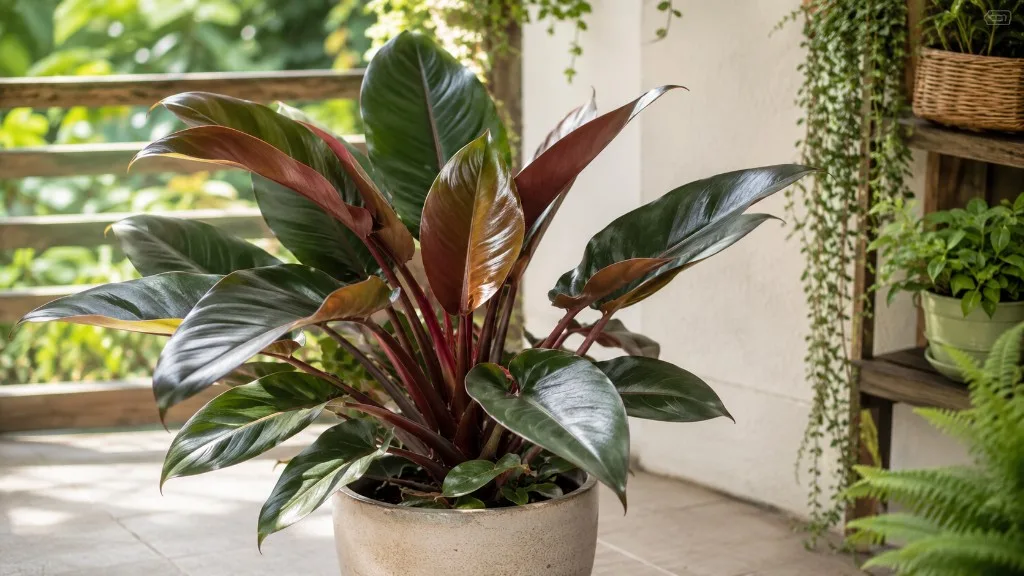
Philodendron Prince of Orange (Philodendron erubescens ‘Prince of Orange’) is a self-heading hybrid in the Philodendron erubescens group — a compact upright rosette famous for copper-orange new leaves that mature to deep green. It does not climb, does not need a moss pole, and shares the Florida hybrid breeding line with Imperial Red, Moonlight, and Rojo Congo. The most common Prince of Orange soil mistake is not choosing the wrong exotic ingredient; it is leaving the plant in dense, unamended peat that holds water at a single central crown while the caretaker focuses on watering frequency instead of root-zone structure.
This guide covers the ideal Philodendron Prince of Orange soil mix, how much perlite to add, when optional bark helps, how to test drainage before you repot, pH and compost choice, container trade-offs, wrong-soil warning signs, and how self-heading architecture changes crown-rot risk compared with vining relatives like Pink Princess.
Reviewed by the LeafyPixels Review Board. Methodology: recommendations checked against NC State P. erubescens culture notes, RHS Philodendron and ‘Prince of Orange’ cultivar guidance, Clemson HGIC philodendron and soil-mix factsheets, and LeafyPixels plant-detail data before publication.
Why Prince of Orange Soil Is About Drainage, Not Brand Names
The phrase “well-draining aroid mix” appears on every philodendron care card, but the label alone does not tell you whether your specific pot drains in two minutes or holds water for ten days. What matters is structure: the network of gaps between peat or coco particles, perlite grains, and optional bark chips that lets oxygen reach roots while moisture moves through predictably. When that structure collapses — and it will, faster in plastic pots and humid rooms — roots lose oxygen within days of a thorough watering. Root rot follows, often before the newest unfurling leaf shows more than slight dulling.
Prince of Orange carries an extra risk compared with vining philodendrons: one central crown. Clemson HGIC notes that self-heading types have brittle petioles and that root rot usually results from a soil mix that does not drain quickly or from overly frequent watering. On a self-header, chronic wet mix at the stem base damages the only growth point. A vining Pink Princess can sometimes push new growth from a lower node after crown stress; Prince of Orange cannot recover the same way. Good soil does not guarantee orange new leaves — light still drives colour — but bad soil makes every other stressor worse.
What Prince of Orange Roots Need From Soil
Soil for Prince of Orange has one job: give aroid roots a stable, breathable environment that dries down predictably between waterings. That sounds simple until you open a bag of standard indoor potting mix and realize it was formulated for dozens of unrelated houseplants, not for a tropical plant whose roots rot quietly when oxygen runs low.
The three properties that matter most are drainage speed, aeration structure, and moderate moisture retention. Drainage speed determines how long the mix stays wet after you water. Aeration structure — the gaps from perlite and optional bark — determines whether roots breathe while the mix is still damp. Moisture retention keeps the plant from drying so fast that you water every other day and stress the root zone with constant wet-dry swings.
Self-Heading Roots on an Aroid Base
Philodendron erubescens is native to Colombia and neighboring South American forests, where it climbs trees and roots into loose organic debris. Prince of Orange is a non-vining, compact self-header bred from that lineage — it sends leaves from a heavy basal clump rather than elongating stems up a support. NC State Extension describes the species preference for moist, well-drained soil rich in organic matter and partial shade indoors, with soil texture listed as high organic matter loam and drainage as good drainage with moist conditions.
Indoors, if you substitute straight peat-heavy potting soil with no amendments, roots lose oxygen within days of a thorough watering. RHS philodendron guidance recommends a loose, free-draining compost that is slightly acidic (pH 5–6) and warns that if the pot is much bigger than the root ball, compost stays wet longer and roots can rot. That oversizing warning matters especially on Prince of Orange, which typically reaches only 0.5–1 metre tall and wide indoors according to RHS cultivar data.
Moisture-Aeration Balance for an Upright Rosette
The central tension in Prince of Orange soil is holding enough moisture for steady growth while keeping enough air in the root zone that roots never sit in stagnant water. Pure peat or straight coco coir absorbs water beautifully but compacts and suffocates roots without coarse amendments. Pure perlite drains fast but dries so quickly that you end up watering constantly.
The goal is a blend that holds moisture in the middle and lower root zone while letting the top 3–5 cm (1–2 inches) dry within a few days and excess water exit from the bottom within minutes of a thorough pour — the same dry-down depth used in our watering guide. When you squeeze a handful of properly mixed Prince of Orange soil, it should barely clump and fall apart easily when you open your hand.
Because Prince of Orange is self-heading with dense foliage shading the pot rim, the surface can look dry while the core stays wet. That is why mix structure matters as much as watering technique: perlite-amended blend plus a drainage hole beats any calendar schedule.
Best Soil Mix for Philodendron Prince of Orange
A reliable mix for Prince of Orange is almost always better than unamended bagged soil because you control drainage yourself. You do not need exotic ingredients. RHS specifically recommends standard houseplant compost for this cultivar — then amend for drainage in typical indoor pots.
Core Recipe by Volume
Here is a percentage-by-volume recipe that works well for most indoor Prince of Orange setups in plastic or glazed ceramic pots with drainage holes:
- 75–80% quality peat-based or coco-based potting soil — structural base and nutrient anchor
- 20–25% perlite — primary aeration and drainage channels
For a single 14 cm (5.5-inch) pot refresh, that translates roughly to 1½ cups potting base + ½ cup perlite. Scale up proportionally for larger batches.
Optional upgrade for humid homes, oversized pots, or growers who tend to overwater: add 10–15% orchid bark or pine bark fines to the recipe above, reducing potting base proportionally. Example: 65% potting soil, 20% perlite, 15% bark. Prince of Orange does not need the full chunky aroid blend that vining Pink Princess often demands — upright self-heading roots in moderate pots usually thrive with perlite alone — but bark adds long-term structure when compaction is the main risk.
Avoid using cactus or succulent mix as the sole substrate. It drains too aggressively for a tropical plant that evolved in moisture-rich forest debris. Borrow perlite from a cactus blend as an amendment, but do not pot Prince of Orange straight into it unless you are prepared to water every few days and monitor closely.
Simpler Beginner Ratio (3:1)
If you want the minimum effective blend: mix 3 parts quality potting soil with 1 part perlite (75% potting soil, 25% perlite). That matches the baseline across LeafyPixels philodendron care data and works well for most beginners in moderate indoor conditions. It is dramatically better than straight bagged mix and takes thirty seconds to combine.
Push perlite toward 30% when the mix stays wet on top for more than 3–4 days after watering, fungus gnats hover around the soil surface, or the pot sits in a cool, low-light corner. At 30% perlite, the mix feels noticeably lighter and dries faster — an intentional trade for lower root-rot risk.
Pumice substitutes for perlite at a 1:1 ratio if you prefer a heavier amendment that does not float to the top when you water aggressively.
When to Add Extra Bark or Perlite
Add bark when any of these apply: the pot is more than 2–5 cm (1–2 inches) wider than the root ball, the room stays above 60% humidity, or you use a deep cachepot that slows evaporation. Add extra perlite when the top layer stays visibly dark and cool four or more days after a soak despite bright light.
Prince of Orange does not need moss poles or moss-based long-term substrate. Moss is useful for propagation cuttings, but established self-heading plants need mineral and bark structure, not dense sphagnum that suffocates mature roots.
Drainage Speed and the Cup Test
Do not wait until your Prince of Orange yellows to find out whether a mix drains well. A one-minute percolation test takes less time than repotting and saves you from discovering a problem after roots are already stressed.
Fill a disposable cup with holes punched in the bottom — or use a nursery pot with drainage — with your blended mix. Pour 240 ml (1 cup) of water evenly across the surface and start a timer. Well-structured Prince of Orange mix should show water exiting the bottom within 1–3 minutes and leave the surface damp but not pooling. If water sits on top for more than five minutes or drips slowly over ten minutes, add more perlite before repotting.
After the test, poke a finger into the mix two days later. The upper third should feel drier than the lower third — a sign that moisture is moving through the profile rather than staying stagnant at the crown.
pH and Compost Choice
Philodendrons prefer slightly acidic compost. RHS philodendron guidance targets pH 5–6, and LeafyPixels plant-detail data lists pH 5.5–6.5 for Prince of Orange. NC State’s P. erubescens profile lists soil pH as acid to neutral.
Most quality peat-free or peat-based houseplant composts already fall in this range. You rarely need to test unless you are mixing from raw components or reusing old ericaceous compost for unrelated plants. If you build from scratch following RHS’s general philodendron suggestion, a workable blend is two parts orchid bark mix to one part peat-free ericaceous compost — then add perlite until the cup test passes. For Prince of Orange specifically, the simpler potting soil plus perlite approach usually suffices because RHS lists standard houseplant compost for this cultivar.
Hard tap water can slowly shift pH upward over months. If leaf tips brown and growth stalls despite good drainage, review watering quality alongside soil — soft, room-temperature water helps maintain slightly acidic conditions.
Containers and Pot Size
Every Prince of Orange pot needs a drainage hole. Clemson HGIC notes that a quality container mix must allow water and air to pass through readily while retaining adequate moisture — but the pot must let excess exit. Decorative outer pots without holes are fine only if the plant sits in a separate inner pot with drainage, and you empty collected runoff within 30 minutes.
Choose a pot only 2–5 cm (1–2 inches) wider than the root ball at repot time. RHS warns that oversized containers keep compost wet longer and invite rot — especially dangerous on a single-crown self-header. Prince of Orange tolerates slightly pot-bound conditions; a snug pot with good mix often outperforms a large decorative cachepot with dense soil.
Terracotta vs Plastic for Prince of Orange
Terracotta breathes through porous walls and dries the mix faster — useful in dim rooms or for heavy-handed waterers. Plastic retains moisture longer, which helps in bright, warm windows where the plant drinks quickly in summer. Match material to your habits and room, not aesthetics alone. A plastic nursery pot inside a decorative sleeve gives you both drainage honesty and display flexibility.
Wrong-Soil Warning Signs
Heavy or compacted mix fails quietly until several symptoms stack. Watch for these on Prince of Orange:
- Top stays wet more than 7–10 days after a thorough soak despite moderate light
- Sour or musty smell when you lift the plant or loosen the surface
- Yellow lower leaves while the pot still feels heavy — often misread as underwatering
- New leaves opening dull green with no copper phase — sometimes light, but chronic wet roots also stall colour
- Fungus gnats hovering at the soil line — a sign of persistent surface moisture
- Water runs straight through without absorbing — a separate failure mode (dehydrated peat or root-bound plant) covered in our repotting guide
First action when you suspect bad soil: stop watering, check dryness at 3–5 cm depth, and inspect drainage holes. If the mix smells sour or the pot has been wet for two weeks, plan a repot into fresh perlite-amended blend rather than waiting for spring.
Seasonal Adjustments Indoors
The same soil mix behaves differently across seasons. In spring and summer, faster growth and brighter light pull moisture through the profile quickly — a mix that felt perfect in March may still work in July, but you will water more often. In autumn and winter, shorter days and cooler rooms slow evaporation; a blend that dried in five days may now take twelve.
That seasonal shift does not mean switching to dense winter soil. It means checking dry-down more carefully and resisting the urge to compensate for slow growth with extra water on unchanged mix. Pair winter soil checks with reduced fertilizer until active growth resumes.
When to Use This Page vs Other Prince of Orange Guides
Use this soil guide when you are choosing or mixing substrate, testing drainage, diagnosing soggy or compacted mix, or planning a repot soil refresh. For how often to water once the mix is correct, see the watering guide. For window placement and orange new-leaf colour, see the light guide. For step-by-step repot timing and pot sizing, see the repotting guide. For feed schedules after fresh soil, see the fertilizer guide. For division and stem cuttings, see the propagation guide. The overview ties the full cluster together.
Related Prince of Orange Guides
- Overview — identity, growth habit, and quick-care summary for this self-heading cultivar
- Watering — dry-down checks at 3–5 cm depth and soak-and-drain technique
- Light — bright indirect light for copper-orange new leaves
- Repotting — when to upsize, root inspection, and post-repot care
- Fertilizer — feeding after fresh mix without burning roots
Conclusion
Philodendron Prince of Orange rewards a simple, honest soil strategy: quality potting mix amended with 20–25% perlite, a drainage hole, a right-sized pot, and a cup test before you commit. This self-heading cultivar does not need the maximal chunky aroid blend that vining relatives often demand, but it does need enough air in the root zone that your watering checks reflect actual dry-down — not calendar habit. Refresh mix every couple of years in spring when roots become densely packed (RHS repotting guidance for philodendrons), watch for sour smell and persistent wetness, and fix the substrate before yellow leaves and green new growth tell you the crown has been stressed for weeks.