Philodendron Prince of Orange Care Guide
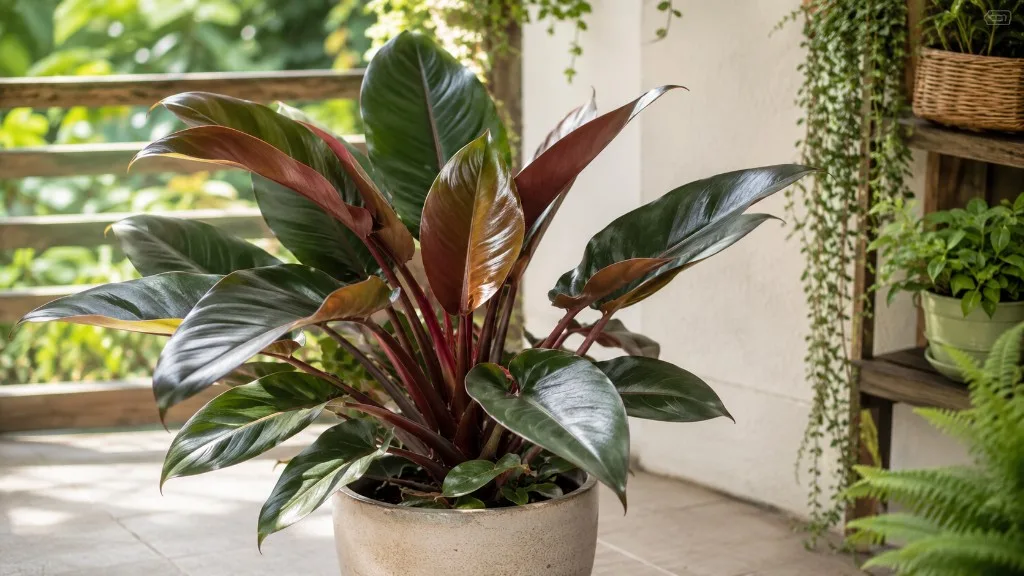
Philodendron erubescens 'Prince of Orange'
Prince of Orange philodendron needs bright indirect light for orange new growth, watering when top 3–5 cm dries, and division propagation. Toxic to pets.
Philodendron Prince of Orange Care Guide
Start with wateringThe most common care mistake for Philodendron Prince of OrangeWatering guide →Philodendron Prince of Orange care essentials
Light
Water
Every 7–10 days in summer - allow top 3–5 cm to dry. Every 10–14 days in winter.
Soil
Standard potting mix + 20–25 % perlite. Well-draining. pH 5.5–6.5.
Humidity
Moderate humidity (50–60 %)
Temperature
18°C to 29°C (65–85°F)
Fertilizer
Feed lightly during active growth.
About Philodendron Prince of Orange
Philodendron Prince of Orange has a upright growth habit.
| Detail | Information |
|---|---|
| Growth habit | Upright |
| Scientific name | Philodendron erubescens 'Prince of Orange' |
Philodendron Prince of Orange Care Guide
Philodendron Prince of Orange (Philodendron erubescens ‘Prince of Orange’) is one of those houseplants people buy for a moment — the unfurling leaf in warm copper-orange — and then keep for years because the everyday care is straightforward. Unlike collector variegated philodendrons that punish dim rooms with reversion, Prince of Orange is a self-heading hybrid bred for upright color at the crown. The trick is not exotic fertilizer or a moss pole. It is bright filtered light on the newest leaf and honest watering when the mix actually dries.
This guide is the hub for Prince of Orange indoors: what the plant is, how its leaf color cycle works, where to place it, how to water and feed it, when to divide or repot, what to check before you buy, and how it differs from close relatives like Moonlight, Imperial Red, and Pink Princess. By the end you should have a complete routine — not a guarantee that every leaf stays orange forever, but a realistic framework extension sources and experienced growers use for Florida-bred erubescens hybrids.
What Philodendron Prince of Orange Actually Is
Philodendron Prince of Orange is a cultivated hybrid in the Philodendron erubescens group — the species known as blushing or red-leaf philodendron. Wild P. erubescens is a climbing tropical perennial in the Araceae family, native to Colombia, where mature vines can scramble high into rainforest canopy. Indoors, the species typically stays around three feet tall in cultivation; Prince of Orange is bred smaller and bushier.
The NC State Extension profile lists ‘Prince of Orange’ as a non-vining, compact, bushy cultivar whose leaves emerge orange, transition to copper, and mature deep green. The RHS plant page describes an evergreen shrub with foliage that emerges bright yellow, turns copper-orange, then dark green, with bright red stems and an upright habit unlike scrambling varieties. That color journey is the entire reason the plant exists as a product — not random variegation, but a predictable new-leaf phase.
Philodendron erubescens and the ‘Prince of Orange’ Cultivar
Botanically, Prince of Orange is Philodendron erubescens ‘Prince of Orange’ — a selected cultivar, not a separate species. It sits in the same Florida hybrid breeding line as Moonlight, Imperial Red, and Rojo Congo, which were developed for interior landscape use and later adopted by houseplant growers. NC State also notes ‘Tangerine’ as a hybrid of Moonlight × Prince of Orange, which tells you how closely related these color cultivars are.
Prince of Orange is self-heading: it sends leaves from a central crown in a rosette-like clump rather than elongating stems that need support. Clemson HGIC groups self-heading philodendrons separately from vining types and notes that ‘Prince of Orange’ has bright orange new leaves, is a compact grower, and needs high light to maintain color and growth. That last point matters more than any single product recommendation.
How Prince of Orange Differs from Moonlight, Imperial Red, and Pink Princess
Versus Moonlight: Moonlight pushes chartreuse to lime new foliage on a similar self-heading frame. Prince of Orange pushes warmer copper-orange tones. Both need brighter light than plain green philodendrons to show their best crown color; neither will perform like a heartleaf philodendron in a dark hallway.
Versus Imperial Red: Imperial Red emphasizes burgundy-red new leaves maturing to deep green on a compact self-header. Prince of Orange runs orange → copper → green. Care overlap is large; the diagnostic leaf is always the newest unfurling one at the crown.
Versus Pink Princess: Pink Princess is a climbing erubescens cultivar with genetic pink variegation that can revert on green-dominated stems. Prince of Orange is self-heading, does not need a moss pole, and does not “revert” in the variegation sense — older leaves naturally green with age, which is normal, not failure. If you want unstable pink sectors and stem-pruning drama, choose Pink Princess. If you want a compact orange crown on an easier upright plant, Prince of Orange is the better fit.
Growth Habit and Mature Size Indoors
Prince of Orange grows as an upright, bushy shrub rather than a sprawler or climber. The RHS lists typical mature dimensions around 0.5–1 metre in height and spread, with 2–5 years to reach that size under good conditions. In most homes you are looking at a tabletop to floor-plant scale specimen — substantial, but not a tree philodendron takeover.
Self-Heading Architecture — No Moss Pole Required
NC State’s philodendron genus guide divides the genus into climbing and non-climbing self-heading types. Prince of Orange is firmly in the second group. Moss poles do not improve leaf color on this plant; brighter light on the crown does. Self-heading types do develop brittle petioles when bumped in traffic paths — Clemson HGIC warns that long leaf stalks on self-headers snap easily — so give the pot a stable corner rather than a doorway squeeze.
Because growth emerges from one central crown, chronic problems hit fast: a single wet, cold root zone can yellow the whole plant. That architecture is why watering discipline matters more than on a sprawling vine with backup growth points.
The Orange-to-Green Leaf Color Cycle
Color on Prince of Orange is a developmental sequence, not a permanent paint job. New leaves open in orange to copper (RHS describes an initial bright yellow phase in strong light), then mature through olive tones toward deep green. Older leaves staying green is normal. The diagnostic leaf is always the newest unfurling one at the crown.
If new leaves open green with no copper phase, light is usually too low — move to brighter filtered exposure and judge only the next two leaves, not yesterday’s foliage. If pink or red-tinged new growth appears on a plant labeled Prince of Orange, verify the label; you may have Imperial Red or a mixed batch from a grower bench.
Best Light for Copper-Orange New Growth
Light is the main lever for foliage quality on Prince of Orange. Clemson HGIC states plainly that this cultivar needs high light to maintain color. NC State recommends partial shade and warns against direct sunlight for P. erubescens indoors. Translated to home language: medium to bright indirect light for several hours daily on the crown — not a dark corner, not blazing south glass without filtration.
The RHS philodendron growing guide advises bright but indirect light and notes that insufficient light produces leggy growth and fewer, smaller leaves — exactly what Prince of Orange owners describe when orange phases disappear.
Windows, Grow Lights, and Reading the Crown
A practical starting placement: near an east window for gentle morning sun plus bright indirect day brightness, or several feet back from a filtered south or west window with sheer curtain diffusion. Prince of Orange belongs where the crown receives light, not just the lower mature leaves shaded by their own foliage.
Too little light: long internodes, smaller leaves, dull green new growth without orange. Too much direct sun: bleached, crispy, or brown patches — pull back or diffuse. After any move, read the last two new leaves only; mature leaves will not regain orange retroactively.
When natural light is weak in winter, a full-spectrum LED grow light 30–45 cm above the canopy for 10–12 hours daily can preserve crown color. Full detail on windows, scorch recovery, and fixture choice lives in the dedicated Philodendron Prince of Orange light guide.
Watering Philodendron Prince of Orange
Prince of Orange wants the standard philodendron rhythm: let the mix approach dryness at the root zone, then water thoroughly — never sit the roots in stale water. Clemson HGIC recommends keeping soil evenly moist but not soggy and never letting plants stand in water. RHS advises letting the top of the compost dry slightly between waterings because saturated compost causes root rot.
For most indoor pots in bright indirect light, check the top 3–5 cm with a finger or dry chopstick — water when that zone feels dry, roughly every 7–10 days in active summer growth and every 10–14 days in cooler, dimmer winter. That interval is a starting guess, not a rule. A small terracotta pot in bright light dries faster than a large plastic pot in a dark corner.
When you water, soak until excess runs from drainage holes, then empty the saucer within thirty minutes. If the pot stays heavy for days after watering, the mix is too water-retentive, the pot is oversized, or light is too low for the root system to breathe — fix the environment before the next pour. Step-by-step dry-down workflow: Philodendron Prince of Orange watering guide.
Soil, Pots, and Drainage
Use well-draining potting mix with added perlite for aeration — a practical home recipe is standard potting mix plus 20–25% perlite by volume, targeting slightly acidic conditions around pH 5.5–6.5 that philodendrons prefer per RHS philodendron guidance. NC State lists moist, well-drained soil rich in organic matter for P. erubescens.
Drainage holes are mandatory. Decorative cache pots without drainage are where self-heading philodendrons rot quietly under dense foliage that hides the soil surface. Terracotta forgives heavy-handed waterers; plastic suits attentive underwaterers in bright light. Recipe tweaks and wrong-mix warning signs: Philodendron Prince of Orange soil guide.
Humidity and Temperature
Prince of Orange prefers moderate humidity around 50–60% and temperatures in the 65–85°F (18–29°C) range that NC State cites for P. erubescens. Average indoor humidity near 50% is often acceptable when light and watering are correct. Below that, watch for crispy leaf tips in winter heating — a small humidifier beats misting, which spikes humidity for minutes and can leave foliage wet in stagnant air.
Keep the plant away from cold window glass, radiators, and AC blasts. RHS sets a 15°C (59°F) minimum for philodendrons; roots in chilled wet mix stop functioning and yellow leaves follow. Gentle room airflow helps prevent fungal issues when leaves stay damp in weak light.
Fertilizer During Active Growth
Fertilizer does not create orange leaves — light does. Feed lightly during active growth to support new foliage once basics are right. A reliable routine: monthly balanced liquid fertilizer at half strength on already-moist soil in spring and summer, then pause in winter or whenever the plant is stressed, newly repotted, or yellowing on wet mix.
Clemson HGIC recommends dilute water-soluble houseplant fertilizer for philodendrons. Never fertilize a dry root ball; salt burn shows as curled, brown leaf tips. Heavy nitrogen pushes soft green growth — fine on Prince of Orange if light is adequate, but it will not substitute for brightness at the crown. Detail: Philodendron Prince of Orange fertilizer guide.
Propagation and Repotting
Prince of Orange propagates most reliably by division at repotting when offsets or multiple crowns appear in one pot — a natural fit for self-heading hybrids that grow as clumps. The RHS Prince of Orange page also lists stem-tip or leaf-bud cuttings as propagation options for philodendron cultivars.
Repot every 1–2 years in spring, or when roots circle the pot and water runs straight through old mix. Move up one pot size with fresh airy mix; oversized pots hold water the crown cannot use, especially in winter. After repotting, keep the plant in bright indirect light without direct sun for a week and water lightly while roots heal. Do not repot on day one after purchase unless mix is failing or pests are obvious — quarantine, learn dry-down speed, and keep care boring while the plant adjusts.
Step-by-step division and timing: Philodendron Prince of Orange propagation guide · repotting guide.
Buying Prince of Orange: What to Inspect
Prince of Orange is widely sold, but bench conditions vary. Look for active orange-toned new leaves at the crown — that confirms the plant is growing in adequate light at the nursery. A shop specimen with only dull green new growth may have been kept too dim and will need a brighter home before you judge success.
Check firm petioles, clean leaf undersides, and roots visible at drainage holes without a sour smell from the mix. Avoid pots with mushy basal stems or yellowing lower leaves on wet soil — those are often pre-existing overwatering problems, not bargains. Prince of Orange is sometimes confused with Moonlight or Imperial Red on crowded grower racks; verify the label and the color of the newest leaf, not only the most photogenic mature foliage.
Pet Toxicity and Safe Placement
Philodendron Prince of Orange is toxic to cats and dogs. Like other members of Araceae, it contains insoluble calcium oxalate crystals that cause oral irritation, drooling, vomiting, and difficulty swallowing if chewed. The ASPCA lists philodendron as toxic to pets. Clemson HGIC notes that all parts of philodendrons are toxic if eaten.
Place Prince of Orange out of reach of pets and young children who chew plants — elevated shelves or rooms pets do not access, not floor-level cache pots because the copper leaves look tempting. The RHS Prince of Orange page flags harmful if eaten and skin/eye irritant sap; wear gloves if sap contact bothers you during division or pruning. Contact your veterinarian if ingestion is suspected.
Common Mistakes and Real Fixes
Most Prince of Orange problems trace to moisture in the pot, then light, then pests — in that order.
Green new leaves without orange: increase bright indirect light on the crown; judge the next two leaves only. Yellow leaves on wet mix: overwatering, compacted soil, or cold roots — check drainage and dry-down before the next soak. Leggy pale growth: insufficient light — move or add a grow light before fertilizing harder. Brown crispy patches: often direct sun or extreme desiccation — diffuse light or raise humidity.
NC State lists spider mites, mealybugs, aphids, and scale as common insect issues on P. erubescens, often appearing in dry, stagnant air. Shower foliage, improve airflow, and treat consistently if pests appear. Overwatering remains the primary disease pathway to root rot — fix culture before reaching for sprays.
Do not change water, pot size, fertilizer, and placement all in one weekend. Adjust one variable, then read the next two leaves or two weeks of dry-down before stacking more interventions.
Conclusion
Philodendron Prince of Orange is Philodendron erubescens bred as a compact self-heading color show — orange and copper at the crown, deep green on mature foliage, no moss pole required. Give it bright indirect light on the newest leaves, water when the top 3–5 cm dries, a perlite-lightened mix with drainage holes, moderate humidity, and warm stable temperatures. Feed lightly in growth season, divide or repot in spring every year or two, and keep it away from pets who chew.
It is an easier philodendron than Pink Princess for most homes because it does not climb or fight variegation reversion — but it is not a low-light plant if you want the orange phase. Buy for active crown color, place it where the crown actually sees light, and judge success on the next unfurling leaf, not yesterday’s green. That observation habit is the whole game.
When to use this page vs other Philodendron Prince of Orange guides
- Philodendron Prince of Orange overview — Canonical hub; start here for the full picture, then drill into a topic.
- Philodendron Prince of Orange light — Window placement, grow lights, and scorch recovery when crown color is the issue.
- Philodendron Prince of Orange watering — Dry-down checks, seasonal rhythm, and overwatering rescue.
- Philodendron Prince of Orange soil — Mix recipes and drainage when water will not behave.
- Philodendron Prince of Orange propagation — Division and cuttings when you are ready to multiply a healthy clump.
Related Philodendron Prince of Orange guides
How to care for Philodendron Prince of Orange?
When should you water Philodendron Prince of Orange?
Every 7–10 days in summer - allow top 3–5 cm to dry. Every 10–14 days in winter.
- Check top 2 inches - Every 7–10 days in summer - allow top 3–5 cm to dry.
- Drain excess water - Empty the saucer after watering so the roots are not sitting in standing water.
What soil works best for Philodendron Prince of Orange?
Standard potting mix + 20–25 % perlite. Well-draining. pH 5.5–6.5.
- Well-draining mix - Well-draining.
Grower notes for Philodendron Prince of Orange
Orange new growth note
If new leaves open green with no copper phase, light is usually too low. Move to brighter filtered light and judge the next two leaves only.
Normal colour aging
Older leaves naturally turn greener — that is not a problem. The diagnostic leaf is always the newest unfurling one at the crown.
No climbing support
Prince of Orange stays upright. Moss poles do not improve leaf colour; brighter light does.
What matters most with Philodendron Prince of Orange
Philodendron Prince of Orange is easiest to understand by its growth habit. No moss pole required. In practice: Medium to bright indirect light essential for orange new leaves. Pair with Standard potting mix + 20–25 % perlite. Well-draining. pH 5.5–6.5, and avoid changing water, pot size, and placement all at once.
Best placement in a real home
Prince of Orange belongs near an east window or filtered south-west exposure where the crown receives bright indirect light for several hours daily. Every 7–10 days in summer - allow top 3–5 cm to dry. Every 10–14 days in winter. Humidity target: Moderate humidity (50–60 %). Temperature comfort zone: 18°C to 29°C (65–85°F).
Before you buy this plant
Look for active orange-toned new leaves at the crown — that confirms the plant is growing in adequate light. A shop plant with only dull green new growth may have been kept too dim.
First month after bringing it home
Do not repot Philodendron Prince of Orange on day one unless the mix is failing or pests are obvious. Quarantine it, learn dry-down speed, and keep care boring while it adjusts.
Safety note for Philodendron Prince of Orange
Philodendron Prince of Orange is not safe for pets or children who chew plants. Use elevated placement or choose a non-toxic alternative for floor pots.
Is it pet safe?
Philodendron Prince of Orange is toxic to cats and dogs.
Toxic - calcium oxalate crystals.
Watering Philodendron Prince of Orange
Every 7–10 days in summer - allow top 3–5 cm to dry. Every 10–14 days in winter.
Soil & potting for Philodendron Prince of Orange
Standard potting mix + 20–25 % perlite. Well-draining. pH 5.5–6.5.
Humidity & temperature for Philodendron Prince of Orange
Philodendron Prince of Orange prefers moderate humidity (50–60 %), though normal home humidity is usually fine. Keep temperatures around 18°C to 29°C (65–85°F).
| Detail | Information |
|---|---|
| Humidity | Moderate humidity (50–60 %) - normal home humidity is fine. |
| Ideal temperature | 18°C to 29°C (65–85°F) |
Fertilizer & pruning for Philodendron Prince of Orange
Use feed lightly during active growth. for Philodendron Prince of Orange.
| Detail | Information |
|---|---|
| Fertilizer type | Feed lightly during active growth. |
Common problems on Philodendron Prince of Orange
Yellow Leaves
MediumLikely cause: Common on this plant type; confirm with recent watering, light, and root checks.
Quick fix: Inspect the plant and correct the most likely care stressor before stacking treatments.
Full fix guide →Brown Tips
MediumLikely cause: Common on this plant type; confirm with recent watering, light, and root checks.
Quick fix: Inspect the plant and correct the most likely care stressor before stacking treatments.
Full fix guide →Root Rot
MediumLikely cause: Common on this plant type; confirm with recent watering, light, and root checks.
Quick fix: Inspect the plant and correct the most likely care stressor before stacking treatments.
Full fix guide →Overwatering
MediumLikely cause: Common on this plant type; confirm with recent watering, light, and root checks.
Quick fix: Inspect the plant and correct the most likely care stressor before stacking treatments.
Full fix guide →Underwatering
MediumLikely cause: Common on this plant type; confirm with recent watering, light, and root checks.
Quick fix: Inspect the plant and correct the most likely care stressor before stacking treatments.
Full fix guide →Spider Mites
MediumLikely cause: Common on this plant type; confirm with recent watering, light, and root checks.
Quick fix: Inspect the plant and correct the most likely care stressor before stacking treatments.
Full fix guide →Mealybugs
MediumLikely cause: Common on this plant type; confirm with recent watering, light, and root checks.
Quick fix: Inspect the plant and correct the most likely care stressor before stacking treatments.
Full fix guide →Aphids
MediumLikely cause: Common on this plant type; confirm with recent watering, light, and root checks.
Quick fix: Inspect the plant and correct the most likely care stressor before stacking treatments.
Full fix guide →Leggy Growth
MediumLikely cause: Common on this plant type; confirm with recent watering, light, and root checks.
Quick fix: Inspect the plant and correct the most likely care stressor before stacking treatments.
Full fix guide →Slow Growth
MediumLikely cause: Common on this plant type; confirm with recent watering, light, and root checks.
Quick fix: Inspect the plant and correct the most likely care stressor before stacking treatments.
Full fix guide →Wilting
MediumLikely cause: Common on this plant type; confirm with recent watering, light, and root checks.
Quick fix: Inspect the plant and correct the most likely care stressor before stacking treatments.
Full fix guide →Drooping Leaves
MediumLikely cause: Common on this plant type; confirm with recent watering, light, and root checks.
Quick fix: Inspect the plant and correct the most likely care stressor before stacking treatments.
Full fix guide →Low Humidity
MediumLikely cause: Common on this plant type; confirm with recent watering, light, and root checks.
Quick fix: Inspect the plant and correct the most likely care stressor before stacking treatments.
Full fix guide →Not Enough Light
MediumLikely cause: Common on this plant type; confirm with recent watering, light, and root checks.
Quick fix: Inspect the plant and correct the most likely care stressor before stacking treatments.
Full fix guide →Fungus Gnats
MediumLikely cause: Common on this plant type; confirm with recent watering, light, and root checks.
Quick fix: Inspect the plant and correct the most likely care stressor before stacking treatments.
Full fix guide →Mold on Soil
MediumLikely cause: Common on this plant type; confirm with recent watering, light, and root checks.
Quick fix: Inspect the plant and correct the most likely care stressor before stacking treatments.
Full fix guide →