Water Stress on Heartleaf Philodendron: Causes, Checks &
Quick answer
Water stress on heartleaf philodendron is the swing between too wet and too dry—limp trailing vines after neglect, then yellow lower leaves after a guilt-soak on soggy mix. First step: lift the pot, probe moisture 2 inches deep, and feel stem firmness at nodes before you water or withhold again.
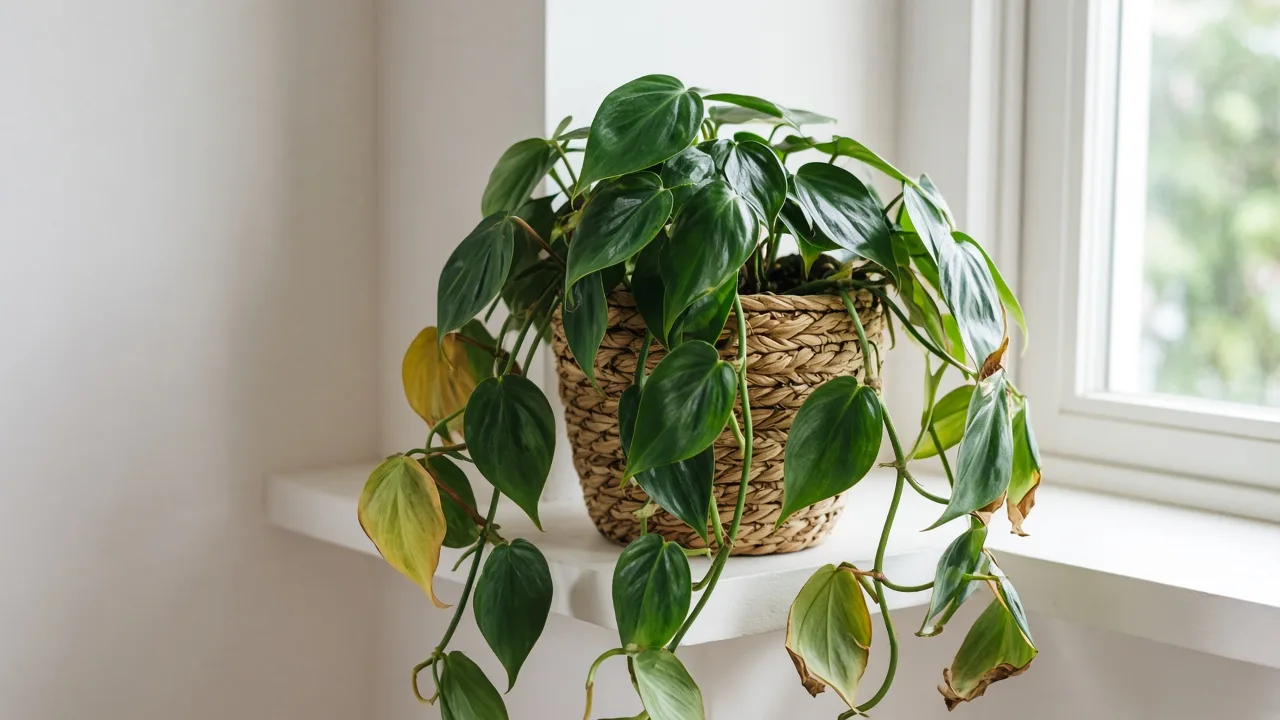
Water Stress on Heartleaf Philodendron: Causes, Checks & Fixes
This guide covers water stress on Heartleaf Philodendron. See also the general Water Stress guide, watering, and light pages for this plant.
Water Stress on Heartleaf Philodendron: Causes, Checks & Fixes
When to use this page
Water stress on heartleaf philodendron (Philodendron hederaceum) describes alternating swings between too wet and too dry—the skipped week in a dim corner, the heavy soak after limp vines, or the hanging basket that dries on the outer rim while the core stays wet. Mixed symptoms on one plant (crispy edges on trailing tips, yellow lower leaves, and limp stems together) belong here.
| Your situation | Start here instead |
|---|---|
| Light pot, dry mix throughout, firm stems, crispy edges only | Underwatering |
| Heavy pot, soggy mix, soft stems, sour smell | Overwatering or root rot |
| Water runs through but mix stays dry inside | Dry hydrophobic soil |
| Multi-day vine hang without mixed wet-dry damage | Wilting or drooping leaves |
| Afternoon limpness near vents or hot glass | Heat stress |
| Ongoing watering rhythm after recovery | Heartleaf philodendron watering guide |
Quick answer
On this fast-growing trailing aroid, water stress is rarely one bad watering—it is the rhythm failure that leaves different damage from each extreme on the same vine. Heartleaf philodendron wilts slightly to signal thirst, which prompts a heavy soak—then its roots rot quickly in compacted or persistently wet mix while the owner waits another week.
First step: lift the pot, stick your finger 2 inches into the mix, and pinch the main stem at a node near the soil line. That trio tells you whether to water once, withhold, or inspect roots—not another calendar guess.
For how irregular watering damages roots in general, see our water stress symptom guide. On heartleaf philodendron, the signature is mixed damage on one trailing vine—crispy outer tips after drought, yellow lower leaves after the guilt-soak—while stipule growth at the vine tip stalls or aborts.
Wet vs. dry decision table
| Signal | Dry side of stress | Wet side of stress | Alternating stress |
|---|---|---|---|
| Pot weight | Light | Heavy days after watering | Swings between both |
| Soil 2 inches deep | Dry throughout | Damp or soggy | Dry surface, wet deep—or vice versa after overcorrection |
| Stem at node | Firm green | Soft, darkening | Firm now but yellow lower leaves from prior wet phase |
| Leaf pattern | Crispy edges, inward curl | Yellow lower leaves | Crispy tips on outer vine plus yellow base leaves together |
| First action | Water once thoroughly | Stop watering; inspect if soft | Stabilize dry-top rhythm; see branches below |
What water stress looks like on heartleaf philodendron
Heartleaf philodendron stores some moisture in its relatively thick glossy leaves, but long trailing vines transpire heavily at the outer tips. When roots cannot supply steady moisture—or sit in soggy mix after a soak—the whole plant shows stress in layers.
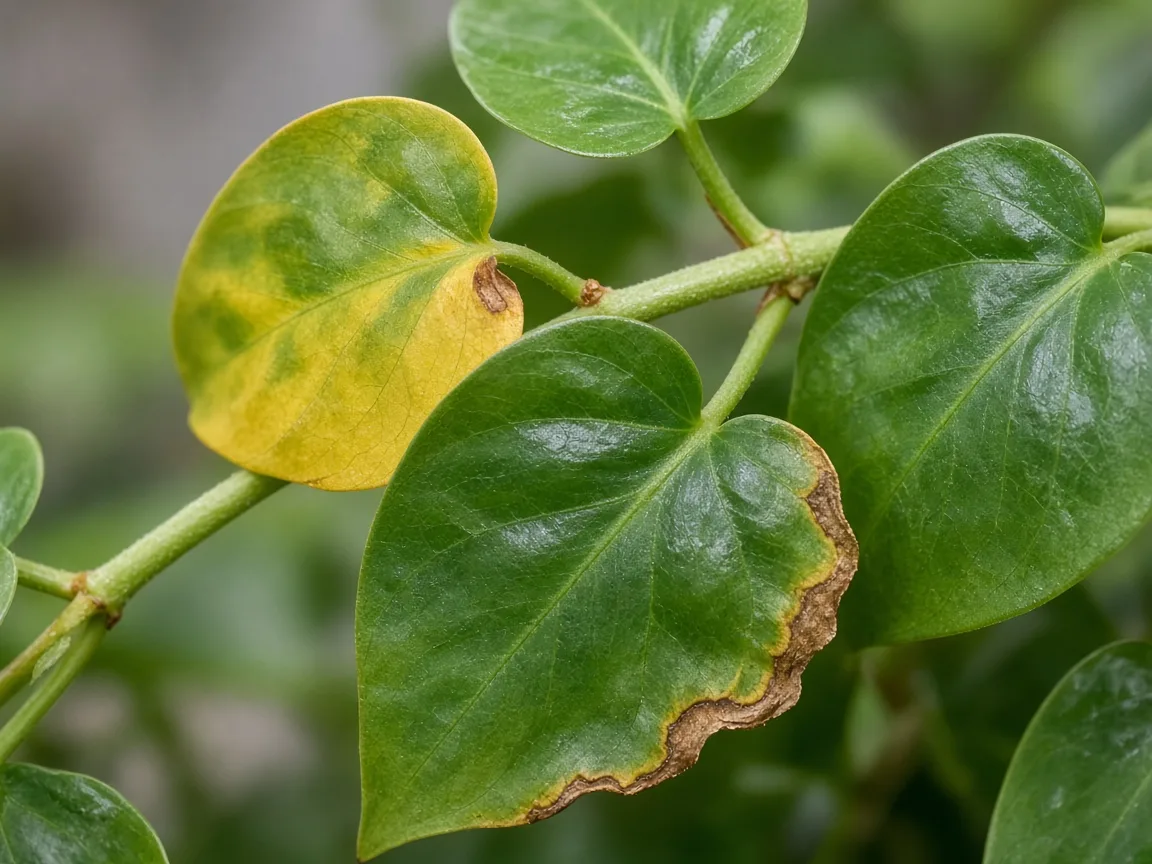
Water stress on heartleaf philodendron—compare crispy curled margins on an outer leaf with yellowing lower foliage on the same trailing stem.
After a dry spell
- Limp trailing vines with heart-shaped leaves curling inward at the edges
- Papery or crispy brown tips on the longest outer segments
- Pot that feels noticeably light when lifted
- Duller gloss on leaves farthest from the soil line
- Stems still firm when pinched at nodes near the crown
After a wet spell or overcorrection
- Yellowing lower leaves, often starting at the oldest nodes on each vine
- Soft or darkening feel at stems where they meet soggy mix
- Fungus gnats hovering after soil stayed damp for days
- Sour or musty smell from the pot
- New leaves failing to unfurl cleanly inside their stipule sheaths
The water-stress signature on trailing vines
Mixed damage on one plant: crispy tips on the dangling third of a vine, yellow leaves at the base of the same stem, and limpness throughout—because you soaked hard after a dry spell, or let a hanging basket go bone-dry then flooded it. Pure underwatering rarely causes yellow lower leaves on damp soil. Pure overwatering rarely causes a feather-light pot and papery edges without wet mix deep down.
Reading moisture stress on stipules and trailing segments
Heartleaf philodendron is easy to confuse with pothos at a glance, but water stress tells a philodendron-specific story. New growth carries conspicuous stipules—papery sheaths at each vine tip. When moisture swings, the newest leaf may brown inside its stipule while older segments farther down the same vine show drought crisping and wet-phase yellowing together. That split pattern on one continuous stem points to alternating stress more than a single bad watering event.
On a long trailing vine, outer segments hang lowest and dry first in a warm hanging basket. Inner crown leaves near the pot often stay firmer because they sit in cooler, shadier air—but if you guilt-soak after outer tips wilt, the wet phase hits the dense root ball at the crown while outer mix still looked dry on the surface. Weight-check hanging baskets; they dry faster on all sides than floor pots in the same room.
Why heartleaf philodendron gets water stress
This tropical understory vine evolved with brief dry windows and sharp drainage—not constant moisture or long droughts. Several home-care patterns reset the wet-dry cycle on repeat.
Calendar watering
Watering every Sunday ignores that cooler rooms, shorter winter days, and dense peat keep pots wet longer while summer brightness dries hanging baskets faster. University of Maryland Extension warns that watering on a schedule leads to too much or too little water—plants should be watered when they need it, not when the calendar says so.
Guilt-soaking after limp vines
Philodendron vines droop when dry, which prompts a heavy soak—then fast-growing roots sit in wet mix while the owner waits another week. Over-watering causes root rot while under-watering causes wilt on this species; the fixes pull in opposite directions if you do not check soil first.
Hanging baskets and warm window air
Heartleaf philodendron is often grown in hanging baskets where warm window air dries the outer mix quickly. You skip a check because the surface still looks damp near the crown, then soak when outer tips wilt—creating a wet core and dry rim in the same container. See dry hydrophobic soil when water runs through without rewetting the center.
Seasonal light shifts
Lower light in winter slows uptake; continuing summer frequency keeps soil cold and wet. Missouri Botanical Garden recommends reducing watering from fall to late winter while still allowing the top to dry between drinks.
Oversized pots and poor drainage
A pot much larger than the root ball holds a wet outer ring long after the surface looks dry, so you water again while inner roots suffocate—then the visible top dries and you withhold until the whole vine wilts. Dense mix without perlite worsens the cycle; see poor drainage and the soil guide.
How to confirm the cause
Work through these checks in order before changing anything else:
- Pot weight — Lift the container. A dramatic weight drop since last week confirms dry-down; persistent heaviness confirms wet mix.
- Soil moisture at 2 inches — Dry throughout the top inch with a light pot points to drought stress. Damp or cold mix 5 cm down with a heavy pot points to excess moisture—even if the surface looks dry.
- Stem firmness at nodes — Pinch the main stem near the soil line. Firm green tissue supports drought diagnosis on the dry side; soft, mushy, or darkening tissue supports rot from the wet phase—do not water until you inspect roots.
- Symptom pattern along the vine — Crispy outer tips plus light pot = dry side. Yellow lower leaves plus damp soil = wet side. Both sets on the same trailing stem = alternating stress.
- Recent history — Did you skip two weeks then soak heavily? Water on schedule through a dim winter? Move a hanging basket to a hotter window? Each pattern fits water stress on this species.
- Drainage check — Saucer water sitting more than 30 minutes, closed cache pots, or mix without perlite keeps the wet phase going and resets the cycle.
If soil is wet and stems are soft, treat as possible root rot on heartleaf philodendron—not simple drought. If soil is dry, stems are firm, and the pot is light, a thorough watering is appropriate after you confirm the pattern.
First fix to try
Stop calendar watering. Lift the pot, probe moisture 2 inches deep, and check stem firmness at nodes—then act on what you find. Nothing else today.
- Dry mix, firm stems, light pot: Water thoroughly until a little runs from the drainage hole, then empty the saucer. Do not mist, fertilize, or repot.
- Wet mix, firm stems: Withhold water until the top 2 inches is dry throughout. Improve airflow around trailing vines. Empty any saucer water.
- Wet mix, soft stems: Do not water. Unpot and inspect roots and stem bases before any soak—rot from the wet phase needs trimming and dry repotting, not another drink.
This one pause prevents the classic mistake: limp vines trigger a soak when roots are already drowning, or dry soil triggers neglect when the plant only needs a single even watering.
Step-by-step recovery
Once you know which side of the cycle you are on, work in this order:
- Stabilize the rhythm — Allow the top of the soil to dry before rewatering. In practice that is often when the top 2 inches is dry, then water until a small amount drains out.
- Empty saucers every time — Never let the pot sit in standing water; that extends the wet phase and invites fungus gnats on philodendron soil.
- Water evenly across the pot surface — Pour slowly so mix absorbs instead of channeling down the gap between root ball and pot wall. Bottom-soak if runoff races through in under a minute.
- Match season to frequency — Reduce drinks in late fall and winter when growth slows; increase checks—not volume—in bright warm months per the watering guide.
- Address chronic wetness — If mix stays damp more than a week, repot into well-draining soil with perlite in a pot only slightly larger than the root ball—after the plant is stable and stems are firm.
- Trim only dead tissue — Remove fully yellow or collapsed leaves for hygiene. Keep blemished but firm leaves; they still photosynthesize while new growth returns.
- Hold fertilizer — Skip feed until new heart-shaped leaves look firm for two weeks. Salt stress on stressed roots worsens edge burn and yellowing.
If inspection shows mushy roots or soft stems at multiple nodes, trim back to firm tissue, let cuts air-dry, and repot into fresh airy mix before resuming the dry-top rhythm.
Recovery timeline
Trailing tips on the dry side of stress often firm within 6–24 hours after one thorough watering when roots are healthy. A long vine may take a full day to perk across its full length.
Recovery from the wet side—after you stop soaking and improve drainage—usually shows as stable new stipule growth within one to two weeks in bright indirect light. Yellow lower leaves and crispy edges are permanent on damaged tissue; they may drop slowly while the plant replaces them.
Chronic alternating stress with repeated guilt-soaks can take three to six weeks before new glossy leaves unfurl cleanly along the full vine length. If no firm new growth appears after conditions stabilize for a month, reassess roots and light—not just watering frequency.
Lookalike symptoms
| What you see | Often confused with | How to tell apart |
|---|---|---|
| Mixed crispy tips and yellow lower leaves | Yellow leaves from overwatering alone | Water stress shows both drought and wet-phase damage on one vine; pure overwatering rarely has a light dry pot history |
| Inward leaf curl | Curling leaves | Alternating stress curl follows irregular watering history; pest curl adds stippling or honeydew |
| Limp trailing vines | Wilting | Wilting page triages wet vs. dry first; this page fits when both extremes happened in sequence |
| Afternoon limpness on moist soil | Heat stress | Heat wilt recovers overnight near vents or glass; water-stress limpness tracks your soak-or-skip history |
| Water runs through, vines still limp | Dry hydrophobic soil | Hydrophobic mix repels top water; alternating stress may include hydrophobic drought after a wet phase |
Mistakes to avoid
Do not water reflexively every time trailing vines droop—confirm whether the pot is light or heavy first.
Do not skip checks on hanging baskets because the crown mix still feels damp; outer vines may be drought-stressed while the core is wet.
Do not fertilize a stressed philodendron to “push” recovery; wait until new growth is firm.
Do not repot and prune heavily on the same day you correct watering—give the plant one stable rhythm cycle first unless roots are clearly mushy.
Do not assume water propagation in a jar prevents soil water stress when you move cuttings back to mix; transition gradually per the overview.
Heartleaf philodendron care cross-check
Heartleaf philodendron performs best with bright to medium indirect light, airy well-draining mix with perlite, and watering when the top 2 inches dries—roughly every 7–10 days in summer, slower in winter. Target 40–60% humidity and daytime temperatures around 18–27°C (65–80°F). Trailing pots in hanging baskets dry and stress faster than floor pots—weight-check the container during summer.
If limp vines repeat weekly despite stable watering, reassess light and pot size before assuming thirst. A dim corner keeps mix wet longer; a hot bright shelf dries baskets twice as fast as a floor pot in the same room.
How to prevent water stress next time
Check soil dryness at 2 inches before every watering—not on a fixed calendar. Empty saucers within 30 minutes and avoid closed cache pots without drainage holes per RHS container guidance.
Weight-check hanging baskets twice weekly in summer; lift floor pots monthly in winter to learn your home’s dry-down speed. Reduce frequency when growth slows in fall, and refresh tired peat every 12–24 months so mix structure survives dry cycles.
Scout stipule tips weekly; new leaf aborts show moisture swings before lower leaves yellow. Keep one care log note—last watered, pot weight, light change—so you can spot the soak-after-neglect pattern early.
When to worry
Treat as urgent when wet soil pairs with soft mushy stems, sour smell, or vines collapsing at multiple nodes—alternating stress may have progressed to root failure that needs immediate inspection, not another dry spell or soak.
Mild limpness that resolves within 24 hours after one correct watering or withholding step is less urgent—stabilize rhythm and monitor stipule growth. Replace or heavily cut back a heartleaf philodendron only when most stems collapse and the root mass is mushy; otherwise trimmed vines and stable watering usually produce new trailing growth within weeks.
Conclusion
Water stress on heartleaf philodendron is a rhythm problem before it is a mystery disease. Mixed crispy outer tips, yellow lower leaves, and limp trailing vines on the same stem point to alternating too-wet and too-dry cycles—not a single calendar mistake you can fix with one extra drink. Lift the pot, read moisture at 2 inches, feel stem firmness at nodes, and let new glossy heart-shaped leaves unfurling from stipule tips tell you recovery is underway.
When to use this page vs other heartleaf philodendron guides
- Heartleaf philodendron watering — Use for routine moisture checks once swings stop.
- Heartleaf philodendron problems hub — Browse all common issues on this species.
- Underwatering — Use when the pot is light and dry throughout with firm stems only.
- Overwatering — Use when the pot stays heavy and soggy without a prior drought phase.
- Wilting — Use when you need wet-vs-dry triage before knowing which extreme dominated.
Related heartleaf philodendron guides
- Heartleaf philodendron overview
- Heartleaf philodendron watering
- Heartleaf philodendron light
- Heartleaf philodendron soil
- Underwatering on heartleaf philodendron
- Overwatering on heartleaf philodendron
- Dry hydrophobic soil
- Heartleaf philodendron problems
Related tool
Use the Plant Problem Diagnosis Tool to narrow causes for water stress on this plant before changing multiple variables at once.