Drooping Leaves on Portulaca: Causes, Checks & Fixes
Quick answer
Drooping leaves on Portulaca are usually from wet roots, severe dry-down in a small pot, or cold nights. First step: check pot weight and stem firmness at the crown before adding water.
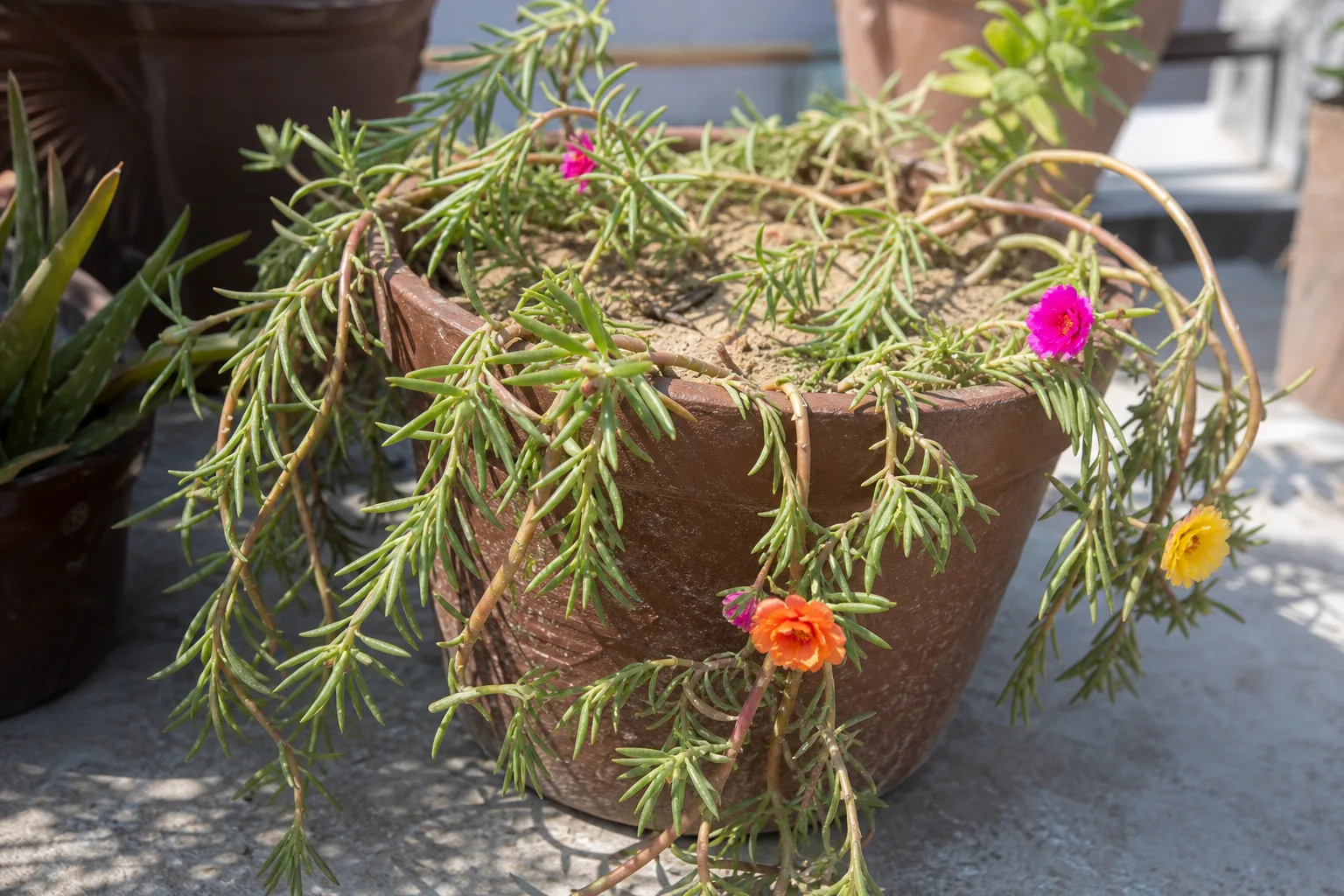
Drooping Leaves on Portulaca: Causes, Checks & Fixes
This guide covers drooping leaves on Portulaca. See also the general Drooping Leaves guide, watering, and light pages for this plant.
Drooping Leaves on Portulaca: Causes, Checks & Fixes
Quick answer
Drooping leaves on Portulaca (Portulaca grandiflora, Moss Rose) usually trace to wet roots after overwatering, severe dry-down in a shallow container, or cold nights on a frost-tender annual. First move: lift the pot and pinch stem firmness at the crown before you water.
Moss Rose is built for high drought and heat tolerance in full sun, yet saturated mix still starves roots of oxygen and can trigger crown rot in poorly drained soils. On this plant, droop on wet soil is rot-risk until proven otherwise.
Scope note: Use this page when limp trailing stems and flattened succulent leaves are your main symptom and you need a fast wet-vs-dry-vs-cold split. If the whole plant is collapsing with spreading softness, start with the wilting guide. If the crown is already mushy, use root rot instead.
Reviewed by LeafyPixels Review Board · Author: sai-ananth · Methodology: Recommendations checked against NC State Extension, Missouri Botanical Garden, Cornell Home Gardening, UC IPM, and ASPCA toxicity data, then aligned with LeafyPixels Portulaca cluster guides.
Wet vs dry vs cold vs heat droop: fast split
| What you observe | Most likely cause | First move |
|---|---|---|
| Pot heavy, mix cool/wet, stem base softening | Root stress / possible crown rot | Stop watering; improve drainage and airflow |
| Pot very light, mix dry through root zone, stems firm | Drought stress in a small container | Deep soak once, then return to dry-down rhythm |
| Droop after cool night, soil not waterlogged, stems firm | Cold stress on a warm-season annual | Move to warmer full sun; protect overnight |
| Midday droop only on hot afternoons, recovers by evening | Temporary heat + water deficit | Check dry-down timing; do not mist or overwater |
| Wet pot, droop persists after you watered “to help” | Oxygen-starved roots on saturated mix | Hold water-adding more makes uptake worse |
If clues conflict, treat wet-root risk first. Portulaca usually survives one dry cycle better than a saturated week.
What drooping looks like on Portulaca
On Moss Rose, drooping is usually limp trailing stems with flattened, dull succulent leaves-not the papery inward curl you see on many drought-stressed houseplants. Learn these four visual patterns before you touch the watering can:
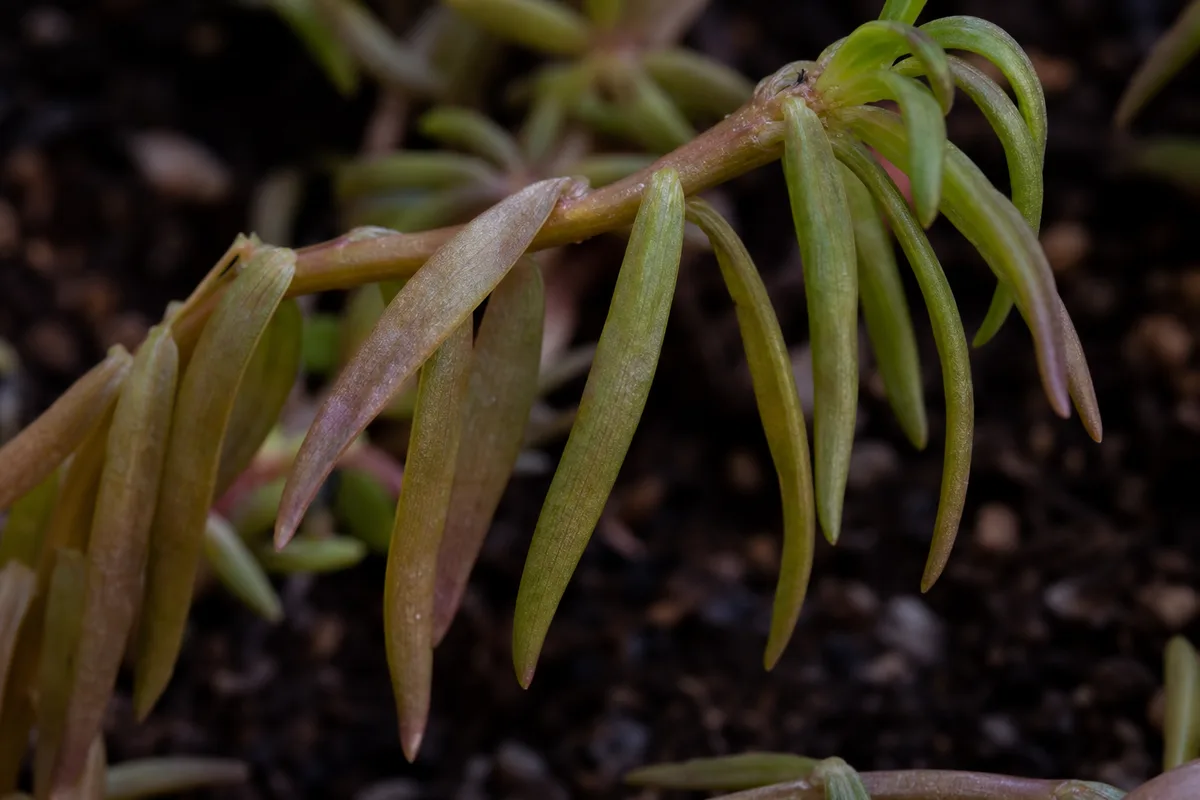
Drooping Leaves symptoms on Portulaca - compare with healthy tissue on the same plant.
Wet-root droop: Stems sag from the soil line outward; lower leaves may yellow; the mix smells sour when you lift the pot; stem bases feel spongy even though leaves still look plump. Flowers stay closed through midday sun-Moss Rose normally opens in strong light and closes on cloudy days.
Dry-root droop: The pot feels noticeably lighter than usual; leaves look slightly shrunken but stems stay firm when you bend them; no sour smell; flowers may close from stress rather than cloud cover.
Cold droop: Uniform morning limpness after a cool night; stems often stay firm; soil moisture looks normal; no rot smell. Portulaca is a warm-season annual sensitive to frost.
Transient heat droop: Afternoon limpness on blazing balcony setups; tissue firms again by evening without extra water-distinct from rot because the pot is not heavy-wet and the crown stays solid.
Why Portulaca gets drooping leaves
Overwatering and root oxygen loss
Portulaca roots expect rapid dry-down in well-drained sandy or rocky soils. Constantly wet peat-heavy mix collapses root function before leaves turn black. In waterlogged media, oxygen movement drops and roots cannot support normal uptake-stems droop even though the pot is wet as described in UC IPM aeration-deficit guidance. Reflex watering is the most common mistake here.
Drought stress in small pots and hanging baskets
Moss Rose is drought tolerant, but a 20 cm hanging basket in full sun on a reflective balcony can move from moist to bone dry in a single hot afternoon. Shallow root volume cannot buffer heat the way an in-ground mat can. Droop here is often reversible when stems stay firm and you rehydrate once, thoroughly, then allow full dry-down again.
Cold stress below warm-season range
Repeated nights around 10°C and below produce uniform morning droop even when the mix is not soaked. Cold-stressed tissue may not bounce back as fast as drought-stressed tissue because cell damage-not water shortage-is the limiter.
Container and site factors specific to Moss Rose
Black plastic pots, south-facing railing cookers, and crowded mixed planters accelerate dry-down. Conversely, Moss Rose planted in shade with slow-evaporating mix stays wet longer-pairing damp shade with succulent leaves is a common setup for crown decline on a plant that wants full sun and good drainage.
How to confirm the cause: 5-clue checklist
Work this sequence once-do not repeat the same checks in multiple sections:
- Pot weight - heavy suggests wet-root stress; very light suggests dry-root stress.
- Stem firmness at crown - soft or mushy crown means urgent wet-root pathway.
- Moisture at depth - probe 2–3 cm down, not just the surface crust.
- Overnight low temperature - recent cool nights push cold stress up your list.
- Flower behavior in midday sun - closed flowers with droop indicate active stress, not normal cloud closure.
First fix to try
If the pot is wet and heavy, stop watering first. Move the container to brighter airflow, empty saucers, and let media dry before any repotting or root surgery. This single step prevents further crown decline while you decide whether unpotting is necessary.
For a light dry pot with firm stems, one deep soak until water exits drainage holes is the first fix-then wait for full dry-down before the next drink.
Step-by-step recovery by cause
Dry-path recovery (firm stems, dry root zone)
- Soak deeply until water runs from drainage holes.
- Return the pot to full sun after watering.
- Wait for full dry-down before the next watering.
- Recheck within 4–8 hours; stems should feel firmer and flowers may reopen.
Wet-path recovery (soft base, wet root zone)
- Hold all water immediately.
- Improve drying: sun, airflow, no standing runoff in saucers.
- If stems keep softening after three to five dry days, unpot and trim mushy roots.
- Repot into gritty, fast-draining mix suited to Moss Rose.
- Wear gloves when handling cut tissue-Portulaca is toxic to cats and dogs if ingested.
Cold-path recovery (post-cool-night droop)
- Move containers to warmer full sun early in the day.
- Protect at night until lows stay above about 10°C.
- Reduce watering frequency while growth is slow.
Recovery timeline, escalation triggers, and when to stop DIY
| Cause | Typical improvement window | Escalate when |
|---|---|---|
| Drought | Same day if stems stayed firm | Still limp 24 hours after one deep soak on a light pot |
| Wet roots | One to three weeks after drainage fix | Crown softness spreads upward despite dry soil |
| Cold | Days to weeks after warm nights return | Blackened, mushy tissue at soil line |
| Heat (transient) | Hours-often by evening | Morning droop that no longer recovers overnight |
Positive signs: firmer stems, resumed midday flower opening, no spread of crown softness.
Stop DIY and replace or consult a local extension office when: crown tissue is mushy through the centre, droop worsens on drying soil over 48 hours, or more than half the trailing stems collapse despite correct first fixes. Moss Rose is an inexpensive seasonal annual-salvage effort should match crown condition, not sentiment.
Case note: balcony basket after a rainy week
A 25 cm Moss Rose basket on a covered balcony stayed wet for six days after back-to-back storms. Morning stems were limp; the pot felt heavy; lower leaves yellowed; flowers stayed shut at noon. Action: saucers emptied, basket moved to an open railing with six hours of direct sun, all irrigation stopped. By day four the mix finally dried; crown firmness returned by day seven; new flower buds opened on day ten. Lesson: wet-root droop on Portulaca improves only after oxygen returns to the root zone-not after another drink.
Drooping vs wilting vs root rot: which guide to use
| Your situation | Start here |
|---|---|
| Limp trailing growth; need wet/dry/cold split | This page - drooping leaves |
| Whole-plant collapse, escalating stress over days | Wilting |
| Persistent wet soil decline, sour smell | Overwatering |
| Mushy crown or blackened stem base | Root rot |
| Recurring dry/wet swings without clear rot | Water stress |
Drooping and wilting overlap on Moss Rose, but drooping here means localized limpness you can triage with pot weight; wilting is the escalation path when multiple stems collapse or stress keeps spreading after your first correction.
What not to do
- Do not water every droop automatically-wet pots need drying, not another round.
- Do not mist for humidity; Moss Rose is a dry-air, full-sun plant.
- Do not repot, prune hard, and fertilize on the same stressed day.
- Do not leave pots in standing water after rain or irrigation.
- Do not force growth with feed while tissue is still limp.
How to prevent drooping leaves next time
Keep Portulaca where it gets at least six hours of direct sun, use sharply drained media, and water only after real dry-down at root depth-not on a calendar. During rainy or cooler periods, extend intervals and prioritize drainage over schedule. On hot container setups, monitor weight daily but water only when the root zone is dry. Shelter pots before nights approach 10°C.
Related Portulaca guides
- Portulaca overview - baseline light, soil, and seasonal expectations
- Portulaca watering - dry-down rhythm for containers vs in-ground mats
- Wilting - whole-plant collapse workflow
- Overwatering - chronic wet-soil decline
- Root rot - crown softness and salvage decisions
- Water stress - recurring dry/wet swings
Related tool
Use the Plant Problem Diagnosis Tool to narrow causes for drooping leaves on this plant before changing multiple variables at once.