Prayer Plant Draft Stress: Check Cold Air, Vents &
Quick answer
Draft stress is plausible when a prayer plant develops new drooping, curled, pale, or darkened leaf areas soon after a cold window, open door, or HVAC blast. Maranta leuconeura is intolerant of low temperatures and cold drafts. Move it to stable bright indirect light, keep it above 15°C (60°F), and check the soil before watering again.
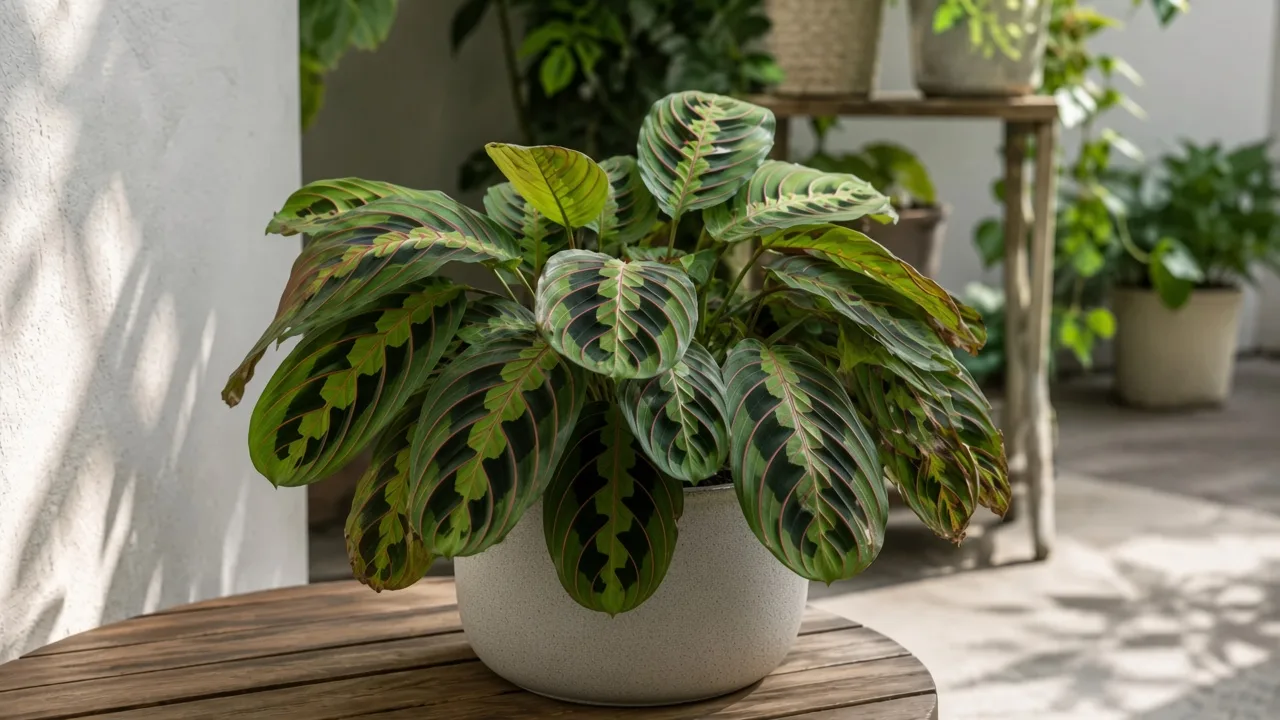
Draft Stress on Prayer Plant: Causes, Checks & Fixes
This guide covers draft stress on Prayer Plant. See also the general Draft Stress guide, watering, and light pages for this plant.
Draft Stress on Prayer Plant: Causes, Checks & Fixes
Quick answer
Draft stress is a likely possibility when new prayer plant damage appears after a cold night, an open door, a chilly window, or repeated air-conditioning airflow. North Carolina State Extension lists Maranta leuconeura as intolerant of low temperatures and cold drafts. Move the plant out of that air stream, keep it in steady bright indirect light, and check the soil before adding water. A single curled leaf does not prove a draft caused it; compare the timing, location, and pattern with watering, light, and humidity changes.
What draft stress means for a prayer plant
Prayer plant, Maranta leuconeura, is a tropical foliage plant grown indoors in temperate climates. A draft is a moving pocket of air that is colder or hotter than the plant’s usual surroundings. It can come from a door or leaky window in winter, an air-conditioning register in summer, a fan blowing continuously across the leaves, or a heater cycling nearby.
The concern is the temperature at the foliage, not just the thermostat reading across the room. A plant beside cold glass may experience a chilly leaf zone while the center of the room feels fine. Missouri Botanical Garden says this species prefers temperatures that do not dip below 60°F and is frost-intolerant. NC State also flags low temperatures and cold drafts as unsuitable. These are reasons to prevent chilling, not a promise that every brief exposure at a particular reading will injure a plant.
Signs to check
Draft stress is more plausible when several clues line up:
- Damage started after a cold night, window opening, door traffic, or a change in heating or cooling.
- The leaves closest to the window or vent look worse than leaves on the sheltered side.
- New leaves remain limp or curled during daylight, rather than simply lifting for the normal nightly “prayer” movement.
- Affected areas look water-soaked or unusually pale at first, then darken or turn dry at the edges.
- The potting mix is not dry enough to explain the sudden wilt, and the plant has not recently been overwatered.
These are clues, not a unique diagnostic signature. Cold injury, dry air, direct sun, root trouble, and inconsistent moisture can overlap. Clemson Extension’s Dracaena guidance notes that temperature changes and drafts can contribute to sudden leaf loss in that separate tropical houseplant; use that as general indoor-plant context, not proof of the cause on Maranta.
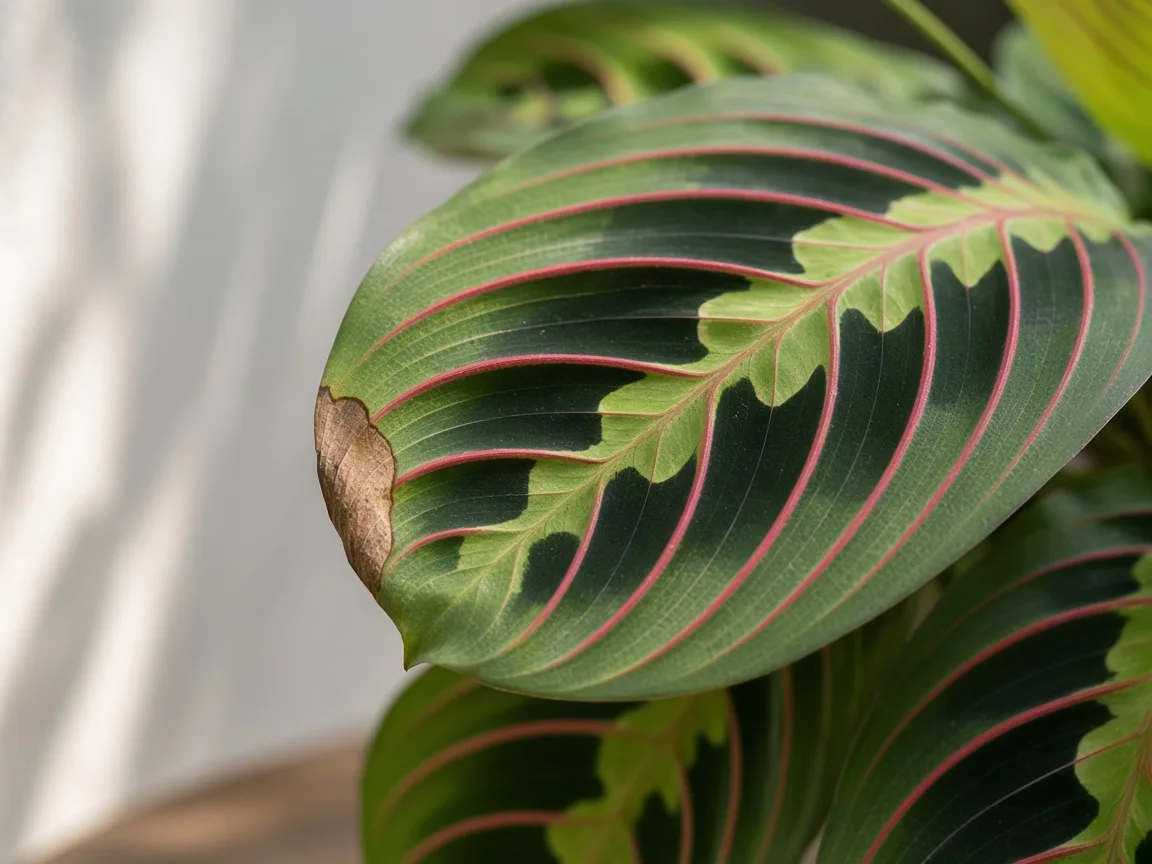
A brown edge can follow several stresses. A recent cold or vent exposure makes a draft worth checking, but the mark alone cannot identify the cause.
Separate drafts from normal movement and lookalikes
Maranta leaves move on a daily rhythm. Leaves that rise toward evening and open again in the morning are showing normal movement, not a draft injury. Look for damage that remains during the day or continues to spread after exposure.
Underwatering is more likely when the mix has dried well below the surface and the pot feels light. Overwatering or root damage is more likely when the mix stays wet, the pot has poor drainage, or stems soften. Dry indoor air can cause crisp edges, especially near a heater, while direct sun can bleach or scorch the exposed surface. NC State notes that low humidity and direct sunlight are also poor conditions for prayer plants, so check these alongside airflow instead of treating every curled leaf as cold damage.
For the broad houseplant pattern, see our draft stress guide. Use the prayer plant problems hub to compare symptoms if the cause is still unclear.
How to check the exposure
- Reconstruct the timing. Note when the first new damage appeared and whether a cold night, open window, moved pot, heating change, or HVAC cycle came just before it.
- Inspect the plant’s position. Check the leaves nearest the glass, doorway, or vent. Feel for moving air at leaf height; a hand held at the pot may miss a narrow vent stream.
- Measure where the leaves are. If possible, place a room thermometer near the foliage overnight and while heating or cooling runs. The thermostat across the room may not reflect the plant’s microclimate.
- Check soil and roots before watering. Feel the mix below the surface and lift the pot. If it is still moist, do not add water to treat limp leaves. If it is dry at the plant’s usual threshold, water thoroughly and let excess drain.
- Review other changes. Recent relocation, direct sun, low humidity, fertilizer, and repotting can create similar signs. Change one factor at a time so you can see what helps.
The Sill’s Maranta guidance gives a broad 65–85°F range and advises not letting the plant fall below 60°F. The RHS profiles the herringbone Maranta as a sheltered conservatory or greenhouse plant, which is consistent with protecting it from exposed outdoor conditions. The exact comfortable range varies by home and cultivar; avoid treating one number as a precise injury threshold.
First fix: stabilize the air around the plant
Move the pot out of the direct air stream and away from cold glass, exterior doors, heaters, and air-conditioning outlets. Keep it in bright indirect light, where the temperature stays steadier. Grow Tropicals likewise advises against cold drafts, sudden temperature changes, and air-conditioning vents for Maranta; this is practical secondary care guidance that agrees with the species’ cold sensitivity noted by NC State and Missouri Botanical Garden.
Do not try to warm a chilled plant with direct sun, a radiator, or a heat mat pressed against the pot. Rapidly changing the exposure can create another stress. Do not increase watering just because leaves look limp: check the mix first, since cool, wet soil can worsen root problems. Hold fertilizer and unnecessary pruning until the plant is stable. Remove only fully dead tissue with clean scissors; damaged green tissue still contributes to the plant.
Recovery and what to expect
Keep conditions steady and watch for new damage over the next few weeks. Existing brown, translucent, or scorched patches will not turn green again, and older leaves may remain curled. Success means the damaged area stops expanding, the plant stays firm, and later leaves develop without the same pattern. Maranta can grow slowly when light and temperature are subdued, so allow time for new leaves before deciding the move failed.
If damage continues after the plant is away from drafts, recheck soil moisture and roots, light intensity, and indoor humidity. Persistent wet soil, soft stems, or a sour smell calls for a root-health check rather than more heat or water. See the watering guide if the mix is drying too quickly, and the light guide if the plant had to be moved farther from a window.
Prevention
- Keep Maranta in a stable indoor spot and aim to keep it above about 60°F (15–16°C); avoid cold nights near windows and exterior doors.
- Do not place the leaves directly in the path of air-conditioning or heating vents. A fan should circulate room air without continuously blowing on the plant.
- During cold weather, move the pot back from the glass at night or use a curtain as a barrier while maintaining indirect light.
- When changing rooms or bringing the plant indoors, avoid leaving it outside in cold air during the move and let it settle in a stable location.
- Check the plant at leaf level when seasonal heating or cooling begins. A comfortable room reading does not rule out a cold or hot stream at the pot.
Related tool
Use the Plant Problem Diagnosis Tool to compare the exposure history with watering and light clues before making several changes at once.
Frequently asked questions
Is curling at night a sign that my prayer plant is cold?
Not by itself. Maranta normally raises its leaves in the evening. Check whether leaves stay curled or limp during the day and whether the plant recently sat by a cold window, door, or vent.
Should I move a prayer plant away from an open window in summer?
Move it if the window creates a direct cold air stream or large temperature swing. In mild weather, gentle room ventilation is fine as long as the plant is not repeatedly chilled or blasted by airflow.
Should I mist the leaves after draft exposure?
Misting does not warm the plant or reverse cold injury. Keep its location steady, check soil moisture, and address low humidity separately if leaf edges remain crisp.
How long should I wait before trimming damaged leaves?
Wait until the extent of damage is clear. Trim a leaf only when most of it is dead or it is declining; a small brown edge can remain while the rest of the leaf still functions.
When is draft stress an urgent problem?
Act promptly if several leaves collapse after a cold exposure, the plant was exposed to frost, or stems become soft. Move it to a stable warm room, inspect the potting mix, and check for root or crown damage if decline continues.
Conclusion
A draft is one possible cause of sudden prayer plant decline when damage follows cold air or a vent and is strongest on the exposed side. Maranta is sensitive to low temperatures, so stabilize its position, keep it above roughly 60°F, and inspect moisture before watering. Use timing and the plant’s location to decide whether airflow fits; curled leaves alone are not enough to diagnose it.