No Flowers on Prayer Plant: What to Check First
Quick answer
A healthy Prayer Plant can remain flowerless indoors; its small blooms are uncommon in house conditions. First check whether it receives bright, filtered light. If the leaves keep growing well and the light is already suitable, keep care steady instead of adding bloom fertilizer or repotting to force flowers.
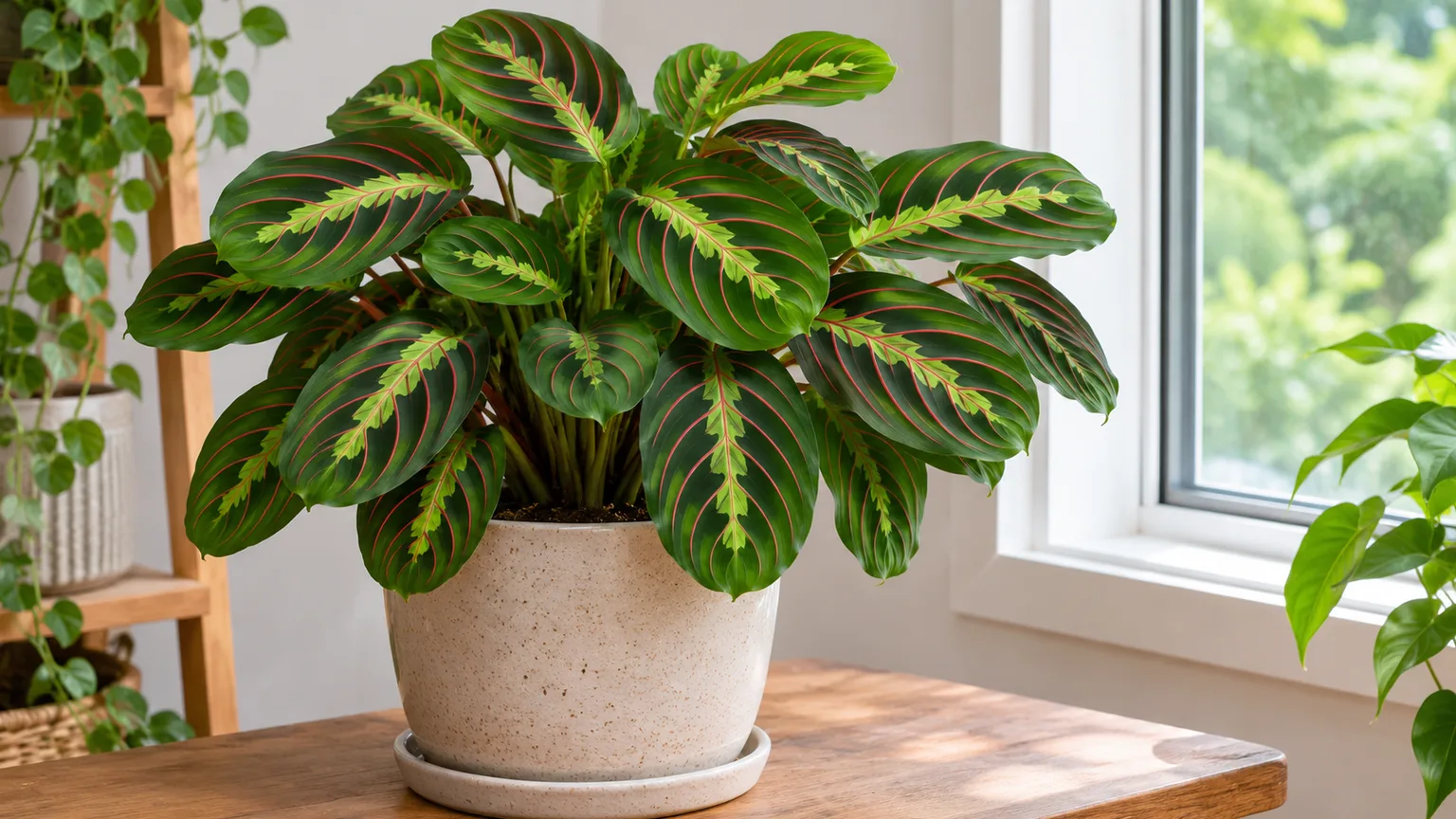
No Flowers on Prayer Plant: What Is Normal and What to Check
This guide covers no flowers on Prayer Plant. See also the general No Flowers guide, watering, and light pages for this plant.
No Flowers on Prayer Plant: What Is Normal and What to Check
Quick answer
A Prayer Plant can stay healthy without flowers indoors. Maranta leuconeura is grown mainly for its patterned foliage, and the RHS describes indoor flowering as unusual. First check the light reaching the leaf canopy. If the plant already gets bright, filtered light and continues to produce healthy leaves, leave its care steady rather than trying to force a bloom.
For general bloom failure across houseplants, see the no-flowers guide. This page focuses on what is normal for Prayer Plant and what to check when the foliage is also struggling.
What no flowers looks like on Prayer Plant
The common pattern is a full clump of patterned leaves with no flower stalks emerging above them. Prayer Plant can produce tiny white-to-purple tubular flowers on slender spikes above the foliage.
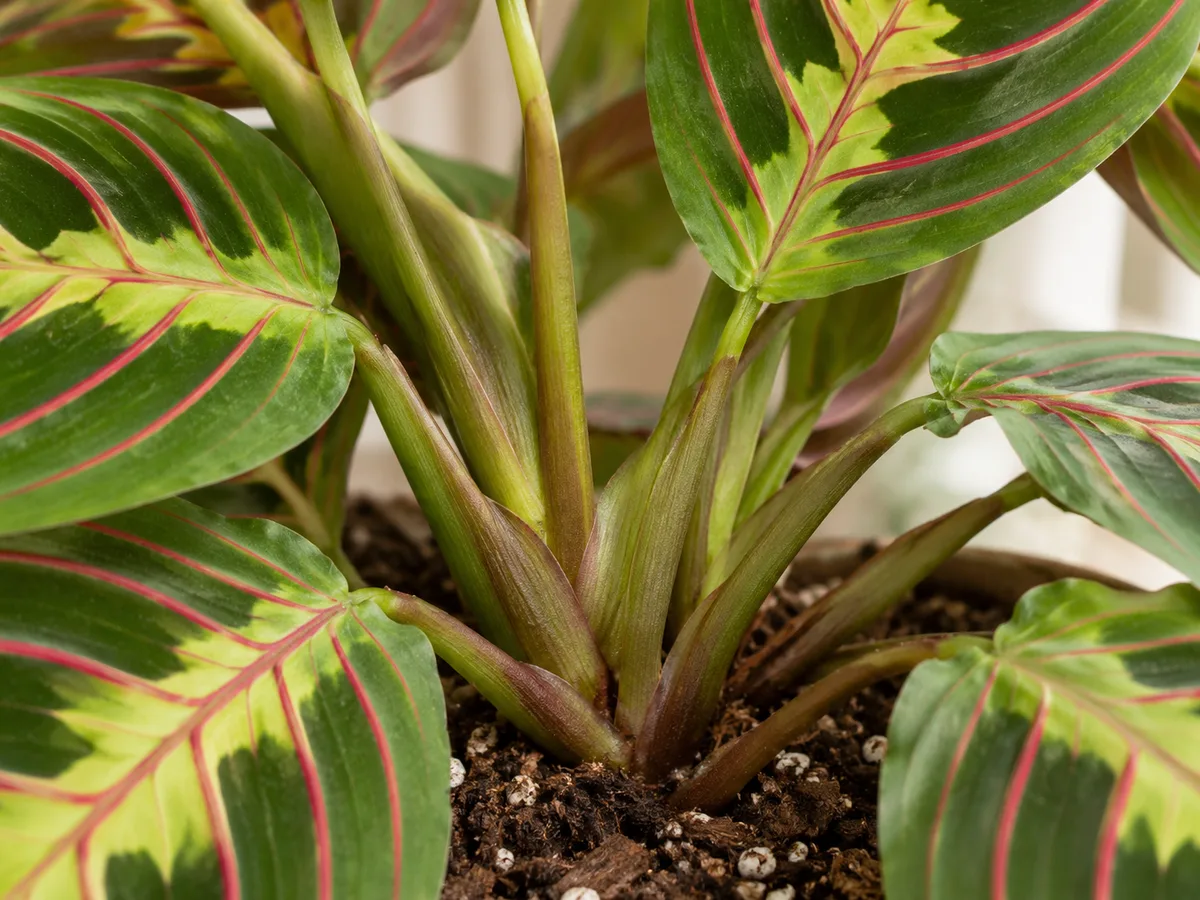
A leafy Maranta crown without a visible flower stalk.
If there are no buds but the leaves remain well patterned and new leaves open normally, read the absence of flowers as an expectation question rather than an alarm.
Why a healthy Prayer Plant may stay foliage-only
Maranta is a rhizomatous, clump-forming plant valued for its foliage. Its small tubular flowers may appear in summer, but NC State describes the blooms as small and insignificant.
That makes “no flowers” a different kind of problem from rotting stems or failing leaves. The NC State profile says Maranta can flower under ideal conditions, but treat light, water, and temperature as checks on the plant’s overall health, not as a recipe that promises flowers.
Check the light before changing anything else
If the Prayer Plant is tucked far from a window or behind heavy curtains, improve light first. Move it gradually to a brighter position with filtered or indirect daylight; do not put it in strong direct sun to force a response. The NC State profile recommends bright indirect light and notes that low light can fade the leaf pattern, while direct sun may bleach the leaves.
Watch how the plant grows after the move. If the leaves stretch on long, sparse stems or lose contrast, use the Prayer Plant not-enough-light guide for diagnosis; Gardening in South Africa also notes leggy growth and dull leaves as signs to review light. If the leaves look healthy and new growth continues, more intervention is unlikely to help. The plant’s light care guide explains how to judge its window exposure.
Nightly leaf movement is not a flower signal
Prayer Plant leaves rise and fold as evening approaches, then flatten again after daylight returns. This normal light-linked movement is called nyctinasty, a term used for the Maranta leaf movement; it is separate from flowering and does not mean a bud is about to appear.
Look for flower stalks emerging above the leaf canopy rather than interpreting the folded leaves as buds. If the leaves stay limp, investigate water, humidity, or light stress instead of treating the plant for “no flowers.” The Prayer Plant watering guide and overwatering guide cover those separate symptoms.
Keep the rhizomatous clump stable
Maranta grows as a spreading clump from rhizomes, so inspect the growing conditions at the soil line without unpotting a healthy plant. Keep the mix evenly moist but not waterlogged during active growth, then reduce watering in winter, as NC State recommends for Maranta. NC State also identifies poorly drained soil as a root-rot risk; Hunker describes overly dry and saturated soil as wilting risks for Prayer Plant.
If the plant is yellowing or wilting, follow those clues as a separate problem. Use the yellow-leaves guide if discoloration is spreading, or the slow-growth guide if new leaves are arriving unusually slowly. Do not divide or repot a sound clump solely because it has not flowered; reserve those changes for an actual care or propagation need.
The first fix and what to leave alone
The first fix is a light adjustment only if the current spot is dim: move the Prayer Plant toward bright, filtered light and give it time to respond. If its current light is already bright and indirect, make no change just to pursue flowers.
Keep its usual care consistent while you observe it. Avoid adding an extra “bloom” fertilizer or increasing the dose of its regular feed; NC State warns that overfertilization can burn Maranta foliage. Do not let the mix become bone dry, but do not keep it soggy either. A fertilizer push is not a dependable way to produce flowers.
Recovery expectations and when to worry
There is no dependable bloom timetable for a Prayer Plant indoors. Gardening Know How places Maranta flowering in late spring to early summer, but that seasonal window does not set an indoor deadline. After a light correction, look first for steady, well-patterned new leaves and the absence of spreading damage. Flowers may not appear even when the Prayer Plant is healthy.
Escalate your diagnosis if leaves yellow or wilt while the mix remains wet; return to the moisture and drainage checks above rather than treating flowerlessness as the cause. If the Prayer Plant continues producing healthy leaves, there is no reason to discard it because it has not bloomed.
When to use this page vs other Prayer Plant guides
Use this page when the foliage looks stable but you have not seen flower stalks. If the plant has stopped making leaves, switch to the no-new-growth guide; if older leaves are yellowing, diagnose that separate symptom with yellow leaves. The Prayer Plant problems hub lists the full cluster, and the Prayer Plant overview covers regular care.
Related tool
If the Prayer Plant has declining leaves as well as no flowers, use the Plant Problem Diagnosis Tool to narrow down the care issue before changing several conditions at once.
Related Prayer Plant guides
- Not enough light — use this when leaves fade or the plant sits in a dim spot.
- Leggy growth — use this when stems stretch and the clump loses its compact shape.
- Slow growth — use this when new leaves still appear but arrive slowly.
- Yellow leaves — use this when discoloration spreads beyond the absence of flowers.
- Overwatering — use this when the mix remains wet or the plant wilts despite wet soil.