Prayer Plant Leaning: Causes, Checks & Fixes
Quick answer
A Prayer Plant that angles toward one window but stays firm is often responding to one-sided light or showing its naturally spreading growth habit. Place it in bright, indirect light and turn the pot a quarter turn at a time. If the root ball rocks or the plant wilts while the mix is wet, check the roots before changing its position.
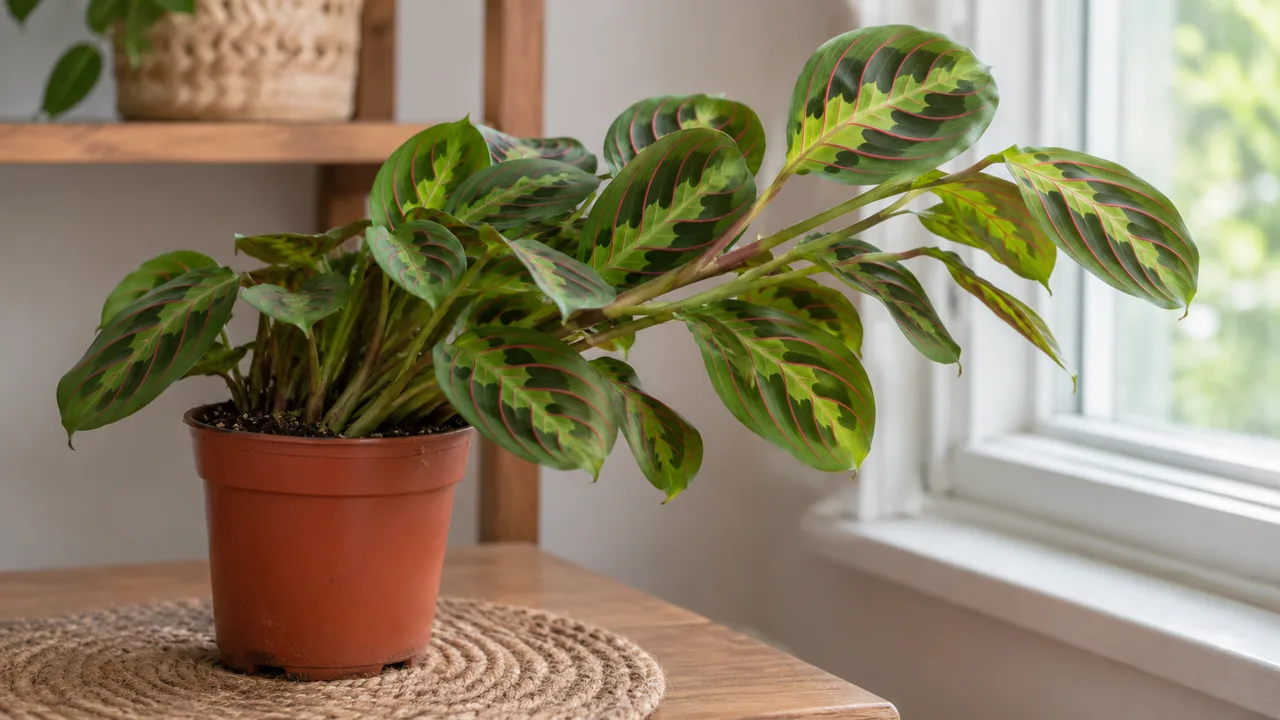
Prayer Plant Leaning to One Side: Causes, Checks & Fixes
This guide covers plant leaning on Prayer Plant. See also the general Plant Leaning guide, watering, and light pages for this plant.
Prayer Plant Leaning to One Side: Causes, Checks & Fixes
Quick answer
If your Prayer Plant leans toward a nearby window but the crown and pot stay firm, start by checking whether light comes mainly from one direction. Move it to bright, indirect light and turn the pot a quarter turn gradually; Maranta also spreads horizontally, so a broad or slightly uneven clump is not automatically unhealthy. For a general overview of why houseplants lean, use the symptom guide; the checks below focus on the Prayer Plant’s clump and leaf movement.
If the root ball shifts inside the pot, or the plant wilts while its mix stays wet, do not treat the lean as a light problem until you check the root zone.
What leaning looks like on a Prayer Plant
A true lean persists when you compare the plant at the same time of day: several petioles angle toward the same side, the crown seems off-center, or the whole root ball tips when the pot moves. A few leaves changing position through the day is different. Maranta leaves lie more horizontally by day and rise at night, while its growth habit naturally spreads outward from the base (North Carolina State Extension’s Prayer Plant profile).
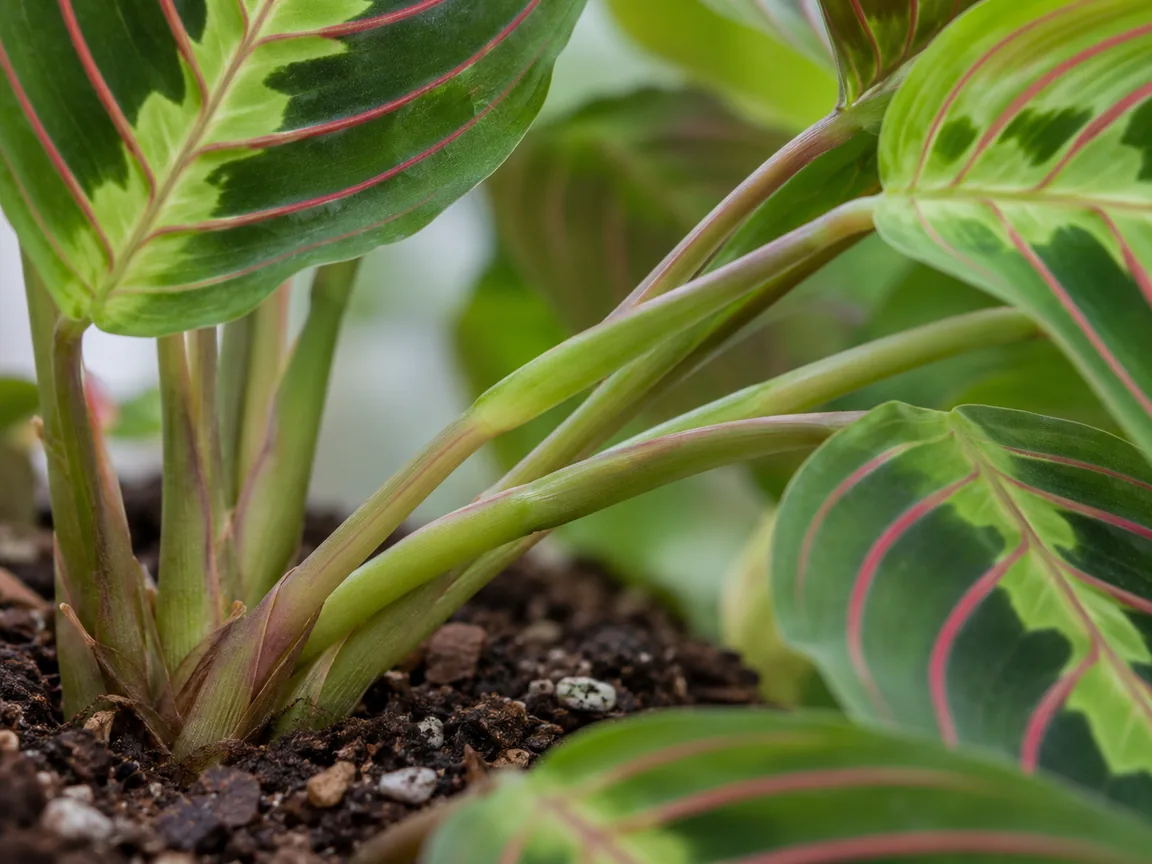
Look at several petioles together and compare them at the same time of day; nightly leaf movement is normal for Maranta.
The plant is a low clump, not a single upright trunk. A slight outward fan can be normal; the concern is a new, worsening tilt paired with a loose base, soft tissue, or declining leaves.
When the shape is normal
Prayer Plant grows from rhizomes and forms a spreading clump. The Missouri Botanical Garden describes it as a low-growing, rhizomatous perennial, and the Royal Horticultural Society also identifies it as clump-forming and rhizomatous (Missouri Botanical Garden’s plant profile; RHS Maranta profile). As the clump widens, individual leaves may rise at different angles instead of making a perfectly upright rosette.
Check the pattern rather than trying to straighten every leaf. If the leaves are firm, the pot is stable, and new growth continues around the clump, a broad silhouette alone does not call for repotting or staking.
Why a Prayer Plant may lean more to one side
Light comes from one direction
If several leaves and newer petioles angle toward the same window, directional light is a likely cause. Houseplants can lean toward their brightest light source, and rotating a pot gradually can distribute that exposure more evenly (Gardening Know How’s guide to turning houseplants). For Maranta, choose a brighter position with filtered or indirect light; it does not need intense direct sun (The Sill’s Maranta care guide).
The clump is spreading or the pot is unstable
Maranta naturally grows outward from its rhizomes. If the container is light, narrow, or sitting unevenly, a wide clump may make it appear more lopsided than it is. Check that the pot rests flat and that the root ball itself is not shifting before deciding the plant needs a larger container.
Wet roots are weakening the base
Root trouble is more likely when the lean comes with a soft crown, yellowing, or leaves that wilt even though the mix is wet. Wisconsin Horticulture notes that root rot can cause wet-soil wilting; affected roots may be soft and brown and can smell bad (University of Wisconsin’s root-rot guide). The Missouri Botanical Garden also lists root rot as a risk in poorly drained soil. Leaning by itself is not enough to diagnose it.
How to confirm the cause
- Compare at the same time of day. Photograph the plant in the morning and later that day. If leaf angles rise and fall together, that is normal Maranta movement; if the clump keeps pointing toward the same window, examine light direction.
- Look at new growth. Note whether new petioles also point toward one side. If the leaves are pale or stretched as well, compare the pattern with the Prayer Plant light guide and not-enough-light guide.
- Test the pot and root ball. Set the pot on a level surface and gently check whether the root ball shifts. A stable root ball with outward-facing leaves is different from a loose clump or soft base.
- Check the mix before watering. Feel the soil and lift the pot. Prayer Plant likes evenly moist conditions during active growth, as NC State Extension advises, but should not sit in soggy, poorly drained mix (Missouri Botanical Garden notes the root-rot risk); follow the watering guide and adjust for how quickly the pot dries.
- Look for a second symptom. Limp leaves after the mix has dried fit a different pattern from leaning alone; use the drooping-leaves guide or wilting guide if those symptoms are present.
The first fix to try
If the clump is firm and the lean clearly follows the window, move the pot to a spot with bright, indirect light reaching it more evenly. Turn it about a quarter turn at a time, such as when you water, rather than making several large changes at once. Keep Maranta out of intense direct sun, which can damage its patterned leaves.
Do not tie the petioles into an upright bundle. Give the plant room to keep its natural spreading shape and judge the adjustment by the direction of later growth, not by forcing older leaves into a new position.
If the pot or root ball moves
If the plant rocks because the pot is too light or unstable, set it on a level surface and use a heavier outer cachepot if needed. If the root ball has shifted but the mix is still healthy, gently firm the mix around it without burying the crown or pressing hard on the rhizomes. Repot only when the existing pot cannot support the clump or the mix has broken down; use the Prayer Plant repotting guide to avoid unnecessary root disturbance.
If the crown is soft or the roots are brown and soft, follow the Prayer Plant root-rot guide instead. Do not add fertilizer or keep watering on a calendar while you are checking for wet-root damage.
Recovery and prevention
Keep the light position and watering pattern steady after the first adjustment. A balanced appearance should be judged from a stable root ball and the direction of later petioles, not from whether each mature leaf stands straight. If the plant continues to decline, or the soil remains wet while the foliage wilts, reassess the roots and use the more specific guides for root rot or slow growth.
To limit repeat leaning, keep the pot level, provide filtered light from a reasonably broad direction, and rotate it gradually when one side consistently faces the window. For unusually long, weak petioles rather than a whole clump angled one way, compare the leggy-growth guide; it covers a different light-related pattern.
When to use this page vs other Prayer Plant guides
Use this page when the clump or several petioles keep favoring one side. Use drooping leaves when leaves lose firmness, not enough light when foliage is pale or stretched, and root rot when wet-soil wilting or soft roots point to a root problem.
Related tool
Use the Plant Problem Diagnosis Tool to compare the light, root-zone, and stability clues before changing several care conditions.
Related Prayer Plant guides
- Prayer Plant overview: basic care and the plant’s natural growth habit.
- Prayer Plant light guide: choosing a suitable indirect-light position.
- Prayer Plant watering guide: adjusting moisture without leaving the mix soggy.
- Prayer Plant wilting guide: distinguishing a limp plant from an unevenly angled clump.
- Prayer Plant root-rot guide: what to do when wet soil and root damage are likely.