Sticky Leaves on Prayer Plant: Honeydew, Pests & What
Quick answer
Sticky, clear droplets on Prayer Plant leaves most often point to honeydew from sap-feeding insects. Isolate the plant, inspect leaf undersides, petiole joints and new growth in bright light, and identify the pest before choosing a treatment. If the film dries pale and no insects or waxy residue appear, consider mineral or accidental residue instead.
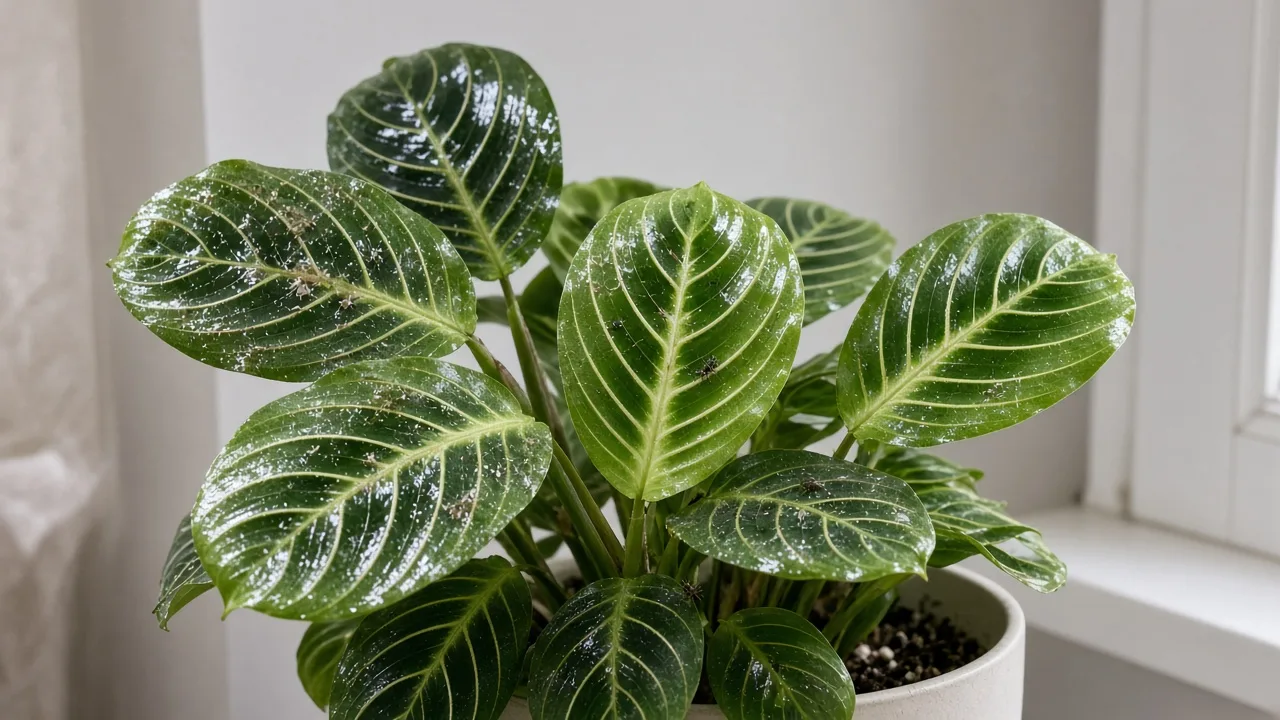
Sticky Leaves on Prayer Plant: Causes, Checks & First Fixes
This guide covers sticky leaves on Prayer Plant. See also the general Sticky Leaves guide, watering, and light pages for this plant.
Sticky Leaves on Prayer Plant: Causes, Checks & First Fixes
Sticky Leaves on Prayer Plant: Causes, Checks & First Fixes
Sticky, clear droplets on a Prayer Plant (Maranta leuconeura) most often mean honeydew from sap-feeding insects. Isolate the pot and inspect before treating: aphids, mealybugs and some scale insects can leave this sugary residue on foliage and nearby surfaces. The sticky-leaves symptom guide covers the general clues; the checks below focus on where to look on Maranta.
What sticky leaves look like on a Prayer Plant
Honeydew feels tacky rather than dusty. It may appear as clear beads, a shiny film, or dried spots on the patterned upper surface, along the leaf edge, or on a lower leaf beneath an infested shoot. A few drops can also land on the stand, windowsill or floor. Sap-feeding pests are a common source of this pattern on houseplants, including aphids, mealybugs and scale. Gardening Know How’s sticky-leaf guide describes the same honeydew clues.
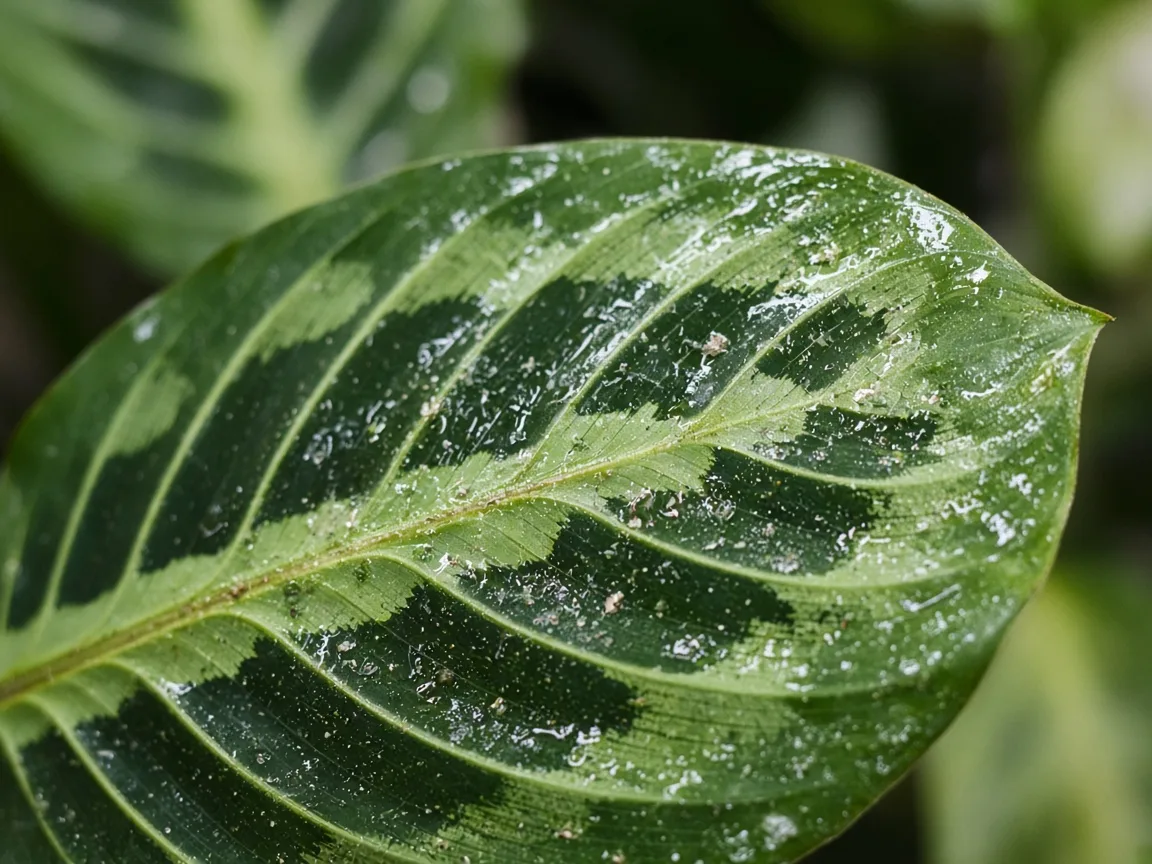
A shiny film and pale specks are a reason to inspect the leaf underside and petiole joints before assuming a watering problem.
Inspect Maranta after its leaves open for the day
Prayer Plant leaf blades fold upward in the evening and open again with changing light, so one quick glance may miss insects tucked beneath them. Inspect in bright daytime light, gently lifting each blade to check its underside, midrib, and the narrow junction where the blade meets its petiole. Normal nightly movement by itself is not a pest symptom; look for insects, waxy flecks, or fresh tacky droplets as separate evidence. Gardening Know How’s Maranta guide describes this normal leaf movement.
Check new rolled leaves and the petioles near the center of the clump, too. Aphids often gather around tender growth, while mealybugs can hide where leaves and stems meet. A hand lens helps distinguish a moving insect from a pale mark in the leaf pattern.
Match the residue to the pest
Aphids are small, soft-bodied insects that often cluster on tender shoots and leave a shiny residue. On Maranta, also check curled or misshapen new leaves, but do not diagnose aphids from leaf distortion alone. Compare the colony and honeydew clues with Epic Gardening’s houseplant pest guide.
Mealybugs look like white cottony or waxy patches, commonly in leaf joints and along veins. Honeydew may accompany the white material, so wipe a small area only after checking whether the patch contains insects. Gardening Know How’s mealybug guide shows the cottony clusters and leaf-joint hiding places to look for.
Scale can look like fixed tan or brown bumps on petioles and leaf undersides. Some scale infestations leave honeydew; a bump alone is not enough to tell whether it is alive. Scale insects can be one source of sticky residue on houseplants, so use a magnifier to inspect for a shell-like insect body instead of scraping the patterned leaf surface.
Spider mites are a different lookalike pest. They are more consistent with fine webbing, pale stippling, and tiny moving specks under the leaves. Epic Gardening’s spider-mite section explains those inspection clues. If you see webbing without tacky residue, compare it with the Prayer Plant’s spider-mite guide.
Separate honeydew from water marks on Maranta
Prayer Plant foliage can show mineral deposits after hard tap water dries on the leaf, so compare a pale film with your water source and look for insects before deciding it is honeydew. Maranta care guidance notes that hard water can leave mineral deposits on foliage; The Sill also advises filtered water when hard tap water is a concern. A tacky film that returns alongside insects still needs a pest check.
Low humidity or a dry pot may coincide with curled leaves or crisp edges, as described in Maranta care guidance, but those symptoms do not explain a sticky coating, which is commonly linked to honeydew from sap-feeding pests (sticky-leaf overview). Use the Prayer Plant humidity guide or watering guide if those separate signs are present; do not compensate for sticky residue by watering more often.
First fix: isolate and clean gently
Move the Prayer Plant a short distance from other houseplants while you inspect it. With a clean, soft cloth dampened with lukewarm water, wipe one affected leaf at a time, supporting the blade with your other hand. Avoid rubbing hard across the patterned surface or forcing folded leaves open. Clean sticky drops from the pot rim and the nearby shelf so that new residue is easier to spot.
Do not start with a broad spray or a home-mixed treatment. First match the insect to the signs above, then follow a care plan for the confirmed pest: see the Prayer Plant guides for aphids or mealybugs. If ants are following a stem or pot, check the separate ants guide; ants are a clue to inspect the plant, not a diagnosis by themselves. If you cannot identify what you see, take a clear close-up to a local extension service or nursery before treating.
What recovery looks like
Wiping can make the leaf feel clean right away, but it is not proof that the insects are gone. Reinspect the undersides, petioles, and new growth every few days at first, then weekly for several weeks. A clean leaf with no returning droplets is a better sign than an old leaf becoming flawless; existing stippling or edge damage may remain visible.
If the sticky film keeps returning, or leaves begin yellowing and dropping, repeat the pest check and compare the pattern with the Prayer Plant yellow-leaves guide. Keep the usual Maranta care steady during this check: the light guide and soil guide can help rule out separate care stress without confusing it with honeydew.
Related tool
Use the Plant Problem Diagnosis Tool to organize the visible signs before choosing a targeted next step.
Related Prayer Plant guides
- Aphids — identify soft-bodied colonies on new growth.
- Mealybugs — check for cottony patches in leaf joints.
- Spider mites — compare stippling and fine webbing with sticky residue.
- Ants on Prayer Plant — check whether ants are following honeydew-producing insects.
- Brown tips — separate dry edges from a tacky film.
- Prayer Plant watering — review the plant’s moisture routine when leaves also wilt or curl.