Prayer Plant Sunburn: How to Spot and Stop Leaf Scorch
Quick answer
If a Prayer Plant has bleached or tan patches after direct sun reaches its patterned leaves, move the pot out of the sunbeam and keep it in bright indirect light. NC State Extension notes that Maranta leuconeura is intolerant of direct sunlight and that excess sun can bleach its leaf color. Brown tips, curling, or drooping alone do not confirm sunburn, so check the exposure pattern before changing water or soil.
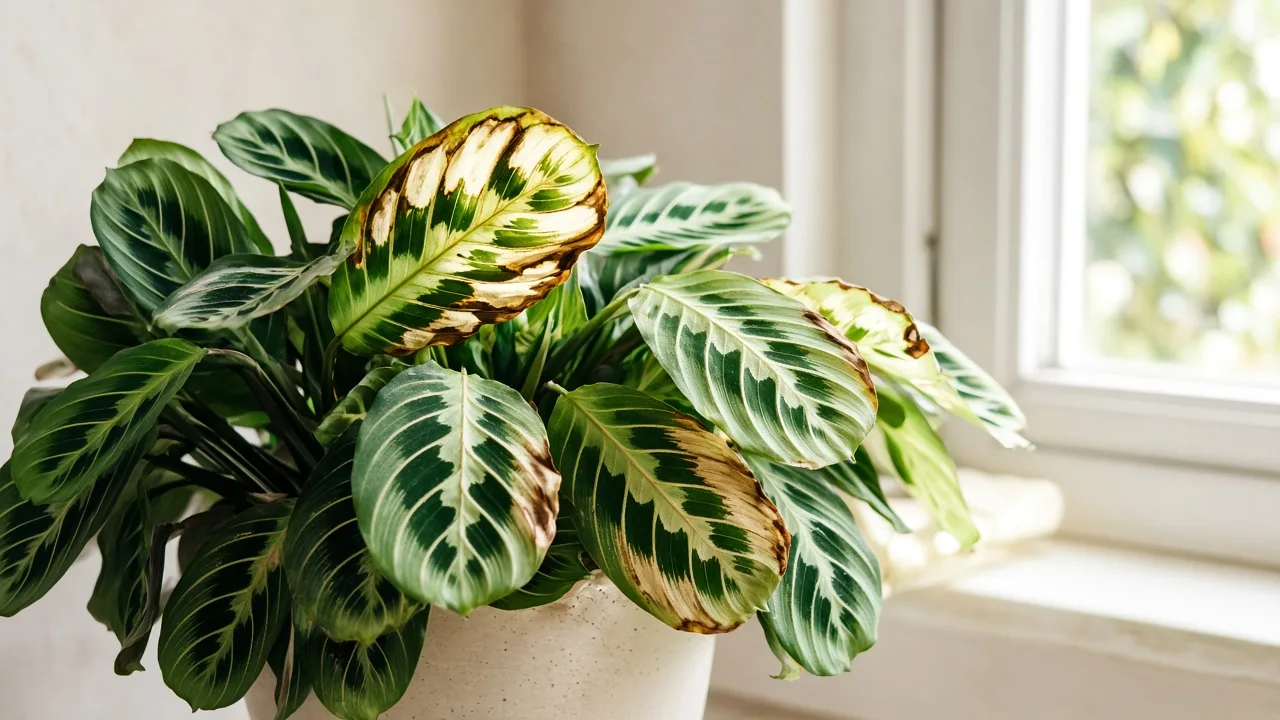
Sunburn on Prayer Plant: Signs, Causes & First Fix
This guide covers sunburn / scorched leaves on Prayer Plant. See also the general Sunburn / Scorched Leaves guide, watering, and light pages for this plant.
Sunburn on Prayer Plant: Signs, Causes & First Fix
Quick answer
Move a Prayer Plant out of any direct sunbeam and into bright indirect light. Maranta leuconeura is intolerant of direct sunlight, and NC State Extension’s Maranta profile notes that excess sun can bleach its leaf colors. Keep the watering routine steady while you assess the damage; light injury does not call for an automatic repot or fertilizer dose.
For the general signs and prevention of sun scorch across houseplants, see our sunburn and scorched-leaves guide. The checks below focus on the patterned leaves and day-to-night movement of Maranta.
What sunburn looks like on a Prayer Plant
Prayer Plant has broad, patterned leaves with contrasting green fields and pale markings. Sun injury can make those colors look washed out, then leave dry cream, tan, or brown patches. The Maranta care guide from The Sill also identifies washed-out color and brown blotches as signs associated with too much direct sun.
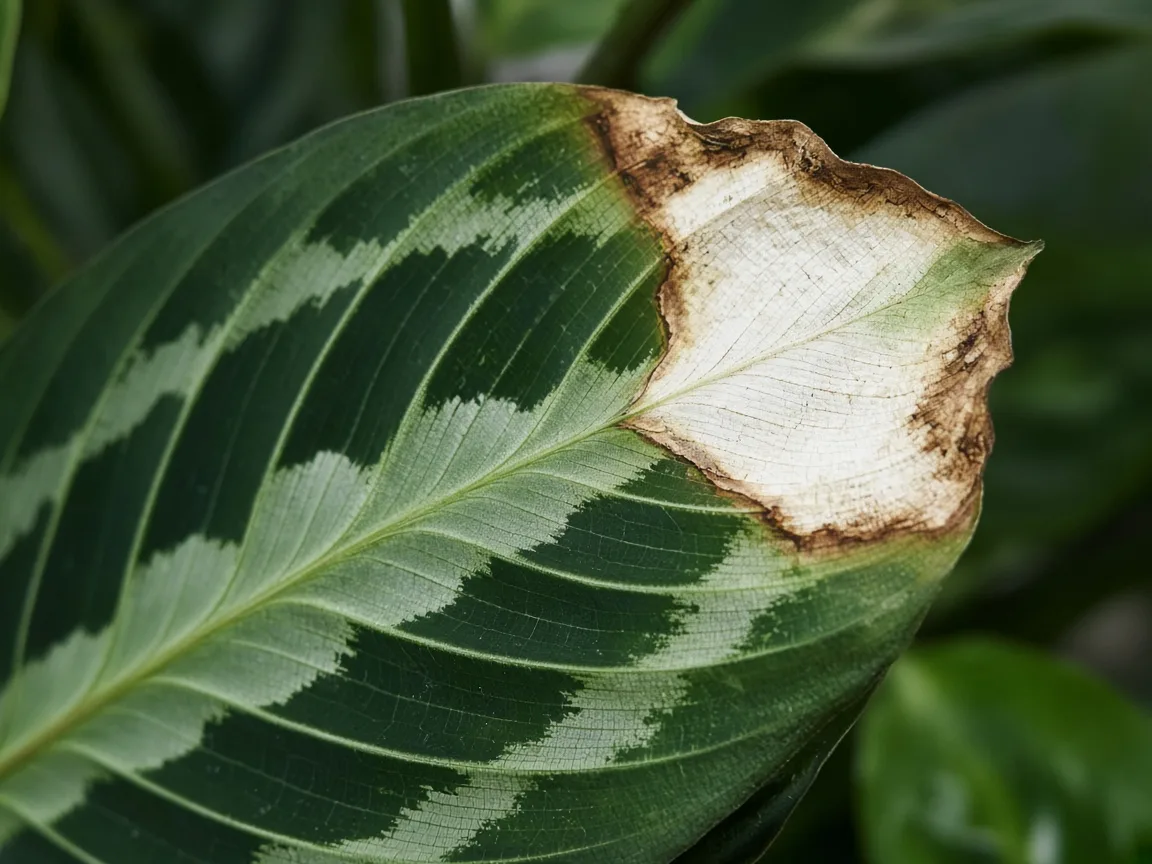
A pale, dry patch with a brown edge is visible on this patterned Maranta leaf. Compare it with leaves that did not face the same light.
The pattern is more useful than the word “brown.” Look for injury on the leaves closest to a sunny window or on the surfaces that received the beam, especially if the plant was recently moved. University of Wisconsin–Madison Extension lists burning, wilting, and a washed-out leaf appearance among signs that a houseplant may be receiving too much light. These signs support a light-stress check, but they do not identify the cause on their own.
Confirm the light exposure before changing care
First, recall where the pot sat when the patches began. Note whether it moved closer to a window, a curtain was opened, or the sun’s angle changed. Watch the plant at different times of day to see whether a direct beam actually lands on its leaves; a bright room can still provide indirect light when the sun itself does not strike the foliage.
Next, compare the damaged leaves with those behind or beneath them. A window-facing pattern after direct exposure supports sunburn. If tips and margins are browning across leaves on all sides, look at other causes as well. Feel the potting mix and review the watering history using the Prayer Plant watering guide before adding water; drooping does not prove the plant is thirsty.
First fix: remove the direct beam
Place the pot where it still receives useful room light but the sun does not shine directly on the leaves. If the only suitable location is beside a sunny window, filter the beam with a sheer curtain. Keep the plant out of deep shade: NC State’s guidance describes low-to-medium light tolerance, while bright indirect light preserves the patterned foliage without exposing it to intense sun.
Do not prune every marked leaf at once. Leave partly green leaves in place while the plant adjusts, and remove a leaf only if most of it has dried or died. Change the location first, then monitor the next leaves instead of also changing the pot, mix, water, and fertilizer on the same day.
Lookalikes on Maranta: movement, dry edges, and water stress
Prayer Plant leaves naturally change angle over the day. NC State Extension describes Maranta leaves as moving from a daytime position toward a more upright “prayer” position at night. That regular movement is different from a bleached lesion; do not mistake a folded evening leaf for scorch.
Dry or crisp margins can point to a different issue. The University of Wisconsin guide notes that fluoride and overfertilization can cause leaf burn on houseplants, and the Maranta guide from The Sill lists curling leaves with brown tips separately from the washed-out color and blotches associated with too much sun. If the damage is mostly at the tips, compare it with our brown-tips guide for Prayer Plant; for leaves that stay curled during the day, use the curling-leaves guide.
Care guides for related Calatheas offer a useful comparison, but they are not a substitute for Maranta-specific advice. Growfully’s Calathea guide and Moyses Flowers’ Calathea makoyana guide also caution that direct sun can fade or burn patterned foliage. Use that only as family-level context; identify the plant and match the symptom pattern before acting.
Recovery: judge the next leaves, not the old marks
Sun-damaged patches generally remain pale or brown rather than returning to the original green. Once you have filtered the light, check whether new injury stops appearing and whether later leaves open with their usual pattern. Maranta’s leaves move and refold each day, so compare color and tissue condition at the same time of day rather than using leaf angle as a recovery measure.
There is no dependable number of days for a sunburned Prayer Plant to “heal.” Recovery depends on how much leaf tissue was exposed and how actively the plant is growing. Keep partially green leaves while the plant is stable; remove only fully dead foliage with clean scissors.
Prevent another scorch
Keep Maranta in bright indirect light year-round and recheck the leaves when seasonal sun begins reaching a window differently. If you have been growing it in a dim corner, increase light by choosing a brighter filtered position, not by placing it in the direct midday beam. Use the Prayer Plant light guide to choose a suitable spot, and use the Prayer Plant overview for its broader care needs.
When to use this page vs other Prayer Plant guides
Use this page when pale or tan patches followed direct sunlight and are concentrated on the exposed side. If the main change is dry brown tips, compare the plant with the brown-tips guide; if its leaves remain curled through the day, check the curling-leaves guide. For other symptoms or a wider overview, start at the Prayer Plant problems hub.
Related tool
Use the Plant Problem Diagnosis Tool if you are unsure whether the pattern fits sunburn or another Prayer Plant problem.