Wrong Soil Mix on Prayer Plant: Causes, Checks & Fixes
Quick answer
A soil mix is a likely problem for Prayer Plant when it repeatedly stays saturated, drains poorly, or dries before the shallow root zone can take up water. Check the mix, pot drainage, and watering pattern together; yellowing or drooping leaves alone cannot confirm a soil problem. Prayer Plant needs evenly moist but well-drained potting medium, not standing water.
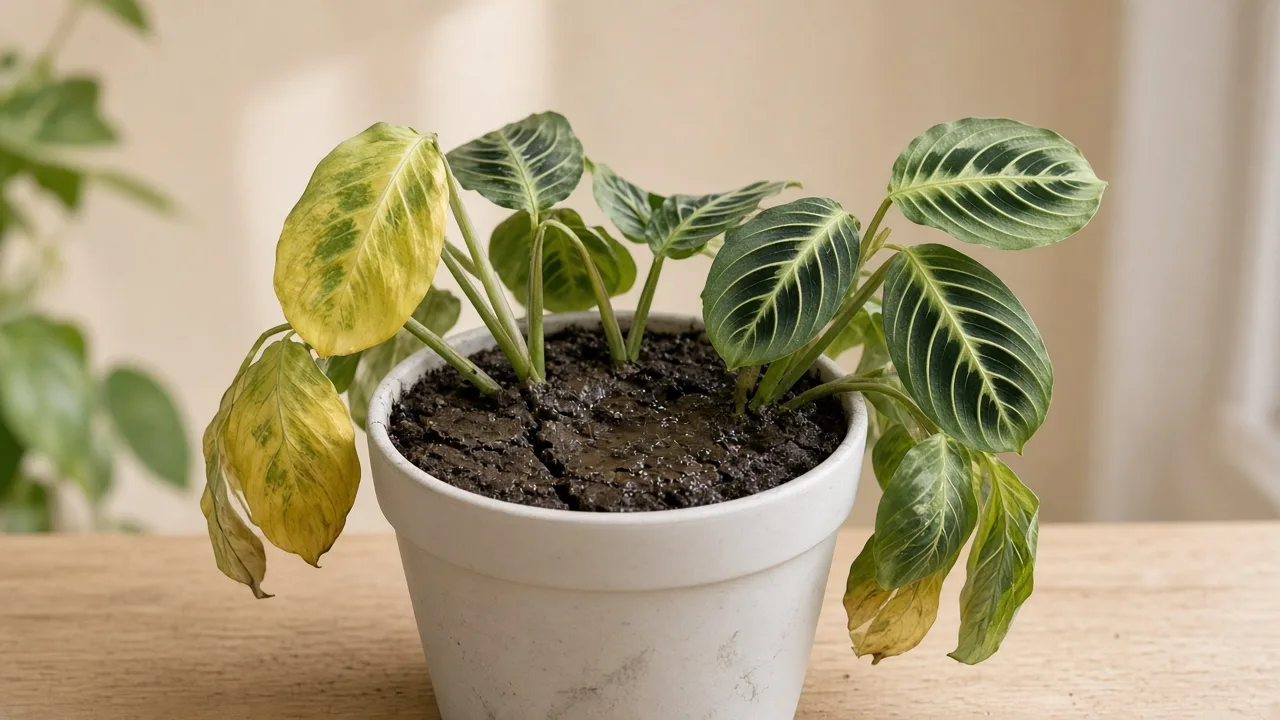
Wrong Soil Mix on Prayer Plant: Causes, Checks & Fixes
This guide covers wrong soil mix on Prayer Plant. See also the general Wrong Soil Mix guide, watering, and light pages for this plant.
Wrong Soil Mix on Prayer Plant: Causes, Checks & Fixes
Quick answer
A wrong soil mix on Prayer Plant (Maranta leuconeura) is most likely when the root zone repeatedly stays soggy, drains poorly, or dries so quickly that the plant cannot maintain steady moisture. The species needs soil that stays evenly moist while still draining; NC State Extension notes that poorly drained soil can lead to root rot.
First check the mix and pot before repotting. Feel below the surface, lift the pot, check its drainage hole, and notice whether water soaks through the root ball or runs around it. Yellowing or drooping leaves alone do not prove the mix is wrong; compare the soil pattern with Prayer Plant watering guidance and light conditions first.
Related: wrong-soil-mix guides
Why soil mix matters for Prayer Plant
Prayer Plant grows from low, spreading rhizomes rather than a deep, woody root system. UF/IFAS describes its root system as shallow and recommends a regular, well-drained potting mix kept evenly moist but not wet; it also warns that water standing on the crown can rot stems. Those plant-specific cautions are why a soil mix must balance moisture retention with drainage.
The Royal Horticultural Society’s Maranta guidance recommends peat-free compost under glass and moist but well-drained conditions. That balance matters more than a fixed ingredient percentage or a branded recipe.
What a poor mix can look like
There is no single leaf mark that diagnoses wrong soil. Look for a repeatable root-zone pattern instead:
- The mix stays wet for too long. The pot remains heavy well after watering, the surface stays glossy or compressed, or water pools rather than soaking in. Poor drainage can contribute to root rot in Prayer Plant, as Missouri Botanical Garden notes.
- The mix dries unevenly. Water rushes down the pot wall or through a narrow channel while the root ball center stays dry. This can happen when an old mix has shrunk away from the pot or no longer rewets evenly.
- The plant shows stress alongside the soil pattern. Yellowing, drooping, or stalled growth can occur with a poorly functioning root zone, but they also have other causes. A Maranta care guide from UK Houseplants describes yellowing and stunted growth among possible waterlogging and root-rot signs; treat those leaves as a prompt to inspect, not as proof by themselves.
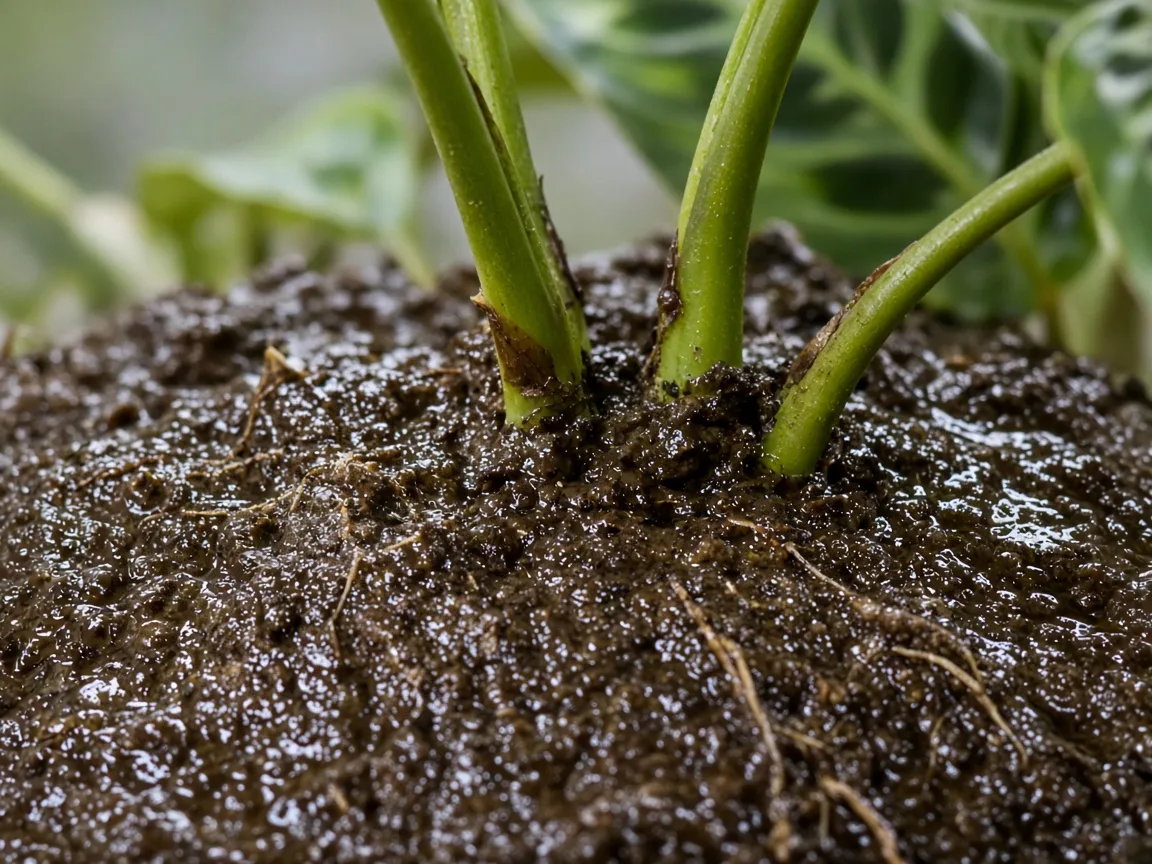
A dense or saturated-looking surface is a reason to check drainage and moisture deeper in the pot; it does not identify the cause on its own.
Check the mix before changing it
- Check moisture below the surface. Use a finger or wooden skewer near the edge of the root ball. A dry surface can hide wet soil below, and a crusted surface can sit over a dry center.
- Lift the pot. Compare its weight a day or two after watering with its weight just before the next watering. A pot that never lightens may be draining slowly, staying in runoff, or receiving water before it needs it.
- Check the exit path. Confirm that the pot has an open drainage hole and that the nursery pot is not sitting in water inside a decorative cachepot. Empty trapped runoff after watering.
- Notice how water enters. If water beads or runs down the sides while the middle remains dry, water more slowly in a couple of passes. If the root ball still will not re-wet evenly, the old mix may need replacement.
- Look at the plant’s base only when needed. If the plant keeps declining while the soil stays wet, slide it from the pot gently to check whether the mix is compacted and whether the rhizome area is firm. For soft, decaying tissue, follow the Prayer Plant root-rot guide.
Do not pull apart a healthy root ball to investigate one yellow leaf. The aim is to confirm a repeated soil or drainage problem before disturbing the shallow roots.
First fix for Prayer Plant
Match the first correction to what the soil is doing:
- If the mix is still wet: do not water again yet. Remove standing runoff, check the drainage hole, and give the pot time to lose weight. Review the Prayer Plant overwatering guide if the soil stays wet despite a pause.
- If the mix is dry but resists water: water slowly over the surface and allow each pass to soak in before adding more. If water continues to bypass the center, plan a careful repot into fresh medium rather than repeatedly flooding the pot.
- If the medium is functioning but the plant still looks unwell: keep the plant’s location and watering routine steady while you check other causes. Do not change soil, light, pot size, and fertilizer all at once; otherwise it will be difficult to tell which change helped.
Prayer Plant should remain evenly moist during active growth, while NC State advises allowing more dry-down during winter. Follow the plant and the pot rather than a fixed calendar, and never leave the roots sitting in standing water.
Choosing a replacement mix
Choose a clean potting medium made for indoor containers. It should hold enough moisture for Prayer Plant without staying saturated. Clemson Extension’s container-mix guidance describes media that let water and air move through while retaining adequate moisture, lists peat-lite materials with perlite as a common indoor mix, and generally discourages garden soil for containers. A practical Maranta example also combines peat-based potting mix with perlite.
You can start with a quality houseplant mix and blend in some perlite if the mix stays dense or wet for too long. If it dries unusually fast, do not keep adding coarse material; use a more moisture-retentive base and check whether water is bypassing a shrunken root ball.
There is no single percentage recipe that fits every room, pot, and watering routine. Make a modest adjustment, then observe the mix through several normal waterings. If a reliable baseline is helpful, see the Prayer Plant soil guide.
When to repot
Repot when you have confirmed that the mix is compacted, remains waterlogged after correcting drainage and watering, or will not re-wet evenly. Use a clean pot with an open drainage hole that fits the root mass; an unnecessarily large pot leaves extra medium that can stay wet longer. Since Prayer Plant has shallow roots, UF/IFAS recommends shallow pots for this species.
Loosen only the medium that comes away easily. Keep healthy roots and rhizomes intact, set the plant at its previous depth, and avoid burying the crown. Water the fresh mix through once so it settles, let excess drain away, and empty the saucer. For a full step-by-step process, use the Prayer Plant repotting guide.
Avoid these common mistakes
- Repotting by leaf color alone. Yellowing has multiple possible causes; check the moisture pattern and drainage first.
- Adding more water to a wet, drooping plant. A saturated root zone is not fixed by another watering.
- Using a sealed pot or leaving runoff in a cachepot. A good mix cannot drain if the water has nowhere to go.
- Choosing an extremely coarse mix without checking how quickly it dries. Prayer Plant needs moisture as well as drainage.
- Changing multiple conditions at the same time. Correct one confirmed issue, then watch new growth and soil behavior.
Recovery and prevention
After adjusting the mix or drainage, keep the plant in stable bright, indirect light and check the soil before watering. NC State recommends keeping potting soil evenly moist through the growing season, with less watering as the soil dries in winter. Avoid letting a healthy plant swing between waterlogged soil and prolonged drought.
Judge the correction by whether the mix now wets evenly, drains, and gradually becomes lighter between waterings. Existing yellow or damaged leaves may remain marked; watch the next leaves and the root zone rather than expecting old tissue to look new again. If the soil behaves normally but symptoms continue, compare the plant with yellow leaves, drooping leaves, and the Prayer Plant overview.
Related Prayer Plant guides
- Prayer Plant soil — mix structure and drainage.
- Prayer Plant watering — how to match watering to the root zone.
- Prayer Plant repotting — when and how to refresh the medium.
- Prayer Plant overwatering — when the mix stays wet too long.
- Prayer Plant root rot — when roots or crowns are soft and decaying.
Related tool
Use the Plant Problem Diagnosis Tool to compare soil trouble with other causes before changing several conditions at once.