Overwatering on Raindrop Peperomia: Causes, Checks & Fixes
Quick answer
Overwatering on Raindrop Peperomia shows as a heavy wet pot, limp glossy teardrop leaves, and yellow lower foliage while the mix stays damp. First step: stop watering immediately and confirm soil moisture at depth before doing anything else.

Overwatering on Raindrop Peperomia: Causes, Checks & Fixes
This guide covers overwatering on Raindrop Peperomia. See also the general Overwatering guide, watering, and light pages for this plant.
Overwatering on Raindrop Peperomia: Causes, Checks & Fixes
Quick answer
Raindrop Peperomia (Peperomia polybotrya) stores water in its thick, glossy teardrop leaves and runs a compact root system that cannot sit in wet soil for days. When you water on autopilot, upsize into a decorative pot, or keep the mix damp because the leaves look perky, you are stacking moisture the plant cannot use. Overwatering shows up as a heavy pot, limp petioles, dull teardrop foliage, and yellow lower leaves while the mix stays damp deep down.
First step: stop watering and confirm moisture at root level before you pour again. If stems are still firm, dry-down and better drainage may be enough. If stem bases feel soft or soil smells sour, treat it as advancing root rot and inspect roots before the next drink.
Why Raindrop Peperomia gets overwatered
Peperomias occupy an awkward middle ground. They are not desert succulents, but Raindrop Peperomia is often described as semi-succulent because of its fleshy foliage. NC State Extension notes the species prefers moist, well-drained soil-not permanently saturated mix. Clemson HGIC warns that peperomia will drop leaves if overwatered and recommends letting the soil dry out between waterings. The leaves already buffer brief dry spells; adding water while the root zone is still damp stacks risk on top of stored leaf moisture.
The root system is the hidden vulnerability. Raindrop Peperomia matures to about one foot tall with less than twelve inches of planting space and keeps a small, shallow root mass relative to its leaf display. An oversized pot holds a large volume of mix that stays wet around a tiny root ball-the classic hidden overwatering setup. Beginners see a lush plant and upsize into a statement ceramic pot, then wonder why stems soften and lower leaves yellow within weeks.
Raindrop Peperomia is also commonly confused with Pilea peperomioides, which many growers keep on a different Raindrop Peperomia watering guide. If you treat Raindrop Peperomia like a moisture-loving pilea and keep the mix lightly damp at all times, you will overwater Peperomia polybotrya in most indoor setups.
Low light compounds the problem. Raindrop Peperomia prefers bright, indirect sunlight. In dim corners or short winter days, transpiration slows and the pot dries more slowly-while calendar watering continues on summer autopilot. Dense peaty mix without perlite holds moisture too long. Decorative cachepots without drainage trap runoff. Each factor alone is manageable; together they create chronic wet feet.
What overwatering looks like on Raindrop Peperomia
Early overwatering on this upright species follows a recognizable pattern:
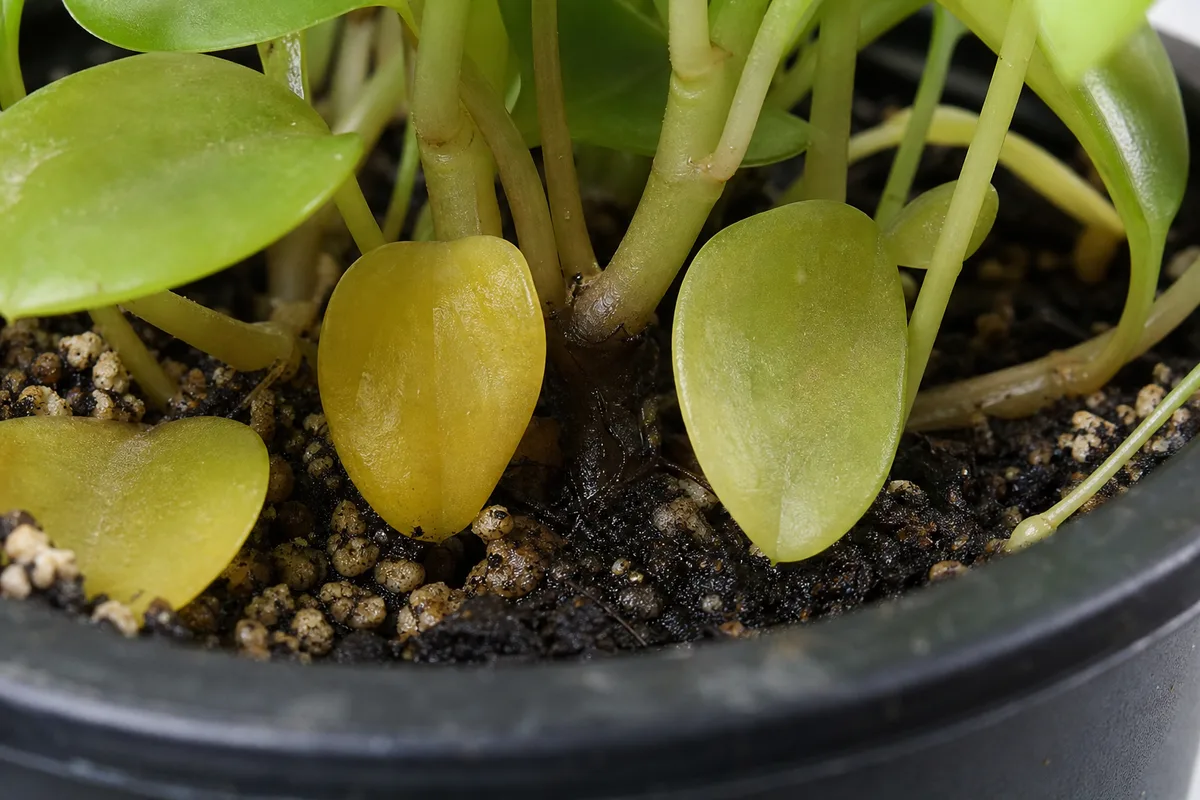
Overwatering symptoms on Raindrop Peperomia - compare with healthy tissue on the same plant.
- Heavy pot that still feels waterlogged several days after the last watering
- Limp petioles holding teardrop leaves that lose their usual springy firmness
- Dull gloss on normally shiny green foliage
- Yellow lower leaves that drop while the mix remains damp-not dry
- Wilting despite wet soil because damaged roots cannot move water to leaves
- White mold or fungus gnats on the soil surface when mix stays constantly moist
- Soft stem bases where leaves attach-the line between overwatering and root rot
The peltate leaves-petiole attached near the center, creating a slight dimple-make limpness easy to spot. Healthy Raindrop Peperomia leaves feel thick and springy. Overwatered leaves may look full but hang on limp stalks because the root system is failing, not because the plant is thirsty.
Advanced overwatering brings sour-smelling soil, brown mushy roots, blackened lower stems, and sudden collapse of the whole plant. Roots in waterlogged soil may die because they cannot absorb the oxygen needed to function normally. RHS guidance on peperomias notes that roots prone to rotting when kept too wet cause yellowing, dropping leaves, and eventual plant collapse.
How to confirm the cause
Work through these checks before Raindrop Peperomia repotting guide or trimming:
- Pot weight - Lift the pot. A heavy feel days after watering confirms excess moisture. A light pot with limp leaves points to underwatering instead.
- Finger or skewer probe - Press your finger 5–7 cm into the mix near the pot edge, or pull a dry chopstick from mid-depth. Cool, clinging, or damp material means wait-not water.
- Drainage check - Confirm the pot has a drainage hole and is not sealed inside a decorative outer pot holding standing water.
- Pot size vs. roots - Slide the plant out gently if the pot feels disproportionately large. A small root ball swimming in wet mix confirms a setup problem.
- Stem firmness - Pinch the base of the main stem. Firm tissue suggests recoverable overwatering; soft or hollow bases mean rot inspection is urgent.
- Smell test - Sour or rotten odor from the mix strongly suggests root damage from prolonged saturation.
- Leaf pattern - Yellowing from the bottom up with wet soil fits overwatering. Crispy edges on a light dry pot fit drought, not this diagnosis.
If the pot is heavy, mix is damp deep down, and stems are still firm, you have confirmed overwatering without advanced rot. Proceed to dry-down first.
First fix for Raindrop Peperomia
Stop watering immediately and move the plant to bright, indirect light with good airflow.
This single step halts further saturation while the mix begins to dry. Do not pour “just a little” because leaves look sad-that adds water to an already failing root zone. Do not repot on day one unless stems are soft or soil smells sour. Do not fertilize a stressed plant hoping to push new growth.
Empty any saucer water. If the plant sits in a cachepot, remove it so air can reach the drainage hole. Raindrop Peperomia light guide helps the plant use remaining moisture without scorching the teardrop leaves. NC State Extension recommends avoiding wetting the leaves during watering, since wet leaves on a stressed plant raise leaf spot risk.
If stem bases are still firm after 48 hours of dry-down, continue waiting until the top 1–2 inches of mix feel dry before one thorough watering with full saucer drainage.
Step-by-step recovery
After the initial stop-water period:
- Let the mix dry completely at the top before the next soak. For Raindrop Peperomia, that often means waiting until the top 1–2 inches are dry-not just the surface turning lighter.
- Improve the pot setup if the container is oversized or lacks drainage. Move to the smallest pot that fits the root ball with fresh well-draining mix containing perlite-only if roots are healthy or after trimming mushy tissue.
- Inspect roots if symptoms persist beyond one dry-down cycle or if stems soften. Gently unpot, rinse away wet soil, and cut mushy brown roots back to firm white or tan tissue with clean shears.
- Air-dry briefly after root trim if rot was found. Repot into fresh airy mix and wait five to seven days before the first cautious watering.
- Remove yellow dropped leaves from the soil surface to reduce fungus gnat habitat. Do not pull leaves still attached to firm stems-they may hold stored moisture the plant is using.
- Address fungus gnats if adults appear. Letting the surface dry between waterings is the primary control; persistent wet mix keeps the gnat cycle alive.
Isolate badly affected plants from other peperomias until the pot dries predictably and new growth looks normal.
Recovery timeline
Minor overwatering with firm stems often shows improvement within one to two weeks once the mix dries and watering stops. Leaves may stay dull until new growth emerges; judge recovery by firm stem bases and fresh teardrop leaves at the top, not old yellow foliage.
Moderate cases with some root trimming may need three to six weeks before stable new growth. Severe rot with mushy stems may be fatal to the main plant-take firm stem cuttings as backup if any healthy tissue remains above the soft zone.
Signs the plant is improving: pot weight drops between waterings on a predictable schedule, petioles regain stiffness, new leaves open glossy and firm, and yellowing stops spreading up the stem.
Signs the problem is worsening: stem bases soften further, more leaves collapse within days despite dry surface soil, sour smell intensifies, or no new growth appears after four weeks of corrected care.
Lookalike symptoms to rule out
Underwatering - Pot feels very light, mix is dry 5–7 cm down, leaves may thin slightly but stems usually stay firm. Perks up within hours of a thorough watering. Wet heavy soil rules this out.
Low humidity stress - Leaf edges may crisp in dry heated air, but soil moisture is normal and stems stay firm. Humidity issues rarely cause sour soil or mushy roots.
Not enough light - Leggy stretched stems and pale growth over weeks, not sudden limp collapse. Often paired with slow drying that masks overwatering-check soil moisture, not just window placement.
Root rot (advanced overwatering) - Same cause, more severe stage. If stems are already soft, follow the root rot recovery path: unpot, trim, repot small. Overwatering prevention failed; rot treatment is now required.
Cold draft damage - Sudden limpness after exposure to AC vents or cold windows, often with intact roots and normal soil moisture. Raindrop Peperomia does best between 65 and 75 °F indoors.
Mistakes to avoid
Do not water because teardrop leaves look slightly soft without checking soil-limpness from root failure and limpness from drought feel similar but need opposite responses.
Do not upsize into a larger pot to “help” a struggling plant. Extra wet soil around small roots is the most common hidden cause of Raindrop Peperomia decline.
Do not mist leaves hoping to perk the plant. NC State Extension advises avoiding wetting leaves to prevent leaf spots; misting does not fix soggy roots.
Do not keep the plant in a cachepot that holds standing water. Drain fully after every watering.
Do not resume calendar watering after one dry week without relearning how fast your specific pot dries in its window.
Do not fertilize until new growth appears and watering rhythm is stable. Fertilizer on stressed wet roots adds salt stress without fixing oxygen loss.
Raindrop Peperomia care cross-check
Overwatering recovery sticks only when the wider care setup matches how Raindrop Peperomia overview actually grows:
- Light - Bright, indirect sunlight so the plant uses water predictably. Dim rooms extend dry-down time and invite repeat overwatering.
- Soil - Well-draining potting mix with added perlite. Mix should accept water quickly and release excess within minutes.
- Pot size - Sized to the root ball, not the leaf spread. Less than twelve inches of planting space is typical for this compact species.
- Water rhythm - Full drink when the top 1–2 inches are dry, then dry-down again. Not small sips every few days.
- Season - Reduce frequency in winter when growth slows and mix stays wet longer.
How to prevent overwatering next time
Track pot weight weekly until you know your plant’s dry-down rhythm in its current spot. A Raindrop Peperomia on a warm east window may need water every seven to ten days in summer; the same plant in a cool north room in winter may go three weeks between thorough drinks.
Use pots with drainage holes and empty saucers within thirty minutes of watering. If you love cachepots, lift the inner nursery pot out to drain, then return it dry.
Choose perlite-amended mix and avoid repotting into containers more than a few centimeters larger than the rootball-RHS peperomia guidance warns that oversized pots keep compost wet longer and cause roots to rot.
Scout for fungus gnats early. Persistent surface moisture feeds larvae; dry surface cycles break the loop.
Keep the plant distinguishable from Pilea peperomioides in your care notes if you grow both-different species, different dry-down expectations.
When to worry
Treat as urgent when stem bases feel soft, soil smells sour, multiple leaves collapse within days, or the upright plant wilts flat despite wet mix. Small root systems fail quickly once oxygen is cut off for extended periods.
Consider the main plant unsaveable when the entire stem is mushy from soil line up. Before discarding, check whether firm tissue remains higher on the stem for propagation cuttings.
Non-urgent: one or two yellow lower leaves on an otherwise firm plant with heavy but not sour soil. Dry-down and corrected watering often resolve this without repotting.
Conclusion
Overwatering on Raindrop Peperomia is a setup and rhythm problem, not bad luck. The fleshy teardrop leaves store moisture; the compact roots need oxygen between drinks. Stop watering first, confirm damp soil at depth, then dry down before you repot or trim. Match pot size to roots, use bright indirect light, and let compost partially dry between waterings-not when the calendar says so. That path saves most plants before root rot from overwatering spreads and keeps the glossy upright habit this species is grown for.
When to use this page vs other Raindrop Peperomia guides
- Raindrop Peperomia watering guide - Use for routine moisture checks before assuming overwatering is the main issue.
- Raindrop Peperomia problems hub - Browse all 20 common issues on this species.
- Yellow Leaves on Raindrop Peperomia - Different entry point when symptoms overlap with overwatering.