Scale Insects on Rubber Plant: Causes, Checks & Fixes
Quick answer
Scale insects on rubber plant look like small tan or brown bumps glued to leaf petiole bases on thick stems, glossy leaf undersides, and the junction where new red-sheathed leaves emerge—often mistaken for normal stem texture until leaves turn sticky or yellow. First step: isolate the plant and scrape every visible bump with a cotton swab dipped in 70% isopropyl alcohol.
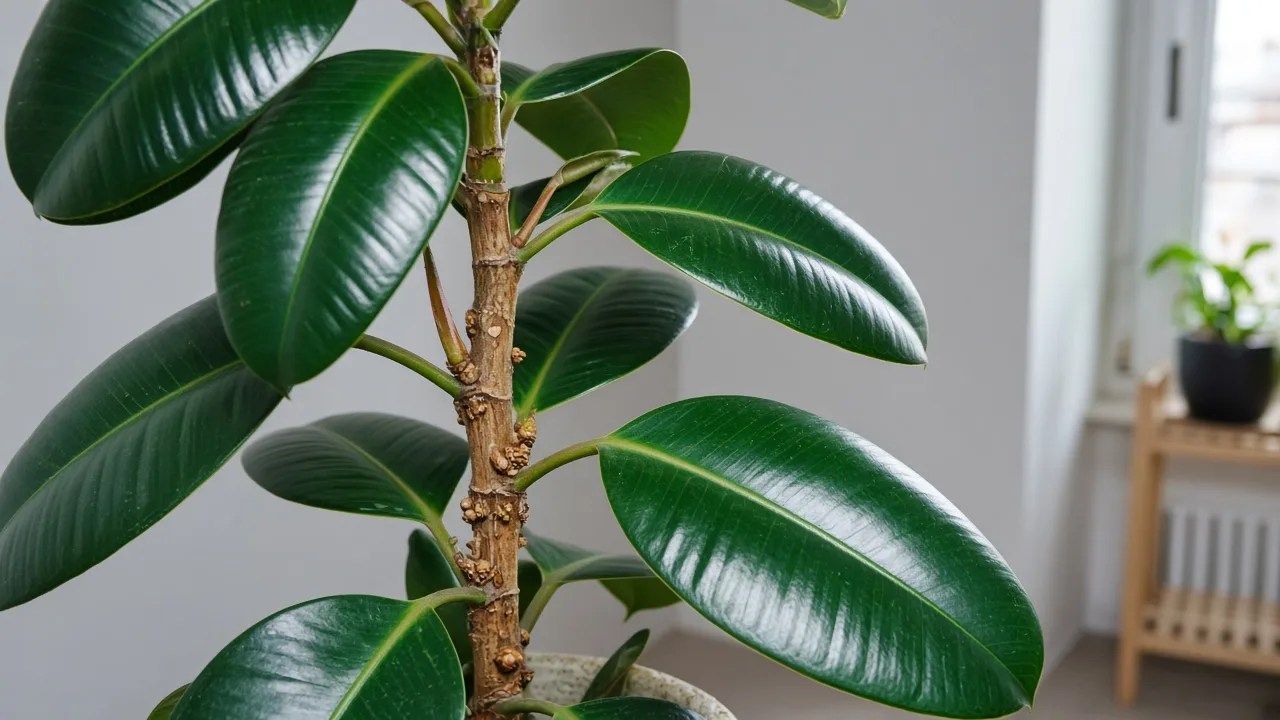
Scale Insects on Rubber Plant: Causes, Checks & Fixes
This guide covers scale insects on Rubber Plant. See also the general Scale Insects guide, watering, and light pages for this plant.
Scale Insects on Rubber Plant: Causes, Checks & Fixes
Quick answer
Scale insects on rubber plant (Ficus elastica) show up as small, immobile tan, brown, or bark-colored bumps on leaf petiole bases on thick stems, glossy leaf undersides, and the junction where new red-sheathed leaves emerge. They pierce tissue, drain sap, and—on soft scale species—excrete sticky honeydew that can lead to black sooty mold on the broad glossy foliage below.
For general scale biology indoors, see our scale insects guide. On rubber plant, bumps often hide inside red protective sheaths and along glossy undersides—places quick top-down watering checks miss on a tall floor specimen.
First step: isolate the plant and scrape every visible bump with a cotton swab dipped in 70% isopropyl alcohol.
Why rubber plant gets scale insects
Rubber plant is an upright woody houseplant with thick glossy leaves that unfurls new growth from bright red sheaths at stem tips. Scale are common sap-sucking pests on houseplants that arrive on nursery stock, shared pruning shears, or nearby infested specimens. The plant’s waxy leaf surface and sheltered sheath crevices give pests protected feeding sites that casual checks miss.
Rubber plant-specific risk factors:
- Red leaf sheath crevices - Scale and mealybugs colonize inside sheaths before the glossy blade opens.
- Glossy leaf undersides - Honeydew and sooty mold show clearly on thick waxy foliage but sprays must reach undersides thoroughly.
- Floor specimen scale - Tall rubber plants get watered from above; lower petioles and stem bases stay uninspected.
- Milky latex sap - Cutting stems during treatment can release irritating sap—wear gloves and avoid getting sap on skin.
- Indoor warmth - Indoor ornamentals lack natural enemies that would control scale outdoors.
Warm rooms suit scale year-round. A recent nursery arrival or a rubber plant in a dim corner with slow, stressed growth often coincides with the first visible bumps along thick stems.
What scale insects look like on rubber plant
Scale insects are protected by a waxy or shell-like cover that makes adults essentially immobile. On rubber plant they are easy to miss until colonies build:
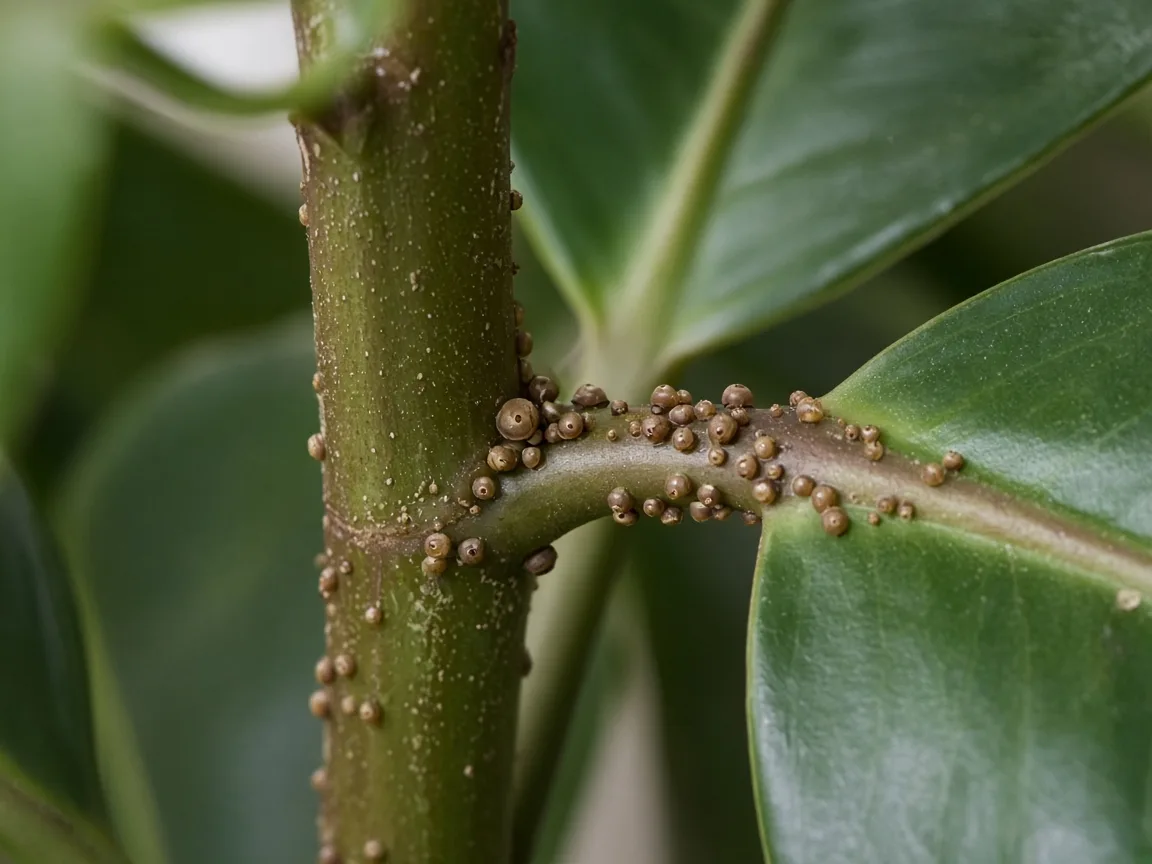
Scale insect symptoms on rubber plant—compare bumps with healthy glossy tissue on the same stem.
- Flat or dome-shaped bumps on green or brown woody stems, leaf petioles, and along glossy leaf undersides
- Bark-colored disks along thick upright stems that do not wipe away with a cloth
- Sticky, shiny honeydew on broad glossy leaves and on floors beneath the canopy
- Black sooty mold on sticky leaf surfaces; it wipes off but returns until insects are controlled
- Ant trails on pot rims, saucers, or cachepots—ants harvest honeydew and protect scale colonies
- Yellow leaves and stalled new sheathed growth when feeding is heavy on growing tips
Press a suspect bump with a fingernail or toothpick. Scale should flake off with gentle pressure; mealybugs smear waxy cotton instead. Spider mites leave fine webbing and stippling in hot dry air, not hard bumps.
How to confirm the cause
Do not treat from one brown speck on a stem. Use this inspection order:
- Isolate first - Move the rubber plant away from other plants before handling.
- Red sheaths and petiole bases - Peel back or inspect inside new red sheaths at stem tips with bright light.
- Glossy leaf undersides - Check the undersides of the largest reachable leaves along veins where soft scales often concentrate.
- Stem bases and soil line - Inspect where thick stems enter the mix and along cachepot rims.
- Scrape test - Pry a bump with a knifepoint. Scale shells lift; natural stem texture stays attached.
- Neighbor check - Inspect ficus and other tropicals on the same shelf for bumps or honeydew.
If stems are firm, soil smells neutral, and the only issue is immobile bumps with stickiness, soft scale fits. If the pot stays heavy for days, soil smells sour, and stem bases soften, rule out root rot from overwatering before spraying.
Lookalike symptoms to rule out
| Sign | Likely cause |
|---|---|
| Immobile bumps + honeydew | Scale (this page) |
| Cottony wax in axils | Mealybugs |
| Stippling + webbing | Spider mites |
| Uniform yellow, wet soil | Overwatering |
| Sudden mass leaf drop | Leaf drop stress |
First fix for rubber plant
Isolate the plant and scrape every visible scale with a cotton swab dipped in 70% isopropyl alcohol.
That single action removes adults you can reach and confirms the pest is alive before you commit to sprays. Clemson HGIC notes that early scale infestations can be removed by scraping; alcohol dissolves the waxy cover on contact. Test a hidden petiole first and wait 24 hours—alcohol can spot-burn sensitive new sheathed tissue.
Work stem by stem from soil line to highest sheaths. Wipe honeydew from glossy leaves below colonies. Do not fertilize a pest-hit rubber plant hoping to push new growth.
Step-by-step recovery
After the initial alcohol scrape:
- Repeat scrapes every five to seven days for at least three cycles. Adult scales are relatively protected from insecticides by their waxy covering.
- Apply horticultural oil or insecticidal soap if bumps persist. Coat petioles and both leaf surfaces thoroughly; oils must contact the pest directly. Repeat at label intervals.
- Shower the plant in a shower or outdoors on warm days—let glossy foliage dry in indirect light the same day.
- Manage ants if they protect colonies on pot rims or cachepots.
- Wash sooty mold off leaves once honeydew production stops.
- Consider a systemic drench only for persistent soft scale after manual efforts fail. Soil treatments containing imidacloprid usually control brown soft scale.
Keep the rubber plant isolated until you see no new scale for at least two weeks.
Recovery timeline
Alcohol scrapes show results within a few days when colonies are moderate. Full treatment takes two to four weeks. Mature glossy leaves may stay blemished—judge recovery by clean new sheathed leaves unfurling without bumps. Rubber plant rebounds faster in bright indirect light than in dim corners.
Red leaf sheaths: where rubber plant hides scale
Rubber plant (Ficus elastica) unfurls new leaves from bright red protective sheaths at stem tips. Scale colonizes inside those sheaths before the glossy blade opens—by the time you see bumps on the exposed leaf, crawlers may already have settled on lower petioles.
During treatment, gently inspect inside each red sheath with a cotton swab dipped in alcohol. Thick waxy foliage resists sprays without thorough underside coverage. Work systematically rather than one rushed pass over visible upper leaves only.
Wear gloves when handling cut stems—rubber plant latex can irritate skin on sensitive people.
Mistakes to avoid
Do not ignore a few bumps at one sheath—they multiply quickly along thick stems. Do not spray undiluted alcohol across entire glossy leaves. Do not return an isolated rubber plant to a shared shelf after one treatment round.
Do not increase nitrogen feeding during an active infestation. With severe scale infestations, discarding the plant may be faster than repeated chemical cycles when scale has spread to most nodes.
How to prevent scale insects on rubber plant
Scout red sheaths and petiole bases during weekly care. Quarantine new rubber plants for two to three weeks. Keep the plant in bright indirect light so new sheathed growth is vigorous and problems show early. Missouri Botanical Garden recommends isolating newly acquired plants for two to three weeks.
Wipe dust from glossy leaves so bumps are visible. Sterilize pruning shears between plants. Remove decorative cachepots during weekly inspections so stem bases stay visible.
When to worry
Treat as urgent when bumps encircle multiple petioles, ants swarm stems, new sheathed tips stall despite good light, or sticky residue coats floors beneath large leaves. Severe infestations can cause plant parts to die even on hardy rubber plants.
Conclusion
Scale insects on rubber plant hide inside red sheaths and along glossy undersides that thick upright growth creates. Isolate first, scrape visible bumps with alcohol, repeat on a schedule, and judge recovery by clean new sheathed leaves—not old damaged foliage.
When to use this page vs other Rubber Plant guides
Use this page for immobile tan or brown bumps with optional honeydew. Use mealybugs for cottony clusters. Use spider mites for stippling on glossy leaves.