Brown Leaves on Rubber Plant: Causes, Checks & Fixes
Quick answer
Brown leaves on Rubber Plant are dead tissue—existing glossy blades do not re-green. First step: push your finger 2 inches into the soil and note whether the pot feels light or heavy before you change humidity, light, or watering.
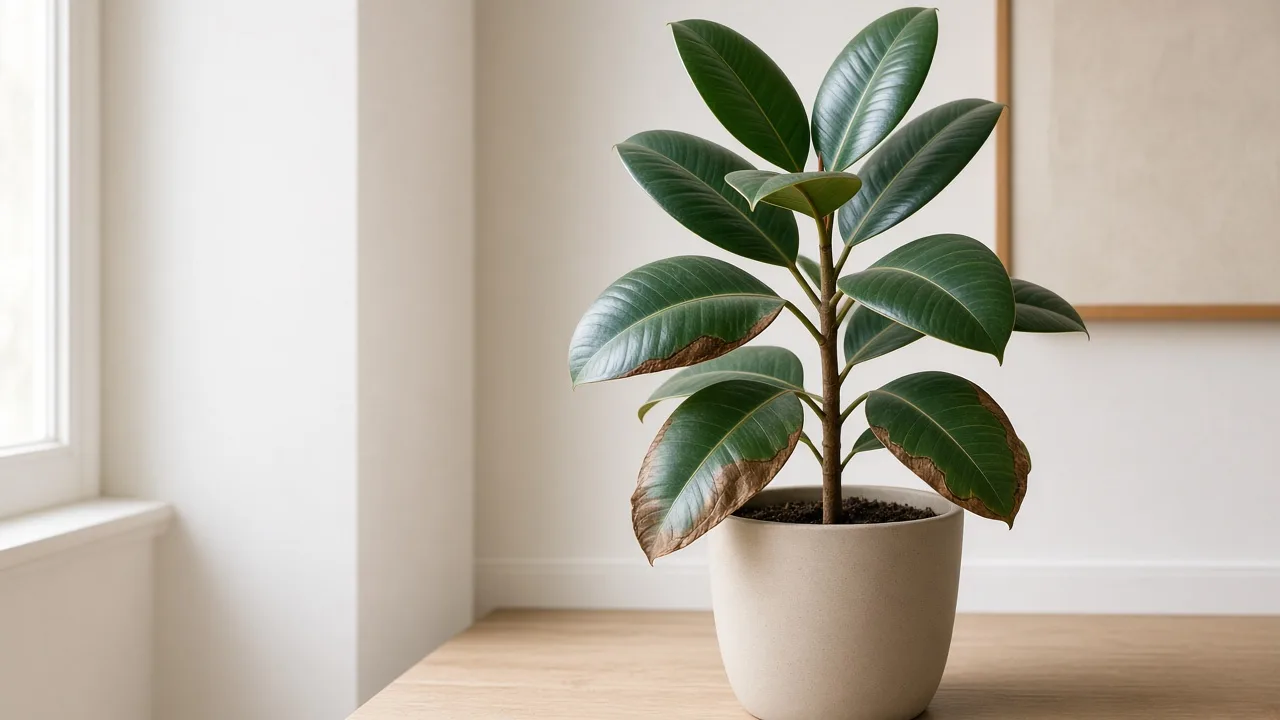
Brown Leaves on Rubber Plant: Causes, Checks & Fixes
This guide covers brown leaves on Rubber Plant. See also the general Brown Leaves guide, watering, and light pages for this plant.
Brown Leaves on Rubber Plant: Causes, Checks & Fixes
Quick answer
Brown leaves on Rubber Plant (Ficus elastica) mean tissue has died—whether from drought, root failure, sun scorch, salt burn, cold drafts, or normal aging of lower canopy leaves. On this tree-like houseplant with large stiff glossy blades, one browned leaf can look dramatic even when the stem tip still pushes healthy new foliage. For general causes of whole-leaf browning, see our brown leaves guide. On rubber plant, texture and pot weight matter more than color alone: crispy dry brown differs from soft dull brown on a heavy wet pot.
First step: push your finger 2 inches into the soil and note whether the pot feels light or heavy. Crispy, papery brown with a feather-light pot points to severe thirst, chronic low humidity, or a cold draft after a recent move. Soft dark brown on cool wet mix with limp lower leaves points to overwatering on Rubber Plant or root stress. Tan patches only on the window-facing side of stiff glossy leaves point to direct sun—not a humidity fix.
What brown leaves look like on Rubber Plant
Healthy rubber plant holds large, stiff, glossy oval leaves on an upright woody stem. Browning breaks that pattern in distinct ways:
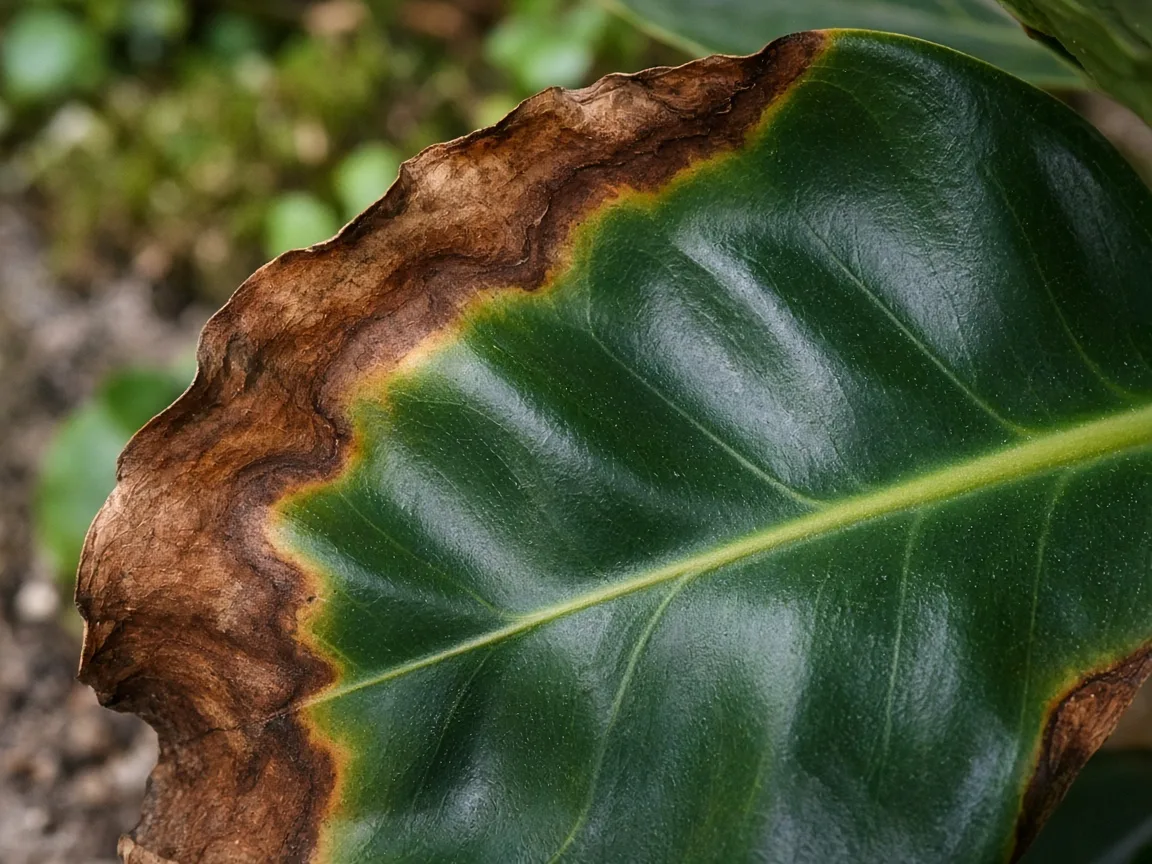
Brown leaf symptoms on Rubber Plant—compare crispy necrotic margins with healthy green tissue on the same stiff blade.
- Crispy brown margins or whole dry blades, light dry pot — Edges desiccate before the center; tissue feels like thick paper. Severe underwatering on Rubber Plant or low humidity on large leaves far from the root zone.
- Soft dull brown patches on lower leaves, wet heavy soil — Limp foliage even though mix feels damp. Root oxygen loss from chronic wet mix.
- Tan or brown patches on the window-facing side only — Papery bleached areas where afternoon rays hit stiff glossy foliage. Direct sun on shade-adapted leaves; see light guide.
- Brown after a move, repot, or cold draft — Several leaves fail at once while soil moisture looks normal. Rubber plant reacts to placement change before it reacts to slow nutrient decline.
- Uniform brown edges after heavy feeding — Salt accumulation; white crust on soil rim may be present. Often starts as brown tips before whole blades necrose.
- Single lowest leaf on an upright stem turning brown slowly — Often normal senescence while apical growth stays green.
Always check the newest leaves at the stem tip. Brown on new growth is more urgent than one aging lower blade fading out.
Reading brown on stiff glossy rubber plant leaves
Rubber plant leaves are very large, leathery, and stiff—often 8–12 inches long indoors—with a raised pale midrib underneath. That anatomy changes how brown reads:
Margin-first dryness: Because each blade is thick and glossy, the outer edge and tip desiccate first when humidity drops or watering swings. Crispy brown that stops at the margin while the center stays green usually means environmental stress—not root rot.
Whole-blade dull brown on lower leaves: When entire lower leaves turn soft and dull while the pot stays heavy, suspect wet-root failure. NC State Extension notes that overwatering can cause loss of leaves on Ficus elastica, and damaged roots cannot supply water evenly to large canopy leaves.
Window-side bleaching: Stiff glossy tissue scorches into tan papery patches on the side facing hot glass. The opposite side may stay green—unlike drought brown, which usually affects margins all around the blade.
Bottom-canopy senescence: On a tall upright rubber tree, one or two lowest leaves may brown and drop while the top stays glossy. That pattern is low urgency if new growth at the tip looks firm.
Move shock and draft sensitivity on Ficus elastica
Rubber plant is one of the houseplants that reacts to change before it reacts to bad care. NC State Extension notes rubber plant prefers to remain in one location and does not do well with drafts or cold temperatures.
After a move, repot, or HVAC season change, you may see several leaves brown and drop within days even when watering has not changed. Cold air from a door, window, or register below about 55°F (13°C) can yellow then brown leaves before they fall—The Spruce notes brief exposure below 50°F can cause this cascade.
Do not stack fixes on day one after a move. Stabilize placement first: move the plant away from draft paths, keep bright indirect light consistent, and resume the normal dry-down rhythm from the watering guide. If brown continues on wet soil after two weeks in a stable spot, shift to root inspection—not another relocation.
For sudden mass leaf failure without an obvious draft, see leaf drop on Rubber Plant.
Winter semi-dormancy and wet-soil brown patches
Rubber plant slows growth in fall and winter and uses less water. Many brown-leaf cases in cold months trace to overwatering on semi-dormant roots, not dry air alone.
When growth is slow and days are short, the top 2 inches of mix may stay wet for weeks if you keep summer watering frequency. Lower leaves turn dull brown or yellow-brown while the pot feels heavy. NC State recommends reducing watering when the plant is dormant from fall to late winter.
Winter fix path:
- Pause watering until the top 2 inches of mix dry.
- Confirm the pot drains and empty cachepots after every soak.
- Keep the plant in bright indirect light so soil does not stay cold and stagnant.
- Unpot only if brown spreads after a full dry-down cycle.
Details: root rot on Rubber Plant when stems soften at the base.
Why Rubber Plant gets brown leaves
Severe dehydration
Extended dryness on large stiff leaves causes irreversible margin death before the whole blade browns. Rubber plant wilts slightly and leaves may curl inward when thirsty. A very light pot with dry mix throughout can crisp several lower leaves at once.
Root injury from overwatering
Compromised roots fail to supply water evenly to large canopy leaves. Lower leaves turn soft dark brown while mix stays damp—the classic wilt-on-wet-soil paradox. Details: root rot on Rubber Plant.
Sun scorch on glossy foliage
Rubber plant wants bright indirect light under protection from afternoon sun. Baking glass bleaches exposed tissue into tan necrotic patches on stiff blades.
Low humidity and heat drafts
Winter heating desiccates leaf edges until whole sections necrose on firm stems with otherwise appropriate watering. Clemson notes rubber plant prefers humid conditions but tolerates dry indoor air; large leaf surface area still browns at the margins first. See low humidity on Rubber Plant when margins crisp in dry air.
Salt and fertilizer burn
Chronic overfeeding or skipped flushing leaves salts in mix. Advanced burn can involve larger brown patches on older leaves after brown tips appear.
Pests and disease progression
Spider mites on Rubber Plant stipple tissue until patches brown in dry heat. NC State lists mealybugs, scales, and spider mites as pests to monitor on this species. Untreated lesions can merge into larger necrotic areas.
How to confirm the cause
- Texture — Crispy = dry stress, sun, or salts. Soft dull = rot, overwatering, or wet-root failure.
- Soil moisture at 2 inches — Dry throughout with light pot = thirst. Wet and heavy = pause watering.
- Position on the stem — Lowest leaf only, slowly = senescence. Multiple lower leaves on wet soil = roots. Tip brown = active stress.
- Leaf location on the blade — Window-facing patches = sun. Uniform margins vs whole-blade dull brown.
- Recent changes — Moved near a vent, skipped winter watering reduction, repotted into oversized pot, heavy fertilizer dose.
- New growth — Green glossy tips = lower urgency. New leaves opening brown = escalate.
First fix for Rubber Plant
Push your finger 2 inches into the soil and note pot weight—then match treatment to crispy-dry versus soft-wet, not to panic over one browned leaf.
- If dry and crispy: Water thoroughly once, drain fully, and move out of direct hot sun while rehydrating. Raise humidity modestly if margins were desiccating in heated air.
- If wet and soft: Stop watering until the top 2 inches of mix dry. Improve airflow; unpot only if browning spreads after appropriate dry-down.
- If sun-facing patches only: Move to bright indirect light; add sheer curtain on south or west glass.
- If brown followed a move or draft: Stabilize placement away from cold air; do not repot and prune the same week.
Do not fertilize burned or rotting foliage on day one.
Trimming brown leaves and latex sap safety
When you remove necrotic tissue, milky latex sap runs from cut surfaces on Ficus elastica. NC State notes that if leaves are cut, the surface will drip sap.
- Wear gloves—sap irritates skin and eyes.
- Use sharp clean shears; wipe sap from blades after each cut.
- Remove fully brown leaves at the petiole base; keep partially green blades unless lesions are spreading.
- Keep trimmed plants away from pets—rubber plant is toxic if chewed.
Do not mist sap onto furniture or skin. Blot cuts with a damp cloth if sap drips.
Step-by-step recovery
Drought recovery
- Soak dry mix thoroughly or bottom-water 20–30 minutes, then drain.
- Trim fully brown leaves; leave partial green tissue in place.
- Resume watering when top 2 inches dry—full rhythm on the watering guide.
- Run a humidifier if margins were crisp in dry winter air.
Wet-root recovery
- Stop watering; empty saucers.
- If brown spreads on still-wet soil after a week of corrected dry-down, inspect and trim mushy roots.
- Repot into fresh airy mix—same size or one step up, not a huge decorative pot. See soil guide.
- Hold fertilizer until new growth looks healthy for two weeks.
Sun scorch recovery
- Relocate to filtered light within several feet of east or shaded south window.
- Trim fully necrotic patches if unsightly; green tissue will not refill bleached areas.
- Acclimate gradually if increasing light later.
Draft and move-shock recovery
- Keep the plant in one stable bright spot for at least two weeks.
- Maintain normal dry-down watering—do not compensate with extra soaks.
- Remove fully brown dropped leaves; watch the stem tip for firm new growth.
Recovery timeline
Thirst brown: Existing crisp tissue stays brown; turgor returns in 12–48 hours after soaking. The next leaf from the stem tip should open glossy within one to two weeks.
Overwatering brown: Spread should halt within three to seven days once mix dries appropriately. Root-trim repots may need two to four weeks before confident new growth.
Sun scorch: Bleached patches are permanent; new leaves should avoid scorch within two to three weeks in corrected light.
Move shock: Leaf drop may continue for one to two weeks after stabilization; new glossy tips confirm recovery.
Normal senescence: One lower leaf browning while the tip stays green needs no recovery timeline—beyond routine care.
Lookalike symptoms
| Pattern | Likely cause | Page |
|---|---|---|
| Brown tips only, firm leaves | Dry air, salts, uneven water | Brown tips |
| Yellow before brown, wet soil | Overwatering | Overwatering |
| Crisp edges, dry soil | Underwatering | Underwatering |
| Several leaves drop after a move | Move shock / drafts | Leaf drop |
| One old lowest leaf on upright stem | Normal senescence | No action if tip green |
| Pale stretched stems, no direct sun | Too little light | Not enough light |
What not to do
Do not assume all browning means underwatering and soak a plant in wet soil.
Do not move the plant repeatedly trying to fix post-move brown—stabilize one spot first.
Do not leave scorched plants in afternoon direct sun hoping leaves will recover color.
Do not fertilize heavily to “green up” brown leaves—salts worsen edge burn on large blades.
Do not remove every partially green leaf—the plant needs photosynthetic surface during recovery.
Do not trim without gloves—latex sap irritates skin and the plant is toxic to pets.
How to prevent brown leaves next time
Water when the top 2 inches of well-drained mix dry. Keep rubber plant in bright indirect light, not baking glass. Maintain 40–60% humidity through heating season. Reduce winter watering when growth slows. Avoid cold drafts below 55°F. Flush salts periodically if you feed regularly. Wipe dust from glossy leaves so you can spot early margin stress.
When to worry
Urgent if new leaves open brown, stems soften at the base on wet soil, most lower leaves fail within days after a cold draft, or mix smells sour. Slow browning of one lowest leaf while the stem tip pushes green is lower urgency.
When to use this page vs other Rubber Plant guides
| Your question | Best page |
|---|---|
| Whole leaves or large brown patches | This page |
| Tips and margins only | Brown tips |
| Crispy texture, drought | Underwatering |
| Wet soil, soft brown lower leaves | Overwatering |
| Mass leaf drop after a move | Leaf drop |
| Bleached patches from hot windows | Light guide |
Related Rubber Plant guides
Conclusion
Brown leaves on Rubber Plant will not turn green again—focus on stopping spread and growing clean new foliage at the stem tip. Feel the brown tissue, probe soil 2 inches deep, note where brown sits on the upright stem, then fix the matching cause. Prevention comes from predictable dry-down, filtered light, stable placement, winter watering reduction, and early response while damage is still at the margins.
Related tool
Use the Plant Problem Diagnosis Tool to narrow causes for brown leaves on this plant before changing multiple variables at once.