Slow Growth on String of Hearts: Causes, Checks & Fixes
Quick answer
Slow growth on String of Hearts is often insufficient light at the crown, an oversized wet pot, or normal winter dormancy-not a disease. One new heart-shaped leaf pair every few weeks in summer is healthy trailing pace; zero new tips through an entire warm spring is a stall worth fixing.
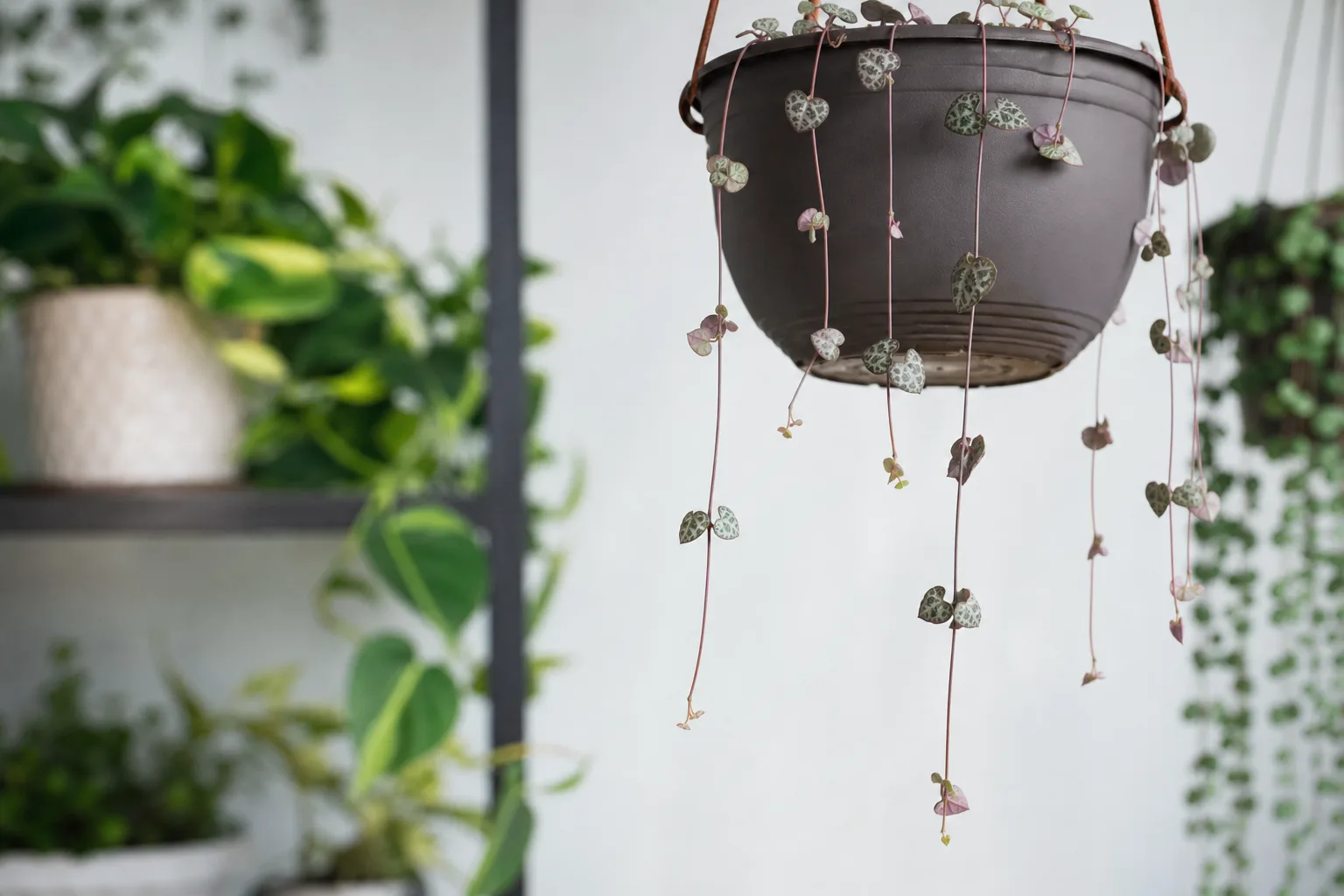
Slow Growth on String of Hearts: Causes, Checks & Fixes
This guide covers slow growth on String of Hearts. See also the general Slow Growth guide, watering, and light pages for this plant.
Slow Growth on String of Hearts: Causes, Checks & Fixes
Quick answer
String of Hearts (Ceropegia woodii) is designed to trail, not rush. A healthy plant in good light often adds one new heart-shaped leaf pair every three to four weeks during warm months, lengthens strands gradually, and forms bead-like aerial tubers along pink wiry stems-then rests quietly through winter while underground tubers stay firm and the mix dries slowly.
Slow growth becomes a problem when the plant adds nothing new through an entire warm spring and summer, or when pale stretched tips sit on mix that stays damp for weeks. That pattern usually means insufficient light at the crown, an oversized wet pot stressing tuberous roots, or hidden pests-not a fertilizer shortage.
First step: confirm you are past winter dormancy, then check whether the growth point at the soil line sits in bright indirect light-not just the hanging tips. Firm tubers with zero new tips in shade point to placement. Soft tubers with sour soil point to root rot instead.
Slow vs. stunted vs. not enough light
Use this table before you repot, fertilize, or panic. Each pattern has a different first fix on String of Hearts.
| Pattern | Leaf frequency (warm season) | Leaf size trend | Internode / stem pattern | Tubers | First fix |
|---|---|---|---|---|---|
| Normal slow growth | New pair every 2–4 weeks | Stable marbled hearts | Tight spacing on firm pink stems | Firm; new aerial tubers forming | None-compare year over year |
| Care-limit stall (this guide) | Zero tips through full warm spring | Pale or unchanged | Strands stop lengthening; crown in shadow | Firm but mix wet for weeks | Move crown to bright indirect light |
| Stunted growth | None or tiny for 2+ warm months | Shrinking new hearts | Weak, limp, or breaking stems | May soften if roots stressed | See stunted growth guide |
| Not enough light (leggy) | Still adding leaves, but small | Pale, washed-out marbling | Long bare gaps between leaves | Usually firm | Not enough light placement fix |
| Winter dormancy | Little to none Oct–Mar | Older leaves unchanged | Quiet rest; no collapse | Firm; mix dries slowly | Reduce watering; wait for spring |
Worked example: In July, a String of Hearts on an east windowsill pushes one new leaf pair every three weeks, forms occasional aerial tubers, and lengthens strands by a few inches per month. That is normal slow trailing-not stunted growth. The same plant with firm tubers but zero new tips from April through June in a north-facing corner is a warm-season stall this guide addresses.
What slow growth looks like on String of Hearts
Normal trailing pace
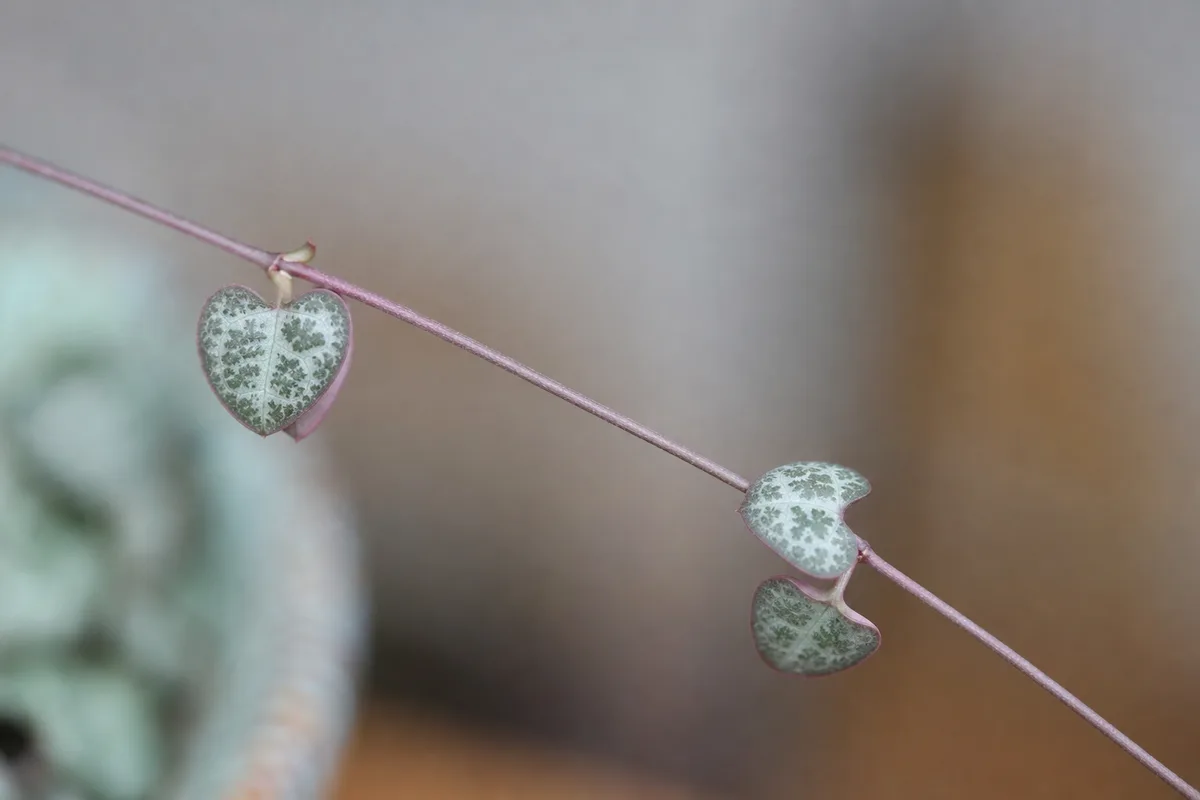
Slow Growth symptoms on String of Hearts - compare with healthy tissue on the same plant.
Ceropegia woodii is a semi-succulent trailing vine from sun-exposed rocky habitats in southern Africa. It stores water in tuberous roots and along stems, then allocates energy to vine length and aerial tubers rather than dense bushy foliage. NC State Extension lists a rapid growth rate when light, drainage, and season align-but indoors in moderate light, modest trailing pace is expected.
Normal slow growth looks like:
- Firm underground and aerial tubers with no sour soil smell
- Occasional new heart-shaped leaf pairs along active tips in summer
- Gradual strand lengthening-not frozen size month after month
- A quiet winter pause with dry mix and no pest residue at nodes
- Marbling that stays crisp on new growth, not washed out
Signs growth is abnormally limited
Problem slow growth on String of Hearts means the plant breaks its warm-season rhythm:
- No new tips through spring and summer despite otherwise stable care
- Strands stop lengthening even though older sections look healthy
- Mix stays damp two weeks or more after watering in a dim corner
- Pale color on recent growth without the deep green-and-silver pattern
- Crown sitting in shadow while trailing tips hang in brighter air above
- Zero new aerial tubers forming along vines that used to produce them
This is different from leggy growth, where the vine still reaches for light with long bare gaps between tiny leaves. Leggy plants are growing-just in the wrong direction. A care-limit stall means forward progress has nearly stopped.
Why String of Hearts grows slowly
Normal baseline: trailing vine, not bushy foliage
String of Hearts will never match a pothos or tradescantia for leaf output. Compare your plant to how it performed last summer, not to fast tropical trailers in the same room. A mature specimen adding a few inches per month with occasional leaf pairs is healthy even when it feels “slow” by houseplant standards.
Insufficient light at the crown
This is the most common indoor limiter. Plants hung above the window frame, centered in a dim room, or on a north sill without supplemental lighting photosynthesize too little to sustain new tissue. NC State notes that large gaps between the leaves indicate the plant is not getting enough light-the crown where new growth initiates must sit in bright indirect light, not just the dangling tips.
Soil may stay wet for weeks because the plant barely uses water-a pattern that weakens tubers over time even before obvious rot appears.
Oversized pot and wet soil
Tuberous roots need oxygen. An oversized container holds moisture too long, especially in low light. String of Hearts is easily killed by overwatering, and chronic wet soil-even without full rot-stalls growth through hidden root stress. The plant prefers to stay slightly crowded rather than swimming in empty wet mix.
Winter dormancy
String of Hearts is dormant over the winter with reduced watering needs. Cool short-day months naturally slow or stop new leaves. Firm tubers, dry mix, and no pests through winter are expected-not a stall requiring intervention. Continued idle growth after light and warmth return is the problem this guide addresses.
Hidden pests and root stress
Monitor for mealybugs, aphids, and scale on String of Hearts overview-they hide at leaf nodes and on aerial tubers and can stall growth without dramatic visible damage at first. Recent String of Hearts repotting guide into an oversized wet pot can also pause growth for several weeks. For progressive shrinkage, tiny leaves, and multi-month stall, see the stunted growth guide.
How to confirm the cause
Work through these checks in order before you repot, fertilize, or prune heavily:
- Season check - Is it late fall through early spring with cool room temperatures? If yes, compare the plant to last year at the same time. Winter pause with firm roots is normal dormancy.
- Pace log - Count weeks between new leaf pairs on an active tip during summer. One pair every two to four weeks is normal slow trailing. Zero pairs from April through June is a stall.
- Tuber firmness - Slide the root ball out gently or feel through the drainage hole. Firm, plump tubers support continued growth. Soft tubers with sour soil smell mean root rot-a different urgency.
- Soil dry-down speed - After watering during active season, note how many days until the mix feels light and dry two-thirds down. Mix wet for two weeks in a dim corner suggests weak light slowing uptake plus excess moisture.
- Light at the crown - Lift trailing strands and look at the soil surface and base stems. If the growth point sits in shadow while tips hang in light, insufficient light is confirmed even if the room feels bright.
- Pot size honesty - An oversized pot with mostly empty wet soil around a small root mass is a common indoor stall trigger.
- Pest inspection - Use a magnifying glass on leaf axils and aerial tubers. White cottony patches or sticky residue explain stall even when watering looks acceptable.
If tubers are firm, pests are absent, and the plant still shows no new growth through a full warm season in what you believe is adequate light, the window spot is likely still too dim-etiolation and stall often overlap. Cross-check the not enough light guide for crown placement detail.
First fix for String of Hearts
After ruling out normal winter rest, move the plant so the crown sits in bright indirect light with one to three hours of gentle morning sun-directly in front of an east window or filtered west window-and hold off on watering until the mix is mostly dry throughout.
That single placement change addresses the most common limiter without stacking risky interventions. Do not fertilize, repot, or soak heavily on the same day. If tubers felt soft when you checked, skip watering entirely until you can inspect roots.
Gradually acclimate over seven to ten days if the plant came from very dim conditions. Sudden harsh afternoon sun on tissue grown in shade can scorch thin leaves-NC State warns that too much sunlight will result in scorched leaves.
Step-by-step recovery
Once light is corrected-or root and pest issues are identified-work through recovery in order:
- Wait two to four weeks after improving light before judging success. New leaf pairs and tubers are the first positive signs.
- Adjust watering to dry-down - Water deeply only when the mix is mostly or completely dry, following the watering guide skewer and pot-weight checks. Reduce watering further in winter rest.
- Treat pests before feeding - Dab visible mealybugs with isopropyl alcohol on a cotton swab; repeat weekly until clear.
- Address root rot if confirmed - Unpot, remove soft black tubers, and repot into fresh fast-draining cactus-style mix in a pot only slightly larger than the remaining root mass. Full protocols live on the root rot page.
- Resume diluted fertilizer only after new growth looks normal-half-strength balanced liquid every four to six weeks during spring and summer active growth, not during stress or winter pause.
- Pin aerial tubers to moist mix at the pot surface if sparse sections need filling once conditions stabilize.
- Consider grow-light supplement if your brightest window still leaves the crown in marginal light-position a full-spectrum LED 12–18 inches above the crown for 8–10 hours daily during active season.
Avoid repotting into a much larger container hoping to jump-start growth. An oversized wet pot is a common reason stall continues after light improves.
Recovery timeline
Slow String of Hearts recovers on new growth first, not by enlarging old leaves. Expect the first fresh leaf pairs or tubers within three to six weeks after light, watering, or pest correction during warm active growth. Winter recovery may take until spring even after conditions improve.
Pale or undersized leaves already on the vine will not revert to full size. Judge progress by internode spacing, marbling depth, and tuber formation on new sections.
If no new tissue appears after six weeks in acclimated bright light with firm tubers and appropriate watering, re-check for hidden pests at nodes or consider whether the mix has become hydrophobic or compacted-a separate soil issue from simple slow growth.
Optional recovery note: A String of Hearts moved from a dim interior shelf to an east windowsill in mid-April often shows its first new leaf pair within three to four weeks as daylight lengthens-faster if the plant was only lightly dormant rather than chronically light-starved.
Lookalike symptoms to rule out
Stunted growth means progressive shrinkage-tiny new hearts, weak stems, and multi-month stall with possible pest or root involvement. See the dedicated stunted growth guide when new tissue stays undersized for months.
Leggy etiolation produces long bare gaps between leaves while the vine still lengthens toward light. Slow growth means overall forward progress stops or stays minimal.
Underwatering makes leaves thin, folded, and crispy with very dry lightweight soil. Growth may slow, but the pattern is dehydration collapse-not months of wet mix in shade.
Root-bound stall is less common on String of Hearts, which likes to be crowded and tolerates tight roots well. Extreme circling with soil drying within a day of watering may need a modest spring repot-not an oversized upgrade.
Post-repot pause is normal for two to four weeks after disturbance, especially if upsized into wet empty soil. Wait before assuming failure.
Mistakes to avoid
Do not reach for fertilizer first when growth has slowed. Extra nitrogen on a stressed plant in dim light can push weak soft shoots without solving the limiter.
Do not repot into a huge pot to “give roots room.” Wet empty soil around tuberous roots extends stall and raises rot risk.
Do not keep watering on a summer calendar through winter rest or through weeks when the mix never dries.
Do not assume String of Hearts is fine in a north window or across the room because it has not died yet. Survival with frozen size is not healthy growth.
Do not ignore mealybugs because the plant “looks okay from a distance.” Node-hidden pests are a common growth stall cause on trailing succulents.
Do not jump from a dim corner to harsh afternoon sun without acclimation. Scorched leaves set recovery back further.
String of Hearts care cross-check
Slow growth often sits at the intersection of light and watering. Ceropegia woodii needs bright indirect light with some morning sun, fast-draining mix similar to a cactus blend, and watering only when the soil is mostly dry. In winter, growth naturally slows and watering should drop accordingly per the watering guide.
Temperature between 18–27°C (65–80°F) supports active growth. Cold drafts below about 10°C (50°F) for prolonged periods can add stress on top of stall but rarely cause it alone indoors.
String of Hearts is non-toxic to cats and dogs, so rubbing-alcohol pest treatment on leaves is household-safe-but keep treated plants away from pets until surfaces dry. More context on the String of Hearts overview.
How to prevent chronic slow growth
Place the crown in front of your brightest suitable east or filtered west window from the start, not above the frame or centered in a dim room. Rotate weekly for even exposure.
Match pot size to the root mass-slightly snug is better than oversized. Repot in spring only when tubers crowd the container, using fresh gritty mix from the soil guide.
Water by pot weight and soil dryness, not a fixed calendar. If the mix stays wet more than two weeks after a soak during active growth, improve light before adding more water.
Scan nodes and tubers monthly for mealybugs and scale. Early treatment prevents sap loss that stalls whole strands.
Feed lightly during active growth only after basics are right-diluted fertilizer every four to six weeks in spring and summer, not as a growth-forcing tool in low light.
When to worry
Slow growth becomes urgent when soft mushy tubers, sour soil, and yellow collapsing strands suggest active root rot-not routine sluggishness. That pattern needs immediate drying, inspection, and likely repot with damaged tissue removed.
Also prioritize action when pest colonies cover multiple nodes, when the plant has shown zero new growth through an entire warm season despite corrected placement, or when wet soil and weak light have combined for months-tuberous roots tolerate drought better than chronic saturation.
No need to panic over a quiet winter with firm tubers and dry mix. Worry when spring arrives, light strengthens, and the plant still adds nothing new for eight or more weeks.
Related String of Hearts care
- String of Hearts overview - species hub and care baseline
- Stunted growth - progressive shrinkage and multi-month stall
- Not enough light - pale stretched growth and crown placement
- Leggy growth - long bare gaps while vine still reaches
- Root rot - mushy tubers and sour soil rescue
- Light guide - bright indirect baseline and window placement
- Watering guide - dry-down protocol and seasonal rhythm
Conclusion
String of Hearts trails slowly by design-a few new heart-shaped leaves each month in good light is healthy, not failure. When the plant adds nothing through an entire warm season, the limiter is usually too little light at the crown, an oversized wet pot, winter dormancy mistaken for crisis, or hidden pests draining energy. Confirm the season, check tuber firmness and dry-down speed, then move the crown into bright indirect light with gentle morning sun before you repot or feed. New hearts and tubers within a few warm weeks mean you found the cause; continued stall after that window means dig deeper into roots, soil, and pests-or compare patterns on the stunted growth page if new tissue stays tiny for months.
When to use this page vs other String of Hearts guides
- String of Hearts watering guide - Use for routine moisture checks before assuming slow growth is the main issue.
- String of Hearts problems hub - Browse all 45 common issues on this species.
- Leggy Growth on String of Hearts - Different entry point when symptoms overlap with slow growth.