Wilting on String of Hearts: Causes, Checks & Fixes
Quick answer
Wilting on String of Hearts looks the same for opposite problems. Lift the pot first: light and dry means underwatering; heavy and wet with soft tubers means overwatering or rot. Never water a wilting plant without checking soil moisture deep in the mix.
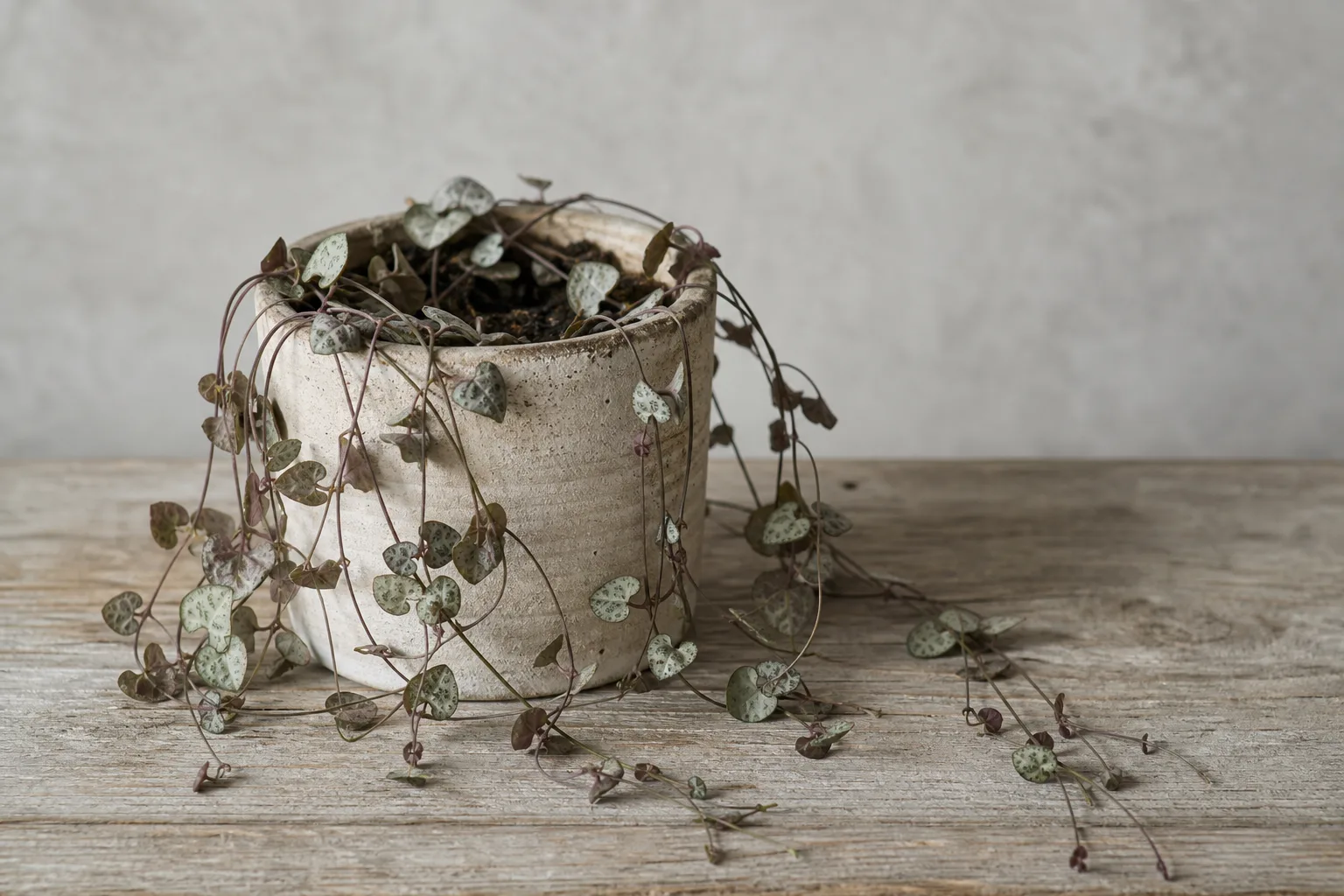
Wilting on String of Hearts: Causes, Checks & Fixes
This guide covers wilting on String of Hearts. See also the general Wilting guide, watering, and light pages for this plant.
Wilting on String of Hearts: Causes, Checks & Fixes
Quick answer
Wilting on String of Hearts (Ceropegia woodii) is one of the most misread signals in houseplant care because limp strands look thirsty whether the roots are dry or drowning. This tender succulent vine stores water in tuberous roots and bead-like aerial tubers, so it can look wilted from dehydration-or from rotting roots that cannot take up water even when the mix is wet.
First step: lift the pot and check soil moisture before you water. A light, dry pot with firm tubers needs a deep drink. A heavy, damp pot with softening tubers needs watering stopped and an inspection, not another soak.
What wilting looks like on String of Hearts
On String of Hearts overview, wilt shows up as limp, trailing stems and heart-shaped leaves that lose their plump curve. The silver-marbled leaves may feel thin and papery rather than firm and slightly succulent. Strands that normally hold a graceful drape hang straight down or look collapsed near the pot rim.
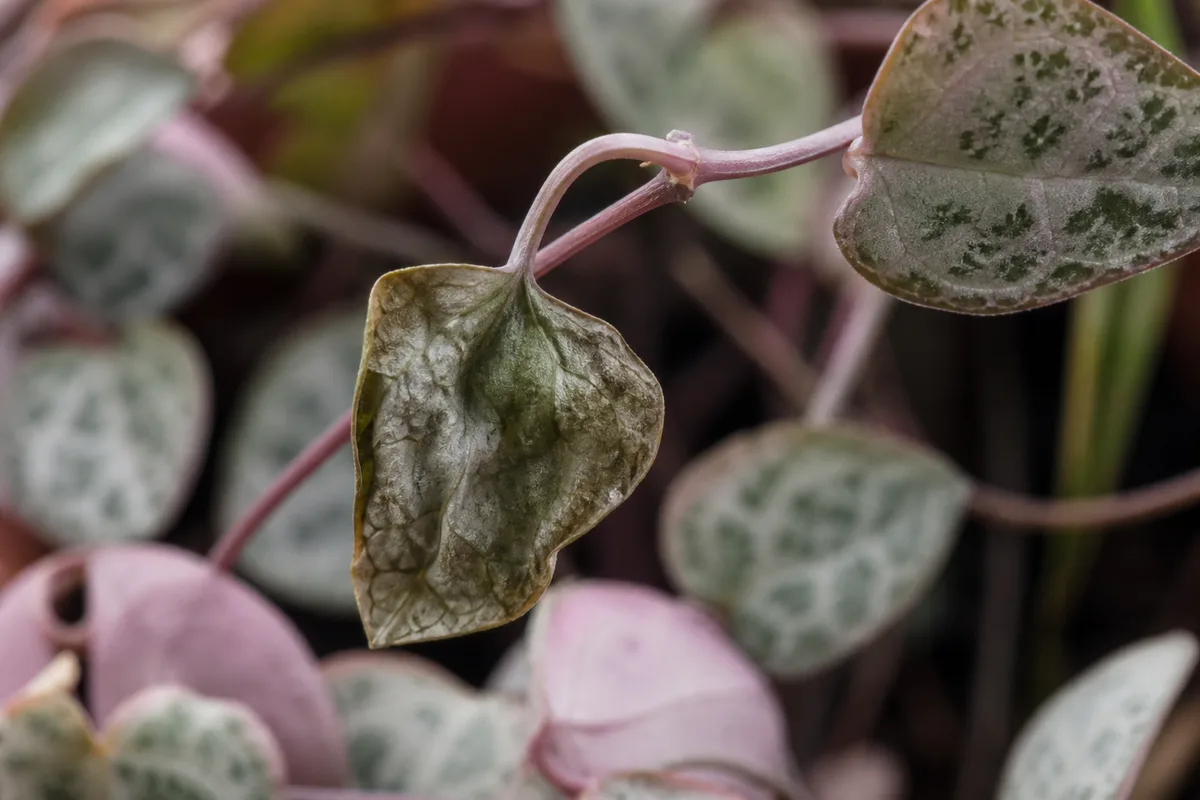
Wilting symptoms on String of Hearts - compare with healthy tissue on the same plant.
Dry wilt and wet wilt can look nearly identical from across the room. The difference is in the root zone:
Dry-wilt pattern:
- Pot feels noticeably light when lifted
- Mix is dry two inches down or deeper
- Leaves are thin, sometimes slightly curled inward
- Underground and aerial tubers feel firm, like small beads
- Soil line may pull away slightly from the pot edge
Wet-wilt pattern:
- Pot feels heavy for its size
- Mix stays damp or soggy days after the last watering
- Leaves may yellow or feel soft and translucent, not just limp
- Tubers at nodes or below soil feel squishy or hollow
- Mix may smell sour or musty
Temporary heat wilt happens after a sudden move to a hotter, sunnier window. Stems droop in afternoon heat but tubers stay firm and soil moisture is normal-not bone dry, not waterlogged. Recovery often follows overnight once light and temperature stabilize.
Why String of Hearts wilts
Ceropegia woodii evolved in dry South African scrub with excellent drainage and seasonal drought. Its tuberous roots and aerial tubers buffer short dry spells, but they cannot compensate forever when a hanging basket dries out in bright summer light. Underwatering during active growth depletes stored water; thin leaves lose turgor first, then whole strands collapse. NC State notes wilted leaves are the result of underwatering on this species.
Overwatering is the opposite failure mode and often the more dangerous one. String of Hearts tolerates dry soil much better than soggy mix and is easily killed by overwatering-especially in cool, dim winter rooms when the plant is dormant over the winter and watering should be reduced even further. Saturated soil deprives tubers of oxygen; decay spreads through fine roots first, then into the caudex and bead-like tubers. Damaged roots cannot transport water upward, so the plant wilts despite wet soil-the classic wilt paradox.
Other triggers fit this species specifically:
- Winter overwatering - growth slows and water use drops, but many growers keep a summer schedule. Mix stays wet for weeks while tubers suffocate.
- Wrong pot or mix - oversized pots, blocked drainage holes, or peat-heavy potting soil hold moisture around sparse tuberous roots too long.
- Low light plus wet soil - weak light slows transpiration, so the plant drinks slowly while the mix stays damp.
- Heat and sun shock - moving a basket suddenly into strong afternoon sun spikes water loss before roots adjust.
- Recent repot disturbance - trimmed or broken roots may underperform for days, causing temporary wilt even with correct moisture.
How to confirm the cause
Work through these checks in order. Each step narrows the diagnosis before you act.
- Pot weight - Lift the container off its saucer. If it is light, it is in need of water; heavy means wet. This is the fastest screen on a hanging plant you cannot easily tip out.
- Deep moisture - Stick a finger or dry skewer two inches into the mix. Dusty dry confirms drought. Clinging damp soil with wilted leaves suggests uptake failure, not thirst.
- Tuber firmness - Gently press aerial tubers along the vines and, if possible, the main tuber at the soil line. Firm beads mean roots are likely intact. Squishy or hollow tubers with wet mix point to rot.
- Leaf texture - Thin, papery, slightly gray-green leaves lean toward dryness. Soft, yellowing, translucent leaves with wet soil lean toward overwatering.
- Stem base - Brown or black mushy tissue where stems meet soil is advanced root failure. Firm pink-purple stems with dry soil mean underwatering.
- Recent care context - Did you water yesterday on a cool winter windowsill? Did the basket sit in String of Hearts light guide for a week without a drink? Did you repot last week? Context often confirms what the pot weight already suggests.
If the pot is heavy, the mix smells off, and tubers are soft, treat wet wilt as confirmed and skip watering entirely. If the pot is light, the mix is dusty, and tubers are firm, dry wilt is confirmed.
First fix for String of Hearts
For dry wilt: water thoroughly once until excess runs from the drainage hole, then let the pot drain completely.
Use room-temperature water and soak the entire root ball-not a light surface sprinkle. Set the hanging basket aside until the saucer is empty and no water pools at the bottom. Do not water again until the mix dries completely. Leaves should begin to firm within hours; full plumpness often returns within one to two days if tubers were healthy.
For wet wilt: stop all watering and unpot to inspect tubers before doing anything else.
Gently knock the plant out of its container. Trim mushy roots and tubers back to firm tissue with clean scissors. Let cut surfaces air-dry in bright indirect light for 24–48 hours, then repot into fresh fast-draining cactus-style mix in a pot sized to the tuber mass-not the full trailing canopy width. Wait at least a week before the first cautious watering.
Do not fertilize, mist, or move the plant into harsh direct sun while it is wilted. One correct action beats stacking treatments.
Step-by-step recovery
After the first fix, follow the path that matches your diagnosis.
Recovering from dry wilt:
- Confirm drainage holes are open and the basket is not sitting in standing water after the soak.
- Move to bright indirect light with some gentle morning sun if the plant was in deep shade-light helps it use water at a steady rate.
- Check leaf texture at 24 and 48 hours. Plumping leaves mean the tubers recharged.
- Resume a moisture-guided schedule: water only when the mix is completely dry during active growth.
- Trim any leaves that stay crisp and brown-they will not recover, but new nodes should stay firm.
Recovering from wet wilt:
- Remove all wet, peat-heavy soil from around tubers so you can see firm versus mushy tissue clearly.
- Sterilize tools between cuts; rot spreads through wet wounds.
- If firm vines and healthy aerial tubers remain, propagate backup strands by pinning beads into moist mix while the main plant dries.
- Repot shallowly-burying tubers too deep in fresh mix slows drying and invites repeat rot.
- Resume watering only when new growth appears or the plant has been dry and stable for at least a week in spring.
Recovering from temporary heat wilt:
- Filter or move the basket out of hot afternoon direct sun.
- Ensure soil moisture is evenly moderate-not saturated, not bone dry.
- Reassess the next morning; firm leaves overnight mean no further action is needed.
Recovery timeline
Mild dry wilt on a healthy String of Hearts often shows visible improvement within a few hours and full leaf plumpness within 24–48 hours. Severe drought that wrinkled aerial tubers may take several days and one or two proper watering cycles before strands look fully turgid again.
Wet wilt recovery is slower and depends on how much tuber tissue was lost. Plants with mostly firm tubers after trimming may push new growth in two to four weeks during spring and summer. Advanced crown rot with collapsed stems at the base rarely rebounds as a whole plant-salvage firm vine sections and aerial tubers instead.
Heat-related afternoon wilt that resolves overnight needs no extended recovery window. If limpness persists through cool mornings for more than three days, revisit soil moisture and tuber health rather than assuming sun stress alone.
Lookalike symptoms to rule out
Drooping from low light stretches stems with large gaps between leaves and pale color-not always limp tissue. Brighten placement before assuming a water problem.
Leggy growth is a chronic light issue, not acute wilt. Strands are thin and spaced out but leaves may still feel firm if moisture is adequate.
root rot on String of Hearts without obvious wilt can show yellow leaves first while stems still hold some turgor. Unpot if yellowing pairs with wet soil even before full collapse.
Mealybugs at leaf nodes weaken vines over time but do not cause the sudden pot-weight change typical of wilt. Look for white cottony clusters in the strand tangle.
Normal winter slowdown reduces growth and water need. Slightly softer leaves in low winter light with dry soil may mean dormancy, not emergency thirst-reduce watering rather than soaking on a calendar.
Mistakes to avoid
Do not water every wilted String of Hearts by reflex. Wet-soil wilt gets worse with each extra pour.
Do not keep a summer String of Hearts watering guide through winter dormancy when the plant uses far less moisture.
Do not repot into standard potting soil or an oversized decorative pot “to give roots room”-both trap water around tubers.
Do not place a recovering plant in full afternoon sun immediately; sunburn adds stress on already weakened tissue.
Do not assume aerial tubers will save a plant with a fully rotted underground caudex. Check both storage organs.
Do not fertilize wilted plants hoping to perk them up. Feed only after moisture balance is restored and new growth is active.
How to prevent wilting next time
Match watering to how fast the pot dries in your home, not a fixed calendar. During active spring and summer growth, allow the soil to dry out completely between waterings. In winter, reduce frequency sharply while growth rests.
Use well-drained sandy potting soil or cactus-style mix and a container with drainage holes sized to the tuber mass. Hanging baskets in bright windows dry quickly-check weight every few days in summer rather than assuming a two-week schedule still fits.
Acclimate to stronger light gradually over one to two weeks so heat and transpiration do not spike overnight.
Keep the plant in bright indirect light with some morning sun during the growing season so it uses water actively and the mix does not stay damp in a dim corner.
Inspect tubers when you water. Firm beads year-round mean the storage system is healthy; recurring soft tubers with wet soil mean your drainage or schedule needs adjustment before the next wilt episode.
When to worry
Treat wilting as urgent when strands collapse at the soil line, tubers turn black and mushy on inspection, or wilt persists after a correct deep watering on confirmed dry soil. Those signs mean vascular or root failure is advanced.
Wet-soil wilt that worsens over 48 hours despite stopping water needs immediate unpotting-not another waiting period.
Dry wilt that does not improve after one thorough watering and 48 hours in appropriate light suggests damaged roots or a blocked drainage issue worth inspecting.
Mild limpness on an otherwise firm plant with dry soil is low urgency-one good watering cycle usually resolves it.
Conclusion
Wilting on String of Hearts rewards a simple habit: lift the pot before you pour. Dry and light calls for one deep drink; wet and heavy calls for inspection and drying out, not sympathy watering. Reading tuber firmness alongside soil moisture separates the two opposite causes that look identical on the vine-and that diagnostic pause is often the difference between a plant that plumps back up in a day and one that loses its caudex to rot.
When to use this page vs other String of Hearts guides
- String of Hearts watering guide - Use for routine moisture checks before assuming wilting is the main issue.
- String of Hearts problems hub - Browse all 45 common issues on this species.
- Root Rot on String of Hearts - Different entry point when symptoms overlap with wilting.
- Drooping Leaves on String of Hearts - Different entry point when symptoms overlap with wilting.