Stromanthe Magic Star Best Soil Mix & pH
Stromanthe Magic Star Best Soil Mix & pH
Stromanthe Magic Star Best Soil Mix & pH
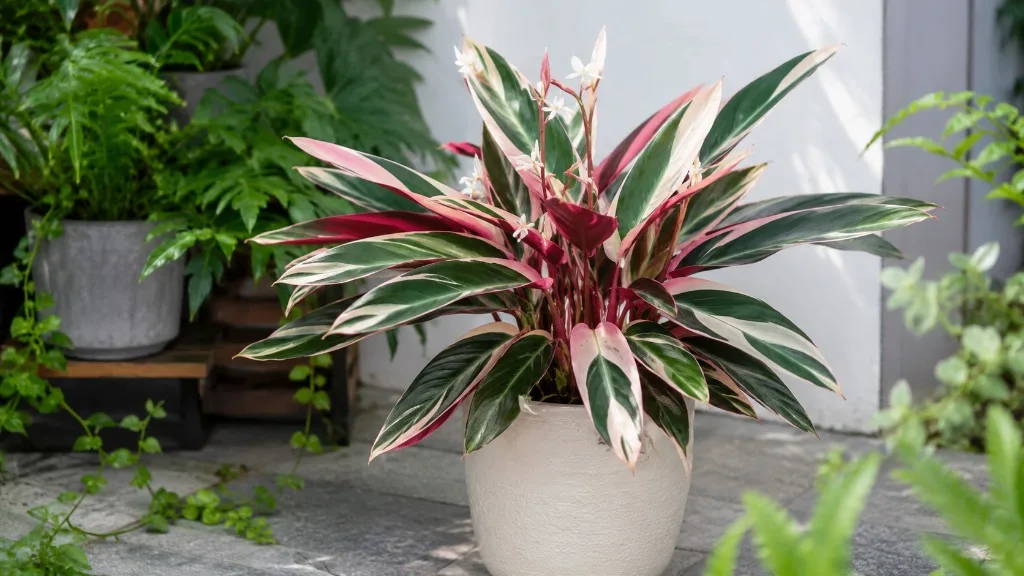
Stromanthe Magic Star — Stromanthe sanguinea ‘Magic Star’ — is sold for its star-splatter pink, cream, and green foliage, but the substrate under those thin leaves decides whether the color lasts. Magic Star shares the same Marantaceae root biology as Triostar and Calathea: fine, shallow roots that want steady moisture and constant oxygen at the same time. Dense, degraded, or oversized-pot soil fails that balance long before humidity or light get blamed. Crisp pink panels on otherwise moist mix, stalled spears, and sour-smelling pots usually trace back here.
Magic Star at a glance: Stromanthe sanguinea ‘Magic Star’ — a pink-and-green variegated prayer plant related to Triostar. Foliage: long leaves splashed with pink, cream, and green with magenta undersides; pale variegation needs bright indirect light and clean water. Humidity: high humidity (at least 60%); pink panels crisp faster than green tissue in dry air. Water: filtered, distilled, or rainwater — variegated stromanthe shows mineral burn on cream and pink zones within weeks. Difficulty: moderate to high — same care band as Triostar with slightly softer pink tones.
The practical target is a moisture-retentive, well-draining, peat- or coco-based mix with perlite and bark for air channels — kept in a pot with drainage holes sized to the root ball, not the leaf spread. Missouri Botanical Garden describes the species band as fertile, moist but well-drained soils that must not dry out completely indoors. Wisconsin Horticulture Extension recommends a quality soilless growing medium kept evenly moist in the growing season. Your mix is the tool that makes both phrases true in a container.
This guide covers what Magic Star roots need, DIY and store recipes, drainage tests, pH and mineral sensitivity, pot pairing, repot timing, and soil mistakes that cause more damage than a single missed watering. For dry-down rhythm tied to this mix, see the Stromanthe Magic Star watering guide.
What Stromanthe Magic Star Needs From Soil
Soil for Magic Star has one job: give fine prayer-plant roots a stable, breathable environment that matches Brazilian understory leaf litter — spongy, organic, and never compressed into a wet brick.
Native Habitat and Fine Root Behavior
Stromanthe sanguinea cultivars including Magic Star evolved on the rainforest floor of Brazil, where organic topsoil stays lightly damp after rain yet drains within hours. Indoors, you recreate that with a peat- or coco-based blend amended with perlite and orchid bark, not with garden dirt or unamended bag soil.
Magic Star spreads through shallow rhizomes and sends thin feeder roots that absorb water quickly but suffocate when mix compacts. NC State Extension notes on Maranta leuconeura — a close Marantaceae relative — describe root rot with poorly drained soils as a primary failure mode. The same structural rule applies to Magic Star: moisture without air equals decline.
Pale cream and pink panels make salt and fluoride buildup visible sooner than on solid-green houseplants. Soil is where minerals concentrate when you top-water with hard tap water or feed repeatedly without flushing. Edge burn on new leaves while the mix feels correctly moist often means chemistry in the root zone, not drought.
The Moisture-Aeration Balance
The tension in Magic Star soil is retention versus aeration. Straight peat or coir alone becomes soggy or hydrophobic over time. Straight perlite dries too fast for even root-zone moisture. The goal is a blend where the top inch dries in roughly three to seven days indoors while the center stays cool and lightly damp — matching how you would water per the Stromanthe Magic Star overview.
If mix stays wet at the bottom for two weeks after one watering, increase perlite and check pot size. If it goes brick-hard in 48 hours, add more coir or peat and review light placement — bright exposure speeds dry-down. Either extreme damages fine roots and shows up as curled or crisped leaves that mimic overwatering on Stromanthe Magic Star or underwatering.
Best DIY Soil Mix for Stromanthe Magic Star
A reproducible DIY blend beats mystery bag soil because you can shift drainage when your room runs warm, bright, or humid.
Recipe by Volume
Dependable default for most indoor Magic Star setups in plastic or glazed pots with drainage holes:
- 40% quality peat-based or coco-based potting soil — structural base
- 20% extra coco coir or peat moss — even moisture buffering
- 20% perlite or pumice — primary aeration
- 10–15% orchid bark or pine bark fines — long-term air channels
- 5% worm castings (optional) — gentle micronutrients
Simpler ratio: 2 parts peat or coir, 1 part perlite, ½ part orchid bark, with a small scoop of quality potting soil per quart for trace nutrients.
Finished texture should look like coarse chocolate cake crumbs — dark organic matter speckled with white perlite and tan bark. Water should penetrate immediately on first pour, not run down the sides of dry peat.
Faster-draining variant for heavy waterers or dim, cool rooms: equal parts coir and perlite plus a handful of bark per quart. Slightly more retentive variant for dry, bright homes: 3 parts coir, 1 part perlite, 1 part potting soil, still with bark. Never remove perlite entirely — that is the most common “helpful” change that backfires into root rot on Stromanthe Magic Star.
How to Mix and Pre-Moisten
Blend dry ingredients in a tub until uniform. Wear a mask if peat dust bothers you. Pre-moisten coir bricks and the final blend to damp and crumbly before repotting — dry peat repels water and causes channeling on first soak.
Store unused mix sealed away from fungus gnats. Soak compressed coir fully and drain before measuring; residual salts from unbuffered coir can burn fine roots and mimic low-humidity crisping on pale panels.
Store-Bought Mixes That Work for Magic Star
Not everyone wants a bucket and dust cloud. Commercial mixes work when you read labels and amend heavy bags.
Amending Standard Potting Soil
Standard indoor potting soil alone is usually too dense for Magic Star. For every 4 parts commercial mix, stir in 1 part perlite and 1 part orchid bark. Without that step, a nursery-fresh plant in reasonable mix often declines six months after repotting into unamended soil.
Never use garden soil, topsoil, or raised-bed mix indoors — they compact, carry pathogens, and defeat container drainage within a season.
Do not use alone: cactus or succulent mix (too fast-draining), pure sphagnum (wrong structure for upright clumps), moisture-control crystals (mask dry-down signals), or outdoor garden soil.
African Violet and Prayer-Plant Shortcuts
African violet mix is an excellent shortcut because it is already formulated for fine roots, moderate moisture, and aeration — the same profile Magic Star needs. Use it as the 40% base in the DIY recipe, or pot directly into violet mix with 10–15% extra perlite stirred in if your home runs cool.
Prayer-plant or calathea-specific blends from reputable brands are another direct fit. RHS guidance for Stromanthe sanguinea lists moist but well-drained loam with acid or neutral pH under glass — inspect any bag: if it feels like fine dirt with no visible perlite or bark, lighten it before potting.
Drainage Tests and Warning Signs
Recipes are starting points. Your home’s light, temperature, and pot choice are the final judge.
The One-Minute Percolation Test
Before repotting or when diagnosing a struggling plant:
- Fill a cup with dry mix. Pour ½ cup water in one steady pour.
- Good mix: water sinks within seconds; no pooling after one minute.
- Too dense: water pools, then sinks slowly into mud-like texture.
- Too chunky: water races through in under ten seconds without darkening the center.
Repeat in the actual pot when possible. Channeling along pot walls while the root ball stays dry produces a plant that looks both thirsty and overwatered — a common trigger for root rot on Stromanthe Magic Star when growers add more water to “help.”
Watch new spear development: healthy Magic Star unfurls leaves with strong pink and cream in bright filtered light. Stuck half-unfurled spears or months without new growth warrant a root-zone check before buying another product.
Drainage Holes, Pot Size, and Cachepots
Drainage holes are non-negotiable. Decorative outer pots must not hold runoff. Lift the inner nursery pot after every watering and empty the saucer — standing water replicates closed-pot anaerobic conditions.
Size the pot to the root mass, not leaf spread. Move up one inch in diameter at repot — roughly one nursery pot size. An 8-inch pot around a 4-inch root ball keeps a large volume of mix wet while roots occupy only the center.
The gravel-at-the-bottom myth creates a perched water table at the soil-rock boundary. Drainage comes from mix structure and holes, not stones. Build air channels through the full column with perlite and bark instead.
pH, Fluoride, and Salt Buildup in the Root Zone
Magic Star leaves are a dashboard for underground chemistry — especially on cream and pink tissue.
Ideal pH for Marantaceae Mixes
RHS lists acid or neutral pH for Stromanthe sanguinea with moist but well-drained loam. In practice, most growers see best results in pH 6.0–7.5. Peat- and coco-based blends with perlite usually land there without adjustment.
Do not chase pH with lime or sulfur unless you have a meter reading and a clear reason. Imbalanced DIY tweaks cause more harm than good on a single container plant.
When to Flush vs Repot
NC State Extension on Maranta notes prayer plants burn with high fluorides and over-fertilization. Those minerals concentrate in soil when water evaporates from the surface or you feed without flushing.
White crust, stunted new spears, and tip burn despite good humidity point to salt buildup. Flush with distilled or rainwater until two to three pot volumes exit the drainage hole, then drain fully. Repeat every few months if you use tap water.
If crust returns within weeks, mix smells sour, or roots are brown and mushy, flush is not enough — repot into fresh airy mix per the Stromanthe Magic Star repotting guide. Pair soil refresh with filtered water; pale panels show mineral damage within weeks on variegated stromanthe.
How Pot Material Changes Dry-Down
The same mix behaves differently by container. Plastic and glazed ceramic retain moisture longer — useful in dry air if the mix itself drains well. Unglazed terracotta pulls water through porous walls, adding safety against overwatering but requiring more frequent checks in bright, dry rooms.
Match pot material to your habits. Heavy waterers benefit from terracotta plus chunkier mix. Travelers or very dry homes may prefer plastic with a slightly more retentive blend. Soil recipe and pot choice are one system; changing one without the other shifts the dry-down curve your watering checks depend on.
When to Repot and Refresh Magic Star Mix
Even excellent mix decomposes. Organic matter breaks down, perlite floats upward, and roots fill air space. Repot every one to two years for actively growing plants, or sooner when roots circle the bottom, water channels down the sides, mix smells sour, or dry-down becomes unpredictable.
Best timing is spring through early summer when growth is strong. Wisconsin Extension notes active-season culture for container Stromanthe; fall can work in warm homes, winter only if mix is clearly failing.
At repot: loosen the outer 20–30% of old mix, trim mushy roots, replant at the same crown depth, water once thoroughly, and hold fertilizer four to six weeks. Do not bury the rhizome — stem rot follows crowns sitting deep in wet mix.
Common Soil Mistakes on Magic Star
Unamended bag soil is the top error. Fix by repotting with perlite and bark, not top-dressing over compacted core.
Oversized pots after repot keep excess mix wet around small root systems. Size up one step only.
Reusing depleted mix from another plant introduces pathogens and flattened structure.
Burying the crown when repotting invites stem rot in moist substrate.
Repotting day one from the nursery removes a often-good peat-perlite blend. Acclimate first unless mix is clearly wrong or roots are circling.
Assuming soil fixes light or humidity. No mix substitutes for bright filtered light and steady humidity for Stromanthe Magic Star overview color — soil prevents root failure; it does not paint leaves pink.
Magic Star-specific humidity and water quality
Stromanthe Magic Star is a Marantaceae prayer plant, so maintain high humidity (at least 60%) — pink panels crisp faster than green tissue in dry air. Missouri Botanical Garden notes houseplants need high humidity alongside evenly moist mix. Use filtered, distilled, or rainwater to limit mineral accumulation in soil; variegated stromanthe shows burn on cream and pink zones within weeks when salts build. Misting alone rarely holds humidity — pair good mix with a humidifier or grouped tropical placement. If new leaves brown at the edges while soil moisture looks correct, flush salts and switch water before repotting into wetter mix.
Conclusion
Stromanthe Magic Star rewards a substrate built like a rainforest floor in miniature: peat or coco base, generous perlite and bark, moist but never waterlogged conditions, and a drained pot sized to roots. Target pH 6.0–7.5, refresh mix every one to two years, and flush salts when pale panels burn despite even moisture.
Make the default recipe, run the percolation test after repotting, and adjust perlite up or down based on how your home actually dries the pot. When leaf problems persist despite good humidity and light, inspect roots and mix before chasing another variable. Magic Star is unforgiving about compacted, sour soil — get the root zone right, and the star-splatter foliage has a fighting chance to stay vivid.
When to use this page vs other Stromanthe Magic Star guides
- Stromanthe Magic Star overview — Start here for whole-plant context before deep-diving soil specifics.
- Stromanthe Magic Star watering — Use when mix feels right but dry-down timing or water quality is the issue.
- Stromanthe Magic Star repotting — Full unpotting steps when mix failure requires transplant.
- Stromanthe Magic Star light — Bright exposure changes how fast this mix dries.
- Root rot on Stromanthe Magic Star — Escalate when soggy mix has already damaged roots.
Related Stromanthe Magic Star guides
- Overview — species hub and Magic Star variegation biology
- Watering — top-inch dry-down rhythm tied to this mix
- Light — brightness affects soil dry-down speed
- Repotting — transplant protocol when mix fails
- Fertilizer — feeding without accelerating salt buildup
- Propagation — division uses the same mix formula
- Pruning — trim after soil and roots stabilize