Drooping Leaves on Syngonium Albo: Causes, Checks & Fixes
Quick answer
Drooping leaves on Syngonium Albo mean the plant cannot hold leaf turgor-usually because the mix is too dry or roots are too damaged to absorb water. Lift the pot and check the top inch before you change anything.
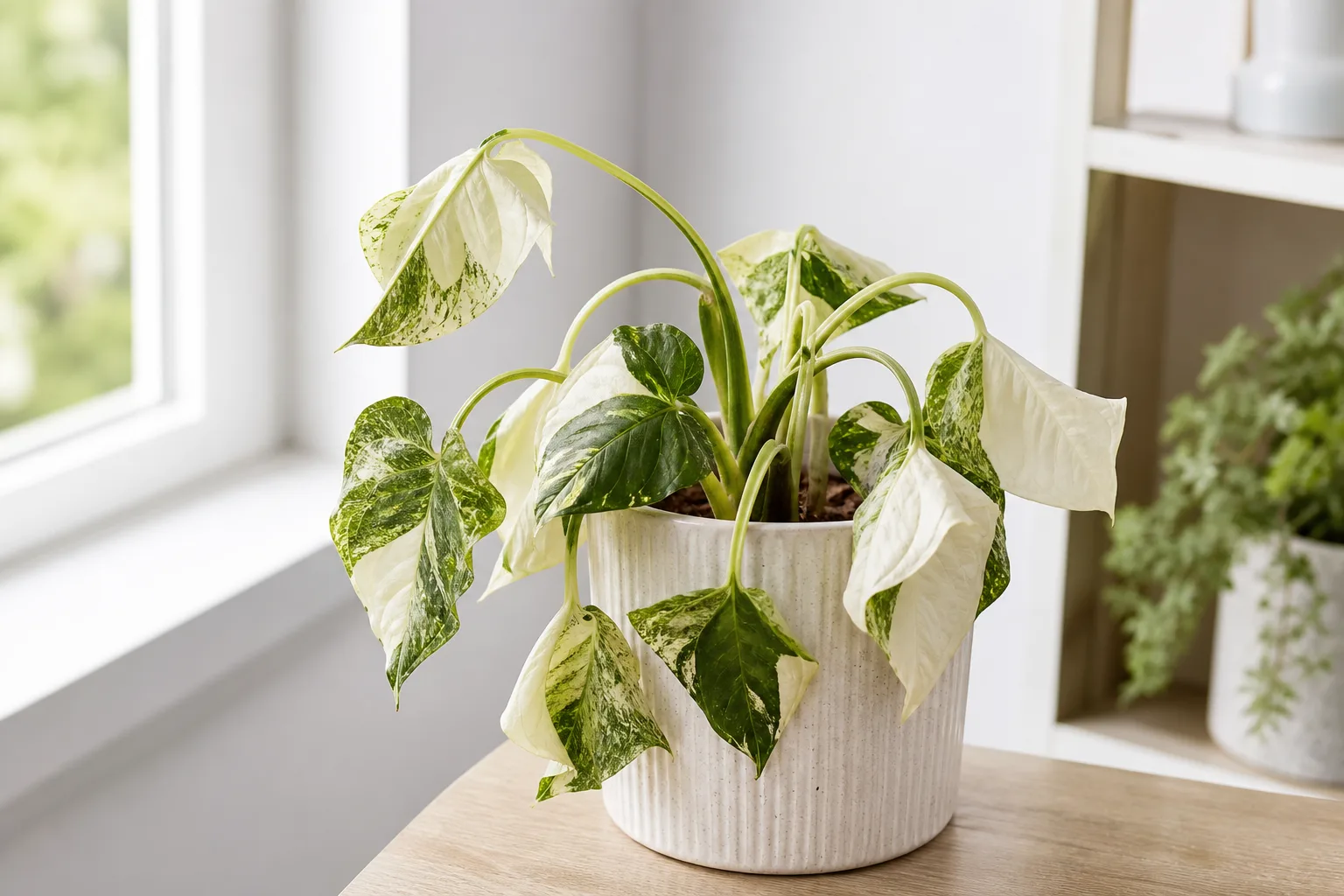
Drooping Leaves on Syngonium Albo: Causes, Checks & Fixes
This guide covers drooping leaves on Syngonium Albo. See also the general Drooping Leaves guide, watering, and light pages for this plant.
Drooping Leaves on Syngonium Albo: Causes, Checks & Fixes
Quick answer
Drooping leaves on Syngonium Albo (Syngonium podophyllum ‘Albo Variegatum’) look dramatic because each arrow-shaped leaf sits on a long petiole-when turgor drops, the whole blade hangs instead of standing at its usual angle. The symptom almost always traces back to water movement: either too little moisture in the mix, or roots that can no longer absorb water even when the soil is wet.
First step: lift the pot and probe the top inch of soil before you reach for the watering can. Periodically lift the pot for changes in weight to judge moisture. A light, dry pot with firm stems needs a deep drink. A heavy, wet pot-especially with a softening stem base-means stop watering and inspect roots. Adding water to a wet, drooping albo is the mistake that turns recoverable stress into stem rot.
| What you find | Likely cause | First action |
|---|---|---|
| Light pot, dry top inch, firm stems | Thirst | Thorough soak; empty saucer after runoff |
| Heavy pot, wet top inch, limp leaves | Root stress / overwatering | Stop watering; see overwatering guide |
| Normal moisture, firm stems, droop after repot or window move | Temporary shock | Stable light; water when top inch dries |
| Wet soil + soft stem base + sour smell | Stem rot risk | Unpot and inspect; see root rot guide |
Use this page when petioles hang gradually but the plant still has structure. Use the wilting guide instead when the whole vine collapses sharply or turgor loss feels sudden and severe.
Drooping vs. wilting on Syngonium Albo - read this first
Both symptoms share the same wet-vs-dry diagnostic fork, but they describe different stages of turgor loss on this long-petioled aroid:
| Signal | Drooping (this page) | Wilting (wilting guide) |
|---|---|---|
| Posture | Petioles bend; blades hang toward the pot rim | Sharper collapse; stems may fold or lean dramatically |
| Speed | Often gradual over hours to a day | Can appear faster, especially in heat or after missed watering |
| Stem feel | Base often still firm in early thirst droop | Softening at soil line more common in advanced collapse |
| Typical trigger | Missed dry-down, hydrophobic mix, mild root stress | Severe drought, chronic wet roots, acute heat or cold shock |
| Recovery signal | Petioles stiffen within hours to one day after correct watering | Judge by firm new growth over days to weeks |
The wilting guide covers full turgor collapse, sour-smell urgency, and salvage-node decisions when the crown is failing. This page focuses on the earlier petiole hang most collectors notice first-and the hydration paradox where wet soil still produces limp leaves.
Why Syngonium Albo leaves droop
Syngonium podophyllum is a tropical aroid with succulent stems and long-petioled juvenile leaves. In bright indirect light during active growth, the plant transpires steadily. When the chunky mix dries too far, roots cannot replace water fast enough and petioles soften. White variegated sectors on Albo have less chlorophyll than green tissue, so they often show the first curl or limp hang while stems still feel firm.
The opposite problem looks identical from above. Overwatering, dense peat-heavy mix, or dim rooms where the plant uses water slowly leave roots sitting in oxygen-poor soil. Stunted slow growth with yellowing leaves is a symptom of over-watering, and drooping frequently appears before lower leaves turn yellow. Damaged roots cannot pull water into leaf cells, so the plant wilts despite wet mix-the classic hydration paradox.
Other triggers matter on this species but are less common than water imbalance. A recent repot or move to a brighter window can cause temporary droop while fine roots re-establish. Cold air from an AC vent slows root function and can make leaves hang on an otherwise evenly moist plant. Extreme dry air in winter can crisp white edges and make adjacent tissue droop without the whole pot being dry.
What drooping leaves look like on Syngonium Albo
Healthy Albo holds arrowhead-shaped leaves at a slight upward angle on stiff green petioles. Drooping changes that posture:
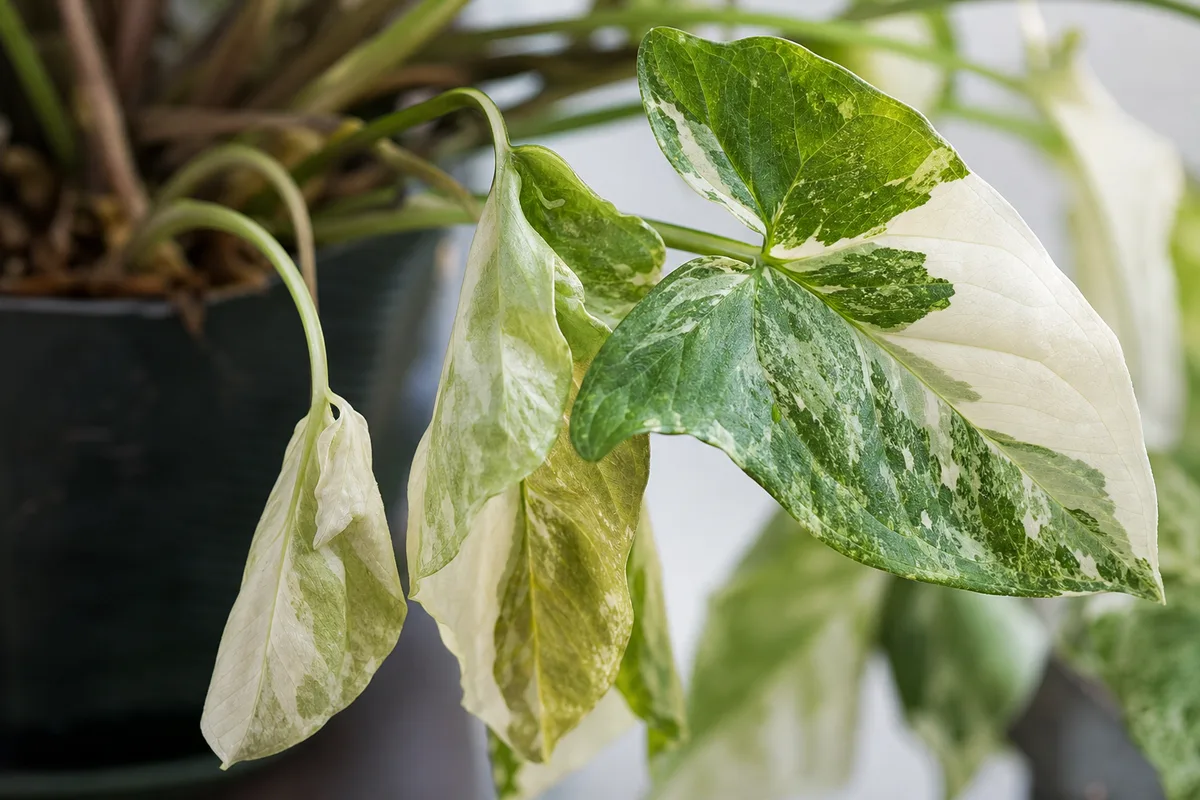
Drooping Leaves symptoms on Syngonium Albo - compare with healthy tissue on the same plant.
Thirst-related droop
- Petioles bend and leaves hang toward the pot rim
- Pot feels light; top inch of mix is dry or pulling slightly from the pot edge
- Stems stay firm when you pinch the base
- White variegated margins may feel papery or show early crisping
- Plant often perks noticeably within hours after a deep watering
Root-failure droop
- Leaves hang even though mix feels wet or the pot is heavy
- Lower leaves may yellow while still drooping
- Stem tissue at the soil line may feel softer than upper stems
- Mix may smell sour; drainage hole may show stagnant moisture
- New variegated leaves emerge smaller or mostly green in dim wet conditions
Temporary stress droop
- Follows repotting, shipping, or a sudden move to stronger light
- Soil moisture reads normal and stems stay firm
- Improves over several days without drastic intervention if light and watering stay steady
Drooping differs slightly from full wilting: droop is often the first soft hang of petioles, while advanced wilt collapses the whole plant. Both share the same diagnostic path on Albo-check the pot, not just the leaves.
Worked example (illustrative): A 4-inch nursery Albo in a bright east window went from firm petioles to visible hang within 48 hours after a missed watering during a warm week. The 4-inch pot felt noticeably light, the top inch was dusty dry, and white margins on two leaves felt papery but stems stayed firm at the base. One bottom-water soak for 25 minutes produced perked petioles within about 6 hours; crisp white edges on those two leaves were trimmed after stabilization. Original before/after photos pending for a future update.
How to confirm the cause
Work through these checks in order:
- Pot weight - Lift the container off the saucer. Light and airy means dryness; heavy and saturated points to excess moisture or poor drainage.
- Top-inch probe - Push your finger into the upper mix. Dusty dry confirms thirst. Clinging wet soil with no dry-down for days suggests overwatering stress.
- Stem firmness - Pinch the base of a petiole and the stem at soil level. Firm throughout supports underwatering or temporary shock. Softening at the soil line with wet mix raises root rot concern.
- Variegation pattern - White sectors limp or crisp before green tissue on a light pot strongly suggests dry stress. Whole-plant droop with wet soil and yellowing lower leaves suggests root damage.
- Recent changes - Repotting within the last week, a new window, or a heat wave explains temporary droop when moisture and stems read normal.
- Drainage check - Water should exit the drainage hole freely. Standing water in the saucer or a blocked hole keeps roots wet and invites decay.
If the pot is light and dry with firm stems, underwatering is confirmed-see the underwatering guide for rehydration depth. If the pot is heavy, wet, and stems are softening, stop watering and plan a root inspection per the root rot guide-not another soak.
First fix for Syngonium Albo
Lift the pot, probe the top inch, and choose one path based on what you find-do not water automatically.
- Dry and light: Water deeply once until excess runs from the drainage hole, then discard saucer water. Wait 12–24 hours and check whether petioles stiffen.
- Wet and heavy with firm stems: Stop watering. Move to brighter indirect light so the mix dries faster. Do not repot on day one unless the soil smells sour.
- Wet with soft stem base: Stop all watering, unpot, and inspect roots. Trim mushy brown tissue, air-dry the root ball, and repot into fresh chunky aroid mix only after stems stabilize.
This single diagnostic step prevents the most costly mistake on Albo: watering a plant whose roots are already failing.
Step-by-step recovery
If underwatering caused the droop
- Water until runoff appears, or bottom-water for 20–30 minutes if mix has gone hydrophobic and water runs straight through the surface.
- Place the plant back in bright indirect light-not direct sun, which can burn white variegation.
- Recheck in a few hours. Perked petioles confirm the diagnosis.
- Resume watering when the top inch dries again; track how many days that takes in your room per the watering guide.
- If white edges already turned crisp brown, trim only fully dead tissue after the plant stabilizes. Those sectors will not re-green.
If overwatering or root stress caused the droop
- Stop watering immediately.
- Knock the plant out of the pot. Healthy syngonium roots are firm and pale; rotted roots are brown, translucent, or mushy.
- Cut away soft roots with clean scissors. Keep firm stem sections with nodes.
- Let the root ball dry in bright indirect light for one to three days before repotting into airy aroid mix with perlite or bark per the soil guide.
- Water lightly once after repotting, then wait for the top inch to dry before the next drink.
- If the stem base is black and soft, salvage firm nodes as cuttings rather than trying to save the whole plant.
Full wet-soil rescue steps live on the overwatering and root rot guides.
If repotting or light shock caused temporary droop
- Keep soil evenly moist-not wet-and avoid moving the plant again for two weeks.
- Maintain moderate humidity if dry indoor air is stressing variegated edges.
- Do not fertilize until new growth looks normal and petioles hold firm without daily collapse.
Recovery timeline
Thirst-related droop on a healthy Albo often improves within hours to one day after proper watering. Small pots in bright rooms perk faster than large containers in dim corners. Hydrophobic dry mix may need a second soak or bottom-watering before petioles fully stiffen.
Overwatering recovery takes longer-typically one to three weeks after roots are trimmed and the mix dries to a healthy rhythm. Judge progress by firm stems and a new arrowhead leaf with stable variegation, not by saving every old drooping blade.
Temporary shock droop after repotting usually resolves within three to seven days when light and moisture stay consistent. Persistent daily collapse beyond 48 hours after correcting water means inspect roots even if you recently repotted.
Lookalike symptoms to rule out
Full wilting collapses the entire plant more dramatically than early droop, but the pot-weight test is identical. When collapse feels acute, switch to the wilting guide.
Yellow leaves often accompany root-failure droop but can also mean natural aging of lower leaves on a mature vine. Yellow with wet soil and soft stems is rot; yellow on the lowest leaf with firm stems elsewhere is often normal.
Curling leaves from low humidity or pest damage can happen alongside droop. Check leaf undersides for webbing or clusters before assuming water alone is the issue. Spider mites are a common problem on syngonium in dry warm rooms.
Leggy pale growth in dim light is not droop-the plant stretches toward light while petioles stay stiff. Move to brighter indirect light per the light guide; droop from thirst still needs a dry-down watering check.
Cold damage shows darkened or water-soaked patches on leaves near a draft. Move the pot away from AC vents; do not compensate with extra water while roots are cold-stressed.
Mistakes to avoid
Do not water every drooping Albo without checking soil first-the most dangerous error is soaking a plant whose roots are already rotting.
Do not keep variegated Albo in dim corners and water on a summer schedule. Low light slows water use; adjust rhythm per the watering guide and light guide.
Do not repot, fertilize, and prune on the same day as a droop crisis. Stabilize moisture and roots first.
Do not mist leaves expecting droop to resolve. Surface moisture does not fix root-zone water balance.
Do not assume white crispy tips mean underwatering only-chronic overwatering can yellow and soften whole leaves while edges also brown. Always pair leaf texture with pot weight.
Wear gloves when trimming rotted tissue; Syngonium contains insoluble calcium oxalates toxic to pets and can irritate skin.
Syngonium Albo care cross-check
Drooping is often a warning that routine care and the plant’s needs have drifted apart:
- Light: Bright indirect light keeps variegation stable and helps the mix dry at a predictable rate. Direct sun scorches white sectors and increases water loss faster than roots can catch up after a missed watering.
- Water: Wait until the top inch dries before soaking again during spring and summer; reduce watering from fall to late winter.
- Mix: Chunky aroid blend with perlite or bark-not heavy garden soil or straight peat that stays wet around sparse roots.
- Pot size: An oversized pot holds wet soil for days after one watering. Match pot volume to root mass.
- Humidity: Moderate humidity supports variegated tissue between waterings in dry winter rooms.
When these basics align, droop becomes rare and usually traces to a missed watering or a recent environmental change you can correct quickly.
How to prevent drooping leaves next time
Learn your pot’s dry-down speed in its current light rather than copying someone else’s schedule. Lift the pot weekly during active growth-you will feel the weight shift from saturated to ready-to-water.
Use containers with drainage holes and empty saucers after every watering. Never let Albo sit in standing water.
Acclimate to brighter windows over a week if you move the plant for better variegation. Sudden light jumps increase transpiration before roots adjust.
Repot into fresh airy mix in spring when roots circle the pot, not in winter when growth and drying are slow.
After travel, check moisture immediately. Albo in a bright room can go from fine to drooping in a few dry days, especially in small pots.
When to worry
Treat droop as urgent when wet soil, sour smell, and soft stem base appear together-that pattern can advance to stem rot within days if watering continues.
Also act quickly when the entire plant collapses with bone-dry mix throughout; rehydrate thoroughly, but ensure the pot drains and is not left sitting in runoff. For full-collapse rescue, see the wilting guide.
Worry less about a single droopy leaf on an otherwise firm plant after one missed watering-deep water once and monitor.
If droop returns every week despite careful dry-down watering, unpot and inspect roots for chronic rot, an oversized pot, or compacted mix that never dries at the center.
Related Syngonium Albo guides
- Syngonium Albo overview - hub page for the full care cluster
- Syngonium Albo watering - dry-down rhythm and seasonal adjustment
- Wilting on Syngonium Albo - acute turgor collapse vs gradual petiole hang
- Overwatering on Syngonium Albo - chronic wet mix and hydration paradox
- Underwatering on Syngonium Albo - thirst droop when the pot is light and dry
- Root rot on Syngonium Albo - wet-soil escalation and node salvage
- Syngonium Albo light - variegation stability and transpiration rate
- Syngonium Albo soil - chunky aroid mix after root trim
Action checklist before you close this tab
- Lifted the pot and probed the top inch of mix
- Checked stem firmness at the soil line
- Chose one path: soak (dry/light), dry out (wet/firm), or inspect roots (wet/soft)
- Confirmed this is droop (gradual petiole hang), not full wilt-if collapse is severe, opened the wilting guide
- Set a reminder to recheck petiole stiffness in 12–24 hours