Vallisneria Aquarium Plant Care: Species, Runners
Vallisneria spp.
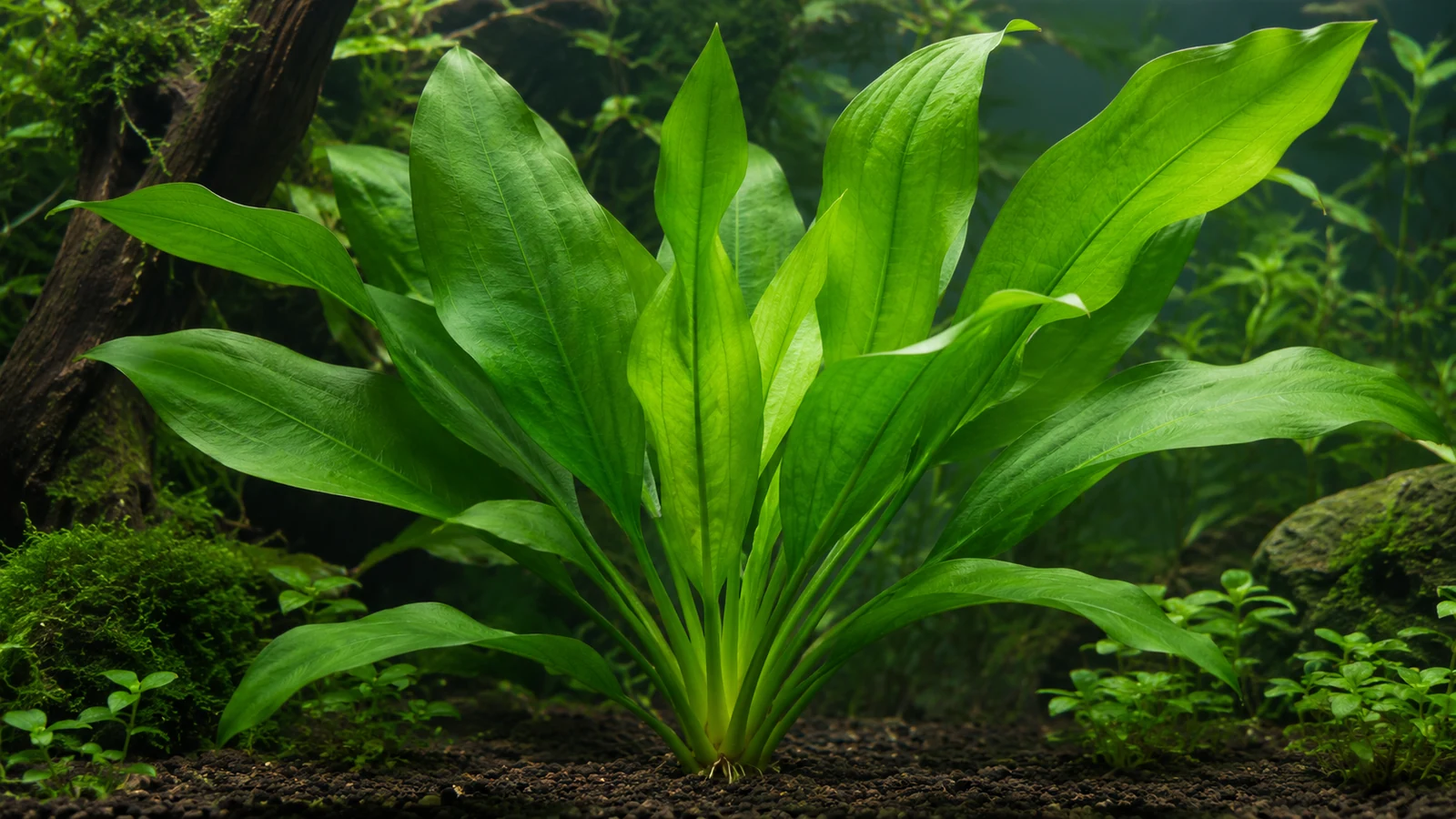
Plant the roots of Vallisneria in aquarium substrate while leaving the leaf crown uncovered. Keep it submerged in stable, species-appropriate freshwater conditions and plan for daughter plants to spread from runners.

Vallisneria Aquarium Plant Care Guide
Start with wateringThe most common care mistake for VallisneriaView Vallisneria Watering Guide →Vallisneria care essentials
Light
Low to moderate aquarium lighting suits many commonly sold Vallisneria, though the exact need varies by species and tank depth. Increase light gradually and keep long leaves from shading plants below them.
Water
Vallisneria is an aquarium plant, not a terrestrial houseplant. Grow it fully submerged in freshwater and maintain stable, species-appropriate aquarium conditions.
Soil
Use an aquarium substrate that can anchor a rooted rosette, such as fine sand or fine gravel. Vallisneria forms roots in the substrate and spreads through it by runners; it is not grown in ordinary potting soil.
Humidity
Not applicable; the plant grows fully underwater
Temperature
Species-dependent. AquariumStocking's V. spiralis guide lists about 18–28 °C (64–82 °F); do not treat that trade-guide range as a universal limit for every Vallisneria species or source.
Fertilizer
Root-feeding forms may benefit from aquarium root tabs when planted in inert sand or gravel. Follow the product label and the needs of the fish and invertebrates in the tank.. Use aquarium-specific root tabs or a suitable aquatic-plant substrate; optional water-column fertilizer should match the livestock and product directions.
About Vallisneria
Vallisneria is native to Species-dependent; the genus occurs in freshwater habitats across multiple continents, typically reaches Highly variable. Dwarf aquarium forms such as V. nana are shorter and narrower; V. americana can produce long leaves that reach the water surface in a deep tank. indoors, with moderate to fast in established aquariums; growth and runner production vary by species, light, nutrients, and tank conditions. growth. Vallisneria has a fully submerged, rooted rosettes that spread by stolons (runners) growth habit and part of the Hydrocharitaceae family. It is also known as Val, Tape Grass, and Eelgrass.
| Detail | Information |
|---|---|
| Also known as | Val, Tape Grass, Eelgrass |
| Native region | Species-dependent; the genus occurs in freshwater habitats across multiple continents |
| Mature size | Highly variable. Dwarf aquarium forms such as V. nana are shorter and narrower; V. americana can produce long leaves that reach the water surface in a deep tank. |
| Growth rate | Moderate to fast in established aquariums; growth and runner production vary by species, light, nutrients, and tank conditions. |
| Growth habit | Fully Submerged, Rooted Rosettes That Spread By Stolons (Runners) |
| Scientific name | Vallisneria spp. |
| Family | Hydrocharitaceae |
How to care for Vallisneria?
How much light does Vallisneria need?
Low to moderate aquarium lighting suits many commonly sold Vallisneria, though the exact need varies by species and tank depth. Increase light gradually and keep long leaves from shading plants below them.. Low aquarium light for many common forms. Moderate aquarium light. low light
- Low to moderate aquarium lighting suits many commonly sold Vallisneria - Low to moderate aquarium lighting suits many commonly sold Vallisneria, though the exact need varies by species and tank depth.
- though the exact need varies by species and tank depth. Increase light gradually and keep long leaves from shading plants below them - Increase light gradually and keep long leaves from shading plants below them..
- Low aquarium light for many common forms - Low aquarium light for many common forms.
- Moderate aquarium light - Moderate aquarium light.
- low light - Low to moderate aquarium lighting suits many commonly sold Vallisneria, though the exact need varies by species and tank depth.
When should you water Vallisneria?
Vallisneria is an aquarium plant, not a terrestrial houseplant. Grow it fully submerged in freshwater and maintain stable, species-appropriate aquarium conditions.
- Check that the rosette stays submerged and anchored - Grow it fully submerged in freshwater and maintain stable, species-appropriate aquarium conditions.
- the crown remains above the substrate
- and the tank stays within the range for the Vallisneria species being sold - Grow it fully submerged in freshwater and maintain stable, species-appropriate aquarium conditions.
- Drain excess water - Grow it fully submerged in freshwater and maintain stable, species-appropriate aquarium conditions.
What soil works best for Vallisneria?
Use an aquarium substrate that can anchor a rooted rosette, such as fine sand or fine gravel. Vallisneria forms roots in the substrate and spreads through it by runners; it is not grown in ordinary potting soil.
- Fine sand or fine gravel that allows roots and runners to establish - Use an aquarium substrate that can anchor a rooted rosette, such as fine sand or fine gravel.
- Nutrient-bearing aquarium substrate - Use an aquarium substrate that can anchor a rooted rosette, such as fine sand or fine gravel.
- or root tabs in inert substrate when needed - Use an aquarium substrate that can anchor a rooted rosette, such as fine sand or fine gravel.
How to propagate Vallisneria?
Vallisneria spreads from the parent rosette by horizontal runners. Let daughter plants root before separating them, then plant the roots in substrate without burying the leaf crown.
- Stolons or runners that produce daughter plants - Let daughter plants root before separating them, then plant the roots in substrate without burying the leaf crown.
- Replanting established daughter rosettes after they develop roots - Let daughter plants root before separating them, then plant the roots in substrate without burying the leaf crown.
Grower notes for Vallisneria
Identify the form before choosing a tank position
Aquarium Vallisneria includes tall ribbon-leaved forms and smaller narrow-leaved trade forms. V. americana can produce leaves that reach the surface, while V. nana is sold as a smaller option. Check the species or cultivar label and allow for variation between individual plants.
Bury roots, not the leaf crown
Separate a bunch into individual rosettes, place the roots in substrate, and leave the point where the leaves meet the roots uncovered. Aquarium Co-Op recommends planting grass-like aquarium plants individually so they have room to spread.
Leave room for runners
Vallisneria spreads by stolons through the substrate, producing rooted daughter plants. Leave space around the original rosettes and thin the colony later if it advances into areas where you do not want it.
Match water conditions to the identified species
Do not assume one parameter range covers the genus. AquariumStocking's V. spiralis guide describes a broad aquarium range, while botanical records for V. americana document fresh to brackish natural waters. Keep the tank stable and use the seller's species identification when choosing conditions.
Allow time for submerged leaves to replace shop-grown foliage
AquariumStocking notes that plants grown above water may shed older leaves after planting underwater. Watch the crown for new growth before deciding that a plant has failed or removing it from the substrate.
Remove old leaves from the base
For long or damaged leaves, remove the whole leaf near the rosette instead of repeatedly cutting across healthy leaf blades. AquariumStocking warns that trimmed leaf tips can brown; thin crowded growth by removing whole rosettes or unwanted runners.
Pet safety is unverified
I could not verify a species-specific pet-toxicity listing for Vallisneria. Do not infer that it is safe or toxic from its use in aquariums; ask a veterinarian if a pet chews or swallows plant material.
Do not infer pet safety from aquarium use. No species-specific toxicity classification was verified; retain the pet-safety review flag until an authoritative source provides a species-specific answer.
Watering Vallisneria
For Vallisneria, check that the rosette stays submerged and anchored, the crown remains above the substrate, and the tank stays within the range for the Vallisneria species being sold. and water there is no individual watering schedule for a submerged plant. Maintain the aquarium's water level and routine water-quality care instead. In an indoor aquarium, follow the tank's stable care routine. Outdoor ponds or unheated tanks require species- and climate-specific choices because Vallisneria species differ in their temperature tolerance.
| Detail | Information |
|---|---|
| How often | There is no individual watering schedule for a submerged plant. Maintain the aquarium's water level and routine water-quality care instead. |
| How to check | Check that the rosette stays submerged and anchored, the crown remains above the substrate, and the tank stays within the range for the Vallisneria species being sold. |
| Seasonal changes | In an indoor aquarium, follow the tank's stable care routine. Outdoor ponds or unheated tanks require species- and climate-specific choices because Vallisneria species differ in their temperature tolerance. |
Soil & potting for Vallisneria
Use a mix of Fine sand or fine gravel that allows roots and runners to establish, Nutrient-bearing aquarium substrate, or root tabs in inert substrate when needed for Vallisneria. Drainage is not relevant under water. Keep the leaf crown visible above the substrate so the base is not smothered while the roots remain anchored. Target soil pH around Not applicable as a soil pH. Aquarium water pH ranges vary by species and source; keep conditions stable and confirm the seller's identification. Repot no routine repotting; thin or reposition the colony as runners spread, ideally in reposition established daughter plants when the aquarium is stable.
| Detail | Information |
|---|---|
| Recommended mix | Fine sand or fine gravel that allows roots and runners to establish, Nutrient-bearing aquarium substrate, or root tabs in inert substrate when needed |
| Drainage | Drainage is not relevant under water. Keep the leaf crown visible above the substrate so the base is not smothered while the roots remain anchored. |
| Soil pH | Not applicable as a soil pH. Aquarium water pH ranges vary by species and source; keep conditions stable and confirm the seller's identification. |
| Repotting frequency | No routine repotting; thin or reposition the colony as runners spread |
| Best season to repot | Reposition established daughter plants when the aquarium is stable |
Signs it needs repotting
- Runners crowd nearby plants or reach areas where the colony is not wanted
- A daughter rosette has rooted and needs to be moved
- A plant has become loose and needs its roots anchored again
Humidity & temperature for Vallisneria
Vallisneria prefers not applicable; the plant grows fully underwater, though normal home humidity is usually fine. Keep temperatures around species-dependent. AquariumStocking's V. spiralis guide lists about 18–28 °C (64–82 °F); do not treat that trade-guide range as a universal limit for every Vallisneria species or source. Avoid letting Vallisneria sit below Confirm the temperature range for the identified species or cultivar and keep aquarium temperature stable; no single minimum applies to the whole genus. Vallisneria americana is documented in fresh to brackish waters in North America. Aquarium forms sold under the genus name can have different native ranges and temperature needs.
| Detail | Information |
|---|---|
| Humidity | Not applicable; the plant grows fully underwater - normal home humidity is fine. |
| Ideal temperature | Species-dependent. AquariumStocking's V. spiralis guide lists about 18–28 °C (64–82 °F); do not treat that trade-guide range as a universal limit for every Vallisneria species or source. |
| Minimum temperature | Confirm the temperature range for the identified species or cultivar and keep aquarium temperature stable; no single minimum applies to the whole genus. |
| Temperature notes | Vallisneria americana is documented in fresh to brackish waters in North America. Aquarium forms sold under the genus name can have different native ranges and temperature needs. |
Fertilizer & pruning for Vallisneria
Feed Vallisneria root-feeding forms may benefit from aquarium root tabs when planted in inert sand or gravel. Follow the product label and the needs of the fish and invertebrates in the tank. using use aquarium-specific root tabs or a suitable aquatic-plant substrate; optional water-column fertilizer should match the livestock and product directions. The best feeding window is during active growth, adjust aquarium nutrients to plant and livestock needs. Do not add garden fertilizer to an aquarium or dose beyond the label to force growth. Vallisneria does not need injected CO2 to grow in many common setups.
| Detail | Information |
|---|---|
| Fertilizer schedule | Root-feeding forms may benefit from aquarium root tabs when planted in inert sand or gravel. Follow the product label and the needs of the fish and invertebrates in the tank. |
| Best season | During active growth, adjust aquarium nutrients to plant and livestock needs |
| Fertilizer type | Use aquarium-specific root tabs or a suitable aquatic-plant substrate; optional water-column fertilizer should match the livestock and product directions. |
| What to avoid | Do not add garden fertilizer to an aquarium or dose beyond the label to force growth. Vallisneria does not need injected CO2 to grow in many common setups. |
Pruning (optional)
Remove old or damaged leaves from the base rather than repeatedly shortening healthy leaf tips; AquariumStocking notes that cut tips can brown. Thin crowded stands by removing whole rosettes and unwanted runners.