Fungus Gnats on Water Lettuce: Causes, Checks & Fixes
Quick answer
Water lettuce has no soil, so fungus gnats around your tank usually mean decaying floating rosettes, uneaten food, filter organic film, or overwatered houseplants nearby-not wet mix on the plant itself. First step: skim and discard yellowing or mushy rosettes and surface debris, then place yellow sticky traps at the tank rim.
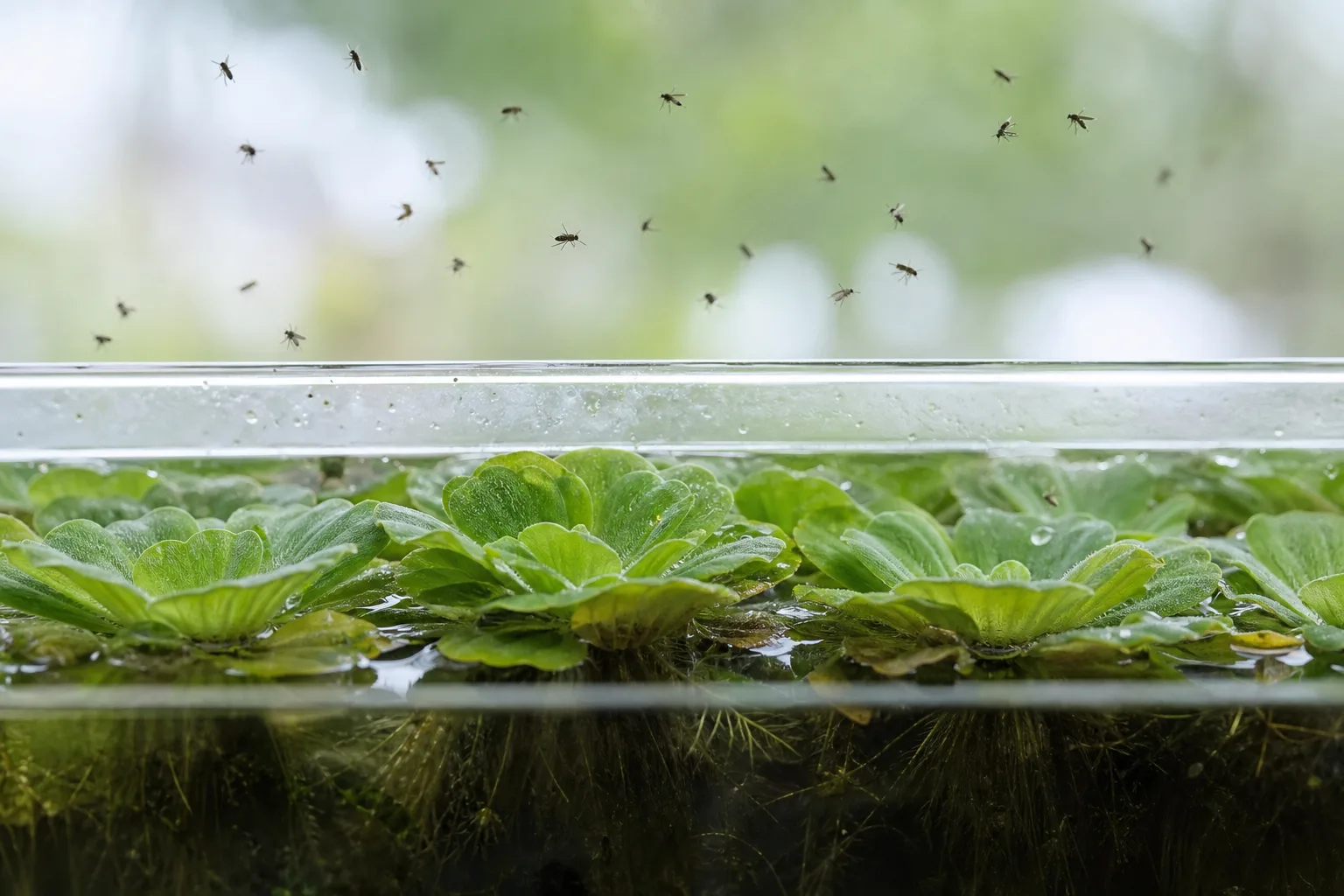
Fungus Gnats on Water Lettuce: Causes, Checks & Fixes
This guide covers fungus gnats on Water Lettuce. See also the general Fungus Gnats guide, watering, and light pages for this plant.
Fungus Gnats on Water Lettuce: Causes, Checks & Fixes
Quick answer
Water lettuce (Pistia stratiotes) is a free-floating aquatic plant - it never sits in potting mix. If you see tiny flies around your aquarium, patio tub, or indoor pond, fungus gnats are almost always tied to moist organic debris somewhere in or near the setup, not to “overwatering” the floating rosettes themselves. Fungus gnat larvae feed in damp organic matter such as decaying leaves on the surface, uneaten fish food, algae film on filter housings, open bags of potting soil on the same shelf, or an overwatered pothos whose saucer touches the tank stand.
First step: skim and discard yellowing, brown, or mushy rosettes plus any floating debris, then set a yellow sticky trap at the tank rim to monitor adult catch. Do not try to “dry out” the aquarium for a plant that lives on open water - that logic applies to houseplants in soil, not to Pistia. Judge progress by fewer flies on traps and firm new daughter rosettes, not by expecting old damaged leaves to look perfect again. For baseline water management, see the water lettuce watering guide and overview.
Do floating water lettuce plants get fungus gnats?
Yes - but not the way a potted fern does. Fungus gnats infest soil, potting mix, and other decomposing organic media where females lay eggs and larvae feed on fungi and organic matter. Water lettuce has no substrate root ball. Its feathery roots hang in the water column and absorb dissolved nutrients directly - the same biology described in University of Wisconsin Extension guidance that water lettuce obtains all moisture from the surrounding water.
So when gnats appear around your water lettuce, think environmental organic overload, not “wet soil on the plant.” Common breeding zones in hobby setups:
- Decaying rosettes and daughter plants left floating after they yellow or melt
- Uneaten fish, turtle, or shrimp food collecting at the surface edge
- Filter intake sponges and rim grime holding decomposing organics
- Overwatered houseplants on the same windowsill or stand
- Open potting-mix bags stored beside the tank
The flies are often a nuisance and early-warning signal that organic material needs cleanup. They are rarely the primary killer of healthy floating Pistia - foul water and rotting plant tissue are.
What fungus gnats look like around water lettuce tanks
You are diagnosing the fly, then where it breeds - not leaf spots on the rosette.
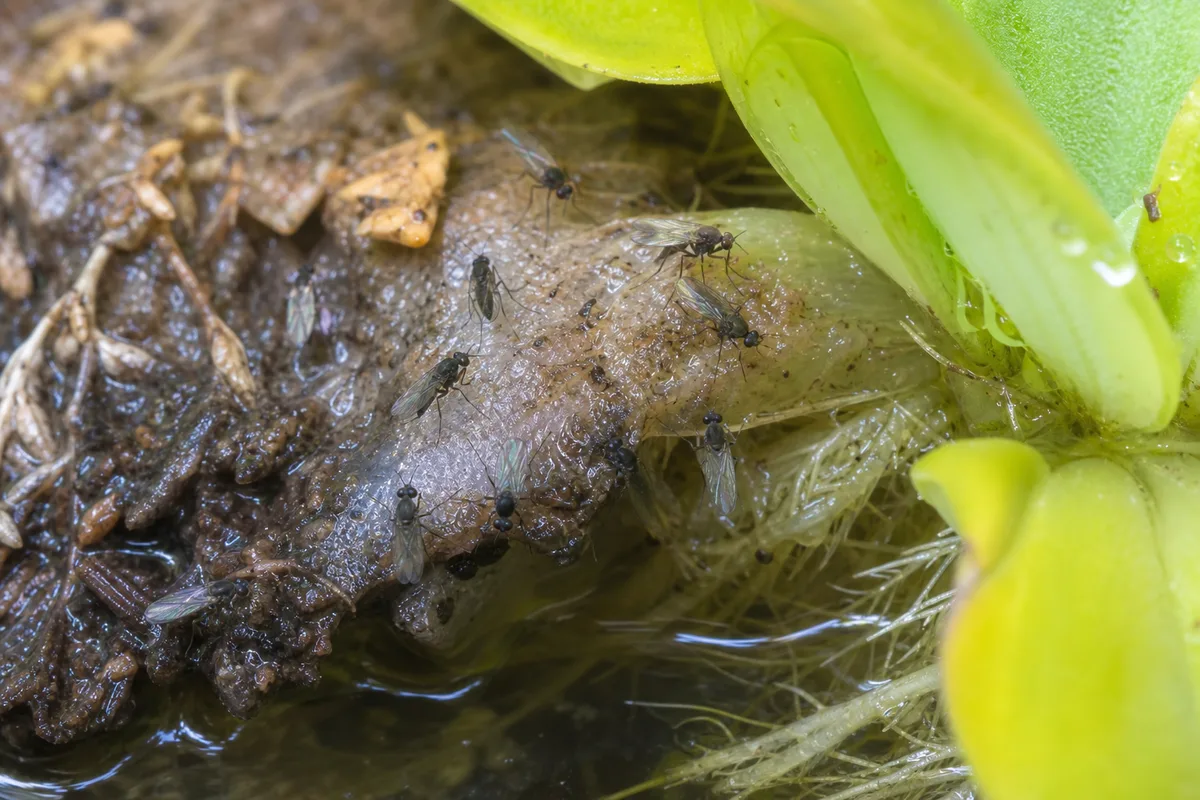
Fungus Gnats symptoms on Water Lettuce - compare with healthy tissue on the same plant.
Adult fungus gnats are small, dark, delicate flies about 1/16 to 1/8 inch long - mosquito-like in build but weaker fliers. They have slender legs and long segmented antennae (longer than the head), which helps separate them from shore flies that have short bristle-like antennae and tend to associate with algae film. Bradysia species, the common indoor fungus gnats, show a Y-shaped vein on each wing. Adults rest on tank rims, glass, nearby pot saucers, or windows; they do not burrow into floating leaves.
Where you see them matters:
- Hovering at the aquarium rim or hood gap → organic film or decaying plant matter at the surface edge
- Clustering over a wet pot saucer on the same shelf → larvae in that houseplant’s mix
- Near the filter housing or drip tray → sponge debris or spilled food
- Around yellowing rosettes piled in a corner of the mat → decaying Pistia tissue
Larvae are tiny whitish legless maggots with shiny black heads. They live in moist organic debris, not in open water. You will not find fungus gnat larvae swimming mid-column in a healthy tank - look under lifted rosettes, in soggy filter floss set aside to dry, or in the top inch of an overwatered neighbor pot.
What this is not: whiteflies, aphids, or spider mites on leaf tissue (those stay on the plant surface); mold on tank surfaces or foul-smelling water (different problem slug - biofilm and water-quality failure); or fruit flies from kitchen produce (stockier tan flies, not long-antennaed gnats).
Why gnats show up near water lettuce
Several hobby patterns repeat around floating Pistia setups.
Crowded mats with decaying rosettes. Water lettuce spreads through daughter plants on short stolons. In warm water, outer rosettes shade interior ones; older leaves yellow, soften, and sink partially. That decaying tissue is exactly the moist organic matter fungus gnats exploit. A dense summer mat left unthinned for three weeks can smell slightly sweet at the surface edge - gnats follow.
Uneaten food and high bioload. Tanks with messy eaters accumulate protein film and crumbs at the surface lip. Gnats do not need soil - they need damp decomposition. A turtle tub with daily pellets and no skimming breeds flies faster than a lightly stocked shrimp tank.
Filter and equipment organic film. Sponges, prefilter socks, and rim grooves trap sludge. If you set a dirty sponge on the stand to dry instead of rinsing it, larvae can complete a generation in that clump while adults visit the tank above.
Adjacent terrestrial breeding sites. The most overlooked source: a overwatered peace lily six inches from the aquarium, or a half-used bag of potting mix tucked under the stand. UC IPM notes adults may emerge from houseplants indoors and become a nuisance - the water lettuce gets blamed because it is visible on the surface.
Seasonal indoor humidity. Gnats occur year-round indoors in moist coastal climates and peak when cooler weather and overwatered winter houseplants combine. The floating plants did not change; the breeding media nearby did.
How to confirm the cause
Work through this checklist before buying sprays.
- Identify the fly. Long antennae, dark delicate body, weak flight near moist zones → fungus gnat. Stocky tan fly over fruit bowl → fruit fly; fix the kitchen source first.
- Lift the floating mat. Pinch test outer rosettes. Mushy, brown, or foul-smelling tissue under the canopy confirms decaying organic debris - remove it before any chemical step.
- Check the tank rim and filter. Run a finger along the inside lip (wash hands after). Slimy brown film or trapped food crumbs support an organic-debris diagnosis.
- Scan adjacent pots. Press the top inch of any houseplant soil on the same furniture. Cold, wet, dark mix in a saucer with gnats running across the surface is a separate breeding site - not “water lettuce soil.”
- Set a yellow sticky trap. UC IPM recommends yellow sticky traps to monitor adults. Tape a small square at the tank rim for three days. Declining catch after debris removal confirms you addressed the source; steady high catch means a breeding site remains.
If rosettes are firm and green, water is clear, traps stay empty, but flies persist - widen the search to garbage bins, compost bowls, and floor drains in the same room before treating the aquarium as infested.
First fix for water lettuce setups
Skim and discard all yellowing, brown, or mushy rosettes and floating debris - bag them for household trash, never outdoor waterways. Pistia is widely treated as an invasive aquatic weed where released; disposal matters as much as fly control.
That single cleanup removes the most common larval food source directly on the water surface. Make it before sticky traps, partial water changes, or any product application - stacking fixes on the same day hides what actually worked.
Immediately after skimming:
- Net uneaten food at the surface edge
- Place one yellow sticky trap at the tank rim (not submerged)
- Wipe the inside rim with a paper towel to remove organic film
If gnats were only following decaying Pistia, catch counts often drop within a few days. If not, move to the recovery steps below - one variable at a time.
Step-by-step recovery
Partial water change and filtration check. After debris removal, perform a 25–30% partial water change with dechlorinated, temperature-matched water if you keep fish or shrimp - the same rhythm described in the watering guide. Rinse mechanical filter sponges in old tank water, not tap, and replace floss if it crumbles. Improved flow reduces stagnant organic pockets at the surface edge.
Thin the floating mat. Separate crowded daughter plants and spread rosettes so outer leaves do not shade interior ones to death. Aim for roughly 30–50% surface coverage in aquariums so gas exchange and light below stay healthy - overcrowding accelerates decay.
Sticky traps for persistent adults. Cut commercial yellow traps into small squares on wooden skewers; rest them at the rim where gnats walk. UC IPM notes adults are short-lived but generations overlap quickly at warm temperatures - traps reduce nuisance while you eliminate larvae sources. Replace when coated; track catch decline weekly.
Dry down adjacent houseplant breeding sites. For an overwatered neighbor pot - not the aquarium - allow the surface of container soil to dry between waterings and empty saucers that hold standing water. Move that pot to another room temporarily if infestation is heavy.
Bti for larvae in terrestrial media only. Bacillus thuringiensis israelensis (Bti) - products such as Gnatrol or Mosquito Bits used per label - kills fungus gnat larvae in potting mix and container media through soil drenches. Extension guidance targets pots, not open aquarium water. Do not dump Bti, pyrethroids, or general insecticides into a stocked tank - fish, shrimp, and beneficial bacteria can be harmed. If larvae are only in a houseplant pot beside the tank, treat that pot per label directions; repeat at roughly five-day intervals while adults persist, as Bti does not persist long indoors.
When to remove the mat entirely. If more than half the rosettes are mushy, the water smells foul, or roots on remaining plants are brown and slimy, salvage only firm rosettes into a clean quarantine container of dechlorinated water. Heavy organic collapse overlaps with foul-water stress - flies are a symptom, not the root problem.
Recovery timeline
Mild cases - a few yellow outer leaves and low trap catch - often stabilize within one to two weeks after the first thorough skim and rim wipe, assuming you stop adding uneaten food and thin the mat.
Moderate infestations with adjacent overwatered pots may need three to four weeks while terrestrial soil dries and any Bti drenches on those pots complete their cycles. At 75°F, fungus gnats can complete a generation in about 17 days, so expect overlapping waves until breeding media disappear.
Recovery markers on water lettuce:
- New daughter rosettes form with firm pale-green leaves
- Fewer adults on sticky traps week over week
- Water stays clear without surface scum returning within days
- White, actively growing roots on salvaged rosettes
Old yellow or brown leaf margins do not green up again - success is clean new growth, not repaired cosmetic damage on spent rosettes.
What not to do
- Do not “let the soil dry” on water lettuce - there is no soil. Lowering water level to dry the plant damages roots that must stay submerged.
- Do not reduce top-ups or partial water changes to fight gnats; stagnant foul water kills Pistia faster than flies do.
- Do not pour insecticides, pyrethroids, or essential-oil sprays into tank water with fish, shrimp, or snails present.
- Do not dump Bti into the open aquarium - extension drenches are for container media, not the water column.
- Do not release removed plants or trimmings into ponds, lakes, or storm drains - invasive-species risk.
- Do not fertilize a mat still shedding decaying tissue; fix organic overload first.
How to prevent gnats next time
Prevention on floating Pistia is debris hygiene and surface management, not humidity trays or watering calendars.
- Thin weekly to biweekly during warm growth - remove excess daughter plants to trash.
- Pinch yellowing outer leaves before they melt into the water column.
- Net uneaten food within an hour in messy-feeder tanks.
- Rinse filter sponges on your normal maintenance schedule; do not let sludge dry on the stand.
- Keep overwatered houseplants away from the tank edge; store potting mix sealed and off the floor.
- Maintain partial water changes and stable 70–85°F water per the watering and light guides so rosettes stay firm and rot less often.
A healthy mat with good surface coverage and clean water rarely breeds gnats on its own - flies appear when organic material accumulates faster than you remove it.
When to worry
Lower urgency: a few gnats on the rim, firm rosettes, clear water, declining sticky-trap catch after one cleanup.
Act within days if:
- Mushy rosettes cover more than a quarter of the mat and smell sour
- Trap catch rises for two consecutive weeks despite skimming
- Fish gasp at the surface, water turns cloudy, or roots on remaining plants turn brown and slimy - treat as water-quality emergency overlapping organic overload, not fly control alone
- Larvae are visible in multiple adjacent houseplant pots - isolate those pots and treat media; gnats will keep emerging until terrestrial sources are gone
Fungus gnats alone seldom justify discarding a healthy floating mat. Foul water with mass tissue melt does - salvage only firm rosettes into clean water and rebuild the setup.
Related water lettuce guides
- Water lettuce overview - floating biology, temperature, and invasive disposal
- Watering guide - top-ups, partial changes, and temperature targets
- Mold on soil - surface biofilm and foul-water smell (different from flying gnats)
- Overwatering - organic overload and stagnant water stress
- Yellow leaves - cold melt and nutrient issues vs. gnat nuisance