Overwatering on Water Lettuce: Foul Water Causes & Fixes
Quick answer
Overwatering on water lettuce does not mean too much H2O-it means foul, stagnant, or oxygen-poor water starving the root zone under dense mats or weak filtration. First step: lift one rosette, smell the water near the roots, and perform a 25–30% partial water change with dechlorinated, temperature-matched water before changing anything else.
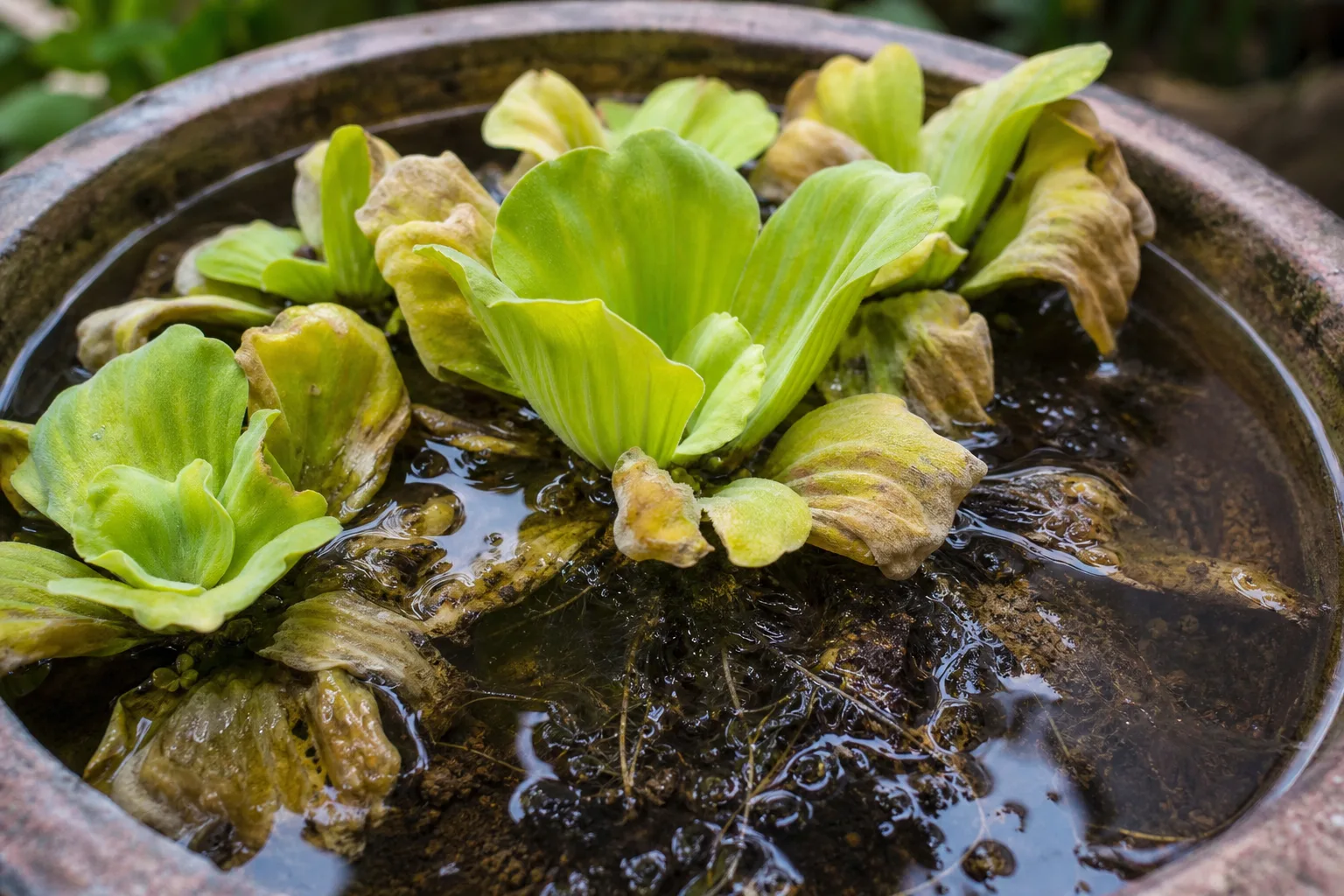
Overwatering on Water Lettuce: Causes, Checks & Fixes
This guide covers overwatering on Water Lettuce. See also the general Overwatering guide, watering, and light pages for this plant.
Overwatering on Water Lettuce: Causes, Checks & Fixes
Quick answer
If you searched overwatering on water lettuce, you may be picturing soggy potting mix, a saucer full of runoff, and a finger test an inch into soil. Stop there. Water lettuce (Pistia stratiotes) is a free-floating aquatic plant that never touches substrate. It cannot be overwatered in the horticultural sense because it lives entirely in water. On this species, “overwatering” means bad water-stagnant, oxygen-poor, nutrient-heavy, or debris-laden water that starves dangling roots before visible rot sets in.
First step: lift one rosette, smell the water near its root curtain, and check whether roots are still firm and pale or already slimy. If water smells earthy or sour but roots feel firm, perform a 25–30% partial water change with dechlorinated, temperature-matched water and remove floating debris-before fertilizer, algaecide, or a full mat teardown.
For species context, temperature bands, and ongoing maintenance rhythm, see the water lettuce overview and watering guide.
Overwatering vs. root rot vs. other Water Lettuce pages
| Symptom pattern | Start here | Why |
|---|---|---|
| Sluggish growth, cloudy water, earthy odor; roots still pale and firm | This page (overwatering) | Foul stagnant column before tissue turns to slime |
| Brown, black, or slimy roots that squish; sour smell on roots themselves | Root rot | Anaerobic decay in root tissue-not just poor water |
| Dry root tips above waterline; mats on dry rim or filter shelf | Underwatering | Lost water contact-not excess water |
| Sudden limp, deflated rosettes over hours | Wilting | Acute turgor loss-often cold shock or ammonia spike |
| Yellow leaves in cool water without foul odor | Yellow leaves | Cold melt mimics water stress until you check temperature |
Why “overwatering” means bad water on floating water lettuce
Houseplant overwatering logic fails because water lettuce obtains all moisture from the surrounding water through feathery roots that hang beneath each rosette. There is no potting mix to saturate, no drainage hole to clog, and no saucer to empty. Extension guidance states plainly that there is no need to water Pistia directly-but there is a need to monitor water quality and level.
What aquarium and pond keepers call overwatering is almost always one of these water-body failures:
Stagnant water under dense mats. Water lettuce spreads rapidly via stolons, forming surface carpets that can cover an entire small tank. The layer beneath a solid mat receives little dissolved oxygen and light. Roots hanging in that dead zone suffocate even before they turn brown-same anaerobic pressure that makes dense invasive mats reduce oxygen in wild waterways.
Weak or bypassed filtration. A filter that is clogged, undersized for bioload, or pointed away from floating plants lets dissolved organics accumulate. Clear water can still be chemically stale-high nitrate, low oxygen at the root zone, biofilm on roots.
Organic overload from feeding and decay. Turtle tanks, goldfish tubs, and overfed community aquariums dump waste faster than plants and bacteria export it. Uneaten food, melted leaves, and fish waste trapped under floating mats fuel bacterial bloom and cloudy water.
Top-ups without partial changes. Evaporation top-ups restore level but concentrate dissolved minerals and waste as pure water leaves and salts stay behind. A tub topped up all summer without a scheduled change is a classic foul-water setup.
Cold, chlorinated, or mismatched top-ups. Large cold water dumps or forgotten dechlorinator stress roots and stall growth-water quality failure even when volume looks fine.
What overwatering looks like on Water Lettuce
Healthy Pistia floats as a compact velvety rosette with thick, light green, hair-covered leaves and long pale roots trailing freely below the surface. Foul water breaks that pattern before full root rot:
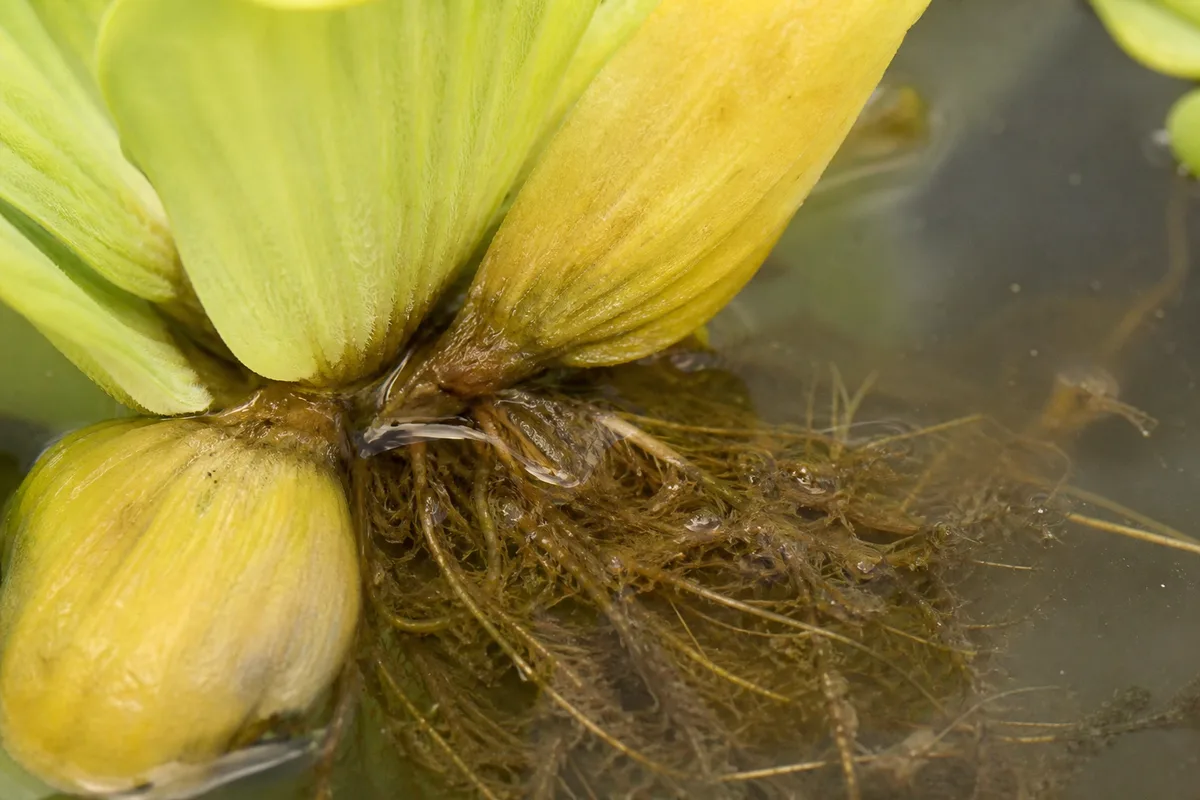
Overwatering symptoms on Water Lettuce - compare with healthy tissue on the same plant.
Water and surface signs:
- Cloudy or tea-colored water after disturbance-not the clear tan of harmless tannins alone
- Earthy, sour, or swampy odor rising when you lift the mat or skim the surface
- Oily or foamy surface film that returns within hours of skimming
- Persistent biofilm on roots that feels slippery but roots still feel firm-not yet mushy
Rosette and growth signs:
- Yellowing outer leaves while the crown still feels firm-often under a dense canopy
- Slow or stalled daughter-plant production despite warm water and good light
- Shrinking rosettes compared to neighbors at the open-water edge of the mat
- Interior plants fail first while edge rosettes near open water stay green
Root signs (early stage-before root rot):
- Roots stay white to pale green and firm but may carry brown sediment or algae coating
- Tips remain springy when pinched-no slime trail into the water
- Long roots in nutrient-rich water are normal; foul water adds odor and cloudiness before tissue collapses
Not foul water - common lookalikes:
- Cold melt: Water below 65°F (18°C) yellows leaves; growth stops near 60°F (15°C) per Wisconsin Extension. Check thermometer before blaming stagnation.
- Nutrient starvation: Ultra-clean RO tanks with zero nitrate-pale, long roots but clear odorless water. See the fertilizer guide.
- Low water level: Dry root tips above the surface-underwatering, not excess water.
- Dry air and light burn indoors: Extension guidance notes brown tips from low humidity and glare-not stagnant water.
How to confirm foul water is the cause
Work through this order so one variable explains the pattern:
- Water smell and clarity - lift one rosette; foul odor or persistent cloudiness after skimming points to organic overload or stagnation
- Root firmness - pinch a root tip; firm pale tissue with coating only = foul water stage; squishy slime = advance to root rot trimming
- Mat density - estimate surface coverage; above 60–70% solid cover on small tanks often means anaerobic pockets beneath
- Filter and flow - confirm the filter runs, intake is not clogged, and a quiet zone exists for floating plants away from shredding outflow
- Recent maintenance - large untreated cold change, skipped partial changes for weeks, or heavy feeding after vacation
- Water tests in stocked tanks - ammonia, nitrite, nitrate; elevated ammonia with floating plants means urgent export, not fertilizer
Cause-to-first-fix matrix
| Likely trigger | What to check | First targeted fix |
|---|---|---|
| Stagnant patio tub in summer heat | Odor, no fish; mat covers full surface | Skim debris; remove 25–40% volume; replace with dechlorinated matched-temp water; thin mat to ~50% cover |
| Undersized filter in turtle tank | Cloudy water; high nitrate; heavy feeding | 30–40% partial change; reduce feeding; verify filter GPH; thin mat for gas exchange |
| Top-ups only, no changes for months | Rising TDS; slow yellowing; clear but “old” smell | 25–30% partial change on schedule; resume weekly or biweekly changes per bioload |
| Mat piled in filter corner | Edge plants fine; corner rosettes yellow | Redistribute mat; deflect outflow; trim trapped debris under pile |
| New tank cycling | Ammonia detectable; plants yellowing fast | Partial changes; reduce stock or feed; do not add fertilizer to foul water |
| Overfeeding goldfish tub | Surface scum; nitrate >40 ppm | Cut feed; partial change; thin mat |
Make one correction, wait five to seven days, then reassess. Stacking algaecide, heavy fertilizer, and full teardown on the same day hides which step helped.
The first fix to try
Perform a 25–30% partial water change with dechlorinated water matched to existing temperature, and remove floating debris and visibly melted leaf tissue from the surface before any other intervention.
That single step exports dissolved organics, resets nitrate creep, and improves oxygen at the root zone without shocking fish or tearing down the entire mat. Skim uneaten food, dead leaves, and surface scum during the change. If mats cover more than half the surface on a small aquarium or tub, thin to roughly 30–50% coverage so open water remains for gas exchange-especially at night when plants and bacteria compete for oxygen.
Do not dose fertilizer into foul water. Do not add algaecide on day one unless you have confirmed an algae species and read fish-safe labels. Do not repot-there is no pot.
Step-by-step recovery by scenario
Stagnant patio tub or whiskey barrel
Small outdoor containers foul faster than filtered aquariums. Heat, wind, and full sun accelerate both plant growth and bacterial decay.
- Skim surface debris and dead leaves
- Remove 25–40% of volume with a siphon or bucket-not a full drain unless water is black
- Refill with dechlorinated water within 2–3°F of existing temperature
- Thin the mat so open water is visible between rosettes
- Mark a reference full line; resume evaporation top-ups per the watering guide
- Repeat partial change in one week if odor persists
Weak filtration in aquarium or turtle tank
Turtle tanks and goldfish systems carry heavy bioload. Water lettuce helps export nitrate but cannot replace a cycled filter.
- Verify filter media is not clogged; clean mechanical prefilter only in tank water
- Perform 30–40% partial change in turtle setups; 25–30% in community tanks
- Reduce feeding for one week; remove uneaten food within minutes
- Thin floating mat; use a floating corral to keep plants in quiet water away from intake
- Test ammonia and nitrite; repeat partial change if ammonia remains detectable
- Establish weekly partial changes for turtle tanks, every one to two weeks for moderate community loads
Dense mat crowding
Fast summer spread can cover the entire surface in two weeks. Interior rosettes yellow while edge plants stay green.
- Harvest excess rosettes to 30–50% surface coverage
- Bag removed plants for trash-never release to natural waterways; Pistia is invasive in much of the United States
- Skim detritus trapped under the former mat layer
- Partial change as above; redistribute remaining rosettes evenly
- Schedule weekly thinning in warm water to prevent re-crowding
Post-vacation or skipped maintenance
Tubs left topped up but unchanged for three or more weeks often show slow yellowing and earthy odor with firm roots still intact-ideal overwatering stage before rot.
- Partial change 25–40% immediately
- Remove all melted tissue and surface scum
- Thin mat; verify heater and filter ran correctly
- Resume scheduled partial changes-top-ups alone are not enough
Recovery timeline
Mild foul water-earthy odor, slight cloudiness, firm pale roots, yellowing limited to interior rosettes-often stabilizes within one to two weeks after one partial change and mat thinning, once water holds 70–86°F (21–30°C) for active growth per extension temperature guidance.
Moderate cases with widespread yellowing but no root slime may need two partial changes spaced seven days apart plus ongoing thinning.
Recovery markers:
- New daughter rosettes appear with velvety green leaves
- Root tips stay white or pale green and firm after changes
- Water smell neutralizes within 48 hours of a good partial change
- Cloudiness clears without returning the same day
Old cosmetic damage-yellow margins, slightly shrunken outer leaves-may never look perfect. Judge success by new clean growth, not repaired old tissue.
Escalation to root rot-brown slime spreading up roots within days-shift to the root rot guide for trimming protocol.
What not to do
Do not dose heavy fertilizer into cloudy or foul-smelling water-it fuels algae and bacterial bloom. Do not add copper-based medications or algaecides without reading labels; aquatic plants absorb from the column and copper herbicides damage floating macrophytes. Do not leave melting tissue decaying on the surface. Do not assume a watering can or misting fixes floating Pistia-only water-body management helps. Do not pile rosettes in stagnant corners or against filter returns. Do not release trimmings or pond water into streams, storm drains, or natural wetlands.
Do not confuse this page with houseplant overwatering articles that discuss fungus gnats in potting mix-that logic does not apply to floating aquatics.
How to prevent foul water next time
Prevention is scheduled water export, not less water volume.
Aquariums and turtle tanks: Plan 25–30% partial changes every one to two weeks; weekly for heavy bioload. Top up for evaporation between changes with dechlorinated, temperature-matched water. Keep surface cover near 30–50% on small tanks.
Outdoor tubs and container ponds: Check reference level every two to four days in summer heat; partial change 20–40% monthly when fish are present. Thin mats before they form a solid lid.
Water quality targets: Maintain pH 6.0–7.5 in standard freshwater culture; avoid huge chemistry swings from oversized changes. In stocked systems, monitor nitrate-persistent readings above 40 ppm with algae and cloudiness mean export, not more top-ups.
Source water: Always dechlorinate; match temperature within a few degrees. Quarantine new plants 7–14 days in separate treated water before merging with display tanks.
For full parameters-level marks, temperature bands, dechlorination, invasive disposal-use the watering guide.
When to worry
Urgency check
High urgency:
- Sour or rotten-egg odor with collapsing rosettes
- Fish gasping; ammonia or nitrite detectable
- Cloudy water worsening daily despite skimming
- Roots turning slimy and brown-cross to root rot
Moderate urgency:
- Widespread yellowing under a dense mat with earthy odor but firm roots
- Slow decline over two weeks after skipped maintenance
- Nitrate above 40 ppm in a stocked tub
Lower urgency:
- Slight interior yellowing; edge rosettes healthy; water clear and odorless
- Post-shipping limpness in quarantine with firm new root tips forming
Best inspection order
Water smell and clarity → root firmness → mat density → filter and flow → water tests (stocked tanks) → temperature.
Severity note
Overwatering on Pistia is medium severity when caught with firm roots-it responds well to partial changes. Left unchecked, foul water progresses to root rot and ammonia spikes in small volumes. Act on odor and mat density before slime appears.
Related Water Lettuce guides
- Overview - species ID, temperature bands, invasive disposal
- Watering - dechlorination, partial changes, evaporation top-ups
- Root rot - brown, slimy root decay and trimming protocol
- Underwatering - low level and stranded mats
- Wilting - acute limp collapse and cold shock
- Yellow leaves - cold melt, nutrient shortage, light stress
Conclusion
Foul water on floating Pistia is a water-body management problem, not a watering-schedule mistake. Lift a rosette, smell the column, pinch a root tip, and thin dense mats before you reach for fertilizer or algaecide. A 25–30% partial change with dechlorinated, temperature-matched water is the right first fix when roots are still firm. Judge recovery by new daughter rosettes and white root tips-not by old yellow margins turning green. Bag excess trimmings for trash; never release plants or pond water into wild waterways.