Wilting on Water Lettuce: Causes, Checks & Fixes
Quick answer
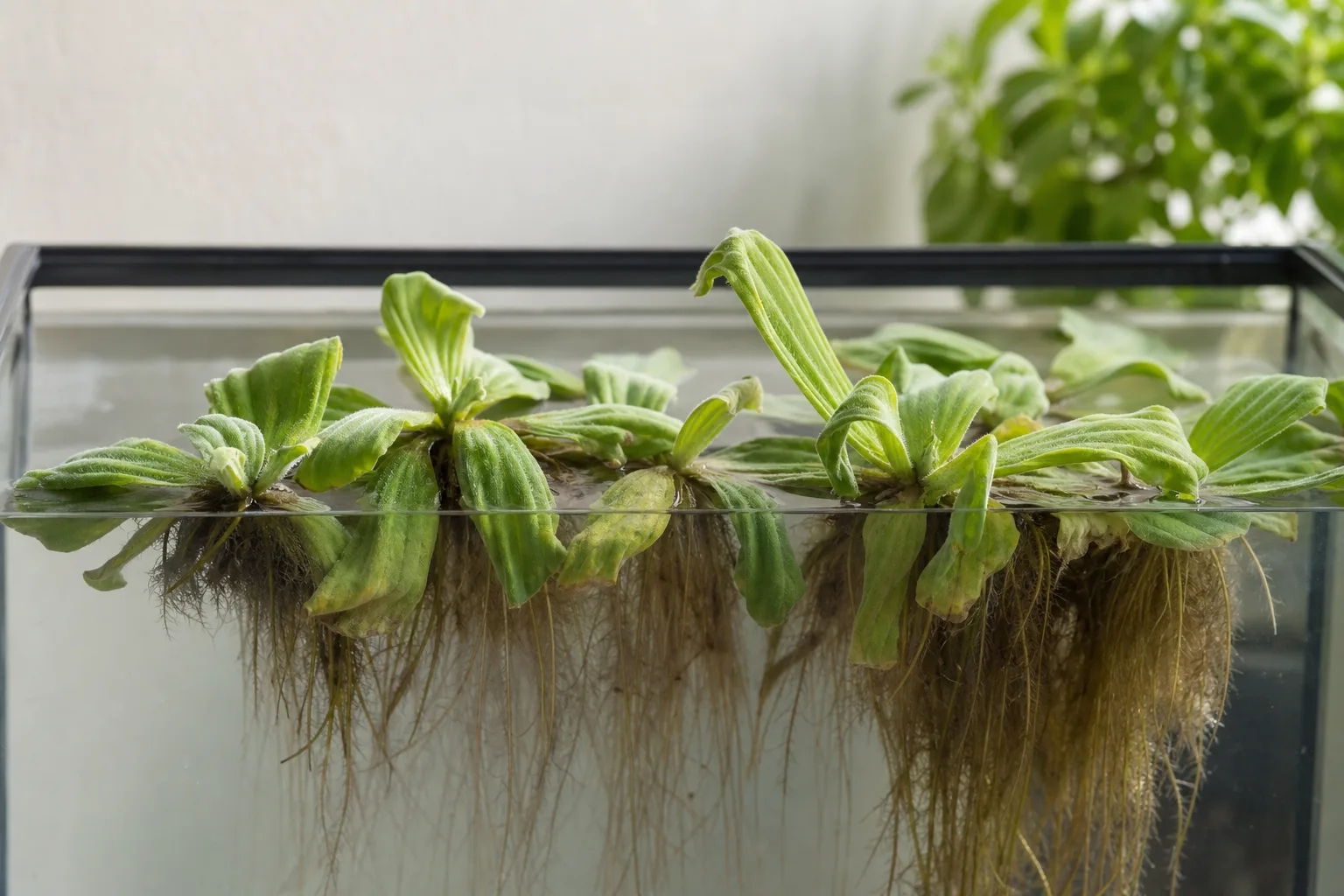
Wilting on water lettuce means the rosette lost turgor because something failed in the water column-not because soil dried out. First step: check whether dangling roots are exposed above the surface from evaporation; refill to your reference mark with dechlorinated, temperature-matched water before changing fertilizer, light, or anything else.
Wilting on Water Lettuce: Causes, Checks & Fixes
This guide covers wilting on Water Lettuce. See also the general Wilting guide, watering, and light pages for this plant.
Wilting on Water Lettuce: Causes, Checks & Fixes
Quick answer
Water lettuce (Pistia stratiotes) wilts when the rosette loses turgor-leaves go limp, margins collapse, and the floating head feels soft instead of springy. On this species that almost never means dry potting soil. Water lettuce obtains all moisture from the surrounding water through feathery dangling roots. When the water level drops from evaporation, cold tap water shocks tissue, or ammonia spikes in a stocked tank, roots cannot supply water fast enough and the whole rosette wilts.
First step: look at the waterline against your roots. If pale root tips or dry feathery strands hang above the surface, refill immediately with dechlorinated water matched to existing temperature-see the watering guide for reference marks and top-up rhythm. Do not reach for a watering can, repotting mix, or houseplant fertilizer on day one.
For species context and responsible disposal, see the water lettuce overview.
Wilting vs. other Water Lettuce stress pages
| Symptom pattern | Start here | Why |
|---|---|---|
| Sudden limp rosettes; firmness lost within hours to days | This page (wilting) | Acute water-level, temperature, or quality shock |
| Gradual outer-leaf sag over weeks; rosette still partly firm | Drooping leaves | Chronic light, crowding, or slow nutrient drift |
| Yellow older leaves while water looks fine | Yellow leaves | Temperature, nitrate, or light imbalance |
| Mushy roots, foul smell, blackened tips | Root rot | Stagnation, decay, or severe quality crash |
What wilting looks like on Water Lettuce
Healthy Pistia floats like a small velvety lettuce head-firm, evenly green, with long hair-like roots trailing freely below the surface. Wilting changes that profile in ways you can spot without a microscope.
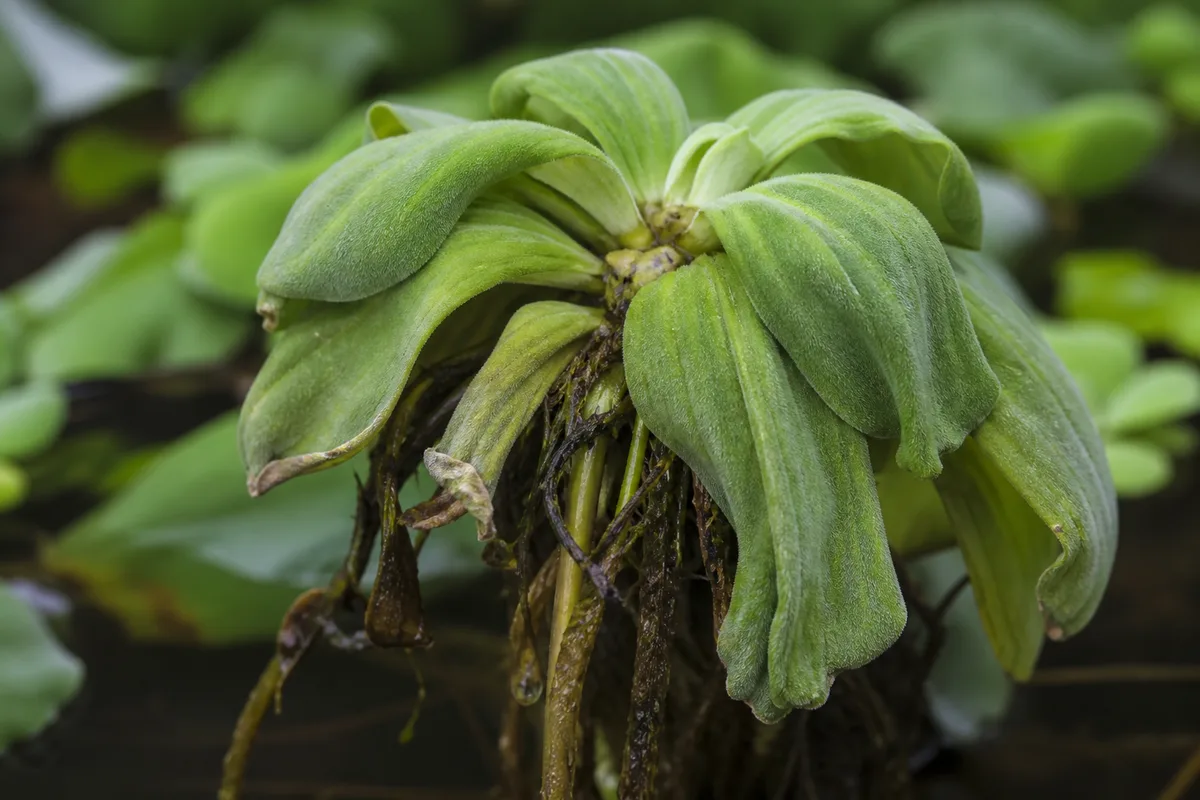
Wilting symptoms on Water Lettuce - compare with healthy tissue on the same plant.
Rosette limpness and leaf margin collapse (most common):
- The floating rosette loses springiness; pressed gently, it feels soft instead of slightly resilient
- Outer leaf margins curl downward or fold inward; the rosette looks “deflated” on the water surface
- Velvety leaf hairs may lie flat instead of holding the rosette above the film of surface water
- Often starts on outer leaves while the center still holds some firmness when roots are only partly exposed
Root tip desiccation from low water level:
- Feathery roots that should hang submerged now have white, brittle tips above the waterline
- Roots feel dry or papery where they meet air; submerged portions may still look pale green
- Common after three hot days in a patio tub, open aquarium, or whiskey-barrel pond without top-up
- The tank or tub can still look “mostly full” while roots at the shallow end have been air-drying
Tank-wide collapse from water quality or temperature shock:
- Many rosettes wilt at once within 24–48 hours of a large cold water change, forgotten dechlorinator, or filter crash
- Leaves may yellow at the same time as limpness-not a slow seasonal fade
- Fish or turtles gasping at the surface is a parallel emergency signal in stocked systems
- Persistent limpness despite full water level points here, not evaporation alone
Unlike normal older-leaf senescence, wilting hits firm green tissue that was healthy days ago. Unlike drooping leaves alone, wilting usually arrives with a clear trigger-heat wave, water change, cold night, or ammonia spike-you can name from recent maintenance.
Why Water Lettuce wilts
Pistia has no substrate root zone. Every cause of wilting is a failure in the water body the plant floats on.
Dropped water level / exposed roots. Summer evaporation pulls inches off small tubs and open tanks. Extension guidance recommends keeping roots covered with several inches of water below the rosette. When roots air-dry, uptake stops and turgor collapses-even if the floating leaves still touch water. This is the closest aquatic equivalent to “underwatering,” but the fix is refill, not a watering can. See also underwatering on water lettuce.
Cold water shock. Water lettuce is tropical. Active growth occurs at roughly 72–86°F (22–30°C), with growth essentially stopping below 60°F (15°C). A large partial change with cold tap water, an unheated spring tub, or a failed aquarium heater can wilt rosettes within hours as metabolism stalls.
Chlorine or chloramine shock. Undehlorinated municipal water damages aquatic tissue and filter bacteria. Dumping raw tap water during a top-up or change stresses roots before you notice fish behavior. Always treat and temperature-match additions per the watering guide.
Ammonia, nitrite, or extreme nitrate in stocked tanks. Turtle tanks, goldfish tubs, and heavy-feed aquariums can spike ammonia after filter failure or overfeeding. Roots absorb from the column; toxic nitrogen compounds damage tissue and stall uptake. Clear water does not mean safe water-test before blaming light.
Overcrowding and shade-out. Dense mats block light to inner rosettes. Water lettuce can double its population in as little as a few weeks under optimal conditions, and stacked rosettes compete for surface light. Outer plants may stay firm while inner ones wilt from starvation-not from level drop.
Insufficient surface light. Water lettuce spreads rapidly via stolons and can form dense surface mats that shade inner rosettes. In indoor aquariums, dry air at the water surface and intense glare can brown leaf margins even when submerged roots are healthy-not a soil moisture deficit. A dim corner with otherwise perfect water can produce soft, pale, limp rosettes over weeks. Acute wilt from light alone is less common than level or temperature failure but appears in overcrowded display tanks.
Stagnation and low oxygen at night. Extremely thick cover on small volumes can crash dissolved oxygen when photosynthesis stops. Pair with foul smell and fish stress-see root rot when tissue turns mushy, not merely limp.
How to confirm the cause
Work through this numbered checklist before stacking fixes. One confirmed branch beats guessing.
- Water level vs. reference mark - Is the surface at your normal full line? Can you see dry root tips above water? If yes, exposed-root wilt is likely; refill first.
- Water temperature - Submersible or floating thermometer at the surface. Below 65°F explains limpness even when level is fine; below 60°F essentially stops growth.
- Recent water change - Large cold change or forgotten dechlorinator within 48 hours strongly points to shock wilt.
- Ammonia, nitrite, nitrate - In stocked systems, test the column. Any ammonia or nitrite above zero is urgent; very high nitrate with algae can stress roots.
- Mat density and light - Can you see open water between rosettes? Are inner plants shaded under a solid carpet? Thin the mat before chasing fertilizer.
- Surface light exposure - Compare to the light guide. Pale, elongated rosettes in a dim room fit light stress; sudden limpness after a heat wave fits level drop.
- Smell and root texture - Sour or rotten odor with blackened, mushy roots points to decay (root rot), not simple wilt from evaporation.
You have confirmed the cause when one check clearly fails-dry roots at the rim, 58°F water, positive ammonia, or a mat covering 90% of the surface-and other variables look normal.
Quick cause comparison
| Confirmed check | Likely cause | First direction |
|---|---|---|
| Dry root tips above waterline | Evaporation / low level | Refill with treated matched-temp water |
| Temp below 65°F after cold change or outdoor night | Cold shock | Warm gradually; smaller changes; move tub indoors if needed |
| Ammonia or nitrite > 0 | Tank crash / bioload | Partial change, stop feeding, fix filter-fish priority |
| Dense mat; inner rosettes limp | Overcrowding / shade | Thin to 60–70% surface cover |
| Dim room; long pale roots; slow decline | Low light | Relocate or add grow light per light guide |
| Mushy black roots; foul smell | Rot / stagnation | Remove decaying plants; partial change; see root rot page |
First fix for Water Lettuce
If roots are exposed or the water level is below your reference mark, refill with dechlorinated water matched within 2–3°F of the existing volume.
That single action fixes the majority of patio-tub and aquarium wilt cases. Add water slowly along the container edge so cold strata do not pool under floating plants. Use a dechlorinator rated for your municipal supply (chloramine needs full neutralization). Let hose or tap water sit to warm, or pre-mix in a bucket, before pouring.
Do not:
- Mist the leaves or add soil moisture-irrelevant to a free-floating aquatic
- Pour undehlorinated cold tap directly onto roots on a hot afternoon
- Fertilize limp rosettes before level and temperature are stable
- “Water less” when wilt came from low level-that deepens root exposure
If the level is already correct, skip refill and move to the branching recovery section for your confirmed cause-one stressor at a time.
Step-by-step recovery by cause
Apply one branch below based on what you confirmed. Wait 24–48 hours before adding a second intervention so you know what worked.
If water level dropped (roots exposed)
- Refill to your marked full line with treated, temperature-matched water.
- Check again in hot weather every two to four days on small tubs; mark the reference line if you have not already (watering guide).
- Remove rosettes with fully collapsed, translucent leaves-they rarely recover; keep firm-centered plants.
- Expect noticeable firming within 12–24 hours when roots were dry only briefly.
If water is cold or chlorinated
- Stop large changes until you can match temperature and dechlorinate every addition.
- For aquariums, verify heater function; aim for 74–78°F in tropical community tanks.
- For outdoor tubs after a cold snap, move plants to a bright indoor container above 50°F minimum-warmer is better for recovery.
- Replace no more than 25–30% per change until rosettes stabilize.
If water quality failed (ammonia, nitrite, nitrate, stagnation)
- Test ammonia, nitrite, nitrate, and pH; prioritize zero ammonia and nitrite in stocked tanks.
- Perform a 25–30% partial change with treated matched-temp water; repeat in 48 hours if ammonia persists.
- Reduce feeding; clean filter intake covered by mats; thin surface cover below ~70%.
- Remove blackened or mushy rosettes so decay does not recycle ammonia-bag for trash, never release to waterways (invasive species risk).
- Recovery timeline: several days to two weeks once chemistry stabilizes; new daughter rosettes judge success.
If light is insufficient or overcrowding shades rosettes
- Thin the mat-remove excess to open water between rosettes; gift or trash per disposal rules.
- Relocate container to brighter indirect light or add aquarium lighting per the light guide.
- For indoor tanks with crisp margins despite good chemistry, address dry air at the surface with partial lid or reduced glare-not more water changes alone. See the light guide for surface exposure targets.
- Expect gradual firming over one to three weeks as new growth expands.
Recovery timeline
Collapsed leaf tissue rarely re-firms. Limp outer leaves that went fully soft usually stay cosmetically damaged. Judge recovery by new stiff leaves at the crown and daughter plants on stolons, not by old foliage returning to perfect form.
| Cause fixed | When you often see improvement | What “recovered” looks like |
|---|---|---|
| Refill after exposed roots | 12–24 hours | Rosette springiness returns; new roots white-green below surface |
| Temperature stabilized | 2–7 days | Pup production resumes; color deepens |
| Ammonia/nitrate corrected | 3–14 days | No new collapse; clean daughter rosettes |
| Thinned mat + better light | 1–3 weeks | Larger new leaves; longer healthy roots |
Severe shock-roots blackened, centers melted, most rosettes translucent-may not be worth saving. Propagate from any firm daughter plants in a clean quarantine tub per the propagation guide.
Lookalike symptoms
Normal older-leaf senescence: Bottom outer leaves yellow and soften slowly on an otherwise firm rosette with submerged roots. No recent level drop or water change. Trim aging leaves; not an emergency.
Shipping compression: Mail-order Pistia arrives flattened and limp from packaging. Float in quarantine water 24–48 hours; firm rosettes recover if roots stayed wet in transit.
Snail or turtle grazing: Torn leaf edges and shortened roots-not uniform turgor loss. Water level and chemistry are fine. Manage herbivory separately.
Mineral or salt crust: White deposits on leaves from hard tap top-ups without partial changes. Leaves may curl but roots stay submerged and firm. Partial changes export concentrated salts.
Gradual droop without acute trigger: If wilting language fits but the decline took weeks, read drooping leaves for chronic stress patterns.
What not to do
- Do not treat wilt like a potted houseplant. There is no root zone to check for wet soil, no repotting fix, and no “overwatering” category-only bad water.
- Do not reduce water volume when wilt came from evaporation. Refill.
- Do not dump collapsed plants into ponds, streams, or storm drains. Pistia stratiotes is invasive across much of the United States; bag and trash excess.
- Do not stack fertilizer, algaecide, and massive water changes the same day. Fix level or temperature first; retest chemistry before the next step.
- Do not assume a full glass means full depth. Measure against your reference mark, especially in wide shallow bowls.
How to prevent wilting next time
- Mark and check water level on tubs and open tanks; top up every two to four days in summer heat per the watering guide.
- Treat and temperature-match every addition; never blast cold chlorinated tap onto floating roots.
- Schedule partial changes in stocked aquariums-25–30% every one to two weeks-to export nitrate while maintaining level between changes.
- Thin mats before they blanket the surface; aim for 60–70% cover maximum on small volumes.
- Keep a thermometer in every setup; growth stops near 60°F water even when air feels mild.
- Quarantine new plants in separate treated water before merging with display tanks.
- Test ammonia and nitrite after filter cleaning, power outages, or heavy feeding in turtle systems.
Prevention on Pistia is water-body maintenance-not a calendar for soil irrigation.
When to worry
Escalate immediately if:
- Ammonia or nitrite reads above zero in a stocked tank-address fish and turtle health first
- Most rosettes collapsed within 48 hours while fish gasp or smell is foul
- Roots are black, mushy, and odoriferous (root rot branch)
- Repeated refill does not restore firmness-test temperature and chemistry before buying replacement plants
- Outdoor plants froze or sat in water below 50°F overnight-tissue may be dead despite midday sun
When in doubt on chemistry in a high-bioload system, consult your local extension aquaculture or aquarium specialist with test results in hand.
Related Water Lettuce guides
- Overview - species ID, invasive disposal, baseline culture
- Watering - level marks, temperature, partial changes, dechlorination
- Light - surface PAR for firm rosettes
- Underwatering - when low level mimics thirst
- Drooping leaves - gradual sag vs. acute wilt
- Root rot - mushy roots and stagnation
- Propagation - backup stock after a crash