Underwatering on Water Lettuce: Causes, Checks & Fixes
Quick answer
Underwatering on water lettuce means floating rosettes lost continuous water contact-usually from evaporation, a low tank level, or mats stranded on filter outflow-not forgotten pot watering. First step: check your reference waterline, refloat every rosette, and top up with dechlorinated, temperature-matched water until roots hang fully submerged.
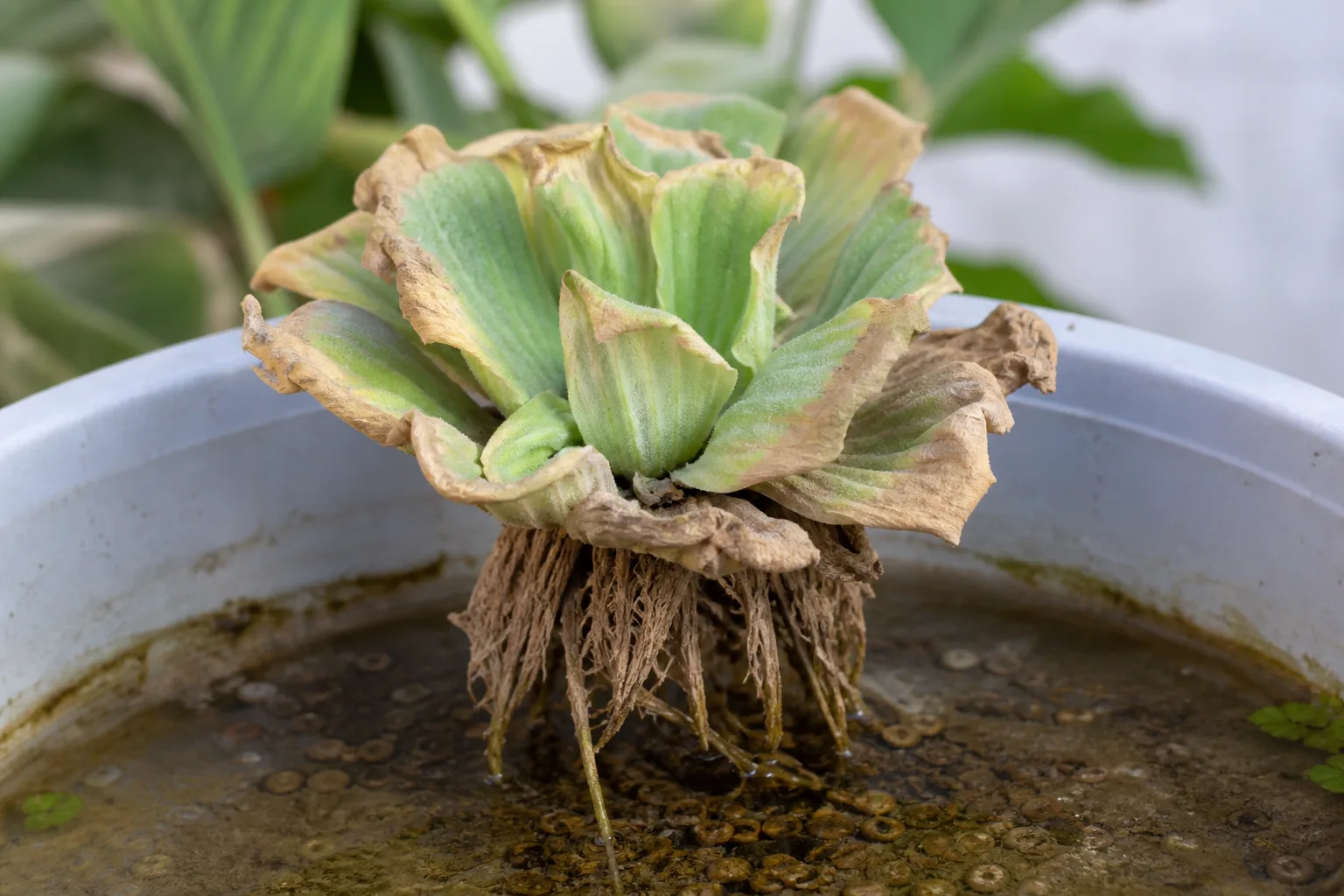
Underwatering on Water Lettuce: Causes, Checks & Fixes
This guide covers underwatering on Water Lettuce. See also the general Underwatering guide, watering, and light pages for this plant.
Underwatering on Water Lettuce: Causes, Checks & Fixes
Quick answer
If you searched underwatering on water lettuce, you may be picturing dry potting soil and a finger test an inch into mix. Stop there. Water lettuce (Pistia stratiotes) is a free-floating aquatic plant that never touches soil. On this species, “underwatering” means rosettes lost continuous water contact-the tank level dropped from evaporation, mats piled on a dry filter shelf or tub rim, or counter transfer during cleaning left roots air-drying while velvety crowns still looked fine.
First step: compare the water surface to your normal full mark and inspect every rosette for dry root tips. Refloat stranded plants, top up with dechlorinated water matched to existing temperature, and verify feathery roots hang fully submerged several inches below each rosette. Do not reach for a watering can, repotting mix, or houseplant fertilizer on day one.
For species context and responsible disposal, see the water lettuce overview.
Underwatering vs. other Water Lettuce stress pages
| What you notice | Start here | Why |
|---|---|---|
| Tank dropped; roots in air; mats on dry rim or filter shelf | This page (underwatering) | Contact loss from level or placement-not soil drought |
| Papery tan brittle margins already present | Crispy leaves | Symptom guide for dry-edge damage, sun scorch, spray |
| Sudden limp, deflated rosettes over hours | Wilting | Acute turgor loss-often cold shock or ammonia |
| Mushy crowns, foul smell, blackened roots | Root rot | Stagnation and decay-not simple dehydration |
| Ongoing level marks, temperature, partial changes | Watering guide | Long-term aquatic maintenance parameters |
Underwatering on Pistia is a water-contact problem, not dry soil
Houseplant underwatering logic fails because water lettuce obtains all moisture from the surrounding water through pale roots dangling in the column. There is no substrate to dry out, no saucer to empty, and no “overwatering” category in the horticultural sense. What keepers call underwatering is almost always:
- Evaporation pulling inches off a patio tub, whiskey barrel, or open aquarium in summer
- Rosettes stranded on a dry glass rim, bucket edge, or filter bracket during maintenance
- Filter outflow piling mats where one side loses surface contact for hours
- Shipping or counter transfer with roots exposed to air between tanks
Room humidity, misting, and soil-moisture apps do not rehydrate floating Pistia. Only restored water level, correct placement, and submerged roots fix true underwatering.
What underwatering looks like on Water Lettuce
Healthy water lettuce floats like a compact velvety rosette with thick, light green, hair-covered leaves and long feathery roots trailing freely below the surface. Underwatering breaks that pattern before full collapse:
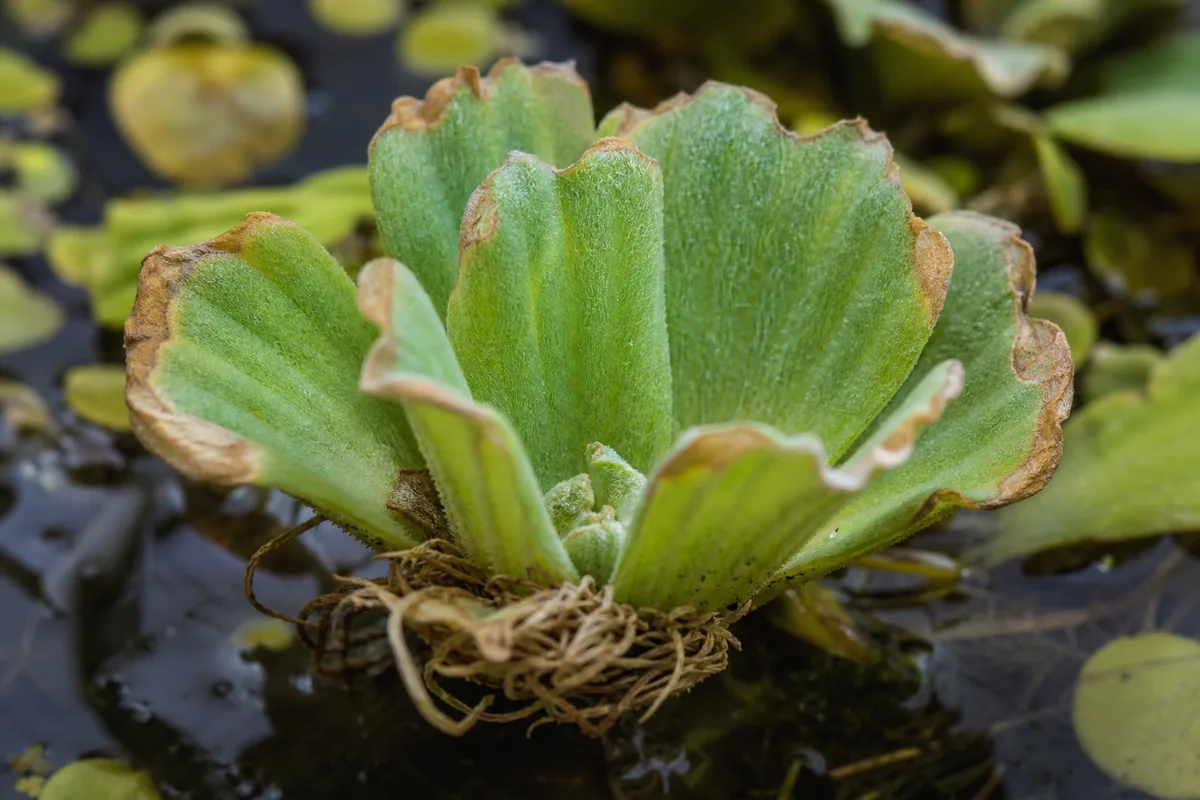
Underwatering symptoms on Water Lettuce - compare with healthy tissue on the same plant.
Low water level and exposed roots (most common):
- Pale root tips or dry feathery strands hang above the waterline while the crown still touches the surface
- Rosettes look slightly flat or shrunken compared to firm neighbors-less springy when pressed gently
- Outer leaf margins begin tan or papery at the edge-not soft yellow melt through a wet crown
- Damage often appears on the shallow end of a sloped tub or after three hot days without top-up
- The container can look “mostly full” while roots at one corner have been air-drying
Mats stranded on filter outflow or dry surfaces:
- Rosettes piled on a filter shelf, net, or aquarium rim overnight-leaves still green but bases no longer in continuous water film
- Windward or outflow side of a mat shows dryness first while the sheltered half stays normal
- Turtle basking lamps over open tubs accelerate edge evaporation; mats drift to the warm shallow corner
Shipping and maintenance dehydration:
- Mail-order Pistia arrives with flattened rosettes and brittle outer leaves after roots dried in transit
- Plants left on a counter “just while cleaning” show margin crisping within hours on velvety tissue
- Daughter rosettes shrink smaller than parent plants when the parent mat lost contact first
What underwatering does not look like: uniform limp collapse within hours from cold tap water (see wilting); soft yellow melt through wet crowns on stagnant water (root rot); gradual pale stretch over weeks with submerged roots (yellow leaves).
The velvety, water-repellent leaf surface can look acceptable while roots below dried for days. Always inspect root length and water contact-not just the floating crown.
Why Water Lettuce gets underwatering
Low water level and summer evaporation
Small patio tubs, whiskey barrels, and open aquariums lose volume to evaporation faster than many keepers expect. Extension guidance recommends keeping roots covered with several inches of water below each rosette. When the reference line drops an inch or two, submerged root surface area shrinks and uptake cannot keep pace-margins desiccate even though the plant still floats.
Summer sun, wind, and turtle-tank basking heat compound the problem. A tub that held twelve inches in May may hold nine in July without a leak-the water went into the air.
Filter outflow and stranded mats
In stocked aquariums and turtle systems, return flow pushes mats against glass or pins rosettes under constant micro-spray. The bulk tank reads “full,” but individual plants lose the calm surface film and full root submersion they need. UF/IFAS notes that water lettuce forms dense floating mats; in home tanks, that density plus strong flow creates localized dry zones houseplant advice never mentions.
Counter transfer and shipping gaps
Any interval with roots in air-draining a tub for scrubbing, moving plants to a dry net, or transit in a sealed bag with minimal water-produces the same underwatering physiology. Pistia tolerates brief handling but not overnight drying on a rim.
Nutrient-poor water in ultra-clean tanks (secondary)
In sparse display aquariums with submerged roots but chronically low nitrate, rosettes may stay small and pale. That is column starvation, not evaporation underwatering-level is fine but the water body is too clean. Refill fixes contact loss; partial changes and appropriate fertilization address starvation. See the watering guide for top-up vs. change distinction.
How to confirm the cause (6-step checklist)
Work through these checks in order before stacking fixes. One confirmed failure beats guessing.
- Water level vs. reference mark - Is the surface at your normal full line? More than an inch low? If yes, evaporation underwatering is likely.
- Root submersion - Can you see dry, white, or brittle root tips above water? Submerged portions should stay pale green and feathery.
- Rosette placement - Are all plants floating freely, or are some on a dry edge, filter shelf, or net?
- Filter flow pattern - Does outflow pin mats or spray one side? Localized dry damage on the outflow half implicates flow, not tank volume alone.
- Water temperature - Read with a floating thermometer. Growth slows sharply below about 65°F and essentially stops near 60°F; cold water can mimic “thirsty” small rosettes even when level is correct.
- Smell, crown firmness, and chemistry - Foul odor, mushy crowns, or ammonia above zero point to root rot or tank crash-not simple contact loss. Clear water does not guarantee safe chemistry in stocked systems.
You have confirmed underwatering when level is low, roots are exposed, or rosettes sat dry on a rim-and temperature, ammonia, and rot checks look normal.
Dehydration vs. lookalike quick comparison
| Confirmed pattern | Likely cause | First direction |
|---|---|---|
| Dry root tips; level below mark | Evaporation / low level | Top up; refloat all rosettes |
| Full level; one side dry on mat | Filter spray / outflow | Redirect flow; move mat |
| Papery margins after rim storage | Stranded placement | Refloat; trim dead edges |
| Limp collapse within 24–48 h of cold change | Cold shock | See wilting |
| Mushy black roots; foul smell | Rot / stagnation | See root rot |
| Submerged roots; pale slow decline | Low nitrate / light | Watering + light guides |
First fix for Water Lettuce
Refloat every rosette on clean water and top up the tank to your normal full mark so roots hang submerged several inches below the surface.
Use dechlorinated water matched within 2–3°F of the existing volume. Add slowly along the container edge so cold strata do not pool under floating plants. If you have not marked a reference line, do it now-tape or permanent marker at the normal full level on tubs and aquarium glass.
Do not:
- Mist leaves or check soil moisture-irrelevant to a free-floating aquatic
- Push rosettes fully underwater to “rehydrate”-they need to float on the surface with roots below
- Fertilize stressed rosettes before level and placement are corrected
- Repot-there is no pot; only water level and mat position matter
If level is already correct and roots stay submerged, underwatering is not your lead diagnosis-branch to wilting, crispy leaves, or water-quality testing.
Filter baffle and mat repositioning
When flow strands mats:
- Deflect return outlets with a sponge or spray bar so surface water stays calm.
- Move mats to the opposite end from outflow; verify no rosette sits on a dry bracket.
- In turtle tanks, baffle basking-lamp heat from the shallow corner where mats collect.
- Recheck placement after every filter service or tank move.
Step-by-step recovery
After refloating and topping up, follow this sequence-one major step per day when possible so you know what helped.
- Remove fully desiccated rosettes - Plants that crumble, no longer float cleanly, or show dead centers will not recover; bag for trash per invasive-species disposal rules.
- Partial water change if quality is poor - Replace 25–30% with treated, temperature-matched water if the tank smelled stagnant or looked cloudy before damage started.
- Thin overcrowded mats - Split dense piles so each rosette contacts open water; Pistia spreads rapidly via stolons and daughter plants and quickly blankets small surfaces.
- Start backup culture - Float a few firm daughter rosettes in a separate jar of treated water indoors while the main tank stabilizes.
- Monitor new growth - Firm velvety daughter leaves and white-green submerged roots are recovery signals; old papery margins stay cosmetic.
Recovery timeline
Desiccated margin tissue will not turn green again. Judge success by new daughter rosettes with firm leaves and fully submerged roots-not by repaired old edges.
| Underwatering severity | When improvement often appears | What “recovered” looks like |
|---|---|---|
| Brief root exposure; level topped up same day | 12–48 hours | Rosette springiness returns; new root tips stay wet |
| Weekend rim drying; margins papery | 1–3 weeks in 70–86°F water | Clean daughter plants on stolons |
| Shipping flattening with some dry roots | 1–3 weeks if crowns stayed firm | New compact rosettes; trim dead outer leaves |
| Total desiccation; centers crispy | May not recover | Propagate from any firm offsets in quarantine |
Cool water below 65°F slows every timeline. See the watering guide for temperature targets.
Lookalike symptoms to rule out
Sun scorch after outdoor move: Tan patches on sun-facing leaves while roots stay submerged and level is full. Shade acutely hit mats; read crispy leaves for acclimation steps.
Cold shock: Many rosettes limp at once after a large cold water change or outdoor night in the 40s°F. Level is fine; temperature failed. See wilting.
Nutrient yellowing: Older leaves yellow slowly on otherwise firm rosettes with wet roots. Level is correct; column may be too clean. Partial changes and light per the watering guide.
Stagnant rot: Soft yellow melt through wet crowns, foul smell, blackened roots. Refilling alone worsens some rot cases-remove decaying tissue and change water.
Gradual droop over weeks: Chronic sag with stable level points to drooping leaves or light stress-not acute underwatering.
Mistakes to avoid
- Checking soil or reducing “watering” - There is no soil. Low level needs refill, not less water.
- Misting rosettes instead of topping up - Surface mist does not rehydrate roots hanging in air.
- Leaving plants on a dry rim during cleaning - Overnight drying is enough to desiccate velvety margins.
- Assuming a full glass means full depth - Measure against your reference mark, especially in wide shallow bowls.
- Dumping dried mats into ponds or storm drains - Pistia stratiotes is invasive across much of the United States; bag and trash excess.
- Stacking fertilizer, algaecide, and massive changes the same day - Fix contact loss first; retest before the next intervention.
Water Lettuce care cross-check
Underwatering recovery sticks only when baseline culture supports floating growth:
- Level: Top up every two to four days in summer on small volumes; roots submerged several inches below each rosette.
- Temperature: Aim for 70–86°F (21–30°C) active growth band; move indoors before frost.
- Water quality: Partial 25–30% changes every one to two weeks in stocked tanks-top-ups alone do not export nitrate.
- Light: Moderate to bright indirect or filtered outdoor sun; acclimate before harsh patio exposure.
- Flow: Calm surface water; mats not pinned under spray.
- Disposal: Never release excess plants to natural waterways.
Full parameters live in the watering guide.
How to prevent underwatering next time
- Mark and honor a reference full line on every tub and open tank; glance daily in summer heat.
- Top up with treated, temperature-matched water-never blast cold chlorinated tap onto floating roots.
- Deflect filter returns before mats pile on dry glass or shelves.
- Float rosettes in a bowl of treated water during tub scrubbing-never on a dry counter overnight.
- Keep a backup jar of daughter plants indoors for patio tubs that evaporate fast in August.
- Thin fast-spreading colonies so outer rosettes do not collect in the shallow warm corner.
- Quarantine new plants in separate water before merging with display tanks after shipping.
Prevention on Pistia is water-body maintenance-not a houseplant irrigation calendar.
When to worry
Escalate when:
- Refill does not restore firmness within 48 hours-test temperature, ammonia, and nitrite before buying replacements
- Crowns turn mushy with foul-smelling water-contact loss merged into rot; see root rot
- Most rosettes collapsed at once after a large untreated water change-see wilting urgency branch
- No daughter plants appear after three weeks of stable warm water and corrected level
- Outdoor plants froze or sat in water below 50°F-tissue may be dead despite refloat
When chemistry in a high-bioload turtle or goldfish system stays unstable after two partial changes, consult your local extension aquaculture resource with test results in hand.
When to use this page vs. the watering guide and crispy-leaves page
- This underwatering page: You suspect the tank dropped, roots hang in air, mats dried on a rim, or filter flow stranded plants-you need cause framing and a six-step confirmation path.
- Watering guide: You want ongoing reference marks, evaporation rhythm, dechlorination, temperature bands, and partial-change schedules-not troubleshooting acute thirst.
- Crispy leaves: Margins are already papery and tan; you need sun-scorch, spray-side, and frost-injury differentiation from simple level drop.
Related Water Lettuce guides
- Overview - species ID, invasive disposal, baseline culture
- Watering - level marks, temperature, partial changes, dechlorination
- Crispy leaves - dry-edge symptoms and sun scorch
- Wilting - acute limp rosettes and cold shock
- Drooping leaves - gradual sag vs. contact loss
- Overwatering - stagnant water and column overload (not soil)
- Root rot - mushy roots and decay
- Propagation - backup stock after a crash
Conclusion
Underwatering on water lettuce means rosettes lost continuous water contact-from evaporation, low tank level, filter-stranded mats, or dry-rim storage-not forgotten pot watering. Refloat every plant, top up to your reference mark, and keep roots submerged before chasing fertilizer or repotting advice that does not apply to floating Pistia. Old papery margins will not green up; watch daughter rosettes for proof your fix worked.