Root Rot on Water Lettuce: Aquarium Causes, Checks & Fixes
Quick answer
Root rot on water lettuce shows as brown or black, slimy dangling roots with a sour smell-usually from stagnant water under a dense mat, trapped detritus, or a filter crash. First step: lift one rosette, pinch a root tip; if tissue squishes and smells foul, remove rotted roots with clean scissors and do a 25–30% partial water change before changing anything else.
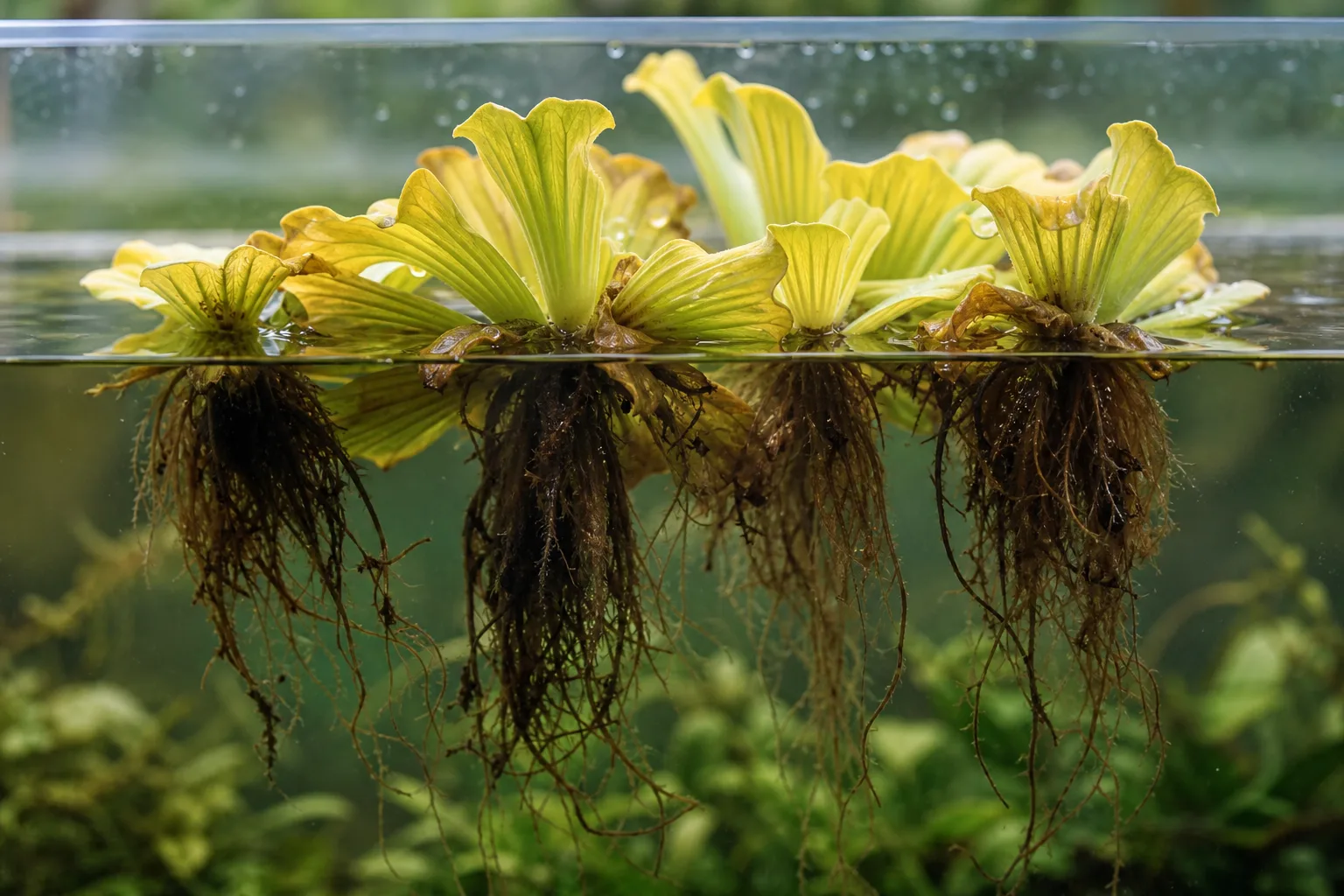
Root Rot on Water Lettuce: Causes, Checks & Fixes
This guide covers root rot on Water Lettuce. See also the general Root Rot guide, watering, and light pages for this plant.
Root Rot on Water Lettuce: Causes, Checks & Fixes
Quick answer
Water lettuce (Pistia stratiotes) does not rot the way a potted fern rots in soggy soil. It has no substrate root ball-only long, feathery roots that hang beneath each floating rosette and absorb nutrients directly from the water column. Root rot here means those dangling roots turn brown or black, feel slimy, and smell sour while the rosette wilts, yellows, or stops producing daughter plants.
First step: lift one affected rosette and pinch a root tip between thumb and finger. Healthy tissue is firm and white to pale green. Rotten tissue squishes like overripe fruit and may trail dark slime into the water. If you confirm rot, trim dead roots with clean scissors and perform a 25–30% partial water change with dechlorinated, temperature-matched water-before fertilizer, algaecide, or a full mat teardown.
For species context, mat management, and invasive disposal rules, see the water lettuce overview.
Root rot vs. overwatering vs. other Water Lettuce pages
| Symptom pattern | Start here | Why |
|---|---|---|
| Brown, slimy, foul-smelling roots; blackened root tips | This page (root rot) | Anaerobic decay in stagnant water or trapped debris |
| General poor water quality without mushy roots yet | Overwatering | Foul stagnant column before tissue turns to slime |
| Sudden limp rosettes; dry root tips above waterline | Wilting | Level drop or temperature shock-not slime rot |
| Yellow leaves; translucent melt in cool water | Yellow leaves | Cold melt mimics rot until you check temperature |
What rotted roots look like on Water Lettuce
Healthy Pistia roots look like a pale underwater curtain-white to light green, firm, and hair-fine, sometimes reaching 15–30 cm (6–12 inches) in warm, nutrient-rich water. They may tan with age or pick up harmless sediment without turning to mush.
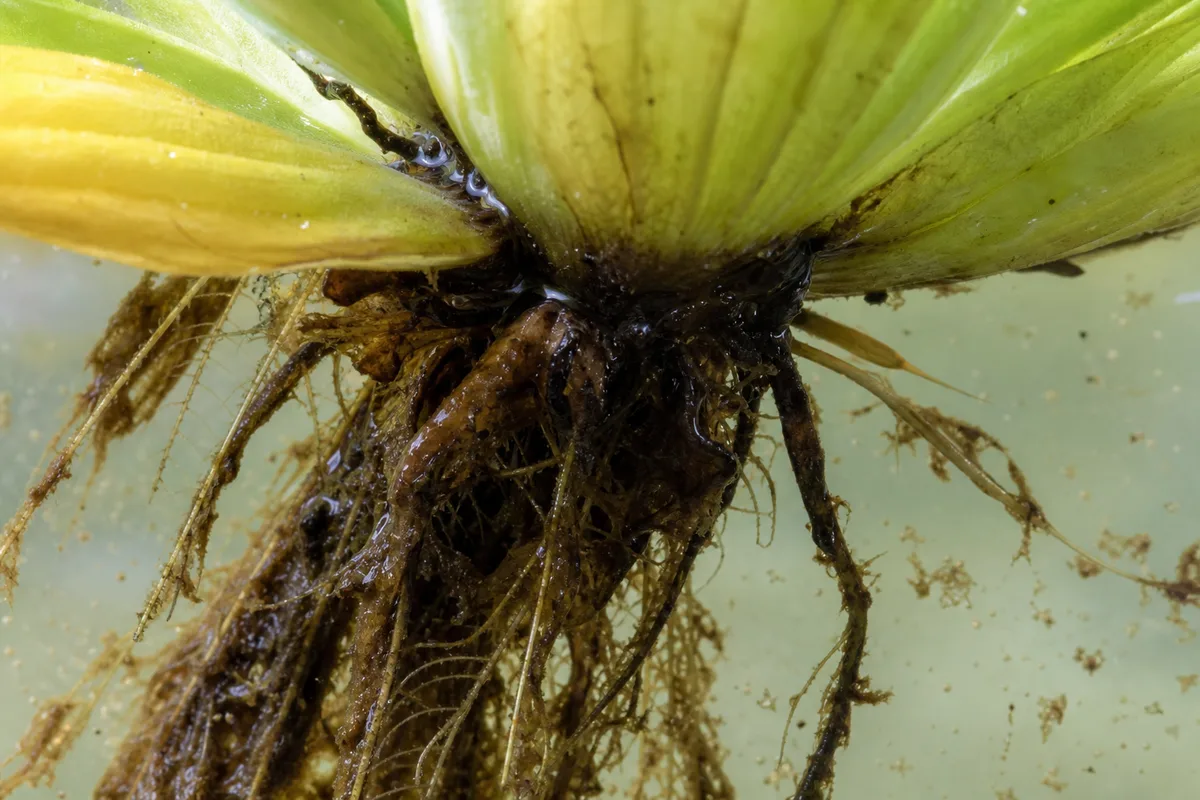
Root Rot symptoms on Water Lettuce - compare with healthy tissue on the same plant.
Signs of true root rot:
- Color shift: Roots turn chocolate brown, dark purple, or black-not the even tan of aging tissue
- Texture: Slimy, soft, or stringy; a gentle pinch collapses the tip instead of springing back
- Smell: Sour, swampy, or rotten-egg odor rising from the root zone or when you lift the mat
- Rosette follow-through: Outer leaves yellow or wilt while the crown feels softer than usual; daughter plants on stolons may fail while the parent rots
- Spread pattern: Decay starts at root tips or in piled-up corners where flow is zero, then climbs toward the rosette base over days
- Water cloudiness: Fine particulate or biofilm after disturbance; ammonia may rise in stocked tanks
Not rot - common lookalikes:
- Cold melt: Water below 65°F (18°C) yellows leaves and dissolves tissue, but roots often stay firm until very late. Check the thermometer first (growth slows sharply below about 60°F).
- Normal root shed: Older sections darken and detach while new white tips grow from the crown-no slime, no smell, no rosette collapse.
- Shipping stress: Mail-order plants arrive with shortened, pale roots; float in quarantine 48 hours before judging-firm new tips mean recovery, not rot.
- Filter splash damage: Torn leaves and broken stolons from outflow jets-not uniform root blackening.
Why Water Lettuce gets root rot
Every cause ties to water the roots breathe and drink from, not soil moisture.
Stagnant water under dense mats. Water lettuce spreads rapidly via stolons and daughter plants, forming surface carpets that can cover an entire small tank. The layer beneath a solid mat receives little oxygen, light, or flow. Roots hanging in that dead zone suffocate and decay-same anaerobic logic that makes dense invasive mats reduce dissolved oxygen in wild waterways.
Detritus and biofilm at the surface. Fish waste, melted leaves, and uneaten food collect under floating plants. Trapped organic matter decays against root hairs, fueling bacterial slime. Skim debris during weekly maintenance; do not let a root curtain become a detritus mop.
Filter failure or zero flow corners. Gentle circulation matters. Completely still pockets-especially where rosettes wedge against glass, overflow weirs, or plant corrals-rot first. Conversely, blasting roots with a powerhead can shred tissue and invite infection at wound sites; balance matters.
Warm water + heavy bioload. Tropical temperatures speed both plant growth and bacterial decay. A stocked aquarium with rising ammonia after a filter crash stresses roots before leaves show classic yellowing. Rotting tissue then recycles more ammonia-a feedback loop in small volumes.
Pile-up outside the water. Rosettes pushed onto the rim or filter box stay wet on leaves but expose roots to air, then partial submersion-tissue at the waterline rots first. Redistribute after every water change.
Mat self-shading. Interior rosettes under a thick canopy get weak light and poor gas exchange at the root zone even when outer plants look fine. Thin before inner roots turn black.
How to confirm the cause
Work through this checklist in order. One failed check is enough to start the rescue branch.
- Root pinch test - Lift a rosette; pinch the tip of several roots. Firm white or pale green = healthy. Squishy brown/black with slime = rot confirmed.
- Smell check - Sniff at the water surface near piled plants. Sour or rotten odor with dark roots confirms decay, not cold melt alone.
- Water temperature - Submersible thermometer at the surface. Below 65°F favors melt over rot; below 60°F growth stops and tissue collapses (Wisconsin Extension water lettuce guidance).
- Ammonia, nitrite, nitrate - In stocked tanks, test the column. Any ammonia or nitrite above zero plus mushy roots = urgent water-quality rot event.
- Mat density and flow - Can you see open water between rosettes? Are plants stacked in a corner with no rippling? Stagnation explains localized black roots.
- Recent maintenance - Large untempered water change, power outage, or clogged filter within 72 hours points to a crash-triggered rot flare.
- Crown firmness - Press the rosette base gently. Mushy crown with black roots means discard the rosette; salvage daughters if firm.
You have confirmed rot when roots are slimy and dark and smell or chemistry supports decay-not when a few tan older root sections shed harmlessly.
Lookalike comparison table
| What you see | Likely cause | Quick check |
|---|---|---|
| Brown slimy roots + sour smell | Root rot / stagnation | Pinch test squishes; ammonia may be elevated |
| Yellow translucent leaves; firm roots; cool water | Cold melt | Temp below 65°F; warm gradually |
| Tan root tips shedding; firm white new growth | Normal aging | No odor; rosette still springy |
| Black roots only in one stagnant corner | Local pile-up | Flow visible elsewhere; thin that zone |
| Limp rosette; dry white root tips in air | Low water level | Refill first-see wilting |
First fix for Water Lettuce
If the root pinch test confirms slime, trim every rotted root back to firm white or pale tissue with sharp, clean scissors-then do a 25–30% partial water change with dechlorinated water matched within 2–3°F of the tank.
That pairing stops new decay and exports dissolved organics without shocking fish. Hold the rosette over a bucket while trimming so slime does not fall back into the display tank. Remove loose black fragments from the water surface by hand or fine net.
Do not:
- Bury or pot the rosette in substrate-Pistia is free-floating only
- Dose fertilizer into foul water on day one
- Spray terrestrial fungicides into a fish or turtle tank
- Wait for “dry soil” logic-there is no soil
If roots look healthy but water smells foul, skip trimming and start with the partial change plus mat thinning-then re-test roots in 24 hours.
Step-by-step recovery
Apply these steps in order after the first fix. Wait 48 hours between major interventions so you know what helped.
1. Partial water change and debris removal
- Remove visibly rotted rosettes-bag for household trash; never release Pistia into natural waterways.
- Change 25–30% of the volume with treated, temperature-matched water per the watering guide.
- Gently skim melted leaves, uneaten food, and detritus trapped under the mat.
- Retest ammonia and nitrite in stocked systems; repeat a partial change in 48 hours if ammonia persists.
2. Trim rotted roots and thin the mat
- For each salvageable rosette, cut roots at the transition from firm to mushy-sterilize scissors between heavily infected plants if multiple tanks are involved.
- Shorten overly long root curtains to 10–15 cm (4–6 inches) if they clog intakes or drag decaying tips-healthy Pistia regrows roots quickly in warm water.
- Thin the surface to roughly 30–50% cover on small aquariums so light and gas exchange reach the water below (overview mat-management guidance).
- Separate crowded daughter plants so stolons do not pile three rosettes in one stagnant corner.
3. Improve flow without shredding rosettes
- Redirect filter outflow below the surface or use a spray bar-gentle rippling, not a whitewater jet on leaves.
- Use a floating plant corral to keep Pistia away from filter intakes and stagnant back corners.
- In ponds, manually redistribute wind-piled mats after storms so no section sits anaerobic for weeks.
4. Monitor recovery markers
- 24–72 hours: No new black tips on trimmed roots; sour smell fades after the change
- 1–2 weeks: New white root tips emerge from the crown; daughter plants resume growth
- Discard if: Crown turns mushy, all roots blacken after two partial changes, or ammonia stays elevated with fish stress
Recovery timeline
Rotted root tissue does not turn white again-recovery means new clean roots and firm new leaves, not repaired slime.
| Severity | What you did | Typical timeline | Success looks like |
|---|---|---|---|
| Mild - tips only, firm crown | Trim + one partial change + thin mat | 3–10 days | Fresh white root tips; rosette regains springiness |
| Moderate - half the root curtain lost | Trim + two partial changes + flow fix | 1–3 weeks | New daughter rosettes; no spreading black slime |
| Severe - mushy crown or tank-wide crash | Remove losses; chemistry correction; propagate daughters | 2–4 weeks or discard | Clean quarantine tub with firm survivors only |
Cold-damaged plants misread as rot may recover after warming to 70–85°F (21–29°C) over several days-verify temperature before composting the whole colony.
What not to do
- Do not treat this like houseplant root rot. No repotting, no “let the soil dry out,” no drainage holes-only water-column repair.
- Do not keep rotting rosettes in the tank hoping they rebound-decay fuels ammonia and can harm fish before every plant shows symptoms.
- Do not dump removed plants outdoors. Pistia stratiotes is invasive across much of the United States; trash or fully dry before disposal.
- Do not stack algaecide, antibiotics, and massive water changes the same day. Fix trim + partial change first; retest chemistry before the next step.
- Do not confuse rot with underwatering. Exposed dry root tips need refill-see wilting-not aggressive root amputation alone.
How to prevent root rot next time
- Cap surface cover at 30–50% on home aquariums; leave open water for gas exchange (rapid spread can blanket a tank in weeks if you never thin).
- Thin every one to two weeks during warm months-harvested biomass is nutrient export, not waste.
- Maintain gentle circulation-subtle surface rippling, not stagnant film or hurricane outflow.
- Schedule 25–30% partial changes in stocked tanks to control nitrate and organic load per the watering guide.
- Keep water in the 70–85°F band with a reliable heater indoors; cold melt and rot both worsen when metabolism stalls.
- Skim detritus during changes; do not let root curtains trap mulm indefinitely.
- Quarantine new plants in a separate tub two weeks before merging-shipping slime and pond hitchhikers stay isolated.
Prevention on floating Pistia is mat and water-body hygiene, not a soil watering calendar.
Practical checks
Urgency check (fish safety in small tanks)
Treat as urgent if:
- Ammonia or nitrite reads above zero with foul odor and dark roots
- Fish or turtles gasp at the surface while roots are visibly black
- Most rosettes show slime within 48 hours of a filter failure or heat spike
- Crown bases soften and detach from stolons-salvage daughters only
Address livestock chemistry first; plant trim is second, not the reverse.
Best inspection order
New white root tips → root pinch and smell → water temperature → ammonia/nitrite → mat density and corner pile-up → filter flow → daughter-plant health on stolons.
Severity note
Act within 24 hours when slime spreads up the root curtain or smell is obvious in a stocked nano tank. A single tan root tip on an otherwise firm rosette can wait for the next weekly maintenance.
Related Water Lettuce guides
- Overview - species ID, temperature, invasive disposal, baseline culture
- Watering - partial changes, dechlorination, temperature matching
- Overwatering - poor water quality before roots turn to slime
- Wilting - limp rosettes from level drop or shock
- Yellow leaves - cold melt and nutrient stress
- Propagation - restart from clean daughter plants after a crash