Aphids on Water Lettuce: Causes, Checks & Fixes
Quick answer
Aphids on water lettuce cluster on rosette crowns and leaves at the water surface, not underwater. First step: skim off every rosette with visible aphids and wipe the tank rim where they crawl-do not spray insecticidal soap into a stocked fish or turtle tank.
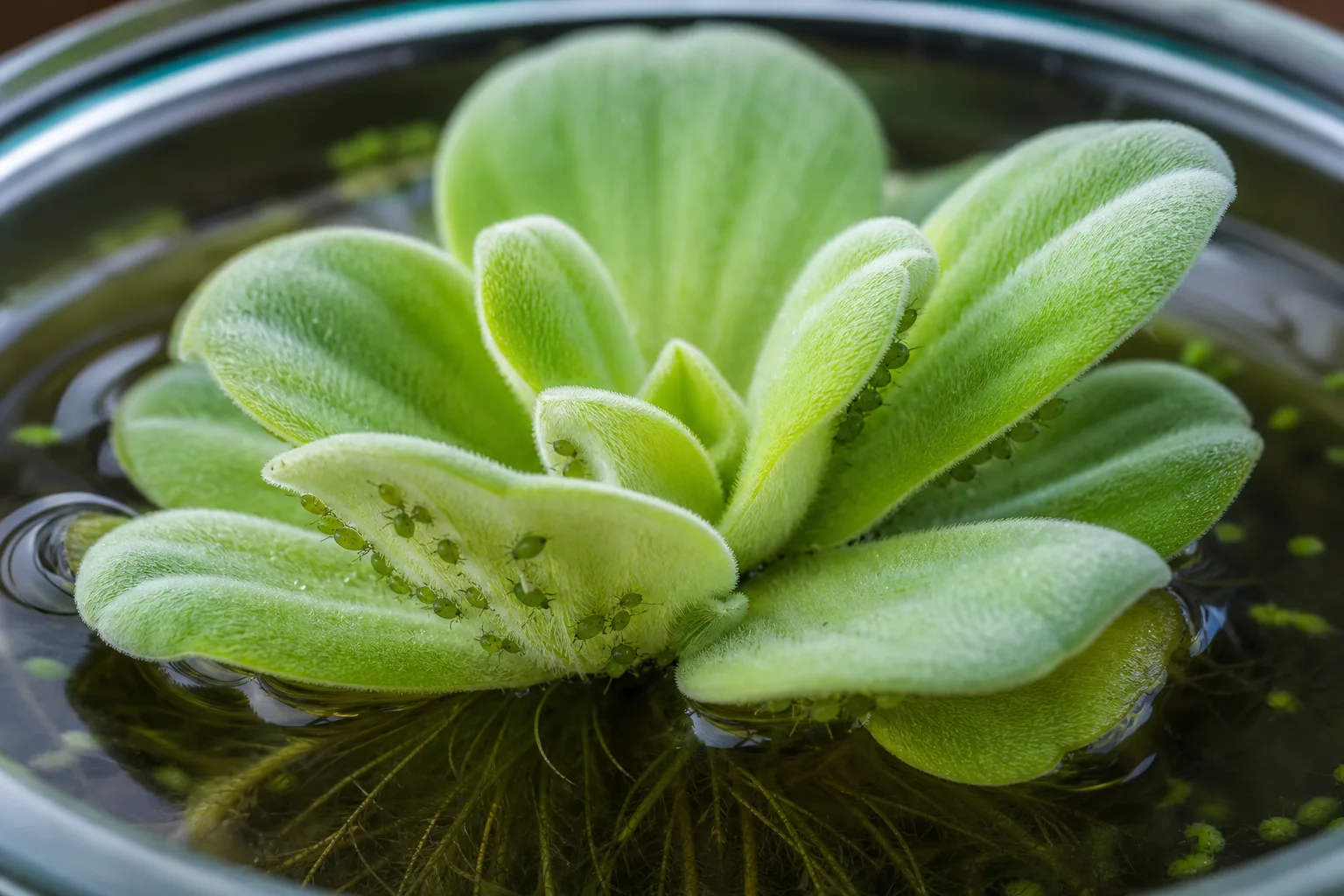
Aphids on Water Lettuce: Causes, Checks & Fixes
This guide covers aphids on Water Lettuce. See also the general Aphids guide, watering, and light pages for this plant.
Aphids on Water Lettuce: Causes, Checks & Fixes
Quick answer
Aphids on water lettuce (Pistia stratiotes) show up on rosette crowns and velvety leaves at the water surface, not on submerged roots. These are sap-feeding insects that colonize exposed tissue at or above the waterline-tiny green, brown, or black clusters on the soft leaf center, sometimes with sticky honeydew on nearby rosettes or aquarium glass.
First step: skim off every rosette that carries visible aphids and wipe the tank rim where they crawl. Do not spray insecticidal soap, neem oil, or alcohol directly into a fish or turtle tank. Water lettuce reproduces quickly through daughter plants in warm water, so discarding a contaminated mat and restarting from clean stock is often safer than trying to wash pests off large rosettes inside a stocked aquarium.
Why water lettuce gets aphids on floating rosettes
Rosette crowns are easy feeding sites. Water lettuce forms compact floating rosettes with soft, velvety leaves and feathery roots trailing below. Aphids cannot live underwater indefinitely, but they feed readily on leaf tissue at or above the surface-especially the tender crown where new growth emerges. Warm aquarium water and bright surface light push fast vegetative growth and steady daughter-plant production, the same conditions that let aphid colonies double in less than a week once a few hitchhikers establish.
Unquarantined stock is the usual entry route. Water lettuce arrives on pond scoops, online orders, and aquarium starter bundles with pests already on the rosettes. Skipping isolation is the most common way aphids reach a clean tank. Winged aphids can also drift in from nearby houseplants or open windows and land on floating rosettes.
Semi-aquatic aphid species fit this habitat. The waterlily aphid (Rhopalosiphum nymphaeae) is a semi-aquatic species documented on water lettuce (Pistia stratiotes) alongside water lilies, duckweed, and other floating aquatics. It can walk on the water surface and crawl down emergent plant parts. Specialized body hairs trap air so these aphids can feed on submerged plant parts and move between rosettes on the surface film.
Indoor tanks lack aphid predators. Outdoors, fish, lady beetles, and other predators reduce aphids. In a closed aquarium, nothing reliably hunts surface colonies before they spread across the entire mat. Fish may nibble roots but rarely control a dense aphid outbreak on rosette crowns.
Tank edges become highways. Aphids crawl along glass rims, lids, and nearby surfaces when disturbed or when rosettes are removed. Colonies can persist on hardware even after you skim the plants, then reinfest fresh daughter plants within days.
What aphids look like on water lettuce
- Tiny soft-bodied, pear-shaped insects-about 1/16 to 1/8 inch (2–4 mm)-clustered on rosette crowns and upper leaf surfaces, not beneath the water on roots
- Green, brown, black, or reddish colonies visible without magnification once numbers build; waterlily aphids are often dark olive to brown with a dusting of whitish wax
- Sticky honeydew coating velvety leaves, the water surface film, or aquarium glass below heavy feeding zones
- White necrotic spots, yellowing lower leaves, or premature crown whitening in dense colonies-damaged tissue looks dull or coated rather than firm and evenly green
- Ants on tank rims or nearby shelves-ants harvest honeydew and protect aphid colonies from predators
- White cast skins shed by growing nymphs stuck to leaf crowns or floating in the surface film
- Winged adults appearing when colonies crowd-sign the infestation may spread to other plants
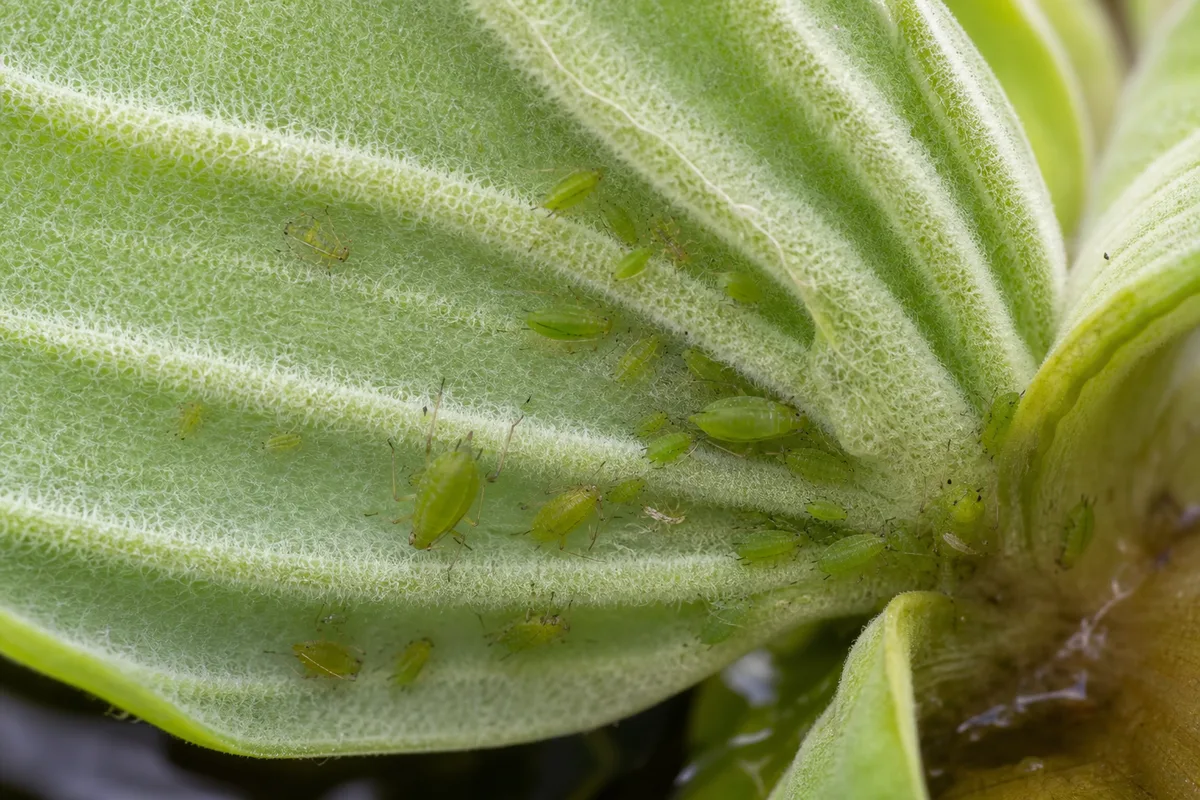
Aphids symptoms on Water Lettuce - compare with healthy tissue on the same plant.
Water lettuce rosettes are larger than duckweed fronds, so damage shows as patchy yellowing across individual rosettes, greasy surface film, or stunted daughter plants on stolons rather than a thinning micro-mat. Heavy honeydew can support sooty mold growth on leaves and glass, though the mold itself is secondary to the aphids.
Confirm aphids vs. springtails, detritus, and biofilm
Work through these checks before treating:
- Rosette crown inspection - Lift one rosette into a white dish under bright light. Look for moving insects on the velvety leaf center. Aphids have two small tailpipes (cornicles) on the hind end-visible with a hand lens.
- Disturbance test - Touch a cluster with a toothpick. Aphids move slowly or drop off. Springtails jump sharply when disturbed-they are harmless decomposers, not sap feeders.
- Location check - Confirmed aphids stay at or above the waterline on leaf tissue. If bugs only appear on submerged roots of another plant, you may be seeing a different issue.
- Honeydew test - Rub a leaf crown between fingers. Aphid honeydew feels tacky. Normal water lettuce feels velvety and wet without stickiness.
- Tank rim survey - Inspect glass edges, filter outflow trays, and lid seams. Crawling aphids here explain reinfestation after skimming.
- Nearby plant check - Look at houseplants within a few feet of open-top tanks. Winged aphids often commute between the aquarium surface and terrestrial hosts.
| Sign | Aphids | Springtails | Detritus / biofilm |
|---|---|---|---|
| Movement when poked | Slow crawl or drop | Sharp jump | None |
| Body shape | Pear-shaped with cornicles | Tiny oval jumpers | Irregular debris |
| Honeydew | Sticky coating on leaves or glass | None | None |
| Location | Rosette crowns, tank rims | Surface film, glass | Trapped in mat edges |
| Plant damage | Yellowing, necrotic spots | None | Cosmetic discoloration only |
If you find no insects, no honeydew, and no ant activity-only green rosettes-aphids are unlikely. Algae film, mulm, and bacterial biofilm can discolor leaves but do not produce sticky honeydew or moving colonies.
First fix: skim infested rosettes and wipe the tank rim
Skim off every rosette that shows aphids, honeydew, or cast skins. Wipe the tank rim and any lid edges with a damp cloth.
Use a net or tongs to remove contaminated rosettes completely. Bag and discard them in household trash-do not compost near garden ponds or release removed Pistia stratiotes into outdoor waterways where the species can spread invasively. Wipe down glass rims, light fixtures, and filter hardware where aphids hide. This single step removes the food source and most live insects at once.
Because water lettuce produces daughter plants on stolons within days in warm nutrient-rich water, sacrificing a contaminated mat costs little compared with trying to wash individual rosettes inside a stocked tank. If you must keep genetics from a rare line, salvage only a few clean-looking daughters into a quarantine container-not back into the display tank yet.
Why not to spray soap or oil into a stocked tank
Insecticidal soap and plant oil sprays are labeled for direct contact on terrestrial plant pests, not for open aquarium water. They can harm fish, turtles, shrimp, and beneficial tank bacteria even at diluted rates. Alcohol and neem products carry the same risk when runoff enters the water column.
If you treat salvaged rosettes with soap outside the display tank-as some growers do for stubborn colonies-dip only the aerial leaf tissue in a separate container, rinse thoroughly with dechlorinated water, and quarantine for seven to ten days before any reintroduction. Never pour pesticide solutions directly into stocked water.
Quarantine clean daughter rosettes before returning
Place apparently clean daughters in a separate container of dechlorinated water away from the main tank. Inspect crowns daily for seven to ten days. If aphids reappear, discard and restart from a trusted source. Aphids are not aquatic-swishing rosettes underwater or submerging them briefly dislodges stragglers that fish or filter intake may remove in a fish-only quarantine setup. Do not leave water lettuce fully submerged for days; it needs surface contact to photosynthesize.
Step-by-step recovery
After the initial skim and wipe:
- Quarantine any salvage stock - Keep a few daughters in a separate container. Inspect daily. Discard at the first sign of reinfestation.
- Submerge salvage rosettes briefly - A firm underwater swish dislodges pests that cannot hold onto wet leaf tissue. Fish in a quarantine tub may consume dislodged insects.
- Let fish help in fish-only tanks - In display aquariums with fish, a strong fine jet directed at a quarantine container rim can knock aphids into the water where predators consume them. This works for stragglers, not a full rosette infestation.
- Check nearby houseplants - Rinse infested houseplants at the sink with a firm forceful spray of water, angling pots so runoff goes down the drain. Aphids on pothos or herbs near the tank often reinfect water lettuce.
- Reintroduce clean rosettes gradually - Add a few daughters after one week with no new colonies on rims or salvaged stock. Expand coverage only when inspection stays clean.
For turtle tanks, prioritize water quality over saving every rosette. Remove infested plants promptly-decomposing tissue plus honeydew fouls water faster than turtles can graze it down. Avoid copper-based treatments, algaecides, or terrestrial pesticides in turtle water.
Recovery timeline and daughter-plant expectations
Expect visible improvement within 24 to 48 hours after a thorough skim and rim wipe-no new honeydew and no crawling insects on glass. A clean surface mat from salvaged or new daughter plants typically covers the tank again within one to two weeks under moderate aquarium light and normal nutrients in warm water.
Judge recovery by firm new rosettes and absent pest signs, not by the color of old removed tissue. Individual damaged leaves do not heal; water lettuce replaces them through daughter-plant production on stolons. If aphids return within three to five days, you missed colonies on tank hardware or a nearby houseplant is still supplying winged migrants.
Mistakes to avoid
- Spraying insecticidal soap or neem into a stocked tank - Runoff harms aquatic livestock and disrupts biological filtration.
- Trying to wash aphids off a full mat inside the display tank - Rosettes overlap and pests hide between daughter plants on stolons, reinfesting within days.
- Keeping a “mostly clean” mat - Partial removal leaves enough aphids to reproduce parthenogenetically and recover the colony within a week.
- Ignoring tank rims and lids - Crawling aphids on hardware reinfect fresh water lettuce after every skim.
- Adding pond stock without quarantine - Outdoor sources commonly carry waterlily aphids and other surface pests.
- Releasing removed plants into waterways - Pistia stratiotes is invasive in many warm climates; bag discarded rosettes for trash.
- Using copper or general pond pesticides in turtle tanks - Residues accumulate in water and harm aquatic animals.
Prevent aphids next time
- Quarantine all new water lettuce for one to two weeks in a separate container before it touches display water.
- Inspect rosette crowns weekly during thinning-lift one rosette and scan for moving dots or sticky film.
- Keep tank rims clean - Wipe glass edges during water changes so aphids cannot establish off-plant refuges.
- Monitor houseplants near open tanks - Treat terrestrial aphids promptly; winged forms can colonize water lettuce overnight.
- Avoid emersed floaters touching walls or shelves - Frogbit and other floaters with leaves above the waterline create bridges for aphids onto neighboring rosettes.
- Source from clean growers - Pond scoops and wild collections carry the highest pest risk.
Water lettuce is easy to replace through daughter plants. Keeping a small clean backup culture in a separate container costs little and saves a stocked tank if aphids return.
When to escalate - heavy colonies and reinfestation loops
Escalate treatment when:
- Aphids coat most rosettes and honeydew fouls water within hours of skimming
- Ants persist on tank hardware, protecting colonies you cannot reach
- Winged aphids appear on multiple houseplants and the aquarium simultaneously
- Turtle tank water turns cloudy or smells foul soon after a heavy infested mat collapses
- Salvage quarantine fails twice-discard all stock and restart from a verified clean source
Aphids rarely kill water lettuce outright-the plant reproduces too quickly in warm water-but they can degrade water quality in turtle tanks and spread to terrestrial plants around the setup. Aggressive skimming plus rim cleaning resolves most aquarium cases without chemicals. For persistent infestations in large pond tubs, wiping aphids off reachable leaves works on small setups where you can reach every rosette from the edge.
When to use this page vs other Water Lettuce guides
- Water Lettuce watering guide - Use for routine moisture checks before assuming aphids is the main issue.
- Water Lettuce problems hub - Browse all 3 common issues on this species.
- Yellow Leaves on Water Lettuce - Different entry point when symptoms overlap with aphids.