Mold on Soil on Water Lettuce: Causes, Checks & Fixes
Quick answer
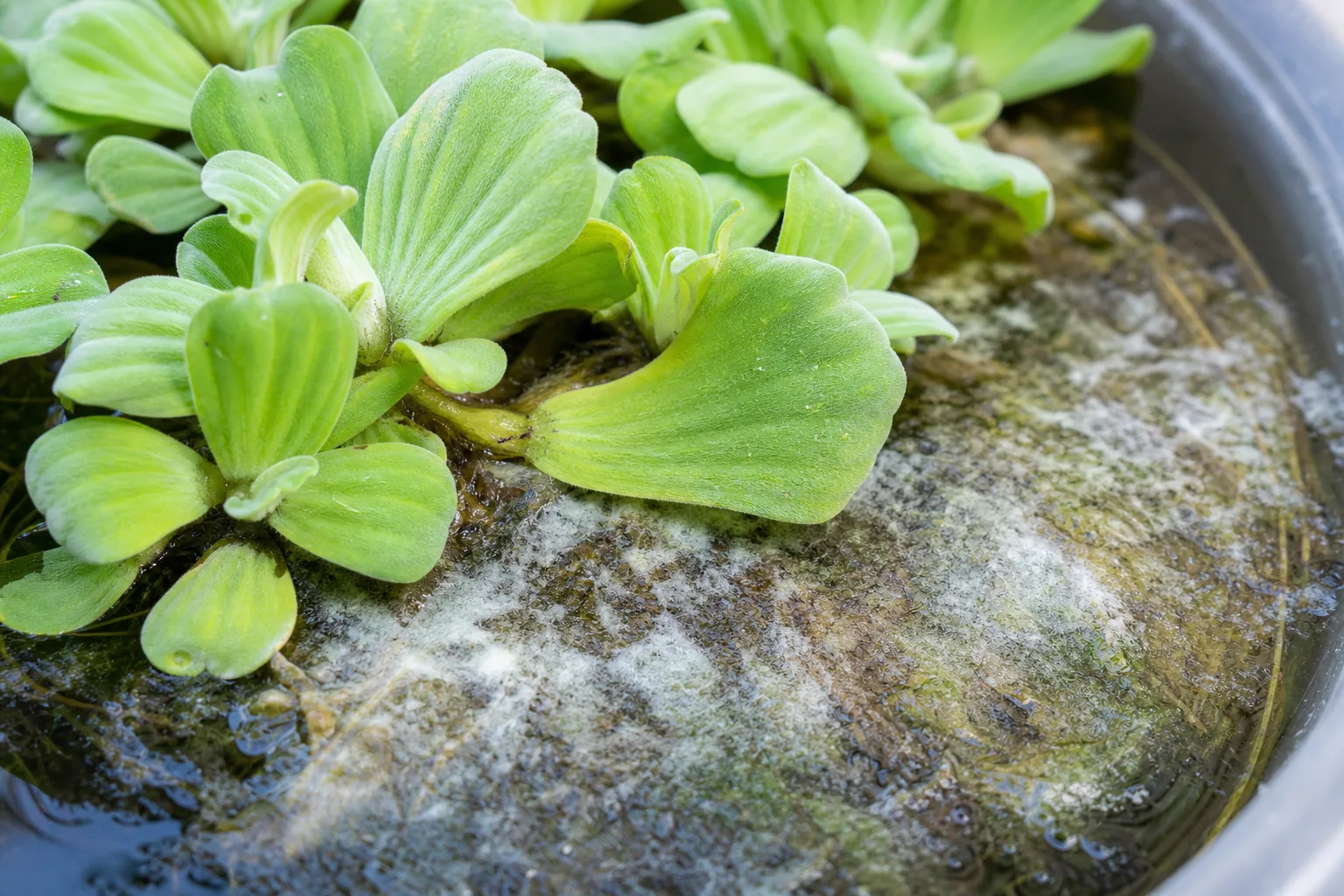
On water lettuce, 'mold on soil' is almost always fuzzy growth on aquarium gravel, sand, or pond sediment-not potting mix-fed by decaying rosette melt and organic debris. First step: siphon sunken melt and uneaten food off the substrate during your next partial water change.
Mold on Soil on Water Lettuce: Causes, Checks & Fixes
This guide covers mold on soil on Water Lettuce. See also the general Mold on Soil guide, watering, and light pages for this plant.
Mold on Soil on Water Lettuce: Causes, Checks & Fixes
Quick answer
Water lettuce (Pistia stratiotes) is a free-floating aquatic plant that obtains moisture and nutrients from the water column-not from potting soil. When people search for mold on soil on water lettuce, they are usually seeing white, gray, or tan fuzzy growth on aquarium gravel, sand, or pond bottom sediment where decaying organic matter collects beneath a floating mat.
That fuzz is typically saprophytic water mold or similar fungi feeding on dead rosette tissue, uneaten food, or turtle waste-not a disease attacking healthy floating leaves. The rosettes above may look fine while the substrate looks messy.
First step: during your next partial water change, siphon decaying rosette fragments and organic debris off the substrate surface. Remove the food source before adjusting light, adding chemicals, or replacing the whole colony. Waiting for the fuzz to disappear on its own rarely works while fresh melt keeps landing on the bottom.
What “mold on soil” means for water lettuce (not potting mix)
Terrestrial plant-care sites use a “soil” topic slot for every species. For water lettuce, that label is misleading. The plant never roots into substrate in aquarium or pond culture-it floats on the surface with feathery roots dangling in the water. Any “soil” in your search phrase really means aquarium gravel, sand, clay, or pond sediment at the tank bottom.
Fuzzy outbreaks there trace to organic buildup from decaying plant matter and waste, not wrong houseplant potting mix. If someone tried to grow water lettuce in moist terrestrial soil, that setup would fail immediately and any mold there reflects wrong culture, not a normal water lettuce problem.
What mold on the substrate looks like on water lettuce setups
On water lettuce tanks and ponds, the problem shows up on bottom surfaces, not in a houseplant pot:
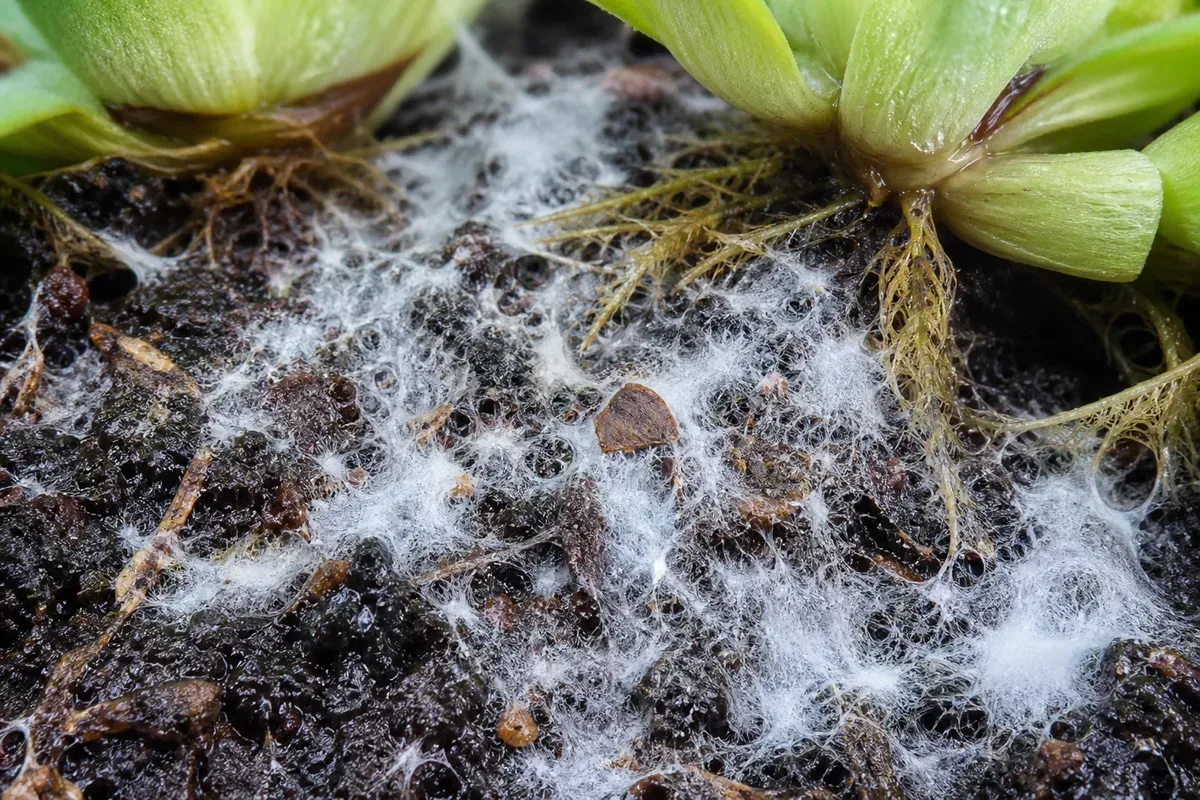
Mold on Soil symptoms on Water Lettuce - compare with healthy tissue on the same plant.
- White, gray, or cottony tufts on gravel, sand, or pond sediment
- Slimy or fuzzy patches clustered around sunken yellow or brown rosette leaves and broken stolons
- Biofilm-like coating on substrate near filter intakes clogged with plant debris
- Sometimes a musty or sour smell when you disturb the gravel during cleaning
Healthy water lettuce has firm, velvety green rosettes floating at the surface with white to tan roots trailing below. Fuzz that sits only on debris at the bottom, while living rosettes stay buoyant and green, points to decay on the substrate rather than infection of the plant.
In turtle tanks, mold-like growth may appear faster because turtles shred plants, knock rosettes loose, and leave food particles that settle into gravel voids. Dense floating mats also shed outer leaves as interior rosettes get shaded; those leaves sink, rot, and feed fuzz below.
Lookalikes on the same surfaces: green hair algae (stringy, not cottony), snail or fish eggs (uniform tiny dots), and the normal biofilm on new driftwood (often clears once organics drop). True water lettuce melt looks like yellowing, translucent, or brown outer leaves peeling away from the rosette-that tissue is what feeds the fuzz below.
Why water lettuce tanks get fuzzy growth on the bottom
Water lettuce is a fast-spreading floating rosette plant that reproduces through daughter plants on horizontal stolons. Outer leaves senesce naturally; when stressed by cold, poor light, or surface agitation, rosettes shed heavily. Those fragments become the main fuel for fuzzy growth on the bottom.
Because water lettuce is rootless in the substrate sense and feeds from the water column, fuzzy outbreaks on gravel trace to organic buildup, not nutrient deficiency in soil mix.
Common water-lettuce-specific triggers:
Rosette melt and shedding. New water lettuce often drops outer leaves after a tank move, shipping, or sudden temperature drop. Until you remove that melt, saprophytic fungi colonize decaying plant matter on moist surfaces and appear as white or gray growth on gravel.
Dense mat shading. When surface coverage exceeds roughly one-third to one-half of the water area, interior rosettes yellow and shed faster. Dense mats also block the air-water interface and can reduce gas exchange-accelerating debris accumulation below.
Overfeeding and trapped waste. Food that falls between gravel pebbles rots in low-flow pockets. In aquariums, that organic load feeds water mold on the substrate.
Poor debris removal. Water lettuce left unthinned clogs filter intakes and traps detritus in its feathery roots. Regular netting and gravel vacuuming limit fungal food sources-the aquarium equivalent of removing dead leaves from a garden bed.
Low flow over the bottom. Stagnant pockets below dense floating mats let debris accumulate. Water lettuce prefers clean, oxygenated water; foul stagnant zones speed decomposition.
Condensation and surface damage. Dripping condensation from tank lids or filter splash can waterlog velvety leaf hairs, causing tissue rot that sinks and feeds substrate fuzz.
How to confirm the cause (checklist)
Work through these checks before treating:
- Locate the fuzz. Substrate and debris only, or also on firm green floating rosettes? Fuzz limited to decay confirms saprophytic growth on waste.
- Inspect rosette health. Buoyant green rosettes at the surface with separate bottom fuzz means cleanup-not plant medicine.
- Look for melt sources. Recent tank move, cold water below 65°F, new light, filter splash, or turtle shredding? Match timing to shed fragments on the bottom.
- Check feeding habits. Uneaten pellets, feeder fish remains, or produce scraps in gravel?
- Smell and water clarity. Sour odor or persistent cloudiness suggests excess dissolved organics beyond a small harmless patch.
- Test ammonia and nitrite if livestock act stressed. Decomposing plant matter can spike nitrogen compounds when filtration is overwhelmed.
If rosettes themselves turn brown, slimy, and sink en masse while the whole colony collapses, you may have broader water-quality stress or melt-not just surface fuzz on gravel. If only debris is fuzzy and floating rosettes stay firm, confirmation is straightforward: organic waste on the substrate.
First fix: siphon debris during a partial water change
Siphon decaying rosette fragments and organic debris off the substrate during a partial water change.
Use a gravel vacuum to lift sunken leaves, broken stolons, and visible fuzz from the top layer of gravel or sand. Net large floating melt before it sinks again. Pinch off yellowing outer leaves from parent rosettes and remove uneaten food you find in the same pass.
Do not reach for tank-wide fungicide, copper, or algaecide as a first response-those can harm water lettuce, turtles, fish, and beneficial bacteria. Do not stir the entire substrate clouding the tank unless you are prepared for a larger water change afterward.
This single cleanup cuts the food supply that saprophytic fungi need to grow on decaying plant matter. Once debris stops accumulating, fuzz usually fades within days to two weeks.
Step-by-step recovery
After the first siphon pass, continue in this order:
- Net floating melt daily for several days after acclimation or a tank change. Water lettuce can shed heavily at first until conditions stabilize.
- Thin overcrowded mats. Remove excess rosettes so flow reaches the surface and debris does not pack against the filter intake. Dispose of removed plants in household trash-never release into natural waterways.
- Pinch senescing leaves. Remove yellowing outer leaves before they sink and rot.
- Adjust feeding. Offer smaller portions, feed outside the tank if possible, or remove leftovers within an hour so gravel traps less organic matter.
- Improve bottom flow. Reposition filter outlets or add gentle circulation so detritus cannot sit in dead zones under floating plants.
- Partial water changes. Replace 20–30% of tank water weekly-or more often briefly if organics were heavy-while continuing light substrate vacuuming.
- Rinse affected décor. Scrub driftwood or rocks with a soft brush in old tank water if fuzz clings to surfaces after debris removal.
- Hold fertilizers and chemicals until water clears and new daughter rosettes look stable. Extra nutrients or copper-based products stress water lettuce during cleanup.
If fuzz returns within days on clean gravel with no new debris, review whether substrate grain size traps food (large pebbles with deep voids are common culprits) or whether wood in the tank is leaching organics.
Recovery timeline
Within 24–72 hours: Visible fuzz should stop spreading once major debris is gone and uneaten food is controlled.
Within one to two weeks: Substrate surface should stay cleaner; new daughter rosettes on firm parent plants indicate the colony is recovering. Old melted leaves will not regenerate-remove them.
Three to four weeks: With weekly thinning and vacuuming, repeat outbreaks should be rare. Persistent fuzz with clean habits points to an underlying substrate or décor issue, not water lettuce genetics.
Judge success by firm new rosettes and clearer water, not by whether every old leaf greens up again.
Lookalikes on the same surfaces
- Green hair or thread algae - Stringy, attached filaments on plants or rocks; fixed by light/nutrient balance, not debris siphon alone.
- Brown water lettuce melt - Translucent yellowing from cold or stress; remove tissue and fix water quality-the fuzz follows the melt, not the reverse.
- Biofilm on new wood - Common in young tanks; often subsides as wood stabilizes if organics stay low.
- Cloudy bacteria bloom - Milky water column, not just cotton on gravel; needs filtration and water-change patience, not gravel scraping alone.
- Terrestrial mold in potted soil - Wrong setup for water lettuce; float rosettes on clean water instead.
What not to do
Do not mist water lettuce with fungicide or dump anti-fungal treatments into a turtle or fish tank without species-safe guidance-healthy rosettes do not need it, and chemicals can injure livestock and biofilter bacteria.
Avoid copper-based algae products; water lettuce is sensitive, and copper is unsafe for many invertebrates and some turtle setups.
Do not ignore shed leaves because the floating mat still looks green from above-debris below will keep feeding fuzz and can foul water.
Skip potting water lettuce in houseplant soil or burying rosettes in gravel; that guarantees decay and mold unrelated to normal aquarium care.
Do not reduce watering frequency or let substrate “dry out”-water lettuce lives in open water. The fix is debris removal and water quality, not less moisture.
Do not overfeed to “help” a stressed tank-extra food worsens the organic load that fuels substrate mold.
How to prevent substrate fuzz next time
- Thin water lettuce weekly in fast-growing turtle or community tanks so shed leaves do not accumulate.
- Pinch yellowing outer leaves before they sink-dead plant material on moist surfaces feeds fungal growth if left in the water.
- Net melt after moves-new water lettuce often sheds before it settles.
- Vacuum the gravel surface during routine partial water changes; remove dead plant material from surfaces to limit fungal food sources.
- Control feeding and waste so organic matter does not collect in gravel pockets.
- Maintain filtration sized for the tank plus plant and turtle load; clear plant debris from intakes weekly.
- Keep surface calm-redirect filter outflow so splashing does not damage velvety leaves and trigger melt.
- Dispose of excess plants responsibly-water lettuce is widely classified as an invasive aquatic weed; place removed plants in household trash, not outdoor waterways.
When to escalate (smell, cloudiness, test results)
Act quickly if:
- Water smells rotten or sewer-like, not mildly earthy
- Ammonia or nitrite rise above safe levels for your livestock
- Multiple rosettes turn brown and slimy and sink, not just scattered outer leaves
- Fuzz returns within two to three days despite daily debris removal-inspect substrate size, buried food, and filter function
- Turtles or fish show lethargy, gasping, or swollen eyes alongside dirty substrate-treat as a water-quality emergency, not a cosmetic mold issue
Small cottony patches on gravel near a clump of shed leaves, with firm green rosettes above and normal test readings, rarely threaten the plant or animals.
Conclusion
Mold on soil on water lettuce is a misleading label for a common aquarium and pond problem: saprophytic fuzz on gravel fed by decaying rosette melt and organic debris. The plant lives on open water, not potting mix-so the fix starts at the tank bottom, not the soil bag.
Confirm that living rosettes stay buoyant while fuzz sits on waste, then siphon debris and control feeding before considering chemicals. Thin fast-growing water lettuce, keep up partial water changes, and remove melt promptly. When debris stays low, fuzz clears, new daughter rosettes form, and the tank stops smelling sour-that is recovery done right.
Related Water Lettuce guides
- Water Lettuce overview
- Water Lettuce watering
- Water Lettuce light
- Fungus Gnats on Water Lettuce
- Overwatering on Water Lettuce
- Root Rot on Water Lettuce
- All Water Lettuce problems
Conclusion
Use this page to confirm mold on soil on Water Lettuce by pattern and pot checks-not by treating every houseplant the same. When symptoms overlap with sibling pages, follow the linked guide for the matching cause before stacking fertilizer, repotting, or pesticide.