Water Sprite Care Guide: Floating or Rooted Aquarium Fern
Ceratopteris thalictroides
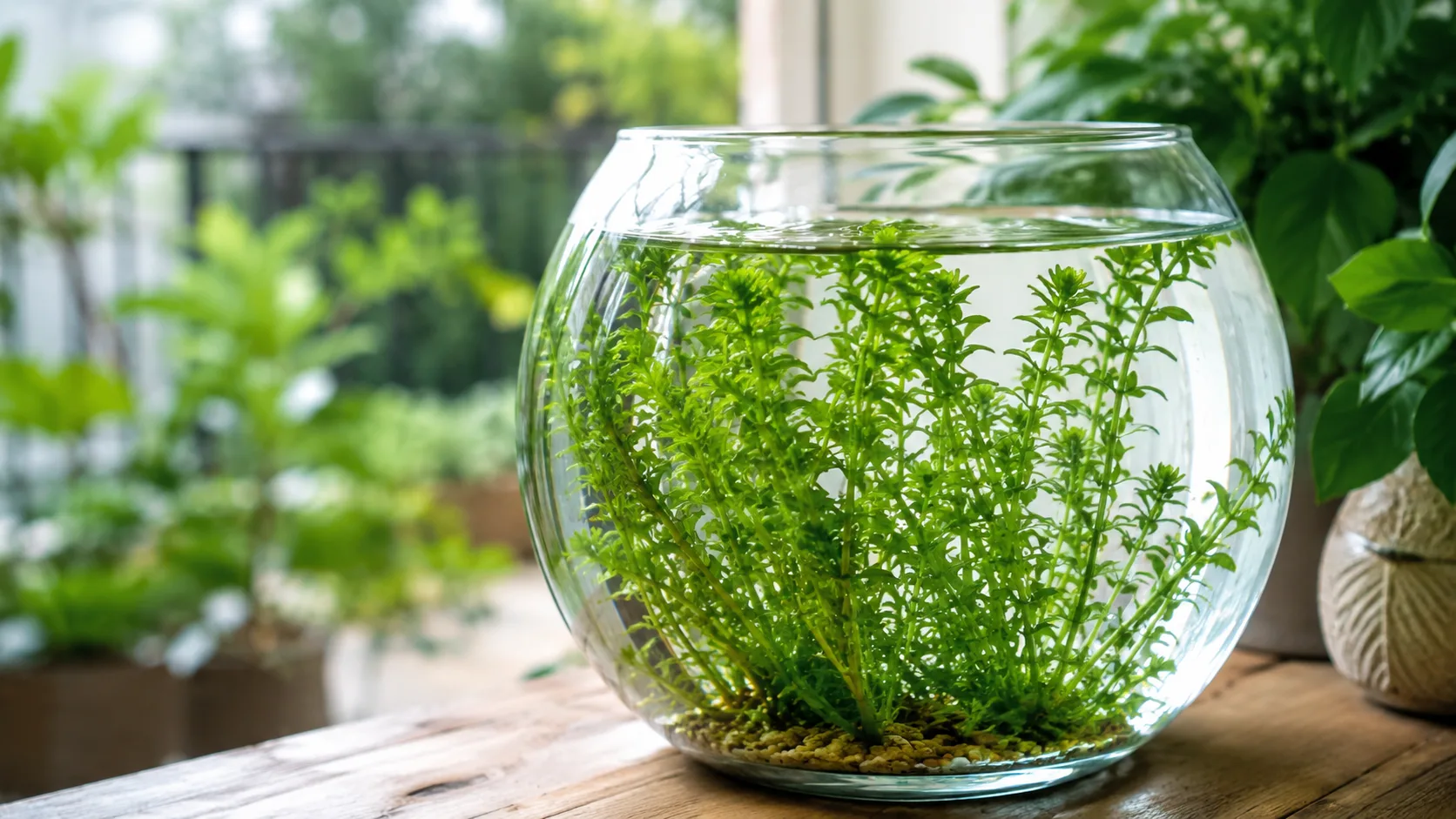
Grow Water Sprite fully submerged or floating in stable freshwater with low to medium light. It can grow without substrate; if rooted, cover the roots but keep the crown exposed. Thin fast-growing fronds and collect plantlets or fragments before they crowd the tank.
Water Sprite Care: Growing Ceratopteris thalictroides in Aquariums
Start with wateringThe most common care mistake for Water SpriteWatering guide →Water Sprite care essentials
Light
Low to medium aquarium light is usually suitable; moderate light supports fuller growth. Floating fronds sit closer to the light and may shade plants beneath them.
Water
Keep Water Sprite continuously submerged or floating in clean freshwater. Maintain stable aquarium conditions, and avoid sudden temperature or water chemistry changes when moving it between tanks.
Soil
No substrate is needed when Water Sprite is grown floating. To root it, use aquarium-safe gravel or sand and cover the roots while keeping the short crown or rhizome above the substrate.
Humidity
Temperature
Fertilizer
Fertilize only when the aquarium's plant load and measured nutrient levels indicate a need; fast growth can use nutrients from the water column.. Use aquarium-specific fertilizer at a conservative, label-directed dose if needed.
About Water Sprite
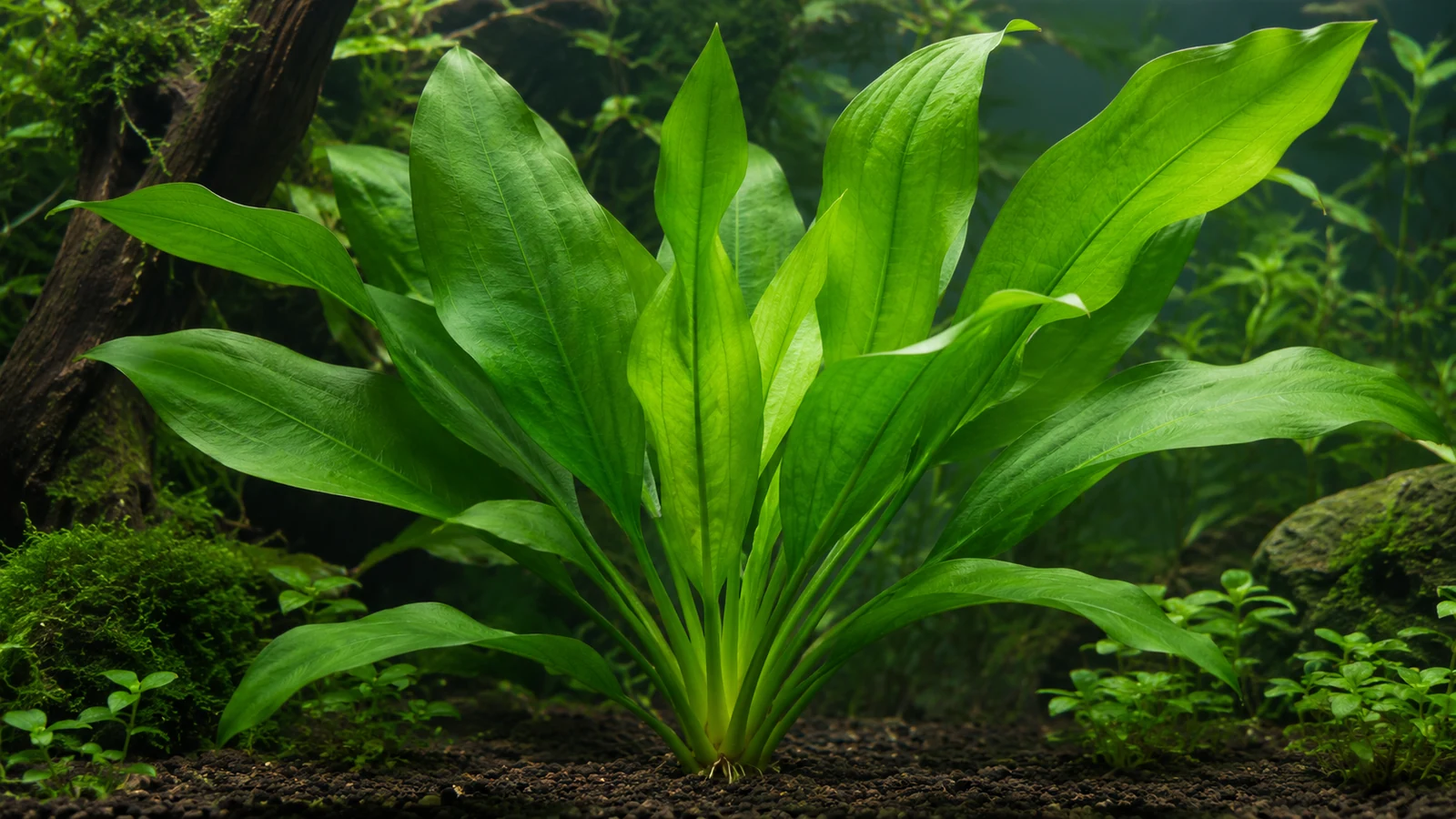
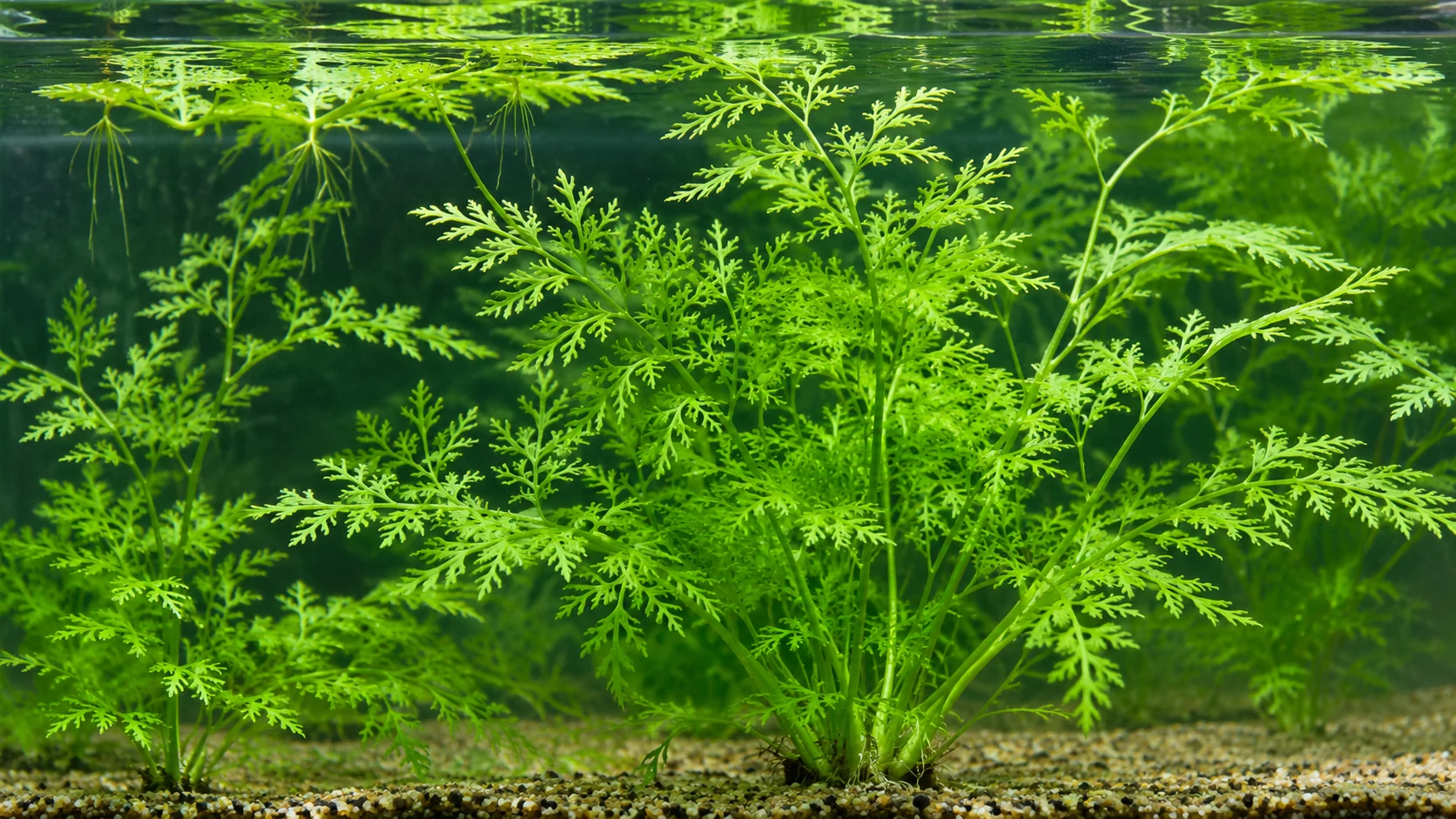
Water Sprite is native to Tropical lowland freshwater wetlands; the exact native range is uncertain, and the species is now distributed across tropical regions., typically reaches Aquarium references report about 15–30 cm tall and 10–20 cm wide; wild plants can grow much larger, with fertile fronds approaching 1 m. indoors, with fast in suitable aquarium conditions growth. Water Sprite has a floating or loosely rooted aquatic fern with a short rhizome and a rosette of finely divided fronds. growth habit and part of the Pteridaceae family. It is also known as Indian water fern, Swamp fern, Floating stag's horn, Sumatra fern, and Oriental water fern.
| Detail | Information |
|---|---|
| Also known as | Indian water fern, Swamp fern, Floating stag's horn, Sumatra fern, Oriental water fern |
| Native region | Tropical lowland freshwater wetlands; the exact native range is uncertain, and the species is now distributed across tropical regions. |
| Mature size | Aquarium references report about 15–30 cm tall and 10–20 cm wide; wild plants can grow much larger, with fertile fronds approaching 1 m. |
| Growth rate | Fast in suitable aquarium conditions |
| Growth habit | Floating Or Loosely Rooted Aquatic Fern With A Short Rhizome And A Rosette Of Finely Divided Fronds. |
| Scientific name | Ceratopteris thalictroides |
| Family | Pteridaceae |
How to care for Water Sprite?
How much light does Water Sprite need?
Low to medium aquarium light is usually suitable; moderate light supports fuller growth. Floating fronds sit closer to the light and may shade plants beneath them.. Low to medium aquarium lighting. Floating or rooted placement. low light
- Low to medium aquarium light is usually suitable - Low to medium aquarium light is usually suitable; moderate light supports fuller growth.
- moderate light supports fuller growth. Floating fronds sit closer to the light and may shade plants beneath them - Floating fronds sit closer to the light and may shade plants beneath them..
- Low to medium aquarium lighting - Low to medium aquarium lighting.
- Floating or rooted placement - Floating or rooted placement.
- low light - Low to medium aquarium light is usually suitable; moderate light supports fuller growth.
When should you water Water Sprite?
Keep Water Sprite continuously submerged or floating in clean freshwater. Maintain stable aquarium conditions, and avoid sudden temperature or water chemistry changes when moving it between tanks.
- Check that the fronds remain hydrated and that water quality and temperature are stable. New submerged leaves may look different from older leaves grown above water. - Keep Water Sprite continuously submerged or floating in clean freshwater.
- Drain excess water - Keep Water Sprite continuously submerged or floating in clean freshwater.
What soil works best for Water Sprite?
No substrate is needed when Water Sprite is grown floating. To root it, use aquarium-safe gravel or sand and cover the roots while keeping the short crown or rhizome above the substrate.
- Floating culture in clean freshwater, with no soil. - No substrate is needed when Water Sprite is grown floating.
- Aquarium-safe sand or gravel when rooting the plant. - To root it, use aquarium-safe gravel or sand and cover the roots while keeping the short crown or rhizome above the substrate.
How to propagate Water Sprite?
Small plantlets can develop on leaves. Let them grow until they can be handled, then leave them floating or place them in a suitable rooted position. Healthy cuttings can also be floated or replanted.
- Leaf plantlets or bulbils - Small plantlets can develop on leaves.
- Healthy stem or frond trimmings - Healthy cuttings can also be floated or replanted.
- Spores in suitable conditions - Let them grow until they can be handled, then leave them floating or place them in a suitable rooted position.
Grower notes for Water Sprite
Grow it as an aquatic fern
Water Sprite is Ceratopteris thalictroides, a freshwater fern found in tropical wetlands. It can grow floating or loosely rooted, so it is not a terrestrial houseplant that should be allowed to dry between waterings.
Choose floating or rooted culture
Floating growth needs no substrate and develops dangling roots in the water. If planting it, cover the roots but leave the crown exposed; burying the crown can cause it to decay. The plant can also be attached loosely to aquarium hardscape, but floating or substrate-rooted culture is simpler.
Expect a change in leaf form after planting
Aquarium stock may have leaves grown above water. As it adjusts to fully submerged growth, older leaves can fade while newer leaves become more finely divided. Remove only decaying growth and give the plant time to acclimate in stable conditions.
Moderate light and optional added carbon are enough for many tanks
Aquarium plant references rate its light need around low to medium and its carbon dioxide need as low. Adequate light and ordinary tank nutrients support steady growth; injected CO2 is not a starting requirement for a simple setup.
Thin it before it crowds the tank
Water Sprite can grow quickly and use dissolved nutrients. Remove extra fronds when they shade other plants, cover the surface, or approach filter intakes. Its growth can help take up nutrients, but it does not replace filtration or regular aquarium maintenance.
Keep new plantlets and fragments contained
The fern can form bulbils or plantlets on its leaves, and loose pieces can continue growing in water. Collect unwanted fragments and never release aquarium plants or water into local ponds, streams, or wetlands; Water Sprite is nonnative in some regions and can spread there.
Is Water Sprite safe for pets?
This research did not establish a species-specific veterinary safety rating for Water Sprite. Aquarium use does not by itself show that the plant is safe to feed to a pet; ask a veterinarian before offering it as food.
No species-specific veterinary toxicity assessment was verified for Ceratopteris thalictroides in this research. This is an evidence gap, not a finding that the plant is toxic or safe for any pet.
Watering Water Sprite
For Water Sprite, check that the fronds remain hydrated and that water quality and temperature are stable. New submerged leaves may look different from older leaves grown above water. and water it is an aquatic plant, so it should remain in water at all times. Maintain the aquarium's normal water-change routine and replace evaporated water with appropriately treated water. Growth may slow with cooler water or weaker seasonal light. Keep any outdoor container within the species' warm-water tolerance and thin excess growth.
| Detail | Information |
|---|---|
| How often | It is an aquatic plant, so it should remain in water at all times. Maintain the aquarium's normal water-change routine and replace evaporated water with appropriately treated water. |
| How to check | Check that the fronds remain hydrated and that water quality and temperature are stable. New submerged leaves may look different from older leaves grown above water. |
| Seasonal changes | Growth may slow with cooler water or weaker seasonal light. Keep any outdoor container within the species' warm-water tolerance and thin excess growth. |
Signs of overwatering
- A rooted crown decays when buried or water quality is poor.
- Decomposing fronds cloud or foul the aquarium water.
Signs of underwatering
- Fronds or roots left out of water begin to dry and collapse.
- Floating plants stranded above the waterline may dry out.
Soil & potting for Water Sprite
Use a mix of Floating culture in clean freshwater, with no soil., Aquarium-safe sand or gravel when rooting the plant. for Water Sprite. Not applicable to floating culture. For rooted plants, keep the crown exposed and avoid packing the substrate around it. Repot repotting is not usually needed. Reposition or divide the plant when it outgrows its space, shades tank mates, or interferes with aquarium equipment., ideally in during active growth in warm, stable aquarium conditions.
| Detail | Information |
|---|---|
| Recommended mix | Floating culture in clean freshwater, with no soil., Aquarium-safe sand or gravel when rooting the plant. |
| Drainage | Not applicable to floating culture. For rooted plants, keep the crown exposed and avoid packing the substrate around it. |
| Repotting frequency | Repotting is not usually needed. Reposition or divide the plant when it outgrows its space, shades tank mates, or interferes with aquarium equipment. |
| Best season to repot | During active growth in warm, stable aquarium conditions. |
Signs it needs repotting
- Floating fronds cover too much of the water surface.
- Dense growth shades plants below or blocks a filter intake.
- A rooted plant becomes crowded or its crown is buried by substrate.
Humidity & temperature for Water Sprite
Fertilizer & pruning for Water Sprite
Feed Water Sprite fertilize only when the aquarium's plant load and measured nutrient levels indicate a need; fast growth can use nutrients from the water column. using use aquarium-specific fertilizer at a conservative, label-directed dose if needed. The best feeding window is during active growth, adjusted to the aquarium's livestock and nutrient levels. Avoid terrestrial fertilizers and unverified treatments in aquarium water; consider fish and invertebrates before adding any product.
| Detail | Information |
|---|---|
| Fertilizer schedule | Fertilize only when the aquarium's plant load and measured nutrient levels indicate a need; fast growth can use nutrients from the water column. |
| Best season | During active growth, adjusted to the aquarium's livestock and nutrient levels. |
| Fertilizer type | Use aquarium-specific fertilizer at a conservative, label-directed dose if needed. |
| What to avoid | Avoid terrestrial fertilizers and unverified treatments in aquarium water; consider fish and invertebrates before adding any product. |
Pruning
Thin excess fronds as the plant grows. Remove decaying leaves promptly, and keep floating growth clear of filter intakes and light-sensitive tank plants.