Mealybugs on Zinnia: Causes, Checks & Fixes
Quick answer
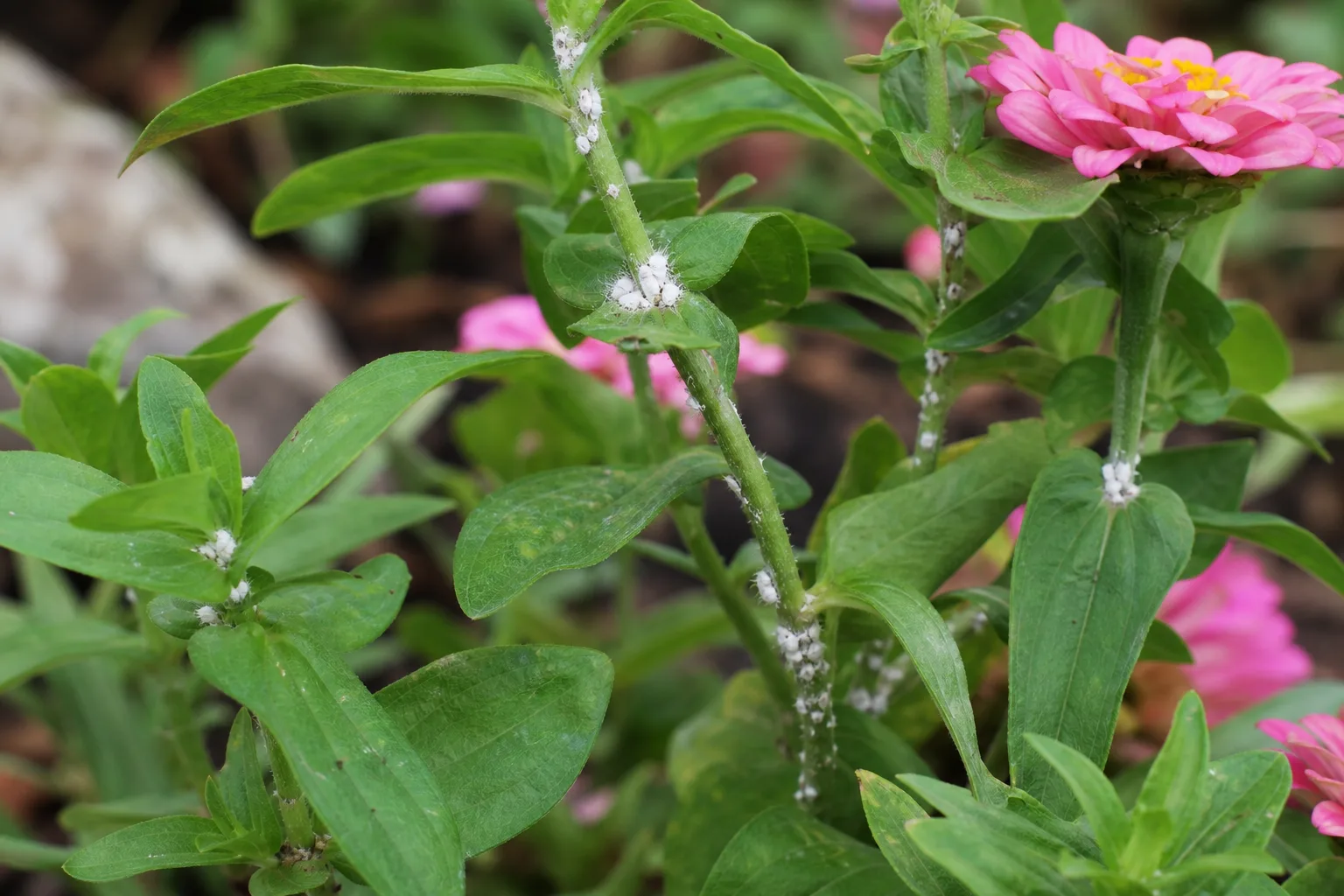
Mealybugs on Zinnia show as white cottony tufts tucked into leaf axils and stem joints-most often on greenhouse-started or indoor seedlings, not mature outdoor beds in full sun. First step: isolate affected plants and dab every visible cluster with a cotton swab dipped in 70% isopropyl alcohol before you spray anything.
Mealybugs on Zinnia: Causes, Checks & Fixes
This guide covers mealybugs on Zinnia. See also the general Mealybugs guide, watering, and light pages for this plant.
Mealybugs on Zinnia: Causes, Checks & Fixes
Quick answer
Mealybugs on Zinnia (Zinnia elegans) appear as white cottony tufts tucked into leaf axils, stem joints, and sometimes along the soil line on crowded seedling flats-most often on greenhouse-started or indoor zinnias, not on mature plants baking in outdoor full sun. They suck sap and excrete sticky honeydew, which can coat leaves and invite sooty mold on upper foliage below feeding sites.
First step: isolate affected zinnias the same day you spot cottony wax. Move the tray or pot away from other seedlings, shared humidity domes, and bench neighbors before you dab, rinse, or spray. Once isolated, dab every visible cluster with a cotton swab dipped in 70% isopropyl alcohol, touching the pest directly-not pooling liquid across tender zinnia cotyledons.
Established outdoor zinnias in open beds are rarely troubled by mealybugs because warm-season annuals in bright sun and good airflow do not offer the protected, year-round habitat that favors indoor populations. The risk window is indoor seed starts, late-thinned direct-sown rows still touching, and container zinnias on sheltered porches where mealybugs can persist without cold winters or natural enemies. Full species context: Zinnia overview.
Why Zinnia gets mealybugs
Mealybugs are not a signature outdoor zinnia pest like aphids or powdery mildew-but zinnia seedlings fit the profile of greenhouse-vulnerable plants when flats stay crowded, humid, and warm through late spring.
Indoor seed starts create perfect hiding spots. Zinnias are often sown in dense trays or six-packs where cotyledons and first true leaves press together at the stem. Mealybugs live in protected areas such as branch crotches, leaf-stem joints, and crowns-exactly where a 10-day-old zinnia seedling is thickest. A quick glance at open leaves misses wax buried in those folds.
Crowded flats limit airflow and natural control. Seedlings thinned late, or packs left too long before transplant, create stagnant warm pockets at the tray surface. Greenhouse and indoor ornamentals are especially vulnerable because mild temperatures favor overlapping generations and beneficial insects are absent.
Excess nitrogen on young zinnias softens tissue. High nitrogen coupled with regular irrigation stimulates tender new growth where mealybugs prefer to feed and lay eggs. Starter fertilizer pushed too hard on indoor zinnias produces lush, soft stems that are easier to colonize than moderately fed, sun-hardened transplants.
Contaminated benches, tools, and neighboring plants spread crawlers. Mealybugs arrive on infested stock, reused pots, or shared snips. Crawlers are mobile before they develop wax and can walk between touching seedlings in the same flat-one infested coleus or herb pack on the same bench can seed zinnia trays nearby.
Outdoor full-sun beds are usually self-correcting. Once zinnias are spaced in garden rows with six or more hours of direct sun, mealybug populations rarely build the way they do indoors. Sun, airflow, and natural enemies such as lady beetles and lacewings normally keep outdoor mealybugs below damaging levels. If you see white patches only after plants move outdoors, trace the source to the transplant batch-not the bed itself.
What mealybugs look like on Zinnia
On zinnia seedlings and container plants, check these patterns together:
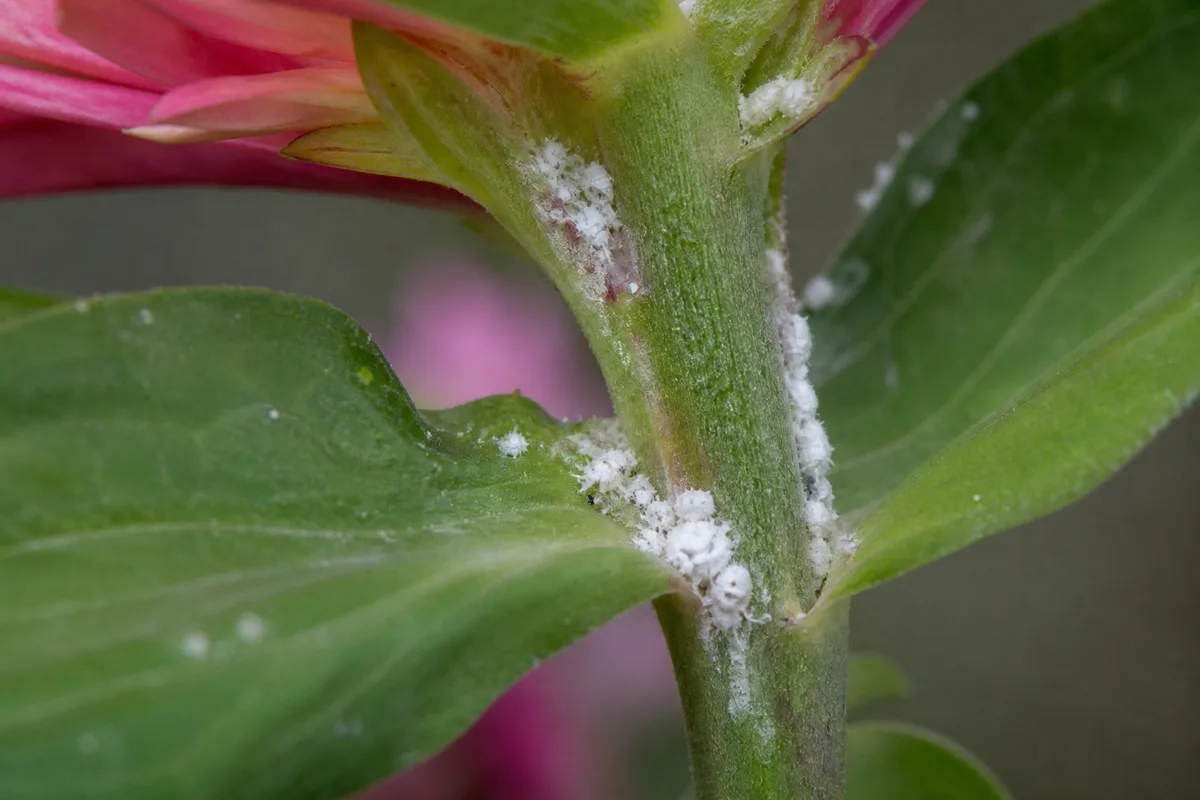
Mealybugs symptoms on Zinnia - compare with healthy tissue on the same plant.
- White fluffy or cottony tufts in stem joints where leaves meet the main stem-not a uniform dry dusting across the whole leaf face
- Waxy clusters at leaf axils on lower stems, especially where cotyledons or first true leaves overlap
- Sticky, shiny honeydew on leaves below colonies or on pot rims and tray surfaces
- Black sooty mold growing on untreated honeydew, dulling leaf color
- Ants on pot edges or bench surfaces farming honeydew from hidden colonies
- Stunted or distorted newest leaves on heavily infested seedlings while older leaves still look partially green
- White cottony material at drainage holes or just below the soil line on long-held transplants
On mature outdoor zinnias, mealybugs-if present at all-usually concentrate at lower stem joints near the soil or in tight container groupings on shaded porches. They are uncommon on open ray petals or fully exposed upper stems in full sun.
What zinnia mealybug damage is not:
- Dry white flour-like patches on leaf surfaces that wipe off evenly - powdery mildew; no cottony filaments or honeydew
- Soft pear-shaped green or black insects clustering on new tips - aphids; no waxy coat
- Loose white grains on soil surface - perlite, vermiculite, or crushed eggshell from seed-starting mix; does not smear pink when crushed
- Fine stippling and webbing in hot dry weather - spider mites; confirm with a tap test over white paper
How to confirm the cause
Do not treat from one white speck on potting mix. Work through these checks in order:
- Isolate first - Move the zinnia tray or pot away from other seedlings before handling so crawlers do not walk to neighboring packs.
- Stem-joint scan - With bright light, inspect every fold where zinnia leaves meet the stem, starting at the soil line and working up. Most seedling mealybugs hide here before they spread to open foliage.
- Underside check - Lift lower leaves and look at bases pressed against the stem. Wax is easy to miss when leaves overlap tightly in six-packs.
- Disturbance test - Touch a white patch with a dry cotton swab. Mealybugs smear pinkish or yellowish body fluid when crushed; mineral splash, perlite, and mildew residue do not.
- Honeydew wipe - Run a finger along the stem below a suspect tuft. Stickiness that returns within a day means sap feeders are still active.
- Neighbor flat inspection - Check every pack on the same bench, especially herbs, coleus, or other greenhouse-prone species that may have introduced crawlers.
- Outdoor vs indoor context - If the plant has been in full sun outdoors for weeks with good spacing and only a single white speck appears, rule out perlite splash and mildew before assuming mealybugs.
Lookalike symptoms to rule out
| What you see | Likely cause | Key difference |
|---|---|---|
| White cottony tufts in stem joints | Mealybugs | Waxy filaments; pink smear when crushed; honeydew |
| Dry white powder on leaf faces | Powdery mildew | Even coating; no insects; spreads in humid crowded beds |
| Pear-shaped insects on new tips | Aphids | No fluffy wax; colonies move when disturbed |
| White grains on soil only | Potting mix debris | Not attached to plant tissue; no stickiness |
| Stippling + fine webbing | Spider mites | Hot dry weather; mites crawl on white paper tap test |
First fix for Zinnia
Isolate the affected zinnia and dab every visible wax cluster with a cotton swab dipped in 70% isopropyl alcohol.
Use a fresh swab per plant when multiple seedlings are infested so you do not smear crawlers between pots. Dab directly on the cottony mass-the alcohol dissolves the waxy coating and kills mealybugs on contact. Treated mealybugs turn light brown within minutes, which confirms you hit live insects rather than inert debris.
Test one leaf with a tiny alcohol touch first if seedlings are very young; zinnia cotyledons can burn if alcohol pools on tissue. Dab the pest, not the whole leaf surface.
Do not plant infested seedlings into garden beds on day one. Do not spray insecticidal soap across the flat before you have isolated and spot-treated visible clusters-that spreads crawlers when you move trays. Do not increase nitrogen feeding on pest-hit zinnias; soft new growth invites more egg laying.
Step-by-step recovery
After the initial alcohol dabs:
- Repeat alcohol dabs weekly on any cottony clusters that reappear, especially in stem joints and at the soil line. Mealybugs lay 100–200 eggs in cottony sacs over several weeks-one pass rarely clears a flat.
- Apply insecticidal soap if colonies persist after two alcohol sessions. Coat stems, leaf axils, and undersides thoroughly; soaps work best on younger nymphs with less wax. Repeat every seven to ten days for two to three cycles.
- Use a gentle water rinse on sturdy seedlings if wax is somewhat exposed-a forceful spray can dislodge mealybugs before soap application. Let foliage dry in bright light the same day; avoid soaking flats overnight.
- Discard heavily infested seedlings when most of a six-pack is coated and growth is already stunted. Discarding infested plants minimizes spread onto clean trays-zinnia seed germinates quickly and restarting is often cheaper than endless spray cycles.
- Hold clean survivors in quarantine for at least one week after the last visible wax before planting out. Inspect stem joints daily during warm greenhouse weather when all life stages can be present year-round indoors.
- Wipe honeydew off leaves with plain water once feeding stops. Coated old leaves may stay dull; judge recovery by clean new growth at the tip.
For outdoor blooming zinnias that picked up a light infestation from contaminated transplants, time insecticidal soap sprays early or late in the day when bees are less active on open blooms. Zinnias attract pollinators-cover buds and spray stems and leaf axils rather than open flowers when possible.
Recovery timeline
Light infestations on vigorous seedlings often show no new wax within two to three weeks when alcohol dabs and soap repeats are consistent. A full recovery course with overlapping egg hatch may take four to six weeks indoors-plan for that before your target transplant date.
Distorted or honeydew-coated cotyledons rarely look perfect again once hardened. Watch for clean new true leaves and firm stem tips instead of expecting old tissue to green up.
Heavily coated seedlings that stay stunted after two treatment rounds are poor transplant candidates. Direct-sow a fresh batch in warm soil or restart in clean trays rather than planting wax carriers into garden beds.
Mistakes to avoid
Do not plant out infested zinnia flats to “let the sun fix it.” Outdoor sun helps established plants but does not reliably clear a heavy flat before crawlers spread across the bed.
Do not use household dish soap. Products not labeled for plants can burn zinnia foliage.
Do not ignore ants on bench surfaces. Ants protect mealybugs from natural enemies while harvesting honeydew.
Do not confuse powdery mildew with mealybugs and spray fungicide on insects-or vice versa. The alcohol dab test takes thirty seconds and prevents the wrong treatment.
Do not reuse contaminated pots or trays without washing. Mealybugs hide in crevices on benches and container rims between crops.
Do not reach for broad-spectrum insecticides on outdoor zinnia beds when a light stem-joint colony appears. Cultural practices and biological control usually suffice outdoors and preserve lady beetles that also control aphids on the same planting.
How to prevent mealybugs on Zinnia next time
Prevention centers on clean seed starts, not outdoor bed sprays-mature zinnias in full sun rarely need mealybug programs.
Inspect every new seedling pack at purchase and again three days after bench placement. Quarantine flats away from established trays for the first week.
Space seedlings as soon as true leaves appear. Thin zinnia rows in the garden to 20–30 cm so stems do not touch-crowded outdoor rows share the same stagnant pockets that favor pests and mildew together.
Avoid excess nitrogen on indoor starts. Moderate feeding produces firmer stems than lush over-fed cotyledons that mealybugs colonize easily.
Sanitize benches, domes, and tools between crops. Power-wash greenhouse benches when rotating from mealybug-prone herbs or foliage plants into zinnia seed season.
Scout stem joints weekly on indoor zinnias until planting out. Outdoor beds in full sun need only occasional checks at the soil line on container plants.
Zinnias are non-toxic to pets-safe for butterfly gardens after labeled spray intervals pass on any treated transplants.
When to worry
Treat as urgent when cottony wax covers most seedlings in a flat, honeydew spreads across multiple packs on one bench, or you are within days of setting infested transplants into open garden beds where crawlers can walk to neighbors.
Discard rather than treat when growth is already stunted, stems are coated top to bottom, and your transplant window is short. Fresh zinnia seed in warm soil often outpaces a failing flat.
Outdoor zinnias with a few stem-joint tufts on otherwise vigorous blooming plants are manageable with alcohol dabs and targeted soap-not an automatic reason to pull the entire bed. Mature sun-grown zinnias recover faster than crowded indoor seedlings.
Moderate mealybugs on indoor starts are urgent mainly because of spread risk to the whole tray, not because a single wax tuft kills an annual overnight.
Conclusion
Mealybugs on zinnias are primarily a seed-start and greenhouse problem, not a typical outdoor bed epidemic. Inspect stem joints on indoor flats, isolate at the first cottony tuft, dab with alcohol before you spray, and quarantine clean plants before planting out into summer sun. That path stops crawlers from riding transplants into otherwise healthy zinnia rows-and keeps your focus on the aphids and mildew that actually dominate outdoor zinnia culture.
When to use this page vs other Zinnia guides
- Zinnia watering guide - Use for routine moisture checks before assuming mealybugs is the main issue.
- Zinnia problems hub - Browse all 38 common issues on this species.
- Yellow Leaves on Zinnia - Different entry point when symptoms overlap with mealybugs.
- Spider Mites on Zinnia - Different entry point when symptoms overlap with mealybugs.
- White Spots on Zinnia - Different entry point when symptoms overlap with mealybugs.