Places to Get Free Arbor Day Trees
Free Arbor Day trees are usually local and seasonal. Here’s where to look, what to verify before pickup, and how to help a donated sapling survive.
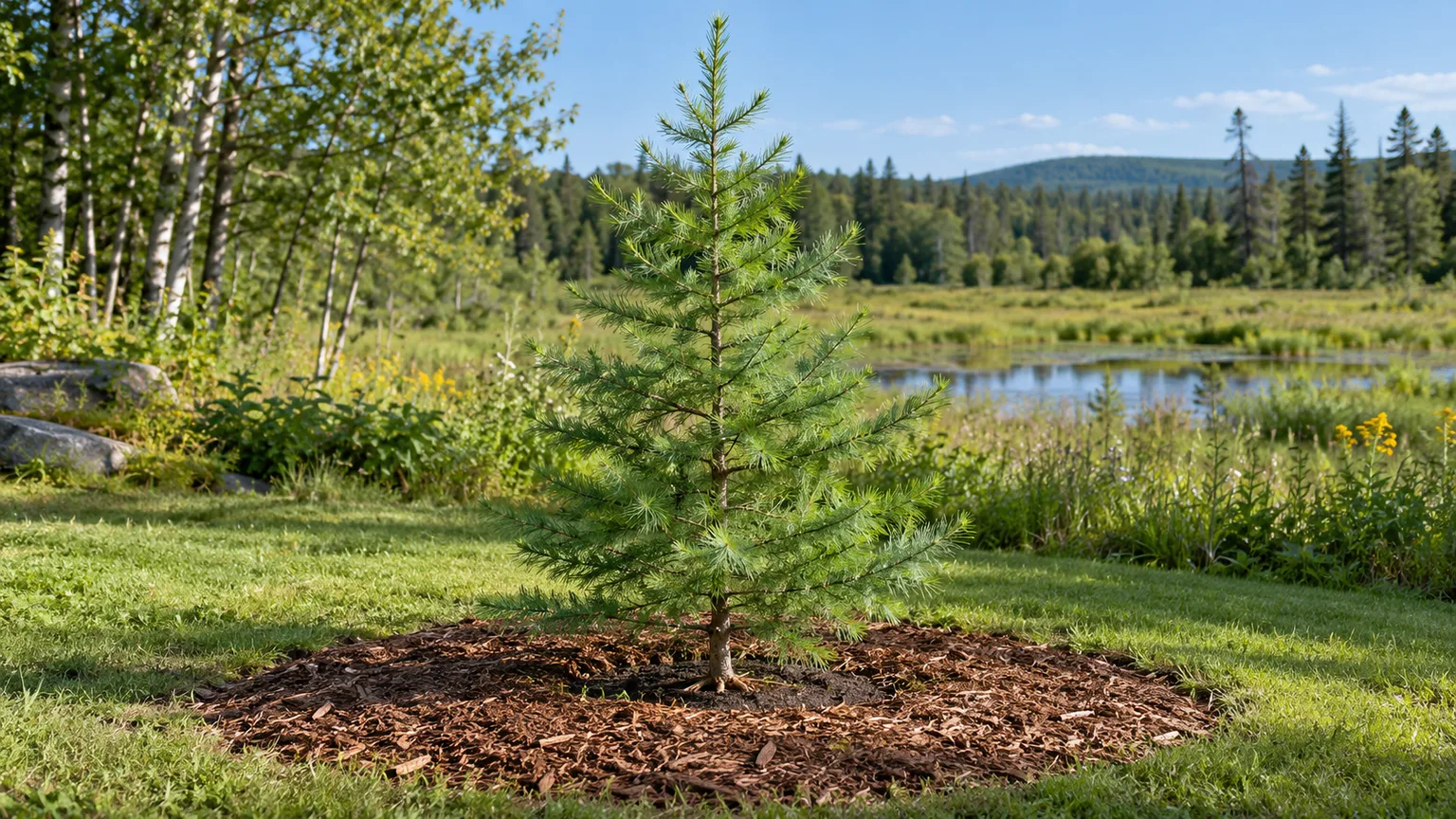
Free Arbor Day trees are most often offered through local programs, one-day events, utilities, and nonprofit partnerships, not through a single national giveaway that serves every household. The best place to start is your city’s tree or urban forestry office, then check your electric utility, county conservation district, and local tree-planting organizations. Availability, species, pickup dates, and eligibility change from place to place, so confirm the current terms before you make plans.
A free tree is a useful find only if it suits the space you can plant and you can provide the care it needs after the event. Use the list below to locate a real offer, distinguish giveaways from discounts, and avoid bringing home a tree that is a poor fit for your yard.
Start with local programs, not a nationwide calendar
There is no universal Arbor Day tree distribution schedule. Arbor Day is celebrated on different dates by state and community, and local tree programs depend on budgets, grants, nursery stock, staff, and volunteer capacity. One city may distribute trees in spring and again in fall; a nearby town may offer a planting rebate rather than a free tree; a rural county may have a seedling sale but no giveaway.
That variation is why “free trees near me” is only a first search. Start with the agency that manages trees where you live, because its eligibility rules usually track your actual address rather than a broad region. Search your city name plus “free tree,” “tree giveaway,” “urban forestry,” or “yard trees.” If the municipality has no tree office, the work may sit under public works, parks and recreation, sustainability, environmental services, or a community forestry committee.
Treat any old article, social post, or saved event listing as a lead rather than proof an offer is still open. A page can remain online after applications close, and a program that repeats annually may change its dates, tree list, and limits each year.
Check your city or county tree program
Municipal forestry and parks departments are often the most direct route to a free yard tree. Programs may give eligible residents a young tree to plant on private property, reserve a tree online for pickup, deliver a tree, or include a planting service. Some focus on neighborhoods with low canopy or heat exposure; others are open to households throughout city limits while supplies last.
Check the program page for whether it serves your exact address. City limits do not always match postal city names, and an address with a city mailing address may sit in an unincorporated area or a separate municipality. Programs may also limit the number of trees per household, require an owner’s permission, ask you to agree to care for the tree, or restrict eligible planting spots.
If you want a street tree, contact the city before planting. The strip between sidewalk and curb may be public right-of-way, where the city decides what species can be planted and who does the work. A free tree offered for a private yard is not automatically approved for that strip, even if it fits physically.
Watch for Arbor Day and Earth Day giveaways
Cities, libraries, garden clubs, botanical gardens, conservation groups, schools, and neighborhood associations sometimes distribute seedlings during Arbor Day, Earth Day, or a local volunteer event. These are often the simplest events to attend, but they are also among the least predictable: a giveaway may happen only once, require advance registration, or run out before the posted end time.
Look at official event calendars from your local government, library system, parks department, and county extension office. Follow the organization’s own event page or newsletter rather than relying on a repost, because the organizer can update the species, pickup window, weather plan, and reservation link. A local news report on Charlottesville’s biannual program described a limited tree allotment for city residents and noted that supply moved quickly, illustrating how a recurring program can still have a short inventory window (29News report).
Ask whether the seedling is intended for a home yard, a restoration site, or a community planting. Event volunteers may be distributing small bare-root or container-grown trees with instructions; they may not be able to help you choose a site or deliver it. Bring a sturdy box or damp towel for roots, and do not leave a bare-root tree in a hot car while you finish errands.
Ask your electric or water utility
Some utilities provide trees or discounts as part of shade, energy-efficiency, watershed, or neighborhood canopy programs. The usual logic is site-specific: a tree planted to shade a building may reduce cooling demand, while a tree near a stream may help a local watershed. That means a program can be limited to customers, homeowners, particular service areas, approved planting sites, or a list of recommended species.
Check the utility’s energy-efficiency, residential rebates, community grants, and environmental stewardship pages. Search the utility name with “free shade tree,” “tree rebate,” “tree giveaway,” or “energy-saving trees.” A rebate is not the same as a free tree: you may need to buy an approved tree first, provide a receipt, meet a size or species rule, and wait for reimbursement.
Before planting for shade, think about the mature canopy and the building. Do not put a large tree where it will conflict with overhead lines, block a required sightline, crowd a foundation, or grow into a service corridor. The utility may provide species and placement guidance, but the homeowner remains responsible for checking the exact site and local rules.
Contact state forestry and conservation offices
State forestry agencies, county conservation districts, soil and water districts, and watershed programs are useful leads—especially for people planting several trees, restoring habitat, or managing rural acreage. They may sell low-cost seedlings, offer a limited free distribution, provide cost-share support for a qualifying project, or refer you to a local nonprofit. A state nursery sale is valuable, but it is not a free-tree giveaway simply because the trees are small.
Search your state forestry department and county conservation district for “tree seedlings,” “Arbor Day,” “native tree program,” “conservation tree sale,” and “cost share.” Read the intended use. Some stock is bundled in large quantities for windbreaks, wildlife habitat, reforestation, riparian buffers, or erosion control; a bundle designed for several acres may be a poor and expensive fit for a single suburban planting hole.
For cost-share or grant programs, determine whether you must own or manage the land, submit a site plan, use approved native species, plant a minimum acreage, hire a forester, or document survival after planting. Ask about reimbursement timing and maintenance obligations as well as the seedlings themselves. If a project sounds specialized, a conservation district forester can help you decide whether it is realistic before you apply.
Look to nonprofits and community planting groups
Local tree-planting nonprofits, land trusts, watershed groups, neighborhood associations, and volunteer organizations may run giveaways or distribute trees through partner events. A group may be more likely to have seedlings for a volunteer planting day than a permanent online order form. Search for “community tree giveaway,” “native tree seedlings,” and your county or watershed name; then check the organization’s recent official updates.
National programs can also be easy to misread. The National Wildlife Federation’s current Trees for Wildlife page says its applications are closed to general applicants and that its seedling support is limited to state affiliates and existing partner programs. In other words, it is a route for an eligible organization or community partner to explore, not a promise that any individual can request a box of free trees. The page also emphasizes that partner projects need a plan to care for trees after planting.
If you represent a school, civic group, faith organization, or neighborhood association, ask whether a local nonprofit has a partner application, bulk-seedling event, or community giveaway. Explain the planting site, who will receive trees, how many people can participate, and who will water and monitor them. A credible program will care about tree survival, not just the number handed out.
Treat membership offers as paid promotions
You may encounter Arbor Day Foundation promotions or other nonprofit memberships that include trees, seedlings, or a choice of a tree pack. These offers can be a convenient way to obtain stock, but a membership fee or donation means the trees are not free in the ordinary sense. Older articles may quote a particular price, number of trees, species selection, or mail date that no longer applies.
Read the offer currently displayed by the organization before paying. Check the total at checkout, shipping fees, hardiness-zone or ZIP-code selection, species substitutions, delivery timing, membership renewal terms, and whether the selected trees can actually be planted in your climate and yard. If a site promises a tree “with membership,” compare the full cost with a local nursery’s small-tree price and with genuinely free local programs.
The Foundation’s present shop includes a tree nursery and bulk-seedling category, but the products and offers shown there can change. Use the organization’s current membership and store pages as the source of truth rather than assuming a historic Arbor Day deal is still available.
Find a neighbor’s extra seedling
A neighbor who is removing a volunteer tree, thinning seedlings, or dividing a windbreak may be willing to give you a small tree. Neighborhood groups, community gardens, plant swaps, Freecycle-style groups, and local native-plant societies can help connect people who have surplus trees with people who have a place to plant them.
Ask what species the tree is, how it was grown, whether it has been exposed to herbicides, and whether it is a seedling or a rooted cutting. A tiny volunteer can be free, but moving it can damage its roots and the parent tree. Get the property owner’s permission and ask an extension office or reputable tree guide whether the species transplants successfully at that size.
Do not dig up seedlings from a park, roadside, forest, or conservation area without authorization. Public land rules may prohibit collecting plants, and moving soil or plant material between areas can spread pests, weeds, and diseases. If you cannot confirm the plant’s identity or source, decline it; an unknown tree can become an invasive or poorly suited problem years later.
Search efficiently in your ZIP code
Use a short, repeatable search instead of scrolling through broad lists. Search your city or county plus each of these phrases: “free tree giveaway,” “yard tree program,” “Arbor Day seedlings,” “urban forestry tree,” “utility tree rebate,” “native tree distribution,” and “conservation district seedling sale.” Repeat with the names of your electric utility and local watershed organization.
Then look at official sources in this order: municipal tree or parks page; utility rebates and community programs; county conservation district; state forestry agency; extension calendar; local tree nonprofit; and the organizer’s social media or newsletter. If the page has no current season or year, send a message or call before submitting personal details. An old signup form can collect information without having any trees available.
Save the program page, opening date, application deadline, confirmation message, species list, pickup address, and aftercare instructions in one place. For first-come programs, set a calendar reminder for registration and a second reminder for pickup. Some organizations announce the event before they publish the reservation link, so subscribing to an official mailing list can be more useful than checking search results once.
Confirm eligibility before you apply or travel
Before reserving, find the answers to these questions:
- Is my home address inside the program’s service area, and is the tree for a yard or public right-of-way?
- Do I need to own the property, get a landlord’s written approval, or meet another qualification?
- Is the tree itself free, or do fees, shipping, a donation, a membership, or a purchase apply?
- Is the offer a reservation, a first-come pickup, or an application that must be approved?
- Which species and sizes remain, and can I choose one suited to my yard?
- Do I have to plant it by a deadline, attend an event, submit a site photo, or report survival?
- What happens if bad weather, a shipment delay, or a sold-out inventory changes the plan?
Renters may be able to participate when a program serves residents rather than property owners, but the program’s wording controls. Get permission before planting a lasting tree on a landlord’s property; for a city street tree, use the municipality’s process. If you live in an apartment or lack a suitable planting spot, ask whether the event allows you to give your tree to an eligible person instead of taking one home.
Pick a tree that fits the actual planting site
The giveaway species list is not a menu of trees that will all thrive in your yard. Match each option to sunlight, soil drainage, moisture, winter minimums, mature height and spread, and available root space. A species that fits your planting zone can still fail in a compacted strip, wet low spot, hot pavement edge, or dry south-facing lawn.
Check the tree’s mature size, not the height it has at pickup. A sapling small enough to carry may eventually spread over the roof or tangle with a power line. Use a utility’s or municipal forester’s guidance around wires and sidewalks, and arrange a utility locate before digging. The Wisconsin Extension tree-planting steps begin with checking for buried utilities and matching the planting site to the tree’s needs.
Prefer locally appropriate native species when they suit the site, but do not choose a plant just because a label says “native.” Native ranges, wetness, soil type, and light still matter; a tree native to a nearby county may dislike your dry, alkaline yard. Ask for the botanical name, not only a vague label such as “shade tree,” then confirm its adult size and conditions with your cooperative extension or a regional native-plant resource.
Check the real cost and the delivery format
“Free tree” can mean a seedling you collect at an event, a no-cost tree after approval, a subsidized tree, a rebate after purchase, or a membership package. Those are different offers. Write down what you pay before you accept: enrollment or donation amount, shipping, required equipment, delivery fee, and any cost to plant or protect the tree.
The format also affects what you need to do next. Bare-root seedlings are light and compact, but their roots can dry quickly and they are generally distributed while dormant. Container trees are easier to handle and may have a longer planting window, but are heavier and may still be root-bound. Larger balled-and-burlapped trees take more effort to move and plant; a giveaway may not include the labor needed to place one.
Shipping terms matter. Trees are living goods, often shipped in a season chosen for safe planting, and availability may depend on the organization’s zone or delivery area. Do not assume a national website will mail every species to every state. Check the destination ZIP code, shipment window, package size, and what you should do if the tree arrives while the ground is frozen or the weather is hot and dry.
Prepare for pickup or delivery
Confirm the day, time window, pickup location, and whether someone else can collect the tree. Bring a box or tarp so branches do not get crushed in the car, and take a bucket or damp material to protect exposed roots. Keep the tree shaded and cool, and plant it promptly; if you cannot plant on arrival, follow the program’s written short-term storage instructions instead of leaving roots exposed or the pot baking in a vehicle.
Before pickup, decide where the tree will go. Check the space overhead, the mature canopy width, nearby buildings, sidewalks, fences, drains, and underground utilities. Call the local utility-locate service before any digging, even for a small tree, and follow the marked utility clearance. Do not use a tree giveaway as a reason to plant in a spot that the municipality or utility says is off limits.
If the program gives you a seedling but no species label, ask before leaving. A label helps you check mature size, local suitability, and planting depth. Photograph the tag and save any care sheet; the label is more useful than a generic internet search when you later need to identify the tree.
Plant the tree at the right depth
Plant as soon as soil conditions allow, not simply because Arbor Day is on the calendar. In general, avoid frozen, waterlogged, or extremely hot, dry soil. A small tree waiting in a package can dry out quickly, while a tree planted into saturated ground may struggle to establish. If weather is unsuitable, keep the roots protected and ask the program or local extension office for timing guidance.
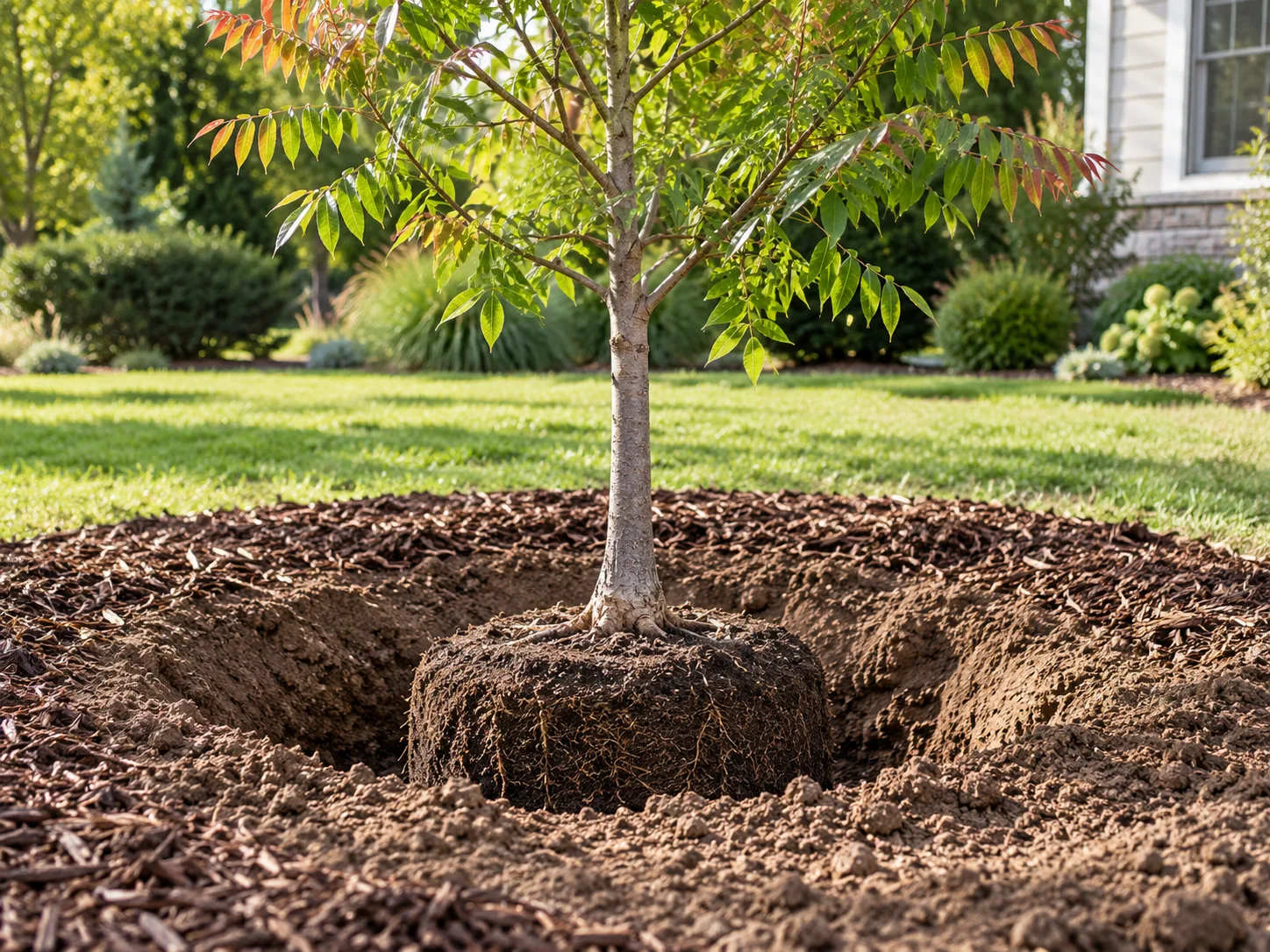
For a container tree, loosen the root ball from the pot and look for the point where the first main roots emerge from the trunk. That root flare should sit at or slightly above finished soil level; burying the trunk base too deeply can create long-term problems. Dig a hole wide enough to let roots spread, but do not make it deeper than needed to keep that flare in the correct position. Wisconsin Extension recommends measuring to the root flare before setting depth, and planting back into the soil removed from the hole.
Water thoroughly as you backfill so soil settles around the roots, then apply a broad, shallow mulch ring. Keep mulch several inches away from the trunk; a mulch pile against the bark traps moisture and can injure the tree. The RHS tree-planting guide recommends watering the root ball well and using a mulch layer while leaving a clear gap at the trunk. Stake only if the tree or site needs support, and remove or adjust supports as directed so ties do not girdle the trunk.
Plan for the first year of care
The tree is not “done” when you plant it. New roots need steady moisture while the tree establishes, especially through dry spells and summer heat. Check soil moisture near the root ball rather than following a rigid schedule: a tree in fast-draining soil or a windy site may need attention sooner than one in cool, moist ground. Water slowly enough to wet the root zone without leaving the planting hole waterlogged.
Keep grass and weeds from competing directly with the new tree, and refresh mulch when it thins while leaving the trunk clear. Inspect any guard, stake, or tie several times during the first growing season. A tie that starts to rub or tighten needs adjustment. The RHS recommends regular watering for at least the first year or two and checking supports as the tree roots in.
Do not fertilize automatically just because the seedling looks small. First check the program’s instructions and your soil conditions; fertilizer cannot compensate for poor drainage, a buried root flare, drought, or a tree planted in the wrong place. If leaves wilt or brown, check soil moisture, planting depth, heat exposure, and transplant stress before reaching for a product. A local cooperative extension can help diagnose a persistent problem.
If no free program is open near you
A closed application does not necessarily mean you missed your only chance. Ask the city forestry office when the next distribution is likely, whether it has a waitlist, and whether it knows of nonprofits or utilities with separate programs. Seasonal cycles commonly follow spring and fall planting windows, but there is no single nationwide schedule, so sign up for the exact organizations that serve your ZIP code.
If a current free tree is not available, a low-cost local seedling or bare-root tree can be a better choice than paying a membership fee for a package you do not want. County conservation district sales, state nurseries, native plant society sales, and community swaps can make small trees affordable. Compare species, root condition, delivery cost, and aftercare needs instead of choosing solely by price.
You can also ask whether a neighbor has a volunteer seedling that can be transplanted safely, or whether a local group will accept you as a volunteer and provide a tree for a shared planting site. A shared project may be the right option if your yard is too small, you rent without planting permission, or the species on offer will not suit the space you have.
Conclusion
The most reliable places to look for free Arbor Day trees are your city or county tree office, seasonal community events, local utilities, conservation districts, and tree-planting nonprofits. Check a program’s live terms before you travel or pay: the tree may be limited to residents, homeowners, utility customers, partner organizations, specific species, or one pickup date. A membership deal or rebate may reduce cost without making the tree completely free.
Once you find a real offer, choose for the planting site first and the giveaway list second. Confirm the species and mature size, protect the roots during transport, plant with the root flare at soil level, and budget time for watering through establishment. A locally suitable tree that you can care for is a better Arbor Day find than a free tree that has nowhere safe to grow.



