21 Best Cactus Plants to Grow in Your Garden
Compare 21 garden cacti by climate, mature shape, flowers, and spine risk. Find the right fit for a dry bed, warm patio, or moveable container.
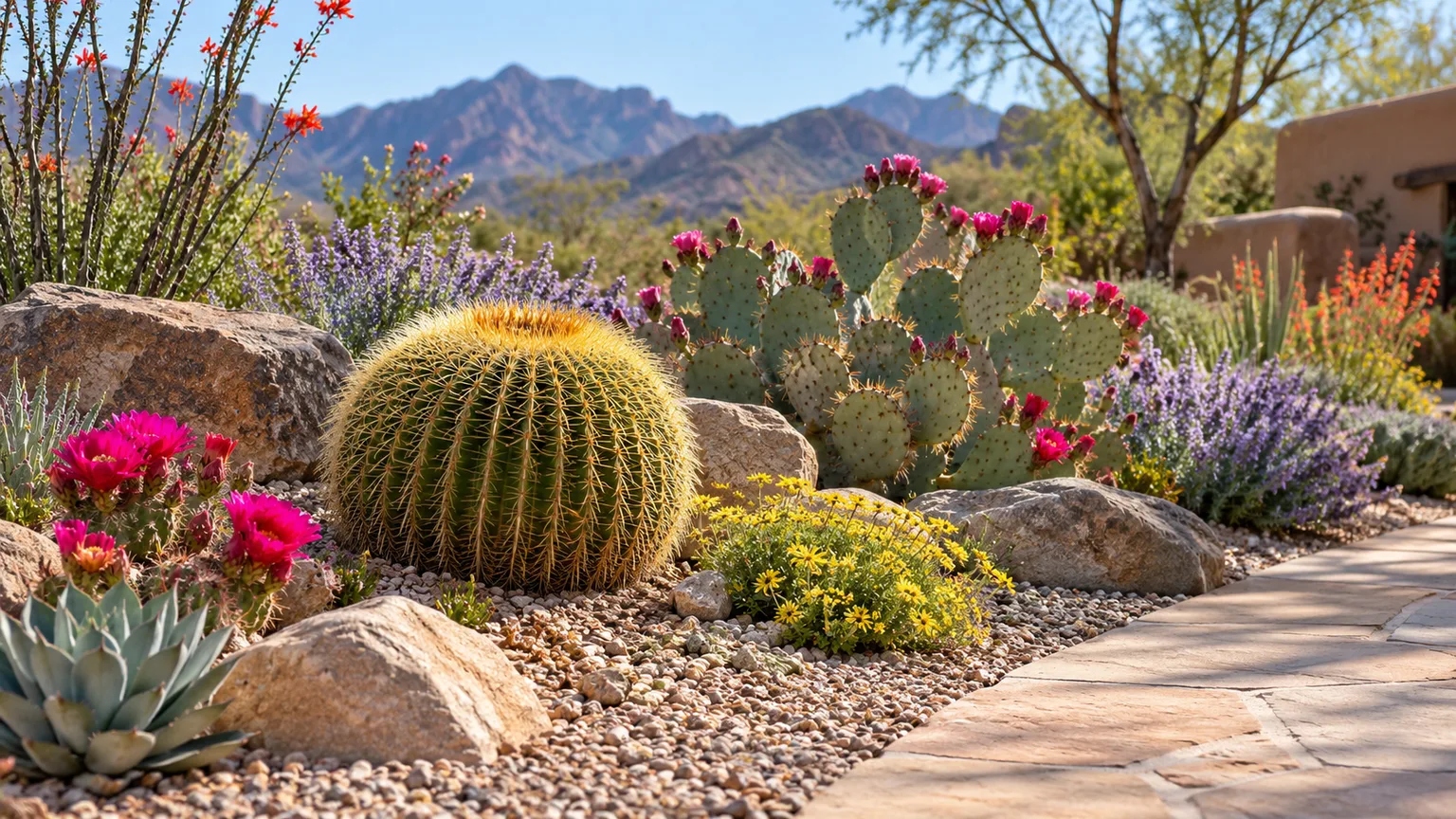
A cactus can be the right plant for a baking-hot slope, a gravel courtyard, or a sunny container that spends winter under cover. But “cactus” describes plants from very different habitats: a cold-adapted hedgehog cactus and a tropical orchid cactus do not belong in the same soil, irrigation zone, or winter plan.
Use the list below as a shortlist, not a universal hardiness chart. First match the plant to your coldest and wettest season, then check the botanical name, mature spread, and local nursery guidance. A cactus that tolerates a dry freeze may rot in cold, saturated soil; another may thrive outdoors only where frost is rare.
Choose cacti by winter conditions first
For a garden bed, winter wetness can matter as much as the lowest temperature. Colorado State University Extension notes that winter-hardy cacti naturally reduce moisture in their tissues before freezing weather and can be damaged when autumn moisture keeps them too wet. In its Colorado guidance, the key conditions are loose soil, excellent drainage, sun, and exposure to drying air; a sunny slope or raised bed can help. Those recommendations are useful beyond Colorado, but the exact cactus still has to match your region. Colorado State University Extension.
In colder or high-desert regions, start with locally hardy species in Opuntia and Echinocereus, and ask a native-plant or cactus nursery which selections persist in your area. University of Nevada, Reno Extension highlights Escobaria vivipara, Opuntia erinacea, Pediocactus simpsonii, and Echinocereus triglochidiatus for high-desert gardens. That list shows why a regional source beats a generic label: some cacti handle cold when roots stay dry, while others are better treated as warm-climate plants. University of Nevada, Reno Extension.
For a mild-winter landscape, you have more choice among columnar, barrel, and paddle forms, but frost tolerance still varies by species and plant size. Where hard freezes are routine, grow the less hardy plants in containers and move them to a protected, bright place before cold snaps. Tropical epiphytic cacti, such as orchid cactus and rat-tail cactus, are not desert-bed substitutes; they need a different growing medium and a sheltered winter.
Prepare a site that stays sunny and drains fast
A cactus bed should drain through its whole root zone, not just look gravelly at the surface. Avoid a low pocket where roof runoff, irrigation spray, snowmelt, or heavy rain collects. If your soil stays soggy after rain, mound the planting area, use a raised bed with free-draining fill, or choose a container rather than trying to cure the problem with a thin layer of rocks beneath the roots.
Better Homes & Gardens suggests a cactus-garden layout for mild-winter landscapes using gravel or crushed stone, sculptural specimen plants, and compatible perennials or shrubs. The idea works best when each cactus has its own planting pocket and its roots are not kept wet by neighbors with higher water needs. In a mixed xeriscape, put cacti in the driest irrigation zone, then group thirstier plants separately. Better Homes & Gardens.
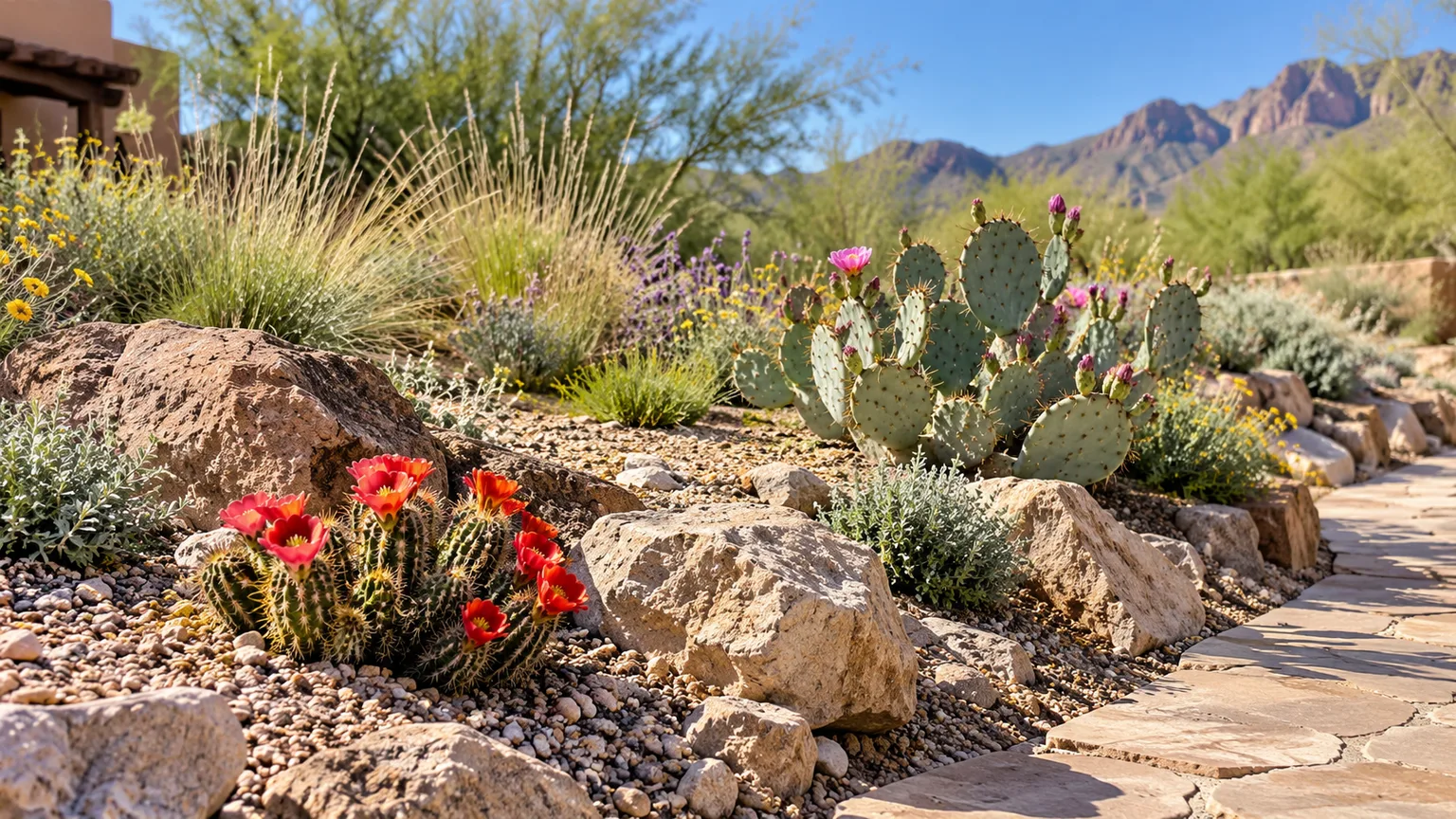
Match exposure to the plant’s natural habitat
Most desert cacti need strong sun, but a nursery-grown plant moved directly from shade into afternoon sun can scorch. Acclimate it over a week or two by extending its exposure gradually, especially in hot climates. Some small globular types and young specimens appreciate light shade during the hottest part of the day, while a frost-sensitive cactus may do better against a warm, protected wall than in an open, windy bed.
Use the actual site, not just the sun label, to decide. A south- or west-facing slope with fast drainage can suit a dry-climate cactus; a shaded north-facing bed that stays damp is a poor trade even if the species is described as cold tolerant. Colorado State University Extension also notes that winter color changes and mild shriveling can be part of seasonal dormancy in hardy cacti rather than a sign of disease.
Shape the root zone instead of relying on gravel alone
The goal is a loose, mineral-rich root zone that lets water drain and air return quickly. In a naturally sandy or rocky site, you may need little amendment. In heavy clay, work with the bed’s grade and structure: build a raised mound or raised planter using a gritty cactus mix rather than digging a small amended hole that becomes a water-collecting basin.
A surface mulch of small stone chips can keep the crown from sitting in wet organic debris, but it does not make poorly draining soil safe. Colorado State University Extension recommends a thin stone or gravel mulch for winter-hardy cacti and warns against winter mulch piled over the plant. Avoid thick bark mulch around desert cacti, and do not assume a layer of gravel at the bottom of a pot will substitute for drainage holes and an airy mix.
21 cactus plants for garden beds and patios
These 21 choices cover low clumps, broad pads, round statement plants, tall columns, and flowering hanging baskets. Their common names can overlap, so use the botanical name when ordering and ask whether the plant is grown outdoors locally. Dimensions are mature possibilities, not spacing instructions for a young nursery pot.
Four candidates for dry, cold-winter gardens
1. Claret cup cactus (Echinocereus triglochidiatus) — Choose this compact, clumping hedgehog cactus for an exposed rock garden with fast-draining soil and full sun. Its vivid red-orange flowers are a spring focal point, and its regional ecology makes it a more sensible cold-garden candidate than many large desert columns. Colorado State University Pueblo Extension describes Echinocereus as a small, mound-forming group with spring flowers and sandy, well-drained soil needs; the county’s native species include claret cup. CSU Pueblo Extension.
2. Strawberry hedgehog cactus (Echinocereus engelmannii) — This low, spreading cactus adds a dense texture and bright spring flowers without creating a tall visual wall. It is native to the Southwest, but do not assume every plant sold under this common name will tolerate a wet freeze; look for a locally proven form and give its clump room to expand. Its mounded habit works well in a sunny gravel pocket where it will not be hidden by taller grasses.
3. Beavertail prickly pear (Opuntia basilaris) — The blue-green pads make a low, sculptural accent, with pink flowers adding seasonal color. It suits dry, sunny Southwestern beds and broad rock-garden pockets, but confirm the winter fit for your exact region before planting it as a permanent in-ground specimen. Leave space around the pad edges and choose a spot where routine weeding will not bring hands close to the plant.
4. Teddy bear cholla (Cylindropuntia bigelovii) — Its fuzzy-looking golden stems stand out in a natural desert garden, but the hooked spines are an unusually serious reason to skip it near paths, play areas, pets, or routine pruning access. Reserve it for a dry climate where it belongs and a remote display zone that people do not brush past; do not plant it simply because its silhouette looks soft. If you cannot maintain a wide, permanent buffer around it, choose a less hazardous cactus instead.
Thirteen choices for warm, dry landscape beds
5. Blue flame cactus (Myrtillocactus geometrizans) — The branching blue-green columns create a strong, cool-toned focal point among warm-colored stone and low desert plants. It needs generous long-term clearance and a mild-winter site, so treat it as a large architectural specimen rather than a close-planted border plant.
6. Candelabra cactus (Myrtillocactus cochal) — This branching columnar cactus works as a single sculptural anchor in a warm, dry courtyard. Set it where the mature shape can be seen from several sides and where its branches will not overhang a walkway; winter protection may be needed outside frost-light climates.
7. Golden ball cactus (Parodia leninghausii) — Young plants begin as rounded columns and can eventually form a bright, golden cluster. Give it strong light with relief from the harshest afternoon heat in very hot sites, and choose a container or protected bed where winter freezes are a concern.
8. Golden barrel cactus (Echinocactus grusonii) — A mature golden barrel makes an unmistakable round accent in a gravel garden or broad container. Allow room for its width, keep it well away from narrow paths, and protect young plants from sudden exposure to intense sun. Its striking symmetry makes it better as a single focal point or a deliberate group than as an edging plant.
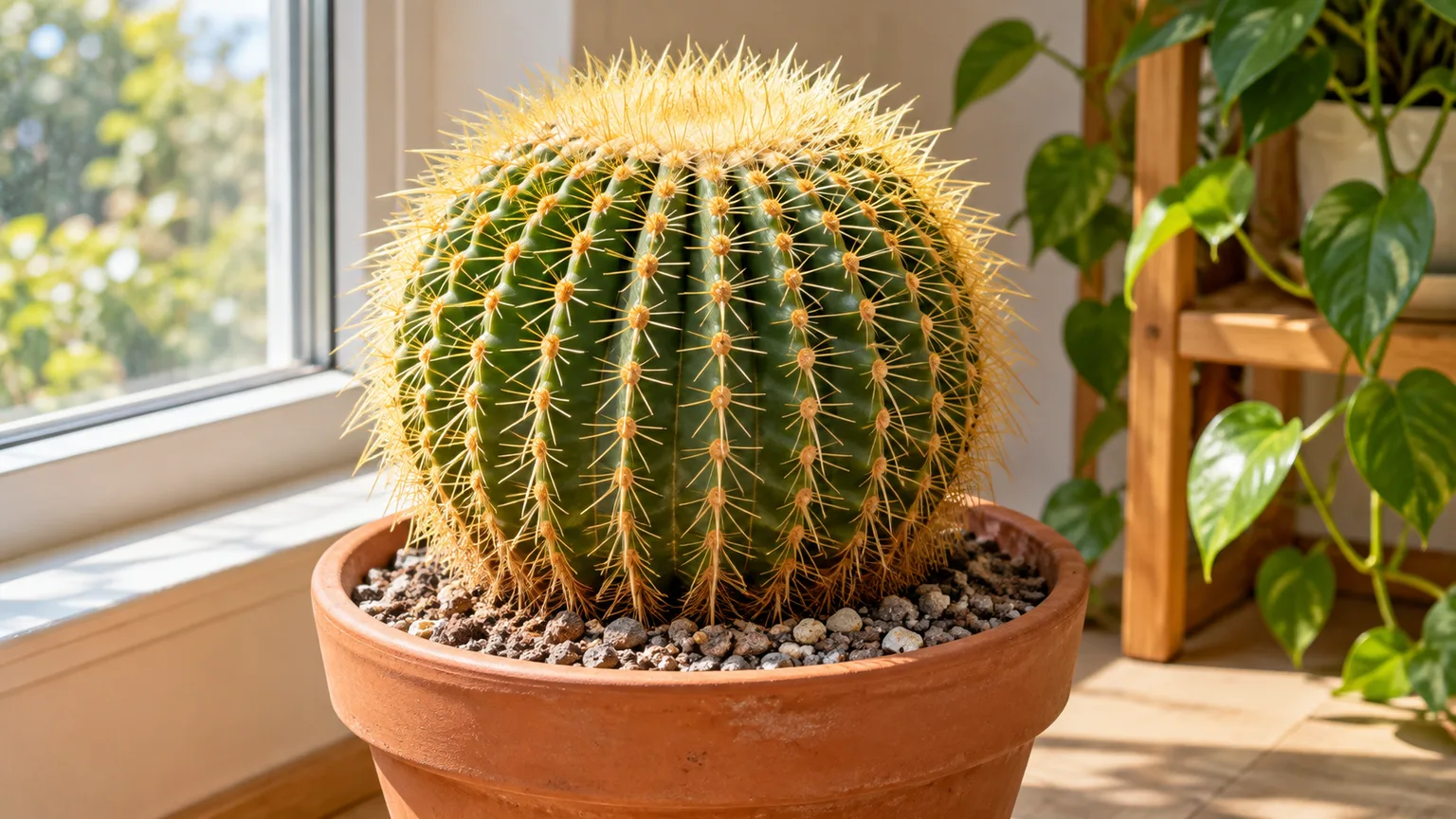
9. Mexican fence post cactus (Pachycereus marginatus) — Use this upright, ribbed cactus where you want a strong vertical screen or repeated column rhythm in a warm landscape. Its eventual height and stiff spines make it unsuitable beside gates and tight paths; plant young specimens only after marking the future footprint.
10. Mammillaria polyedra — This small, rounded cactus can form a dense cluster and suits a shallow bowl or protected rock pocket better than a large mixed bed. It needs excellent drainage and careful sun placement; the matching Mammillaria portrait in the library shows the genus rather than a guaranteed exact species, so use it as a visual example of the growth form, not an identification image. Group several in a low container only if each crown will still receive light and air after the offsets fill in.
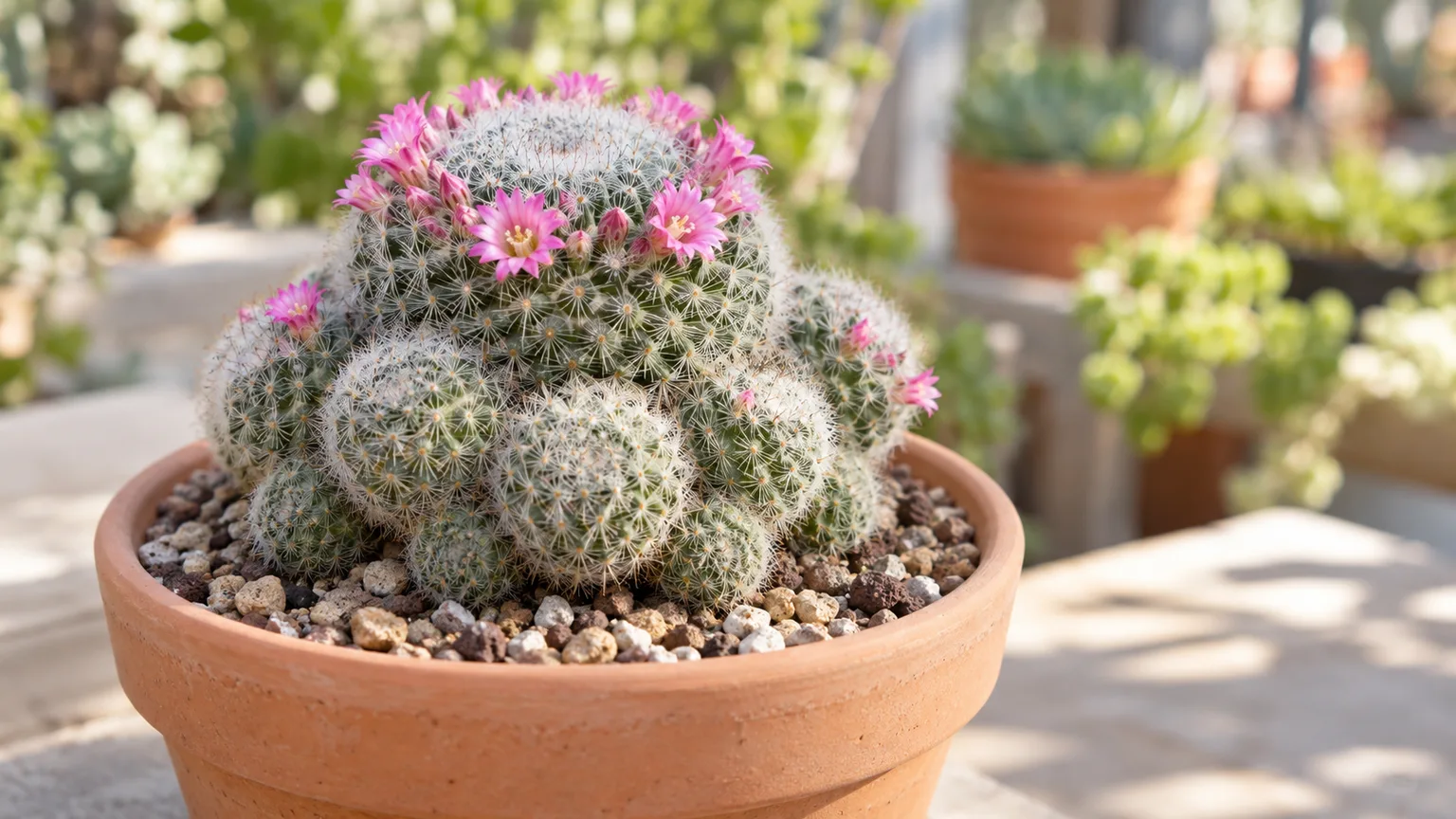
11. Old man cactus (Cephalocereus senilis) — Long white hairs soften the look of a tall column, making this a warm-climate specimen for a sheltered courtyard or a large moveable pot. Do not wash or comb the hairs for appearance; instead keep the plant dry and place it where it will not be touched. This is a slow, long-term choice rather than a fast screen.
12. Organ pipe cactus (Stenocereus thurberi) — Multiple upright stems give this Sonoran Desert native its organ-pipe profile. It belongs in frost-light, hot sites with room for a broad clump, not in a cold-winter garden where repeated freezes can damage it. Use one as a focal plant and let the branching form stay visible. A young specimen can look deceptively small beside a wall, so plan for its later width as well as its eventual height.
13. Prickly pear (Opuntia ficus-indica) — Choose this large pad-forming species for a warm, sunny landscape where there is room for both mature spread and safe maintenance access. It can bear showy flowers and edible-looking fruit, but spine and glochid exposure make it a poor fit next to play areas or paths. If you want a smaller native prickly pear, ask a local nursery for a species adapted to your region rather than treating all Opuntia as interchangeable.
14. Saguaro (Carnegiea gigantea) — The familiar giant column with upward arms is an iconic landscape plant only in the Sonoran Desert and similarly suited warm, dry locations. It is extremely slow-growing, so choose it for a permanent, spacious focal spot, not for quick height. Buy nursery-propagated material and check local rules before moving or collecting native cacti.
15. Silver torch cactus (Cleistocactus strausii) — Slender pale columns create a vertical, almost silvery texture in warm, dry beds. It works best as a repeated group or container focal point where the late-day light picks up its color; avoid a site with prolonged winter saturation or regular hard freezes.
16. Star cactus (Astrophytum ornatum) — The ribbed body and geometric star-like shape make this a natural specimen for a sunny gravel court or a low, wide container. Give it a mineral, fast-drying mix and avoid crowding it with spreading companions; its form is most effective when the ribs and top growth remain visible.
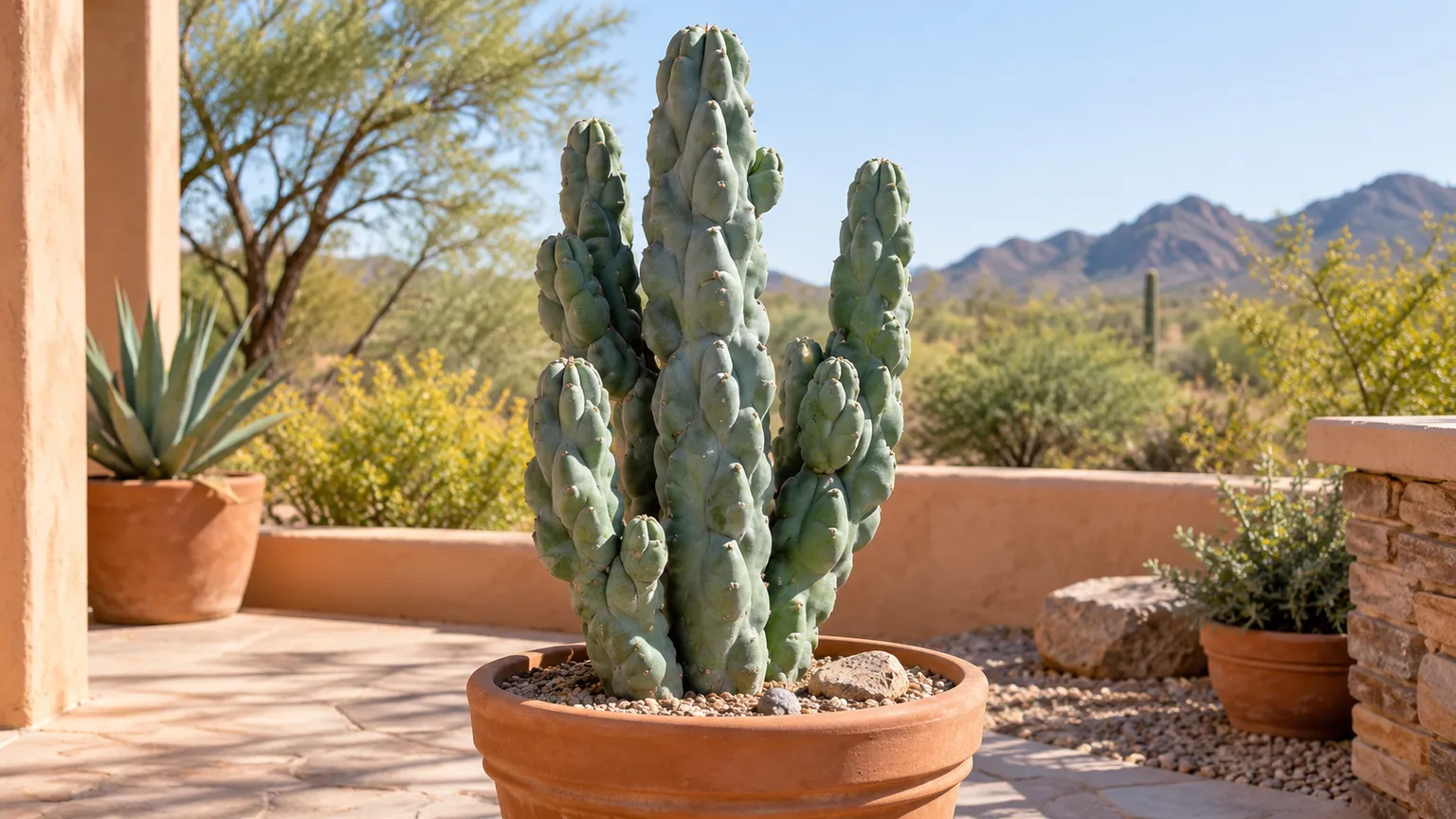
17. Totem pole cactus (Lophocereus schottii f. monstrosus) — This smooth, knobby column is a distinctive accent where a dramatic shape is useful but large spines are not. It is not a cold-climate shortcut: use it outdoors only in a warm setting, or grow it in a pot that can be sheltered when frost threatens. Its upright outline is especially effective beside a simple wall or in a large container.
Four choices for protected patios and moveable pots
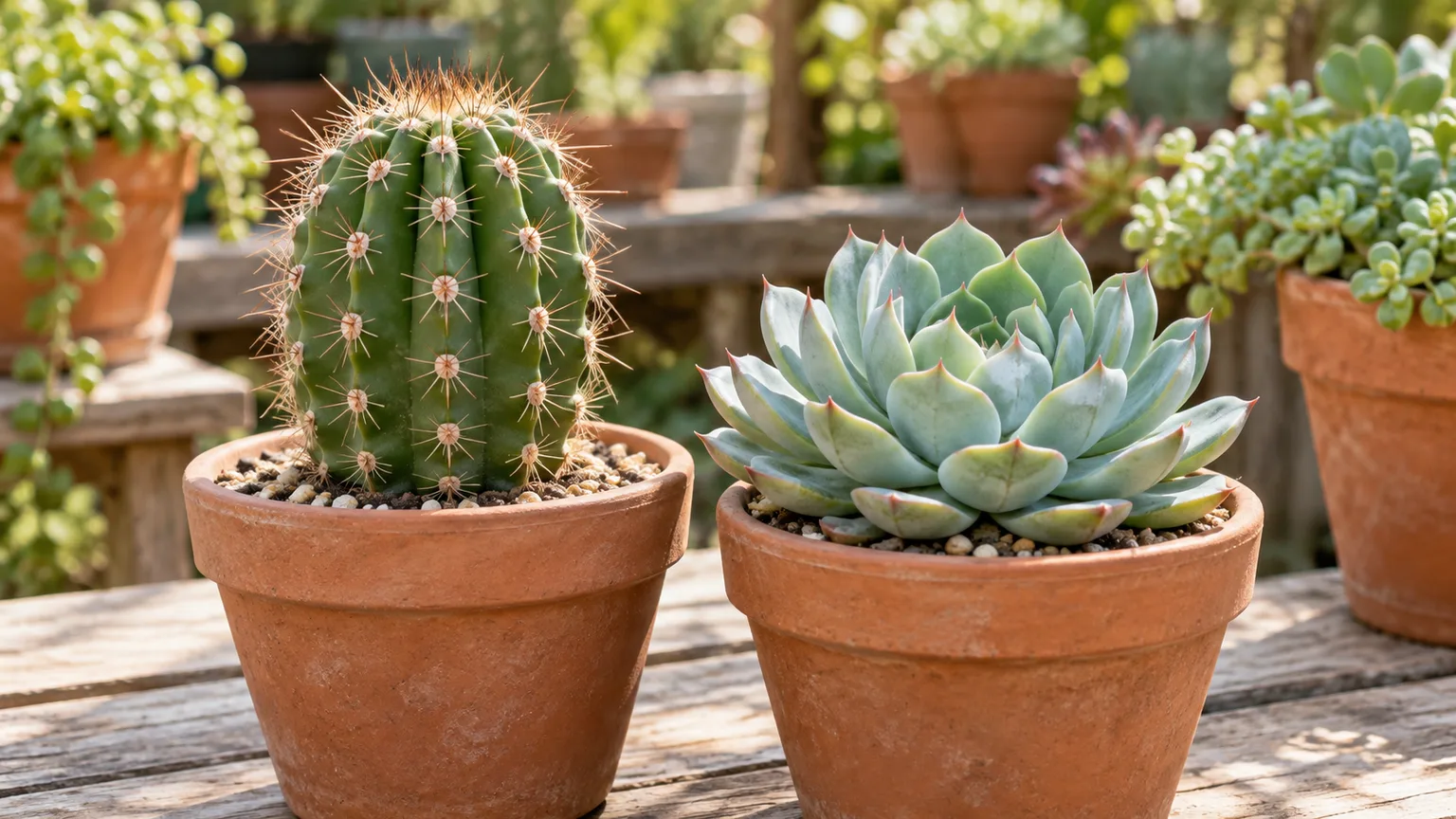
18. Orchid cactus (Epiphyllum hybrids) — Unlike the desert species in this list, orchid cactus is an epiphyte with flattened stems and large flowers. Grow it in a hanging basket or sheltered patio pot with an airy, organic medium that holds some moisture; do not bury it in the dry mineral bed you would make for a barrel cactus.
19. Peanut cactus (Echinopsis chamaecereus) — This low, offsetting cactus is suited to a shallow pot or a warm rock garden, with red-orange blooms when conditions are favorable. The trailing clump can spread beyond its original footprint, and cold or wet winters call for a protected container rather than an exposed bed.
20. Rat-tail cactus (Disocactus flagelliformis) — Long, arching stems and tubular flowers make this a hanging-basket choice for a covered porch or patio, not a ground-cover cactus. Give it bright light and a frost-free winter home in colder regions; let excess water drain freely instead of leaving the basket in a saucer.
21. Turk’s cap cactus (Melocactus matanzanus) — Its rounded body and colorful crown make it a compact collector’s plant for a warm, protected patio. It is less forgiving of cold and severe drying than many desert cacti, so maintain warmth, bright light, and a little more regular moisture than you would for an established outdoor Opuntia. Treat it as a specialty container plant in regions with winter frost, not as a low-water landscape filler.
Make the planting feel like a designed garden
Cacti look intentional when you repeat a few forms rather than collect one of everything in a crowded row. Start with one large focal cactus if your climate supports it, then add a small group of low clumping plants, a broad-padded species, and open areas of stone or gravel. Better Homes & Gardens recommends using cacti as specimen plants and combining them with compatible perennials or small shrubs in mild-winter landscapes; keeping distinct irrigation needs apart makes the design easier to maintain. Better Homes & Gardens’ cactus garden guide.
A desert-inspired bed does not need to be a field of bare gravel. Use a few drought-adapted grasses or flowering perennials in separate pockets to soften the mineral surface and add seasonal bloom, but leave clear air around the cactus crowns. Avoid dense, wet groundcovers that hide stems, trap debris, or make it hard to inspect the base after rain.
Use low growers near rocks and taller forms as focal points
Low clumping cacti such as claret cup can anchor the front or middle of a bed if they remain outside the reach of feet and maintenance tools. Taller forms—blue flame, fence post, organ pipe, or saguaro—belong at the back of a bed or as an isolated focal point with a clear sightline. Think in mature dimensions: a six-inch nursery plant may eventually occupy several feet of width, and a slow-growing specimen can still become difficult to move once established.
Use gravel as a visible design material and as a light surface mulch, not as a promise of water conservation by itself. The deeper root zone, irrigation pattern, and slope determine whether the cactus stays dry. A well-designed xeriscape groups plants by water use so an occasional deep soak for a shrub does not repeatedly saturate a nearby cactus.
Setback, spacing, and companion planting
Lay out the planting before digging. Mark each cactus’s expected mature spread on the ground, add a maintenance corridor around sharp species, and measure from the outermost pad or spine—not from the center of a young plant. Keep teddy bear cholla and glochid-bearing prickly pears away from gates, narrow paths, outdoor dining spots, and places where children or pets play.
Companion plants should share the same sun and drainage needs. University of Nevada, Reno Extension recommends placing cacti in low-water irrigation zones and notes that established plants generally need little supplemental water, with hand watering during severe drought. That does not mean a newly planted cactus can be ignored or that every drought-tolerant shrub can share the bed; use plant groups with compatible root-zone moisture needs. University of Nevada, Reno Extension.
Plant and water cacti with the weather in mind
Plant when the soil is workable and the plant has time to settle before either intense summer heat or the wettest part of winter. Use gloves, tongs, or folded newspaper to handle spiny plants, and avoid crushing or twisting stems while positioning them. Set the root ball at the same depth it grew in its nursery pot; burying the stem base can hold moisture against the plant and invite rot.
Water the root ball after planting, then base follow-up water on rain, temperature, growth, and how quickly the soil dries. A fixed “once a month” rule fails because a cool rainy month, a dry heat wave, a newly planted cactus, and an established in-ground specimen have different needs. In the first growing season, check the root zone during long hot dry spells and water slowly at the base if it is dry several inches down; never keep the bed damp between waterings.
As cold weather approaches, scale back watering rather than trying to keep a hardy cactus plump. In regions with cold, wet winters, avoid irrigating during dormancy and keep fallen leaves or organic mulch away from the crown. Colorado State University Extension explains that winter dehydration is a natural defense for hardy cacti, while excess autumn moisture can increase freeze injury. Colorado State University Extension.
A plant in a pot needs more attention to root temperature and drainage than one in the ground. Containers cool faster during a freeze and dry faster in hot weather; use a pot with an open drainage hole, a mineral-rich mix for desert types, and a sheltered location when temperatures fall. Orchid cactus and rat-tail cactus need a different, more organic mix and should not be watered on the same schedule as a desert barrel or prickly pear.
Handle spines and glochids with a safety plan
Large spines are visible; glochids are tiny, barbed bristles that can detach from some prickly pears and lodge in skin. Cornell Cooperative Extension warns that these small spines can be difficult to remove and recommends using gloves and tongs when handling cacti. For planting, add long sleeves and eye protection, keep tools nearby, and never reach through a cactus to grab a weed or fallen leaf. Cornell Cooperative Extension.
Make access part of the design. Leave enough clearance to weed, inspect the base, and remove debris without leaning over spines; use a long-handled tool for surrounding maintenance rather than pushing mulch by hand. If there is no way to maintain the plant without reaching through it, move it farther from the path or grow it in a container.
Avoid the mistakes that ruin outdoor cactus plantings
The most common mistake is choosing by looks or a generic hardiness label before checking winter moisture and local climate. A species can tolerate a cold snap and still fail in a heavy, wet bed; a warm-climate cactus can be damaged by a freeze even when nearby hardy cacti are fine. Ask for the full botanical name and local outdoor track record, not only the common name.
The next mistake is improving drainage only at the planting hole. A small pocket of gritty soil surrounded by clay can collect water like a basin, so fix the bed’s grade or use a raised mound instead. Do not compensate for slow drainage by watering less often while leaving the cactus in standing or persistently wet soil.
Other avoidable errors include planting mature-size columns too close together, putting spiny plants against a walkway, and watering every cactus on the same schedule. Do not pile leaves, bark, or winter blanket material over a hardy cactus crown; the protection can hold moisture where rot begins. And do not assume that every plant marketed as a cactus is a desert plant: orchid cactus and rat-tail cactus are better choices for sheltered containers and filtered light than for a dry gravel bed. Epic Gardening likewise emphasizes that even cold-tolerant succulents need well-drained soil and can suffer when kept soggy; apply the drainage lesson to cacti without assuming succulent species share the same cold tolerance. Epic Gardening.
Conclusion
The best cactus for your garden is the one whose natural climate, mature shape, and water needs fit the exact place you have. For dry, cold-winter gardens, start with locally proven Echinocereus or Opuntia and build a sunny, sharply draining bed; for warm landscapes, use larger barrel and columnar forms as deliberate focal plants; for frost-prone regions, keep the tender choices in moveable containers.
Before you buy, check the botanical name, ask whether that species has survived outdoors nearby, measure its mature spread, and map out a safe maintenance corridor. With winter wetness, drainage, and placement solved first, a cactus garden can be sculptural and low-water without becoming a painful or short-lived experiment.