Best Growing Conditions for Bamboo: Sun, Soil & Water
Find the right bamboo for your climate, then match it to suitable sunlight, moist well-drained soil, steady establishment watering, and safe containment.
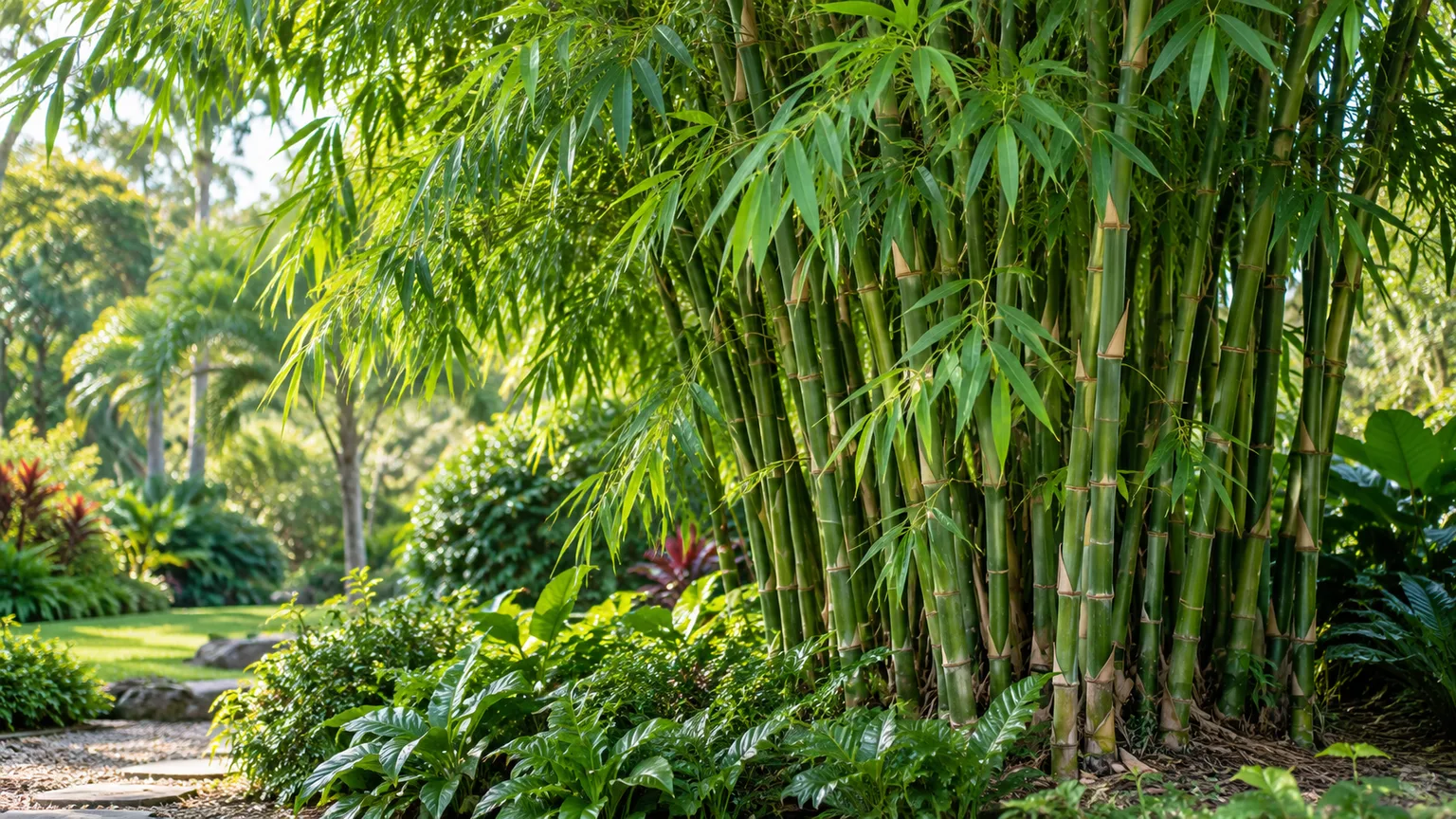
Bamboo grows best when its species, site, and care match. Most garden bamboos prefer fertile soil that stays evenly moist but drains freely, plus a sheltered position with sun or the light level recommended for that species. The biggest mistake is treating “bamboo” as one plant: a compact clumper and a vigorous runner can have very different space, climate, and containment needs.
Before you dig, find the plant’s scientific name and confirm whether its rhizomes run outward or stay close to the parent clump. Then assess your sunlight, drainage, winter exposure, and available room. Getting those decisions right matters more than pushing growth with extra fertilizer.
Start with the plant’s growth habit
Bamboo is a perennial grass with woody stems called culms. Its underground stems, or rhizomes, store energy and produce roots and new shoots; their direction and vigor help determine how the plant spreads. A bamboo’s eventual height, cold tolerance, and preferred light also vary by species and cultivar, so care labels should be read as plant-specific guidance rather than rules for every bamboo.
The Royal Horticultural Society’s bamboo growing guide describes two broad garden habits: running and clump-forming. This distinction is essential when choosing a planting site because the visible canes do not show how far the underground growth may travel.
Tell clumping bamboo from running bamboo
Running bamboos send long rhizomes outward and can produce shoots well beyond the original planting area. The University of Georgia Cooperative Extension notes that some running rhizomes can travel several feet in a year; it recommends installing a barrier when spread must be restricted. The extension’s bamboo bulletin is written for Georgia, so use its measurements as regional guidance, not a universal guarantee.
Clumping types generally add growth near the existing plant, but “clumping” does not mean “will remain small.” A large, mature clump can still occupy substantial space, and the RHS cautions that favorable conditions can encourage even clump-formers to expand. Ask the nursery for the scientific name and expected mature spread, and confirm the growth habit from a reliable species profile before purchasing.
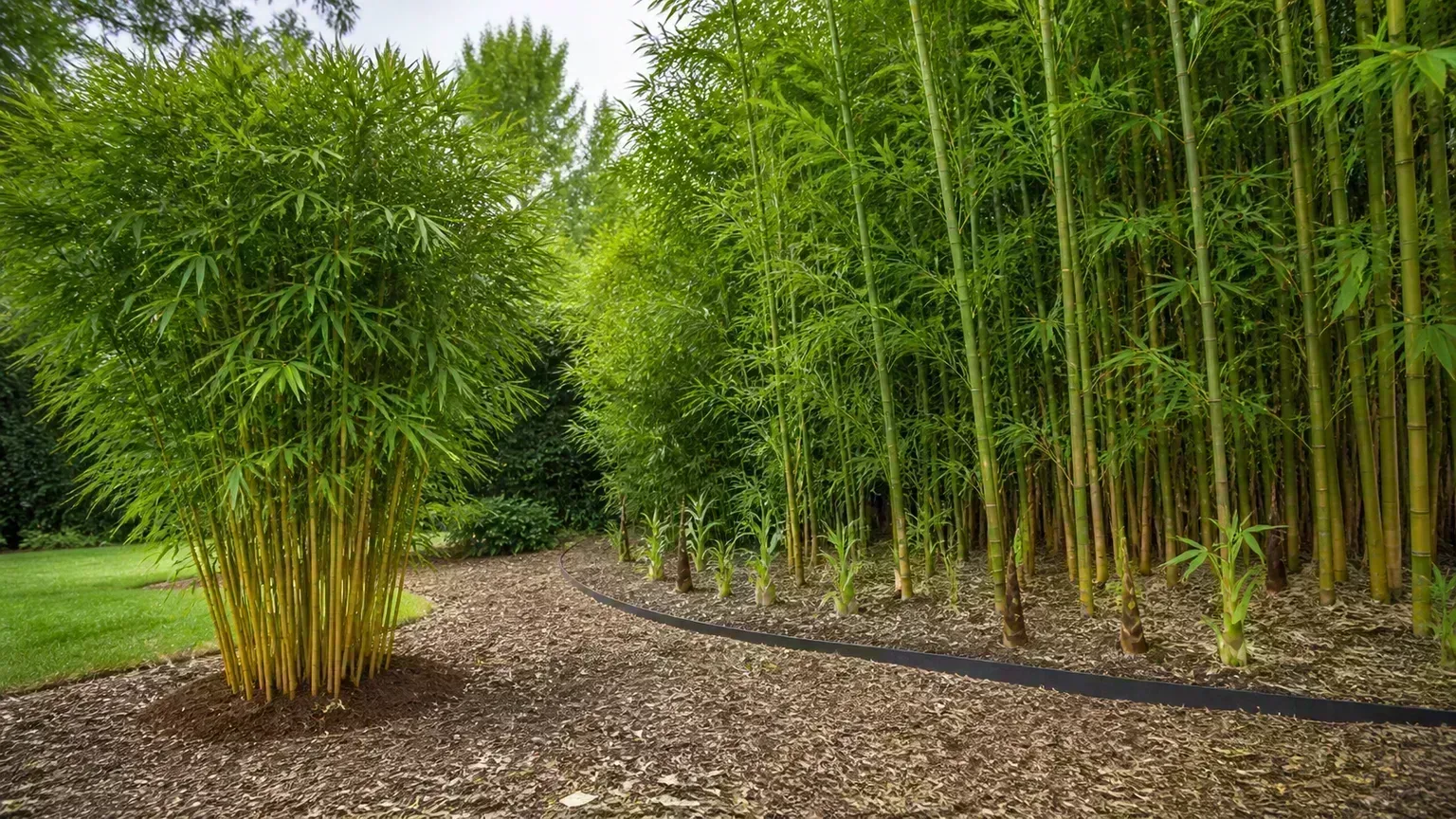
If the plant is unlabeled, or the seller cannot confirm its identity, do not put it beside a property line, drain, patio, or permanent structure. Choose a verified clumping cultivar for a smaller garden, or use a container if you can maintain it. A vague label such as “privacy bamboo” is not enough to estimate how it will behave.
Match sunlight to the species and climate
Many bamboos grow well in full sun, but light tolerance depends on the species and local heat. A sunny site can encourage vigorous growth and denser foliage, while some bamboos tolerate partial shade or prefer protection from intense afternoon sun. The RHS recommends a sheltered, sunny position for many species but stresses checking the plant label; its profiles show species-specific differences.
Consider how sunlight changes across the day and season. In a cool or cloudy climate, a bright open position can help a sun-loving bamboo thrive. In a hot-summer region, morning sun with afternoon shade may reduce leaf stress for a shade-tolerant species, especially when soil dries quickly. Do not compensate for a plant that is poorly suited to intense heat by simply watering more; the cultivar may need a different site.
A species profile illustrates why “bamboo needs full sun” is too simple. Fine Gardening describes black bamboo, Phyllostachys nigra, as suited to full sun or light shade in a protected site. Other species can be more shade-tolerant, but deep shade may leave a sun-loving bamboo thin, slow, or less vigorous. Match the light recommendation to the named plant and observe the actual site in summer, not just in early spring when tree canopies are bare.
Give bamboo moisture-retentive, well-drained soil
The useful middle ground is soil that holds moisture around roots without staying saturated. Bamboo can grow in a range of soil textures, but persistently waterlogged ground deprives roots of air and favors decline. Very sandy or shallow soil can present the opposite problem: it dries rapidly, so the plant may struggle during hot weather or establishment.
Improve soil across the planting area rather than making a small pocket of rich mix in a heavy-clay hole. A hole filled with a different, looser medium can collect water like a basin if the surrounding soil drains slowly. Where runoff repeatedly pools, correct the drainage problem first, choose a better site, or ask a local extension office whether a raised planting area is appropriate.
Test drainage before changing the soil
Look at the site after ordinary rain. If water sits for a long time, the ground stays sticky and saturated, or the proposed planting area lies at the bottom of a slope, do not assume a layer of gravel under the rootball will fix the problem. That can leave the roots sitting in the same poorly drained soil above the gravel.
The RHS describes bamboo’s preference as moist, fertile, free-draining soil and advises avoiding constantly waterlogged or extremely dry ground. Organic matter such as mature compost can help improve the structure of many soils, but incorporate it broadly and follow regional soil-testing advice. In compacted clay, compost alone will not turn a persistently wet site into a reliably free-draining one.
A pH near 6 to 6.5 is recommended in the University of Georgia bulletin for its regional bamboo guidance, but that number should not be applied blindly to every species and soil. Test before adding lime or sulfur; use the lab’s recommendation and the plant’s known preference. Unnecessary pH adjustments can create nutrient problems without solving poor drainage or a climate mismatch.
Water consistently while roots establish
Newly planted bamboo needs more attentive watering than a mature planting with an established root and rhizome network. The UGA bulletin suggests watering one or two times a week during the first three to six months, adjusting for soil and weather. That Georgia schedule is a starting reference, not a fixed calendar for every climate: sandy soil and heat shorten the interval, while cool weather and slow-draining soil lengthen it.
Check moisture a few inches below the mulch before watering. If the root zone is drying, water slowly enough to moisten the original rootball and nearby soil rather than wetting only the surface. Recheck after the water has soaked in. A plant in soggy ground does not need another watering just because its leaves look stressed.
Established in-ground bamboo often needs supplemental water during prolonged dry spells, while containers dry faster and require closer monitoring. Wind, heat, pot size, root density, and exposure all affect how quickly soil loses moisture. The RHS advises regular, generous watering for container bamboo during the growing season and summer watering for newly planted and established plants during dry periods.
Some bamboo leaves fold or roll when water is scarce, but this is a prompt to inspect the root zone, not an automatic diagnosis. Check the soil first: dry soil points toward watering, while wet soil calls for checking drainage, roots, and recent weather. Overwatering a plant in poorly drained ground can compound the stress that gardeners are trying to relieve.
Account for cold, heat, and drying wind
Hardiness is species-specific. Bamboo includes plants adapted to tropical conditions as well as species that tolerate cold winters, so a genus-wide temperature promise is not useful. Check the named cultivar’s hardiness information against your local winter lows, then account for microclimates: a sheltered courtyard can be warmer than an exposed slope, while a windy corner can dry foliage even when temperatures are within the plant’s nominal range.
Cold can damage leaves and young shoots, and severe exposure may kill a tender species. The RHS notes that most of its commonly grown bamboos are hardy in the UK, but that advice cannot be transferred directly to a U.S. planting zone or a different cultivar. The UGA guide specifically urges cold-hardy selections where Georgia temperatures drop below 10°F; gardeners elsewhere should use local extension information and species-level ratings.
Wind protection is helpful in exposed sites, particularly for plants in containers. A fence or nearby shrubs can reduce drying wind if they do not block needed light or trap water around the roots. In hot regions, avoid a location that bakes against reflective walls if the selected species prefers cooler or partly shaded conditions.
Use mulch and fertilizer with restraint
A layer of organic mulch can reduce evaporation, moderate soil temperature, and suppress weeds while new bamboo establishes. Keep mulch on the soil surface and pull it away from culm bases instead of banking it against the canes. Bamboo leaf litter can also be left under a healthy planting when it does not create a maintenance or pest problem; BBC Gardeners’ World Magazine notes that fallen bamboo leaves return nutrients, including silica, to the root area.
Fertilizer is secondary to correct light, moisture, drainage, and species selection. Bamboo can be a vigorous feeder, but adding a high-nitrogen product to a stressed or newly transplanted plant is not a substitute for correcting the cause. The RHS recommends a general-purpose spring feed for bamboo growing in poor, light soil and additional feeding for plants in containers; follow the product label and local soil-test advice.
A useful rule is to fertilize for a reason. If a plant is healthy in fertile soil, a heavy feeding schedule may be unnecessary. If container growth weakens after several seasons, check root crowding, water, and drainage before increasing fertilizer; accumulated salts and a congested rootball can make extra feeding counterproductive.
Plan containment before planting
Containment is a design condition for running bamboo, not a repair to consider after shoots appear on the other side of the garden. Decide in advance whether you can install a continuous barrier and inspect it every year. If the site is narrow or bounded by neighboring yards, buildings, utility lines, or paving, a naturally clumping species or a container may be a better fit.
Clumping bamboo reduces the risk of long-distance rhizome spread, but it can still grow into a large mass. Leave access for pruning and division, and avoid placing it where a mature clump will be hard to reach. Make sure you know where water, sewer, and utility lines are before digging.
Build and inspect a root barrier
A barrier must be continuous, durable, and set deeply enough for the species and local conditions. The RHS bamboo control guidance describes an impenetrable vertical barrier with overlapped, sealed joints and an edge left above the soil so rhizomes cannot simply grow over it. The University of Georgia recommends a trench about 36 inches deep for its regional guidance, while RHS guidance gives a minimum of about 2 feet and says a deeper barrier may be preferable for large running types. Those different recommendations are a reason to check with a local bamboo specialist or extension office rather than treating one depth as foolproof.
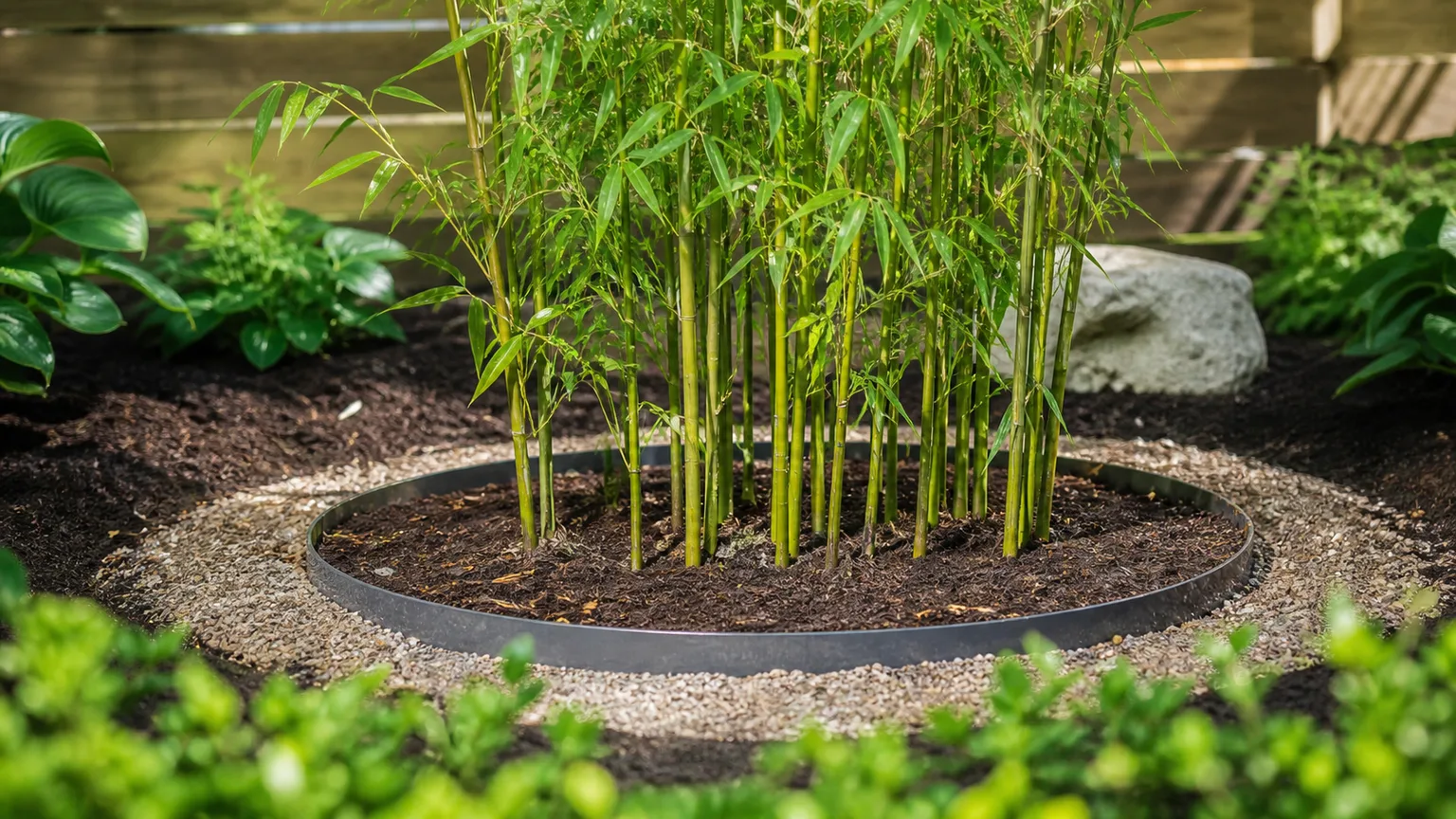
Do not bury the top lip beneath mulch. Keep it visible enough to notice shoots trying to cross, and inspect the full perimeter in spring and late summer. Check seams, corners, and places where soil has accumulated over the barrier. If rhizomes are allowed to escape, sever and remove the growth promptly, then find and repair the route it used.
Choose a site with room for mature growth
A young bamboo in a nursery pot gives a poor sense of its future footprint. Plan for the plant’s mature height and spread, including foliage that may lean into paths and canes that can become difficult to thin. Do not space bamboo based only on the privacy screen you want this year; research the cultivar’s mature dimensions and allow maintenance access behind or beside the planting.
A privacy screen should be positioned for the sightline it needs to block, not automatically on the property boundary. Leave room to inspect both sides and the barrier if the plant runs. Consider shade cast onto neighboring beds, leaf litter on hard surfaces, and whether the chosen bamboo’s mature density could obstruct a path or window.
In a small garden, the best growing conditions may mean not planting bamboo in the ground at all. A large pot or a different screening plant can deliver structure with a more manageable footprint. Choosing a less vigorous plant is often easier than trying to restrain one that is already established.
Grow bamboo in a container when ground spread is unsuitable
Container growing is useful for compact cultivars and for gardeners who cannot dedicate an area to spreading roots. Choose a sturdy pot with drainage holes and enough room for the plant’s mature rootball; the RHS suggests containers at least 18 inches wide and deep for smaller bamboos. Larger species quickly outgrow ordinary patio pots, so confirm the cultivar is suitable for long-term container culture.
Use a free-draining, moisture-retentive potting medium and place the container where it gets the light and shelter the species needs. A pot can dry out much faster than garden soil, especially in sun and wind, so check it often during warm weather. Keep drainage holes clear and raise the pot slightly if it sits on a surface where water cannot escape.
A container does not eliminate maintenance. Rhizomes can crowd the pot, watering needs increase as the plant fills it, and the rootball may need division or repotting every few years. A heavy, exposed container may also need winter protection; choose a cold-hardy species or protect the root zone where winter temperatures threaten it.
Adjust care for the bamboo group
There is no universal sun, hardiness, or water chart that covers every bamboo. A useful comparison is to select the plant by the site you actually have, then adapt watering and protection as it establishes.
| Bamboo group or example | Useful site clue | What to verify |
|---|---|---|
| Fargesia types | Often used as clumping, smaller garden or container bamboos | Species-specific heat tolerance, mature width, and moisture needs |
| Phyllostachys nigra (black bamboo) | Can grow in full sun or light shade in a protected site | Running habit, local hardiness, barrier or container plan |
| Bambusa types | Many are large, warm-climate clumpers | Mature footprint and whether winters are mild enough |
These are examples, not shopping guarantees. The RHS profiles for bamboo species show how even closely related plants differ, while Fine Gardening’s black bamboo profile recommends fertile, moist but well-drained soil with full sun or light shade in a protected position.
Cool-climate and shade-tolerant examples
Some Fargesia cultivars are valued for a clumping habit and can suit cooler gardens, but the genus still contains differences in mature size, sun tolerance, and heat response. A warm, exposed site that performs well for one cultivar may be stressful for another. Confirm the cultivar’s regional hardiness and ask whether it tolerates your summer heat as well as winter cold.
Shade-tolerant species can be useful beneath a bright canopy or on the north side of a structure, but “shade tolerant” does not necessarily mean dense growth in deep darkness. Observe the light during the growing season and select a species description that matches the actual conditions. If the site is dry beneath trees, remember that tree roots compete for moisture even when the bamboo receives some shade.
Warm-climate and sun-loving examples
Many Phyllostachys grow vigorously in sunny sites when soil moisture is adequate, but their running rhizomes require careful containment. Fine Gardening lists black bamboo as suitable for full sun or light shade, moist but well-drained soil, and a protected position. That profile supports a species-level decision; it does not mean every running bamboo is equally cold-hardy or appropriate for a small lot.
Warm-climate Bambusa can form substantial clumps and may need more room than a small garden can provide. Confirm winter minimums and mature width before purchase, especially when a seller advertises a fast-growing privacy screen. A fast-growing plant can still take years to build a mature screen, and strong growth also means more watering, pruning, and containment work.
Diagnose poor growth from the site conditions
When bamboo looks weak, review the conditions in order: plant identity and hardiness, water and drainage, light, root competition, and only then fertilizer. This order avoids treating every yellow leaf as a nutrient deficiency. Bamboo naturally replaces older leaves, and some leaf loss during seasonal growth transitions can occur.
Read leaf and shoot changes in context
Rolled leaves can signal dry soil, but first feel the soil below the mulch. If it is dry, give a deep watering and check again later; if it is saturated, improve drainage and avoid adding more water. Browning on the windward side or after a cold snap points toward exposure, while limp or declining growth in a wet site calls for checking root health and drainage.
Sparse growth in the first year can reflect establishment rather than a failed plant. New bamboo often invests in roots and rhizomes before producing the screen height a gardener expects. Check whether the plant receives its required light and moisture, remove weeds that compete for water, and give it a full growing season before applying extra fertilizer.
If shoots emerge outside the intended area, treat that as a containment issue even if the leaves look healthy. Trace the new shoot back to the rhizome if possible, sever and remove the connecting growth, and inspect the barrier route. Waiting until escaped shoots become a grove makes control far more labor-intensive.
Set a seasonal care routine
At planting: Confirm the cultivar, growth habit, light, mature size, and barrier plan. Plant in spring where that fits local conditions, water the rootball thoroughly, and mulch the surrounding soil without covering the canes.
During the first growing season: Check soil moisture regularly, especially during hot or windy stretches. Water deeply when the root zone begins to dry, keep weeds from competing around the new plant, and walk the barrier perimeter. Do not expect fertilizer to compensate for an unsuitable site.
After establishment: Water during extended dry weather, monitor the barrier, and remove dead or damaged culms with clean tools. Thin crowded canes when needed to keep the clump accessible and attractive. Container plants need more frequent moisture checks and periodic rootball division or repotting.
Before winter: Make sure containers and young plants are not entering cold weather dry. Protect tender cultivars according to local recommendations, and consider shelter from cold, drying wind. In spring, inspect for cold injury and normal leaf replacement before deciding that the plant needs treatment.
Conclusion
The best conditions for growing bamboo depend first on the species and its rhizome habit. For most garden bamboos, aim for suitable sun, fertile soil that stays moist but drains freely, attentive watering while roots establish, and enough shelter to limit drying wind. Match cold tolerance to your climate, and make the mature footprint and containment plan part of the site decision before planting.
If you remember one sequence, use this: identify the cultivar, assess sunlight and drainage, confirm hardiness and mature size, decide how spread will be controlled, and then water according to the soil rather than a rigid schedule. Bamboo can be a striking screen or focal point when those conditions fit; if they do not, choose a more suitable species or a different plant before the roots are in the ground.



