10 Best Plants for Your Bedroom and Their Care Needs
Find the best plants for your bedroom, from low-light cast-iron plants to bright-window orchids, with realistic care notes and clear pet-safety trade-offs.
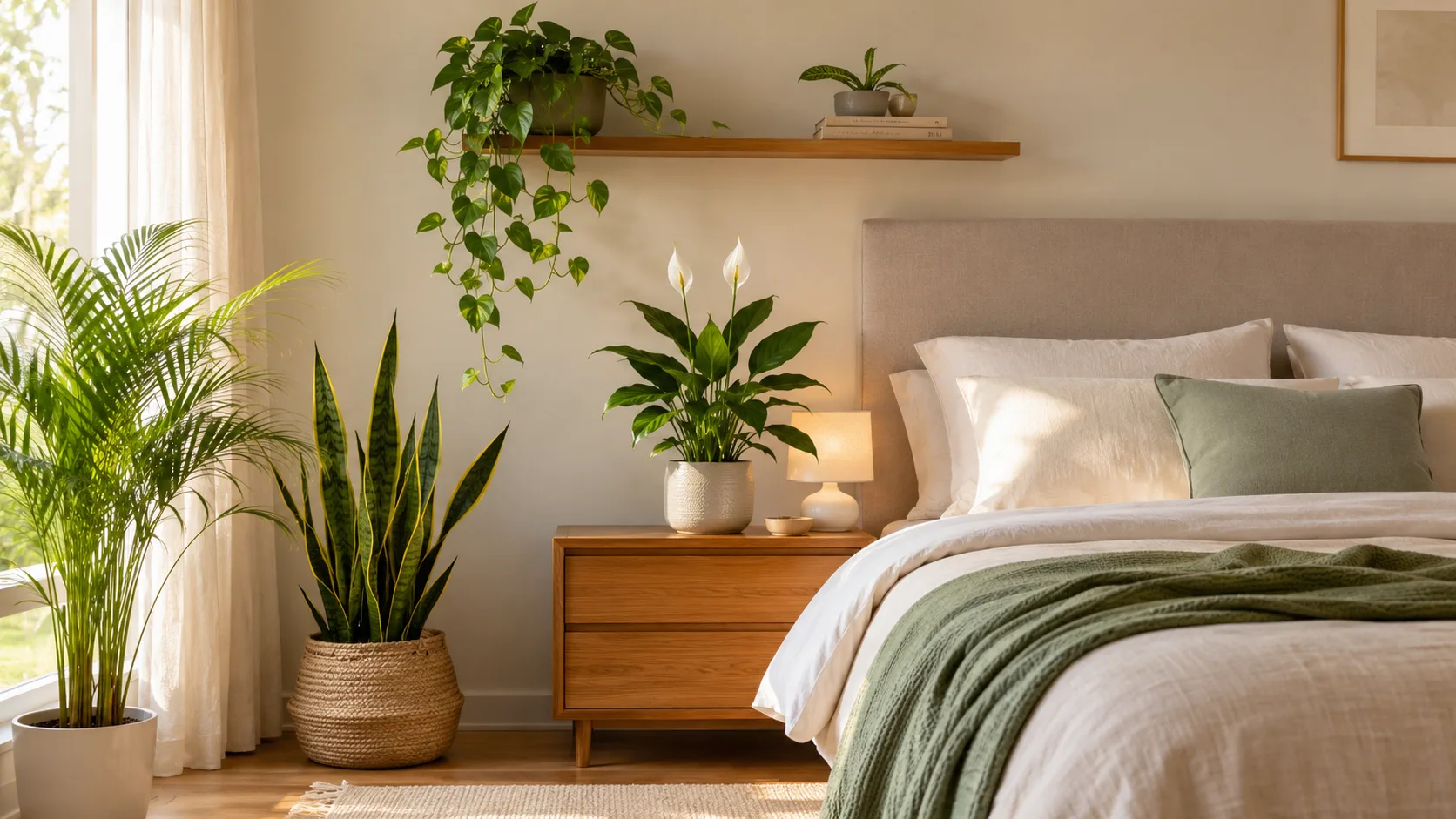
The best plants for a bedroom are the ones that suit its real window light, fit without blocking a walkway, and match how often you want to water. A plant may look calm on a nightstand in a photo and still struggle there if the only window is across the room; another may thrive in that spot but be a poor choice if a cat chews leaves.
Start with conditions instead of a promise that a plant will purify the air or help you sleep. The ten choices below range from durable foliage plants for lower-light corners to flowering plants for brighter windows, with their limits and household cautions spelled out.
Start With the Room: Light, Space, and Pets
Before buying, observe the room at midday and again in the late afternoon. Note which direction the window faces, whether curtains stay closed, how far the proposed plant spot is from the glass, and whether the plant will sit beside a heater, air conditioner, or drafty exterior door. A bedroom plant should be chosen for that spot—not for the brightest room in the house.
Then measure the footprint. A plant on a dresser needs a stable saucer and enough clearance from a lamp, curtain, and sleeping area; a floor plant should not narrow the route around the bed. If pets or young children can reach the foliage or potting mix, choose a verified low-risk species and position it so chewing and tipping are unlikely.
Is Your Room Low-Light or Simply Far From the Window?
“Low light” does not mean darkness. Colorado State University Extension describes low indoor light as a measurable range and notes that few plants tolerate levels below 50 foot-candles; even shade-tolerant plants need enough light to make new growth. Its interior plant light guide identifies cast-iron plants, spider plants, and some ferns among low-light choices, while African violets and orchids fit brighter or medium-light locations.
A north-facing window or a spot several feet from a brighter window may be workable, depending on season and obstructions. A windowless bedroom is a different case: a lamp used for reading is not necessarily a plant light, and no plant can grow indefinitely without light. Move a plant to a brighter room for a regular recovery period or use a suitable grow light; if neither is practical, choose a nonliving accent instead.
The 10 Best Bedroom Plants
These picks are not interchangeable. Each one has a particular bedroom job, and the best choice is the one whose required light and watering rhythm fit the spot you can offer.
1. Cast-Iron Plant for a Dim Corner
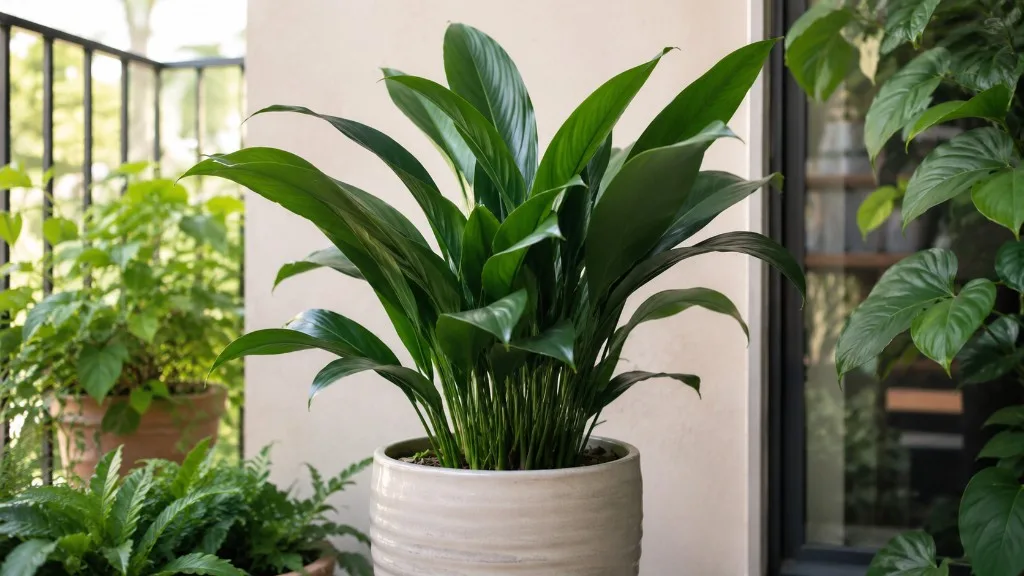
The cast-iron plant (Aspidistra elatior) is a strong choice for a bedroom that receives modest daylight but is not completely dark. Its broad, deep-green leaves grow from the base, so it brings a full look to a floor corner without a woody trunk or long trailing stems. It is also slower-growing than many tropical foliage plants, which helps when you do not want to prune or repot constantly.
Treat “cast iron” as a description of resilience, not a reason to forget the plant. Let the upper part of its potting mix dry before watering, use a pot with drainage, and keep it out of harsh afternoon sun that can scorch foliage. If the room is windowless, this is still not a no-light plant; the answer is a grow light or a brighter location, not more fertilizer.
2. Parlor Palm for Soft, Compact Greenery
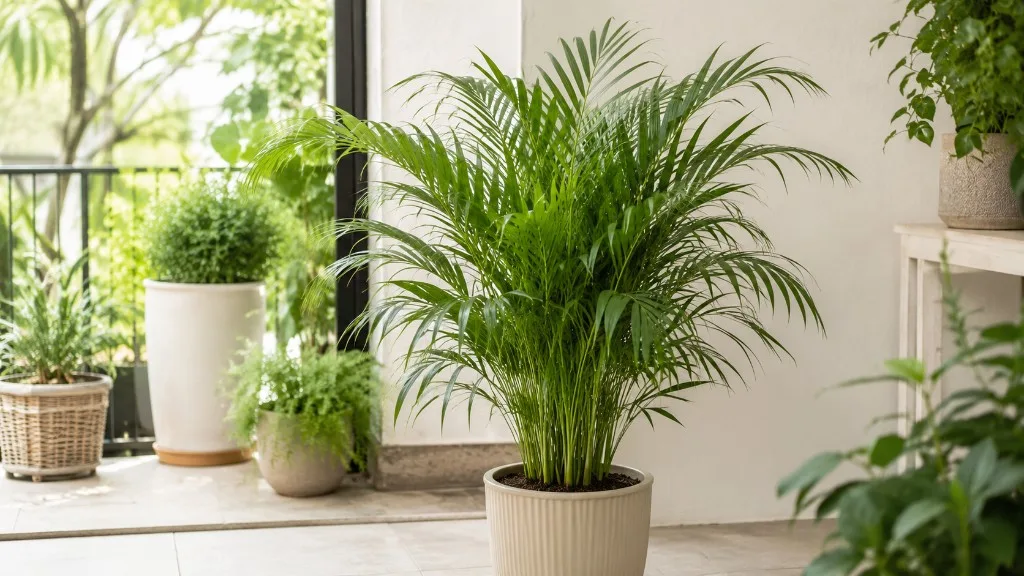
The parlor palm (Chamaedorea elegans) gives a bedroom a softer, feathery silhouette than a rigid upright plant. Its clumping stems suit a dresser-height stand or an open floor area, and a modest specimen is easier to place than a large palm. Texas A&M AgriLife’s houseplant care guide emphasizes matching a plant to its light and watering needs rather than using a fixed schedule; that is especially useful for a palm in a bedroom where heating and cooling can change how quickly the mix dries.
Give it bright, indirect light or gentle lower light and water when the top layer begins to dry, not while the pot is still saturated. Palms can attract spider mites in warm, dry rooms, so inspect the undersides of leaflets and wipe dust away occasionally. Avoid placing it against cold window glass or directly in the path of a heater vent.
3. Snake Plant for a Narrow Floor Spot
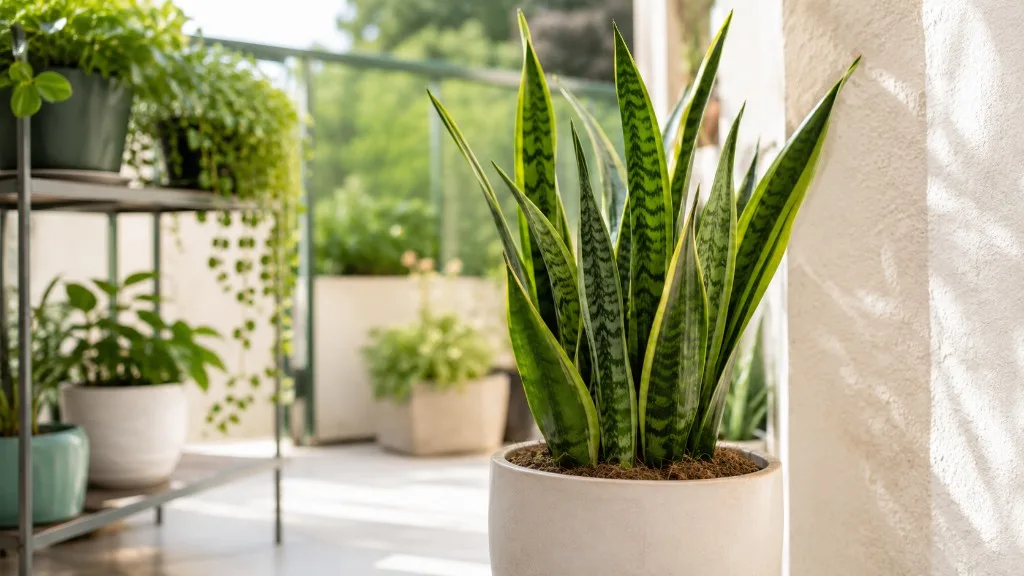
The snake plant (Dracaena trifasciata, formerly Sansevieria trifasciata) is useful when floor space is tight. Its upright leaves take less horizontal room than a bushy plant, and its thick foliage tolerates a longer dry spell than many tropical houseplants. It can survive in lower light, but it grows more steadily in bright, indirect light; in a dim room, expect slower growth rather than a plant that actively thrives in darkness.
Use a freely draining mix and let it dry substantially before watering again. A small, frequent drink is worse than a thorough watering followed by a dry-down because the roots need air as well as moisture. Keep this plant away from pets that chew: the ASPCA lists snake plant as toxic to cats and dogs, with nausea, vomiting, or diarrhea among possible signs (ASPCA plant record).
4. Spider Plant for a Shelf or Hanging Basket
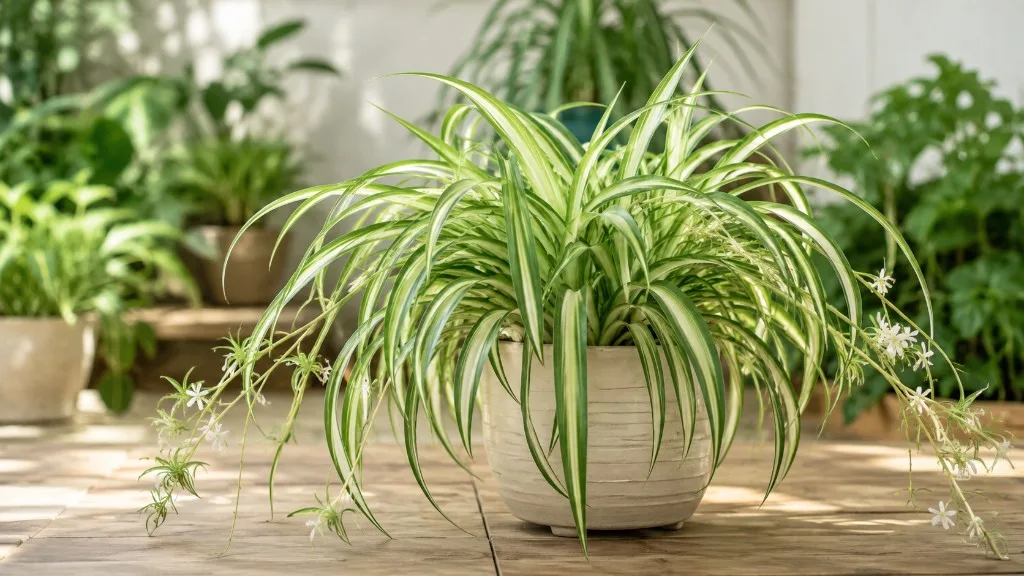
The spider plant (Chlorophytum comosum) is a practical bedroom plant when you want foliage that spills from a shelf or produces baby plantlets on arching stems. It prefers bright, indirect light but adapts to moderate light, making it more flexible than a sun-dependent flowering plant. A hanging basket also keeps its leaves away from bedside clutter, although the basket and hook must be firmly secured.
Let the surface of the mix dry slightly, then water thoroughly and drain the pot; do not keep it standing in water. If tips brown, check several possibilities—dry soil, mineral salts, hard water, and low humidity—before assuming that one cause is responsible. Texas A&M AgriLife lists spider plants among safer alternatives for households with pets, but no plant should be treated as food; put it beyond reach if an animal chews greenery.
5. Baby Rubber Plant for a Small Surface
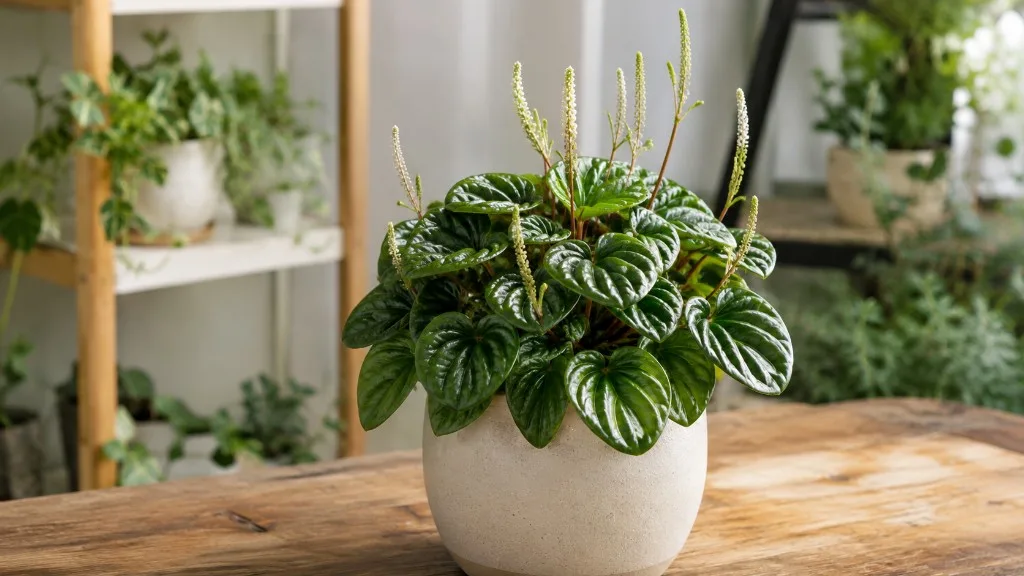
Baby rubber plant (Peperomia obtusifolia) is a compact, thick-leaved option for a shelf, dresser, or wide nightstand. It has a neater footprint than a palm and does not need the damp soil that a fern prefers. The leaf shape and modest size make it a good choice when you want one defined accent rather than a trailing vine near pillows or lamps.
Give it bright, indirect light for sturdy growth, though it can handle somewhat lower light with slower growth. Let the top layer of potting mix dry before watering and never leave water pooled in a decorative cachepot. Texas A&M AgriLife names peperomias as a safer alternative for pet households; check the plant’s exact label and verify it in a veterinary poison-control database before bringing it home, especially if a pet is a persistent chewer.
6. Peace Lily for Glossy Leaves and White Spathes
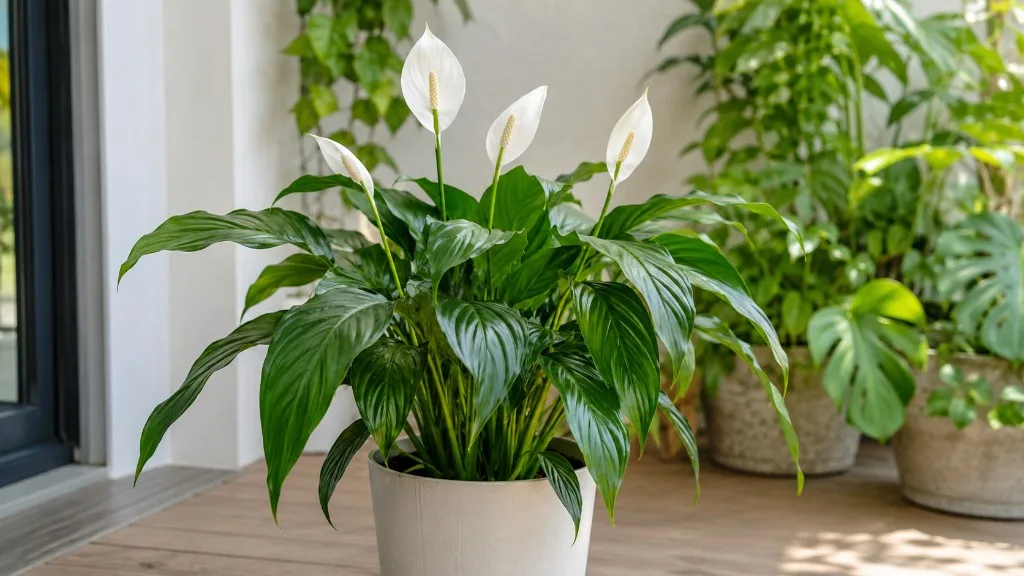
Peace lily (Spathiphyllum) offers shiny leaves and white spathes, but it is not a plant for every bedroom. It prefers bright, indirect light and evenly moist—not waterlogged—soil. A dry plant may droop, which can prompt watering, but repeated wilting is stress rather than a healthy watering indicator; check the mix before reaching for the can.
The main drawback is household safety. The ASPCA lists peace lily as toxic to cats and dogs because it contains insoluble calcium oxalates; chewing can cause intense oral irritation, drooling, vomiting, and difficulty swallowing (ASPCA peace lily record). Choose another plant if pets can reach it, and do not mistake peace lily for a true Lilium lily—the names and hazards differ, but the plant is still not safe to chew.
7. African Violet for a Bright Windowsill
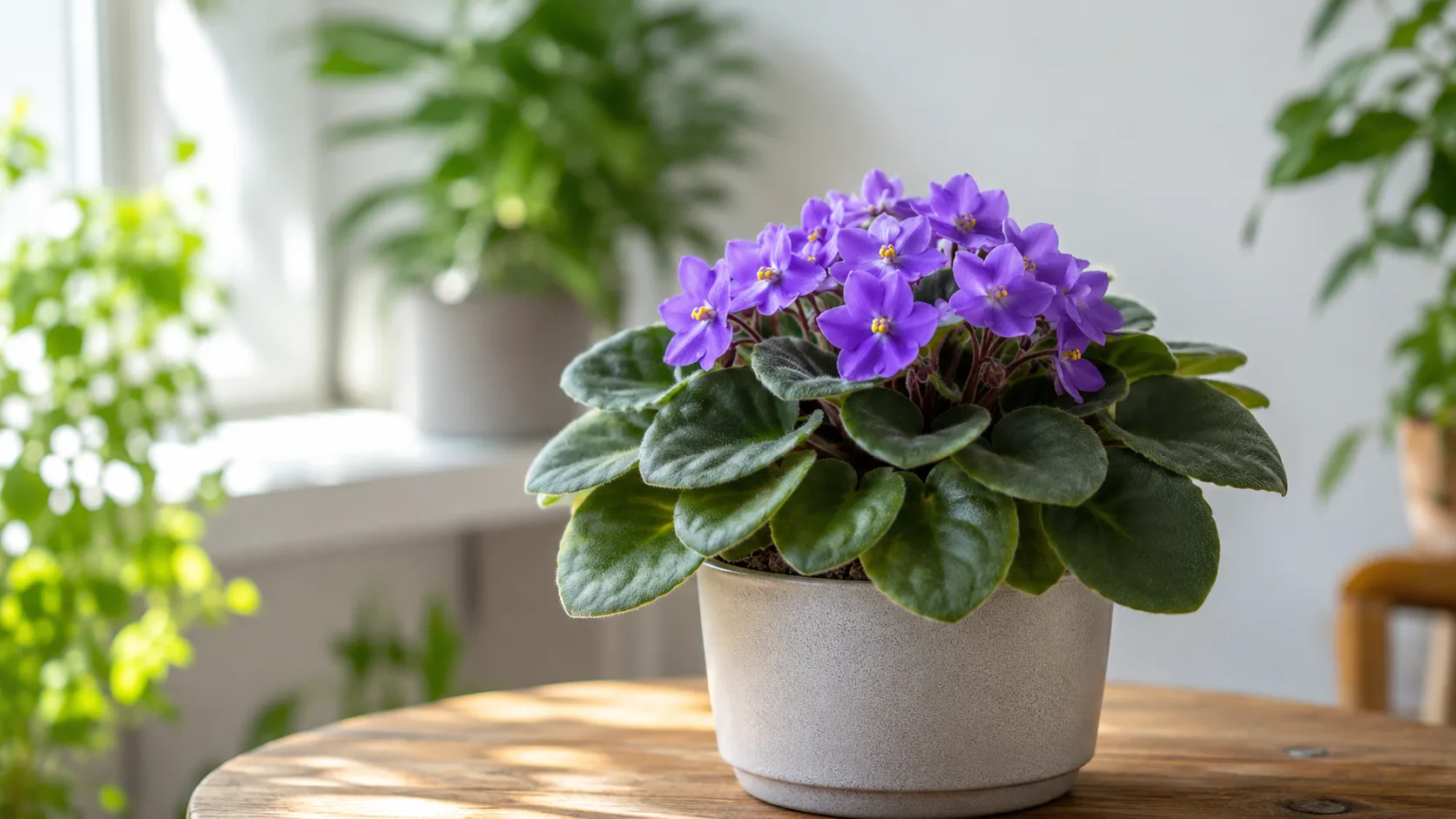
African violet is a better match for a bright sill or a small table near a window than for the dark corner of a bedroom. It stays compact and can flower repeatedly when it receives consistent bright, indirect light and steady care. That makes it a useful choice for someone who wants color without giving up a large area of floor space.
Keep the potting mix lightly and evenly moist rather than letting it swing from bone dry to soggy. Use a container with drainage, water the soil rather than leaving cold water on fuzzy leaves, and turn the pot periodically so growth remains balanced. If the window receives intense direct afternoon sun, diffuse it with a sheer curtain or move the plant slightly back; “bright” does not have to mean leaf-scorching.
8. Moth Orchid for Long-Lasting Flowers
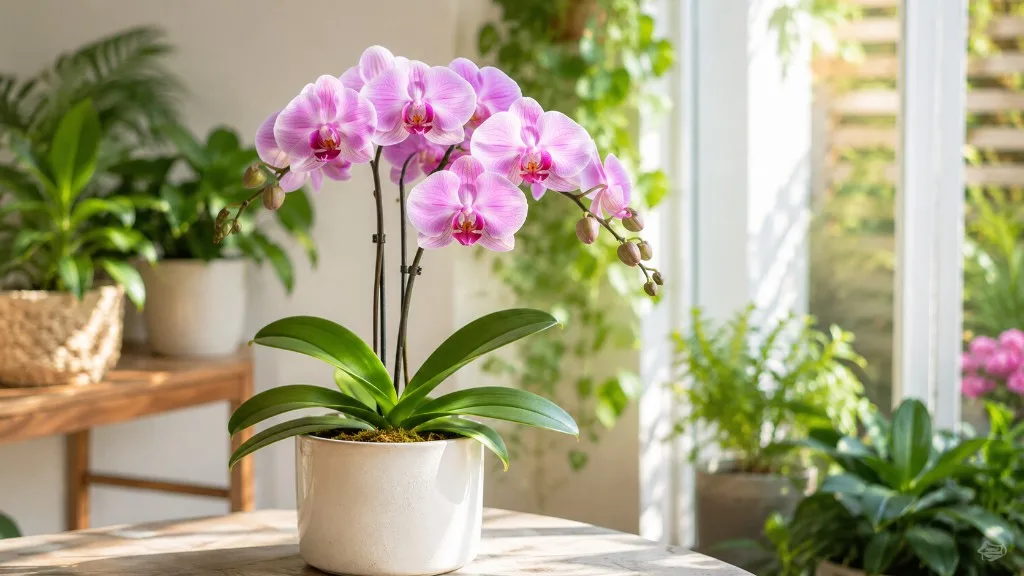
A moth orchid (Phalaenopsis) is a good bedroom choice when there is bright, indirect light and you want flowers rather than a large foliage plant. The blooms can last for weeks, but the plant is not suited to a dark bedside table just because it is sold as an indoor plant. An east-facing window often gives gentler morning light; in a brighter exposure, keep the leaves out of prolonged hot direct sun.
Orchids grow in airy bark or a suitable orchid mix rather than dense standard potting soil. Water when the mix is approaching dry, then let excess drain completely; a decorative cover pot should not conceal standing water. The Pennsylvania Horticultural Society’s low-light houseplant roundup is useful for contrast: low-light foliage choices and flowering orchids are different solutions, so place an orchid where its brighter light requirement can actually be met.
9. Fiddle-Leaf Fig for a Bright, Spacious Corner
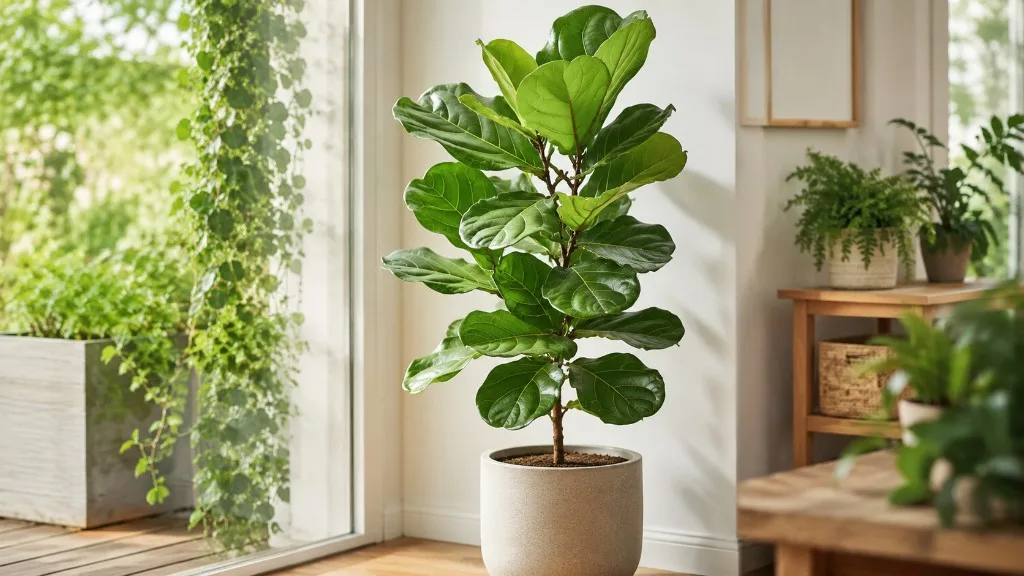
Fiddle-leaf fig (Ficus lyrata) makes sense only if the bedroom has a bright window, enough floor area, and room for a plant that can grow tall. Its large leaves create a focal point, but the plant is less forgiving of repeated moves, cold drafts, and a dramatic change in light than its polished appearance suggests. If the nearest usable window is far across the room, pick a cast-iron plant or spider plant instead.
Keep the plant near a bright window without letting leaves press against hot or cold glass. Water when the upper mix has dried, drain the pot, and rotate it occasionally so growth does not lean strongly toward one direction. Dusting the broad leaves helps them look tidy and makes it easier to spot pests; it does not turn the plant into an air filter.
10. Aloe Vera for a Sunny, Dry Windowsill
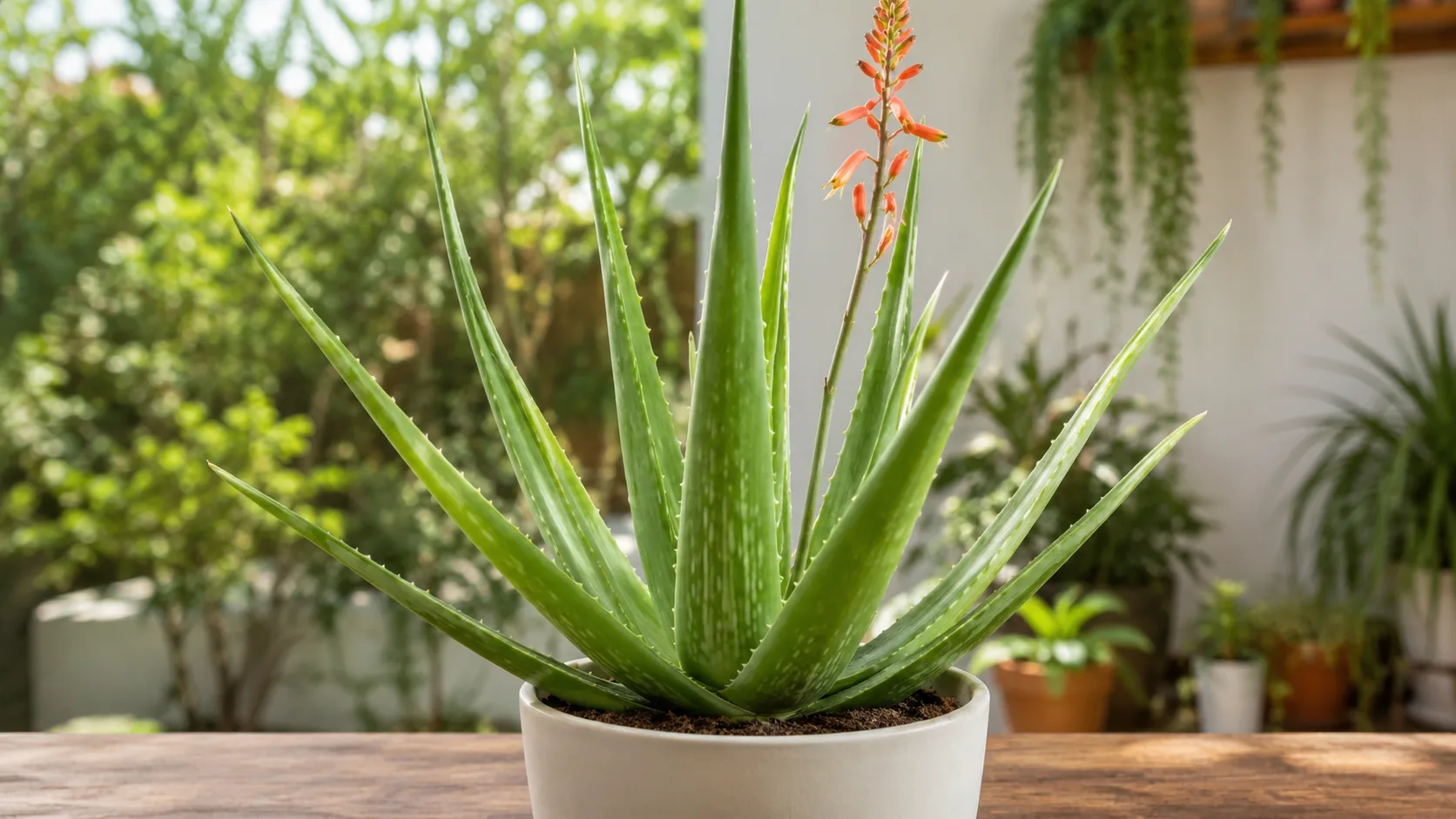
Aloe vera belongs on this list for a bedroom with a genuinely sunny window, not for a low-light nightstand. Its fleshy leaves store water, so it is a useful option if you want a compact succulent that can dry between waterings. Give it a bright sill, a pot with drainage, and a gritty, fast-draining succulent mix; a dim room and a large, wet pot are a recipe for weak growth or rot.
Water deeply only after the mix has dried, then empty the saucer. Avoid using an attractive but sealed container unless the plant remains in a draining nursery pot inside it. Aloe is toxic to cats and dogs according to the ASPCA plant record, so put it in a room or position where pets cannot chew the leaves.
Do Bedroom Plants Clean the Air?
Plants can make a bedroom feel more personal and bring a living object into the room, but ordinary numbers of potted plants should not be sold as an air-cleaning system. Cummings and Waring reviewed 12 chamber studies and converted 196 measurements into a clean-air delivery rate; their peer-reviewed analysis in the Journal of Exposure Science & Environmental Epidemiology found that matching the VOC removal of typical outdoor-to-indoor air exchange would require roughly 10 to 1,000 plants per square meter of floor area. That is an impractical density for a bedroom.
The famous NASA plant experiment used small, sealed chambers to study removal of selected pollutants, not a furnished bedroom with windows, ventilation, textiles, and everyday pollutant sources. You can read the original NASA interior-landscape report, but its controlled setup should not be translated into a promise that one plant will purify a room or raise nighttime oxygen enough to improve sleep. If air quality is the concern, focus on pollutant sources, appropriate ventilation, and properly maintained filtration rather than adding pots.
Are Bedroom Plants Safe Around Pets and Children?
First identify the exact species, not just the shop’s common name, and check a reliable poison-control listing before you buy. Texas A&M AgriLife warns that common plants such as peace lily, pothos, philodendron, and ZZ plant can cause problems if pets chew them, while spider plants, peperomias, and hoyas are named as safer alternatives in its houseplant guide. The ASPCA also cautions that its plant list is not comprehensive and that eating even plants listed as non-toxic may upset a cat or dog; its toxic and non-toxic plant database is a starting check, not permission to let an animal chew leaves.
For a room shared with pets, favor spider plant or a peperomia, then place the pot where the animal cannot knock it over or dig in the soil. If a pet ingests any plant and develops symptoms, contact a veterinarian or animal poison-control service promptly rather than waiting for a houseplant forum to identify the leaf. With young children, keep small pots, decorative stones, fertilizer, and fallen plant parts out of reach; a high shelf is not safe if the plant can fall or trail within reach.
Where to Put a Plant in a Bedroom
Put a plant where its leaves get usable light and its pot can drain without damaging furniture. A saucer protects wood and carpet, but empty it after watering; leaving a nursery pot submerged in runoff keeps roots wet. Texas A&M AgriLife recommends watering based on soil moisture and draining standing water, a particularly useful rule beside a bed where a spill may go unnoticed overnight.
Keep foliage away from heating vents, air-conditioner drafts, and contact with cold window glass. A plant on a nightstand should be compact and stable, with no trailing stems near candles, lamps, or bedding; heavier floor plants belong where they cannot be bumped during a nighttime walk. If the room is small, one well-placed plant is more practical than a crowded cluster that blocks a window or makes watering awkward.
A Low-Effort Bedroom Plant Care Routine
Use a weekly check-in rather than a weekly watering appointment. Feel the mix about an inch or two below the surface, lift the pot to learn how it feels when dry and wet, and water only when the plant’s type and current conditions call for it. Texas A&M AgriLife’s houseplant guidance recommends checking soil moisture before watering and letting excess water drain; pot size, soil, temperature, season, and window exposure all change the interval.
When watering, move the plant to a sink or use a tray, apply water to the mix until it runs from drainage holes, let it drain, and empty the saucer or cachepot. Do not leave plants sitting in water because a bedroom is carpeted or because you want to avoid carrying them to the sink; use a waterproof tray instead. If the room is dim, reduce watering frequency because the pot often dries more slowly, and avoid compensating for slow growth with extra fertilizer.
Check leaf undersides and stem joints when you dust. A few minutes of inspection can catch webbing, sticky residue, or cottony clusters before pests spread to other plants. Rotate a plant a quarter-turn when it leans toward the window, but do not repeatedly relocate a sensitive plant between a warm bedroom and a much brighter, colder spot.
Common Bedroom Plant Problems and the First Fix
Yellow leaves and soft stems are not automatic signs that a plant needs more water. Check whether the lower mix is wet, confirm that the pot drains, and look for a sour smell or mushy roots; if the soil stays saturated, pause watering and address drainage before adding more. If the mix is dry well below the surface and the plant is drooping, water thoroughly and let excess run off.
Leggy stems, small new leaves, or a strong lean toward the glass usually point to inadequate light or an abrupt change in conditions. Move the plant closer to the window gradually or add an appropriate grow light; do not expect a fertilizer dose to replace light. Brown tips can come from dry soil, mineral salts, low humidity, or physical damage, so compare the pattern and recent care rather than treating every brown edge the same way.
If a bedroom plant develops pests, isolate it from the rest of the collection and inspect nearby plants. Wipe or rinse the foliage when appropriate, identify the pest before choosing a treatment, and follow any product label exactly—especially in a room where people and pets sleep. A struggling plant may need a more suitable room; moving it out is often a better fix than trying to make one dim corner serve every species.
Conclusion
The best bedroom plant is a match for the window, not just the décor. Choose a cast-iron plant or parlor palm for softer lower-light foliage, a snake plant for an upright narrow spot, a spider plant or peperomia for a shelf, and an orchid, African violet, fiddle-leaf fig, or aloe only when the room provides the brighter light each requires.
If pets share the room, verify the exact plant before purchase and make access part of the placement plan. Keep the soil draining, water from a moisture check rather than the calendar, and treat a plant as a living accent—not a substitute for ventilation or an air cleaner.



