The 7 Best Lawn Edgers of 2026
Compare seven lawn edgers by power source, blade depth, yard size, and ease of use, then choose the right tool for sidewalks, beds, and driveways.
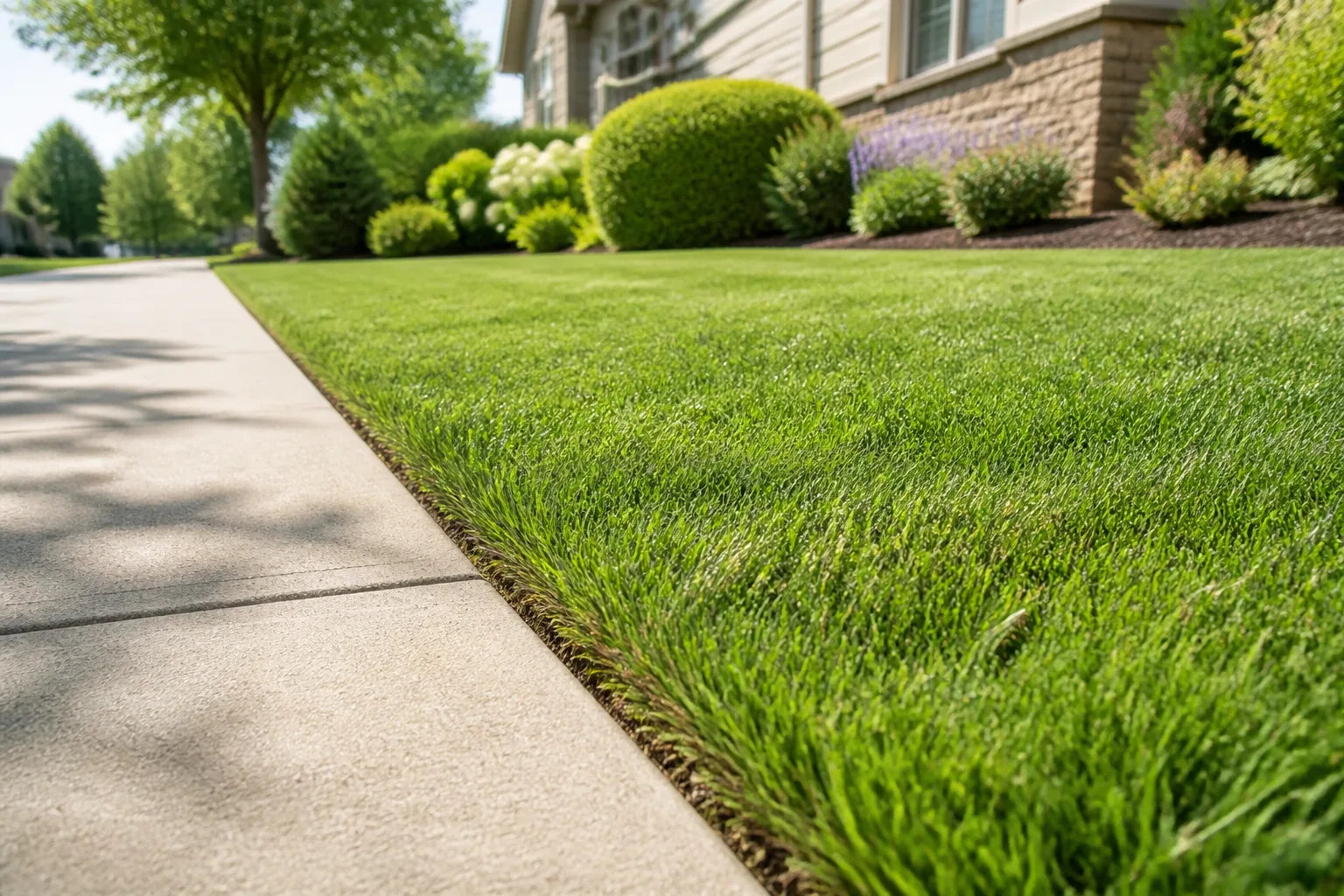
A crisp lawn edge is a small detail with an outsized effect: it separates turf from concrete, mulch, or planting beds so the whole yard looks intentional. The right edger also saves time, because a guide wheel and vertical blade can hold a straighter line than a string trimmer balanced by eye.
The catch is that lawn edges are not all the same. A short sidewalk border, a long driveway, a new flower-bed outline, and an overgrown commercial-style property call for different amounts of depth, power, mobility, and maintenance. This guide matches seven useful edger formats to those jobs, then explains how to make a clean cut without scalping the turf or throwing debris at the hardscape.
Quick picks: the right edger for each kind of yard
Use this table to narrow the field before you compare features. The “best” label describes the job each model suits; it does not mean every lawn should use that machine.
| Best for | Pick | Format | Key strengths | Main trade-off |
|---|---|---|---|---|
| Most established residential edges | ECHO PE-225 | Gas stick edger | Strong engine, curved shaft, guide wheel, debris shield | Fuel mixing, noise, and engine maintenance |
| Cordless freedom and a shared battery system | EGO POWER+ ME0801 | Battery stick edger | Deep adjustment, variable speed, portable operation | Battery and charger cost; balance takes practice |
| A small or medium yard near an outlet | WORX WG896 | Corded electric | Consistent power, three wheels, serrated blade, trenching function | Extension-cord routing and shallow maximum depth |
| Long, heavy-duty straight runs | Earthquake 41273 | Gas walk-behind | Large engine, four wheels, deep cut, adjustable angle | Heavy, costly, and awkward on tight curves |
| One lightweight tool for trimming and edging | BLACK+DECKER GH900 | Corded combo | Low weight, rotating head, automatic line feed | String leaves a softer edge than a blade |
| Short borders or making a new bed line | Fiskars long-handle steel edger | Manual step edger | Quiet, precise, no fuel or battery, excellent initial cut | Physically tiring over long distances |
| A budget corded dedicated edger | Greenworks 27032 | Corded electric | 12-amp motor, height adjustment, simple controls | 1.5-inch depth and no edge guard |
If your lawn is already maintained and the longest edge is only a few hundred feet, start by looking at cordless or corded stick edgers. They are easier to store and maneuver than a walk-behind machine. Choose gas or a walk-behind model when the work is long, the turf is dense, or the tool will be used often enough to justify its added weight and upkeep.
How these lawn edgers were evaluated
The useful specifications here are not just motor size and blade diameter. I weighted the features that decide whether a homeowner can hold a straight line: tool weight, wheel placement, handle and shaft adjustment, depth control, debris protection, and the way the blade or string interacts with concrete.
Power source matters just as much. A battery edger is convenient only if the battery lasts through the route and you have a place to charge it. A corded model has effectively unlimited runtime but can turn a simple curved bed into a cord-management exercise. Gas delivers mobility and sustained cutting power, but the convenience comes with fuel, noise, emissions, starting, and seasonal storage decisions.
Manufacturer specifications are treated as specifications, not proof that one model will outperform another in every yard. For example, ECHO lists the PE-225 as a 21.2 cc two-stroke edger with a 7.75-inch blade, 13.1-pound dry weight, molded nylon shield, i-30 starting system, and five-year consumer warranty (ECHO). Those details support its fit for sustained edging, but they do not remove the need to follow the owner’s manual or assess the operator’s comfort.
Best overall: ECHO PE-225 curved-shaft gas edger
The ECHO PE-225 is the strongest all-around choice when you want a dedicated stick edger that can maintain a lot of established lawn edge without depending on a battery or outlet. Its curved shaft brings the cutting head into a comfortable working position, and its large guide wheel gives you a reference point to follow along pavement.
The 21.2 cc two-stroke engine is substantial for a homeowner tool without pushing the PE-225 into walk-behind territory. The height-adjustment wheel lets you set the blade for a shallow maintenance pass or a more assertive cut, while the molded nylon shield helps contain material kicked up by the spinning blade.
The limitation is not cutting ability; it is ownership overhead. You need the correct fuel-and-oil mixture, fresh fuel practices, air-filter and spark-plug maintenance, and a place to store a gas tool safely. It is also more noise and vibration than most battery models, so a small yard with a few sidewalk sections will rarely use its extra capacity.
Choose it if: you have long hardscape borders, dense turf, or a preference for a gas tool that can work continuously. Skip it if: your route is short, you dislike fuel mixing, or you need a quiet tool for a close neighborhood.
Best cordless: EGO POWER+ ME0801 edger
The EGO POWER+ ME0801 makes the most sense for someone who wants a dedicated blade edger without cords or gasoline, especially if other tools already use the same battery platform. Its 8-inch blade, guide wheel, variable-speed trigger, and deep adjustment range give it more control than a trimmer held sideways.
Variable speed is useful at the boundary. You can slow the blade as you approach a tight curve, ornamental bed, or exposed concrete corner, then add speed when the edge is straight and the soil is firm. The guide wheel keeps the tool from drifting, but this design still needs a balanced grip; do not let the cutting head hang away from the surface and then force it down.
Battery runtime depends on the pack, grass density, depth, and how often you pause to reposition. Treat the battery platform as part of the price: a bare tool is a good value for an existing EGO owner and a less attractive purchase if you must buy the charger and a high-capacity battery only for edging.
Choose it if: cordless maneuverability and a shared battery ecosystem are your priorities. Skip it if: you edge only a short strip, already own a corded outlet nearby, or want the lightest possible manual option.
Best corded: WORX WG896 electric edger and trencher
The WORX WG896 is a practical corded choice for a homeowner with a small or medium property and a reachable outdoor outlet. Its 12-amp motor drives a 7.5-inch serrated blade, and the three-wheel layout gives the cutting head a stable track along a sidewalk or driveway.
The serrated profile is helpful when the border has tougher roots or a mat of turf, but it does not make the tool a deep excavator. The listed maximum depth is about 1.5 inches, so it is best viewed as an edge-maintenance machine with limited trenching ability, not a replacement for a spade when you need to establish a new bed boundary.
The cord retainer keeps the cable connected to the tool, but it does not eliminate the hazard. Use a properly rated outdoor extension cord, keep it behind and away from the blade’s path, and plan the route before turning the machine on. For a compact front yard, that small preparation is usually worth the benefit of steady power and no recharge pause.
Choose it if: you want dedicated blade control at a moderate cost and can safely manage a cord. Skip it if: your yard has disconnected areas, distant outlets, or many curves where cable routing would be more frustrating than edging.
Best for large properties: Earthquake 41273 walk-behind edger
The Earthquake 41273 is the specialist pick for long, demanding runs where a handheld edger becomes tiring. Its 79 cc engine, four-wheel support, tri-tip blade, adjustable cutting angle, and deeper cutting range make it capable of chewing through heavy growth and creating more substantial borders than a typical stick tool.
The wheels carry the machine, which is important because its roughly 57-pound weight would be unreasonable to hold. That same weight makes it difficult to turn around trees, beds, and tight corners. It is most efficient on straight driveway edges, long sidewalk runs, and properties where the operator can make broad, controlled passes.
This is also the pick most likely to be overbought. A walk-behind edger takes more storage space, costs more to maintain, and is slower to reposition than a stick edger. Its trenching capability can help with a shallow landscape-wire or bed-edge job, but always confirm buried utilities before cutting and never treat a product’s maximum depth as a safe digging depth for an unknown site.
Choose it if: you have substantial straight-line work and need deep, sustained cutting. Skip it if: most of your border is curved, your yard is small, or you cannot comfortably control a heavy machine.
Best trimmer-edger combo: BLACK+DECKER GH900
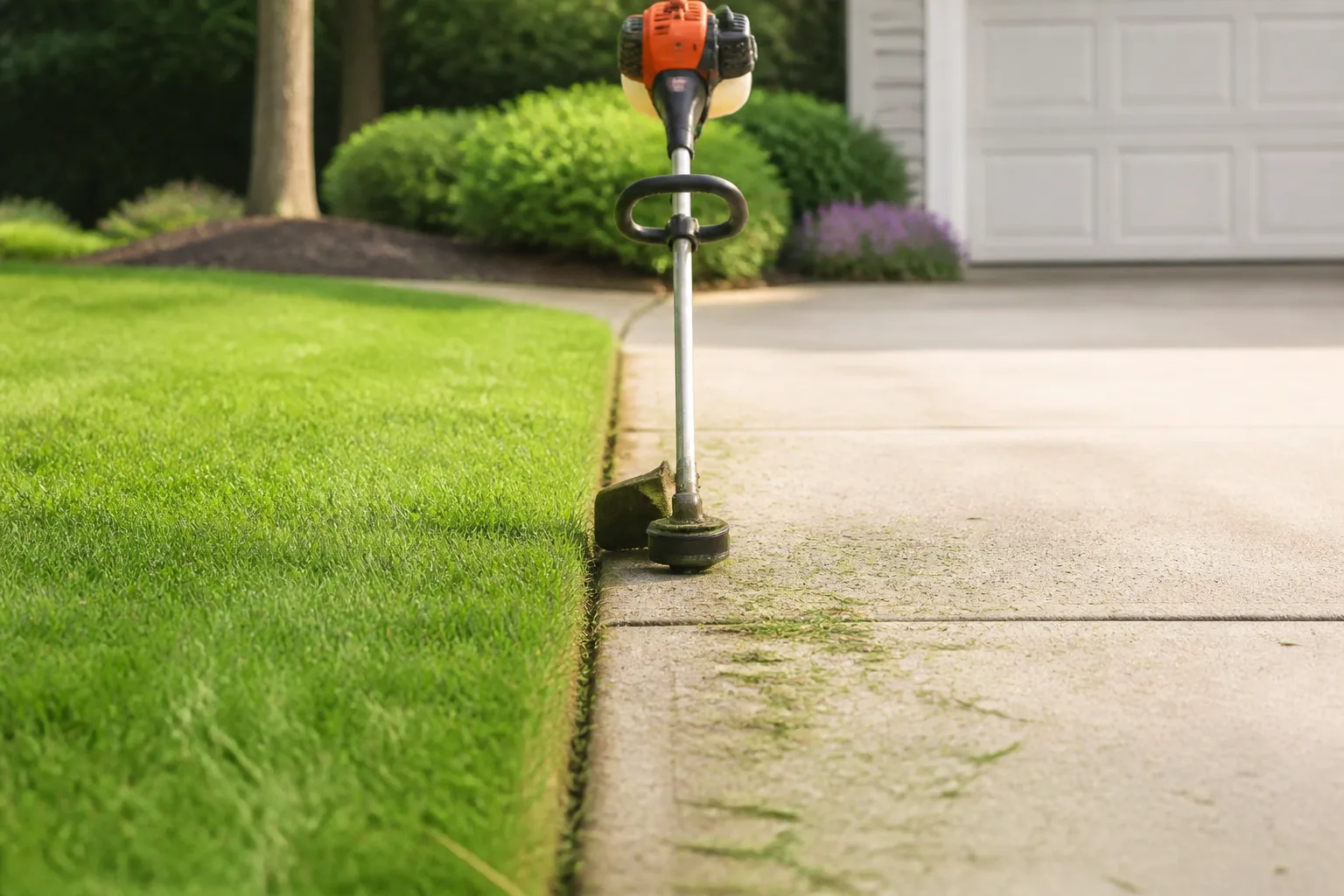
The BLACK+DECKER GH900 is the sensible choice when you need a string trimmer first and an occasional edging function second. Its head rotates so you can switch from horizontal trimming to vertical edging, and the corded 6.5-amp motor avoids the runtime limit of a small battery.
At about 5.5 pounds, it is much easier to carry around shrubs, fence posts, and gates than a dedicated blade edger. Automatic line feed also reduces interruptions, although a string head consumes line faster when it meets concrete or is used to cut into a new boundary.
The trade-off is edge definition. A string trimmer can produce a clean-looking line with a steady hand, but the cut is less mechanically constrained than a blade and wheel. Use this tool when convenience and low weight matter more than a sharply recessed vertical trench.
Choose it if: you want one inexpensive, light tool for two maintenance jobs. Skip it if: your priority is a repeatable vertical edge, deep bed definition, or frequent work through woody roots.
Best manual: Fiskars long-handle steel edger
The Fiskars long-handle steel edger is the best tool in this group for creating a precise first line beside a bed or for maintaining a short border with no motor at all. Its long shaft and foot platform let you put body weight over the blade, then lift and repeat a few inches farther along the marked line.
Manual edging gives you unusually good control over shape. You can stop at a root, adjust the curve, and remove a strip of sod without waiting for a motor to spin down. It is also quiet, produces no exhaust, requires no charging, and needs little care beyond cleaning soil from the blade and checking for damage.
The obvious limit is the operator. Wet clay can cling to the blade, dry compacted soil can resist it, and a long driveway can turn a simple tool into a demanding workout. For a large new edge, loosen the line after rain has softened the soil—but not when it is muddy—and use a spade to remove sod in manageable sections rather than forcing the blade.
Choose it if: you have short borders, want to create a bed edge, or prefer a low-maintenance tool. Skip it if: you have extensive hardscape, compacted soil, or a physical limitation that makes repeated stepping uncomfortable.
Best value: Greenworks 27032 corded edger
The Greenworks 27032 is a good value when you want a dedicated electric edger, need steady outlet power, and do not require a deep cut. Its 12-amp motor, height-adjustable shaft, adjustable auxiliary handle, and three-wheel arrangement cover the basic control features that matter on a modest lawn.
The 7.5-inch blade and approximately 1.5-inch maximum depth suit routine maintenance when the edge is already established. The shallow range becomes a weakness if grass has overrun a bed or the line has disappeared under soil; in that situation, open the boundary manually first and use the machine for follow-up passes.
There is no edge guard separating the blade from the concrete, so you must keep the wheel tracking consistently and avoid leaning the tool into the hardscape. Repeated blade-to-concrete contact dulls the edge, increases vibration, and makes the cut less predictable. That is a manageable limitation for a careful homeowner and a poor fit for someone who wants the tool to correct a wavy line by itself.
Choose it if: you want a straightforward corded dedicated edger for maintained turf. Skip it if: you need cordless mobility, deep trenching, or a strong physical barrier between blade and pavement.
Cutting depth, blade shape, and guide wheels explained
Cutting depth is the distance the blade enters soil below the visible turf line. For routine hardscape edging, a shallow 1- to 2-inch cut is usually enough to remove the overhanging grass and refresh the vertical face. Cutting deeper every time wastes power, throws more soil, and can expose roots or leave a strip of lawn vulnerable to drying.
New garden-bed edges are different. A manual spade or half-moon edger may need to cut a deeper vertical trench to separate the sod root mat from the bed, after which a powered edger can maintain the visible line. Do not use maximum machine depth as a shortcut through unknown ground, tree roots, buried cable, irrigation, or compacted material.
Blade shape changes how the tool handles resistance. Rectangular blades are common for established borders, serrated edges add bite in dense turf, and tri-tip blades are more aggressive in heavy-duty machines. Blade shape does not compensate for a dull blade, a clogged shield, an incorrect angle, or a wheel that is not tracking the boundary.
Guide wheels are a major quality-of-life feature. A front or side wheel supports the tool and gives you a physical reference against the pavement; multiple wheels add stability but can make tight curves harder. If your property is mostly sweeping curves, prioritize balance and a narrow head over maximum depth.
Which power source fits your yard?
Choose by the constraint you notice first:
- Manual: best for short runs, new bed outlines, quiet work, and zero fuel or battery expense.
- Corded electric: best when an outlet is close and you want consistent power without charging.
- Battery electric: best for gates, disconnected areas, and homeowners already invested in the brand’s battery system.
- Gas stick: best for long residential routes and dense growth when sustained power matters.
- Gas walk-behind: best for large, mostly straight runs where handheld fatigue is the problem.
- String-trimmer combo: best when edging is occasional and you also need trimming around obstacles.
Battery advertising often emphasizes voltage, but voltage alone does not tell you how long the tool will run. Pack capacity, grass resistance, depth, temperature, and technique all change runtime. A second compatible battery may solve the route problem, but it also raises total ownership cost and storage requirements.
Gas is not automatically the professional choice. It can be the right answer for long, rough work, yet a battery edger is easier to start, quieter around neighbors, and simpler to store for a homeowner who edges a few times each month. Match the engine to the job, not to the idea that more power is always better.
Stick, walk-behind, and combo edgers compared
Stick edgers are the most versatile dedicated format. They can follow sidewalks, beds, and driveways, fit through gates, and move between sections quickly. Their weakness is operator fatigue and the need to keep the head at a consistent angle.
Walk-behind edgers shift the weight onto wheels and usually deliver greater depth and power. They shine on long straight borders and struggle where you must pivot around a tree, reverse near a corner, or carry the machine across a lawn. Measure storage and turning space before buying one.
Combo tools save money and shelf space when you already need a trimmer. They are excellent for touching up grass that leans over a walk, but they do not create the same mechanically guided edge as a dedicated blade and wheel. If your goal is a formal, recessed bed line, use a manual edger or dedicated machine for the first cut.
The boundary itself matters, too. Along concrete, keep the guide wheel on the hardscape and let the blade just kiss the soil. Along mulch or an informal bed, a manual cut can define the edge without repeatedly flinging mulch into the lawn.
How to edge a lawn without scalping it
Start when the grass and hardscape are dry enough that soil does not smear and clippings do not clump. A state safety guide warns that edgers and trimmers have moving parts that can cause severe injuries; it specifically recommends keeping guards in place and checking that they remain in good working order (Texas Department of Insurance). Put on eye protection, sturdy closed-toe footwear, and hearing protection for loud gas equipment.
Clear stones, sticks, toys, hoses, and loose mulch from the route. Walk the line before starting, look for sprinkler heads and low wires, and decide where the debris will go. If the curve is new, lay a hose as a visual guide and view it from the street before cutting.
Set the machine to a shallow depth for the first powered pass. Keep the guide wheel in contact with the hardscape or the intended lawn-side reference, move at a steady walking pace, and let the blade do the cutting. If the engine bogs, the string head spits debris, or the tool pulls toward concrete, stop and correct the depth, angle, or line instead of muscling through it.
First pass for an overgrown or new edge
When grass has grown several inches onto a sidewalk, do not bury a small edger at maximum depth and expect a single clean pass. Mow first if you can still see the original boundary, then use a spade or manual edger to cut and lift the thick sod strip. The powered tool can then refine the vertical face rather than trying to excavate a root mat.
For a new bed, mark the shape, make the first vertical cut, and remove the narrow ribbon of turf from the bed side. Keep the trench shallow enough to avoid exposing large roots or destabilizing the bed edge. Lawn-edging guidance from The Lawn Almanac also emphasizes marking the line, cutting before digging, setting the edge at a useful height, and firming backfill so the boundary does not shift (The Lawn Almanac).
Maintenance pass along concrete or a bed
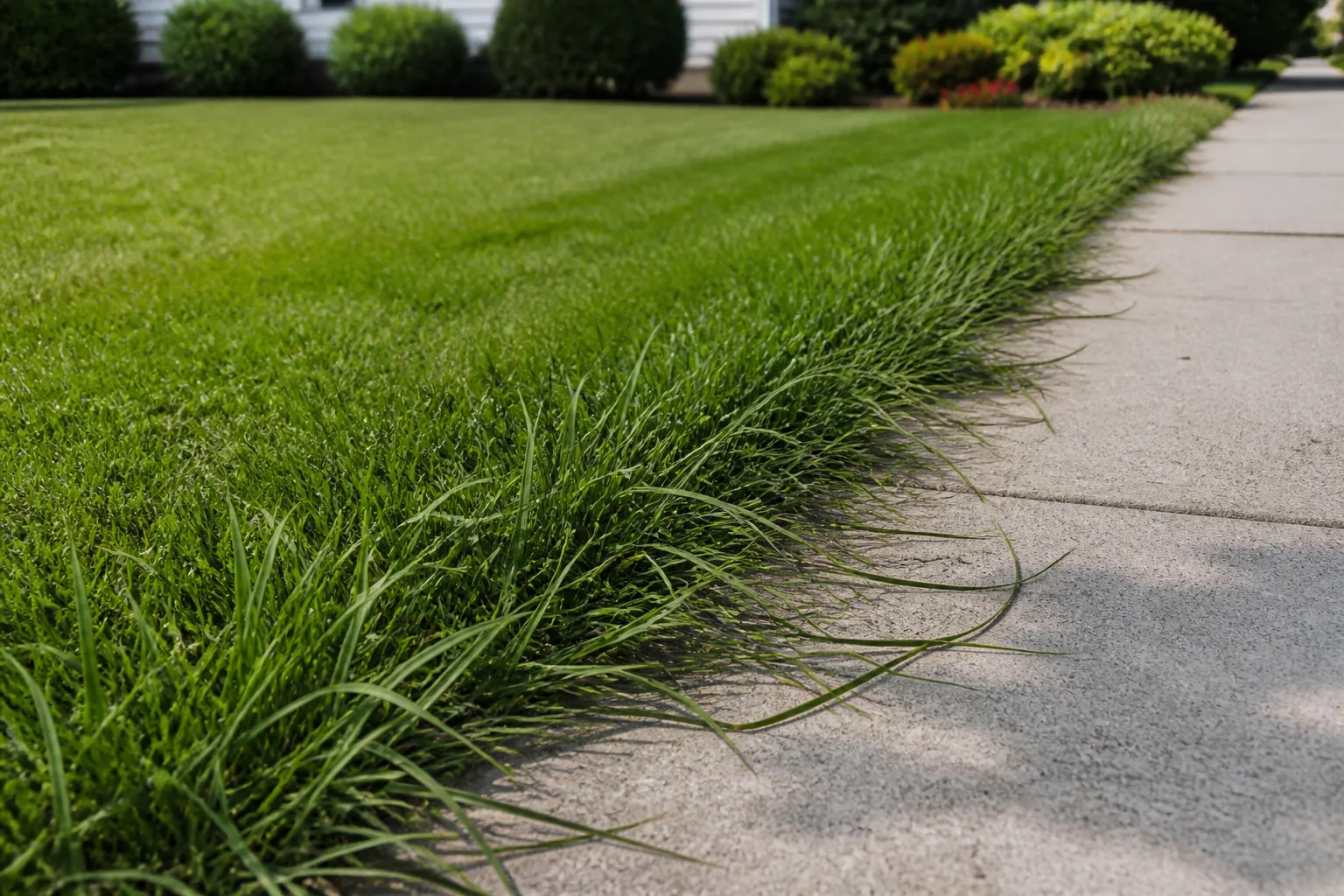
On a maintained edge, aim for consistency rather than maximum depth. Follow the previous line, keep the wheel moving, and make a second short pass only where the first cut left a tuft. Stop at curves and reposition the tool; trying to steer a heavy edger through a sharp radius is a common way to widen the line and scalp the corner.
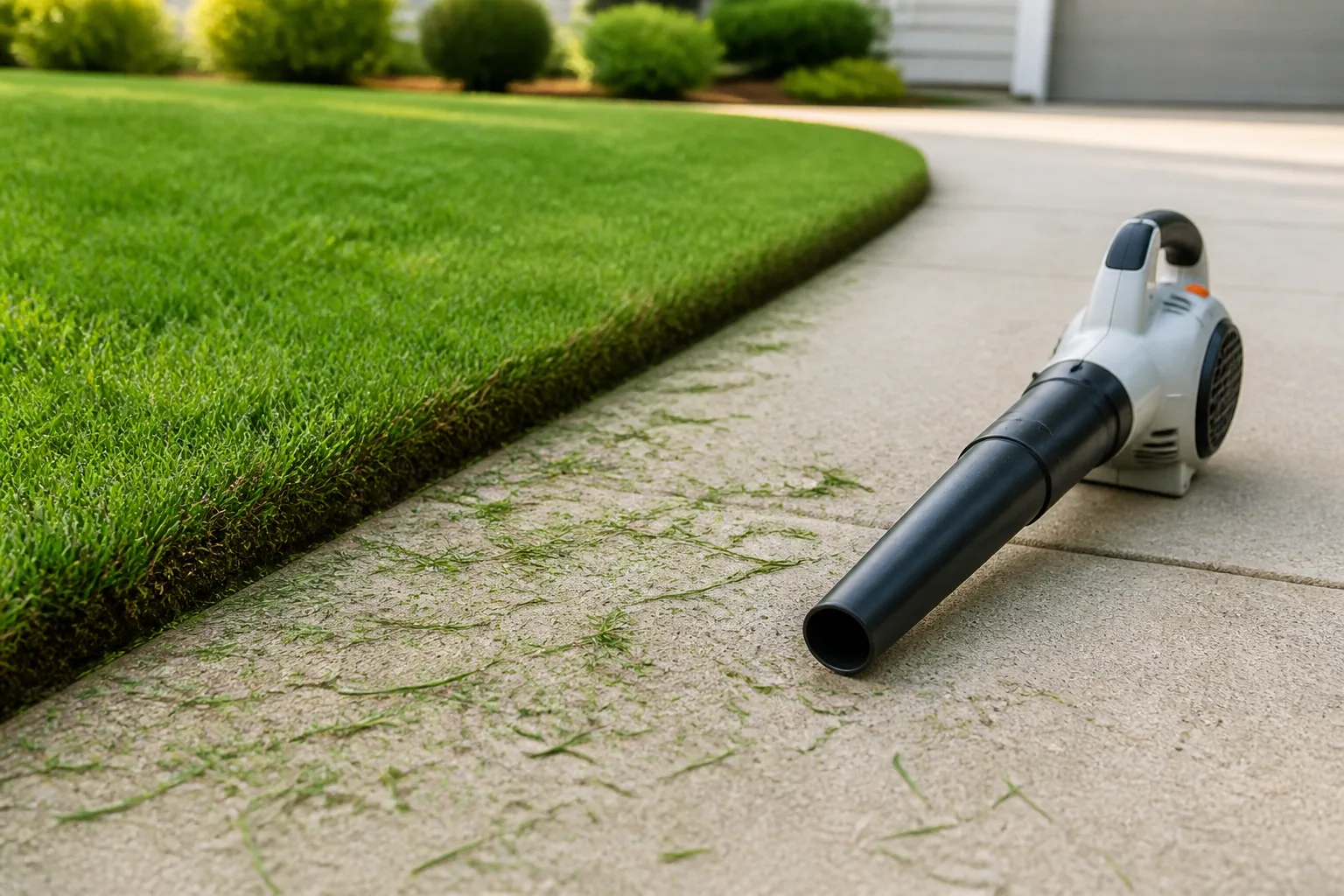
After edging, use a broom or blower to move clippings and loose soil off the sidewalk and driveway. Keep the discharge directed away from windows, vehicles, people, and pets. A clean surface makes it easier to inspect whether the edge is vertical and whether the machine struck the pavement.
How often to edge and how to maintain the tool
Most actively growing lawns need edging every two to four weeks along hardscape, with garden-bed borders touched up when grass begins to lean over or cross the line. Fast-growing warm-season turf may need more frequent attention in hot weather, while cool-season turf often grows fastest in spring and fall. A fixed calendar is less useful than a visible overhang and a line that no longer guides the mower.
Edge after mowing when the grass height makes the boundary easier to see, then clean the hardscape. If the edge has disappeared, recover the line first with a spade and postpone the powered maintenance pass until you can see exactly what you are cutting. Avoid edging saturated soil: wheels rut it, blades smear it, and wet debris can clog the shield.
For electric models, unplug the cord or remove the battery before clearing grass from the head, inspecting the blade, or adjusting depth. For gas models, shut the engine off, let hot parts cool, and follow the manual before touching the blade or shield. Clean soil and grass from the guard, check fasteners and wheel hardware, and replace a bent or badly worn blade rather than trying to balance it by guesswork.
Store batteries indoors in the temperature range specified by the manufacturer, away from moisture and metal objects. Store fuel only in an approved container and use the fuel age and mixture instructions in the manual. The most expensive edger mistake is often not the purchase; it is allowing a clogged guard, loose wheel, stale fuel, or dull blade to turn routine work into a repair.
Safety and storage rules that prevent avoidable damage
Treat the edger as a cutting machine even when it looks small. Keep the guard installed, maintain a safe separation from bystanders, and never defeat a trigger lock or run the tool with a damaged shield. Federal workplace rules for landscaping equipment emphasize guarding moving machine parts and safe operation; homeowner work deserves the same habits even when no workplace supervisor is present (Electronic Code of Federal Regulations, 29 CFR Part 1910).
Do not cut over hidden objects. Mark irrigation, low-voltage lighting, invisible-fence wire, and other buried lines before creating a new edge or trench. Around trees, keep the blade out of the trunk flare and surface roots; a neat lawn line is not worth bark damage or a severed root.
Respect slopes and footing. A heavy walk-behind machine can roll or pull downhill, and wet grass makes both walking and turning less predictable. If the route is beyond your balance, strength, or ability to control the machine, a smaller tool or professional service is safer than compensating with a deeper cut.
Conclusion
For most established residential borders, the best lawn edger is a manageable stick model matched to your power access. Choose the ECHO PE-225 for long, demanding routes and gas-tool durability; the EGO POWER+ ME0801 for cordless control and a battery ecosystem; the WORX WG896 or Greenworks 27032 when an outlet is convenient; and the BLACK+DECKER GH900 when a light trimmer-edger combo is enough.
Use the Earthquake 41273 only when its walk-behind power and deep range solve a real large-property problem. Choose the Fiskars manual edger when you are defining a new bed, working a short border, or want maximum control with minimum maintenance. Whichever format you buy, start shallow, keep the guard and wheel doing their jobs, and let the condition of the edge—not the biggest number on the package—decide how much machine you need.