22 Best Plants for Any Bedroom: Light and Care
Compare 22 bedroom plants by light, size, water needs, placement, and pet precautions so you can choose a plant that will actually thrive.
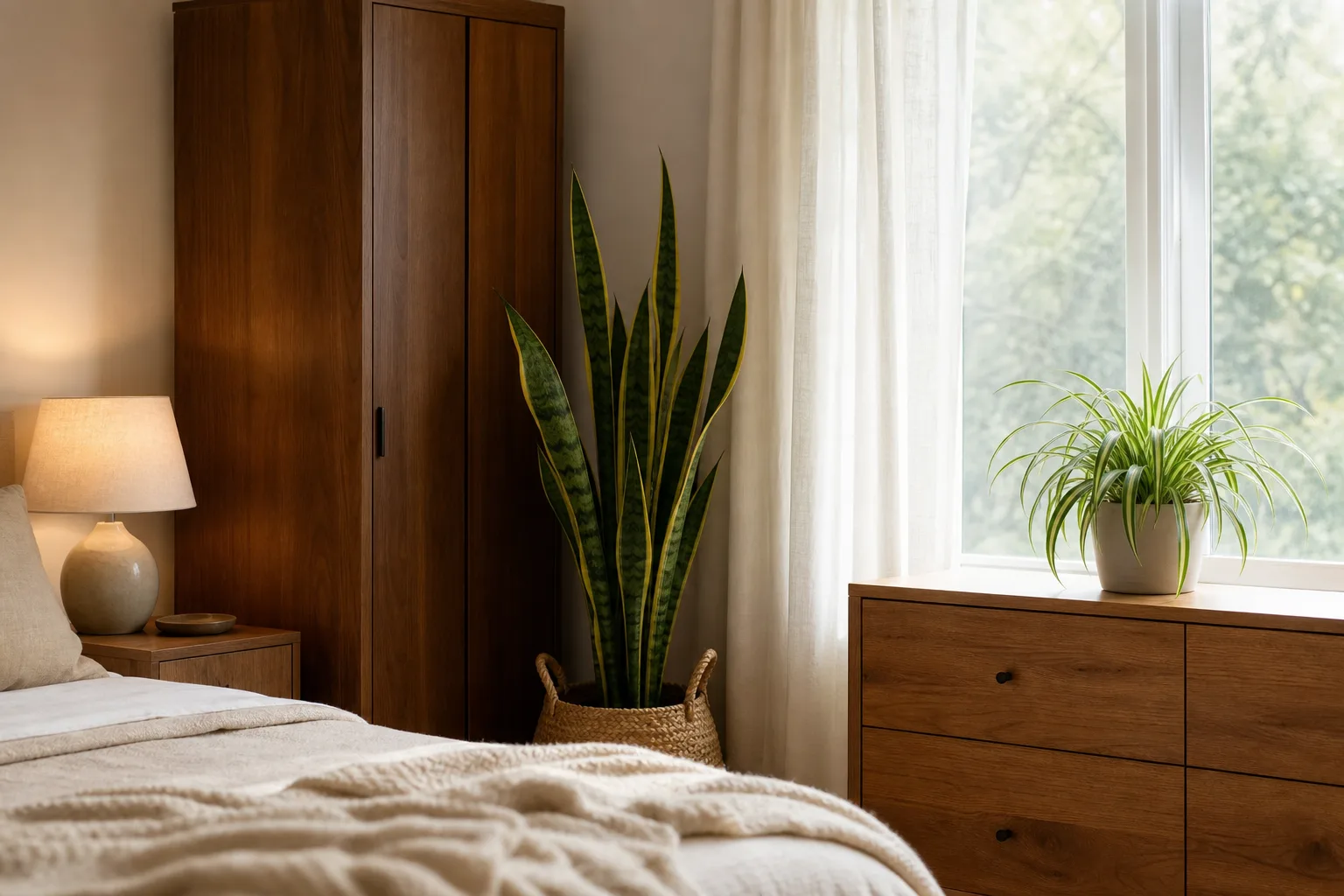
There is no single houseplant that works in every bedroom. A north-facing room, a bright room with sheer curtains, a dry room above a radiator, and a bedroom shared with a curious cat each require a different choice. The useful question is not “Which plant looks best in a bedroom?” It is “Which plant fits this bedroom’s light, space, pets, and care routine?”
This list gives you 22 strong options, but it is organized around those decisions. Start with the filters, then choose one or two plants that match your conditions. A healthy, well-placed plant will make a room feel more finished; a struggling plant on a nightstand will only add another chore.
Start with the bedroom you actually have
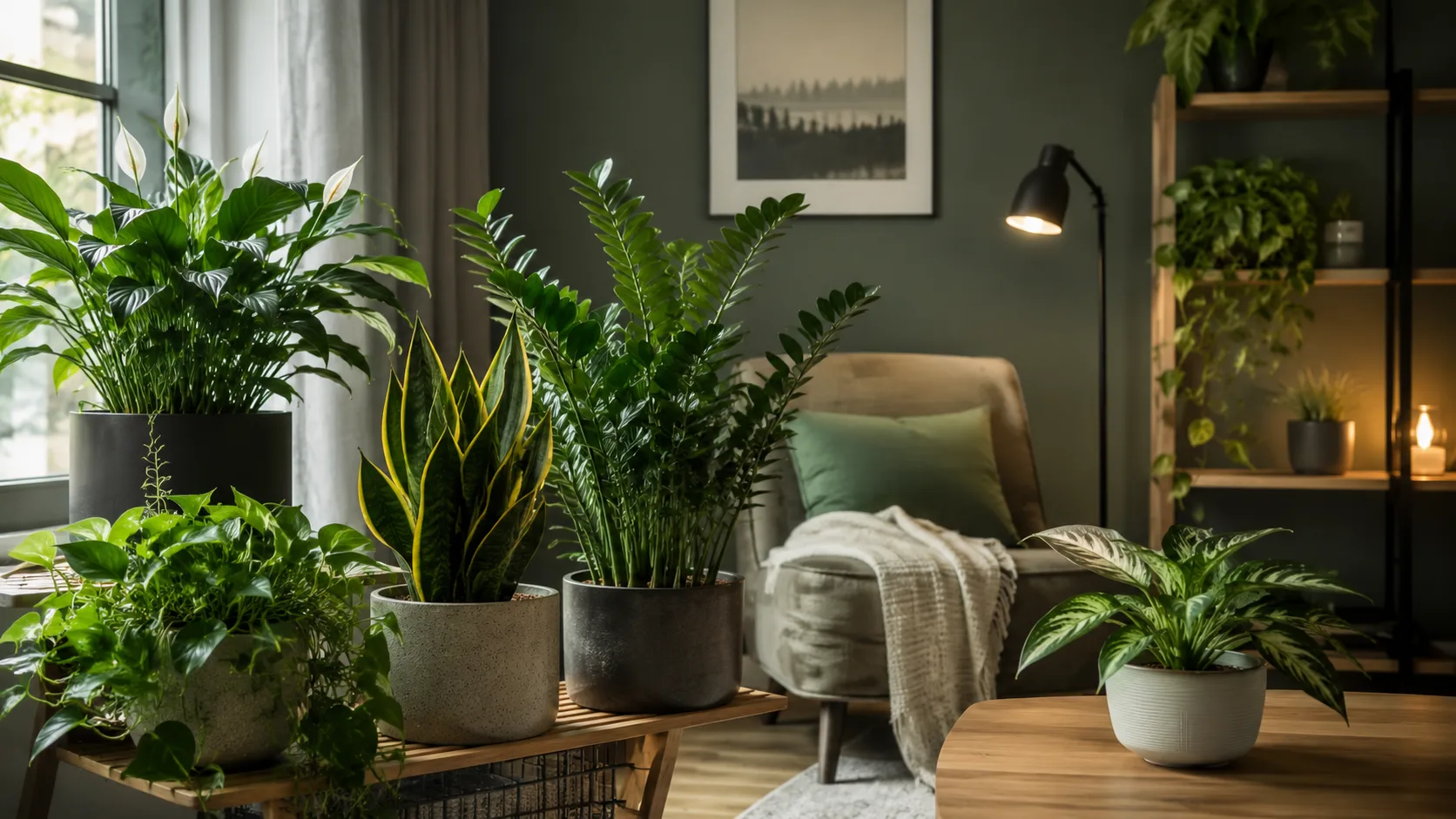
Match the plant to real light
Low light does not mean darkness. BBC Gardeners’ World Magazine describes low-light positions as places near north- or east-facing windows, in lightly shaded corners that still receive daylight, or near a window without direct sun. It also warns that no houseplant thrives in a room with no light at all. Its low-light houseplant guide is a useful reality check before you move a plant to the back of the room.
Use a simple shadow test during the brightest part of the day. A sharp shadow suggests bright light; a soft shadow suggests medium or indirect light; no visible shadow suggests low light. If there is no daylight, add a grow light or choose a different room. A plant may survive for months in dim conditions while stretching, dropping lower leaves, or producing smaller leaves, so “still alive” is not the same as “well matched.”
Decide pet safety before you shop
If a cat, dog, or child can reach the pot, safety outranks appearance. The ASPCA plant database says its list is a compilation rather than a complete inventory, and it notes that eating any plant material can cause vomiting or gastrointestinal upset. Treat “non-toxic” as a safer choice, not permission for a pet to eat the plant.
Common bedroom favorites such as snake plant, ZZ plant, pothos, peace lily, Chinese evergreen, dracaena, dieffenbachia, anthurium, aloe, and jade are not the choices I would leave within reach of a pet. For a pet-accessible bedroom, begin with spider plant, parlor palm, Boston fern, prayer plant, peperomia, calathea, or African violet, then check the exact botanical name and cultivar in a current poison-control database before buying.
Use space and care routine as filters
Measure the place where the plant will live, including the saucer. A plant that fits on a dresser today may block a drawer once its leaves arch outward. Keep heavy pots off narrow shelves above the bed, and do not let trailing vines cross a walkway or curtain cord. For floor plants, choose a stable pot with a wide base rather than a tall, easily tipped container.
Your watering habit matters just as much. Snake plants and ZZ plants forgive long dry intervals; ferns and prayer plants do not. If the bedroom is the last room you remember during a busy week, choose a plant that prefers drying rather than a plant that needs consistently damp mix. The right plant is the one your routine can support in February, not only the one that looks good at the garden center.
Quick comparison of 22 bedroom plants
| Plant | Best bedroom use | Light | Water rhythm | Pet decision |
|---|---|---|---|---|
| Snake plant | Narrow floor corner | Low to bright indirect | Let mix dry fully | Keep out of reach |
| ZZ plant | Neglected corner | Low to medium indirect | Dry well between waterings | Keep out of reach |
| Pothos | Shelf or hanging pot | Low to medium indirect | Water when partly dry | Keep out of reach |
| Spider plant | Hanging basket or dresser | Medium indirect | Water when surface dries | Pet-safer; verify name |
| Parlor palm | Small palm silhouette | Low to medium indirect | Slightly dry between waterings | Pet-safer; verify name |
| Peperomia | Nightstand or shelf | Medium indirect | Let upper mix dry | Pet-safer; verify name |
| Prayer plant | Patterned tabletop foliage | Medium indirect | Keep evenly, not soggy | Pet-safer; verify name |
| Boston fern | Humid, bright room | Medium indirect | Keep mix lightly moist | Pet-safer; verify name |
| Peace lily | Low-light flowers | Low to medium indirect | Water before deep wilt | Keep out of reach |
| Chinese evergreen | Color in dim light | Low to medium indirect | Dry slightly | Keep out of reach |
| Dracaena | Tall architectural plant | Low to bright indirect | Dry partway | Keep out of reach |
| Cast iron plant | Very slow-growing corner | Low to medium indirect | Dry somewhat | Verify exact species |
| Bird’s nest fern | Glossy upright foliage | Medium indirect | Keep lightly moist | Verify exact species |
| Staghorn fern | Wall or hanging display | Medium to bright indirect | Soak, then drain | Verify exact species |
| Rubber plant | Large bright bedroom | Bright indirect | Dry upper layer | Check before pets chew |
| Aloe vera | Sunny sill | Bright light | Dry fully | Keep out of reach |
| Jade plant | Sunny, dry sill | Bright light | Dry fully | Keep out of reach |
| Fittonia | Small terrarium-style pot | Medium indirect | Do not let fully dry | Verify exact species |
| Moth orchid | Bright sill with blooms | Bright indirect | Water medium when dry | Verify exact species |
| Anthurium | Warm flowering spot | Bright indirect | Slightly moist, never soggy | Keep out of reach |
| Calathea | Humid patterned foliage | Medium to bright indirect | Even moisture | Verify exact species |
| African violet | Compact flowering plant | Bright indirect | Water soil, not crown | Pet-safer; verify name |
The light labels describe a useful starting point, not a guarantee. A low-light plant still grows more slowly in a dim room, and a variegated cultivar often needs more light than a plain green form. Rotate the pot a quarter turn every week or two if growth leans toward the window.
1. Snake plant: best for dark corners
Snake plant (Dracaena trifasciata, formerly grouped under Sansevieria) is the best first choice for a bedroom where you want a strong vertical shape and minimal watering. Its stiff leaves suit a narrow floor corner, and it does not become floppy when light is less than ideal. NC State Extension’s plant profile is a good reference for its botanical identity and growing requirements.
The main way to kill it is kindness: frequent watering in a pot that drains poorly. Wait until the mix is dry through most of the pot, then water thoroughly and empty the saucer. Keep it away from pets that chew leaves, and choose a smaller cultivar if a full-size plant would crowd the bed.
2. ZZ plant: best for low maintenance
ZZ plant (Zamioculcas zamiifolia) stores water in thick underground rhizomes, which is why it handles a missed watering better than a fern. Its glossy, upright stems work on a dresser, a low bookcase, or a floor stand, and its slow growth is useful in a small bedroom.
Give it some daylight even if the room is dim, and do not compensate for low light by watering more often. The plant uses water more slowly when it is growing slowly. ZZ plant is a poor choice for an accessible pet pot; place it out of reach and verify current safety information for the exact plant you purchase.
3. Pothos: best trailing plant
Pothos (Epipremnum aureum) is the easiest way to add movement to a shelf. Let the vines trail from a high dresser, or prune them back to make a fuller plant. Green forms tolerate lower light; highly variegated forms keep their pattern better in bright indirect light.
Water when the upper portion of the mix has dried, then let excess drain before returning the pot to its cover. If leaves become small and the gaps between them lengthen, move the plant closer to filtered light rather than fertilizing heavily. Pothos is not a pet-accessible bedroom choice, so use a high, stable location only if the room’s animals truly cannot reach it.
4. Spider plant: best pet-safer hanging plant
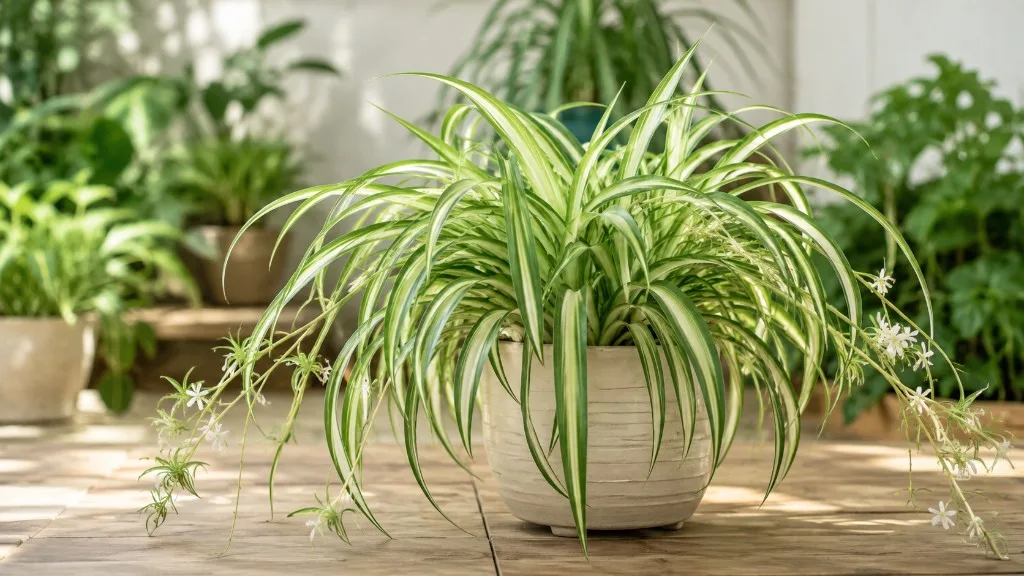
Spider plant (Chlorophytum comosum) is forgiving, fast-growing, and naturally suited to a hanging basket or a high shelf because its offsets spill over the edge. It prefers bright indirect light but can manage less, although growth and leaf striping may weaken in a very dim room.
Let the surface dry slightly between waterings, and flush the pot occasionally if brown tips appear alongside hard-water buildup. It is one of the most practical starting points for a bedroom shared with pets, but confirm the exact plant name in the ASPCA database rather than relying on a common name alone.
5. Parlor palm: best small palm
Parlor palm (Chamaedorea elegans) adds a soft, feathery silhouette without demanding the bright light that many larger palms need. It works beside a dresser or in a corner with filtered daylight, and its slow growth helps it stay bedroom-sized for years.
Keep the soil from staying wet, but do not let the plant dry to dust. Brown tips can come from dry air, irregular watering, mineral-heavy water, or old fronds; check the pattern before misting every day. A pebble tray can add a small amount of local humidity, but it should not leave the pot standing in water.
6. Peperomia: best compact choice
Peperomia includes compact plants with thick leaves, upright forms, and trailing varieties. A ripple peperomia or baby rubber plant fits a nightstand better than a fast-growing vine, and its fleshy leaves give you a clear visual clue when the plant needs water.
Use a loose, well-draining mix and let the upper half dry before watering again. Avoid a dark, damp corner: compact does not mean indestructible, and saturated mix can damage the roots. Peperomia is especially useful when you want one small plant rather than a collection of large pots.
7. Prayer plant: best patterned foliage
Prayer plant (Maranta species) and related calatheas bring patterned leaves and visible nighttime movement to a bedroom. They suit a warm room with medium or bright indirect light, away from a heating vent or cold draft.
This is a choice for someone who will check the plant more than once a month. Keep the mix evenly moist but never waterlogged, and watch for crisp edges when the air is very dry or the water contains a lot of dissolved minerals. If you want the look but not the work, choose peperomia or a plain green dracaena instead.
8. Boston fern: best for humid bedrooms
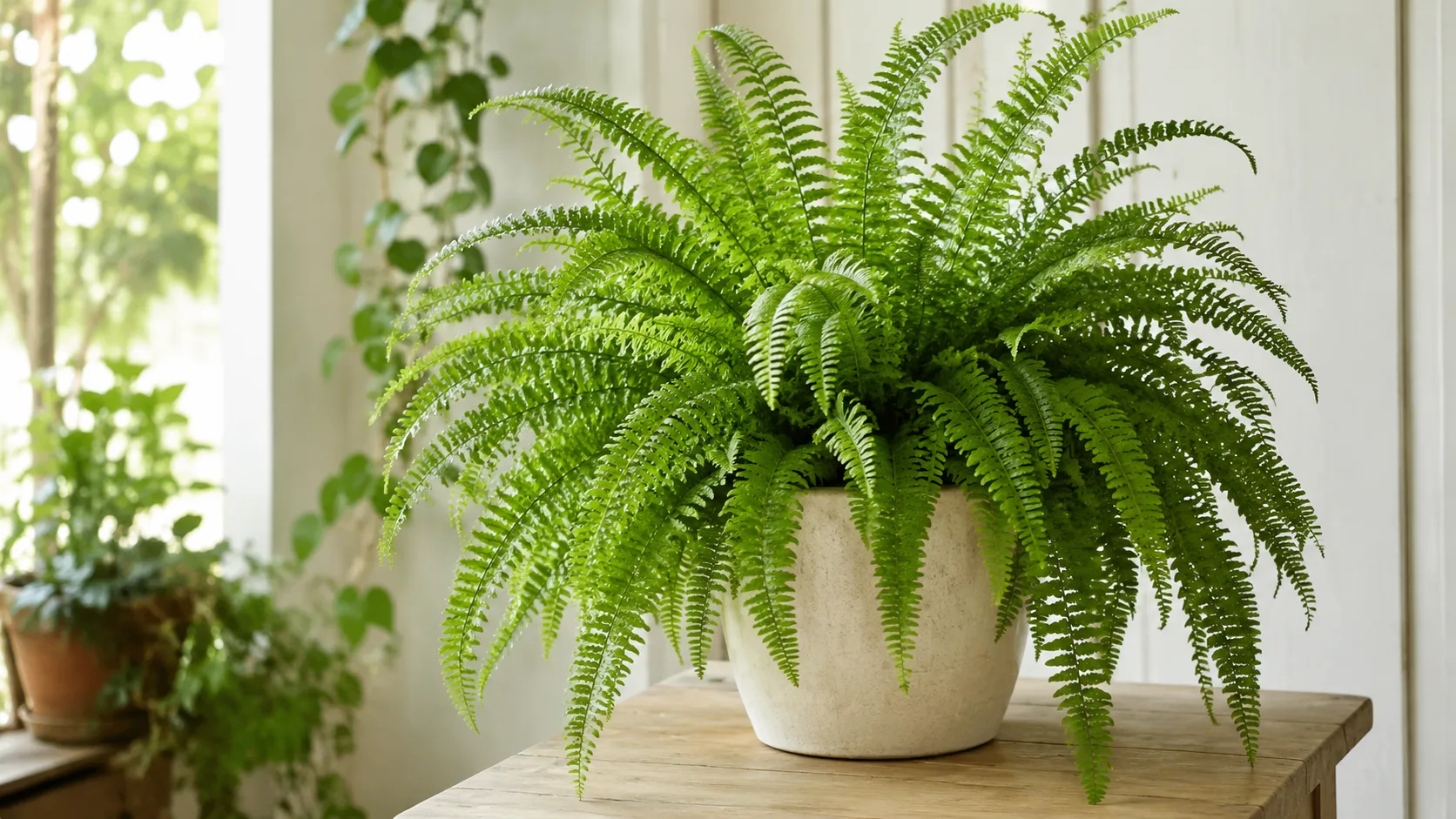
Boston fern (Nephrolepis exaltata) is a lush option for a bright bedroom that runs dry from heating. Its arching fronds look best in a hanging basket or on a stand where air can circulate, but it is not a plant to abandon for two weeks and hope for the best.
Keep the mix lightly moist, provide indirect light, and raise humidity around the plant without keeping the crown or saucer constantly wet. Remove completely brown fronds at the base and inspect the undersides for pests. A bathroom-adjacent bedroom or a room with a humidifier is a better match than a hot, dry corner above a radiator.
More good bedroom plants: 14 choices with trade-offs
9. Peace lily — Choose it for elegant white spathes and lower-light tolerance, but expect drooping when it is thirsty and keep it away from pets and children. It wants more consistent moisture than a snake plant, so it is not the best “forget it” option.
10. Chinese evergreen (Aglaonema) — Its patterned or colored leaves brighten a dim room, and it tolerates dry spells better than many tropical plants. Give brighter indirect light to colorful cultivars, and treat it as a reach-proof plant in a pet household.
11. Dracaena — Janet Craig and other dracaenas make tall, tidy floor plants for a bedroom corner. They tolerate a broad range of indoor light, but they grow more strongly in brighter indirect light; avoid cold drafts and soggy mix. NC State’s Dracaena profile helps separate the broad genus from a specific cultivar.
12. Cast iron plant — Aspidistra elatior is slow, shade-tolerant, and useful for a bedroom where you want leaves without rapid growth. It still needs some daylight and good drainage, and its slow pace means recovery from a bad watering habit takes time.
13. Bird’s nest fern — The upright, undivided fronds look polished on a plant stand. Keep water out of the central crown, use indirect light, and provide more humidity than you would for a ZZ plant.
14. Staghorn fern — A mounted staghorn turns a blank wall into a plant display, but it is a project rather than a neglect-tolerant pot. It needs bright filtered light, airflow, and a soak-and-drain routine; hang it securely and away from the bed.
15. Rubber plant — Ficus elastica suits a bright bedroom with enough ceiling height for a substantial silhouette. Let the upper mix dry, rotate the plant so it grows evenly, and keep its sap and leaves away from chewing pets.
16. Aloe vera — Aloe belongs on the brightest sill, not in a dim corner. Let the mix dry fully and use a gritty, freely draining medium. Its fleshy leaves make it easy to overestimate how much water it needs, and it is not a pet-accessible plant.
17. Jade plant — Jade is a long-lived succulent for a sunny window and a gardener who prefers infrequent watering. Low light produces weak, stretched growth, while a wet pot can cause root problems. Use a heavy container so the top-heavy plant does not tip.
18. Fittonia — Nerve plant stays small and brings bright veining to a shelf or terrarium-style display. It wilts dramatically when dry, then may recover after watering, but repeated swings are stressful. Choose it for a room where you will notice it every day.
19. Moth orchid — A phalaenopsis orchid can bloom for months in bright indirect light and takes little floor space. Water the bark or moss when it is nearly dry, let it drain completely, and never leave the roots in a decorative cachepot full of water.
20. Anthurium — Anthurium supplies long-lasting color in a warm, bright bedroom. It flowers best with bright indirect light and steady moisture, while dark conditions usually mean foliage without dependable blooms. Keep it out of reach of pets.
21. Calathea — Calathea offers dramatic leaves for a warm, humid room with filtered light. It is rewarding when your water and humidity are consistent but frustrating in a dry room with irregular care. Choose a hardier green form if you are new to humidity-sensitive plants.
22. African violet — African violet is one of the best small flowering plants for a bright windowsill that does not receive harsh midday sun. Water at the soil line or from below, keep leaves dry, and use a pot that drains freely. Its compact size makes it a safer choice for crowded bedrooms than a large floor plant.
Build a bedroom setup that stays healthy
Water by soil, not by calendar
The calendar can tell you to check, but it cannot tell you whether a pot is dry. Light, temperature, pot size, root mass, and season all change how quickly a plant uses water. Put a finger into the mix or lift the pot before watering; then water thoroughly until a little drains out, and empty the saucer.
Use a longer dry interval for snake plant, ZZ plant, aloe, and jade. Check more often for Boston fern, prayer plant, Fittonia, calathea, and peace lily. If a plant is in low light, assume it may use water more slowly, not that it needs extra water to make up for the lack of sun.
Prevent drafts, pests, and clutter
Keep plants away from radiator blasts, air-conditioning vents, and cold glass. Sudden temperature swings can stress leaves even when the room’s average temperature seems comfortable. Leave enough space around foliage to inspect the undersides of leaves and wipe dust away; crowded plants hide pests and make watering messy.
Use a saucer under every pot, protect wood furniture, and keep a trailing plant’s vines clear of lamps, cords, and curtains. Quarantine a new plant for a week or two if you already have a collection. That small pause is easier than treating every bedroom plant after one purchase brings in scale or spider mites.
When a bedroom plant is struggling
Yellow lower leaves and wet mix usually point you toward excess water, poor drainage, or too little light rather than a need for more fertilizer. Crispy edges suggest several possibilities—dry soil, dry air, salt buildup, direct sun, or a draft—so inspect the root zone and location before changing three things at once.
Long gaps between leaves, leaning stems, and loss of variegation mean the plant is asking for more usable light. Move it gradually closer to the window or add a grow light on a timer. A sudden jump from a dim corner to hot afternoon sun can scorch leaves, so change one variable at a time and watch the newest growth.
If a bedroom plant keeps declining, believe the pattern. Move a thirsty fern to a more humid room, replace a toxic plant with a pet-safer option, or give a sun-loving succulent to someone with a brighter window. The best bedroom plant is not the most fashionable one; it is the one whose needs fit your room well enough to stay healthy.
Conclusion: choose the plant you will actually care for
For a dim corner and infrequent watering, start with snake plant or ZZ plant. For a shelf, choose pothos or peperomia; for a pet-accessible room, begin with spider plant, parlor palm, Boston fern, prayer plant, or African violet after checking the exact name. A bright sill opens the door to aloe, jade, orchids, anthuriums, and flowering violets, while a humid room can support ferns and calatheas.
Buy one plant, place it where its light and safety needs are realistic, and observe it for a month before adding another. A bedroom feels calmer when the greenery is thriving, stable, and easy to live with.



