Brown Leaves on Japanese Maple Trees: Causes & Fixes
Brown leaves on Japanese maple trees usually signal leaf scorch, but sun, wind, wet roots, salt, or disease can look similar. Use these checks to find the cause.
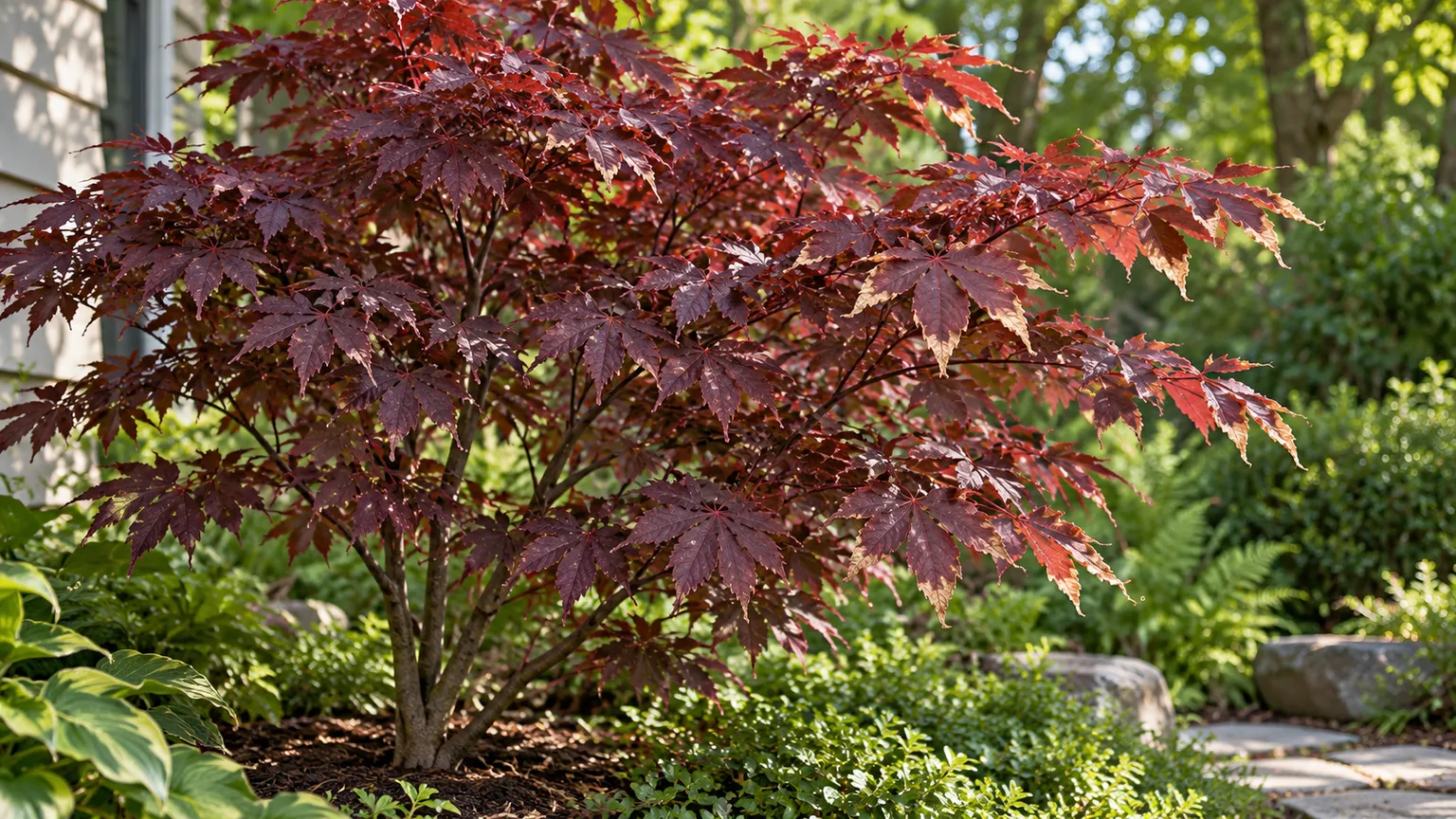
Brown leaves on a Japanese maple often mean leaf scorch: the foliage is losing water faster than the roots can replace it. Hot sun is one trigger, but drought, drying wind, frost, waterlogged soil, root injury, and excess fertilizer salts can create a similar brown edge. The fastest way to narrow it down is to check the pattern on the tree, what the weather has been doing, and whether the root zone is actually dry.
Do not water or fertilize automatically just because the leaves look thirsty. A maple with dry soil may need a slow soak; one with saturated soil may have damaged roots that cannot take up water. The steps below help you tell those situations apart and choose a correction the tree can use.
Quick diagnosis: match the pattern to the likely cause
Start with where the browning appears, then connect it to recent weather and care. Leaf scorch commonly starts at the tips and margins because those leaf areas are farthest from the main veins carrying water. That pattern is a clue, not proof: several stresses can disrupt water uptake, and a disease or damaged branch can affect a similar-looking area.
| What you see | What to check first | Likely explanation |
|---|---|---|
| Crispy brown tips or edges after hot, sunny weather | Is the damage worst on the afternoon-sun or windward side? Is the soil dry? | Heat, sun, wind, or drought stress |
| Brown margins while the soil stays wet | Does water drain, or is the root zone compacted or waterlogged? | Roots cannot take up water because they lack oxygen or were injured |
| One branch or one section browns while the rest looks normal | Was there digging, pruning, construction, trunk damage, or a dead twig? | Local root or branch injury; disease is also possible |
| Distinct spots, lesions, or a spreading pattern in wet weather | Are spots separate from the leaf edge and appearing on new leaves? | Possible leaf-spot disease rather than simple scorch |
| Whole leaves change color and drop in autumn | Is the change happening across the canopy as days shorten? | Normal seasonal color and leaf drop |
| Newly opened leaves blacken after a late frost | Did a cold night follow budbreak? | Frost injury to tender new growth |
Next, check soil moisture several inches down beneath the mulch and out toward the canopy edge. Note whether the problem appeared after a heat wave, a dry wind, a freeze, a recent fertilizer or spray, or work near the roots. That small history often tells you more than the leaf color alone.
What leaf scorch looks like on a Japanese maple
Japanese maple leaf scorch usually begins as dry, tan-to-brown tissue along the leaf tips and outer edges. Leaves may curl, shrivel, or become crisp; if stress continues, browning can spread between veins, whole leaves can dry, and some may drop early. The Royal Horticultural Society describes Japanese maples as especially prone to this response, with finely divided foliage particularly vulnerable after environmental stress such as hot sun or drying wind (RHS guidance on acer leaf scorch).
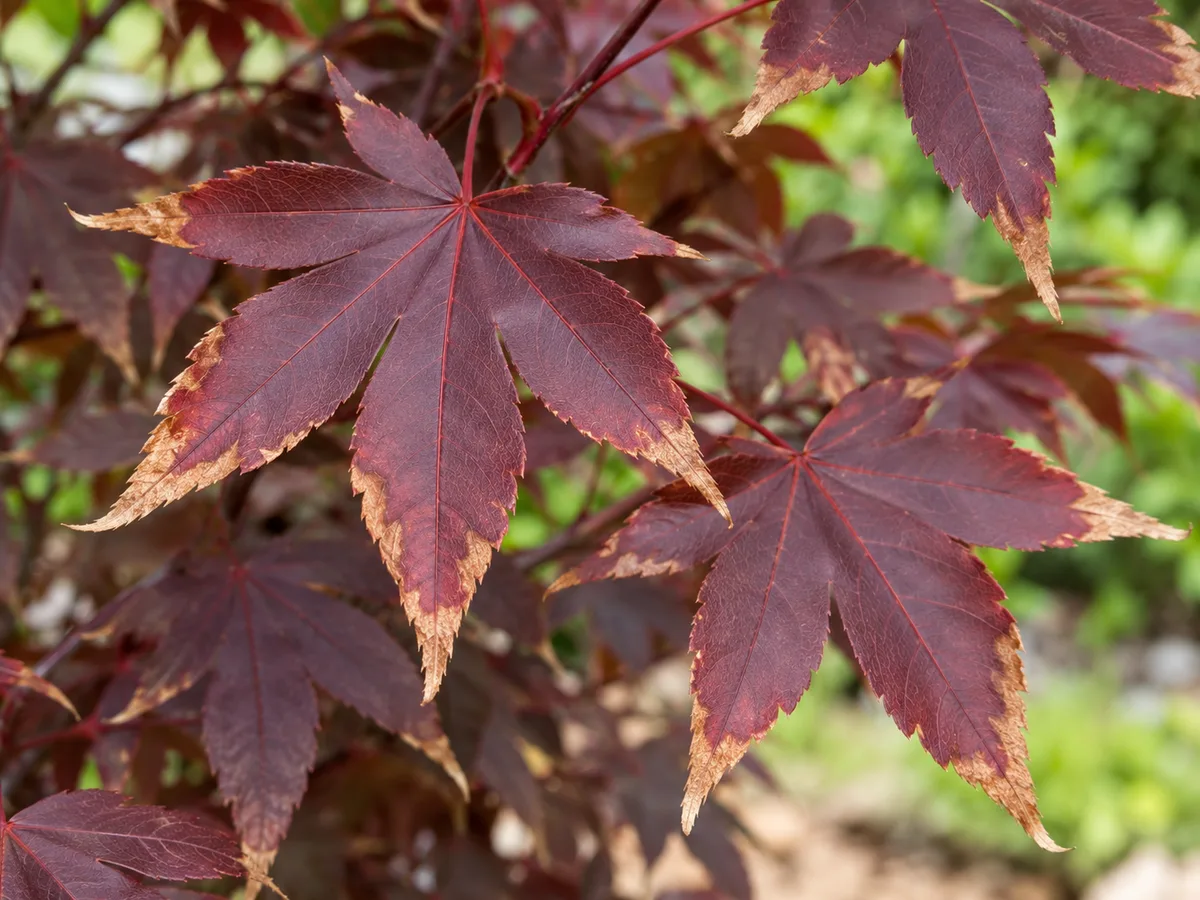
Scorch damages the leaf tissue; brown areas will not turn green again, even after the cause is corrected.
Scorch is a symptom, not a disease name. It describes a leaf that has dried or been injured faster than the plant can replace the damaged tissue. As Colorado State University Extension explains, water moves from fine feeder roots through the plant to leaves; when uptake cannot keep pace with loss, leaf margins are often among the first areas to show damage.
The common causes of brown Japanese maple leaves
Several stresses can converge on the same visible result: the canopy needs more water than the roots can deliver. The trigger may be a hot afternoon, a depleted root zone, or roots that are sitting in airless soil. Use the clues below to find the cause before changing your care routine.
Hot afternoon sun and reflected heat
Many Japanese maples do well with morning sun and afternoon shade or filtered light, especially in places with hot summers. A tree that receives intense sun for hours may develop dry margins on the most exposed leaves; heat bouncing off a south- or west-facing wall, paving, or a fence can make a spot harsher than it appears from the shade. If the damage returns during the same hot stretch each year, exposure is a strong suspect.
Exposed upper leaves can also scorch while lower foliage stays protected by the canopy, a useful clue described in Epic Gardening’s overview of sunscald. That pattern supports an exposure diagnosis, but still check soil moisture because sun injury and drought often overlap.
This does not mean every Japanese maple must grow in deep shade. Cultivars differ, and a plant that has acclimated to a sunny site may tolerate more light than one moved abruptly from shade. But delicate, deeply divided foliage can scorch readily, and even a more sun-tolerant selection needs adequate soil moisture and protection from reflected heat. A sudden move from filtered light into full afternoon sun can damage leaves that formed under gentler conditions.
Dry soil, heat, and underwatering
During hot weather, leaves lose water quickly. If the root zone dries before roots can replace that loss, leaf tips and margins turn brown; a recently planted tree, a maple in a pot, and a tree competing with turf are particularly easy to miss. Japanese maples have relatively shallow roots, so grass and dense groundcover planted right up to the trunk can compete for the same surface moisture (BBC Gardeners’ World growing guide).
Do not rely on the lawn as a moisture gauge. A lawn sprinkler may wet the top layer without soaking the tree’s broader root zone, or it may run often enough to keep soil waterlogged. Check the soil under the canopy in more than one place: dry, crumbly soil several inches down supports a drought diagnosis; cool, saturated soil suggests a different problem.
Drying wind, frost, and winter stress
Wind pulls moisture from leaves and soil, so a tree can scorch even when the thermometer is not extreme. Browning concentrated on the side that faces prevailing wind or an exposed corner points toward wind stress. Strong, dry winds are especially hard on container-grown maples, whose root balls can dry or freeze faster than surrounding garden soil. A filtered windbreak or a more sheltered pot position can reduce exposure; solid walls can also create turbulent gusts in some layouts (RHS wind-scorch guidance).
Cold can injure newly opened leaves after a late spring frost, while dry winter soil can damage roots before the next growing season begins. If tender leaves browned immediately after a cold snap, wait to see which buds remain alive rather than pruning the whole canopy. In exposed or cold regions, protect a container’s root ball and move the pot to a sheltered spot during harsh weather.
Waterlogged soil, damaged roots, or compaction
Brown edges do not always mean the tree needs more water. In saturated soil, roots have too little oxygen to function well; a damaged or restricted root system may also fail to supply the canopy even when moisture is present. Colorado State University Extension lists overwatering, root loss, compaction, and fertilizer injury among conditions that can lead to scorch. The RHS likewise includes waterlogging alongside drought and hot sun as potential causes of acer scorch.
Look for a low spot where water stands, dense or compacted soil, a buried root flare, or a recent trench, patio project, vehicle track, or change in grade near the tree. If one side of the canopy is declining after excavation or construction, the damaged roots may be localized. Do not try to fix that by keeping the area constantly wet; improve drainage or get a tree professional to assess the root zone instead.
Fertilizer, pesticide, and salt injury
Fertilizer salts can injure feeder roots when too much is applied, when it is concentrated in one area, or when the soil is already dry. The canopy may then show scorched margins or spots even though you have watered. Salt from de-icing products can create a similar problem where runoff reaches the roots, while salt-laden coastal winds can dry exposed foliage.
If browning began soon after feeding or spraying, stop additional applications and review the product label, placement, and rate. Do not add more fertilizer to “help” a stressed tree: it does not repair scorched leaves and can add more salt stress. For pesticide injury, use only products labeled for the site and target, and avoid making assumptions about a safe temperature or dose that the product label does not support.
Normal fall color and seasonal leaf drop
Japanese maples are deciduous. In autumn, leaves can turn vivid yellow, orange, or red before dropping, and this seasonal change is not leaf scorch if it occurs broadly as the tree enters dormancy. Brown, crisp margins during midsummer heat are different from a whole-canopy fall color change. A few naturally older or shaded leaves may also drop without signaling a serious problem.
Timing matters: browning in the first hot spell, after planting, following a frost, or immediately after a fertilizer application points toward a stress event. A gradual change across the canopy in fall is usually part of the tree’s normal cycle.
When brown leaves may point to disease or branch damage
Environmental scorch usually follows a weather or root-zone stress and often affects exposed margins or the side facing the sun or wind. Disease becomes more plausible when you see distinct lesions that spread independently of exposure, repeated symptoms during mild weather, cankers or decay on stems, or a branch that wilts while nearby branches stay healthy. These patterns do not confirm a disease, but they are reasons to look beyond watering.
Pay particular attention to one-sided dieback, branches that fail to leaf out, or leaves that wilt and brown while the soil is moist. Root injury, trunk damage, and vascular problems can all interrupt water movement, and different causes can look similar from the ground. Avoid cutting into the trunk or applying a fungicide as a test. Take clear photos, note when symptoms began and what has changed around the tree, and ask a local extension office or certified arborist to diagnose persistent or progressive decline.
What to do in the first 48 hours
The goal is to stop the stress that is still happening without adding a second one. Use this sequence:
- Check moisture before watering. Probe the soil beneath mulch in two or three spots, several inches down. If it is dry, water slowly; if it is saturated, pause and investigate drainage.
- Reduce the active exposure. Move a potted tree into bright shade and shelter it from wind. For a planted tree, use temporary shade cloth during a heat wave or a filtered windbreak if that is practical.
- Review recent inputs. Check when and how much fertilizer, pesticide, herbicide, or de-icer was used. Stop repeat applications until the cause is clear.
- Leave most attached leaves in place. They will not heal, but removing them does not correct the roots or exposure. The tree will shed them naturally if needed.
- Photograph the canopy and mark the date. Compare the same branches over the next few weeks. New damage after conditions improve suggests the underlying stress has not been corrected.
Avoid emergency transplanting, heavy pruning, or repeated daily watering while the tree is stressed. Those actions can compound root injury or expose more foliage to sun. A small, evidence-based adjustment is safer than trying several fixes at once.
How to water a Japanese maple without overcorrecting
Water according to the root zone, not a fixed calendar. Push a finger or soil probe beneath the mulch; if the soil is dry several inches down, apply water slowly over the area beneath and just beyond the canopy so it has time to soak in. A brief sprinkle at the trunk may wet only the surface, while a long, fast stream can run off compacted ground without reaching roots.
Let the soil drain and check again before the next deep watering. Established trees generally need less frequent irrigation than newly planted trees, and containers dry faster than in-ground plantings. During hot or windy weather, check more often; do not assume daily watering is right for every site. If water pools, drains very slowly, or the pot has no clear drainage path, address that before adding more water.
In dry climates, winter watering may matter when the ground is unfrozen and there has been little precipitation. Colorado State University Extension recommends occasional deep winter watering in its regional guidance, but timing and frequency depend on local climate, soil, and snow cover. Ask a nearby extension service for regional advice rather than copying a calendar designed for another climate.
When to change the tree’s location
If a young tree repeatedly scorches in the same exposed position despite sound watering, a better site may be the lasting fix. Look for morning light, some protection from the hottest afternoon sun, shelter from drying winds, and soil that holds moisture without remaining soggy. Avoid planting against a heat-reflecting wall or beside pavement that radiates afternoon warmth.
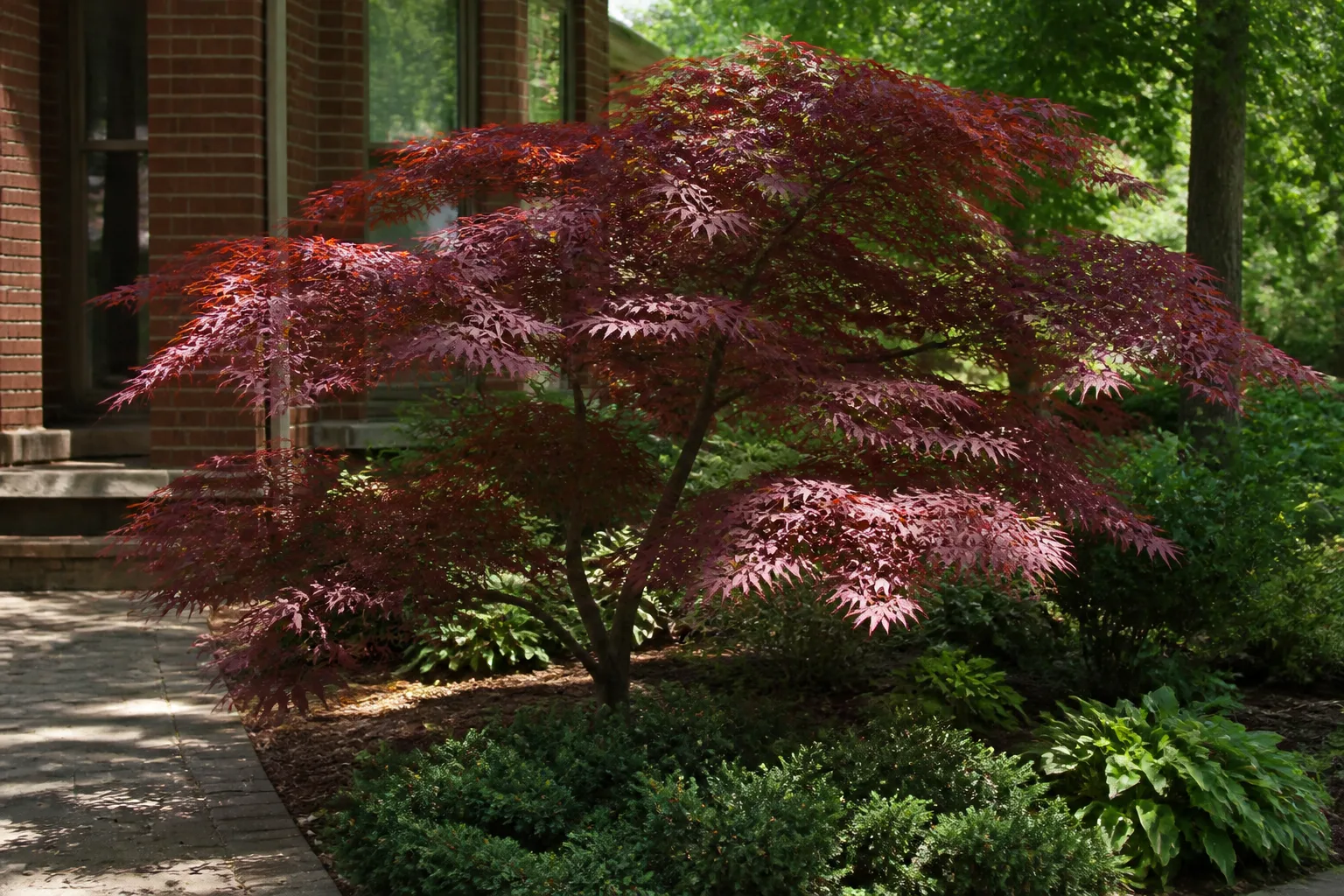
For a container maple, relocation is simple: move it to a bright, sheltered position during hot or windy spells, and check that the pot drains freely. For a young in-ground tree, wait until a suitable dormant period in your region and move it only if the root ball can be lifted without major damage. A mature maple is difficult to transplant; get professional advice before disturbing its roots. The RHS recommends a sheltered position and moisture-retentive but well-drained soil for reducing acer scorch.
Should you cut off brown leaves?
Usually, no. Brown tissue is dead and will not regain color, but attached leaves still shade inner foliage and their removal does not address the cause. Japanese maples will shed leaves in autumn anyway, so trimming every scorched leaf is mostly cosmetic work that can leave the tree more exposed.
You can remove leaves that are completely dead and hanging, or that have a confirmed disease problem, but avoid stripping a large portion of the canopy. If a twig is clearly dead, wait until you can distinguish dead wood from living tissue and prune with clean tools at an appropriate time for your climate. Do not shape or heavily prune a heat-stressed tree just to make the brown edges less visible.
What recovery looks like—and what it does not
The brown portions of a leaf are permanently damaged. If the stress stops, the tree may remain leafy with some unattractive margins, shed affected foliage, or produce new growth if healthy buds remain; none of those outcomes is guaranteed after severe root or branch injury. Colorado State University Extension notes that there is no cure for existing scorch, but appropriate water management can help a plant recover.
Judge recovery by the whole tree over time, not by whether old leaves turn green. Look for stable branches, viable buds, and healthy new leaves in the next growth period. If browning continues to spread after the weather cools and soil moisture is appropriate, or if whole branches die back, revisit root damage and disease possibilities instead of increasing water or fertilizer.
How to prevent scorch next season
Prevention starts with a site that suits the cultivar and local climate. Give the tree shelter from harsh afternoon sun and drying wind, provide moisture-retentive but well-drained soil, and keep turf from competing directly around its shallow root zone. BBC Gardeners’ World recommends watering new Japanese maples and those in prolonged dry periods, and notes that potted specimens need additional attention.
Mulch helps buffer soil temperature and slow moisture loss. Spread a layer of organic mulch over the root zone, keeping it away from the trunk and root flare; do not pile it against the bark. This photo shows a tree root zone mulched without burying the trunk:
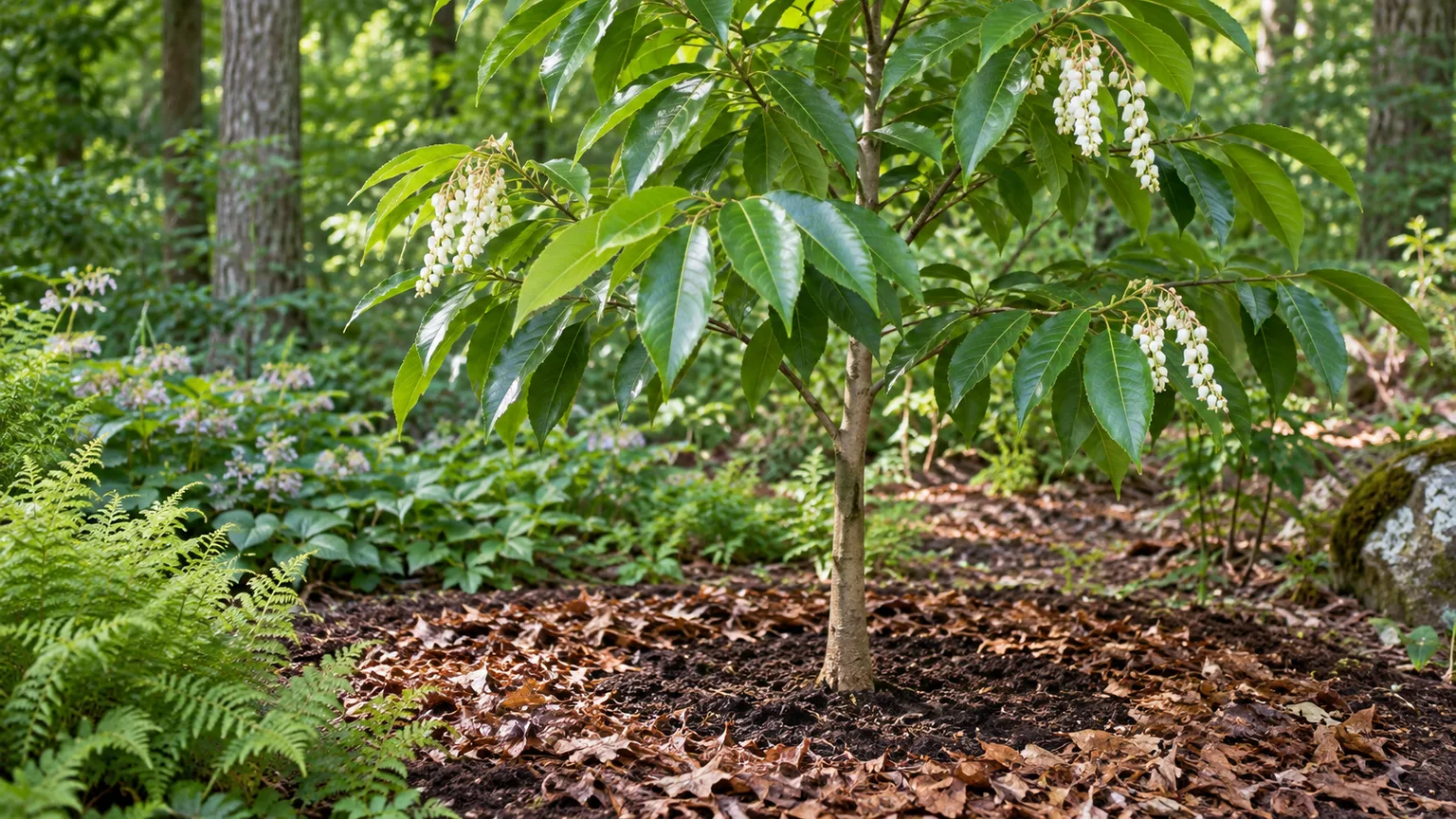
Keep these habits through the year:
- Check soil moisture during heat waves, dry winds, and long rainless stretches instead of relying on a weekly schedule.
- Water newly planted trees and container maples more closely than established trees, while allowing excess water to drain.
- Avoid unnecessary fertilizer, especially when the tree is already stressed or the soil is dry.
- Protect containers from severe wind and winter cold; their root balls are more exposed than roots in the ground.
- Reassess any tree that scorches every year. Repeated damage can mean the cultivar, exposure, irrigation, or drainage does not fit the site.
No single measure makes a Japanese maple immune to scorch. A hot, windy summer can still damage leaves, but correcting the conditions that recur each year gives the tree a better chance to hold healthy foliage.
When to call an arborist or extension service
Ask for an on-site diagnosis if browning spreads through the canopy despite appropriate soil moisture, a single limb or one side repeatedly declines, branches die back, the trunk is injured, or symptoms return in mild weather. Also ask for help if the tree is large and you are considering moving it, if roots have been cut by construction, or if you suspect a pesticide, herbicide, or road-salt injury.
Bring dated photos, the tree’s approximate age, recent weather, watering details, and a list of products applied. A local extension service can account for regional pests and climate; a qualified arborist can inspect the canopy, trunk, and root zone. That information is more useful than applying a general-purpose spray to a tree that may simply be in the wrong site or have injured roots.
Conclusion
Brown Japanese maple leaves are often a sign that the canopy lost water faster than the roots could replace it, but sun is only one possible trigger. Match the pattern to recent weather, then check soil moisture, drainage, wind exposure, root disturbance, and recent chemical use before acting.
Water only when the root zone is dry, protect the tree from active heat or wind stress, and resist fertilizer or heavy pruning while it recovers. The scorched tissue will stay brown, but a Japanese maple can continue growing if the underlying problem is corrected and its buds, roots, and branches remain healthy.



