Brown Leaves on Magnolia Trees: Causes and Fixes
Brown leaves on magnolia trees can follow frost, drought, poor drainage, or disease. Read the leaf pattern, check soil moisture, and choose the right next step.
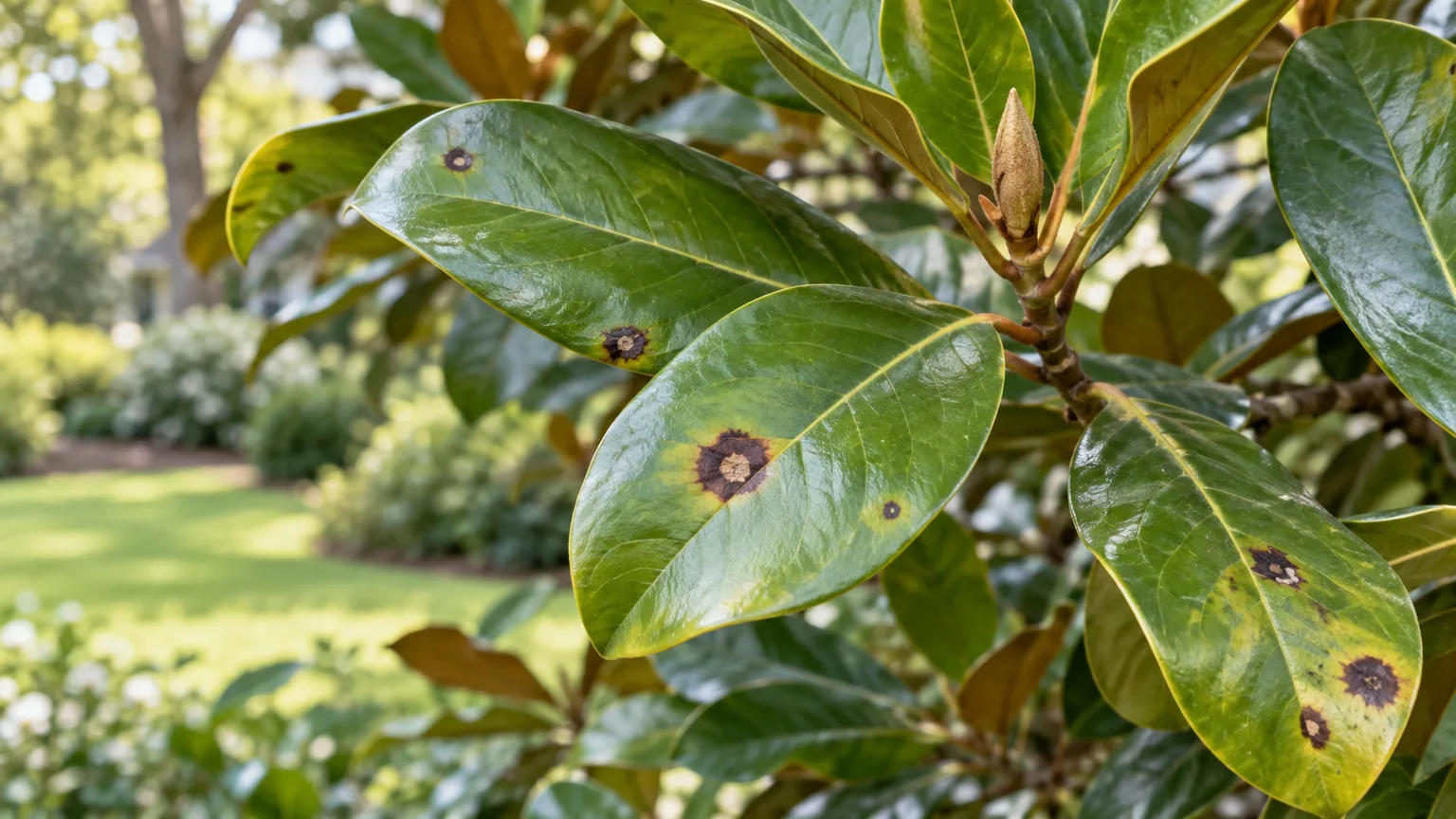
Brown leaves on a magnolia can mean anything from normal turnover of old evergreen leaves to frost injury, drought, saturated roots, or disease. The color alone cannot tell you which one. Look first at which magnolia you have, where the browning starts, when it appeared, and whether the soil is dry or persistently wet. Those four clues usually narrow the next step more safely than watering or fertilizing on instinct.
A dry, crispy margin after a hot spell often points to leaf scorch, but a magnolia with damaged roots can scorch while the ground is wet. A few old interior leaves on an otherwise vigorous Southern magnolia may simply be shedding. New spots, progressive branch dieback, or a tree that keeps declining in mild weather deserve a closer look.
Start by identifying the magnolia and the browning pattern
“Magnolia” covers trees with different leaf habits. Southern magnolia (Magnolia grandiflora) is evergreen, while saucer and star magnolias are deciduous. North Carolina State Extension describes Southern magnolia as a broadleaf evergreen and notes that it drops leaves in both fall and spring, so the calendar and the age of the affected foliage matter as much as the color (N.C. State Extension Plant Toolbox).
Before treating anything, step back far enough to see the whole canopy. Is browning limited to older leaves inside an evergreen crown, concentrated at tips and edges on the exposed side, scattered as separate spots, or confined to one limb? Then recall whether it began after a freeze, heat wave, dry period, heavy rain, fertilizer application, pesticide spray, or nearby digging. A short note with dates and photos can reveal a cause that a single close-up cannot.
Quick diagnosis: match browning to its timing and location
Use the pattern as a sorting tool rather than a final diagnosis. Several stresses can interrupt water delivery and produce similar dry margins, while disease is more likely when spots or branch decline follow a distinct pattern.
| What you notice | What to check | More likely explanation |
|---|---|---|
| A few older leaves inside an evergreen crown yellow, brown, and drop while the tips stay healthy | Is new growth firm and green, with no widespread canopy thinning? | Normal leaf turnover |
| Fresh leaves blacken or turn brown soon after a late freeze | Did tender buds or flowers open before the cold night? | Frost injury |
| Dry, crisp tips or edges after heat, drought, or strong wind | Is the root zone dry, and is damage worse on the exposed side? | Leaf scorch from weather or inadequate water uptake |
| Yellowing followed by browning while soil stays wet | Does water drain slowly, or is the tree in a low, compacted spot? | Root stress from poor drainage or excess irrigation |
| Separate circular, purple, black, or tan lesions spread across leaves | Are spots distinct from the leaf edge and appearing on multiple leaves? | Leaf spot or another foliar problem |
| One limb or sections of the canopy wilt and decline over time | Is there branch injury, trunk damage, or brown vascular staining? | Root, trunk, or vascular disease problem needing diagnosis |
Probe the soil in two or three places under the canopy, several inches below the surface and away from the trunk. Dry soil supports a drought explanation; soil that is still soggy days after rain points in another direction. Do not let one clue overrule the others: an exposed branch may be both wind-dried and poorly supplied by roots.
Normal leaf turnover on evergreen magnolias
Evergreen does not mean every leaf remains on the tree forever. Southern magnolias replace older leaves as new foliage develops, and some shedding in spring or fall can leave a light layer of yellowing or brown leaves beneath the canopy. If the drop is limited to older, shaded interior leaves and the branch tips continue to grow normally, the tree may be following its usual cycle rather than failing.
Normal turnover should not look like rapid browning across the entire outer canopy. Pay attention to new leaves, buds, and branch tips: healthy new growth, firm twigs, and a stable canopy are reassuring; expanding bare patches or branches that fail to leaf out are not. Deciduous magnolias normally lose their foliage in autumn, but browning during active summer growth or immediately after spring budbreak needs a weather and root-zone check.
Avoid trying to stop ordinary leaf turnover with extra water or fertilizer. Those inputs will not preserve aging leaves, and excess irrigation can make root conditions worse. If the tree’s identity is uncertain, use a plant identification guide or ask a local nursery or extension office to confirm whether it is evergreen or deciduous before judging the timing.
Frost and winter wind can brown exposed foliage
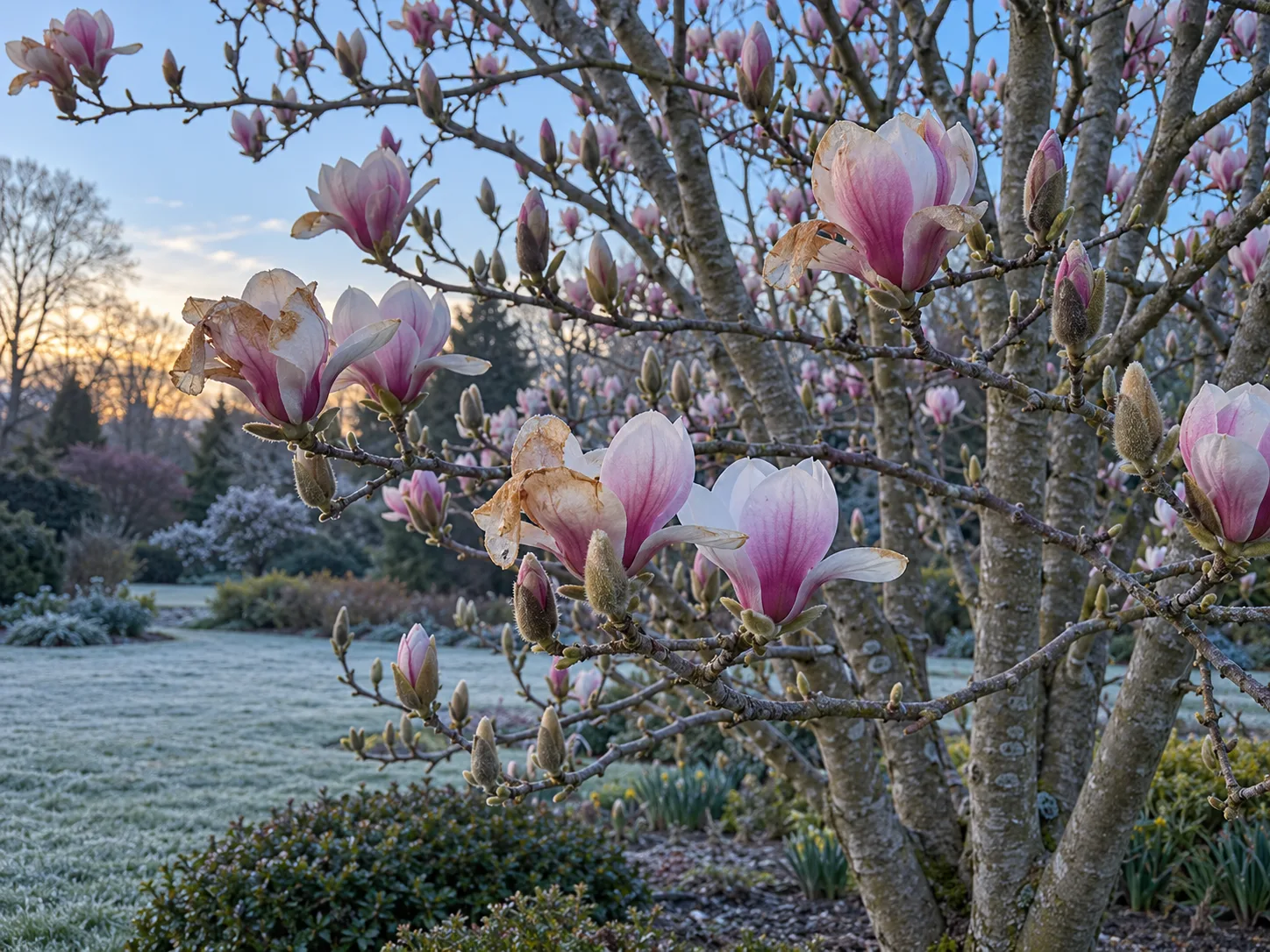
A late frost can injure tender magnolia leaves that have already unfolded. Damaged tissue may look water-soaked, limp, dark, or suddenly brown; flowers and young shoots can be affected at the same time. On an evergreen magnolia, winter wind and dry soil can also desiccate leaf edges, especially on the exposed side. Browning that appears just after a freeze is a stronger frost clue than browning that slowly spreads during a hot, dry month.
A late frost often spoils the appearance without killing a mature tree. Do not rush to cut back every brown shoot: wait until the freeze threat passes and new growth shows which buds and branches remain viable. Small, newly planted magnolias may benefit from a breathable temporary cover during a forecast freeze, but remove it when temperatures rise; do not wrap a large tree in plastic or put a heater near its foliage.
For winter scorch, check whether the soil dried during a long period without rain or snow. In dry regions, an occasional deep watering on a mild day may help when the ground is unfrozen and water can soak in before temperatures drop again. That is regional advice, not a universal schedule; local extension recommendations and soil conditions should guide winter watering.
Drought and heat cause the common leaf-scorch pattern
Leaf scorch describes damaged foliage, not one specific disease. When leaves lose water faster than roots can replace it, the tips and margins—often the farthest tissue from the main veins—may dry first. Colorado State University Extension explains that scorch can follow drought, heat, damaged or restricted roots, overirrigation, and excess fertilizer; UC IPM also lists frost, poor drainage, drought, sun or heat, mineral problems, salts, and wind as possible contributors (Colorado State University Extension; UC Statewide IPM Program).
On a magnolia, scorch may show as a dry brown edge, crispy tips, curled leaves, or broad patches of dead tissue after a stretch of hot sun and little rain. Browning that is worse on the sunny or windward side supports an exposure problem. But it does not prove the tree is simply thirsty: construction damage, compacted soil, a small root zone, or too much water can all reduce the roots’ ability to supply the canopy.
Newly planted magnolias are especially vulnerable because their roots are still establishing beyond the original root ball. A mature tree under established conditions may ride out a short dry spell, but heat, a shallow watering pattern, turf competition, and a long dry period can still combine to exceed its capacity. Southern Living’s practical overview likewise distinguishes brown edges after heat or drought from yellowing and browning associated with overly wet roots; the useful lesson is to inspect the soil rather than infer moisture from leaves alone (Southern Living).
Once a leaf edge has dried, it will not turn green again. Focus on preventing additional damage: check moisture, water only when the root zone needs it, and reduce reflected heat or wind exposure if those are recurring triggers. A brown leaf is not a reason to repeatedly soak a tree whose soil is already moist.
Wet soil can create a thirsty-looking canopy
Roots need both water and oxygen. When soil remains saturated, fine roots can be injured or fail to function normally, so foliage may wilt, yellow, brown, or drop even though the ground feels wet. Colorado State Extension includes excess moisture among the conditions associated with scorch; North Carolina State Extension notes that Southern magnolia tolerates moisture but not prolonged flooding or swampy soil.
Check drainage before watering again. Look for standing water, a downspout that empties near the trunk, a low planting site, compacted soil, or a root flare buried under excess soil or mulch. If a tree in a pot is affected, confirm that drainage holes are open and the container is not sitting in a saucer full of water. A single rainstorm does not establish root rot, but soil that stays wet for days or repeated leaf drop in a poorly drained site needs attention.
Do not dig trenches through the root zone, pile sand or compost against the trunk, or try to “fix” a mature tree by changing its grade without expert advice. Those interventions can injure roots or redirect water toward the trunk. If the site is persistently waterlogged, a local arborist can assess drainage and root condition; the long-term fix may be site management rather than a fungicide.
Distinct spots, blight, and pests look different from scorch
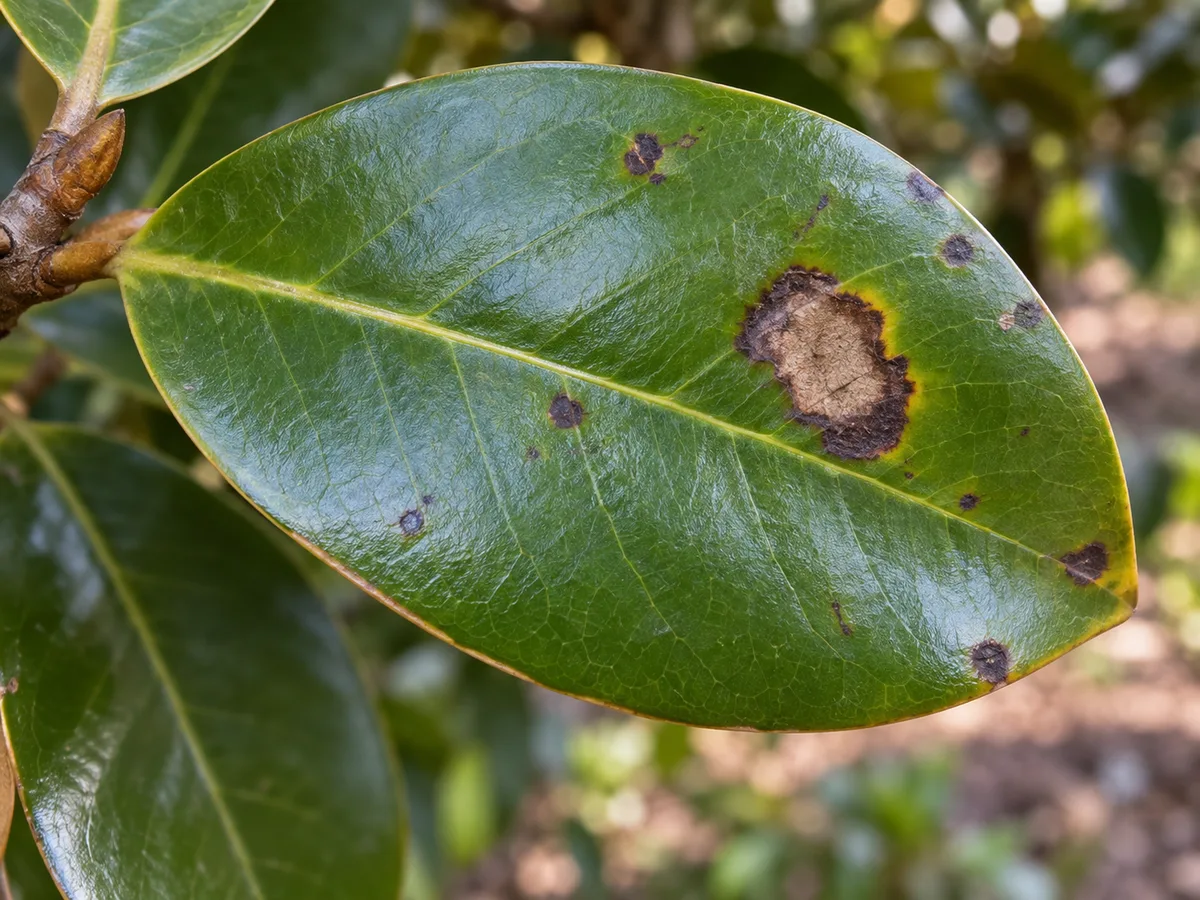
Scorch tends to follow margins or exposed areas, while leaf spot produces individual lesions that can be round, irregular, or surrounded by a darker or yellowish border. Magnolias can develop leaf spots, and a trusted horticulture overview such as Epic Gardening’s guide to magnolia decline illustrates how spot patterns differ from broad environmental browning. A spotted leaf is not enough to identify a pathogen, however; different organisms and noninfectious injuries can look alike.
Inspect several leaves from different parts of the tree, including the underside. Note whether the spots are raised, sunken, spreading, or associated with sticky residue, webbing, insects, or blackened shoots. If only a small number of older leaves show spots and the tree is otherwise growing normally, close observation and cleanup of fallen diseased foliage may be all that is needed. Avoid spraying a fungicide just because a leaf is brown; the product may not target the cause, and unnecessary applications add cost and exposure without repairing damaged tissue.
If spots expand quickly, new growth is distorted, twigs develop lesions, or the canopy continues to thin, submit clear photos or a sample to a local plant diagnostic clinic. Keep samples cool and follow the clinic’s instructions rather than mailing a wet pile of leaves. The diagnosis matters because fungal spots, bacterial blight, insects, weather injury, and root stress call for different management.
Branch-by-branch decline calls for a disease check
A magnolia with one branch at a time wilting, thinning, or failing to leaf out is different from a tree whose whole exposed canopy scorched during one heat wave. Possible explanations include a broken or girdled branch, root damage on one side, canker, vascular disease, or wood decay. Look for a timeline: did the decline start after excavation, a storm, a vehicle impact, pruning, or a change in irrigation?
Verticillium wilt is uncommon compared with ordinary weather stress, but it is serious enough to recognize. University of Illinois Extension describes magnolias with branch-by-branch decline or overall thinning and notes that infected magnolia sapwood may show general brown discoloration. A homeowner cannot confirm the disease from canopy symptoms alone; a diagnostic lab is more reliable than cutting several branches and guessing from the color (University of Illinois Extension: Verticillium Wilt of Magnolia).
Do not assume every wilted limb is Verticillium, and do not remove a mature tree based on a visual guess. If the tree is declining progressively, ask an extension plant clinic or certified arborist about sampling and diagnosis before choosing a replacement. Verticillium can persist in soil for years, so confirming the cause is important before replanting a susceptible host in the same spot.
Nutrient problems are easy to misdiagnose
A nutrient issue is more likely when a recurring color change affects much of the canopy and follows a consistent pattern, rather than appearing suddenly on a windward edge after a freeze or heat wave. Iron availability problems often show as yellow tissue between greener veins on newer leaves; they do not automatically explain crisp brown margins. Several stresses, including poor drainage and root damage, can also interfere with nutrient uptake and create misleading symptoms.
Do not apply iron, fertilizer, or a soil acidifier based only on browning. The wrong nutrient or dose can add soluble salts, injure roots, or mask a drainage problem. If the pattern resembles chlorosis or the tree has been weak for several seasons, get a soil test that measures pH and relevant nutrients, then follow a recommendation suited to the tree and soil rather than a generic fertilizer schedule.
Salt, fertilizer, construction, and other root injuries
Fertilizer salts can scorch roots when too much product is applied or when granules or spikes are concentrated near a small portion of the root system. Salt used for winter ice control can also reach roots through runoff or splash. If the browning began soon after fertilizing, spraying, paving, trenching, or changing lawn care, that recent event deserves attention before you assume infection.
Magnolia roots extend beyond the trunk flare, often into the area under and beyond the canopy. Construction, soil compaction, grade changes, tilling, and repeated foot or vehicle traffic can reduce root function; some symptoms may not appear until weeks or months later. A tree can also be stressed by lawn irrigation that wets only the surface or by herbicide drift from nearby applications. Write down products and dates so a professional can evaluate exposure rather than treating from memory.
Stop any optional fertilizer or pesticide while the cause is uncertain. Do not flush the whole root zone with water unless a qualified local source recommends that response for the specific product and soil; in heavy or poorly drained soil, extra water may worsen the injury. For pesticide exposure, follow the label and contact the manufacturer or local extension service for crop- and site-specific guidance.
What to do in the first 48 hours
You do not need to solve the entire problem at once. The goal is to prevent an avoidable second stress and collect the clues that distinguish a short-lived weather injury from a worsening root or disease problem.
- Photograph the whole tree and the leaves. Include the trunk, root flare, branch tips, and both healthy and affected foliage. Repeat the same views weekly so you can tell whether the damage is stable or spreading.
- Check the calendar. Record the first date you noticed browning and any freeze, heat wave, dry wind, heavy rain, fertilizer, spray, pruning, or construction that came before it.
- Feel the root-zone soil. Check under the canopy in several places several inches down. Dry soil calls for a careful soak; persistently wet soil means pause and inspect drainage.
- Look for pattern clues. Older interior leaves, exposed margins, separate lesions, and a single declining branch point to different possibilities.
- Hold off on treatments that can compound stress. Do not fertilize, apply a fungicide, prune healthy branches, or water repeatedly until the clues support that action.
If the browning is limited to old leaves or followed a single frost, observation may be the right initial response. If the canopy is progressively thinning, multiple limbs wilt in mild weather, or the trunk has wounds or decay, contact a local extension office or tree professional promptly.
Water a magnolia without worsening the problem
Water according to the condition of the root zone, not a fixed calendar or the number of brown leaves. When the soil is dry, apply water slowly over the area beneath the canopy so it can soak in rather than run off. Recheck moisture later; the aim is an evenly moist but aerated root zone, not permanently wet soil.
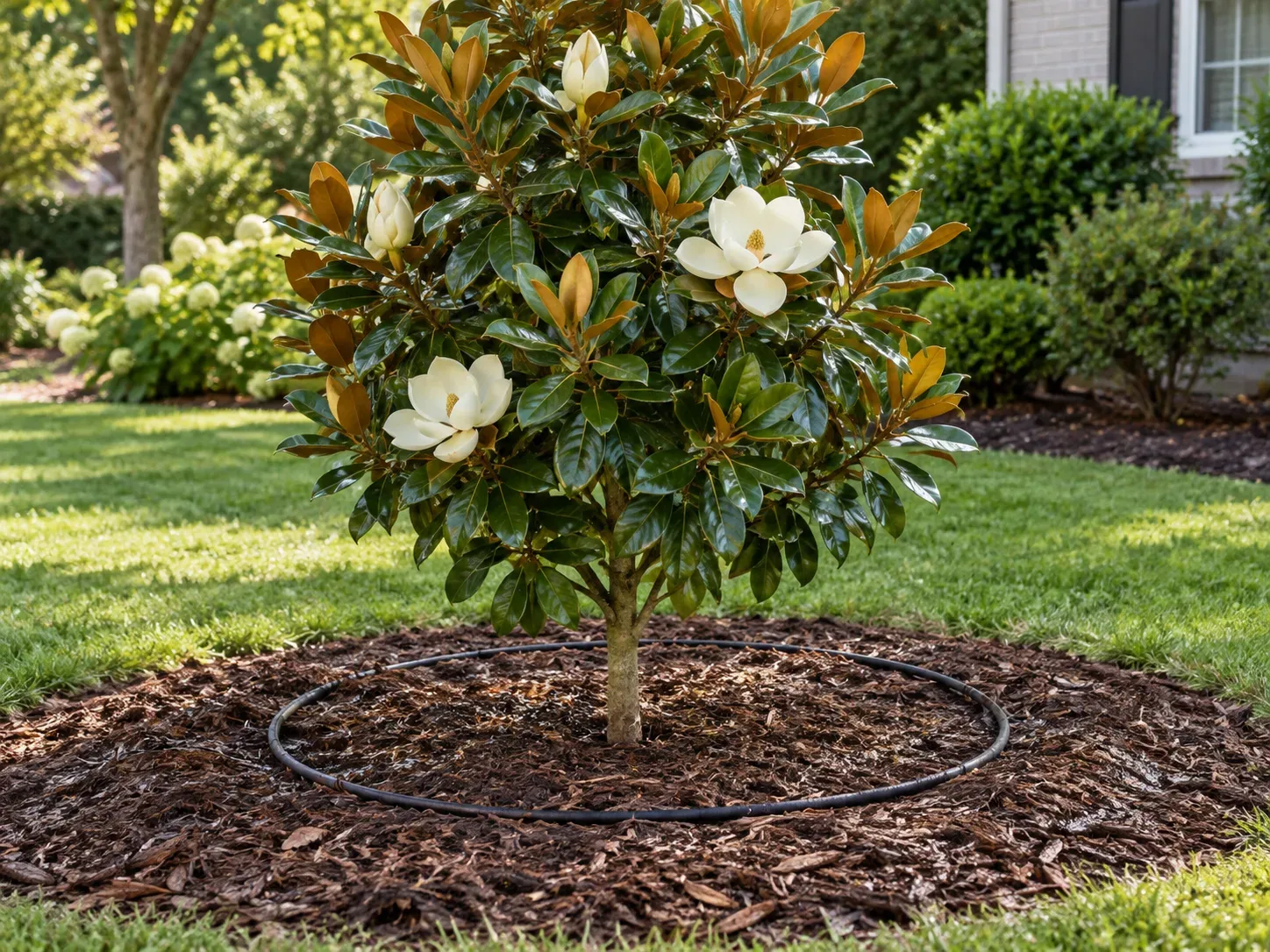
Young trees need closer monitoring than established trees because their roots have not spread widely. During hot, rainless weather, check the original root ball and the surrounding soil: the nursery root ball may dry faster than native soil, or the surrounding clay may remain wet while the root ball is dry. A slow hose or drip line can help deliver water without washing soil away, but do not leave it running unattended or directed at the trunk.
Keep turf and dense groundcover from competing right next to the trunk. A broad layer of organic mulch helps moderate moisture and temperature, but leave a visible gap around the bark and avoid deep “volcano” piles. If the soil is saturated or drains poorly, stop routine irrigation until it dries somewhat and seek advice about the site; more water is not the cure for leaves that look thirsty when roots lack oxygen.
Should you remove brown leaves or prune the tree?
Brown leaf tissue cannot recover, but that does not mean every affected leaf needs to be removed. A magnolia can keep some damaged leaves until they naturally drop, and removing large amounts of foliage reduces the canopy without correcting drought, frost, root damage, or disease. Leave partially green leaves attached unless they are heavily diseased or present a specific sanitation concern.
Wait to prune after frost or heat stress until you can distinguish dead wood from temporarily damaged foliage. Scratch tests on small twigs can sometimes reveal living green tissue beneath the bark, but do not repeatedly wound the trunk or larger branches. Remove only clearly dead or broken branches with clean, sharp tools, and use an arborist for work that is high, large, or near structures.
If you suspect a contagious disease, do not move infected leaves and tools through the garden without cleaning them. Ask an extension office how to handle the sample and whether sanitation or pruning is appropriate for the diagnosis. Pruning is not a substitute for identifying a cause that is affecting roots or the trunk.
What recovery looks like
The brown parts of a leaf will remain brown or fall; they do not turn green when watering improves. Recovery means that browning stops spreading, existing buds remain viable, new growth appears in the next appropriate flush, and branches stay firm. The pace depends on whether the cause was a short frost, a dry spell, root disturbance, or an ongoing disease, so a few days of unchanged foliage do not by themselves prove that the tree is still declining.
A mature magnolia may retain some cosmetic damage through the season and still recover. A newly planted tree or one with extensive root loss has fewer reserves, so progressive wilt, dry twigs, or widespread leaf drop deserves closer monitoring. Do not judge recovery only by whether the tree makes a burst of new leaves: that can use stored energy, while root health and steady branch growth matter over time.
Keep a simple record of new growth and affected branches. If the pattern stabilizes after the triggering weather passes and the tree produces healthy shoots, continue sensible watering and avoid adding unnecessary fertilizer. If damage continues to advance despite corrected moisture and moderate weather, get a diagnosis rather than repeating the same treatment.
Prevent another episode next season
Choose a planting site that matches the species and gives the mature tree room to develop a broad root system. Protect new magnolias from harsh wind and late-frost pockets where possible, while preserving enough light for the selected cultivar. Because magnolias vary in size and cold tolerance, use a regional plant source or extension recommendation when choosing a species rather than assuming all magnolias behave like Southern magnolia.
Water newly planted trees consistently while roots establish, then adapt irrigation to rainfall and soil texture as the tree matures. Water deeply enough to wet the root zone, but allow drainage and avoid frequent shallow sprinkling. A wide, moderate mulch ring reduces evaporation and lawn competition; keep mulch away from the trunk and avoid piling soil over the root flare.
Prevent avoidable root injury by keeping heavy equipment, trenching, and grade changes away from the root zone whenever possible. Fertilize only when a soil test or an informed diagnosis indicates a need, and follow the label. After each season, note the weather and which part of the canopy was affected; recurring patterns help you adjust exposure or irrigation before the next stress event.
When to ask an arborist or extension office
Get help when browning progresses despite reasonable moisture, several branches decline one after another, the entire crown thins, or the trunk has cankers, cracks, cavities, or unusual staining. Also ask for an assessment if a mature tree stands in persistently wet soil, was recently affected by construction, or would require risky pruning. These are conditions where guessing can lead to the wrong action or unnecessary removal.
A useful diagnostic submission includes the magnolia’s approximate age and type, when symptoms began, recent weather and care, a whole-tree photo, close-ups of both affected and healthy leaves, and pictures of the trunk and root flare. Extension services may direct you to a plant clinic or diagnostic lab; a certified arborist can evaluate canopy structure, roots, and safety in person. Ask what evidence supports the diagnosis and whether any proposed treatment is likely to change the outcome.
Conclusion
Brown leaves on a magnolia are a symptom, not a diagnosis. A few older leaves dropping from an evergreen Southern magnolia may be routine, crisp edges after heat may be scorch, wet ground may point to root stress, and separate lesions or branch-by-branch decline call for a disease check. Start with the tree’s identity, the pattern and timing of damage, and root-zone moisture before reaching for water, fertilizer, or pruning shears.
Correct the stress you can verify, protect healthy roots, and give the tree time to show whether damage is stable or progressing. Brown tissue will not turn green again, but a magnolia with viable roots and buds may continue growing. When symptoms keep spreading or the diagnosis could affect whether the tree is pruned or removed, involve a local extension office or qualified arborist.



