How to Grow and Care for Buddha Belly Bamboo
Learn how to grow Buddha belly bamboo in a pot or garden, manage light and water, protect it from cold, and encourage swollen canes without harming it.
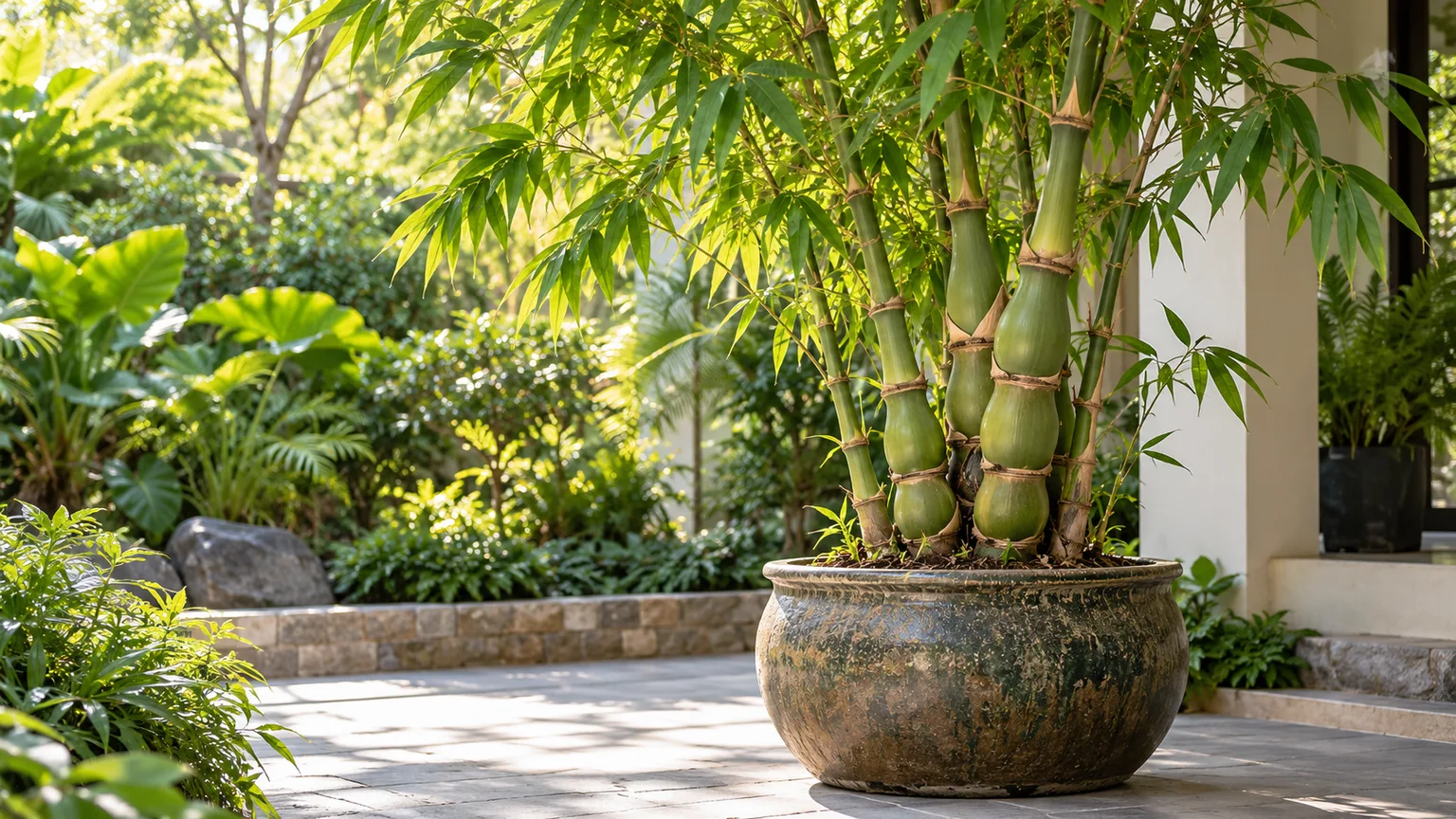
Buddha belly bamboo is a striking plant with a practical catch: it is a large, warm-climate bamboo that can be grown in a container, but it is not a compact, low-light houseplant. Give it strong light, a generously sized pot with drainage, and steady moisture, and it can make a handsome patio specimen or conservatory plant. In a cold-winter climate, plan to move it under cover before frost rather than relying on a label’s hardiness number.
The distinctive swollen sections are part of the plant’s appeal, but they are not a result you can force safely with chronic neglect. The best care starts by deciding whether your home or garden can support the plant’s size and light needs; then you can manage its shape without sacrificing the clump.
| At a glance | What to expect |
|---|---|
| Botanical name | Bambusa ventricosa |
| Growth habit | Tropical or subtropical, clump-forming bamboo |
| Best setting | Warm outdoor garden, bright patio, sunroom, or very bright window |
| Light | Full sun to part shade outdoors; strongest available light indoors |
| Water | Keep the root zone evenly moist, then let excess water drain |
| Soil | Fertile, humus-rich, well-draining soil or potting mix |
| Size | Can become a large landscape plant; a pot limits but does not guarantee a small size |
| Cold | Treat as frost-sensitive unless a local specialist confirms otherwise |
Identify the Plant Before You Choose Its Spot
The accepted botanical name is Bambusa ventricosa, a member of the grass family, Poaceae. Kew’s Plants of the World Online records its native range from Guangdong in southern China to Vietnam and places it in a subtropical biome. The common name refers to rounded, swollen internodes—the stem sections between the joints—on some of its culms, or canes. (Kew Plants of the World Online)
Check the plant label if you are buying one for its shape. “Buddha belly” is also used for Bambusa vulgaris ‘Wamin’, sometimes sold as Giant Buddha’s Belly; it is a different plant with its own dimensions and growth pattern. Bamboo Land Nursery explicitly distinguishes ‘Wamin’ from B. ventricosa. This matters because care advice and expected size can vary with the exact bamboo, and a plant sold under a loose common name may not be the one you intend to grow. (Bamboo Land Nursery; Bamboo Society of Australia)
Bambusa ventricosa forms a clump rather than sending long running rhizomes across a yard. That is a meaningful containment advantage, not a promise that the plant will stay in a narrow footprint. A mature clump expands at its edges and can grow tall enough to crowd a walkway, obscure a window, or press against a fence. UF/IFAS Extension describes clumping bamboo as growing outward only a few inches per year in general, while stressing that gardeners still need to choose the right species and site. (UF/IFAS Extension)
Decide Whether Indoor Growing Suits Your Light
This bamboo can live in a container indoors, but “indoors” should mean a bright conservatory, greenhouse, sunroom, or position directly beside a bright window—not a dim corner several feet from glass. Bamboo grows quickly outdoors in warm weather and needs considerable light to make sturdy canes. A specialist grower recommends several hours of direct light for indoor plants, and a recent Singapore care guide likewise cautions that dark rooms are usually too dim for steady growth. (Davis Bamboo; Tumbleweed Plants)
If the plant is already in a low-light room, move it in stages over a week or two toward brighter conditions. A sudden jump from filtered indoor light to hot midday sun can scorch foliage, especially if the bamboo has been kept in a nursery shade house. If your brightest spot still produces long, thin growth, sparse leaves, or repeated leaf drop, consider a grow light or a different plant better suited to your indoor conditions.
Choose Bright Light and Acclimate Gradually
In a warm garden, full sun to partial shade is workable. In hotter, dry-summer areas, morning sun with afternoon protection can reduce heat and moisture stress; in humid or mild regions, a more open sunny location may support stronger growth. The RHS general bamboo guide recommends sun or light shade for many bamboos, but exact tolerance varies by species and climate. (RHS bamboo growing guide)
For a container, place the plant where it gets bright light for much of the day and where strong wind will not repeatedly dry the pot. Rotate the container occasionally if one side faces the window, but avoid frequent moves between a shaded room and direct outdoor sun. When moving it outside for summer, acclimate it over several days: begin in bright shade, add morning sun, and watch the leaf edges before increasing exposure.
Plant in Rich Soil That Still Drains
Use soil that holds enough moisture for a vigorous grass but does not remain saturated. For a garden bed, choose a site where water does not pool after rain; loosen compacted ground and blend in organic matter if the soil is poor. For a container, a quality loam-based potting mix amended with bark or perlite can improve air movement and drainage. Avoid planting the rhizome mass in dense clay or a potting medium that collapses into a wet, compact block.
Do not try to fix poor drainage by placing gravel at the bottom of the pot. The entire root zone needs a free path for excess water to leave through unobstructed drainage holes. Use a mix that drains throughout, and set the container on feet if the holes sit flush against a patio surface. A saucer can catch runoff indoors, but empty it after watering rather than allowing the pot to stand in water.
Water by Checking the Root Ball
There is no reliable “once a week” schedule for every Buddha belly bamboo. A small indoor pot, a large outdoor tub, and a newly planted clump in hot weather lose water at very different rates. Check the top inch or two of mix and the weight of the container; water thoroughly when the surface has begun to dry, then let excess drain away. A wind-exposed pot may need checking daily during a heat wave, while a cool, slow-growing plant may need much less frequent watering.
After planting or dividing, keep the root ball consistently moist while new roots establish. Once established, water deeply enough to wet the root zone instead of sprinkling only the surface. University of Georgia Cooperative Extension gives general bamboo watering guidance that varies with soil and weather and notes that inward-rolling leaf edges can signal a need for water. Treat that cue as a prompt to check the soil, not as proof that the plant is thirsty: saturated soil can also cause yellowing and weak roots. (University of Georgia Cooperative Extension)
The useful distinction is between moist and waterlogged. If the pot remains heavy and wet for days, check drainage and root health before adding more water. If the root ball has dried completely and pulled away from the pot, water slowly in two passes so the mix can absorb moisture instead of letting it run around the edges.
Choose a Pot That Can Support the Clump
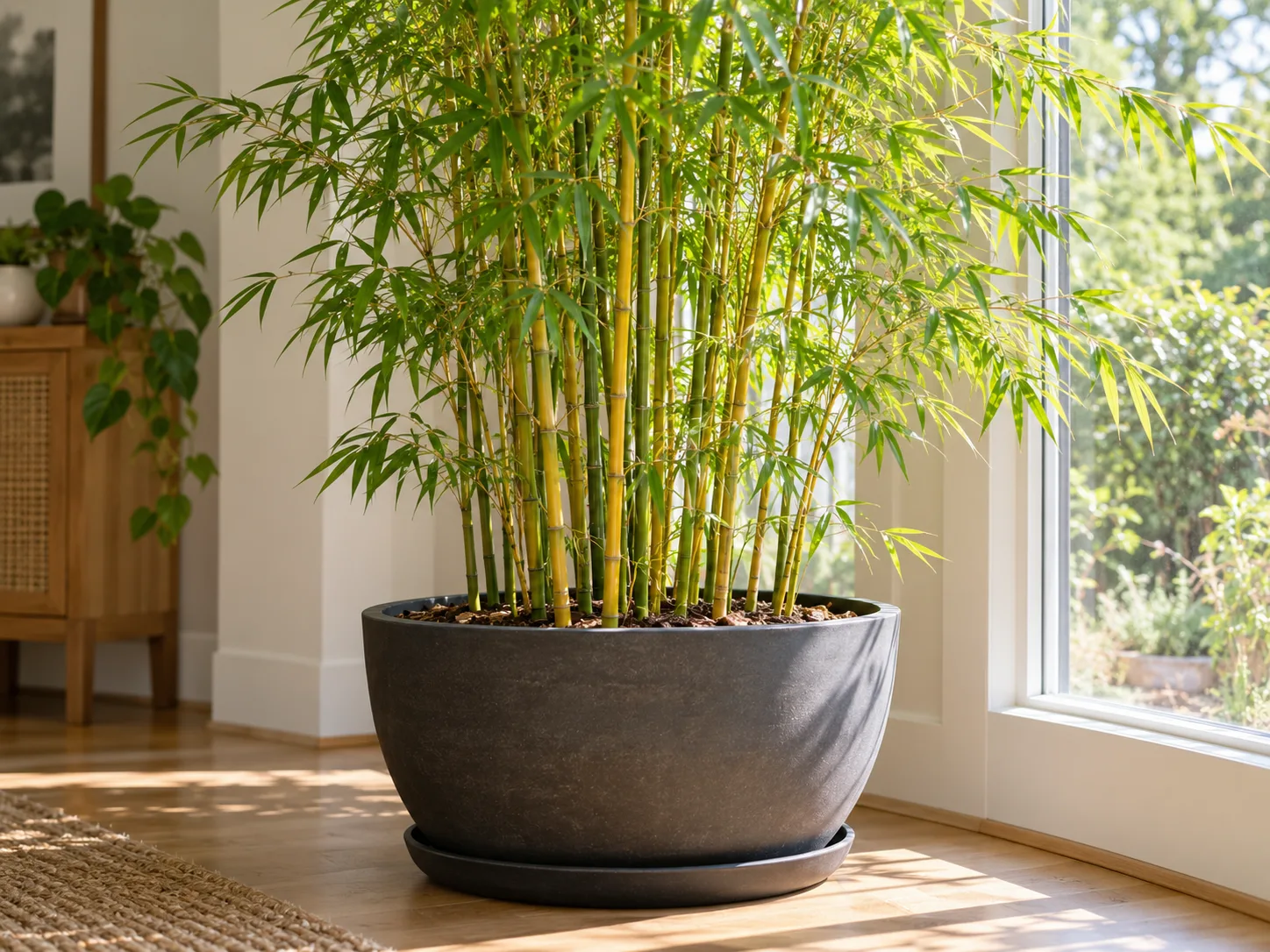
Start with a heavy, stable container that is wider than the plant’s root ball and has several open drainage holes. The RHS recommends a large container at least 18 inches across and deep for smaller bamboos; for a vigorous B. ventricosa, think of that as a starting reference, not a lifetime size. A broad planter helps prevent a tall, leafy clump from tipping in wind, and the root mass needs enough volume to support new shoots without becoming a solid ring of roots. (RHS bamboo growing guide)
Avoid choosing a tiny decorative pot to make the plant dwarf. A cramped root zone dries rapidly, makes watering less forgiving, and can turn the plant into a high-maintenance specimen that produces little healthy growth. Container culture can moderate size and may make swollen internodes more visible, but a pot-grown plant still needs room, regular checks, and occasional repotting or division.
If the container will sit indoors, use a waterproof saucer or a nursery pot inside a decorative cover that can be lifted for watering. Outdoors, a frost-prone location is easier to manage if the planter can be moved with a dolly or planted on casters. Choose the winter location before the plant becomes too heavy to shift safely.
Feed Lightly During Active Growth
Bamboo can use substantial nutrients, especially when it is confined to a container and produces new culms. University of Georgia Extension describes bamboo as a heavy feeder in pot culture, while MyGardenLife recommends a slow-release spring feed for this species. A practical approach is to use a balanced slow-release fertilizer at the label rate in spring, then reassess the plant’s vigor before adding more. (UGA Cooperative Extension; MyGardenLife plant profile)
Do not fertilize a dry, heat-stressed, or waterlogged plant in the hope of correcting yellow leaves. Fertilizer cannot repair damaged roots, and excess salts can add stress to a confined root ball. If growth is pale or weak, first check light, drainage, root crowding, and watering. Resume feeding when growth is active and the underlying conditions are sound.
Encourage the Belly Without Damaging the Plant
The bulging shape is a feature of particular culms, not a sign that every cane will swell on command. Specialist grower Bamboo Land notes that B. ventricosa may produce a mix of swollen and straight shoots even under normal warm-climate conditions. It also reports that constrained growth can make the swelling more prominent. The swell appears as a new culm develops; you cannot turn an old straight cane into a bulbous one by changing its care later. (Bamboo Land Nursery; Bamboo Garden)
Some growers use mild water restriction or root restriction to encourage short, swollen internodes. That is a horticultural tradeoff, not a recommendation to let the plant wilt. The same condition that can emphasize the form can also reduce vigor, dry fine roots, brown leaves, and interrupt shoot production. Keep the plant healthy first; do not leave it bone-dry, deliberately starve it, or trap it in a pot that is already failing. The visible character of the plant and the health of the rhizome are separate goals, and a well-grown plant may still have straight canes.
Grow Outdoors Only Where Winter Allows
In a warm, frost-free landscape, B. ventricosa can be grown as a specimen, a loose screen, or a large accent near a patio. It can become much taller than a houseplant: Bamboo Garden lists a maximum height of 55 feet and an average of 30 feet under its conditions, while Bamboo Land gives a typical range of about 20 to 33 feet. Those figures describe favorable landscape growth and should not be treated as a guaranteed height for every region or plant. (Bamboo Garden; Bamboo Land Nursery)
Before planting in the ground, check the mature height and width with a local bamboo specialist and inspect the space above and around the planting area. Keep it clear of overhead wires, narrow paths, rooflines, and places where a dense clump would block a view. The plant is clumping rather than running, but the clump still needs room and may eventually require thinning or edge control. It is a poor choice for a narrow bed if you cannot periodically maintain it.
Protect the Roots From Cold
Published cold ratings for B. ventricosa vary. Bamboo Garden lists USDA Zones 9b–10 and advises against outdoor planting where significant frost occurs, while Bamboo Land lists a lower minimum temperature. These are not equivalent guarantees: duration of a freeze, wind, soil moisture, plant age, and root exposure all change the outcome. A container also exposes the root ball to colder air than in-ground soil does. (Bamboo Garden; Bamboo Land Nursery)
For a home gardener, treat this as frost-sensitive bamboo unless a local grower has confirmed it survives your specific winter conditions. In areas with freezes, grow it in a movable container and bring it into a bright, frost-free greenhouse, sunroom, or conservatory before cold weather arrives. Reduce watering as growth slows, but do not let the root ball become completely dry. In mild climates, mulch the root zone and shelter young plants from cold, drying wind; cover alone may not protect a plant through a prolonged hard freeze.
Prune for Shape, Size, and Airflow
Pruning is mainly a way to manage the clump’s outline, remove old growth, and reveal the canes. In spring, cut dead, damaged, or weak culms close to the soil line with sharp loppers or a pruning saw. If the center is crowded, remove a few older culms at the base so light and air can reach the remaining foliage. The RHS recommends thinning weak or congested bamboo canes in spring and notes that the tops can be shortened to control height. (RHS bamboo growing guide)
You can shorten a tall cane, but bamboo does not continue extending upward from a cut tip. New leaves and branches may form below the cut, so place the cut just above a node and avoid leaving ragged, crushed tissue. Remove a few canes at a time rather than stripping the whole plant, especially indoors where each leaf matters for making energy. A clean, selective prune looks better and avoids turning a healthy clump into a bundle of bare sticks.
Repot or Divide Before the Pot Fails
Inspect the container at least once a year. Roots emerging from the drain holes, a root mat circling the surface, water that races through without wetting the mix, or a sudden decline in growth can signal a crowded root ball. The RHS advises moving container-grown bamboo to a larger pot every few years or dividing it into several containers. The interval depends on how fast the plant is growing and how much room it has; use the root ball rather than the calendar as your guide. (RHS bamboo growing guide)
Repot during active growth in spring or early summer, when warm conditions help recovery. Move up to a stable container that gives the roots space, refresh the depleted mix, and water thoroughly. If you want to limit the plant’s overall size, division is usually healthier than leaving the entire clump jammed into a pot too small to water reliably. Large bamboo root balls can be tough and heavy, so use a sharp pruning saw or ask for help rather than forcing the plant out by pulling on its canes.
Propagate by Division, Not by a Bare Cane
For a home gardener, division is the most dependable way to make another plant from an established clump. The new piece needs living rhizome and roots along with attached culms; a detached cane by itself is not the same as a rooted division. The RHS recommends dividing bamboo in mid-spring and using younger rhizomes toward the outside of the clump. UGA Extension also describes dividing a root-bound potted bamboo with a stiff spade or saw, then planting and watering the sections promptly. (RHS bamboo growing guide; UGA Cooperative Extension)
Work through the process without letting the roots dry out:
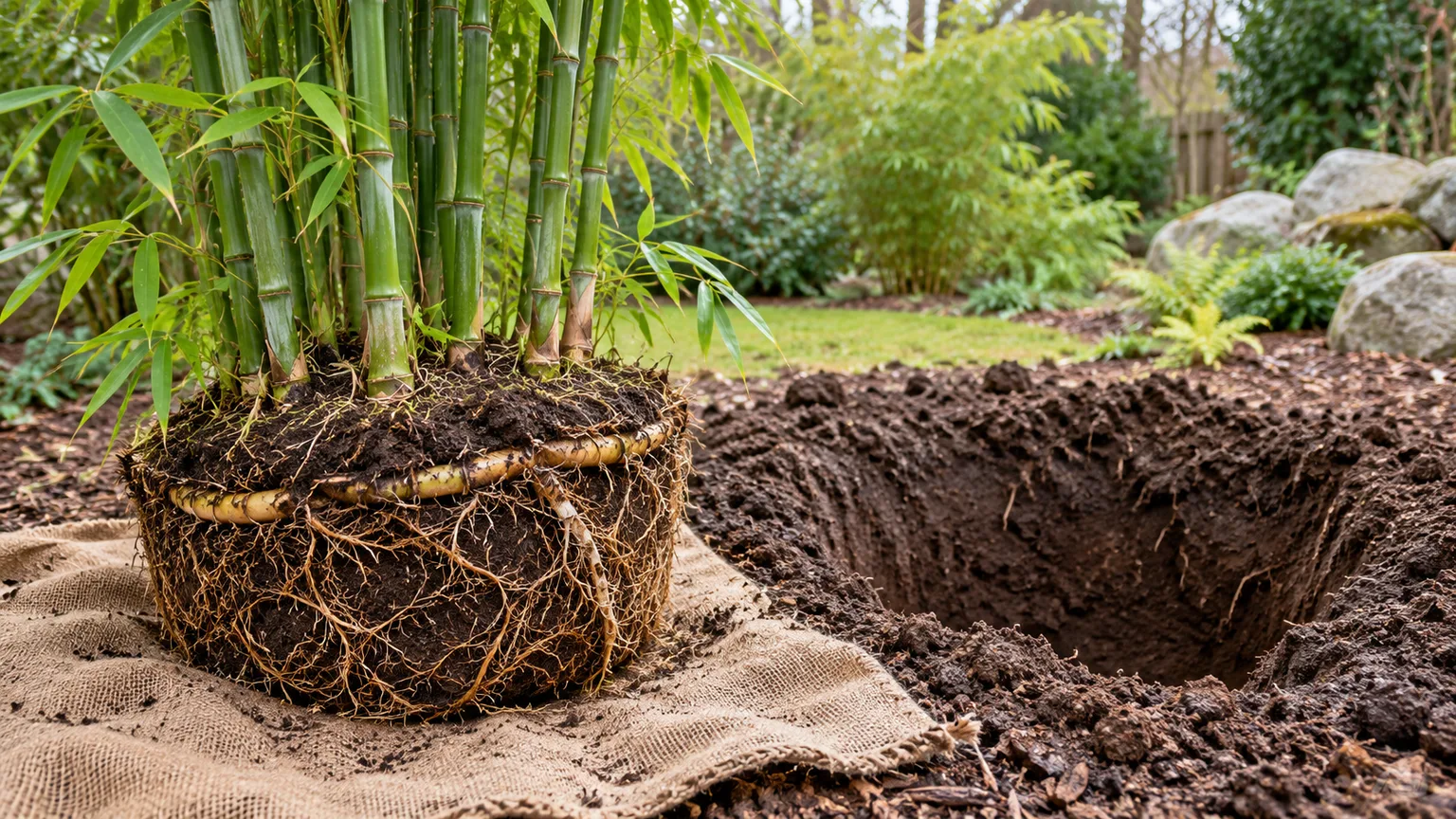
- Water the parent plant the day before dividing, then remove it from the pot or expose the outside edge of an in-ground clump.
- Select a vigorous outer section with several culms and a substantial piece of rhizome and roots.
- Cut through the root mass with a clean, sharp saw or spade; avoid splitting it into tiny pieces that have too little root to establish.
- Pot or plant the division immediately at its previous depth, firm the mix around the roots, and water thoroughly.
- Keep it in bright shade for a short recovery period, protect it from wind, and maintain even moisture while new growth resumes.
Avoid dividing during heat waves, a cold snap, or while the plant is producing tender shoots. A newly divided clump has fewer roots to supply its leaves and is especially vulnerable to drying wind. If it wilts after division, move it to shelter and check the root-zone moisture before pruning healthy foliage.
Diagnose Yellow Leaves, Brown Tips, and Weak Culms
One or two aging leaves turning yellow is different from widespread yellowing across the plant. If many leaves yellow and the soil is wet, inspect drainage and roots first; a sour smell, persistently soggy mix, or black, soft roots suggests the plant may be sitting too wet. If the pot is dry and leaves curl inward, water slowly and fully, then check again the next day. Do not try to solve both problems by watering more frequently without checking the substrate.
Brown tips can follow missed watering, dry indoor air, wind, or accumulated fertilizer salts. Clip only the dry tissue if appearance matters, leaving a narrow brown edge rather than cutting into green leaf. Then review what changed: did the plant move into hotter sun, get repotted, sit near a heater, or receive a strong fertilizer dose? Correcting the cause prevents each new leaf from developing the same symptom.
Thin, weak canes or sparse foliage point first to inadequate light, severe root crowding, or a recent period of stress. Give the plant brighter conditions gradually and ensure the pot drains. Do not respond to weak growth by severely restricting water or applying heavy fertilizer; either can make the underlying root problem worse. A sudden collapse after a freeze or a persistently foul, soft root ball merits help from a local bamboo nursery or extension office.
Check for Scale, Spider Mites, and Other Pests
Bamboo is not immune to pests simply because it is vigorous. Inspect the undersides of leaves and the cane joints for fine webbing, stippling, sticky residue, or fixed brown bumps. The University of Georgia Extension notes that some bamboos can be affected by scale insects and spider mites, and recommends careful inspection of new plants. If you add another bamboo or houseplant, keep it separate briefly and check it before placing it beside the collection. (UGA Cooperative Extension)
First confirm what you are seeing. Spider mites often leave fine webbing and pale stippling; scale insects look like stationary bumps attached to a leaf or stem. Wash small infestations off with a firm stream of water, isolate the plant when possible, and remove heavily affected material. If you use a horticultural soap or other product, follow its label for the plant and setting, test a small area first, and avoid spraying in hot direct sun.
Use the Clump as a Focal Point, Not a Tiny Hedge
In a pot, Buddha belly bamboo works best as a tall accent for a sunny patio or bright conservatory where its foliage and distinctive canes can be appreciated up close. As the plant grows, expect to prune or divide it rather than treating the original nursery pot as a permanent container. A moveable container is especially useful where the plant needs winter protection or where a homeowner wants to keep roots from establishing in a fixed bed.
In the landscape, use it where a large clump has enough room to expand and where access for pruning remains easy. Its upright foliage can soften a fence or provide a tropical backdrop, but it may be too wide and tall for a narrow urban border. If you need a small, low-maintenance screen, compare mature dimensions with cold-hardy alternatives before planting. The appealing “belly” is only one part of the decision; the mature clump and the climate determine whether it will thrive in your space.
Conclusion
Grow Buddha belly bamboo where you can provide bright light, a draining but moisture-retentive root zone, and enough room for a vigorous clumping grass. Indoors, choose a sunroom or a very bright window and be prepared to move it outside only after gradual acclimation. Outdoors, confirm your winter temperatures with a local bamboo specialist and use a container if frost protection is needed.
Treat swollen internodes as a possible feature, not a reason to neglect the plant. Gentle space and water management may emphasize the shape, but chronic drought and a pot-bound root ball can damage the clump. Keep the roots healthy, prune with restraint, and divide the bamboo when its container becomes genuinely crowded; that approach gives you the best chance of enjoying both the plant’s health and its unusual canes.



