Does Vinegar Kill Mold? How to Use It Safely
Does vinegar kill mold? Learn when white vinegar works, how long to leave it, which surfaces to avoid, and when a mold professional is safer.
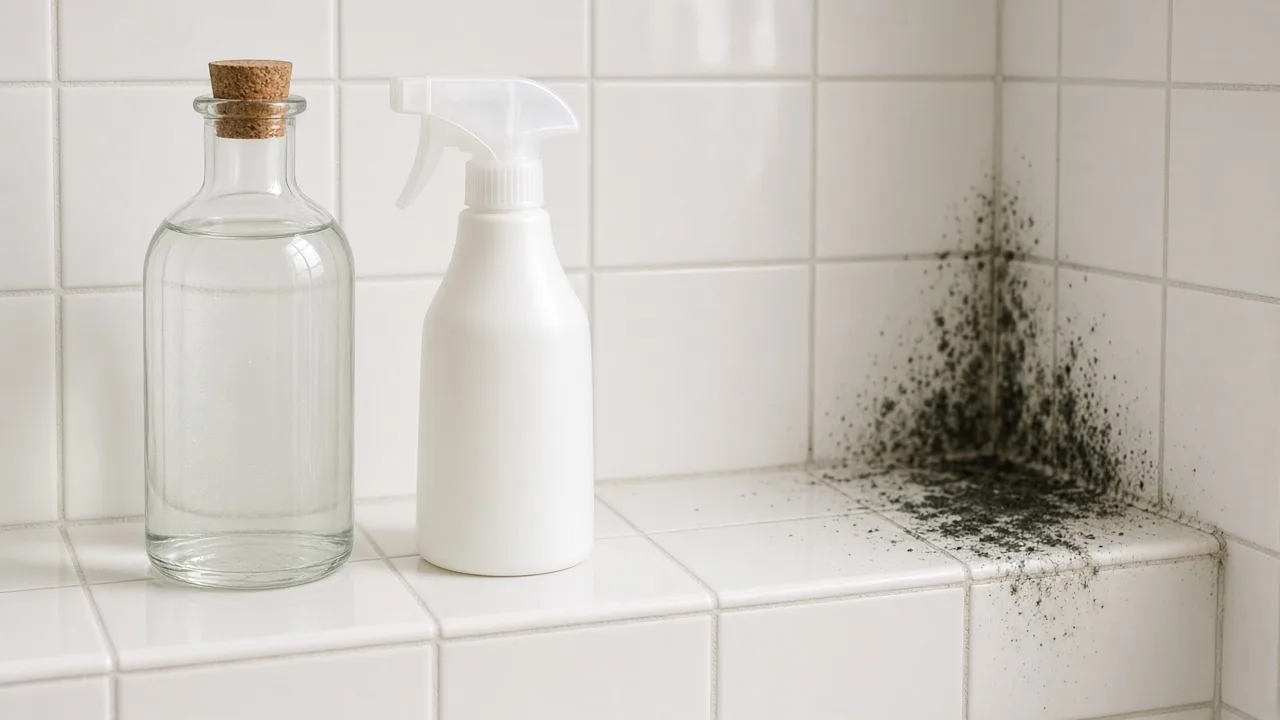
If you are looking at a small patch of mold on bathroom grout, a window frame, or another hard surface, white distilled vinegar may kill some of the exposed growth. It is acidic, inexpensive, and useful when it can stay in contact with the colony long enough to work. But vinegar is not a universal mold treatment, and “killed” does not mean that stains, spores, or contaminated material have disappeared.
The safest way to think about it is as a limited cleaning option for a small, accessible patch on a compatible surface. The bigger priorities are protecting yourself, avoiding cross-contamination, drying the area, and fixing the leak or condensation that fed the mold. If the growth is extensive, hidden, recurring, in an HVAC system, or associated with contaminated water, vinegar is the wrong level of response.
The quick answer: vinegar can help, but it is not mold remediation
Vinegar contains acetic acid, usually at about 5% in food-grade white vinegar. That acidity can damage fungal cells and may reduce viable mold on some surfaces, but performance depends on the species, concentration, surface, amount of growth, and contact time. A laboratory result is not the same as a guarantee for a damp wall or a moldy carpet.
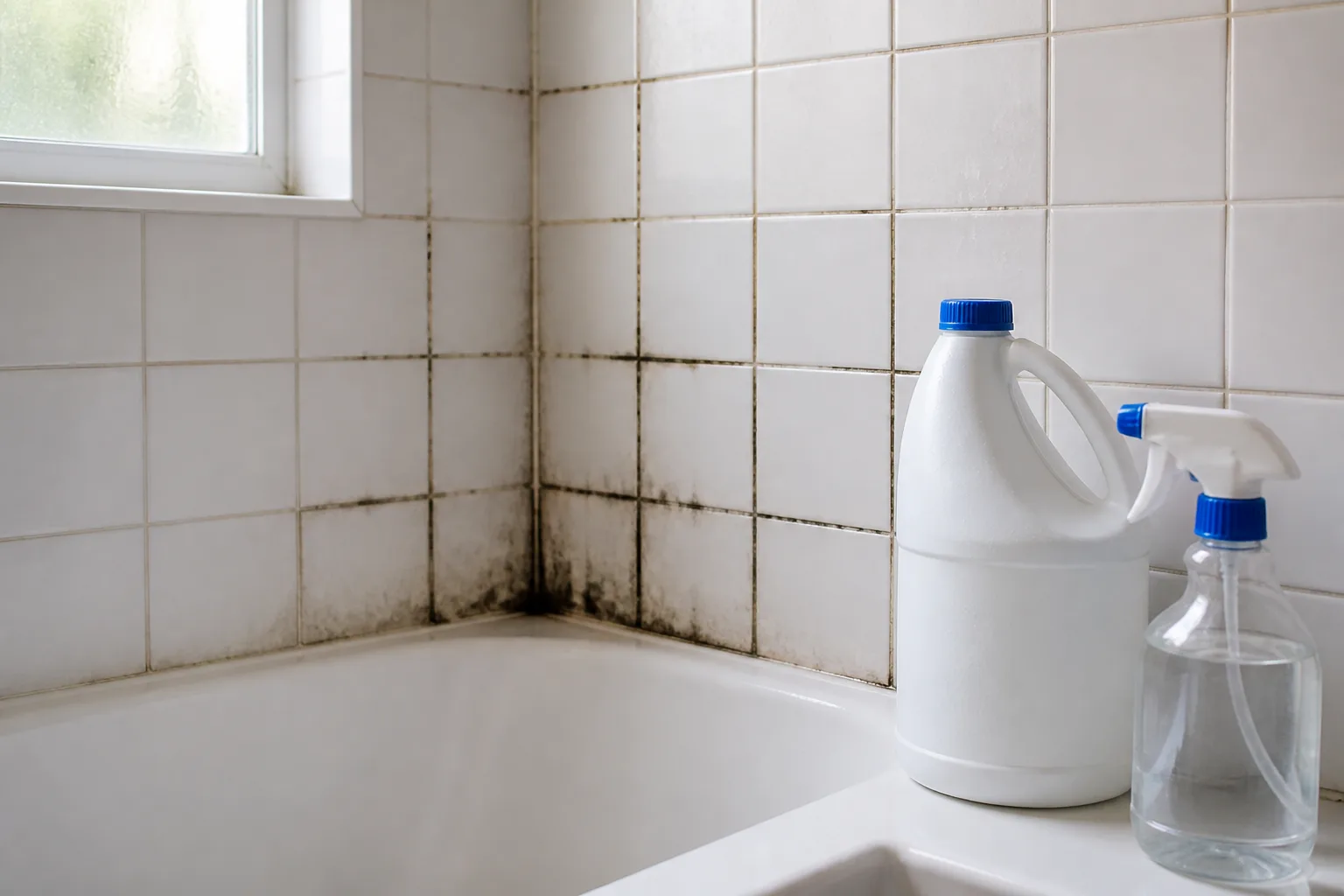
The peer-reviewed evaluation of antifungal agents in indoor environments found that household agents varied substantially by organism and test conditions. That is why a careful guide should say “may kill exposed mold on a suitable surface,” rather than promise that vinegar kills every mold species or reaches growth hidden below a finish.
Killing mold, removing stains, and removing contaminated material are different jobs
Mold cleanup has three separate outcomes. A treatment may reduce living growth, but the dark mark can remain because pigment has stained grout or fabric. Wiping can remove the visible colony without reaching hyphae inside porous material. And even dead fragments can still be irritating, so physical removal and containment matter after the chemical step.
This distinction changes what you do next. On glazed tile, you can usually clean the surface and dry it. On soft drywall, swollen particleboard, carpet padding, or insulation, the material itself may be the problem; adding more liquid can push moisture deeper and make regrowth more likely.
Why contact time matters more than a quick spray-and-wipe
Spraying vinegar and wiping immediately mostly wets the surface and removes loose dirt. It does not give the acid time to remain in contact with the growth. For a small patch on a compatible hard surface, keep the area visibly damp for roughly an hour as a practical starting point, then wipe and scrub according to the material’s tolerance. Do not interpret that as a universal kill time.
If the surface dries quickly, do not keep flooding it. Repeated wetting is especially risky on wood, painted wallboard, grout with failing sealant, and fabrics. The goal is controlled contact followed by thorough drying, not saturation.
Decide whether your mold patch is a DIY job
Before reaching for a spray bottle, estimate the affected area and look for the cause. A three-by-three-foot patch is about 9 square feet; that is near the commonly used 10-square-foot DIY threshold in EPA mold-cleanup guidance. The measurement is not a permission slip. A smaller patch can still be unsafe if it is hidden, repeatedly returning, inside a wall, or in a ventilation system.
DIY is most defensible when the growth is small, visible, limited to a hard surface, and caused by a problem you can correct. A little mold on a removable bathroom accessory is a different job from a musty odor behind wallpaper or a stain that appears after every rainstorm. If you cannot explain where the moisture came from, cleaning is only a temporary experiment.
The 10-square-foot rule and other stop signs
Stop and get professional guidance when growth covers more than about 10 square feet, follows flooding or sewage, affects a large porous area, or appears to be spreading behind a surface. Also stop if the material is soft, crumbling, swollen, or delaminated. Those signs suggest that wiping the face will not solve the contamination.
Do not sand, dry-brush, or use a household vacuum on visible mold. Those actions can disturb settled material and spread it. If you must handle a small patch, use damp methods, bag disposable wipes and protective material while they are still contained, and wash reusable tools according to their material and the product directions.
Health, HVAC, and contaminated-water exceptions
The CDC’s mold-health and cleanup information advises protective measures and extra caution for people with asthma, allergies, chronic lung disease, or weakened immune systems. If someone in the household is medically vulnerable, have another adult handle the cleanup or ask a clinician for individualized advice. A mask is not a substitute for deciding whether the job should be done at all.
Never clean suspected mold inside an HVAC system with vinegar. Running a contaminated system can distribute particles through the building, while spraying liquid into ducts creates a new moisture problem. Mold after sewage, floodwater, or another contaminated-water event also needs a different plan because the hazard is not limited to fungal growth.
Choose the surface before choosing the cleaner
Vinegar is not “safe on everything.” Acids can etch or dull calcareous stone, attack some finishes, and corrode certain metals. Always check the manufacturer’s care instructions and test an inconspicuous spot first. Keep the area wet only as long as the material can tolerate it.
Where vinegar is a reasonable first test
Glazed ceramic tile, porcelain, glass, and some sealed plastic or metal surfaces are usually the most forgiving candidates. Grout is more complicated: vinegar may help with surface growth, but repeated acid exposure can weaken cement-based grout or a sealer. Use a small test area, keep the application controlled, and rinse or wipe as the finish requires.
For a refrigerator gasket, shower accessory, or window-track surface, first remove loose debris with a damp disposable cloth. Then apply a small amount of undiluted white vinegar, allow contact time, wipe or scrub gently, and dry every groove. If the rubber has become porous, cracked, or permanently discolored, replacement may be more reliable than repeated treatments.
Where vinegar can damage or fail
Do not use vinegar on marble, limestone, travertine, or other acid-sensitive natural stone. It can etch the surface rather than simply clean it. Be cautious with aluminum, copper, unsealed wood, waxed floors, delicate finishes, electronic screens, and surfaces whose care instructions prohibit acids.
Porous materials are the bigger limitation. Carpet, upholstery, ceiling tile, insulation, particleboard, and soft drywall can hold moisture and growth below the visible face. Vinegar may reduce what you can see while leaving the material damp and contaminated. The Healthline overview of vinegar and mold similarly emphasizes that effectiveness depends on both the amount of mold and the surface.
Painted drywall deserves a careful middle position. A tiny surface spot on intact, dry wallboard may be wiped with a barely damp cloth after a spot test. If the paint is bubbling, the drywall is soft, the odor persists, or the patch returns, stop treating the face and investigate behind it. Do not paint over active mold; paint is a finish, not a moisture repair.
Gather supplies before cleaning.
For a genuinely small, accessible patch, gather nitrile or rubber gloves, sealed eye protection, a well-fitting N95 respirator, disposable cloths or paper towels, a small spray bottle labelled “undiluted white vinegar,” a mild detergent for the later physical-cleaning step, and a sealable waste bag. Wear clothing that can be washed promptly and remove clutter from the work zone.
Open a window or run an exhaust fan that vents outdoors if doing so will not spread air from the contaminated area into the rest of the home. Keep children, pets, and medically vulnerable people away. Do not create a strong cross-draft through occupied rooms, and never mix vinegar with bleach, ammonia, or another cleaner. Vinegar and bleach can produce chlorine gas, which is a serious inhalation hazard.
How to remove a small mold patch with vinegar
The sequence below is for a small patch on a compatible surface, not for a flooded room, HVAC contamination, or deeply porous material. If the surface manufacturer gives different instructions, follow the manufacturer’s instructions.
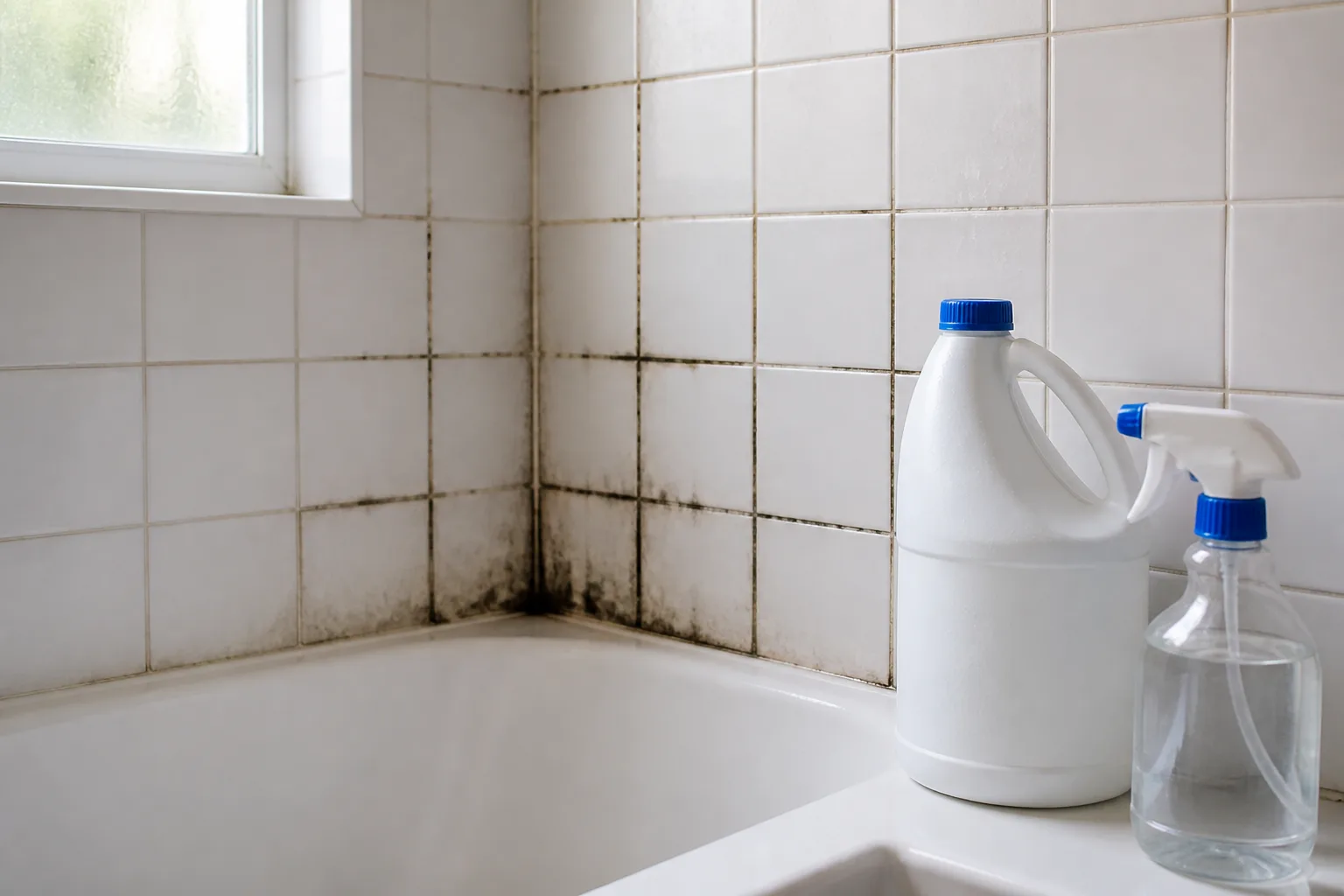
Protect, isolate, and ventilate the work area
Put on the respirator, gloves, and eye protection before disturbing the mold. Move nearby washable items out of the area or cover them with disposable material. If you are cleaning a bathroom, close the door as much as practical while using the exhaust fan so the rest of the home does not become the airflow destination.
Find the water source before cleaning if you can: a plumbing leak, failed caulk, condensation, roof leak, or poor bathroom ventilation. Take a photo and note the patch’s approximate size. That simple record helps you tell whether the area is shrinking after the repair or quietly returning.
Apply vinegar without oversaturating the material
Use plain, undiluted white distilled vinegar unless a product label says otherwise. Avoid culinary mixtures, essential oils, and improvised combinations. Lightly wet the moldy area rather than fogging the whole room, and keep the liquid on the target surface.
Allow about 60 minutes of contact on a compatible hard surface as a cautious working interval, watching for finish damage. If the material begins to discolor, swell, soften, or lose its sheen, stop and wipe it away. A longer dwell time cannot compensate for an unsuitable surface.
Wipe, scrub, dispose, and dry completely
Wipe from the cleanest edge toward the visibly affected area, changing cloth sections often. On tile or grout, a soft nylon brush can loosen residue after the contact period. Avoid aggressive brushing that splashes droplets or drives material into joints, cracks, and unfinished edges.
Follow with a clean, damp wipe if the surface can tolerate it, then dry immediately with fresh towels and airflow. Bag used disposable materials while still in the contained area. Wash your hands after removing gloves, launder clothing separately if it is visibly contaminated, and inspect the area again after it has been dry for a day or two.
If the dark color remains but the surface is dry and the growth has not returned, you may be looking at staining rather than active growth. Do not keep escalating to stronger household chemicals just to chase a color change. Stain removal and substrate replacement are separate decisions.
Vinegar versus bleach, detergent, and peroxide
For routine mold cleanup, a stronger smell is not proof of a better outcome. EPA guidance on mold cleanup emphasizes physical removal from hard surfaces and complete drying; it does not make bleach the default answer for every material. Bleach is particularly poor at solving mold embedded in porous surfaces, and it introduces dangerous mixing and ventilation concerns.
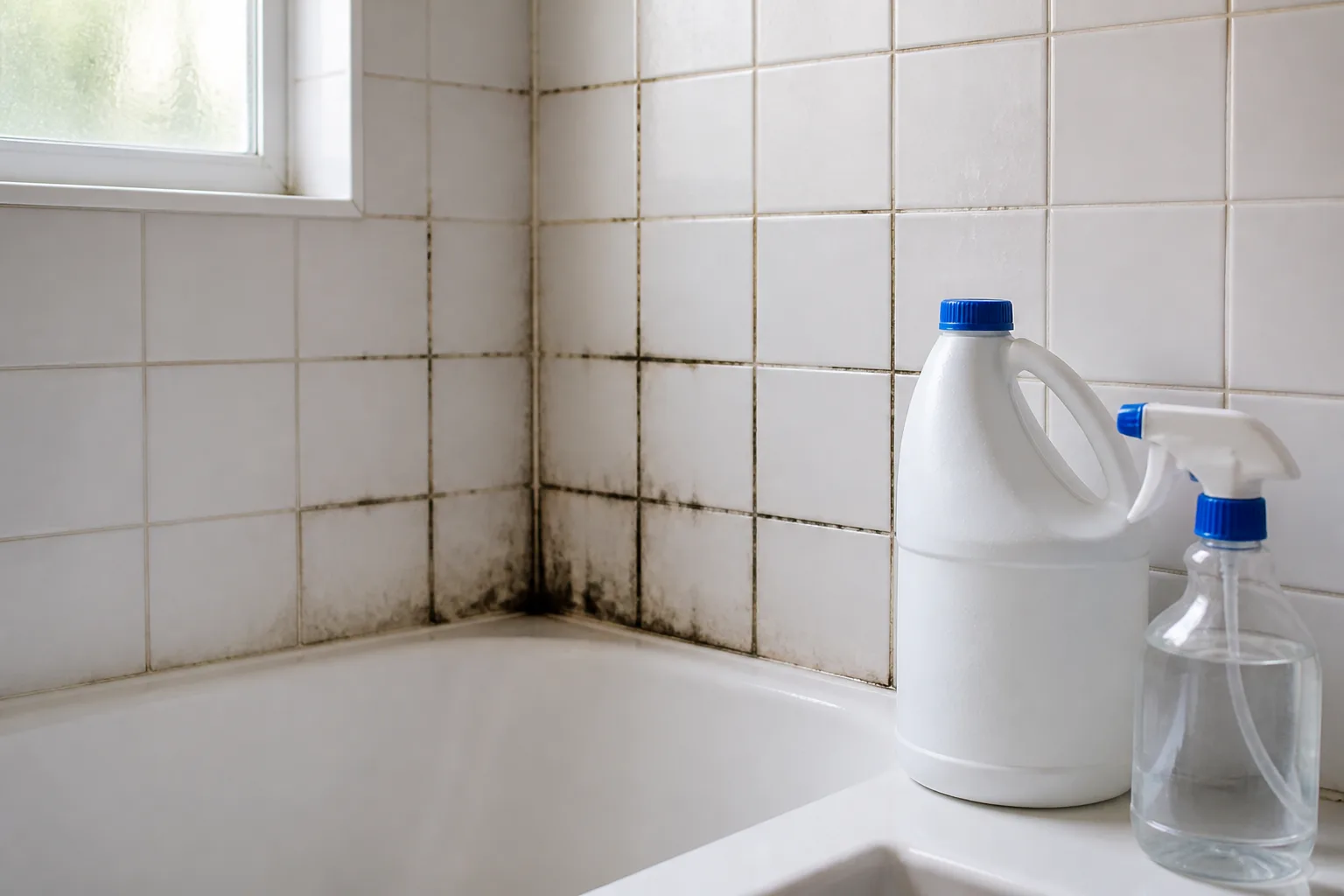
Detergent and water can be the more appropriate first-line physical cleaner for many hard, nonporous surfaces. Vinegar may be useful as a controlled acidic treatment where the finish allows it, but it does not replace scrubbing, wiping, drying, or repair. Hydrogen peroxide has its own material and concentration limits; switching chemicals without checking the surface can compound damage.
“Natural” also needs a precise definition. Vinegar is familiar and comparatively simple, but it can irritate eyes, damage finishes, and create hazardous gas when mixed. Treat it as a chemical with a label and a surface-specific use, not as a harmless substitute for every other cleaner.
Why mold returns after vinegar cleaning
Mold is a moisture problem with a visible symptom. If a bathroom fan does not remove humid air, a window sweats every morning, a pipe leaks behind a cabinet, or a basement wall stays damp, the cleaned patch has the same conditions waiting for it. Vinegar can remove the current colony and still fail as prevention.
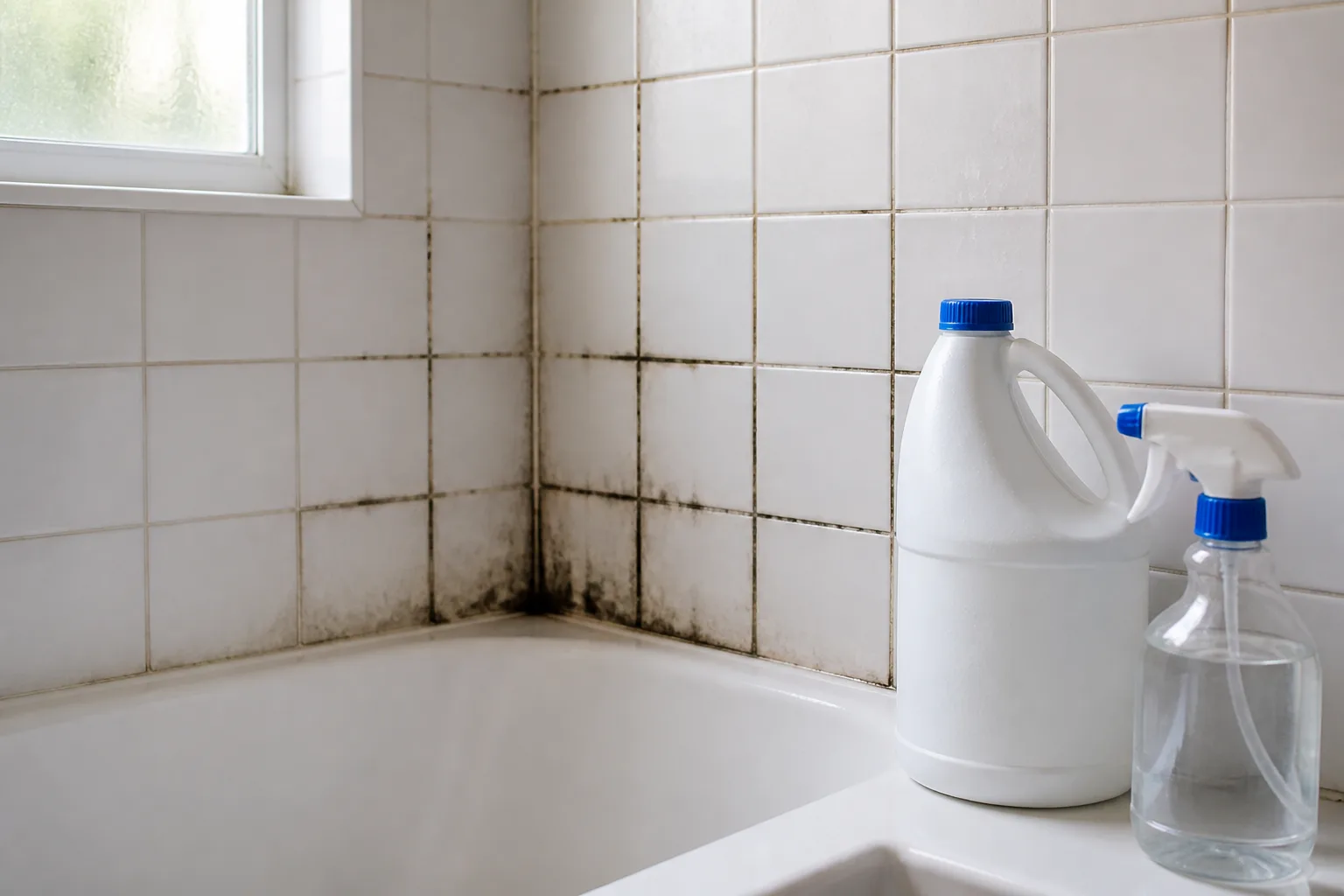
Find the moisture source and measure humidity
Check for leaks, condensation, wet insulation, blocked vents, and furniture pressed against cold exterior walls. A small hygrometer can show whether a room stays unusually humid even when no water is visibly pooled. Improve exhaust, repair leaks, increase air movement, and use a dehumidifier where appropriate—but do not point a fan at a patch while you are actively disturbing it.
The CDC’s mold information notes that mold grows where moisture is present and that people can respond differently to exposure. The practical lesson is to correct moisture promptly and take health symptoms seriously, without trying to identify a “most dangerous” color by appearance alone. Color does not tell you whether a patch is safe to clean.
When a stain is a material problem, not a cleaning problem
A recurring shadow on caulk may mean the seal has failed and water is entering behind it. A soft wall may indicate that the board has absorbed moisture. A musty smell with no visible source may point behind cabinets, under flooring, or inside a wall. In each case, more vinegar treats the evidence, not the source.
If a patch returns in the same outline after cleaning and drying, document it and stop repeating the treatment. Repeated wetting can enlarge the damaged zone. The next step may be a plumber, roofer, building professional, or mold-remediation specialist rather than a different spray.
When to call a mold-removal professional
Call for an assessment when the area exceeds roughly 10 square feet, the source was floodwater or sewage, growth is inside HVAC equipment, the material is porous and extensively affected, or mold keeps returning after the moisture problem has been repaired. Professional help is also sensible when removal requires opening a wall, disturbing insulation, or working near someone with significant respiratory vulnerability.
Be cautious of anyone who promises to identify a dangerous mold by color alone or sells testing as the only answer. Ask what the inspection will cover, how the moisture source will be addressed, what materials will be removed or cleaned, and how the work area will be contained. The most useful service solves the building problem, not just the visible stain.
Conclusion
So, does vinegar kill mold? It can kill or reduce some exposed mold on a small, compatible surface when applied carefully and left in contact long enough—but it is not a complete mold-remediation system. Use it as one controlled step, not as a reason to soak porous materials, treat an HVAC system, or keep repeating a failed cleanup.
Protect yourself, assess the size and surface, clean with containment, dry completely, and fix the moisture source. If the patch is large, hidden, recurring, contaminated by floodwater, or connected to the air system, stop the DIY experiment and get qualified help.