How to Grow and Care for Chinese Holly
Choose Chinese holly by mature size and berry needs, plant it correctly, and diagnose common leaf problems before pruning, fertilizing, or treating pests.
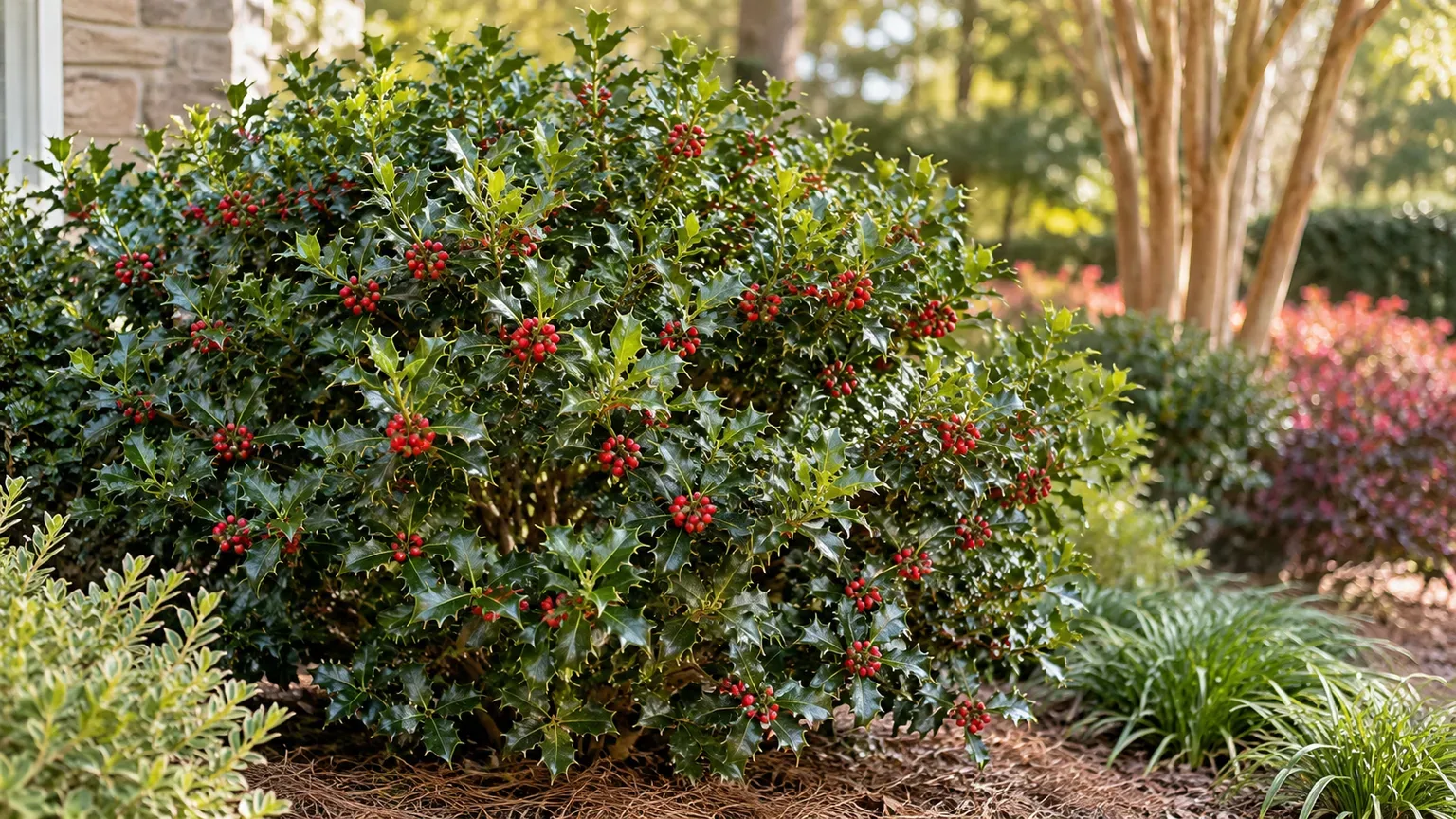
Chinese holly is a glossy, spiny evergreen that can anchor a foundation bed, form a privacy screen, or grow as a small tree. The catch is that “Chinese holly” describes a species with cultivars that differ greatly in size, leaf spines, and fruiting. The plant tag matters more than a generic care calendar.
Before planting, check two things: the mature width of the cultivar and whether your local extension service lists Chinese holly as invasive. Then choose a permanent site with sun and fast-draining soil. Young shrubs need steady moisture while roots establish; older plants are more drought tolerant, but neither stage benefits from persistently soggy soil.
Chinese Holly at a Glance: an Evergreen With a Large Footprint
Chinese holly (Ilex cornuta) is a broadleaf evergreen from China and Korea. Its stiff, glossy leaves are usually angular with stout spines, which is why the plant can work as a barrier but is uncomfortable beside a narrow path or where children play. The small spring flowers are pale and fragrant; female plants can develop red fruits that persist into winter. North Carolina State Extension describes the species’ foliage, flowers, fruit, and landscape uses.
A full-size plant can become much larger than a typical foundation shrub. North Carolina State Extension lists hedge forms up to about 15 feet and small-tree forms up to 25 feet; named cultivars range roughly from 3 to 10 feet, though individual selections can exceed that range. The commonly listed hardiness range is USDA Zones 7–9, but exposure, cultivar, and local winter conditions affect performance. Check the nursery tag and regional extension recommendations rather than assuming every plant sold as “dwarf” will fit a tight bed.
Check Local Suitability and Choose a Cultivar
Chinese holly is not an automatic choice for every landscape. North Carolina State Extension notes that it can escape cultivation and naturalize in parts of the Southeast, and the University of Georgia’s DeKalb County Extension catalog lists isolated Chinese holly specimens in Henderson Park. Those reports are a reason to check your county’s current invasive-plant guidance before buying; they do not mean the species is prohibited everywhere. If it is flagged locally, select a non-invasive alternative recommended for your site instead of relying on repeated pruning to contain it.
Match a cultivar to the space you have
Choose by the plant’s mature width first, then by leaf texture and fruit. A compact plant can still spread wider than its label height suggests, and a naturally large cultivar is a poor fit for a small foundation strip even if you plan to shear it every year.
| Cultivar | Useful trait | Planning note |
|---|---|---|
| ‘Burfordii’ | Dense, dark foliage and abundant red fruit; it can fruit without pollination | A large shrub or small tree, not a small foundation plant; leave room for a mature screen |
| Dwarf Burford | A smaller form of standard ‘Burfordii’ | “Dwarf” is relative; verify both mature size and fruiting behavior for the exact selection |
| ‘Carissa’ | Compact, rounded growth and leaves with one terminal spine | North Carolina State Extension gives a typical range of about 3–4 feet tall and 3–6 feet wide; berry production is uncommon |
| ‘Rotunda’ | Dense, rounded habit | The leaves are sharply spined, so keep it away from walkways and play areas; fruit may be sparse |
Cultivar names are not interchangeable. In particular, ‘Carissa’ has much smaller dimensions than standard Burford holly, while some online descriptions of Dwarf Burford understate how broad an older shrub can become. North Carolina State Extension’s Carissa profile and University of Arkansas Cooperative Extension’s cultivar notes illustrate why it pays to check named selections instead of shopping by common name alone.
Decide whether you need a pollination partner
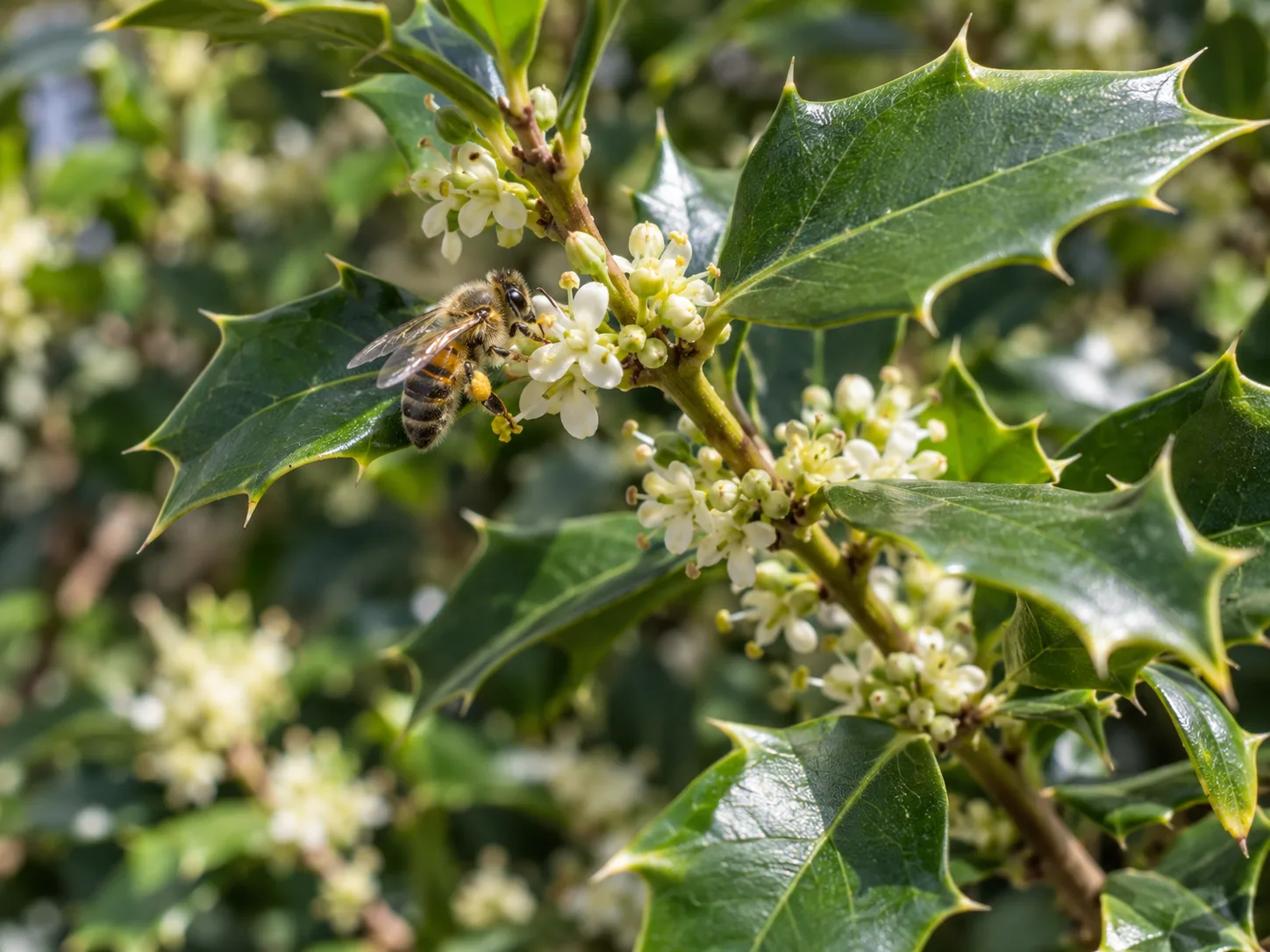
Most Chinese hollies are dioecious: male and female flowers occur on separate plants, and only a female plant makes fruit. For many cultivars, reliable berry production means planting a compatible male that blooms at the same time and is close enough for bees to move pollen between shrubs. If your plant has flowers but no berries, confirm its cultivar and sex before changing fertilizer or pruning; a male plant will never fruit, and a female may not have a pollination partner.
‘Burfordii’ is a useful exception because it can set fruit parthenocarpically, without fertilization. A nearby male may still improve fruit set in some parthenocarpic hollies, so do not assume every female cultivar behaves like Burford. Check the label or ask the nursery about the exact selection, and remember that a newly planted shrub may need time to flower. Virginia Cooperative Extension explains how dioecious hollies differ from cultivars that can set fruit without a male; Arkansas Extension identifies ‘Burfordii’ as a heavy-fruiting exception.
Choose Sun and Well-Drained Soil
Plant Chinese holly in full sun to partial shade. More sun generally supports denser growth and better flowering and fruiting, while a lightly shaded site can work where afternoon heat is intense. Deep shade produces a looser plant with fewer flowers, so it is a poor choice if you want a dense screen or a strong berry display. The Royal Horticultural Society lists full sun or partial shade and moist but well-drained soil for Ilex cornuta.
Drainage matters more than making the soil rich. Chinese holly tolerates several soil textures but struggles where water sits around the roots; compacted construction fill and a low spot are common reasons a new evergreen declines. If water remains in the planting hole after rain, choose a better site or build a broad, gently raised planting area rather than filling the hole with loose compost that can hold water like a basin.
Soil pH can affect foliage color. North Carolina State Extension notes that high-pH soils may contribute to chlorosis or leaf scorch. If leaves are pale while the soil is wet or the shrub is otherwise declining, get a soil test before adding iron, sulfur, or fertilizer; yellow leaves alone do not tell you which nutrient is missing.
Plant It Once, at the Correct Depth
Plant in fall or early spring when temperatures are mild and the root ball is not drying quickly. In hot-summer climates, fall gives roots time to establish before the next heat wave; in colder regions, early spring allows roots to settle before winter. Because established Chinese holly does not tolerate root disturbance well, decide on its mature footprint before you dig and treat that spot as permanent.
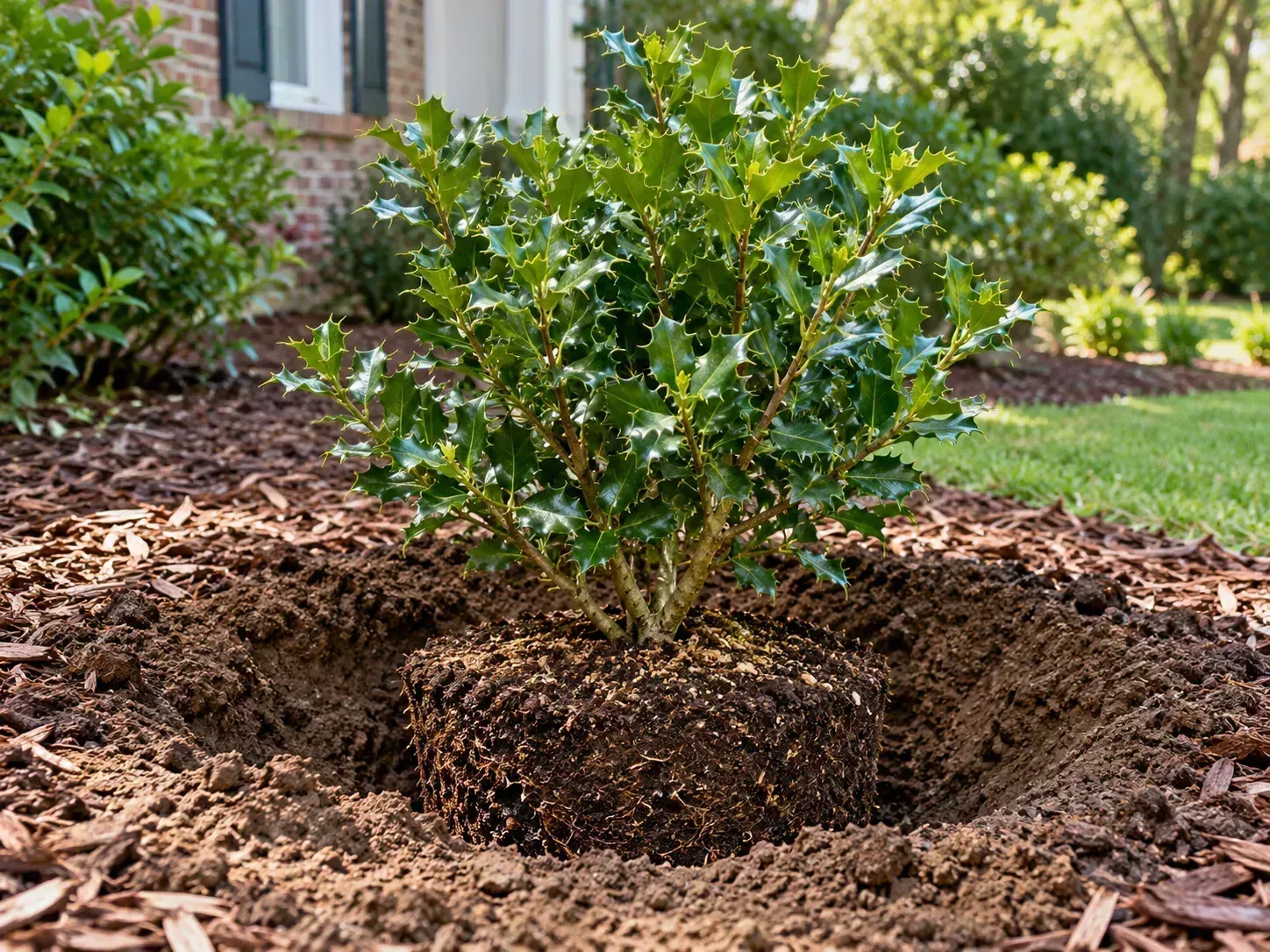
Dig a hole two to three times as wide as the root ball and no deeper. Set the shrub so the root flare and top of the root ball sit at or just above surrounding grade; planting too deeply invites chronic wetness around the crown. Loosen circling roots gently, backfill mostly with the soil you removed, and water once the hole is partly filled to settle large air pockets. Finish backfilling without burying the trunk, then spread a thin mulch layer over the root zone while leaving a clear ring around the stems.
Water During Establishment, Not by a Rigid Calendar
Water thoroughly after planting, then check the soil in the root ball and the surrounding soil every few days during dry weather. The goal for a new shrub is evenly moist soil while roots expand, not daily shallow sprinkling and not standing water. Slow watering at the root zone gives moisture time to soak into the original nursery mix, which can dry at a different rate from the surrounding ground.
During the first growing season, adjust frequency to rainfall, temperature, and soil texture. Sandy soil dries faster than clay, and a container loses moisture faster than an in-ground shrub. If the top few inches are dry and the root ball is becoming dry below the surface, water deeply; if the soil is still wet, wait and investigate drainage rather than adding more.
Once established, Chinese holly tolerates heat and short dry periods better than it tolerates waterlogged roots. In a prolonged drought, give it an occasional deep soak instead of frequent light watering. Gardening Know How’s Chinese holly care overview also recommends occasional deep watering in dry periods; check your own root-zone conditions instead of following a rigid timer. Do not read “drought tolerant” as “never needs water”: new growth, flowers, and fruit can suffer when roots stay dry for weeks.
Fertilize Only When Growth or a Soil Test Calls for It
Chinese holly is not a plant that needs routine heavy feeding to stay green. Start with healthy soil and mulch; fertilize only if a soil test identifies a deficiency or if growth is weak after you have ruled out drainage, root damage, and pH problems. For a confirmed need, use a slow-release product labeled for landscape shrubs and apply it at the label rate in late winter or early spring, not in a hot or drought-stressed period.
Avoid using fertilizer as a quick fix for yellow leaves. Excess nitrogen can push soft growth that needs more water and is more vulnerable to cold, while iron additions will not solve a root problem or poor drainage. If new leaves are yellow with greener veins, test soil pH and drainage first; if older foliage is scorched or dropping, inspect moisture and roots before feeding.
Prune for the Shape You Can Maintain
Prune in late winter before the spring flush if you need to control size, remove damaged wood, or open a dense shrub. Use clean, sharp bypass pruners for small branches and loppers for larger ones; thick gloves and sleeves help protect you from the sharp foliage. The plant can be shaped as a hedge or trained into a small tree by gradually removing selected lower limbs, but that form takes several seasons rather than one severe cut.
If the plant is crowding a window, path, or utility line now, first decide whether the mature size still fits the space. Repeated hard shearing can keep a too-large cultivar artificially small for a while, but it creates a dense outer shell, shades the interior, and leaves you with more maintenance each year. Replacing it with a better-scaled shrub can be a better long-term answer than cutting it back to bare framework.
Taper hedges and preserve next season’s display
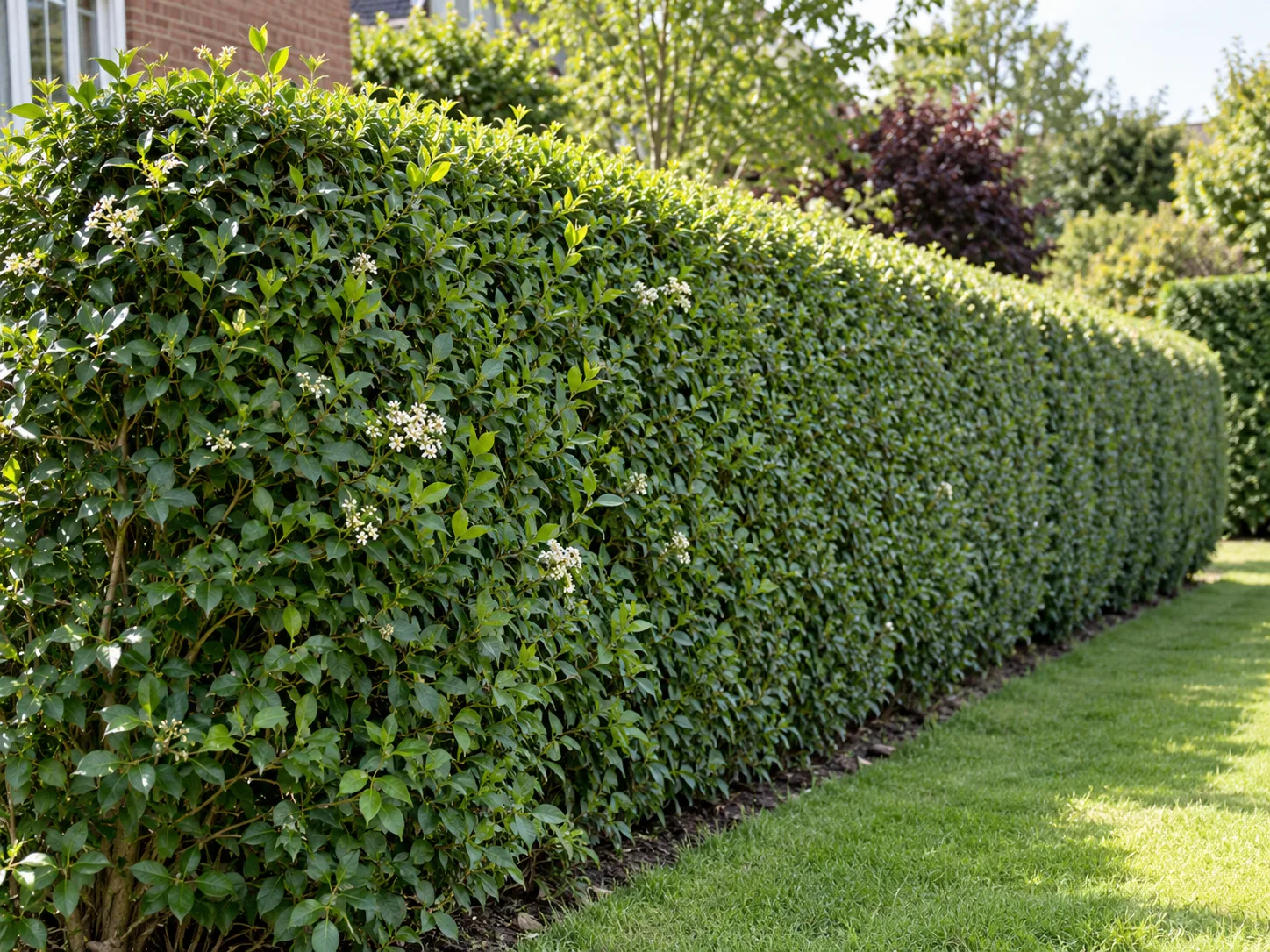
For a formal screen, keep the base slightly wider than the top so sunlight reaches lower branches; a hedge that is wider at the top can thin out at the bottom. Make several light passes instead of cutting deeply into old bare wood, which may not refill evenly. Remove dead, crossing, and inward-growing branches selectively when the plant is young, then trim the outer surface only as often as the chosen shape requires.
Late-winter pruning is also a fruit decision. Flowers and the following fruit form on new growth, so a heavy cut can reduce the next display even when the shrub responds with vigorous shoots. If berries are the reason you planted it, prune conservatively and avoid shearing after the growth that will flower has developed. The RHS holly guide recommends light trimming and advises pruning around the plant’s growth cycle.
Troubleshoot Yellow Leaves, Pests, and Decline
Chinese holly is generally durable, but it is not immune to pests or root problems. North Carolina State Extension lists holly leaf miner, scale, whitefly, and spider mites as occasional pests, with leaf spot, powdery mildew, leaf rot, and tar spot among possible diseases. Start by identifying what changed and where symptoms appear; spraying before you know the cause can damage beneficial insects and leave the real problem untouched.
Use the pattern of damage to choose your next check
- Yellowing across many leaves: Check whether the soil stays wet, the plant was planted too deeply, or the site has high-pH soil. Poor drainage and chlorosis are more useful first checks than adding a general fertilizer.
- Brown, scorched margins after dry or windy weather: Check root-zone moisture and winter exposure. Water deeply during a dry spell, maintain mulch over the root zone, and wait to see whether new growth is healthy before removing large sections.
- Curving trails inside leaves: These can point to leaf-miner activity. Remove a small number of badly affected leaves and ask your county extension office whether local monitoring or treatment is warranted.
- Small bumps, sticky residue, or fine stippling: Inspect leaf undersides and stems for scale or mites. Confirm the pest before using any treatment, and follow local extension advice and the product label if a pesticide is needed.
- Spots with premature leaf drop: Improve airflow by selective pruning, keep fallen infected leaves from accumulating under the shrub, and avoid routine overhead watering when foliage is slow to dry.
A single old leaf turning yellow is not an emergency; evergreens shed some older foliage. Widespread decline, branch dieback, or repeated yellowing deserves a closer look at drainage, planting depth, winter injury, and soil pH. The Clemson Cooperative Extension holly fact sheet and North Carolina State Extension’s Chinese holly profile are useful references for identifying likely pests and diseases before you treat.
Propagate a Named Cultivar With Cuttings
If you want another plant that matches a named cultivar, take semi-hardwood cuttings rather than collecting seed. A cutting is a clone, while seedlings may differ from the parent in growth habit, spine shape, sex, and fruiting behavior. This matters most when you are trying to reproduce a compact hedge or a particular berry-producing plant.
In summer, take several healthy tip cuttings from the current season’s growth after it begins to firm. Remove lower leaves, place the cut ends in a clean, free-draining propagation medium, and keep them warm and evenly moist in bright indirect light; high humidity helps, but a sealed, waterlogged container encourages rot. Rooting can be slow and uneven, so take more cuttings than the number of plants you ultimately need and wait for a well-developed root system before potting them on.
Seed propagation is possible, but it is a poor shortcut for a named selection. Seedlings can take a long time to germinate and will not reliably reproduce the cultivar’s size, sex, or berry traits. For a predictable landscape plant, buying a correctly labeled shrub is usually easier than raising seed.
Grow Compact Types in a Container
Chinese holly can grow in a large outdoor container if you choose a naturally compact cultivar and accept that the pot will need more attention than an in-ground planting. ‘Carissa’ is a better starting point than standard ‘Burfordii’ for a patio, but check the mature width and whether you value berries before selecting it. Use a sturdy pot with drainage holes and enough room for roots to expand; a decorative cachepot without drainage is not suitable as the planting container.
Use a free-draining shrub mix, water when the upper layer has begun to dry, and let excess water drain fully. Containers heat and dry faster than garden soil in summer and expose roots to colder temperatures in winter. If the plant outgrows its pot or dries out repeatedly between waterings, move it to a larger container or plant it in an appropriate permanent site rather than repeatedly pruning the top to compensate for a crowded root system.
Protect the Roots and Berry Display Through Winter
Plants in the right climate range usually need little winter care once established. A broad mulch layer helps buffer soil temperature and conserve moisture, especially around newly planted shrubs, but keep mulch away from the stems. Give a new plant some shelter from drying winter winds if it is exposed, and water before the ground freezes when autumn has been unusually dry.
In a marginally cold site, damage may show first at leaf edges or on exposed branch tips. Avoid pruning immediately after a cold snap; wait until the extent of dieback is clear, then cut back to living wood in late winter or early spring. A container plant needs extra root protection because a pot freezes more quickly than the ground, so move it to a sheltered outdoor position during the coldest weather rather than treating it as a warm indoor houseplant.
Keep Berries Away From Children and Pets
Treat Chinese holly fruit as ornamental, not edible. North Carolina State Extension describes the species as having low-severity poison characteristics and notes that ingestion can cause vomiting, diarrhea, or other illness in people. The ASPCA lists holly as toxic to dogs and cats; its guidance describes leaves and berries as low toxicity but still associates ingestion with vomiting, diarrhea, and depression. Keep fallen fruit out of reach and do not use branches where curious children or pets can chew them.
If a child or pet may have eaten berries or leaves, remove access to the plant and contact a medical professional, veterinarian, or poison-control service for case-specific advice. Do not wait for symptoms or try a home remedy. When pruning, wear gloves and protect your eyes; the spiny leaves can scratch skin even when the plant is otherwise healthy.
Conclusion
Chinese holly is easiest to grow when you choose the right cultivar before digging. Confirm local invasive guidance, plan for mature width, decide whether berry production requires a male pollinator, and place the shrub in sun with well-drained soil where it can remain undisturbed.
Water the root ball consistently while the plant establishes, then shift to deep watering during prolonged dry spells. Prune lightly in late winter, diagnose yellowing before fertilizing, and keep the sharp leaves and red fruit away from high-traffic play areas and pets. Those decisions will do more for a long-lived, attractive shrub than frequent feeding or constant shearing.



