Candy Corn Plant Care: How to Grow Cuphea micropetala
Grow *Cuphea micropetala* for late-season orange-and-yellow flowers. Get practical planting, container, pruning, and overwintering advice plus winter tips.
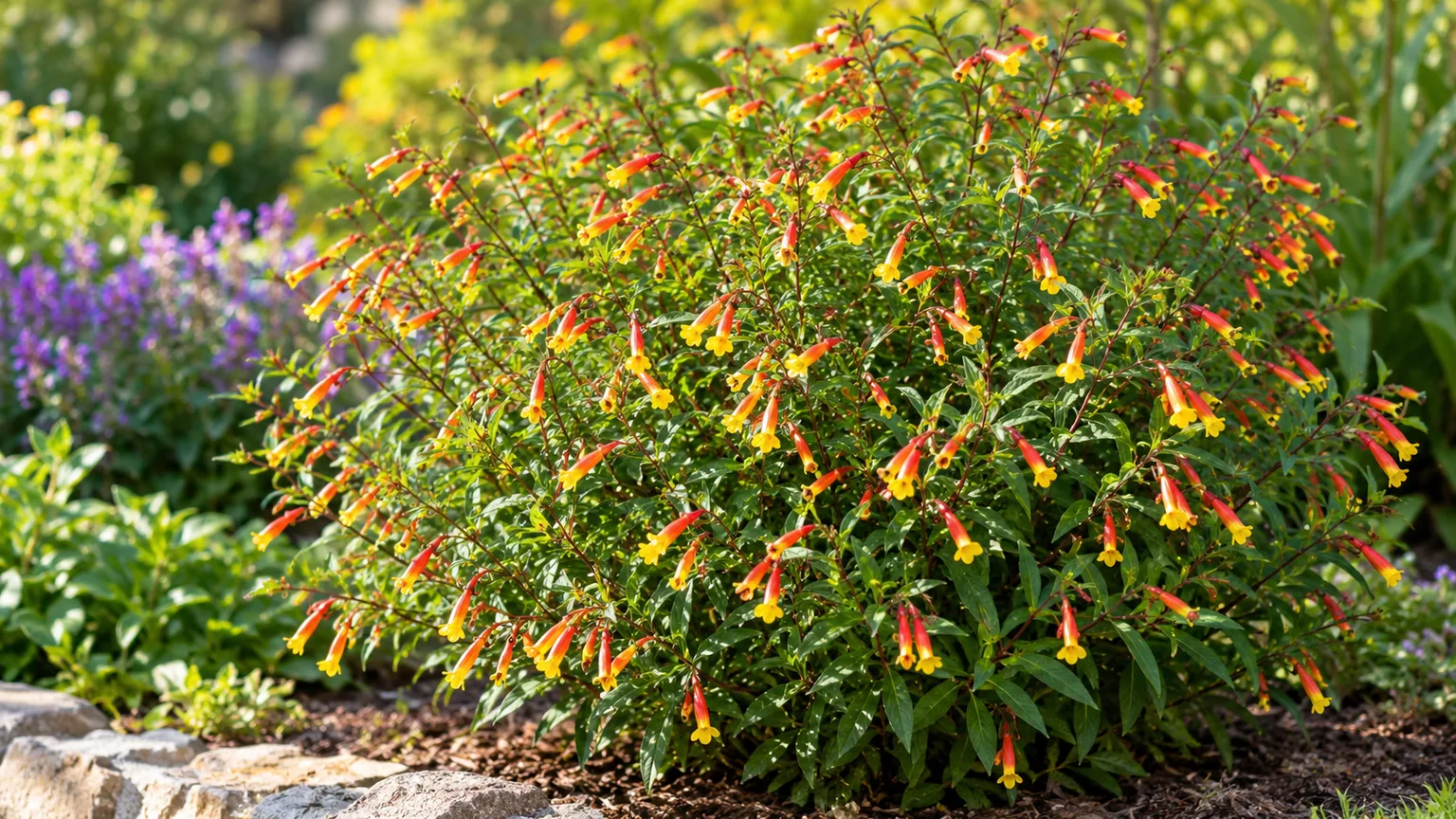
Candy corn plant (Cuphea micropetala) earns its place in a garden late in the season, when many summer flowers are fading. Its narrow green leaves and upright, branching stems carry tubular flowers that shift through yellow, orange, and red, and the blooms can attract butterflies and hummingbirds. The main challenge is not daily care; it is matching this warm-climate perennial to a winter that may be too cold or wet for it to survive outdoors. Clemson Cooperative Extension describes it as a fall-blooming perennial whose late flowers can support pollinators.
A sunny, well-drained site and regular water while the plant establishes are the basics. In colder regions, treat it as a seasonal annual or grow it in a container you can move to shelter; in warm regions, leave the stems standing through winter and prune only after you can see what survived.
Candy corn plant at a glance
| Feature | What to expect |
|---|---|
| Botanical name | Cuphea micropetala |
| Other common name | Mexican giant cigar plant |
| Origin | Central and southwestern Mexico |
| Habit | Clumping, woody-based perennial or subshrub in warm climates |
| Typical size | About 3 feet tall and wide; size varies with climate and growing conditions |
| Light | Full sun for the most flowers; some afternoon shade is acceptable in hot, dry sites |
| Soil | Ordinary garden soil is fine if it drains well |
| Bloom period | Late summer into fall; timing shifts by climate and establishment |
| Reference hardiness range | USDA zones 8a–11b in NC State Extension’s profile; local winter conditions still matter |
| Winter behavior | Evergreen in mild conditions; may die to the ground and regrow after cold |
| Common uses | Pollinator borders, cottage gardens, cutting gardens, large containers |
The plant is best thought of as a tender woody perennial rather than a reliably hardy shrub everywhere. Extension references commonly place it in warm zones, but a zone label cannot account for a wet winter, an exposed planting bed, or an unusually cold spell. Your local winter pattern and the drainage around the crown matter as much as the printed range.
How to identify Cuphea micropetala
Look for a rounded clump of narrow, lance-shaped leaves on upright stems that can become woody near the base. Kew describes the species as an erect woody perennial roughly 0.5 to 1.5 meters tall, with reddish-purple stems and narrow leaves; garden plants are often smaller, especially when young or grown in containers. Its tubular flowers are borne along the upper portions of the stems rather than forming a single, broad flower head.
The candy-corn effect comes from the flower’s changing color, not from a perfectly uniform stripe pattern on every bloom. Young flowers can look more yellow, while older flowers deepen toward orange-red. That variation creates a two-tone display across the shrub; it is also why plants with a mix of flower ages can look more vivid than a plant carrying only newly opened blooms. Kew’s Plants of the World Online confirms the species’ accepted name, Mexican range, woody habit, reddish stems, and distinctive floral structure.
Candy corn plant belongs to the loosestrife family, Lythraceae, and is native to Mexico. It is not a corn plant, a vine, or a member of the unrelated ornamental “cigar plant” types that share the genus name Cuphea. Identifying the exact species matters because size, flower form, bloom timing, and cold tolerance differ across the genus.
Where candy corn plant grows best
Sunlight for the strongest flowering
Give Cuphea micropetala at least six hours of direct light if you want the fullest flowering. North Carolina State Extension recommends full sun for the most blooms, while a location with light afternoon shade can be a sensible compromise where reflected heat and dry summer winds are intense. Deep shade usually produces more foliage and fewer flowers, and the plant may lean as it reaches for light.
If you are choosing between a morning-sun site and a hot, walled-in western exposure, start with the morning-sun bed unless your climate is mild. The goal is enough direct light to support flowering without making a new transplant struggle through its first weeks. A plant in a pot can be moved after you see how quickly its soil dries.
Soil and drainage before fertilizer
The soil does not need to be exceptionally rich or specially acidic. Average garden soil works when water can drain away rather than pooling around the crown; heavy clay can be workable if the bed drains, but a low spot that stays wet after rain is a poor planting choice. If water stands for hours, choose a raised bed, a slight slope, or a large container instead of trying to fix the problem with frequent amendments.
This distinction becomes more important in winter. A plant that tolerates a brief cold spell may still be lost when cold and saturated soil persist together, so improving drainage is more useful than feeding a struggling plant. Work in a modest amount of finished compost if the bed is depleted, but avoid creating a rich pocket that holds water around the roots.
Heat, cold, and the perennial question
Candy corn plant is reliably perennial only where winter conditions remain mild enough. NC State Extension describes it as a perennial in warmer regions and notes that plants can die back when temperatures reach the 20s, then recover as spring temperatures rise. The University of North Florida Botanical Garden likewise reports that it can die to the ground and resprout after a cold Northeast Florida winter.
NC State Extension lists USDA zones 8a through 11b, but treat that range as a guide rather than a promise for every yard. Winter outcomes vary with drainage, exposure, and the age of the root system. In borderline climates, treat the plant as a tender perennial: spring planting gives roots the longest possible growing season before winter, but do not count on a first-year plant surviving a severe or wet freeze. In colder regions, enjoy it as an annual or overwinter a potted specimen in a protected, bright, frost-free space.
When and how to plant it
Plant outdoors after frost danger has passed and the soil has warmed. Spring planting gives a young plant time to develop roots and branching before its late-season display; a plant installed shortly before autumn may stay small or fail to settle in before cold arrives. In mild climates, fall planting can work if the plant has several weeks of warm weather and the site drains well, but it is a riskier choice where winters are unpredictable.
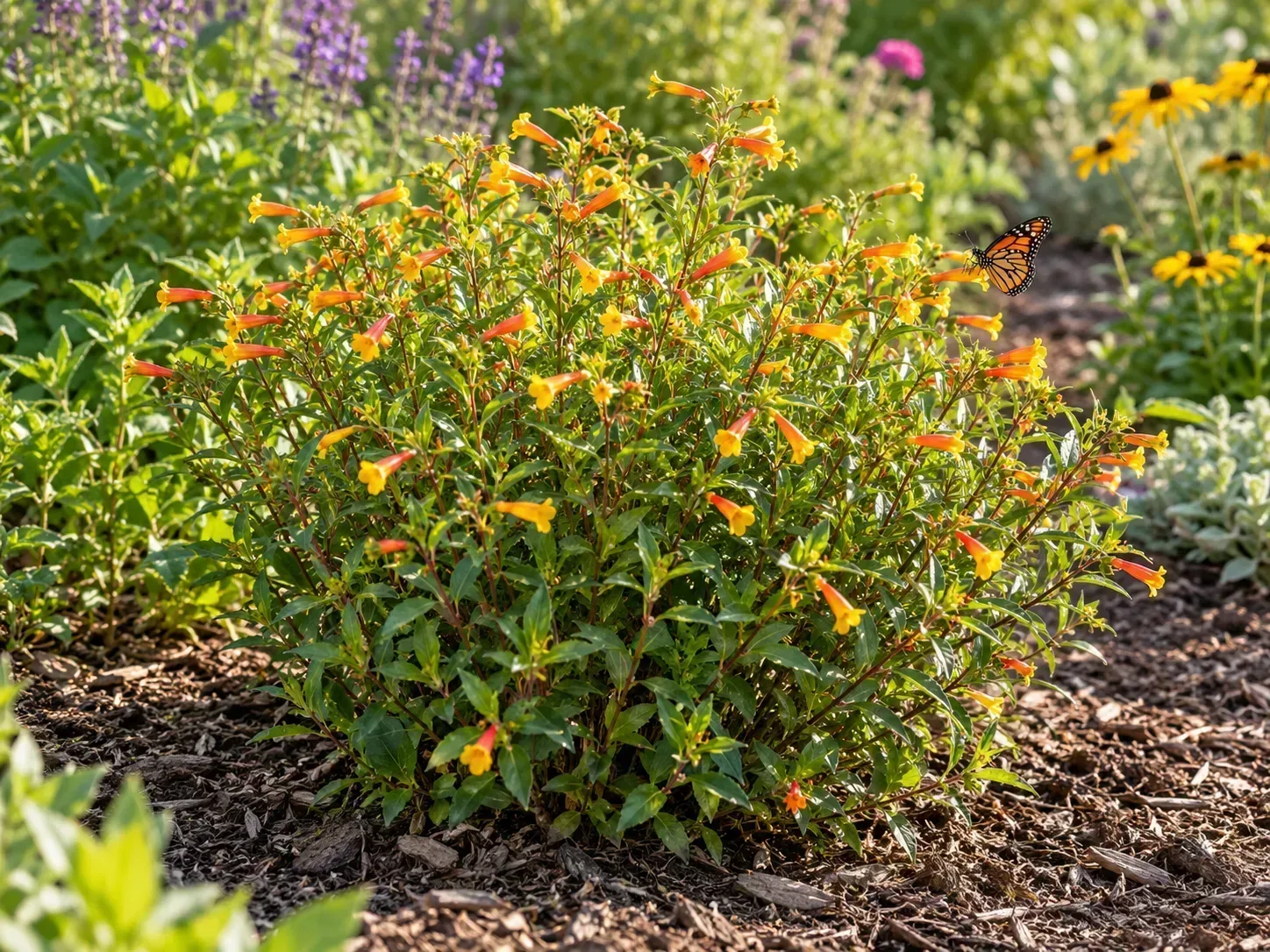
Choose a spot with room for the plant to form a rounded clump. Mature dimensions are often near 3 feet in height and width, though nursery tags and local conditions can yield smaller or larger plants. Leave enough air space that neighboring plants do not bury the lower stems, and avoid crowding it against a walkway where branches will be constantly brushed aside.
To transplant, water the nursery pot first, loosen circling roots gently, and set the root ball level with the surrounding soil. Backfill with the native soil rather than a rich, sharply different mix, then water thoroughly to settle it. Mulch can help conserve moisture in summer, but keep it a few inches away from the stems so the crown is not held damp.
Watering without keeping roots soggy
Water regularly during the first growing season, especially when the plant is newly planted or a stretch of hot weather arrives. Rather than watering by a rigid calendar, check the soil a finger’s depth below the surface; if it is drying out, give the root zone a thorough soak. Newly planted shrubs need more consistent moisture than an established clump, whose roots can explore a larger volume of soil.
Once established, candy corn plant tolerates some dry weather. That does not mean it should be left bone dry while it is flowering in a container or during a prolonged heat wave. A practical rule is to water deeply when the upper few inches of soil have dried, then let excess drain completely; in-ground plants may need less frequent watering after their first season.
Watch how the plant and soil respond together. Midday drooping that resolves by evening in extreme heat can be temporary, but repeated wilting in a pot usually means the root ball is drying too quickly. Yellowing lower leaves paired with persistently wet soil point in the opposite direction: pause watering, clear blocked drainage, and check whether the roots are staying saturated.
Avoid small daily splashes that wet only the surface. They encourage shallow roots and can leave the center of a dense root ball dry, particularly in a large pot. Water at soil level when possible, and empty saucers after irrigation so the plant is not left standing in water.
Fertilizing for flowers, not just foliage
A plant in reasonably fertile garden soil may need no routine fertilizer. Too much nitrogen can push soft leafy growth at the expense of sturdy branching and flowers, while a healthy clump in poor soil may benefit from a light spring application of a balanced, slow-release fertilizer. Follow the label for container size or bed area rather than adding an extra dose because flowering has not started yet.
Start by checking the likely causes of weak flowering: insufficient sun, planting too late in the season, recent transplant stress, or winter damage. Fertilizer will not correct any of those. If the leaves are unusually pale and growth is weak after the plant has established, a soil test or a modest, label-directed feed is more useful than repeated applications.
Container plants lose nutrients through repeated watering, so they may need more regular feeding than in-ground plants. Use a diluted, balanced product at the labeled interval during active growth, then stop or reduce feeding as growth slows in cool weather. Do not fertilize a dry root ball; water first to lower the chance of root injury.
Growing candy corn plant in a container
A container is a useful choice when your winters are too cold for in-ground survival. Pick a sturdy pot with several drainage holes and enough volume to support a shrub that can reach around 3 feet; a pot roughly 18 inches wide is a reasonable starting point for a mature specimen, though a young plant can begin in a smaller vessel and move up as it grows. Choose a pot that can be moved safely before buying the largest possible one.
Use a quality potting mix that drains freely, not garden soil packed into a pot. Set the plant at its original depth, water until liquid runs from the drainage holes, and let the mix begin to dry between thorough waterings. In hot weather, a large established plant may drink quickly; in cool weather or low light, the same watering schedule can keep the root zone too wet.
Put the pot where it receives several hours of direct sun and enough airflow. If you want to overwinter it indoors, move it before a hard freeze rather than waiting until foliage has been badly damaged. A bright, cool-but-frost-free area is generally easier to manage than a dim heated room; reduce watering when growth slows, and do not expect the plant to flower well without adequate light.
Repot when roots circle densely, water runs straight through without wetting the mix, or growth stalls despite good light and appropriate watering. Move up one pot size in spring and loosen only the outer circling roots. A container plant can also be divided or replaced if it has become woody and difficult to keep balanced.
What to expect from the flowers and pollinators
The main display typically arrives from late summer into fall, although exact timing shifts with climate, planting date, and the time needed for a new plant to establish. The University of North Florida Botanical Garden describes its heaviest flowering as late summer and fall. Clemson Extension notes that the September bloom period can provide nectar when some summer flowers have faded.
Flowers are tubular and nectar-rich, which helps explain their appeal to hummingbirds and butterflies. Use candy corn plant as one part of a pollinator border rather than as a single-source habitat: a sequence of native and adapted flowers with overlapping bloom periods provides more reliable resources across the growing season. Leave pesticide decisions out of the routine care plan unless a pest is truly causing damage; broad, unnecessary spraying can harm visiting insects.
The plant is generally self-cleaning, so you do not have to remove every spent flower to keep it blooming. If a few branches become untidy, trim them lightly after the main flush, but avoid shearing repeatedly through buds. Late pruning is best saved for the dormant or nearly dormant period, when you can see the plant’s basic framework.
Pruning and overwintering the plant
In warm climates, wait until late winter before cutting the plant back. NC State Extension recommends a late-winter cutback to prompt fresh growth, and waiting also gives the stems time to protect the crown during cold snaps. Once you see new growth near the base, remove dead or damaged stems and cut remaining old stems back close to the ground, taking care not to nick emerging shoots.
Do not cut it hard in autumn just because the blooms are finished. If the plant has died back after a freeze, leave the base in place until spring rather than assuming it is dead; the roots may still be alive and capable of resprouting. A thin mulch layer can buffer temperature swings, but do not pile wet mulch over the crown.
In a borderline climate, site selection is the first winter protection. Choose a sheltered, well-drained spot out of cold wind, plant in spring, and avoid stimulating tender late growth with heavy autumn fertilizer. If the plant is in a container, move it under cover before temperatures fall below freezing; a warm, bright protected place is safer than leaving a pot exposed, because roots in a container experience colder conditions than roots in the ground.
In climates with winters well below the plant’s tolerance, either grow it as a warm-season annual or overwinter a potted plant indoors. Indoor survival is not guaranteed: low light, dry heated air, and excess watering can all weaken it. Keep the plant in the brightest suitable location, inspect for pests before bringing it inside, and water according to actual soil dryness rather than the summer routine.
Three ways to propagate candy corn plant
Propagation is most reliable during active growth, when stems are flexible and the plant can recover quickly. The methods are not equally convenient: cuttings produce a small number of clones, division refreshes a mature clump, and seed is worthwhile when you have viable seed and enough warmth. For most home gardeners, a few spring or early-summer cuttings are the easiest controlled route.
Rooting stem cuttings
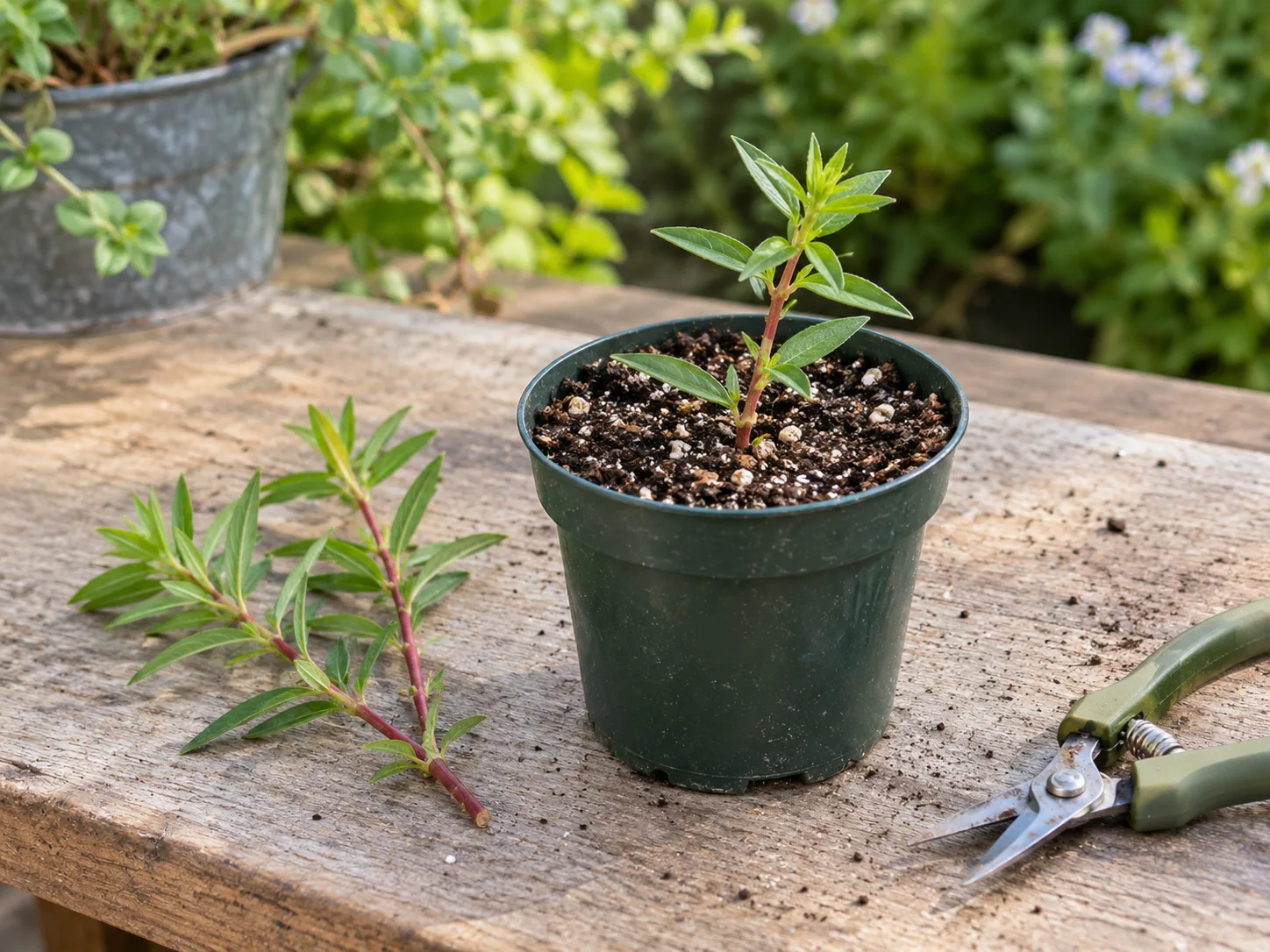
Take 3- to 4-inch tip cuttings from healthy, nonflowering stems in spring or early summer. Use clean snips, remove the leaves from the lower half, and insert the bare stem into a small pot filled with moist seed-starting mix or another airy, clean propagation medium. Avoid taking so many cuttings that the parent loses the new growth it needs for the season.
Place the pot in bright, indirect light and keep the medium lightly moist, not waterlogged. A clear cover can help hold humidity, but vent it daily and remove it if condensation stays heavy or mold appears. Warmth supports rooting; harsh direct sun can overheat a covered pot and wilt the cutting before it forms roots.
Check for resistance with a gentle tug after a few weeks rather than pulling the cutting up to inspect it. Rooting time depends on temperature and the maturity of the stem; Rooting time depends on temperature and the maturity of the stem, so allow several weeks before checking for resistance with a gentle tug. Once roots hold the mix together and new growth appears, acclimate it gradually to outdoor sun before planting it in the garden.
Dividing an established clump
Division is best for a mature plant that has formed several rooted shoots and is actively growing in spring. Water it the day before, lift the clump carefully, and use a sharp spade or knife to separate it into sections with healthy roots and several stems each. A very small plant or a woody specimen with few independent rooted sections may not divide cleanly; take cuttings instead.
Replant the divisions promptly at their previous depth and water them thoroughly. Keep the soil evenly moist while they settle in, and give them temporary protection from harsh afternoon sun if the roots were disturbed. Division can reinvigorate an overgrown plant, but it also temporarily reduces flowering while the sections rebuild roots.
Starting from seed
Seed is a possibility, but it is less predictable than taking cuttings or buying a plant. Allow flowers to mature and look for dry seed capsules; collect them before they split and scatter. Seed availability can be limited, and seedlings may not match a selected parent perfectly if the plant was grown near other Cuphea varieties.
Cuphea seed-starting guidance commonly recommends warm conditions and surface sowing because the seeds need light. Press seed gently against moist mix instead of burying it, and keep the container warm and evenly damp; Garden Design’s broader Cuphea guidance advises waiting until outdoor soil is warm and gives germination in roughly 8 to 10 days under suitable conditions. Treat that timing as a general genus-level expectation, not a guarantee for every C. micropetala seed lot.
Once seedlings have several true leaves, transplant them carefully into individual pots and grow them on in bright light. Harden them off after frost danger has passed. Seedlings started late may not have enough time to become substantial plants before the autumn flowering period, so start early if you want a meaningful first-season display.
Troubleshooting common problems
Few or no flowers: Start with light and timing. A shaded plant, a very late spring planting, or a plant recovering from hard winter damage may produce leaves before it is ready to flower; moving it into stronger light or feeding it heavily will not make it bloom overnight. Give it a full growing season in a suitable site before deciding it is a poor performer.
Leggy stems: Too much shade, excessive nitrogen, or crowding can lead to stretched growth. Improve light gradually if the plant is in a pot, reduce unnecessary fertilizer, and pinch or lightly trim young growth in late spring to encourage branching. Avoid cutting deeply into old woody stems during summer unless the plant has healthy shoots below the cut.
Yellowing leaves or a declining base: Check the soil before adding water or fertilizer. Persistently damp soil and poor drainage can stress roots, especially when temperatures are cool; improve drainage and let the mix dry somewhat before watering again. If only a few older leaves yellow while the plant is growing well, that may be normal turnover rather than a crisis.
Freeze damage: Wait for the coldest weather to pass and watch for new growth at the base. In warm regions the top can die back while the root crown survives, so an apparently bare plant may still recover. If no growth appears after the surrounding plants have resumed growth and the crown is soft or rotten, the plant may not have survived.
Aphids: Inspect the newest growth if leaves curl or sticky residue appears. NC State identifies aphids as a pest to watch, though the species has few significant pest problems overall. For a small infestation, dislodge them with a firm stream of water and reassess before using any pesticide; follow product labels and avoid spraying open blooms visited by pollinators.
Choosing the right plant when names overlap
“Candy corn plant” is sometimes used loosely for plants with similar orange-and-yellow flowers. The name in a nursery listing is not enough; check the botanical name before buying, particularly if you want a clumping shrub that returns in a warm climate.
Cuphea micropetala is the true candy corn plant described here. Cuphea ignea is usually called cigar plant or firecracker plant and has a different flower shape; some hybrids are sold under dramatic cultivar names and may stay more compact. Cuphea llavea, or bat-faced Cuphea, has a very different flower profile, while Manettia luteorubra is a twining vine sometimes called candy corn vine. They are not interchangeable in habit or care.
If you have limited space or need a plant to trail or climb, the clumping habit of C. micropetala may not fit your design. If your winters are cold and you cannot move a large pot, treat it as an annual rather than expecting a perennial to return. Confirm the Latin name and mature dimensions on the plant tag, then choose based on your site and winter plan rather than the common name alone.
Conclusion
Candy corn plant grows best in a sunny place with soil that drains freely, and it needs more attention while establishing than after its roots have spread. Its late-season flowers make it useful in a pollinator border, but its winter behavior is the deciding factor: in warm, well-drained gardens it can return from a woody base, while colder regions are better served by an annual planting or a movable container.
Plant in spring, water deeply as the root system develops, and avoid excess fertilizer and soggy soil. Leave the stems through winter, prune after new growth shows, and propagate with cuttings if you want a dependable copy of a plant you like.



