How to Grow and Care for Hoptree: Site to Seed and Prune
Learn hoptree care from site selection to pruning, plus how to start this native shrub from seed and support swallowtail larvae without panic or pesticides.
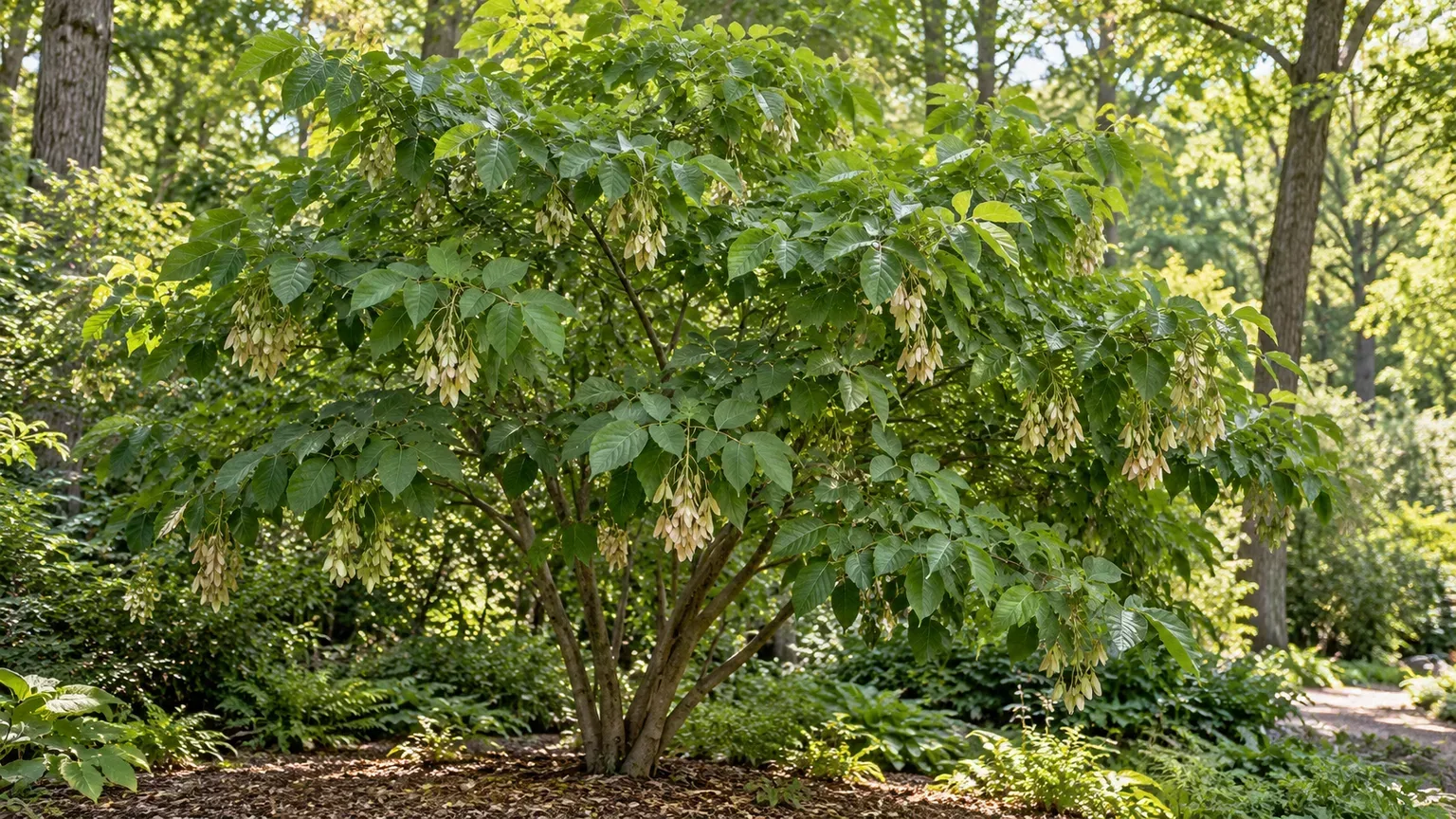
Hoptree is a useful choice when you want a native, deciduous shrub that tolerates shade and gives swallowtail butterflies a place to raise their young. It is also a plant to choose with your eyes open: Ptelea trifoliata can become a broad, low-branched shrub or small tree, its crushed leaves have a noticeable smell, and hungry caterpillars may strip a young plant more than you expect.
The care itself is straightforward. Give a new plant room, drainable soil, and regular water while it establishes; after that, hoptree usually needs little pruning or fertilizer. The sections below help you decide where it belongs, what to expect through the seasons, and whether seed or layering is the better way to make more.
Does Hoptree Fit Your Garden?
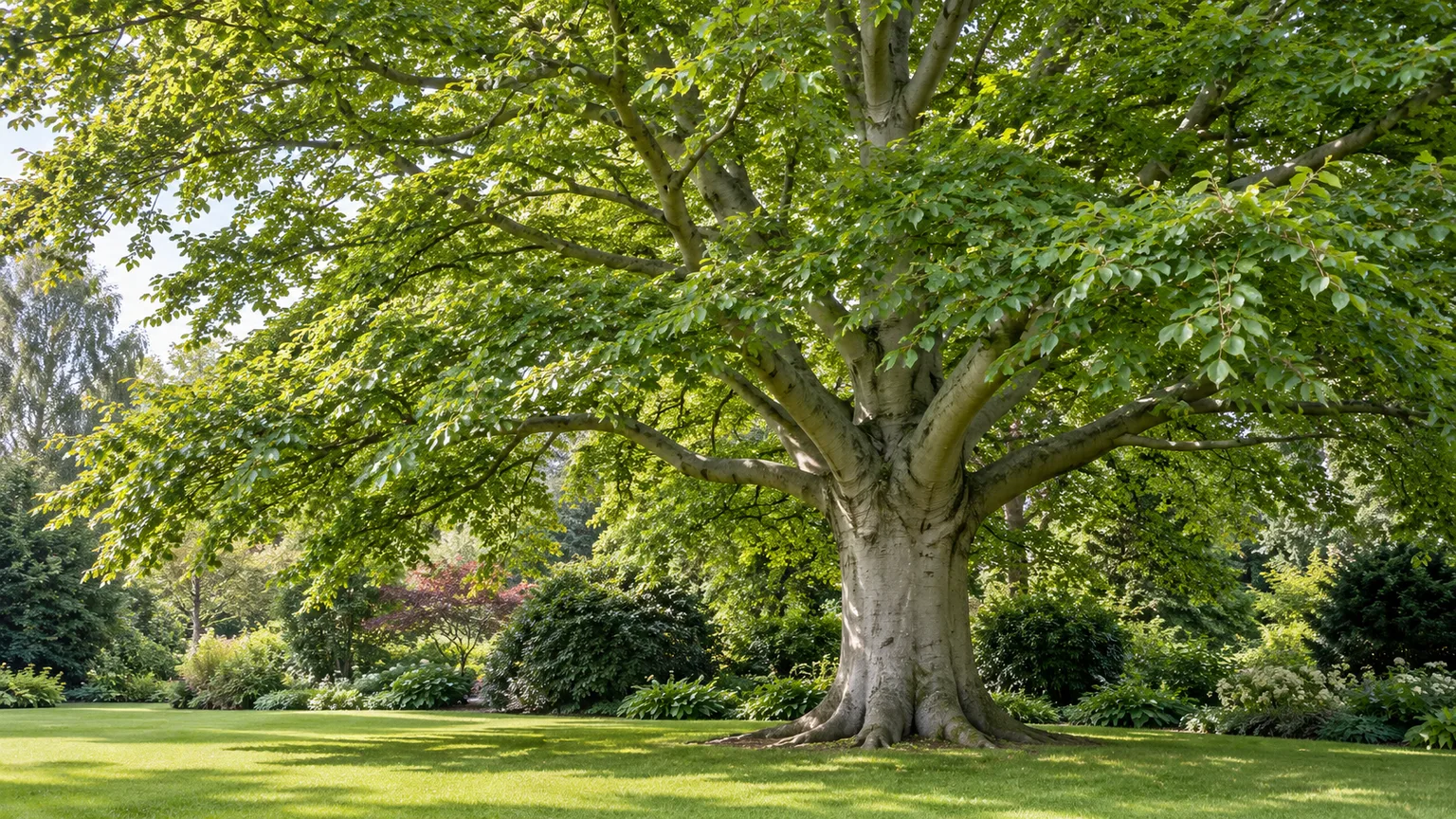
Hoptree is a large shrub or small tree, not a compact foundation plant. A mature specimen commonly reaches about 15 to 20 feet tall and can spread about as wide, although the exact shape depends on growing conditions and whether you let it retain several low stems. Oregon State University’s Landscape Plants profile and NC State Extension’s plant profile give similar mature dimensions.
Plan around the crown it will have in years, not the small nursery pot you buy today.
That footprint works well at a woodland edge, in a native shrub border, or as an informal screen where lower branching is welcome. It is a poor fit beneath low utility wires, tight beside a walkway, or where you need an evergreen privacy wall. Hoptree drops its leaves in fall, grows relatively slowly, and is often valued more for habitat and texture than for dramatic flowers.
Its most distinctive garden role is as a larval host plant for the giant swallowtail. A planting also offers spring flowers for insects and papery fruits that can persist after the leaves fall. If you want a spotless specimen with no chewing, a host plant may not match your priorities; if you enjoy seeing the food web in the garden, that feeding is part of the benefit.
Identify Hoptree Before You Plant
The botanical name is Ptelea trifoliata, and the plant belongs to the citrus family, Rutaceae. Its compound leaves have three leaflets—the center leaflet is often the largest—and the glossy green foliage can turn yellow-green in autumn.
When you crush a leaf or stem, it may release a strong citrus-like or musky odor; people disagree about whether that smell is pleasant, so avoid placing the plant right beside a seating area if you are sensitive to fragrance. Oregon State’s species description notes the leaf structure and crushed-leaf odor.
After the foliage emerges, small greenish-white flowers form in clusters near the ends of branches. Those flowers are subtle rather than showy; the flatter, round, winged fruits that follow are easier to recognize.
Oregon State’s botanical profile describes the fruit as a circular samara, and the name trifoliata refers to the three-part leaf. The species is native across a broad stretch of North America, but local populations and regional conditions still matter when you choose a nursery plant.
Hoptree Is Not Hop Hornbeam
Common names can cause a mix-up: hoptree is not hop hornbeam (Ostrya virginiana), an unrelated tree in the birch family. Hoptree has three-part compound leaves and flat, wafer-like samaras; hop hornbeam has simple, toothed leaves and hop-like clusters of papery fruit. Hoptree also is not a true ash despite “stinking ash” and “wafer ash” among its common names.
The word “hop” reflects a historical use of hoptree’s bitter fruits as a poor substitute for hops, as noted in the University of Arkansas System Division of Agriculture profile. That history is not a modern food or brewing recommendation. Do not eat the fruits, brew with them, or use plant parts medicinally based on a common name or historical anecdote.
Choose a Site for the Mature Shrub
Before digging, look at the site through the day and after rain. Hoptree is unusually adaptable for a native woody plant, but a simple distinction helps: it tolerates several light levels, while long-term success still depends on giving roots both moisture and air. The plant fits best where its full crown can develop without constant shearing or crowding.
Sun, Shade, and Heat
Hoptree grows in full sun, partial shade, and even heavy shade. That range is useful, but it does not mean each location produces the same result. An open woodland edge or site with dappled light is a reliable starting point: it reflects the shrub’s natural setting and avoids the harshest afternoon exposure in hot-summer regions.
In more sun, expect the soil to dry sooner, especially while the roots are young. Check moisture more often during heat waves, and use mulch to slow evaporation.
In deep shade, the plant may still grow, but flowering and fruiting can be less noticeable, and a crowded canopy can make the naturally spreading form feel sparse. Give it airflow and enough light for the role you want, rather than forcing a bright, showy performance from an understory species.
Soil, Drainage, and Native Range
Choose average garden soil that drains after a heavy rain. Hoptree can handle clay, rocky ground, and a range of soil conditions, but tolerance of clay does not mean it should sit in a basin of water.
A low point that stays saturated is a worse choice than ordinary soil that dries between rains. NC State Extension documents the species in open woodland and rocky bluff habitats, while Arkansas Extension describes it at woodland edges in moderately moist soil, not directly beside streams.
Its common name “swamp dogwood” can mislead gardeners into planting it in permanently wet ground. If a test hole still holds standing water the next day, improve drainage or choose a different location instead of trying to fix the problem with fertilizer. You do not need to amend the entire bed with rich compost; planting into the native soil helps roots transition beyond the hole without creating a soft, overly amended pocket.
Plant Hoptree at the Right Depth
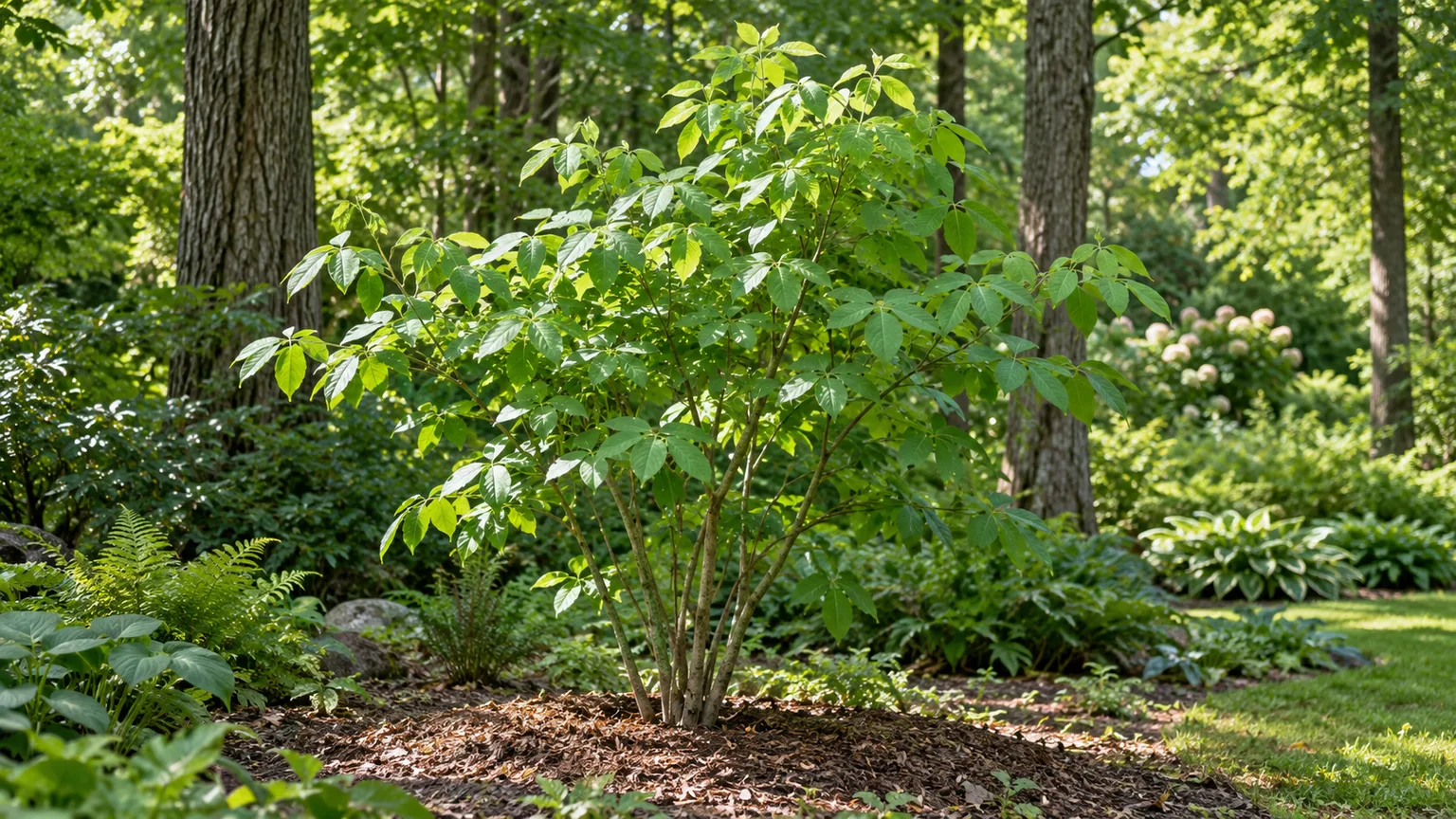
Plant a container-grown hoptree in fall or early spring when the ground is workable and temperatures are moderate. Avoid planting during a heat wave, into frozen soil, or just before a stretch when you cannot keep a new root ball from drying out. If you are comparing nursery plants, look for a firm root ball, healthy buds, and several sound stems; a smaller plant is easier to water and establish than an oversized specimen.
Dig a hole two to three times as wide as the root ball but no deeper. Loosen circling roots around the outside, position the plant so the root flare sits at or just above finished soil level, and backfill with the soil you removed. Water slowly to settle the soil around the roots, then spread a 2- to 3-inch layer of organic mulch over the root zone while keeping it several inches away from the stems.
If you are planting more than one hoptree, leave space for mature width instead of spacing them like a clipped hedge. The root flare should remain visible after settling; burying the stems under soil or piling mulch against the trunk can keep the base damp and conceal early damage. Water the entire root ball and surrounding backfill, since a dry nursery mix can repel water even while the adjacent garden soil looks moist.
Water It Through Establishment
A newly planted hoptree needs more attention than an established one. During its first growing season, check the root ball and surrounding soil every few days in hot or windy weather, then water deeply when the upper few inches have dried.
In cool, rainy weather, wait; a calendar reminder should not override a wet root zone. The goal is evenly moist soil around new roots, not permanent saturation.
Water at the base so it reaches the root ball rather than running off the surface. A slow hose or drip line is useful on compacted or sloped ground, where a fast pour may disappear before it soaks in. If leaves droop in late afternoon during a heat spell, check the soil before adding water: temporary midday wilt can occur in heat, but persistent wilt with dry soil calls for a deep soak, while wilt with wet soil points toward a drainage or root problem.
Once established, hoptree tolerates dry periods better than many ornamental shrubs. Do not interpret that as “never water”: a prolonged drought, exposed full-sun site, or unusually dry winter can still stress a young or recently transplanted plant. For general garden watering, horticulturist Melinda Myers recommends watering thoroughly but less often and checking soil moisture below the surface; apply that principle to hoptree rather than using a fixed weekly amount for every climate and soil.
Mulch and Fertilizer: Keep Care Light
A broad, shallow mulch ring reduces weeds and slows water loss while roots expand. Shredded leaves or bark chips work; keep the layer about 2 to 3 inches deep and leave an open collar around the stems.
Each spring, top up only where the mulch has thinned, instead of building a volcano against the shrub. A natural leaf layer beneath nearby trees can also serve the same basic function.
Hoptree generally does not need routine fertilizer in ordinary garden soil. Too much nitrogen can push soft leafy growth without solving the real cause of poor performance, and it cannot compensate for standing water, excessive shade, or a root ball that dries out. If growth is unusually weak after the plant has had time to establish, first check drainage, moisture, root competition, and light; use a soil test before adding nutrients.
Prune for a Shrub or Small Tree
Let the plant’s natural shape guide pruning. For a multi-stem shrub, remove dead, broken, rubbing, or badly crossing branches and keep the crown open enough for air and light. If you prefer a small-tree form, select one sturdy trunk while the plant is young and remove competing basal stems gradually over several seasons; stripping every lower branch at once creates unnecessary stress and can leave the plant looking awkward.
Late winter is a convenient time to inspect the structure while the leaves are off. Make clean cuts just outside the branch collar, and avoid topping the plant to hold it below a size that the site can support. If flowers and samaras are a priority, do not shear the branch tips without considering the plant’s flowering cycle; light selective cuts preserve more natural shape and seasonal interest than repeated hedge trimming.
Hoptree may produce shoots from the base, which can be useful when you want a fuller screen but inconvenient in a narrow bed. Remove unwanted shoots at their point of origin when they are small, rather than repeatedly mowing the same area. If the plant’s size or spreading form keeps requiring major cuts, relocating or replacing it with a naturally smaller shrub is kinder and less work than trying to maintain a permanent artificial outline.
Flowers, Scent, and Papery Samaras
The small flowers usually appear in late spring or early summer, with timing shifting by region and the year’s weather. They are greenish to pale yellow-white and can have a musky or citrus-like scent. Arkansas Extension notes that the fragrance varies by observer; a plant that smells mild to one person can seem unpleasant to another, especially when leaves are bruised.
After flowering, female flowers can develop into flat, papery, round-winged fruits called samaras. They turn tan or brown as they mature and may remain on branches into winter, adding a subtle texture after leaf fall.
The fruit is not a showy edible harvest; treat it as a botanical feature and wildlife resource. NC State Extension notes that birds and small mammals use the fruits, and the thin wings help distinguish hoptree from plants with fleshy berries.
A young hoptree may take several years to flower. Arkansas Extension’s profile described a five-year-old specimen that bloomed for the first time, but that is one garden observation, not a guaranteed schedule. If a healthy plant is still juvenile, patience is more useful than heavy feeding.
If an older plant rarely flowers, review its light exposure and pruning history before changing fertilizer.
Make Room for Swallowtail Caterpillars
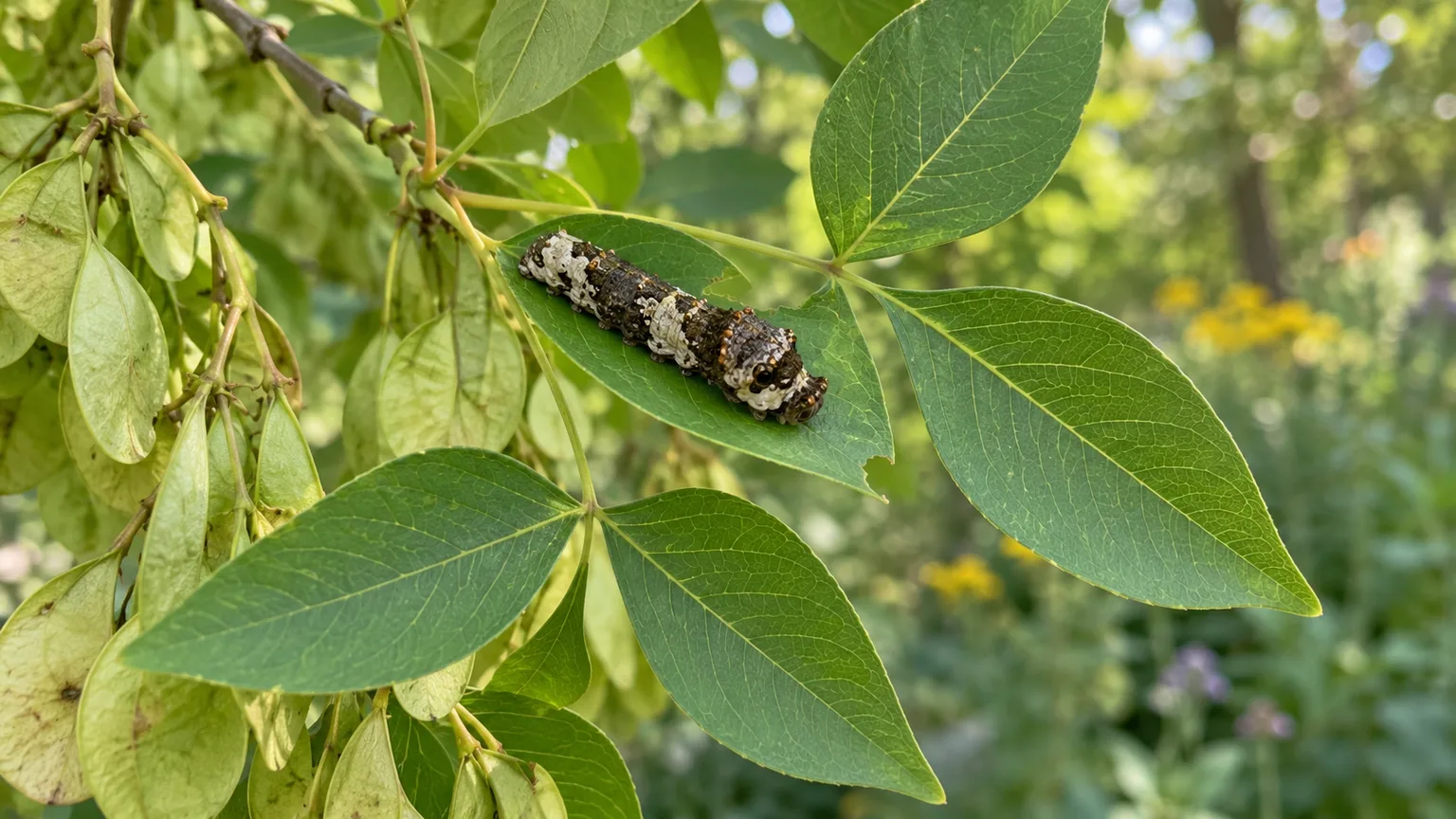
Hoptree is a host plant for the giant swallowtail’s caterpillars, and NC State Extension identifies it as one of the larval host plants for that butterfly. Gardenia’s hoptree profile also describes its role for eastern tiger swallowtail larvae. The small eggs and camouflaged caterpillars can be easy to overlook until chewing becomes visible; young larvae may resemble bird droppings, a form of camouflage rather than evidence of disease.
A young shrub can lose a surprising amount of foliage if many larvae arrive at once. An Arkansas Extension horticulturist recounts a small hoptree with more giant swallowtail eggs than it could easily support.
That is a real trade-off for a host plant, not a sign that the shrub is inherently unhealthy. Established hoptree can replace leaves, but newly planted specimens have less reserve, so support the plant with appropriate moisture and do not add stress through drought or aggressive pruning.
If your goal is to support butterflies, leave healthy caterpillars in place and avoid broad-spectrum insecticides. A spray intended for chewing insects can harm the very larvae the plant is there to feed.
If you cannot accept visible leaf loss, choose a different spot or plant more than one host shrub so a single small specimen is not the only food source. Do not remove caterpillars simply because the leaves look imperfect; intervene only if you have identified a separate, serious problem and have a specific, targeted plan.
Propagate Hoptree From Seed
Seed is a good option if you can be patient and want several plants. Hoptree seed may be slow or inconsistent for home gardeners because it can need a period of cool, moist conditions before it germinates. The USDA Forest Service-associated Native Plant Network protocol documents a nursery process that collected seeds in November, stored them cool, then pretreated them in damp sphagnum for about five months before sowing.
Collect mature samaras from a healthy plant as they turn from green toward tan or brown, and keep the seed lot labeled with its collection date and source. Remove damaged fruits and let the rest dry briefly in a ventilated place before storage.
The exact collection month varies by climate, so use the fruit’s maturity rather than a fixed date from another region. If you cannot identify the seed inside a samara confidently, sow intact mature samaras rather than crushing them and damaging the seed.
Cold Stratification or Outdoor Sowing
For controlled sowing, mix the seeds with barely damp coarse sphagnum or another clean, moisture-holding medium, seal them in a labeled container, and keep them cool and moist for roughly five months before sowing. The Native Plant Network’s protocol specifies a long pretreatment but displays inconsistent temperature units, so confirm a precise setting with a regional native-plant nursery instead of relying on that field. Check the medium periodically: it should stay damp but not waterlogged, and seeds with visible roots should be sown carefully rather than left tangled in moss.
A simpler route in the Native Plant Network protocol is to sow the dried seeds in flats outdoors in a sheltered cold frame or unheated high tunnel and wait through natural seasonal conditions. Protect the container from rodents, which may disturb or eat seeds, and mark the location so it is not discarded as an empty pot. That protocol reports emergence in five to six months; home results can take longer or vary with seed maturity and conditions, so do not throw the flat away after a few weeks.
Move seedlings only after they are sturdy enough to handle, and keep them shaded from harsh midday sun while they establish. Grow them in individual containers until the roots hold the mix together, then plant them outdoors during cool weather. Seed-grown plants may vary and take time to reach a useful landscape size; if you want one exact cultivar or an established plant sooner, buy a nursery-grown specimen instead.
Try Layering Before Taking Cuttings
Layering is often simpler than trying to root a fresh cutting because a low branch stays attached to the parent plant while it develops roots. NC State Extension lists layering as a recommended propagation strategy for hoptree, while Gardenia’s profile also describes semi-hardwood cuttings. If the plant has a flexible lower branch, layering is the easier home-gardener experiment.
In spring or early summer, choose a healthy branch low enough to bend toward the soil without cracking. Remove leaves from a short section, gently nick the underside if the stem is woody, pin that section under a few inches of soil, and leave the leafy tip above ground.
Keep the spot moist and mark it; check for roots only after a full growing season rather than tugging repeatedly. When it has formed a substantial root system, sever the new plant from the parent and transplant it during dormancy.
Semi-hardwood cuttings are less predictable. If you try one, take several healthy current-season stems after they begin to firm, use a clean sharp pruner, and place them in a sterile, well-drained propagation medium under bright indirect light and high humidity.
Not every cutting will root, and rooting hormone is not a substitute for correct moisture and cleanliness. For a single new plant, layering or a nursery purchase is usually more efficient than expecting every cutting to succeed.
Troubleshoot Slow Growth and Leaf Damage
Slow growth is normal at first. Hoptree is not known for rapid growth, and it may spend its early years building roots before adding much visible height or flowering. If the plant is stable and leaves look healthy, check whether it receives enough moisture during establishment and whether nearby tree roots are competing for water. Do not respond by repeatedly applying fertilizer, which can make the soil problem harder to diagnose.
Yellowing or wilt calls for a soil check. Feel the soil at the root ball and a few inches beyond it. Dry soil suggests the plant needs a slow soak, while persistently wet soil points toward poor drainage or watering too often.
Also check that the root flare is not buried under soil or a thick mulch layer. A newly transplanted shrub can shed some leaves as it adjusts, but progressive decline deserves a closer look at roots and site conditions.
Leaf spots are occasional, not a reason to spray on sight. NC State Extension reports no serious pest or disease problems but does mention occasional leaf spot. Remove heavily affected fallen leaves, avoid wetting foliage late in the day, and improve airflow if branches are crowded. A few damaged leaves or caterpillar-chewed edges do not justify a fungicide or insecticide; identify a specific disease first and follow local Extension guidance if symptoms spread.
Deer resistance is not a promise. Gardenia’s profile reports that deer rarely browse hoptree, but browsing depends on local pressure and available food. Protect a newly planted shrub with a barrier if you see repeated feeding, then reassess as the plant grows. If a branch has been broken, prune back to healthy wood rather than cutting the entire shrub into a uniform ball.
Choose a Cultivar and a Local Source
The straight species is the simplest choice when you want a regional native host plant and the natural green foliage. Named selections include ‘Aurea’, with yellow to yellow-green foliage, and ‘Glauca’, with blue-green foliage; the RHS lists ‘Fastigiata’ as an upright form. Foliage color can shift through the season, and a cultivar’s ultimate habit should be confirmed with the nursery rather than inferred from a short label.
If the butterfly-host role is your main reason for planting, ask whether a named cultivar supports the same local wildlife interactions as the straight species; published horticultural profiles do not always document cultivar-specific larval use. A locally sourced, regionally appropriate straight species is the lower-uncertainty choice for habitat planting. For any purchase, confirm the botanical name Ptelea trifoliata because common names can be confused with hop hornbeam and other woody plants.
Conclusion
Choose hoptree for a roomy spot with decent drainage, from dappled shade to sun, and expect a broad, low-branched form rather than a tidy miniature tree. Water it carefully while it establishes, mulch without burying the stems, and keep fertilizer and pruning light unless you have a clear reason to act.
Its strongest feature may be the one that asks you to loosen your idea of a perfect shrub: swallowtail caterpillars use its leaves as food. If that fits your garden, hoptree can provide a quiet native structure, unusual samaras, and a direct connection to local butterfly life. If you want to grow another, use protected seed flats for a patient project or layer a low branch for a more direct route.