19 Deer-Resistant Shade Plants to Grow in Your Garden
Find shade plants deer tend to avoid, from woodland flowers to groundcovers, with advice on dry shade, toxic choices, and aggressive spreaders before planting.
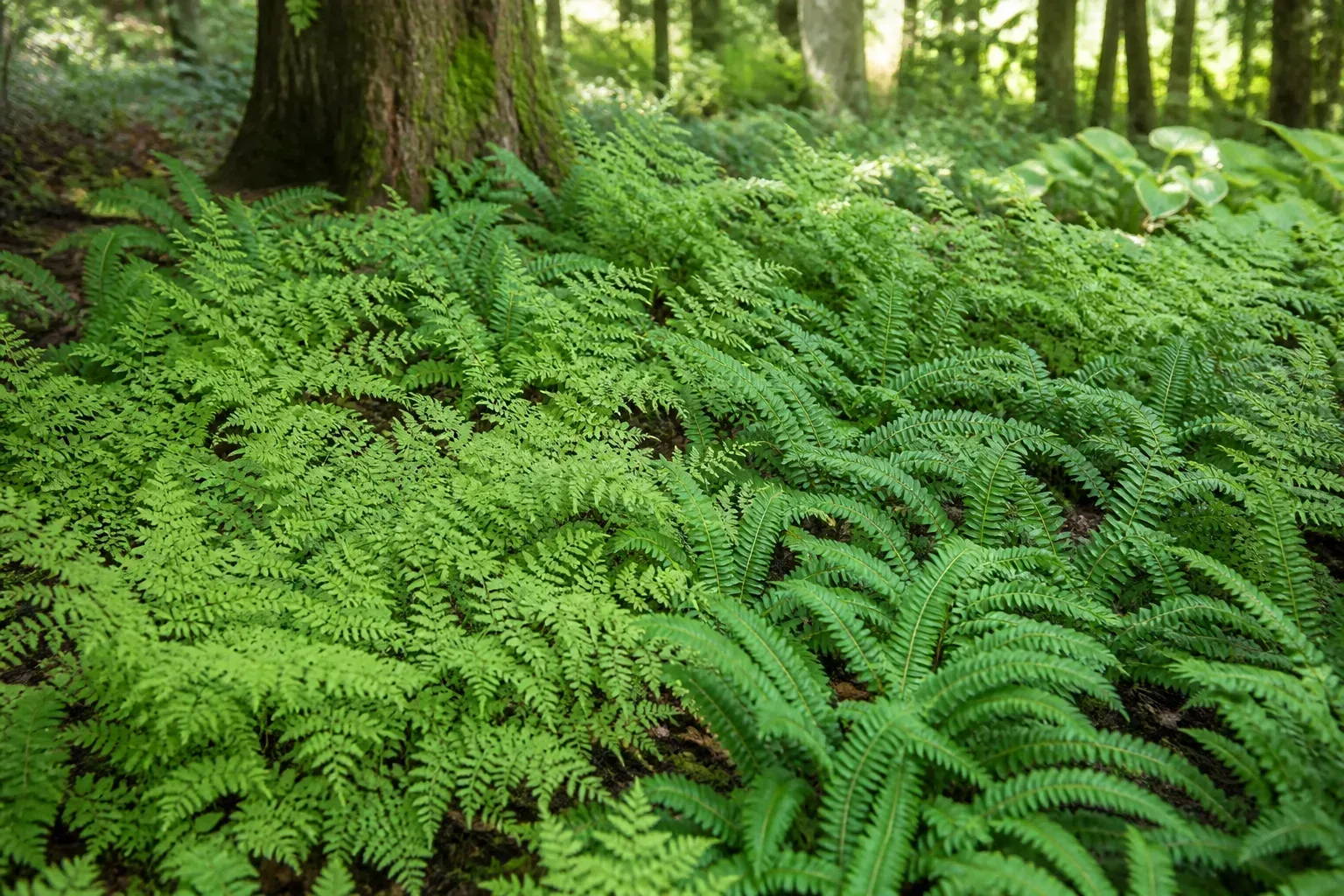
A shady yard that deer visit can feel like a narrow set of choices: plant another hosta and watch it disappear, or give up on flowers. A better plan is to choose species with a track record of lower browse appeal, then match them to the moisture, soil, and light that actually exist in your shade garden.
The 19 plants below include spring woodland blooms, textured foliage, and groundcovers. “Deer-resistant” is a useful shorthand, not a guarantee. A hungry animal may sample almost anything, so the goal is to make a bed less tempting and more resilient—not to promise that a plant can never be nibbled.
Deer resistance is a probability, not a promise
Plant lists often make resistance sound like a fixed trait. In practice, deer preference shifts with local herds, season, weather, plant age, and what else is available. Cornell Cooperative Extension explicitly cautions that no plant is completely deer-proof, especially where deer density is high, and its regional list still groups plants by how often they are damaged. Use those lists as a starting point, then ask a nearby extension office or experienced native-plant nursery what deer browse in your area.
Texture, scent, sap, and taste can all influence whether a plant gets sampled, but none is a dependable force field. New leaves are tender and exposed, and fresh transplants have not yet built a large root system or enough foliage to recover from repeated browsing. Even a species that deer usually ignore can be clipped when winter food is scarce or a young plant is placed beside a well-used trail.
That changes how you should read this list: the strongest choice is not always the plant with the boldest “deer resistant” label. It is the plant that fits your site and can recover if a deer tests it. If browsing is severe, a properly installed physical barrier is more predictable than swapping one perennial for another.
First match plants to the shade you actually have
“Shade” covers very different gardens. A bed below a high, open canopy may get several hours of shifting sun; a north-facing wall can receive little direct light; and a spot beneath a mature maple can be dry despite its shade. Decide which condition you have before buying plants, because a moisture mismatch often looks like a deer problem when stressed foliage is actually failing on its own.
Name the light exposure
Watch the site on a clear day and note when direct sun reaches the soil, not just the leaves above it. Dappled shade is light filtered through a tree canopy; partial shade gets some direct sun for part of the day; and full or deep shade gets little or none. BBC Gardeners’ World makes the useful point that the amount and timing of light should guide plant choice, and that a shady bed may still be wet or dry depending on the canopy and surrounding structures.
Many of the flowering plants here bloom best in dappled or partial shade, even if their leaves tolerate deeper shade. For the darkest corners, lead with foliage plants such as a Japanese painted fern or a groundcover, then place spring bloomers nearer the edge where they can catch more light. If stems lean, flowering is sparse, or foliage thins from year to year, test a brighter location before adding fertilizer.
Check moisture and root competition
Press a finger into the soil after ordinary rain and again after a few dry days. A bed beneath trees can shed rain and lose water to competing roots, while a low spot near a downspout may stay damp long after the rest of the garden drains. The first suits drought-tolerant barrenwort better than moisture-loving astilbe; the second may be a natural fit for foamflower or Jack-in-the-pulpit, provided it is not waterlogged.
Do not try to turn dry shade into a bog by adding frequent shallow waterings. Water deeply when newly planted roots need it, mulch lightly with leaf mold or compost, and choose plants that tolerate the site once established. Under a large tree, avoid cutting major roots or piling soil against the trunk to create a planting pocket; tuck smaller divisions into existing gaps and give them room to spread.
19 shade plants deer tend to leave alone
These plants suit different parts of a shade garden, and some need more qualification than others. Common names can cover many species and cultivars, so check the botanical name on the plant label. Hardiness, mature size, bloom timing, and deer response may shift by selection and region; use your local nursery or extension service to confirm the cultivar for your climate.
Early spring flowers and fresh foliage
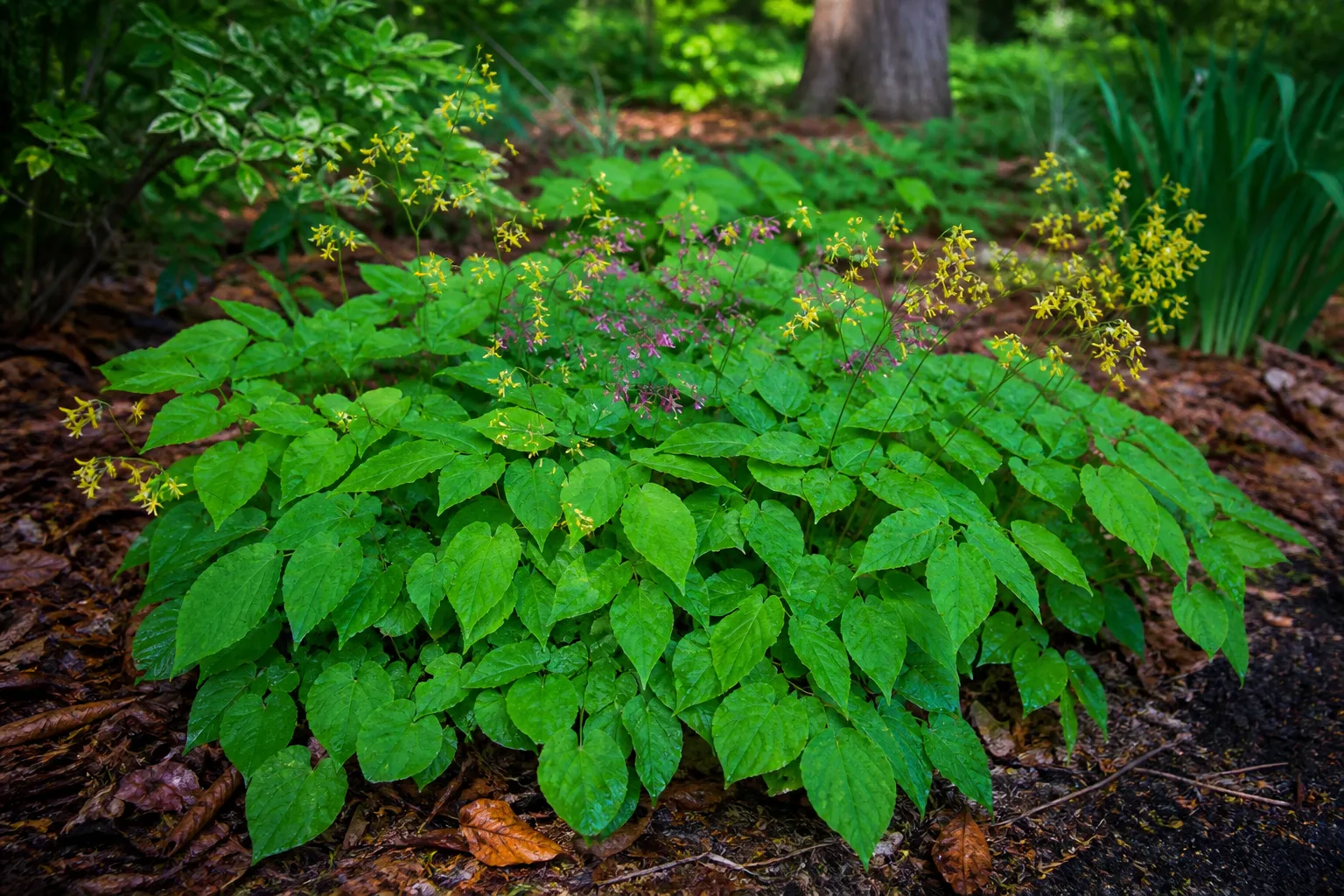
1. Barrenwort (Epimedium spp.) is one of the better picks for dry, root-filled shade. Its low, spreading clumps carry heart-shaped leaves, often with bronze or red tones as they emerge, and delicate spring flowers above the foliage. It is slower to cover ground than aggressive spreaders, which makes it easier to place under deciduous trees and along woodland edges. Give it well-drained soil; standing water is a worse problem than a brief dry spell.
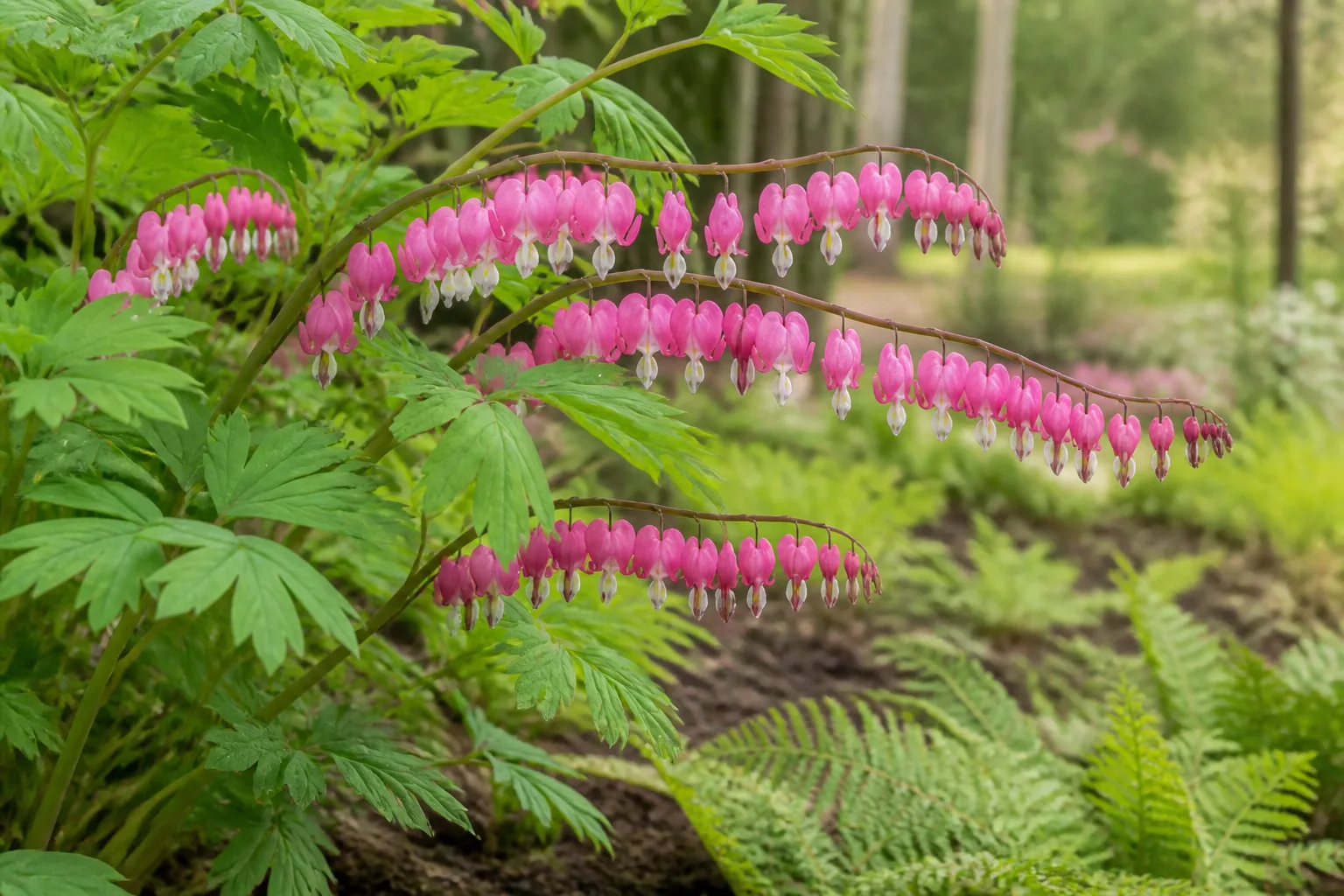
2. Bleeding heart (Lamprocapnos spectabilis) brings arching stems of dangling, heart-shaped flowers to cool spring shade. It is a strong seasonal focal point beside ferns, but its foliage can yellow and disappear as summer heat arrives. Plant it where later-emerging companions will cover the gap, and do not interpret its summer dormancy as a deer attack if the stems fade evenly after flowering.
3. Siberian bugloss (Brunnera macrophylla) adds broad, often silver-marked leaves and small blue spring flowers. It works best in cool, moisture-retentive soil that drains rather than staying soggy; silver-leaved cultivars brighten a north-facing border, while green forms generally handle less-than-ideal conditions better. Leave space for a clump to widen instead of packing it between thirsty tree roots.
4. Rue anemone (Anemonella thalictroides) is a small woodland perennial for a patient gardener. Its airy white or pale pink spring flowers sit above delicate foliage, and the plant can retreat after its short display. Site it where you will not disturb it with frequent digging or heavy summer traffic. It is more convincing in a naturalistic patch than as an instant, weed-smothering carpet.
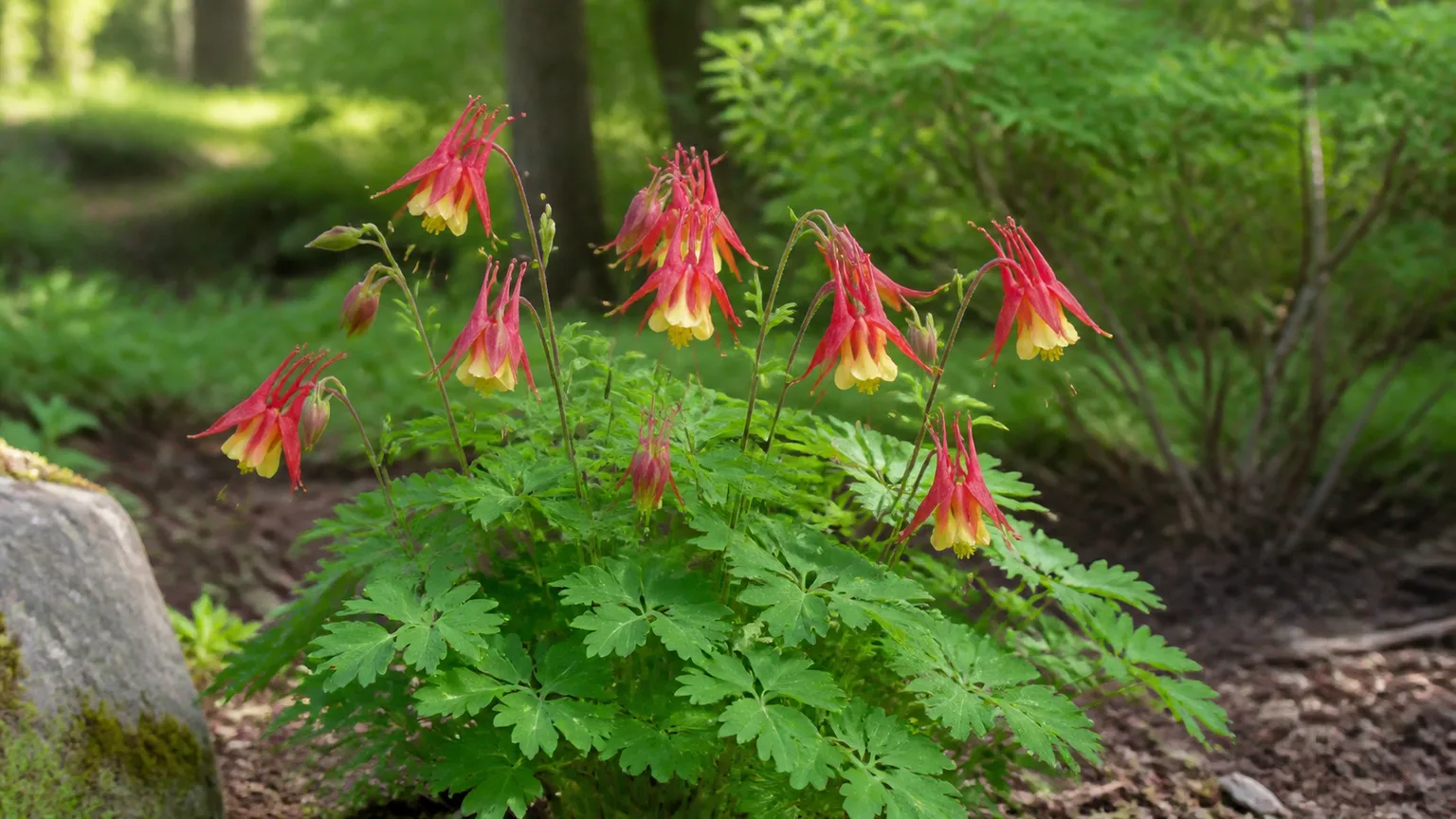
5. Columbine (Aquilegia spp.) tolerates light shade and often self-sows into the edges of a woodland bed. The flowers rise above the foliage in spring and early summer, giving a loose, natural look rather than a solid mass of color. Columbines may be short-lived, so allow a few seedlings to replace older plants if you like their appearance. Seedlings may not match the parent cultivar, and more sun usually means more flowers.
Color and foliage for moist woodland beds
6. Lungwort (Pulmonaria spp.) makes a low clump of spotted or silver-marked leaves and early tubular flowers that can open pink and mature toward blue or violet. Its coarse, often lightly bristly foliage is less appealing to many browsers than a tender hosta leaf. Lungwort prefers cool, evenly moist soil; if the leaves crisp at the edges in summer, check whether tree roots are stealing water before blaming sun alone.
7. Astilbe (Astilbe spp.) is the plume-flower option for a bed that stays reliably moist. Its feathery flower spikes and fernlike leaves bring vertical color, but it is not a shortcut for dry shade. A plant that wilts repeatedly in a parched border will make a poor long-term choice even if deer usually leave it. Gardenia’s astilbe guidance also emphasizes matching cultivar height and bloom time to the garden, since varieties differ noticeably.
8. Jack-in-the-pulpit (Arisaema triphyllum) is a native eastern North American woodland wildflower with a hooded spathe around a central spadix. It prefers rich, consistently moist soil and can go dormant by midsummer, so mark its position before planting neighboring perennials. North Carolina Extension notes that calcium oxalate crystals make it poisonous if eaten and help deter wildlife; keep children and pets from chewing any part of it.
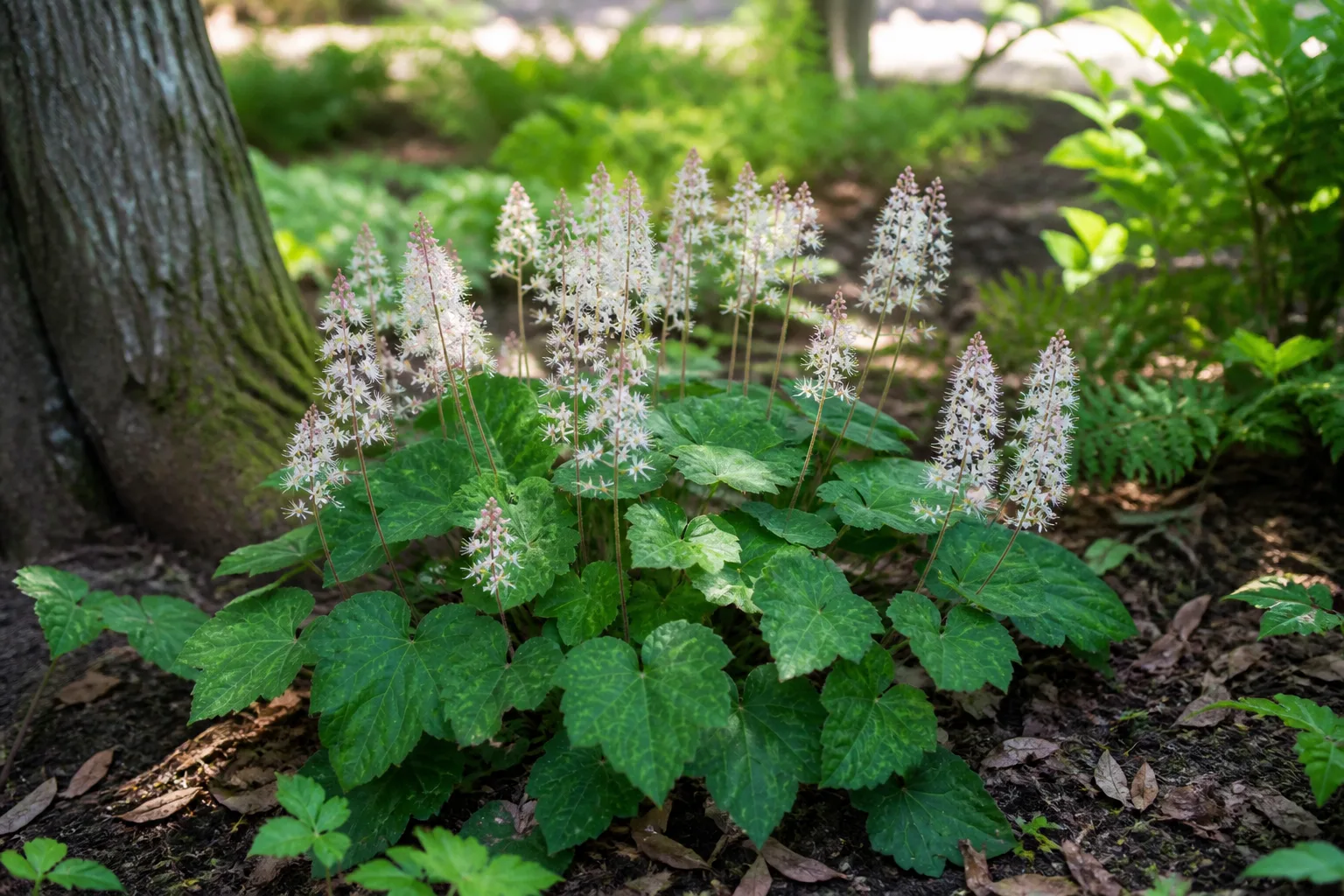
9. Foamflower (Tiarella cordifolia) forms a tidy, low colony with maple-shaped leaves and frothy spring flower spikes. It is useful at the front of a moist woodland border or beneath deciduous trees where soil stays cool and leaf litter can remain. Some cultivars spread by runners more quickly than others, so check the label if you want a compact clump rather than a gradually knitted groundcover.
10. Primrose (Primula spp.) offers a wide range of flowers for cool, damp shade, but “primrose” is a large genus, not a single uniform plant. Choose hardy garden species and cultivars suited to your winter climate, and keep their roots from drying out during spring bloom. The florist’s primrose, Primula obconica, is a different, tender species: North Carolina Extension flags its leaves for contact dermatitis, so wear gloves when handling it and do not assume every primrose shares the same risk.
Low groundcovers that earn their space
11. Wild ginger (Asarum canadense) is a North American native with broad, heart-shaped leaves that form a slow, low woodland carpet. Its small spring flowers sit close to the ground beneath the foliage, so the leaves do most of the visual work. Give it humus-rich soil with steady moisture and shade; it is a better choice for a naturalistic native planting than for a hot, dry, exposed edge.
12. Bergenia (Bergenia spp.) supplies thick, leathery leaves that can color up in cold weather, with clusters of spring flowers held above the clump. It tolerates a range of soils and is often more forgiving of short dry spells than astilbe or foamflower. Use it as a broad edging or in a mixed border where its large leaves contrast with finer fern fronds. Space plants for airflow in humid climates.
13. Japanese pachysandra (Pachysandra terminalis) is an evergreen-looking groundcover that can fill deep shade, but it deserves a strong caution before planting. North Carolina Extension describes it as a rhizomatous groundcover that can spread aggressively and be difficult to remove, and it points to Allegheny spurge (Pachysandra procumbens) as a native alternative in its region. Avoid Japanese pachysandra near natural areas, and check local invasive-plant guidance before buying it.
14. Lily-of-the-valley (Convallaria majalis) brings fragrant white bells and a dense carpet to moist or dry shade, but this plant has two serious trade-offs: it can spread beyond the bed, and it is poisonous if eaten in sufficient quantity. North Carolina Extension notes that its rhizomes can form dense colonies and that it is reported invasive in some states; its profile also warns of serious symptoms after large ingestions. Treat it as a contained planting only where it is permitted and manageable; choose a nonspreading groundcover if you cannot monitor its edges.
Texture and late-season color
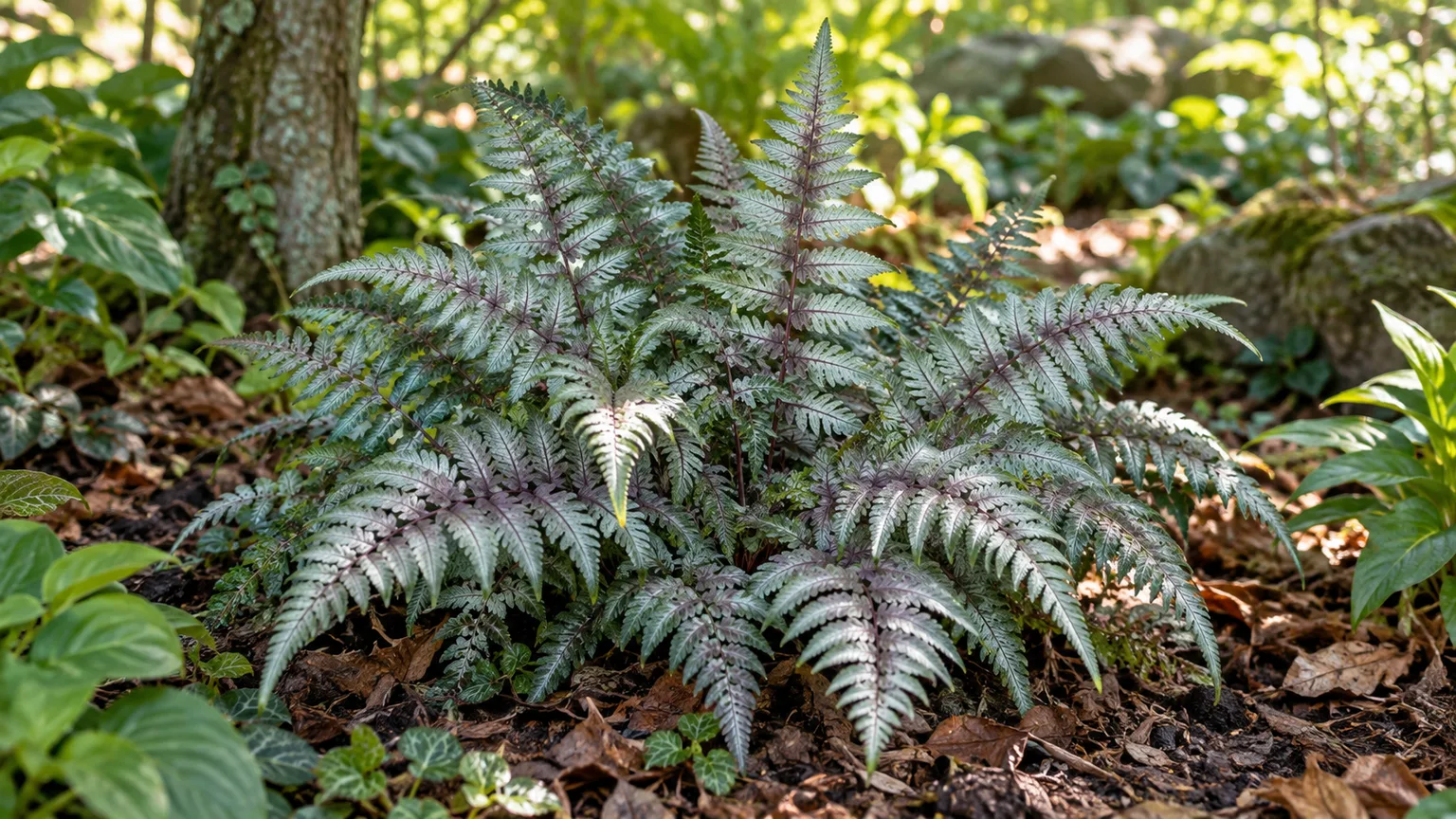
15. Japanese painted fern (Athyrium niponicum var. pictum) earns a place for foliage rather than flowers. Its arching fronds combine silvery green with burgundy or purple tones, brightening a shaded planting without demanding a sunny spot. Give it humus-rich, evenly moist soil and shelter from reflected heat; the colors often look best in cool, dappled light. Combine it with a broad-leaved plant so the foliage shapes do not blur together.
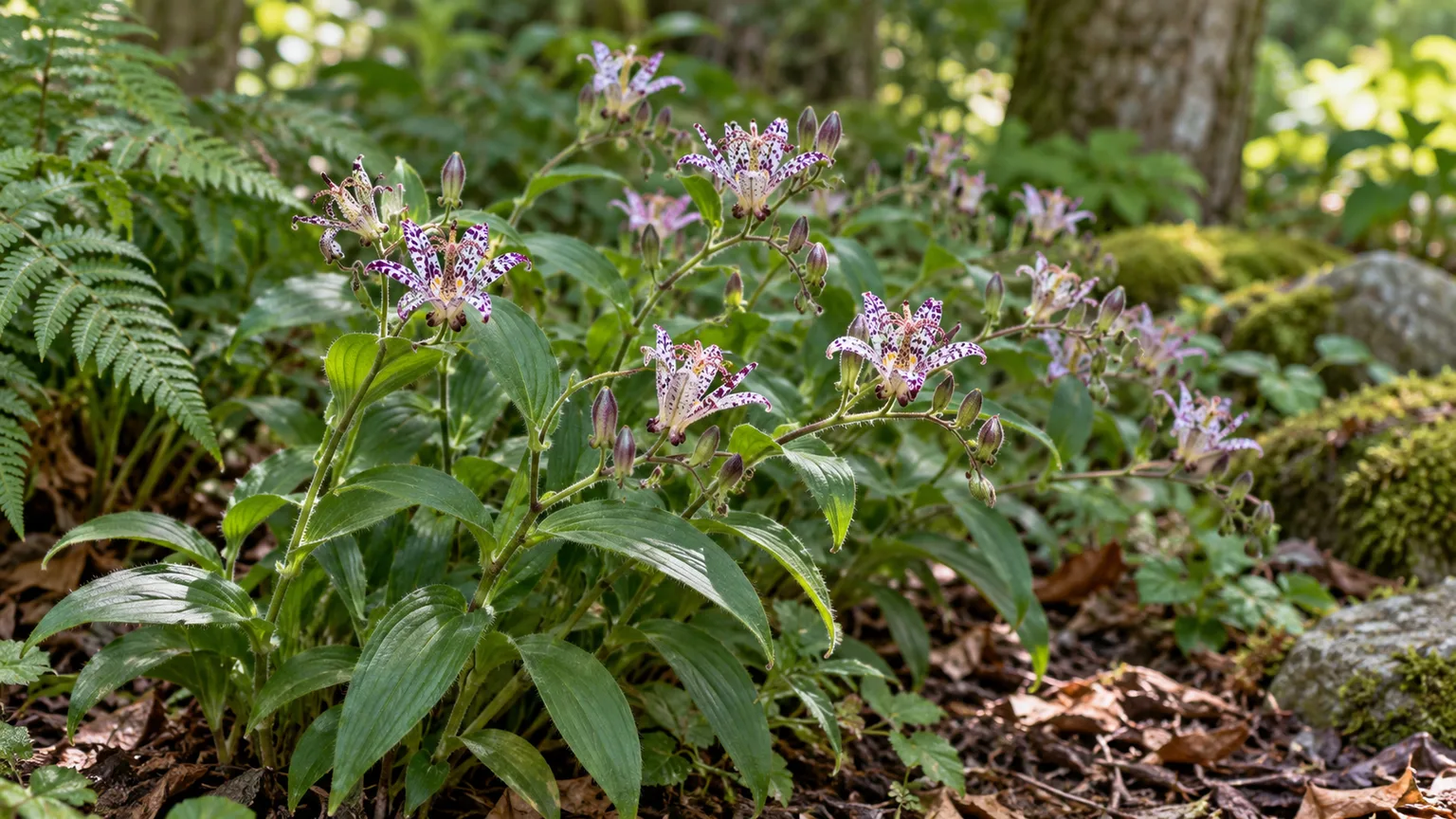
16. Toad lily (Tricyrtis spp.) extends the show into late summer or fall with small, orchid-like flowers speckled in purple or burgundy. It suits a protected, consistently moist woodland border where its upright stems will not be knocked over. A harsh, dry site can leave it thin and stunted, so use it where you can maintain moisture through the growing season. Species and cultivars differ in height and bloom time.
17. Spiderwort (Tradescantia spp.) provides clumps of narrow foliage and repeated blue, purple, or pink flowers, especially in cooler climates and brighter shade. Each bloom is brief, but more buds open over time. Some species and cultivars spread or self-sow more readily than others, and deep shade can reduce flowering. Confirm that the particular spiderwort is hardy in your area rather than treating all plants sold under the name as interchangeable.
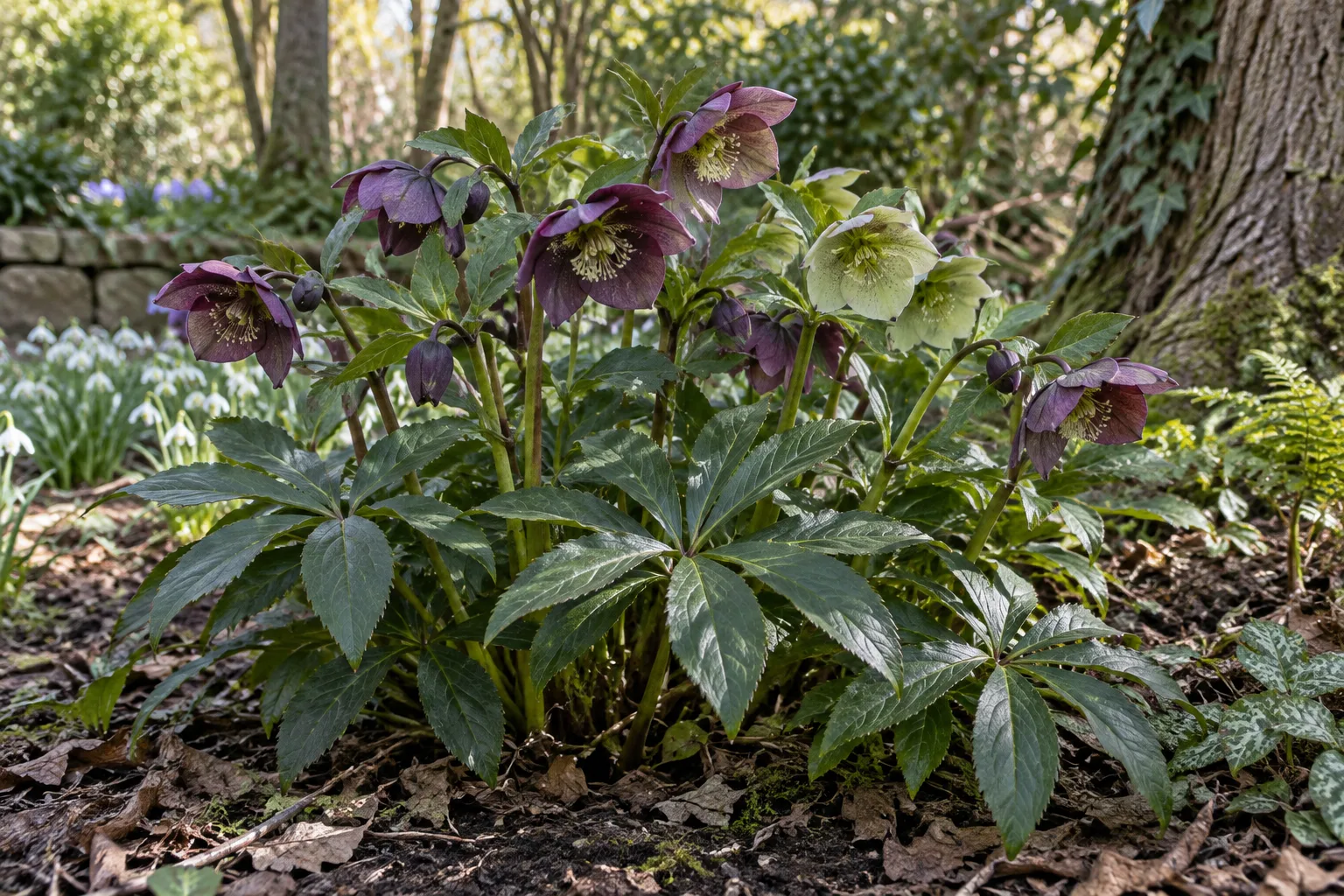
18. Lenten rose (Helleborus × hybridus) offers evergreen foliage and nodding late-winter or early-spring flowers in a sheltered, shaded border. It prefers humus-rich, well-drained soil; wet winter ground can be more damaging than ordinary summer dryness once the plant is established. North Carolina Extension lists hellebores as poisonous to humans if ingested, so place them where children and pets will not chew the leaves.
19. Corydalis (Corydalis spp.) adds finely cut foliage and delicate blue, yellow, or pink flowers to a cool, well-drained shade bed. Many selections prefer soil that stays lightly moist without becoming waterlogged, and they can go dormant in heat or drought. Mark the planting so you do not dig into a dormant crown, and check the species or cultivar because growth habit and spread vary.
Arrange plants by height, moisture, and season
Start with the bed’s driest and darkest section, because those limits are harder to change than color. In dry shade beneath mature trees, try barrenwort with Japanese painted fern only where you can water during establishment; add bergenia toward the edge where it catches a little more light. In moist, dappled shade, combine lungwort or foamflower at the front, astilbe behind them, and bleeding heart as a spring focal point that can disappear without leaving a bare hole.
For a native woodland planting in eastern North America, use wild ginger, foamflower, Jack-in-the-pulpit, and locally native ferns as a layered groundcover-and-foliage mix. Do not transplant plants from the wild; buy nursery-propagated stock and use species native to your state or ecoregion. A plant that is native somewhere else on the continent may still be poorly suited to your local ecosystem.
Think in seasons as well as layers. Rue anemone, bleeding heart, bugloss, and columbine carry spring interest; astilbe and foamflower add summer texture when their soil stays moist; toad lily can extend interest later in the year; and painted fern or bergenia helps the bed hold its shape between blooms. Repeat a few species rather than scattering all 19 across one small bed. Repetition looks intentional and makes it easier to notice which plants deer actually leave alone at your property.
Before planting, group candidates by water need. Place thirsty plants together where a soaker hose can reach, and reserve the drier edge for species that tolerate tree-root competition. Mixing astilbe into a dry pocket then trying to compensate with extra watering wastes water and stresses the plant; moving the species to a naturally moist position is the more durable fix.
Protect new plants through establishment
A deer-resistant label is not a substitute for protection when browsing is intense. Protect small transplants and newly planted bulbs with a sturdy physical barrier until roots are established and the plant has enough growth to recover from occasional nibbling. King County’s Native Plant Guide notes that deer browse tender new growth and identifies fencing as the most reliable way to protect prized plants from damage.
For a small bed, an anchored wire cage or a temporary fence around the planting can be easier to maintain than repeated sprays. Make the barrier tall and stable enough for local deer behavior, close gaps at the ground, and check it after storms. A short ring that deer can step over or a loose net that catches wildlife can create new problems rather than solving the browsing one.
If you use a commercial repellent, treat it as a backup that needs label-directed reapplication after rain and during new growth. Rotate products only according to their labels, keep them off edible crops unless the label allows that use, and never assume a homemade hot-pepper or soap mixture is safe for pets, beneficial wildlife, or plant tissue. Repellents can reduce sampling but are less predictable than a barrier around the plants you cannot afford to lose.
Safety, spread, and regional cautions
“Deer-resistant” does not mean nontoxic. Jack-in-the-pulpit, lily-of-the-valley, and hellebores can cause poisoning if eaten; North Carolina Extension documents the calcium oxalate risk in Jack-in-the-pulpit and lists lily-of-the-valley and North Carolina Extension’s Lenten rose profile as poisonous. Keep these away from toddlers who explore gardens by taste, and do not plant them where pets routinely chew leaves. If anyone ingests a plant, identify it and contact a poison-control resource or veterinarian rather than waiting for symptoms.
Two groundcovers also need containment thinking. Japanese pachysandra can spread aggressively and is not native to North America; lily-of-the-valley can form a dense rhizome network and is invasive in some states. Check your state or county invasive-plant list before adding either one near a woodland, creek, or other natural area. For North American gardens, the native Allegheny spurge may be a more responsible pachysandra-like choice where it is locally appropriate, but it is not native everywhere.
Primrose is another example of why the botanical name matters: some plants in the genus are grown as hardy perennials, while Primula obconica is known for causing contact dermatitis in susceptible people. Wear gloves if you are sensitive, and do not generalize one species’ risk to every primrose. The same careful label reading applies to cultivar hardiness, mature size, spread, and bloom season.
What to do if deer still browse
First look at the damage pattern. Cleanly clipped shoots and repeated browsing at reachable height point toward deer, while ragged holes, slime trails, wilt, or whole-plant collapse suggest other causes. Photograph the bed before you change anything; one night’s visit can be hard to diagnose after you have pruned, sprayed, or watered.
If a supposedly resistant plant gets sampled once, protect the new growth and watch for recovery before replacing it. If deer repeatedly return to the same bed, the problem is pressure, not necessarily a bad plant choice. Add a barrier, remove easy access to tender plants, and put less-palatable foliage on the garden’s exposed edge so your most vulnerable bloomers are not the first available meal.
Keep a simple seasonal record: plant name, where it sits, whether it is newly planted, and what happened after winter or drought. That small local log is more useful than a universal ranking because it reflects the deer and conditions in your garden. Over time, keep the winners, move the plants that are failing from dryness or excess shade, and stop spending on species that are repeatedly eaten despite protection.
Conclusion
The best deer-resistant shade garden starts with two matches: a plant deer are less likely to choose and a site that meets its light and moisture needs. Barrenwort, ferns, lungwort, foamflower, astilbe, and other woodland perennials offer different strengths, but their performance depends on where you plant them and how much browsing pressure your yard receives.
Choose a few species for your soil, check local guidance before planting aggressive or toxic options, and protect new growth when deer pressure is high. That gives a shady garden a better chance to fill in, even when wildlife still passes through.