Crepe Myrtle Leaves Turning Brown: Causes and Fixes
Crape myrtle leaves turning brown can signal fall change, drought, wet soil, leaf spot, or chemical injury. Match the pattern and timing before treating.
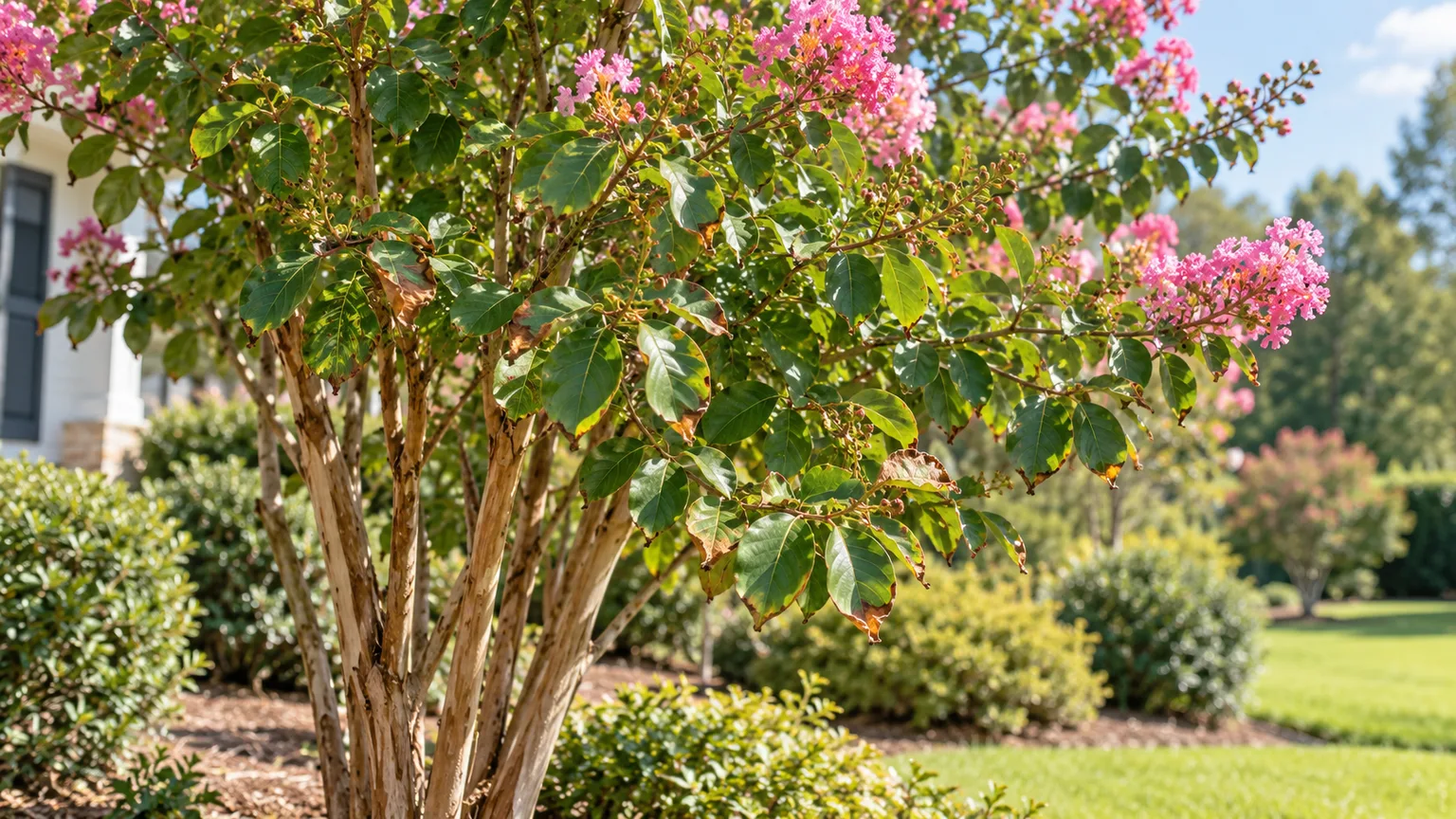
A brown crape myrtle leaf is a symptom, not a diagnosis. The fastest way to narrow the cause is to note when the color change started, whether the entire leaf or only certain areas are affected, and what the soil and weather have been doing. Brown edges after a dry heat wave call for a different check than small spots after weeks of humid rain.
A few brown leaves in autumn can be normal as this deciduous tree enters dormancy. Summer browning can come from drought, waterlogged roots, leaf-spot disease, insects, frost injury, fertilizer salts, or herbicide exposure. Before watering more or spraying, inspect several leaves from different parts of the canopy and compare the pattern with recent conditions.
Start with the leaf pattern and season
Look at both sides of several leaves, then step back and check where the damage sits in the canopy. A single old leaf or a handful of browned tips may be incidental; a pattern repeated across many branches is more useful. Also note whether the change is gradual or appeared within a day or two after a storm, heat wave, freeze, fertilizer application, or nearby lawn treatment.
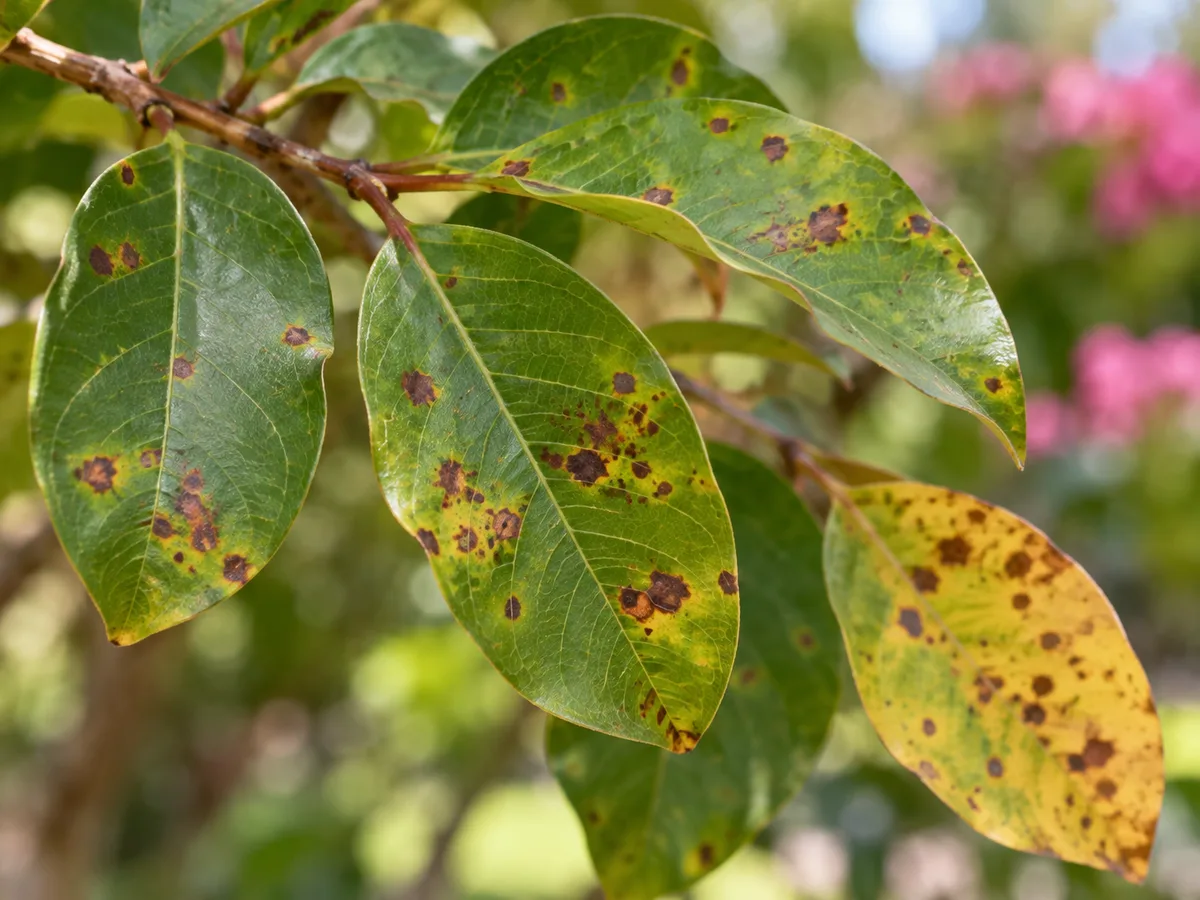
Brown spots, yellowing between lesions, and dry margins are different clues; use them with timing and site conditions rather than diagnosing from a photo alone.
A quick triage: spots, scorch, yellowing, or full-leaf brown
| What you see | What to check next | A reasonable first move |
|---|---|---|
| Many leaves change color together in autumn, then drop | Local season, nights cooling, whether nearby deciduous plants are changing too | Monitor; do not fertilize or spray to hold leaves |
| Crispy margins or tips during hot, dry weather | Moisture 4 to 6 inches into soil, recent rain, establishment age, reflected heat | Water slowly at the root zone only if the soil is dry |
| Separate round or irregular brown spots, often followed by yellowing and early leaf drop | Recent humid rain, overhead irrigation, symptoms beginning low in the canopy | Keep leaves dry, collect fallen diseased foliage, monitor spread |
| Yellowing plus sticky leaves or a black film that smears | Aphids, scale, honeydew, ants, and insects on leaf undersides or stems | Identify the insect before choosing a control |
| Wilt or yellow-brown leaves while soil stays wet | Drainage, standing water, irrigation overlap, compacted ground | Pause irrigation until the root zone is no longer saturated |
| New leaves or shoot tips blacken after a freeze or spray event | Exposure date, wind direction, neighboring plants, distorted new growth | Record the event and wait to see which buds remain alive |
These patterns overlap. Drought can make leaves curl and scorch, but fungal spots can also expand until large parts of a leaf are brown; root stress may show first as yellowing or premature leaf drop rather than a neat, diagnostic lesion. Use the table to decide what to inspect, not to label a disease with certainty.
When brown is part of the season
Crape myrtles are deciduous. As days shorten and temperatures cool, leaves may turn yellow, orange, red, or brown before dropping; the timing and intensity vary with cultivar, local weather, and exposure. If the shift is happening across the whole tree late in the growing season and the twigs remain firm with healthy buds, seasonal change is more plausible than a sudden disease emergency.
The LSU AgCenter’s field observations document early color change and leaf drop during a wet summer when Cercospora leaf spot was active, which is why calendar timing alone is not enough. Compare the leaves: uniform color across much of the canopy without distinct lesions often fits senescence, while scattered spots, yellow halos, and premature defoliation during warm, wet weather point toward a leaf-spot problem. A sudden color change in midsummer deserves a closer look; a steady autumn transition usually does not require intervention.
Do not try to keep a deciduous crape myrtle green by applying fertilizer late in the season or watering on a fixed schedule. Neither action reverses dormancy, and extra nitrogen can push tender growth when the tree should be slowing down. If the tree otherwise looks healthy, remove only clearly dead material and let the seasonal cycle proceed.
Brown, crispy margins point to water or heat stress
Dry, crisp edges that spread inward are consistent with leaf scorch, especially after prolonged heat, hot wind, or a stretch without rain. The outer parts of a leaf lose water faster than the plant can replace it, so margins may brown while the center stays green; leaves can curl, droop, or drop if stress continues. This pattern is not proof of drought, because root injury and excess salts can produce similar damage.
A newly planted crape myrtle is more vulnerable than an established one because its roots still occupy a limited volume of soil. Epic Gardening’s crape myrtle profile describes the tree as needing water while it establishes and as preferring well-drained soil; drought tolerance is not the same as being drought-proof in its first growing season. Southern Living’s planting guidance also emphasizes watering a newly planted tree as it transitions into the landscape, though the amount and frequency should follow actual soil conditions rather than a universal timer.
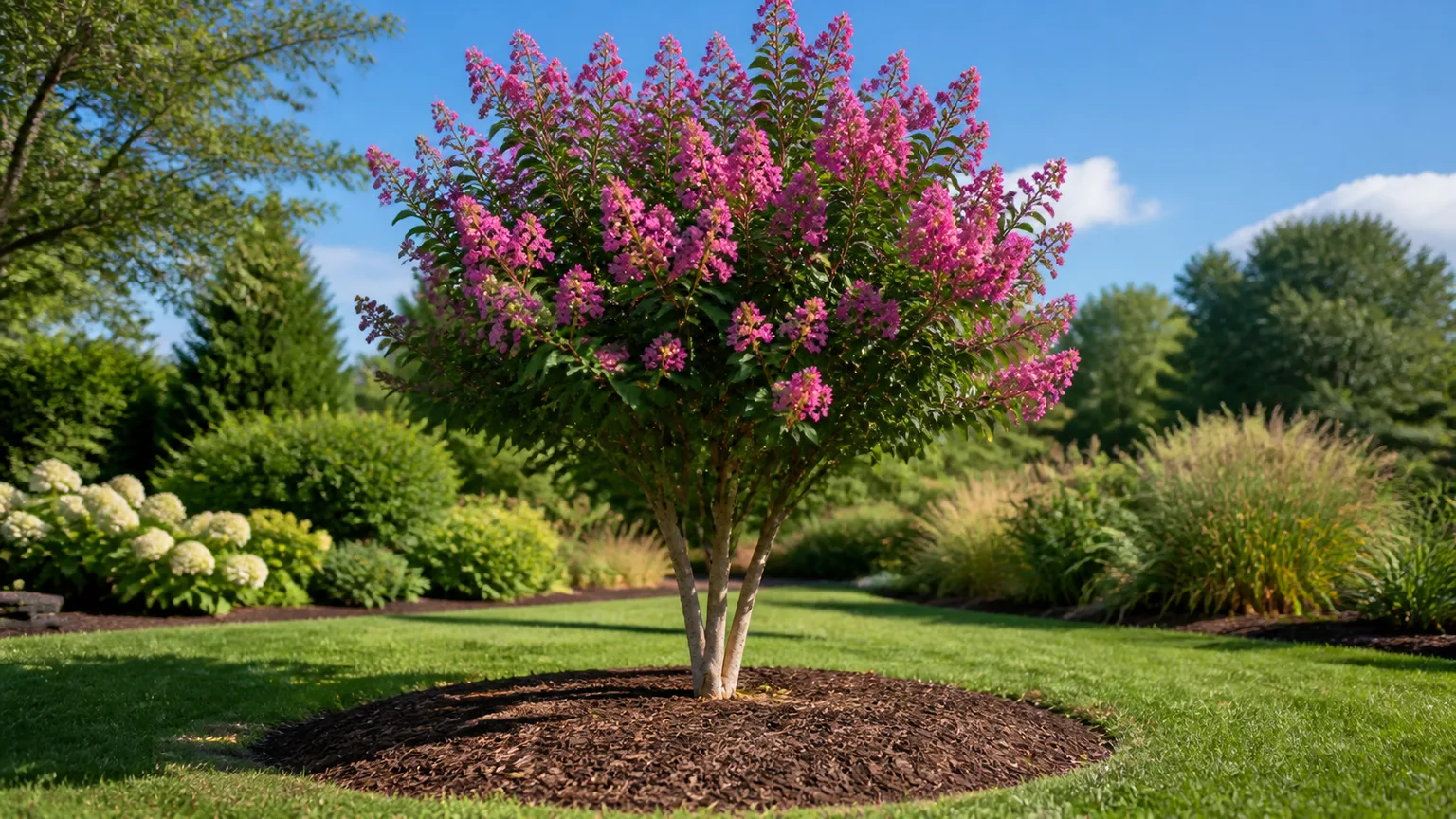
Use the root zone, rainfall, and soil moisture to guide watering; a sunny site and a mulch ring can help reduce avoidable stress.
Check soil moisture before changing irrigation
Push a finger or narrow trowel into the soil several inches deep near the outer half of the canopy, away from the trunk. If the soil is dry at roughly 4 to 6 inches, water slowly over a broad root-zone area so moisture can soak in rather than run off; check again before repeating. If the soil is cool and wet at that depth, do not add more water just because leaves are brown.
New plantings may need more frequent attention, particularly in hot weather and sandy soil, but check the root ball as well as the surrounding bed. A root ball can dry out while nearby clay remains wet, or the reverse can happen after irrigation. Apply water at soil level in the morning when possible, avoid repeatedly wetting foliage late in the day, and account for rainfall and local watering restrictions.
Brown tissue will not turn green again after watering. The useful measure is whether new leaves stay healthy and whether the damage stops advancing; do not keep soaking the tree to erase marks that are already dead. If a tree wilts despite moist soil, investigate drainage and root conditions instead of increasing irrigation.
Wet weather and leaf spot create separate brown spots
Warm, humid weather and long periods of wet foliage can favor fungal leaf spots. These diseases usually begin as distinct lesions rather than a clean, uniform brown edge. Depending on the disease and the age of the infection, spots can have dark centers, yellowing around them, or merge until a leaf becomes mostly discolored and drops.
Crape myrtle can develop Cercospora leaf spot. The LSU AgCenter describes summer leaf color change and premature leaf drop in connection with this disease, while the University of Arkansas System Division of Agriculture’s photo guide shows early and advanced crapemyrtle leaf-spot symptoms. Those references are useful for comparison, but a photo cannot establish which pathogen is present or whether every brown patch on a particular tree has the same cause.
Cercospora: spots, halos, and early leaf drop
Look for small reddish-brown to dark spots that appear on multiple leaves, often first lower in the canopy, then enlarge or join. Yellowing around lesions and early leaf drop can follow; after repeated warm, wet periods a tree may look thin even though branches and buds remain alive. Greg Grant, a Texas A&M AgriLife Extension horticulturist, notes that Cercospora can cause frustrating early leaf fall but rarely kills established crapemyrtles.
Focus on reducing the conditions that help leaf spots spread. Water at the soil surface instead of spraying the canopy, avoid crowding plants so foliage can dry after rain, and collect fallen affected leaves where disease has been recurring. Do not strip every leaf or prune heavily in response to a few spots; removing a large share of the canopy adds stress and does not repair infected tissue.
A fungicide is not a cure for leaves already marked. It may be considered only when the disease has been confirmed or repeatedly causes severe early defoliation, and any product must be labeled for the plant and use site in your location. For a one-time late-season outbreak on an otherwise vigorous tree, monitoring and sanitation are often more useful than spraying.
Yellow leaves with sticky black residue point to sucking insects
A black coating that wipes or smears off is different from dead brown tissue embedded in the leaf. Sooty mold grows on honeydew left by sap-feeding insects, especially aphids; the film can make foliage look dirty or dark and may accompany yellowing when an infestation is heavy. Look for clusters of small insects on new growth, sticky leaves below them, and ants visiting stems.
Do not spray just because leaves look black. First confirm that insects are present and identify where they are feeding; natural predators may already be reducing a light aphid population. If the tree is losing vigor or the pest population is persistent, get a local recommendation and use only a control labeled for that pest and ornamental tree. Insecticides applied without a target can harm beneficial insects and leave the actual cause of browning untouched.
Blackened new growth after frost or chemical exposure
A late frost can damage tender leaves that emerged during a warm spell. The youngest exposed growth may turn dark brown or black, curl, and collapse soon after temperatures fall below freezing, while older leaves or protected lower branches remain less affected. If the damage followed a cold snap and stops spreading once temperatures rise, wait before pruning; living buds may still push new growth.
Herbicide drift or accidental contact is more plausible when browning begins soon after nearby lawn or weed treatment, affects the side facing the application, or appears on several exposed plants at once. Some herbicide injuries also twist, cup, strap, or distort new leaves instead of producing simple scorch. Note the date, product if known, wind, and which plants were affected; do not repeat the chemical application or try to counteract it with fertilizer.
If you suspect drift, keep the product container or a photo of its label and contact your county extension office for help interpreting the pattern. Wash off only if the label or a local expert specifically advises it and the exposure was just made; once tissue has absorbed a herbicide, rinsing old leaves will not reverse injury. Avoid pruning everything immediately, because the amount of living wood is easier to assess after the plant responds.
Saturated soil can stress roots too
Overwatering does not simply mean giving a tree “too much water” once. The bigger concern is soil that remains waterlogged because drainage is poor, irrigation overlaps with rain, or runoff collects around the root zone. Roots need oxygen as well as moisture; persistently wet soil can impair root function and lead to yellowing, wilting, leaf drop, or brown foliage that resembles drought stress.
Check the soil before you water. If it stays wet for days, look for a low spot, a downspout outlet, a leaking drip line, compacted soil, or mulch piled high against the trunk. A wet, heavy root zone combined with limp leaves is a reason to pause irrigation and investigate drainage, not to apply a fungicide to the canopy.
Do not dig up a mature tree to inspect roots based on brown leaves alone. If the ground is chronically saturated or a tree declines despite correcting irrigation, an arborist or extension diagnostician can assess the site with less risk than exploratory trenching. Water stress can injure roots before the canopy gives a clear signal, so avoid swinging from drought to constant saturation in an attempt to compensate.
Fertilizer and other chemical injury
A heavy fertilizer dose, fertilizer piled against the trunk, or granules left on dry foliage can injure leaves or roots through concentrated salts. The timing is informative: if browning followed a recent application, record the product, amount, placement, and whether the soil was dry. Fertilizer is not a general medicine for brown leaves; adding nitrogen without a diagnosed need can push soft growth and obscure whether the original problem is improving.
If granular fertilizer is still visible on dry leaves, gently brush or rinse it away before it dissolves, taking care not to flood already saturated soil. If it was applied to the ground, follow the product label for cleanup rather than adding another product to “neutralize” it. Use a soil test when nutrient deficiency is a realistic concern, and follow its recommendations instead of guessing at a dose.
Also consider overspray from household cleaners, salt spray, or other lawn and garden products if damage is concentrated on exposed surfaces. Chemical injury often tracks an application pattern more closely than a disease does, but symptoms can overlap. Save the label or container and seek an extension diagnosis before attempting a chemical treatment on the crape myrtle.
Make the next 48 hours count
You do not need to identify a fungus on the first day to avoid making the problem worse. Take clear photographs of the whole canopy, one damaged branch, and both sides of several leaves; photograph again from the same positions after a few days. Record the date, recent rain, temperature extremes, irrigation, fertilizer, and any nearby spraying.
Then make three low-risk checks: determine whether browning is on old or new leaves, see whether spots are distinct or margins are uniformly dry, and test soil several inches down. Look for sticky residue and insects, then inspect a few twigs for firm buds and live tissue beneath a light scratch on a small branch. This small record often reveals whether symptoms are moving, seasonal, or tied to one event.
Choose just one first response based on what you observed. Water only if the soil is dry; pause irrigation if it is saturated; keep foliage drier and collect fallen diseased leaves when spots follow wet weather; wait and monitor after a frost or spray event. Avoid changing watering, fertilizer, pruning, and pesticide use all at once, because you will lose the evidence that could identify the cause.
When fungicide or insecticide is justified
A pesticide makes sense only when you have identified a target and the likely benefit outweighs the cost and collateral effects. For a confirmed, recurring leaf-spot disease that causes substantial early defoliation, ask your local extension office whether prevention is warranted in your climate and which products are currently labeled for ornamental use. Products differ by active ingredient and label restrictions; never copy a rate from an old article or use a product on a plant or site that its label excludes.
Fungicides protect healthy tissue; they do not make brown spots disappear. Timing, coverage, repeat intervals, weather limits, and protective equipment are label-specific. If damage is already late-season and the plant is otherwise healthy, sanitation and monitoring may be more appropriate than starting a spray program.
For aphids or scale, confirm the insect and assess whether the population is actually harming the plant before choosing a control. Avoid broad-spectrum sprays when beneficial insects are active, and do not assume a black leaf means an insect problem unless honeydew, sooty mold, or the insects themselves are present. If the same symptoms return each year, a diagnosis is more valuable than repeatedly trying products.
What to expect from recovery
Existing brown areas are dead tissue; they do not heal back to green. A tree can still recover if the roots and buds are healthy, so judge recovery by new leaves, firm twigs, and whether browning has stopped spreading rather than by the damaged leaves themselves. It may take the rest of the growing season, or the next spring’s growth, to see the full result.
Crape myrtles may also drop affected leaves early, especially after leaf spot or prolonged stress. Leaf loss looks dramatic, but it does not automatically mean the plant is dying; Grant’s horticultural guidance notes that Cercospora leaf spot seldom kills an established tree. More concerning signs include dieback extending into major branches, no living buds when the next growing season begins, or a rapid decline despite suitable soil moisture.
Do not remove a large amount of living canopy simply to make the tree look tidy. Prune dead or broken branches with clean tools at an appropriate time, but wait until you can distinguish dead tips from dormant or temporarily stressed growth. If you are unsure, have a local extension office or qualified arborist evaluate a representative branch before making major cuts.
Reduce repeat problems at the site level
Crape myrtles generally perform best with good light and well-drained soil. Southern Living’s planting guidance and Epic Gardening’s profile both emphasize sunny placement; Epic Gardening also notes that a new tree needs water while it establishes. If an older canopy now sits in shade from a growing neighboring tree, or the planting bed holds water after every storm, correcting the site may matter more than treating each season’s leaf symptoms.
Water at ground level when the root zone is dry, and adapt the interval to rainfall, soil texture, tree age, and local restrictions. A layer of mulch can moderate soil temperature and reduce evaporation, but keep it a few inches away from trunks and root flares. Avoid overhead irrigation late in the day, where practical, because leaves that stay wet overnight create a more favorable setting for some leaf-spot diseases.
Use spacing that leaves air around mature branches, remove fallen diseased foliage during recurring leaf-spot seasons, and skip fertilizer unless a soil test or clear growth issue justifies it. When planting a new tree in an area with repeated Cercospora problems, ask a local nursery or extension office for cultivars with better local resistance; resistance is not immunity, and performance can vary by climate and cultivar. LSU AgCenter’s regional observations also show that rainfall and local conditions influence how severe leaf spot becomes.
When to ask an arborist or extension office
Seek a closer diagnosis if browning spreads rapidly through the canopy, major branches die back, the trunk develops new wounds or decay, or the plant is declining even though soil moisture and drainage seem appropriate. Also ask for help when several species in the same area develop similar symptoms after a spray event, since the pattern may point to exposure beyond the crape myrtle. A certified arborist can assess tree structure and root-zone conditions; an extension office or plant clinic can help distinguish disease from environmental injury.
Bring more than one close-up photo. Include a whole-tree image, leaf undersides, the boundary between healthy and affected tissue, the date symptoms began, recent weather, irrigation details, and any chemical labels. If a pathogen is suspected and treatment would be costly, a plant diagnostic lab may be able to test a sample; local instructions for collection and shipping matter, so call before sending leaves.
Conclusion
Brown crape myrtle leaves can reflect a normal autumn transition, drought or heat, saturated roots, leaf spot, insects, frost, or chemical injury. The key clue is the combination of pattern, timing, soil moisture, and recent exposure—not brown color by itself.
Start with a few leaves and a soil check. Water only dry soil, keep foliage dry when leaf spots are present, avoid automatic fertilizer or pesticide, and watch whether healthy new growth continues. If the damage keeps advancing or affects major branches, get a local diagnosis before making a drastic change.



