How to Grow and Care for Coral Honeysuckle
Learn how to grow coral honeysuckle with practical advice on light, soil, watering, support, pruning, propagation, cultivars, and common problems.
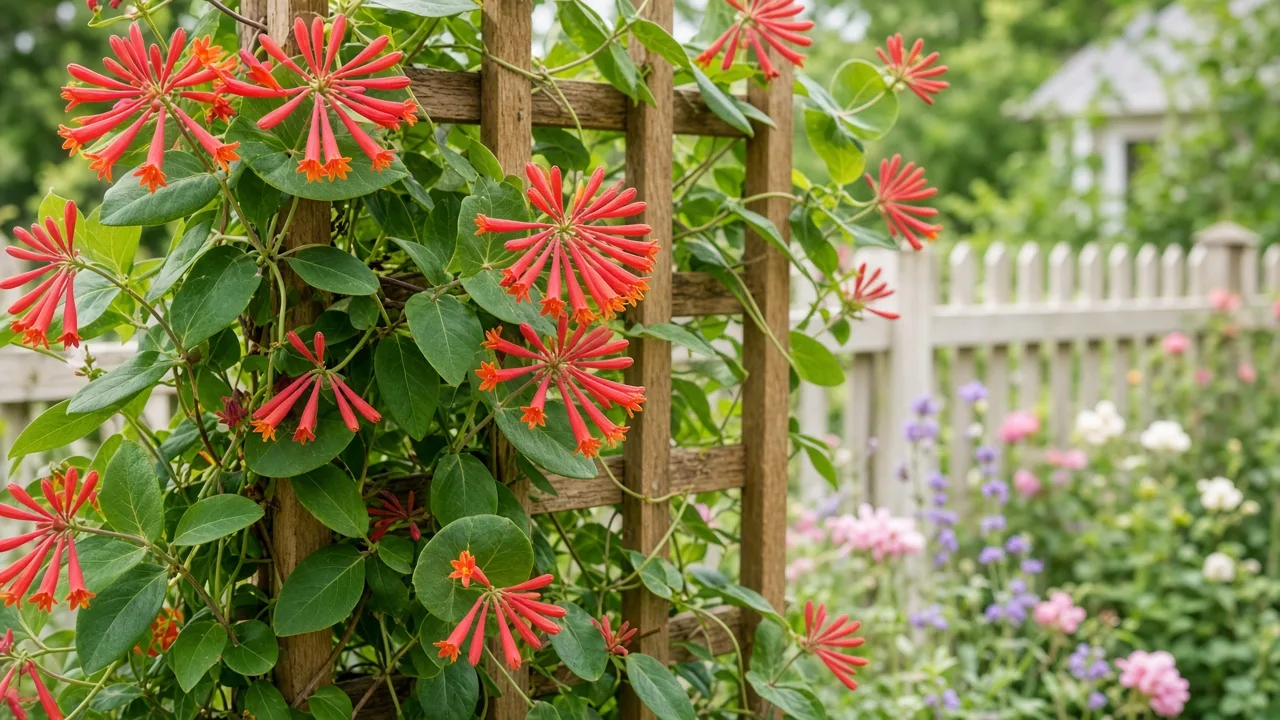
Coral honeysuckle (Lonicera sempervirens), also called trumpet honeysuckle, is a woody native vine valued for clusters of narrow red, coral, orange, or yellow flowers. It draws hummingbirds and other pollinators, then may carry small red fruits that feed birds. Its care is simple once you plan for the two things that shape the whole job: the vine needs a sunny place for abundant flowers, and its twining stems need something to wrap around.
This is not the same plant as invasive Japanese honeysuckle. Coral honeysuckle can grow vigorously, but it is a North American native that is usually a more contained garden vine. Give it room, guide it onto a suitable support, and water it while it establishes; mature plants need little routine feeding or pruning.
Know what you are planting
Coral honeysuckle is native to the eastern United States, and horticultural references commonly list it for USDA zones 4 through 9. In warmer parts of its range it can stay evergreen or semi-evergreen; colder winters may make it drop its leaves. The name sempervirens means evergreen, but it is not a promise that foliage will stay green in every climate. The UT Gardens profile explains that evergreen behavior is most reliable in mild southern winters, while Duke Gardens describes it as a Southeastern native with strong wildlife value.
The vine climbs by twining its stems around a narrow support; it does not attach to a wall with adhesive pads. Without something to climb, it can sprawl along the ground, so the right form depends on the space you want to fill. A trellis, arbor, fence, or sturdy obelisk turns it into a vertical accent, while a bank or open slope can accommodate a trailing groundcover.
Do not choose it on the assumption that every honeysuckle is either invasive or harmless. Coral honeysuckle is distinct from Lonicera japonica, the invasive Japanese honeysuckle. If you are identifying a vine already in the yard, compare several traits before cutting it; the Japanese honeysuckle identification guide covers that look-alike and its removal.
Choose the site before planting
Think through mature height and access before you place the plant. Coral honeysuckle commonly grows about 10 to 20 feet long, and a mature vine can cover more space than a small nursery pot suggests. Put the root ball close enough to its support for new stems to reach it, but leave room to get behind the vine for tying, pruning, and checking leaves.
Light for flowers
Full sun produces the best flowering. A site with roughly six hours of direct sun is a useful target; the vine can tolerate partial shade, but it usually flowers less there. In a hot region, afternoon shade can help protect a new planting from heat stress, but heavy shade is a poor trade if blooms are the reason you planted it. NC State Extension and UT Gardens both emphasize stronger flowering in full sun, and Fine Gardening’s plant profile lists a range from full sun to partial shade.
If a healthy vine is leafy but nearly flowerless, assess its light before changing the soil or adding fertilizer. Watch the plant through the day rather than estimating from the view at noon: a building, evergreen hedge, or mature tree may shade it for most of the morning. A little light pruning in the surrounding planting can improve exposure, but do not strip nearby trees or shrubs just to force a vine into a site that is too shaded.
Build the support while the vine is young
Choose a frame that will still feel steady after years of woody stems and rain-wet foliage. Install a trellis or fence support before planting so you do not drive stakes through the root ball later. A grid, wires, or narrow crosspieces give the stems places to wind around; tie long shoots loosely with soft garden ties until they catch. Check the ties as stems thicken so they do not constrict the vine.
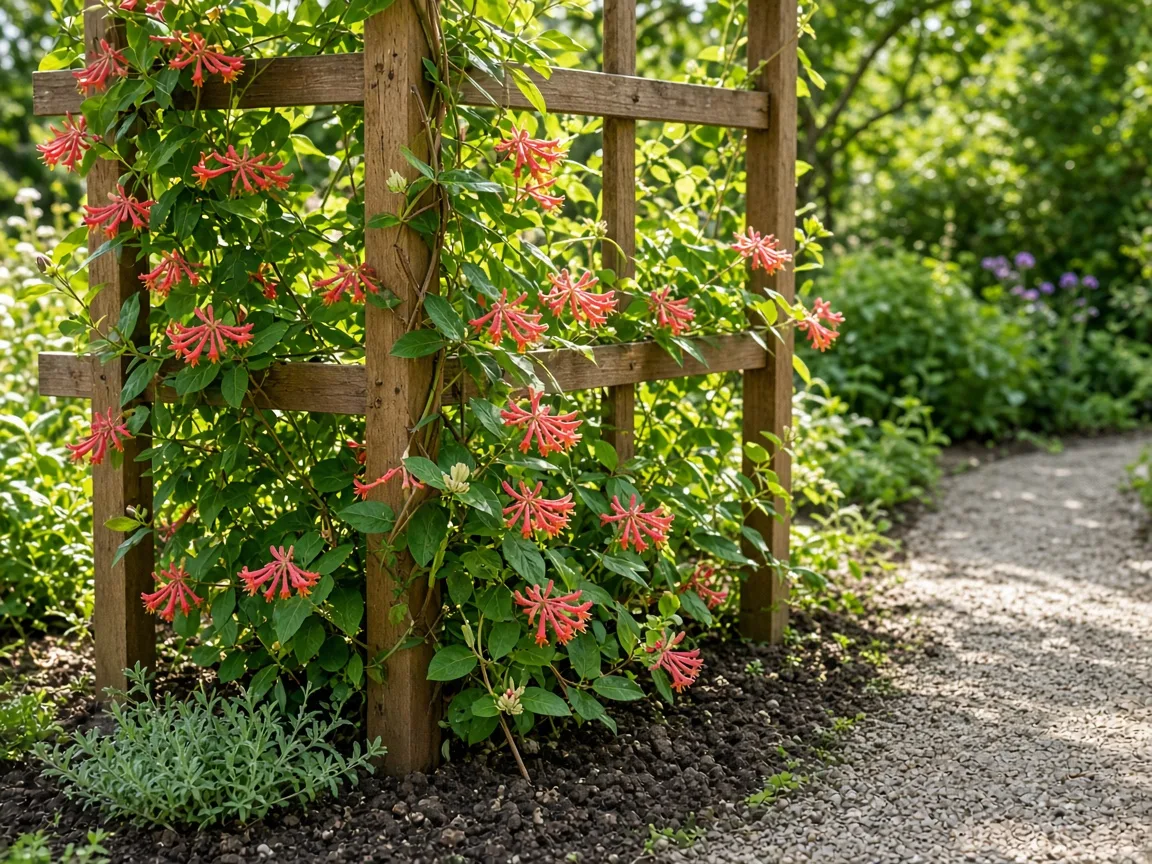
Do not expect the plant to cling to a blank masonry wall, and avoid training it through a tree canopy where it could shade or burden young branches. Coral honeysuckle can be allowed to sprawl on a slope, as NC State Extension notes, but a climbing vine is easier to inspect and prune when the main stems stay visible.
One less obvious siting issue is wildfire exposure. NC State Extension flags coral honeysuckle as highly flammable and advises keeping it outside the defensible space immediately around a home. In fire-prone areas, follow local defensible-space recommendations rather than treating native status as a fire-safety rating.
Soil and planting in the ground
Coral honeysuckle grows in average garden soil if it drains well. Medium moisture and humus-rich soil suit it, but a permanent puddle around the roots does not. The vine can tolerate clay, according to UT Gardens, so clay alone is not a reason to reject the plant; the deciding question is whether water drains away after rain. If the spot stays saturated, plant on a broad raised mound or choose a better-drained location rather than digging a small, amended pocket that can collect water like a basin.
Spring and fall are practical planting seasons because moderate temperatures make it easier to keep a young root ball from drying out. Set the plant at the same depth it grew in its nursery container, loosen circling roots if needed, and backfill with the soil you removed. Water slowly to settle soil around the roots, then spread a modest organic mulch over the root zone while keeping it from piling against the stem base.
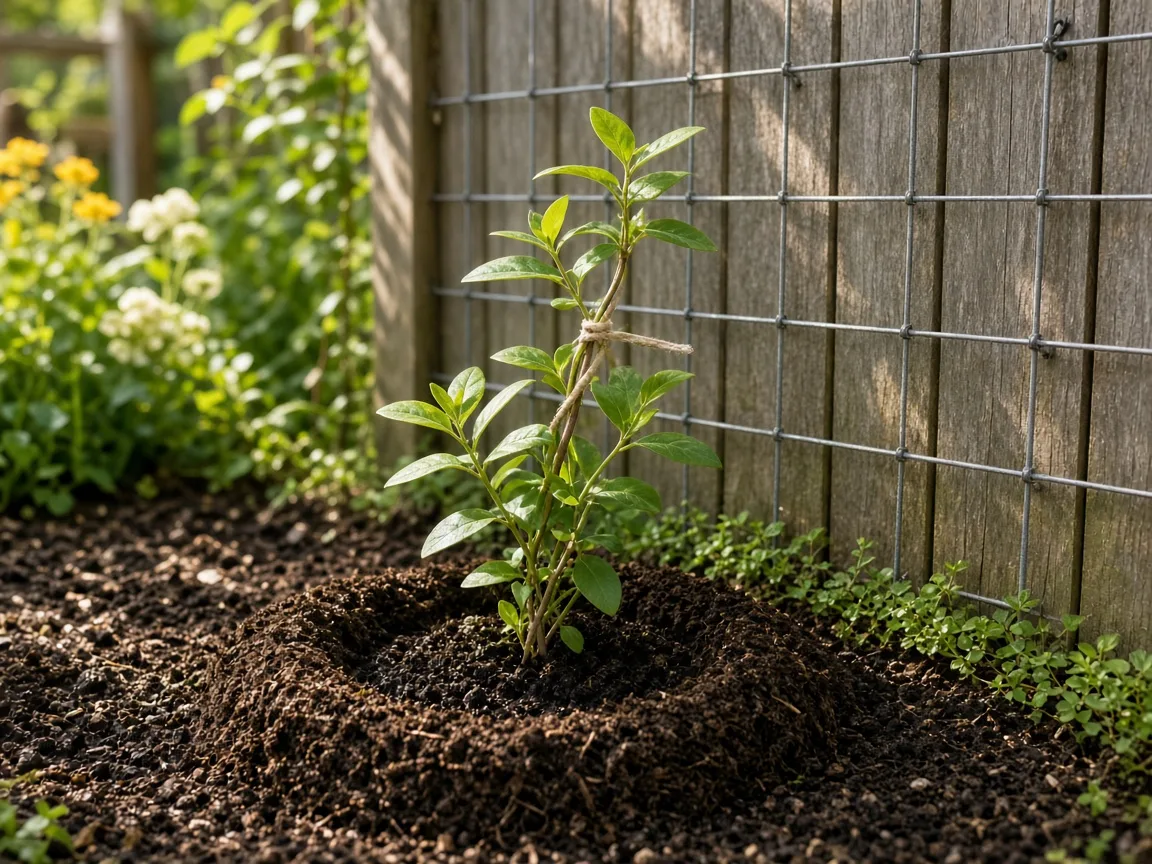
Plant close enough to the trellis that the first shoots can be guided onto it, but do not bury the stem to make it reach. The root ball should sit level with the surrounding grade, with the top of the roots covered rather than exposed. Clear weeds and competing groundcover from the immediate root zone for the first season; a small transplant does not yet have the roots to compete with established plants.
Water by establishment, not schedule
Water a new plant deeply after planting and keep the root zone evenly moist as roots spread into nearby soil. For the first growing season, check the soil every few days during dry weather. If the top couple of inches have started to dry, water at the base long enough to moisten the root ball and surrounding soil. If the soil is still damp, wait; adding water to already wet clay can limit oxygen around the roots.
After the plant is established, coral honeysuckle can tolerate dry spells better than a newly planted vine. It still flowers and grows more reliably when it is not repeatedly pushed into drought, especially in hot weather or sandy soil. During an extended dry spell, soak the root zone instead of sprinkling the foliage briefly. A mulch layer reduces evaporation, but it cannot compensate for waterlogged soil or roots packed tightly by nearby trees.
For a plant in a container, check moisture more often than for one in the ground because the potting mix dries faster. Water when the surface begins to dry, let excess water drain, and empty any saucer beneath the pot. Leaf wilt can follow either drought or damaged roots, so feel the soil before watering again.
Fertilizer and mulch: keep inputs modest
Routine fertilizer is usually unnecessary when coral honeysuckle is growing in decent soil. Too much nitrogen can produce a leafy vine with fewer flowers, a trade-off reported by NC State Extension and Duke Gardens. A thin layer of finished compost in spring is enough for most garden beds; only consider a fertilizer if growth is poor and a soil test or local extension recommendation points to a nutrient shortage.
Avoid planting where lawn fertilizer routinely runs off into the root zone. Repeated feeding is especially unhelpful when the real problem is shade, drought, a cramped root area, or a newly planted vine that has not established. Extra nutrients cannot replace sunlight or repair roots held in soggy soil.
Use mulch to slow moisture loss and reduce weeds, not to bury the stem base. Keep a small clear area around the plant and refresh mulch only as it breaks down. In a very wet climate, a thinner layer and good air movement near the lower stems are preferable to a deep, constantly damp blanket.
Pruning and training after flowering
Coral honeysuckle does not need an annual haircut. Prune to remove dead or damaged stems, keep the vine within its support, or reduce a section that has become crowded. For shape and size, wait until the main flowering flush has ended. NC State Extension notes that this vine flowers on new growth but still recommends avoiding pruning until after flowering; that timing protects the flowers you are waiting to see and leaves room for new stems to develop.
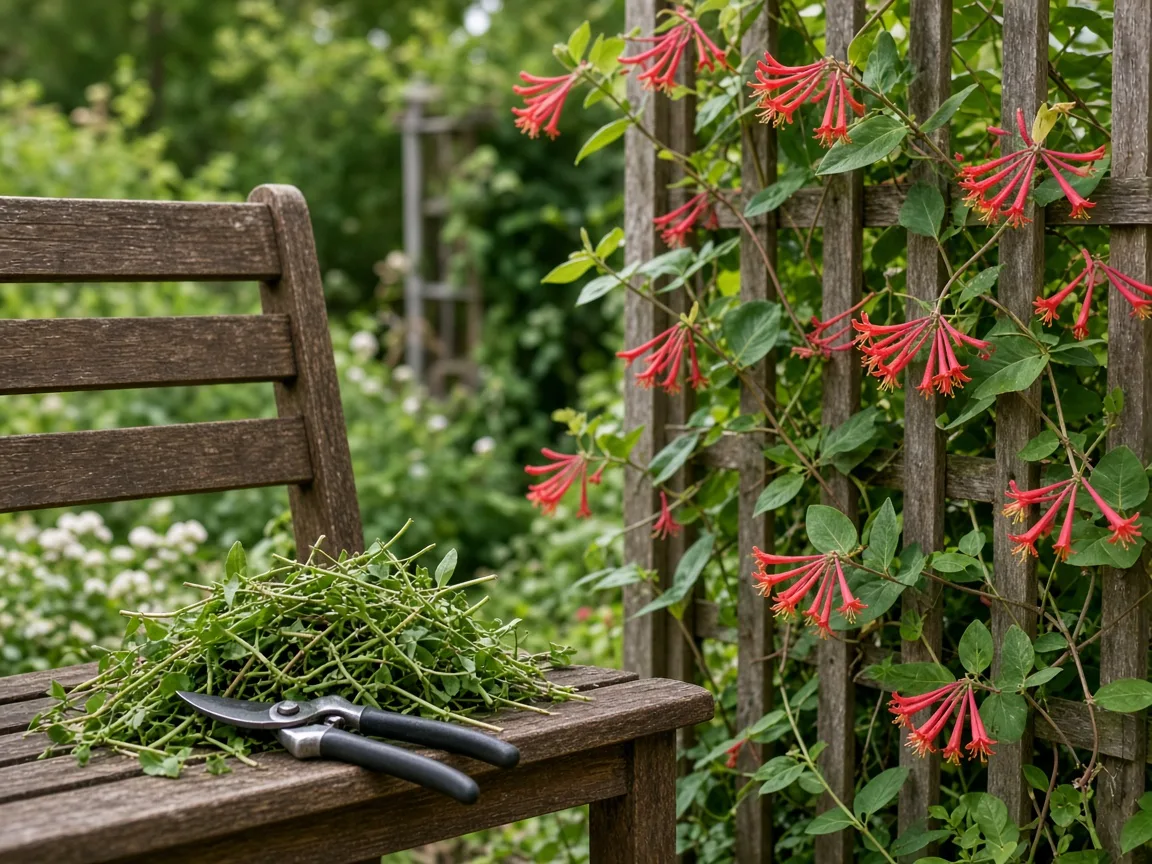
Start with cuts that have a clear purpose. Remove dead, broken, or crossing stems first, cutting back to a healthy side shoot or the point where the stem joins a larger branch. Then shorten only the long stems that are escaping the support. If you need to reduce an old, tangled vine, spread stronger pruning over more than one season instead of cutting the entire plant to the ground; a hard cut sacrifices flowers and can leave a slow-to-fill gap.
For a repeat-blooming cultivar such as ‘Major Wheeler,’ a light trim after the first strong flush is less disruptive than a severe cut while the vine is still making flowers. If you want late-season flowers, leave healthy new growth intact. Tie new stems into open spaces on the support while they are flexible; training early often saves more work than pruning hard later.
Propagate by cuttings, layering, or seed
Choose a propagation method based on what you want to preserve. Cuttings and layering make a plant genetically like the parent, which is useful for named cultivars. Seeds take longer and may not reproduce a cultivar’s exact flower color or blooming pattern. NC State Extension lists layering, stem cuttings, and seed as options, while UT Gardens recommends softwood cuttings in late spring or summer. Fine Gardening also points to summer semi-ripe cuttings.
Rooting softwood cuttings
Take a cutting in late spring or early summer when the vine has fresh, flexible growth. Pick a healthy nonflowering shoot, cut a 4- to 6-inch tip with a few leaf nodes, and remove leaves from the lower portion. Use a clean pot and a moist, airy propagation mix; insert the bare lower stem deeply enough that at least one node is below the mix. Keep leaves above the surface and out of direct sun.
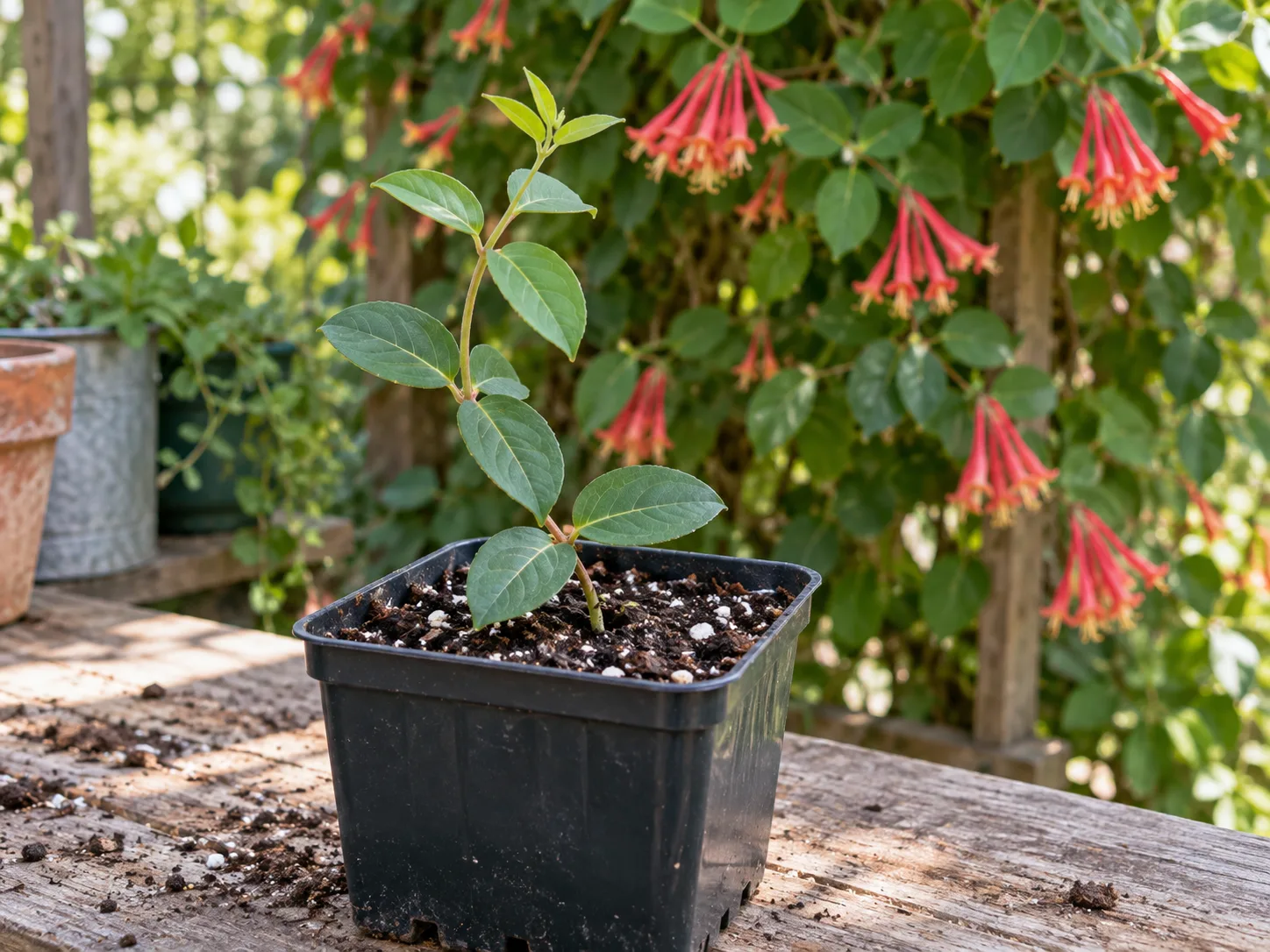
Covering the pot loosely with a clear bag or dome can slow moisture loss, but keep the cover from pressing against the leaves and open it if condensation stays heavy. The mix should feel lightly moist, not waterlogged. After several weeks, check gently for resistance or visible roots through a drainage hole; do not keep tugging on the cutting every day. Pot it up when it has a small root system, then let it grow before planting it into its permanent site.
Rooting hormone is optional rather than a requirement. The bigger practical gains come from fresh stems, a clean cut, a medium that drains, and consistent moisture without direct midday sun. Make more than one cutting if you need a backup, because not every shoot will root.
Simple layering
Layering is a low-equipment option if a flexible stem reaches the ground. Choose a healthy low shoot, bend one node to the soil, and pin that point in place with a landscape staple or a small stone. Cover the node lightly with soil, leave the tip exposed, and keep the spot from drying out. Once roots have formed and the buried section resists a gentle lift, cut it free from the parent and transplant it.
This method keeps the shoot attached to the parent while it roots, which reduces the chance that a new propagule dries out. Do not bury a long section deeply or sever it early. If the plant is on a trellis with no shoots near the ground, a cutting is simpler.
Seed and cultivar traits
Collect fully ripe red fruits in fall if you want to try seed. Clean away the fruit pulp, sow in a container of seed-starting mix, and keep the mix moist but not soggy. Seed pretreatment recommendations can vary; check the seed supplier or regional native-plant guidance for whether cold-moist stratification is needed in your situation instead of assuming every batch follows one fixed schedule.
Seedlings are a good way to grow the species, but they may vary from a named parent because they are the result of pollination rather than a genetic copy. Choose a cutting or rooted layer when you want ‘Major Wheeler,’ ‘John Clayton,’ or another selected cultivar to stay true. Seedlings also need patience: protect the small plants from weeds and drying while their roots are still limited.
The Epic Gardening coral honeysuckle guide likewise treats cuttings as the straightforward way to multiply a plant and seed as the slower, less reliable route. That is a useful distinction when deciding whether to preserve a cultivar or experiment with seedlings.
Choose a cultivar and set bloom expectations
Flower color and bloom length depend on the cultivar as well as light and growing conditions. Coral honeysuckle’s spring display is often its strongest, while some selections rebloom more lightly or keep flowering into summer and early fall. The flower tubes are usually not fragrant, so choose this vine for its color, form, and wildlife value rather than assuming it will perfume an evening garden.
| Cultivar | What to expect | Good fit when |
|---|---|---|
| ‘Major Wheeler’ | Reddish-orange flowers with an extended or repeat bloom period | You want a longer display on a fence or arbor |
| ‘Alabama Crimson’ | Deep crimson flowers and dark blue-green foliage; can reach a long, vigorous spread | You want a bold red flower and have room for a large vine |
| ‘John Clayton’ | Yellow flowers; a more compact habit than many selections and a tendency to rebloom | You want a lighter flower color or a somewhat shorter vine |
| ‘Cedar Lane’ | Narrow red or coral tubes with yellow throats | You want the classic trumpet shape and contrasting throat |
| ‘Sulphurea’ | Yellow flowers | You want a yellow-flowered selection |
Cultivar names and mature-size estimates vary between sources and nurseries, so use the label for the plant you are actually buying. The NC State profile lists cultivars and notes repeat flowering in ‘Major Wheeler’; the UT Gardens guide also recommends reblooming forms for a longer season. If season-long flowers matter more than a specific color, ask a local native-plant nursery which selection has performed reliably in your region.
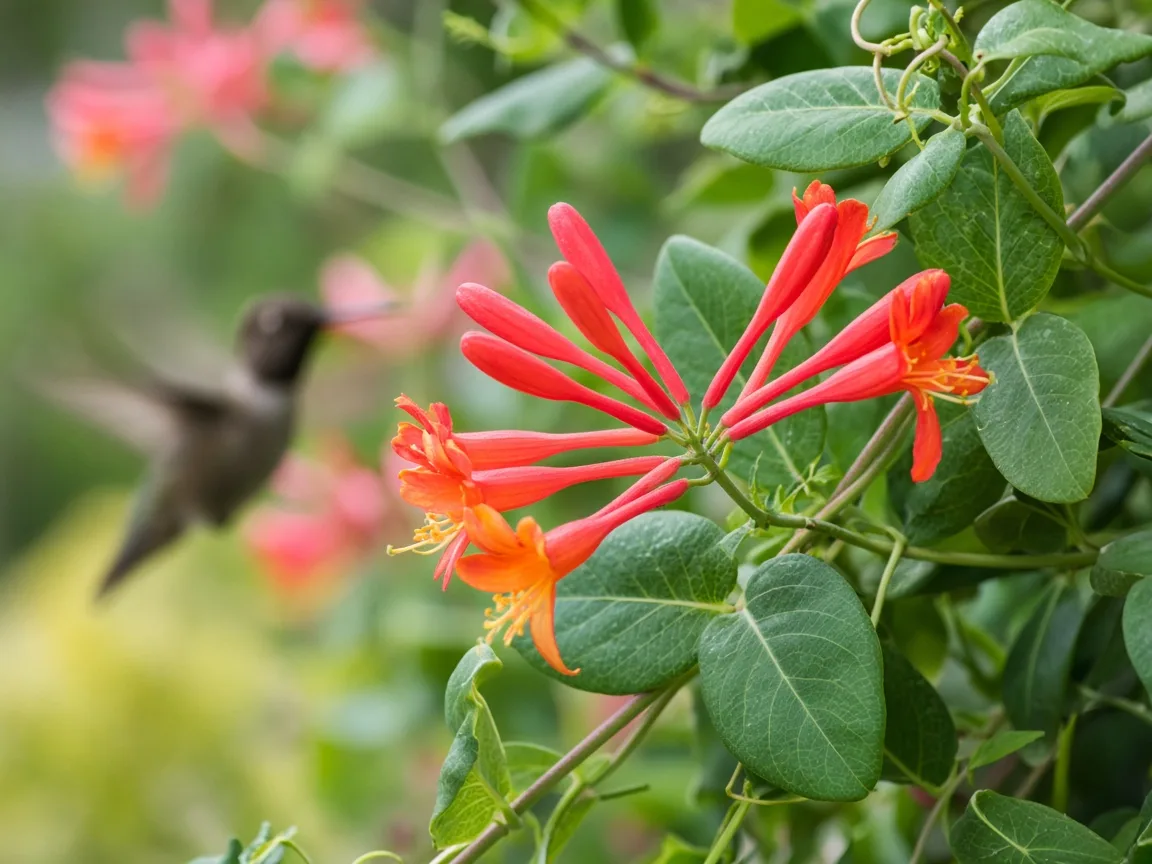
The native vine is more than a floral screen. Duke Gardens describes coral honeysuckle as a nectar source for hummingbirds, bees, and butterflies, a host plant for spring azure butterflies and clearwing moths, and a source of red fruits eaten by migrating songbirds. Leave some fruiting stems intact if you want the wildlife value; avoid treating the berries as food for people.
Grow coral honeysuckle in a container
A container works for a young vine or a smaller cultivar, but it asks for more attention than an in-ground planting. The mature plant can grow 10 to 20 feet long, so a small decorative pot and a lightweight stake are not a long-term match. Use the largest practical container with drainage holes, a sturdy trellis fixed securely to the pot or a nearby wall, and a potting mix that drains while retaining some moisture.
Container roots heat and dry faster than garden soil, particularly on a sunny deck. Check moisture during warm weather and water deeply when the mix starts to dry; do not leave the pot standing in runoff. Feed only if the vine shows weak growth and avoid high-nitrogen applications that favor leaves over blooms.
Plan for winter protection in cold regions. Roots in a pot receive less insulation than roots in the ground, even when the vine itself is hardy. Group the container against a sheltered wall, insulate around it, or move it to an unheated protected space after it is dormant. Keep the mix just moist enough to prevent complete drying, but do not store the pot in standing water.
Winter habits and seasonal maintenance
Leaf drop is not automatically a problem. The species may stay evergreen or semi-evergreen where winters are mild, but it can become deciduous where freezing weather is routine. If the vine loses leaves after a cold snap and stems remain firm, wait for spring growth before cutting it back. Removing healthy stems in winter can remove next season’s structure before you know which wood is alive.
In spring, check ties, remove clearly dead or broken stems, and guide fresh shoots into open spaces. During summer, monitor water during long dry periods and look at new leaves for aphids or mildew. After flowering, make any size or shape cuts that are needed. In fall, remove diseased leaf litter from below the vine and check that the base has not been covered by drifting mulch.
In-ground coral honeysuckle in an appropriate hardiness area generally needs little winter preparation. Good drainage and a sheltered location matter more than heavy wrapping. For a plant in a container, root insulation is the larger issue; moving a pot to a protected spot is more useful than covering the dormant stems.
Diagnose weak flowering, aphids, and mildew
If a vine is alive but not flowering, check causes in this order: light, fertilizer, pruning, then age and cultivar. Coral honeysuckle in dense shade may grow leaves without producing the display you expected. Move a container to a sunnier position, or improve light around an in-ground plant where that can be done without harming other plants. If you recently applied lawn or garden fertilizer, stop feeding and allow the plant to use the growth it has already made.
Pruning at the wrong time can remove the current flush of buds or reduce flowers for a season. A newly planted vine may also spend its first season building roots and framework. Finally, check the cultivar label: a selection with a strong spring flush may not flower continuously even when care is excellent.
Aphids may gather on tender tips and buds. Inspect new growth; if only a few shoots are affected and the vine keeps growing, monitor rather than spraying automatically. A firm stream of water can dislodge a light cluster. Avoid treating open flowers, where broad applications can affect the pollinators visiting the vine.
Powdery mildew or leaf spots are more likely in hot, humid conditions when foliage is crowded and air movement is poor. Remove heavily affected leaves and fallen debris, thin a few crossing stems after flowering, and water the soil rather than repeatedly wetting the canopy. Mild cosmetic damage is not a reason for a blanket fungicide treatment. If spotting spreads quickly, the stem dies back, or the plant declines despite better airflow and drainage, take a sample or photos to a local Extension office for diagnosis before choosing a treatment.
Conclusion: give the vine room and a frame
Coral honeysuckle thrives when you match its growth habit to the site: give it sun for stronger bloom, well-drained soil with moderate moisture, and support that its stems can twine around. Water consistently while it establishes, then respond to the soil and weather rather than following a fixed weekly routine. Skip heavy fertilizer and prune after flowering only when the vine needs shaping.
Choose a cultivar for flower color and bloom pattern, and leave room for its mature length. That small amount of planning turns a new transplant into a long-lived native vine that is easier to maintain and useful to the wildlife that visits its flowers and fruit.