Dish Soap Weed Killer: Recipe and Safe Use
Mix dish soap and water for a quick weed-control spot spray. Get the ratio, weather rules, plant-safety limits, and next steps for regrowth.
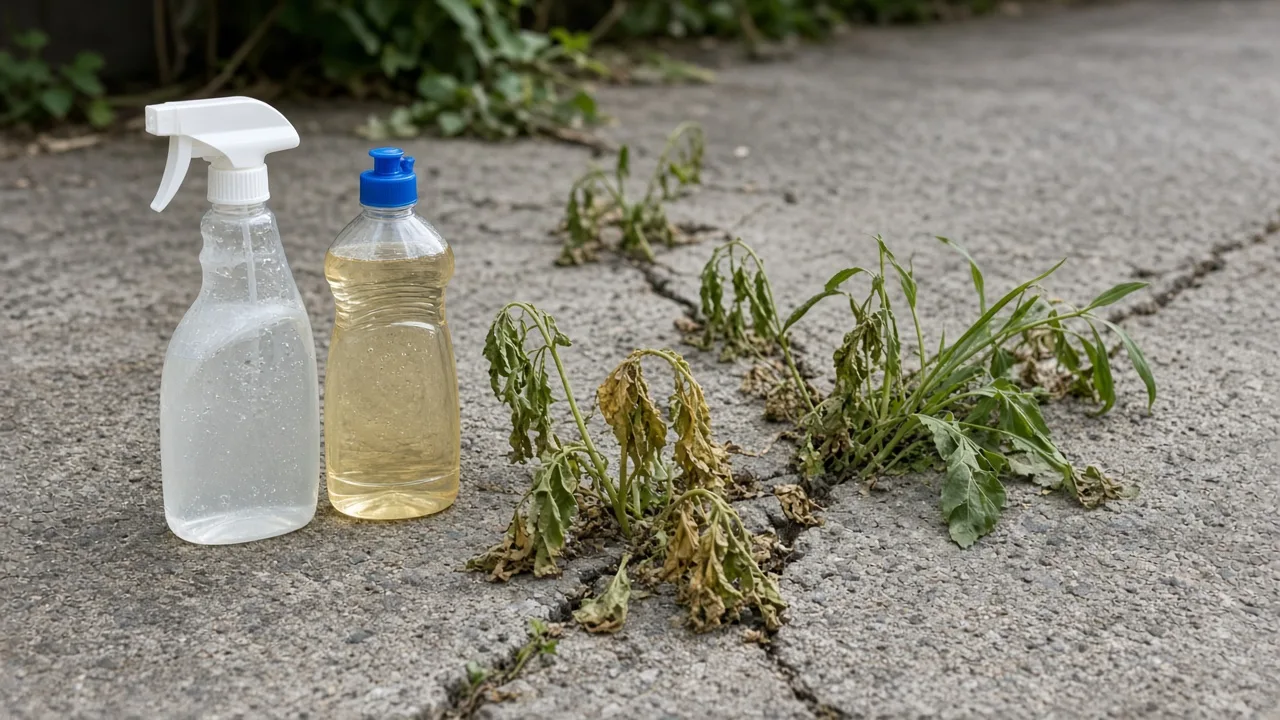
The quickest honest answer is yes: a dish soap weed killer can brown and kill small weeds when the spray thoroughly coats their exposed leaves. But it is a contact treatment, not a root-killing system, and it is non-selective. The same liquid that damages a weed can damage grass, flowers, vegetables, and young tree foliage if it drifts or splashes onto them.
That makes this a very specific tool. It is useful for weeds growing in sidewalk cracks, driveway joints, paver gaps, gravel, and other places where you want bare hardscape—not for broadcasting over a lawn or misting through a planted bed. Use the recipe below as a measured spot spray, then let the site determine whether spraying is sensible at all.
What to know before you mix
Dish soap does not make a weed disappear because it travels through the whole plant. It damages the green tissue it touches, so the result depends on the weed’s age, leaf surface, weather, and how completely you cover it. Small seedlings with a lot of tender leaf area and very little stored energy are the easiest targets.
The phrase “soap” also hides a practical distinction. Household dishwashing liquids are cleaning products with formulas that vary by brand, while commercial insecticidal soaps are plant-use products made for a different job. Georgia Cooperative Extension explains that dish soaps can burn foliage at high concentrations, especially when plants are stressed or temperatures are above 90°F, and recommends testing any soap spray on a small area first (Georgia Cooperative Extension). For weed control, that is one more reason to keep this mix on isolated hardscape rather than treating a whole garden.
The two-ingredient recipe
For a manageable spot-treatment batch, combine:
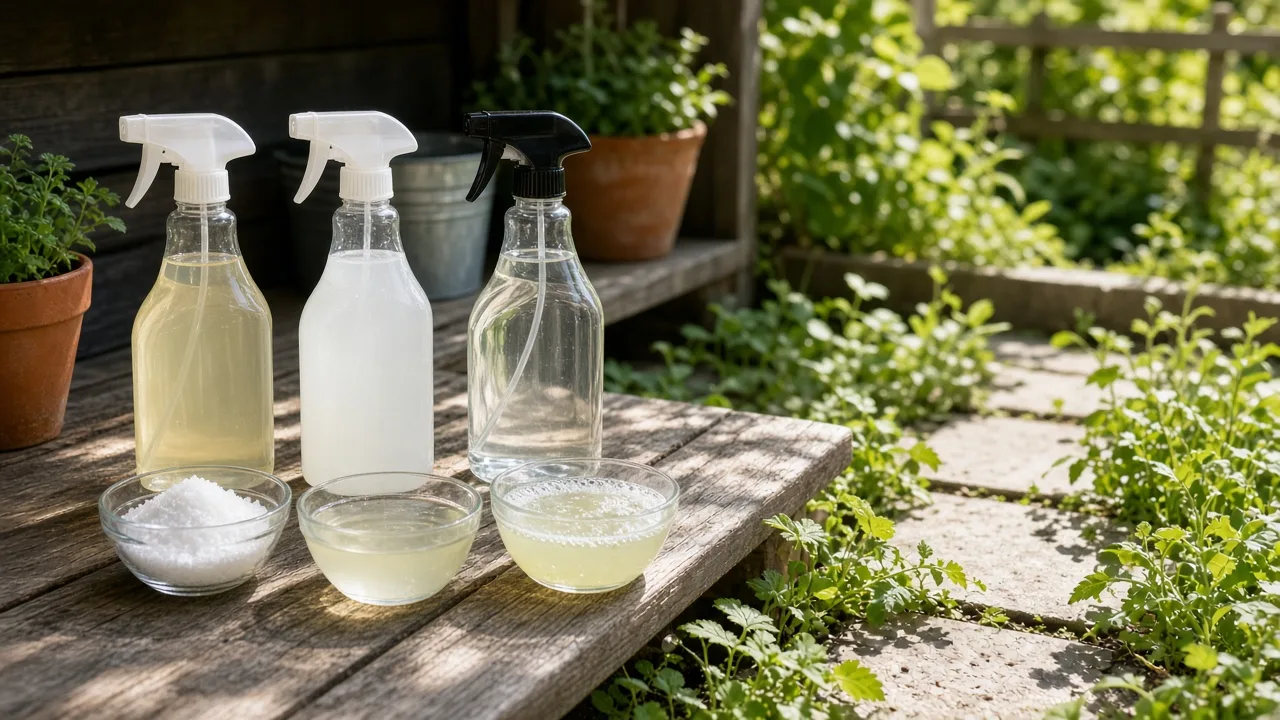
- 1 tablespoon of plain liquid dish soap
- 1 quart of water
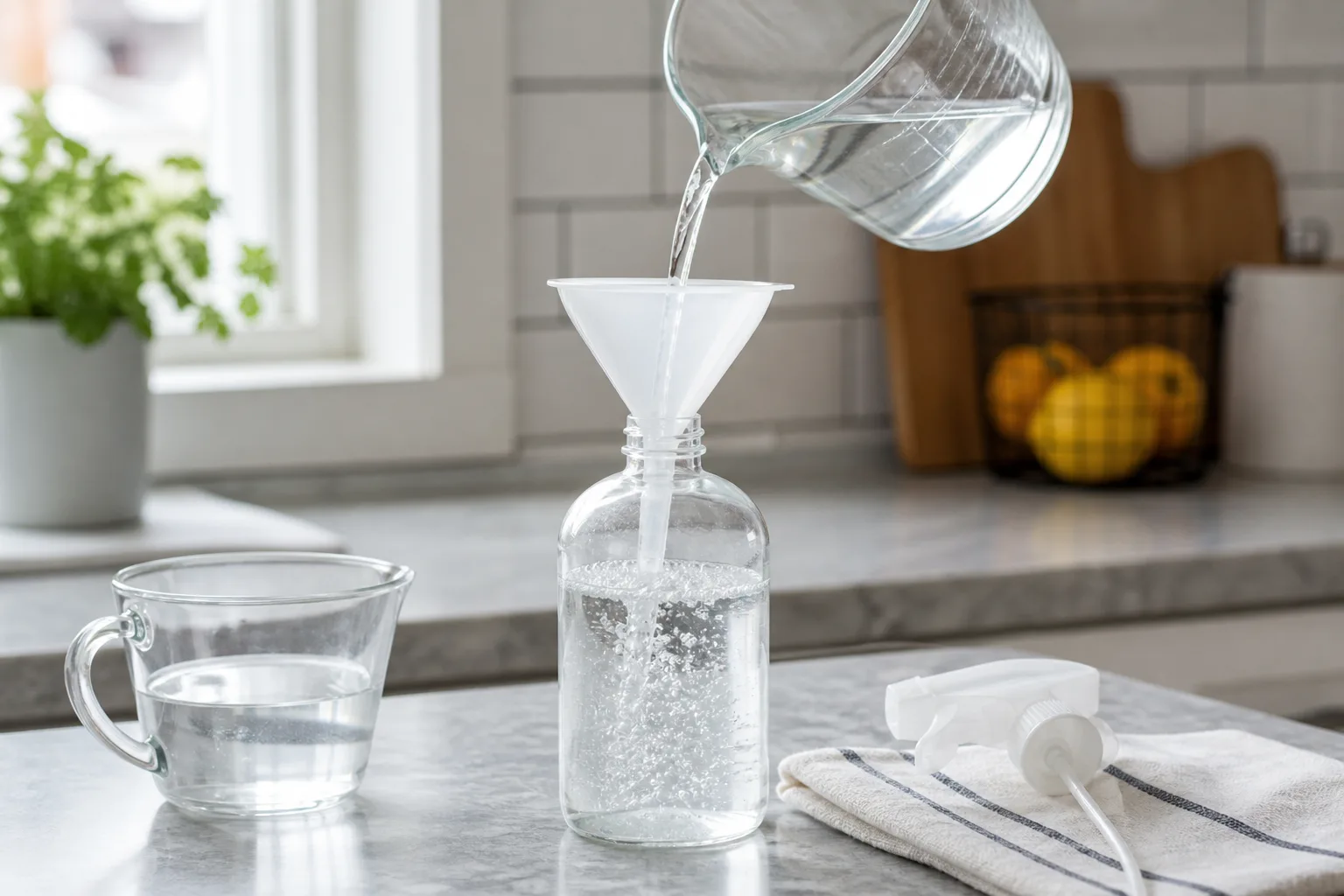
Use a dedicated spray bottle with a stream or coarse-spray setting. Add the water first, pour in the soap, and swirl rather than shaking hard; excess foam makes it harder to see how much liquid is reaching the weed. Label the bottle clearly, even though the ingredients came from your kitchen, and never reuse it for food, drinking water, or plant-washing.
This ratio is a restrained starting point, not a challenge to keep adding detergent. It is close to the 1–2% dish-soap range described by Georgia Cooperative Extension for soap sprays, while Colorado State University Extension lists a stronger kitchen recipe and still emphasizes coating weeds only (Colorado State University Extension). A stronger mix remains non-selective; it does not become a selective lawn herbicide or gain the ability to reach roots.
Scale the batch without guesswork
If you need more liquid, use 4 tablespoons of dish soap per gallon of water. For a half-quart test bottle, use 1½ teaspoons per 2 cups of water. Measuring is worth the few seconds because “a glug” can turn a mild spot spray into a foliage-burning detergent bath.
Make only what you can use for the job at hand. If the bottle sits, the soap may separate or foam unpredictably, and a forgotten unlabeled bottle is an avoidable household hazard. Keep any remainder closed, clearly labeled, and out of reach of children and pets; never leave it beside drinking water or garden harvests.
Why the spray works on contact
Leaves are not bare paper. Their outer cuticle helps slow water loss, and many weed leaves shed plain water before enough of it can stay in contact. Dish soap changes the way the liquid wets the leaf and can damage exposed plant tissue, which helps the leaf dry down and collapse in bright, dry conditions.
The key word is contact. The spray only acts where the solution lands, so a plant can look wilted on top while its crown, taproot, stolon, or rhizome remains alive underneath. That difference explains why a tiny chickweed in a crack may vanish after one treatment while a mature dandelion or spreading grass returns with fresh leaves.
Soap’s job is coverage, not root control
Think of the dish soap as the part that helps the water spread and stay on the target long enough to do its surface-level work. It is not a systemic herbicide, and it does not turn a contact spray into a soil treatment. The better your leaf coverage, the more complete the top kill; the deeper the weed’s stored energy, the greater the chance of regrowth.
That is also why the method is not automatically “safe” just because it uses a familiar household product. A plant does not know whether the detergent was poured from a kitchen bottle or a garden bottle. If the liquid covers a desirable leaf, it can injure that leaf too. When a weed is touching a tomato, flower, shrub, or turfgrass, precision matters more than convenience.
Where the spray earns its keep
The best targets are small, green weeds growing alone on a surface where no plant should be growing. Sidewalk cracks, driveway seams, patio joints, gravel paths, and the edge of an empty foundation strip all give you room to aim without sacrificing something you want to keep.
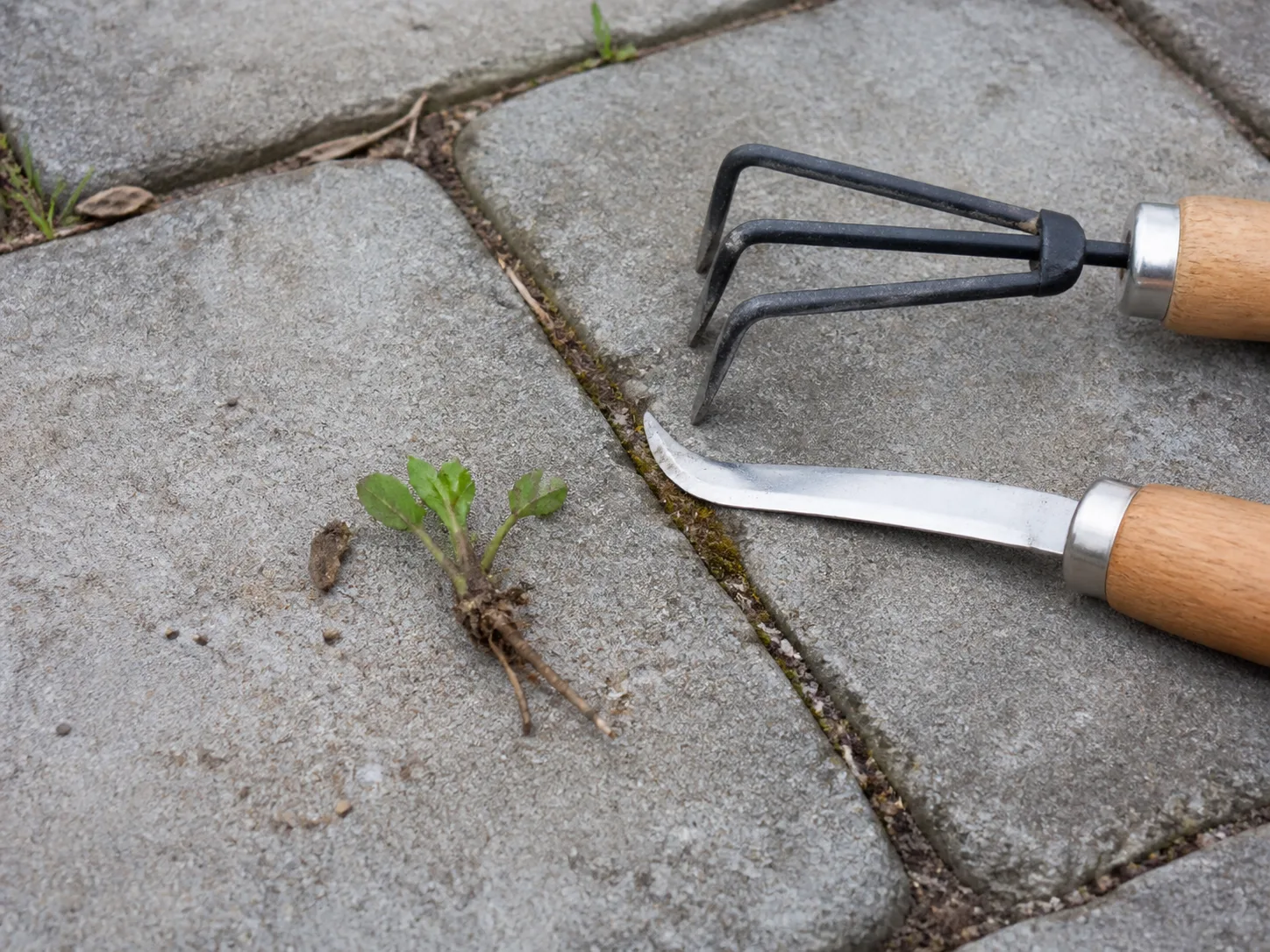
It is particularly handy when a weed is too rooted in a narrow crack to pull cleanly. A careful stream can wet the foliage without soaking the surrounding bed, and a follow-up visit can remove the dead top and clear loose soil from the gap. That is a maintenance job, not a promise that the crack will stay weed-free forever.
Where it disappoints
The mix is a poor fit for a lawn. It cannot tell a dandelion from the grass around it, and a fine mist can leave a constellation of dead spots long before you notice where the drift went. A selective lawn herbicide, manual removal, or better turf density may solve that problem more cleanly, depending on the weed and local label directions.
It is also a poor fit for planted beds, edible gardens, and areas you plan to seed soon. Even if you aim well, droplets can bounce off foliage or run into soil. The risk is not only visible leaf burn; repeated detergent exposure can make a small gardening error larger than the original weed.
Mature perennials are another weak target. Dandelions, bindweed, nutsedge, quackgrass, and other weeds with substantial underground structures may lose their leaves and return. Epic Gardening’s practical weed-removal guidance makes the same distinction: hand-pulling is the precise option near crops, while mowing, hoeing, mulching, and tarping fit different weed sizes and sites (Epic Gardening).
Choose the site before the sprayer
Before mixing, walk the area and ask one question: If every green leaf touched by this spray died, would I be okay with that? If the answer is no, do not use a broadcast or misting motion. Pull the weed, cover nearby foliage, or choose a tool that lets you work mechanically.
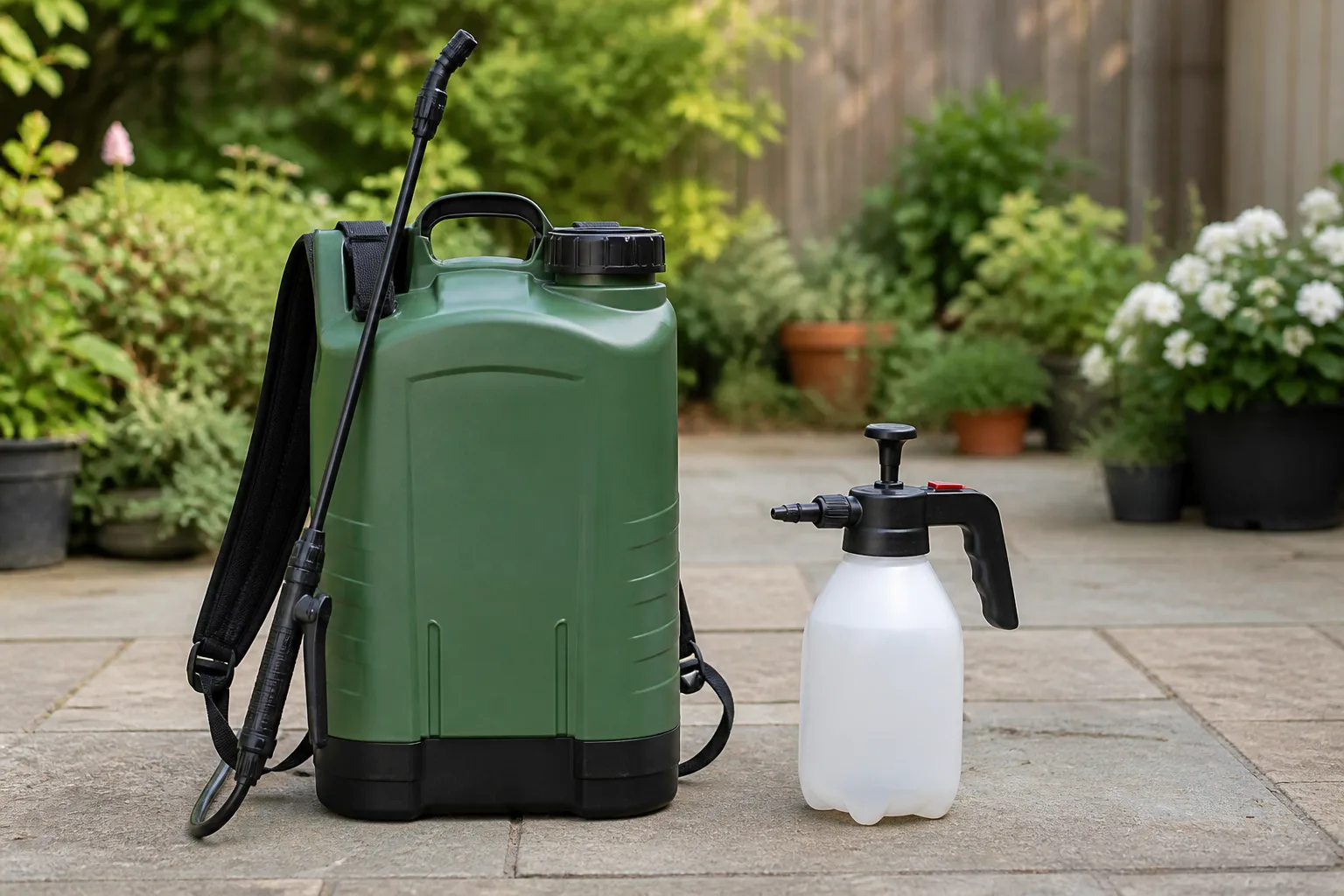
The site test is more useful than calling any homemade spray natural or chemical-free. A paver joint with no nearby plants gives you a margin for error. A vegetable bed gives you almost none. A lawn is a planted surface by definition, even if the plant you dislike is a dandelion.
For a hardscape treatment, sweep away loose debris first so the weed’s leaves are visible. Do not spray across drains, ponds, streams, or places where runoff will move directly into water. If the weeds are beside a garden border, place a piece of cardboard between the target and the plants you are keeping, and use a narrow stream rather than a fan of droplets.
Time the spray for dry, calm weather
Choose a day when the leaves are dry and the forecast gives the treatment time to remain on them. Rain, irrigation, and heavy dew dilute or rinse away a contact spray before it has done much. Bright, warm conditions help exposed foliage dry, which is why extension and horticulture sources commonly point gardeners toward sunny, dry weather for contact weed treatments.
Wind is the deal-breaker. A breeze can carry droplets onto lawn blades, flowers, or neighboring plantings, and the Wisconsin Extension description of herbicide injury highlights wind and hot conditions as common ways a treatment reaches unintended plants (University of Wisconsin Extension). If you cannot see the spray landing exactly where you intend, wait.
There is a useful compromise between “hotter is always better” and “never spray in sun.” On empty hardscape, a dry sunny window is practical. Near desirable plants, work in the cooler morning, avoid the hottest part of the day, and skip treatment when plants are already wilted from heat. Georgia Cooperative Extension specifically warns that stressed plants and high heat increase the chance of soap injury (Georgia Cooperative Extension).
Apply it as a true spot treatment
Put on gloves and eye protection, check that the nozzle is set to a narrow stream or coarse spray, and stand so the wind is behind you only if the air is genuinely calm. Aim at the weed’s leaves from close range and wet the foliage until it looks evenly coated; stop before the liquid runs across the pavement into a planting area.
Cover the top and any accessible sides of the leaves. You do not need to drench the soil, and you do not need to soak a large circle around the plant. A contact treatment succeeds by putting enough solution on green tissue, not by flooding the crack.
Work in small sections so you remember which areas were treated. Keep people and pets away until the spray has dried, and wash your hands after removing gloves. Do not spray in an enclosed space, do not use the mixture as a general-purpose garden cleaner, and never pour leftover liquid into a pond, storm drain, or water feature.
Shield nearby plants and soil
Cardboard, a piece of plastic held as a temporary shield, or your own careful hand placement can reduce drift, but a shield is not a license to spray carelessly. Avoid windy conditions, keep the nozzle close to the target, and do not spray above shoulder height where droplets can travel farther than expected.
If a desirable leaf is accidentally coated, rinse it promptly with clean water if you can do so without washing the spray onto another plant or into sensitive soil. Watch the plant over the next few days. If the weed is interwoven with the plant you want, the safest answer is usually hand-pulling rather than trying to make a homemade spray more powerful.
What you should see afterward
Small weeds may look dull, limp, or scorched later the same day, but visible browning is not the same as a dead root. Give the foliage time to dry and inspect it again over the next several days. Do not judge success by one wilted afternoon, especially with a mature perennial.
The most useful follow-up is a gentle tug after the top has dried. If the plant lifts with a shallow root, remove it and clear the crack. If the crown holds fast and new green growth appears from the center or from runners, you have a root problem that a contact spray did not solve.
Fine Gardening describes contact weed treatments as useful for foliage while warning that vinegar and citrus products can be nonselective and that established taprooted weeds may need repeated attention (Fine Gardening). The same contact-versus-root distinction is the right way to interpret a soap spray: it can be a quick top-kill tool without being a complete eradication plan.
Fix the common failure modes
If nothing happened, start with the application rather than doubling the soap. The leaves may have been wet, the spray may have missed the underside or growing point, the weather may have turned cloudy or rainy, or the weed may simply be too mature for a one-pass contact treatment.
If the leaves browned but the plant returned, identify the regrowth pattern. A fresh seedling beside the original usually needs a quick pull. A rosette that reappears from the same crown needs root removal or repeated, carefully timed control. A creeping grass or vine may require a longer sequence of cutting, exhausting, digging, or covering.
If the spray injured a plant you wanted to keep, stop using it in that location. Move to a shielded tool or manual removal, and do not try to “neutralize” the area with extra soap, vinegar, or salt. The solution to nonselective injury is better targeting, not a stronger recipe.
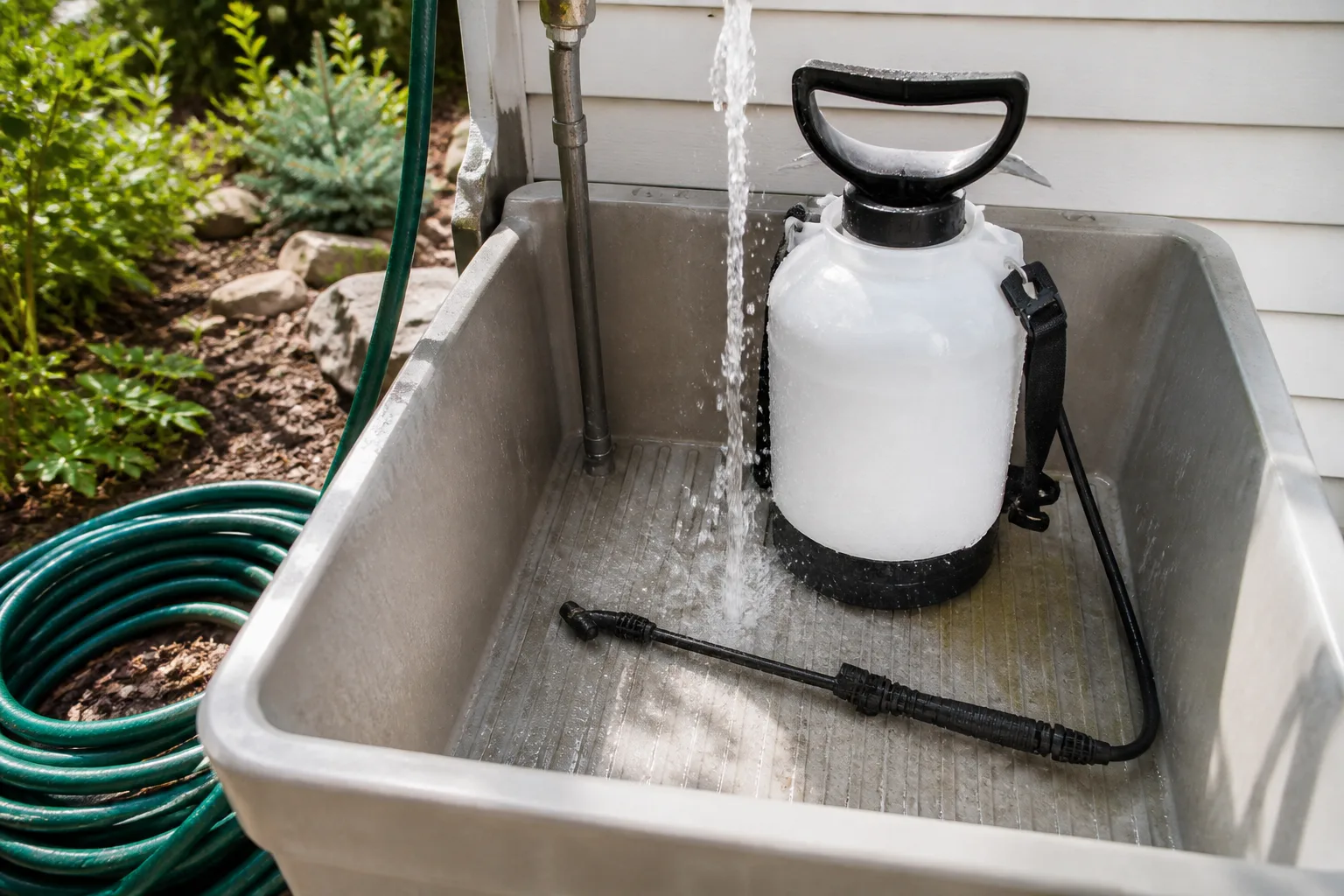
If the bottle clogged, too much foam or undissolved debris may be blocking the nozzle. Rinse the sprayer with clean water, do not poke the tip toward your face, and make a smaller fresh batch with plain liquid dish soap. Avoid bleach, ammonia, and other household cleaners in the bottle.
Should you add vinegar or salt?
You do not need either ingredient for the two-ingredient method, and adding them changes the risk profile. Salt is the bigger long-term concern for any place that might become a garden: it can make soil harder for future plants to use. Colorado State University Extension recommends reserving salt for places such as pavers and driveways rather than areas intended for planting (Colorado State University Extension).
Vinegar is an acid contact treatment, not a magic root killer. Household vinegar may brown young weeds, while stronger horticultural products require much more careful handling; Fine Gardening notes that concentrated vinegar products are nonselective and that soil applications can affect pH. For a small weed beside flowers or food crops, switching to acid is not a safety upgrade.
The practical rule is simple: keep the soap-and-water recipe simple when you are treating isolated hardscape, and do not escalate by pantry improvisation when the site is planted. If a stubborn problem truly needs a pesticide, choose a product registered for that use and follow its label, including the listed target, site, rate, protective equipment, and reentry directions.
Choose a better tool when the weed returns
For one or two weeds near a crop, pull while the soil is moist and use a narrow weeder or trowel to follow the root. Hold the wanted plant steady, loosen the weed at its base, and remove as much of the root or crown as the soil allows. This is slower than spraying but far more selective.
For young weeds scattered through a bed, shallow hoeing or hand cultivation can cut them before they seed. Work the surface lightly rather than churning the soil deeply; aggressive disturbance can bring buried seeds up and spread pieces of perennial roots. A short weekly pass is usually easier than waiting for a dense, flowering patch.
For a bare, unplanted area, cardboard topped with mulch or a weighted tarp can block light over time. Epic Gardening recommends tarping for larger areas that are not currently planted and mulch for established beds, because the right method depends on whether you need to protect crops while suppressing new growth (Epic Gardening).
Boiling water also has a narrow but useful niche on pavement cracks. It can damage any plant it touches and will not solve every deep-rooted perennial, so pour carefully and keep it away from feet, pets, and wanted plants. The best choice is the one that matches the site, not the one with the most dramatic before-and-after claim.
Build prevention into the routine
Soap can handle today’s isolated weed, but prevention is what makes the job smaller next week. Remove weeds before they flower, sweep seed-catching grit out of paver joints, and repair or refill open gaps where soil accumulates. A clean, tight hardscape gives new seedlings fewer places to anchor.
In planted beds, cover bare soil with an appropriate organic mulch layer rather than repeatedly spraying around living stems. Epic Gardening recommends roughly two to four inches of materials such as straw, leaves, or wood chips, with a small open ring around plant stems and trunks so moisture does not stay pressed against them (Epic Gardening). Top up the layer when it thins, and pull any weeds that emerge before they set seed.
Gardening Know How likewise frames homemade desiccant mixes as best for driveways, sidewalk cracks, gravel, and other places where wanted plants are absent; its tested DIY recipe also warns that the same ingredients can kill desirable plants (Gardening Know How). That is the mindset to keep: spray only where a miss is acceptable, pull where precision matters, and mulch where prevention will pay you back.
For a recurring paver problem, combine methods. Pull or spray the visible growth, scrape out roots and loose soil, then improve the joint so it is less hospitable to the next seed. For a lawn problem, strengthen the turf and identify the weed before choosing a selective treatment. A two-ingredient spray is most satisfying when it is one small part of a plan that keeps you from reaching for it every weekend.
Conclusion
The best version of this viral hack is the least dramatic one: 1 tablespoon of plain liquid dish soap in 1 quart of water, sprayed as a targeted coat on small weeds growing in empty hardscape. It can dry and brown foliage quickly, but it is non-selective, contact-only, and unreliable against deep roots.
Use a dedicated labeled sprayer, dry calm weather, a narrow stream, and enough coverage to wet the leaves without runoff. Keep it off lawns, food gardens, flower beds, and any plant you hope to keep. When the weed returns, pull the root, cover the site, repair the crack, or choose a properly labeled product instead of adding more soap, salt, or acid. That is what makes the hack genuinely useful: not that it kills every weed, but that it solves the right small problem without creating a bigger one.