3 DIY Soil Mixes for Healthier Houseplants
Three DIY houseplant soil mix recipes with ratios for tropicals, aroids, and succulents, plus practical guidance on coir, bark, perlite, and watering.
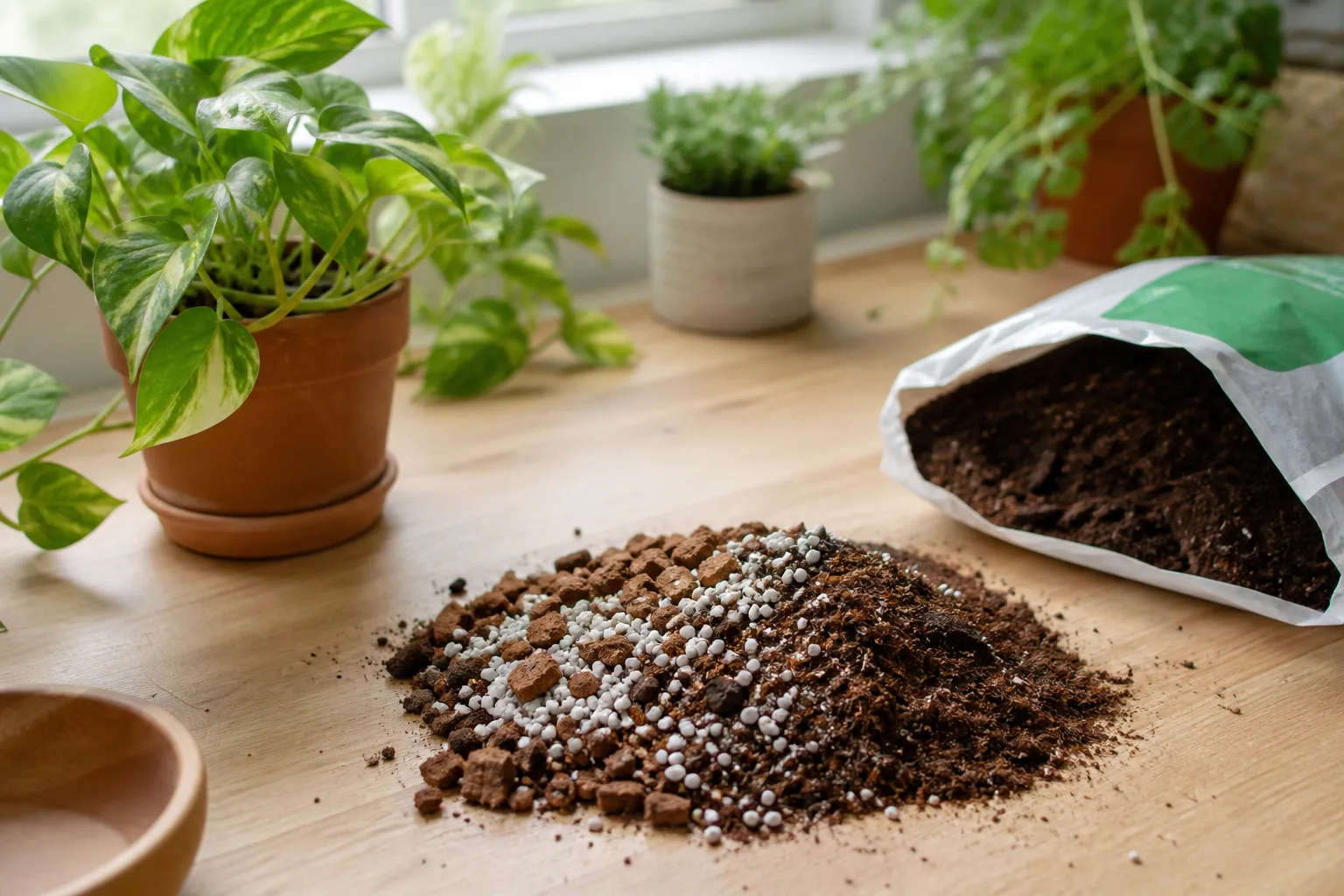
The most useful DIY houseplant soil mix is the one that stays evenly moist without turning dense and airless between waterings. You can start with three blends: a balanced mix for many leafy tropicals, a chunkier version for aroids such as Monstera and Philodendron, and a faster-drying mix for cacti and many desert succulents.
Measure each ingredient by volume with the same scoop, and treat the ratios as starting points rather than rules for every plant. The room, pot, root system, and your watering habits all affect how quickly a mix dries. A small test batch lets you adjust before you repot several plants.
Pick the right mix for your plant
Use the balanced blend if your plant likes regular moisture but should not sit in soggy media: many Pothos, Peace Lilies, ferns, and common foliage plants fit here. Choose the chunky blend for thick-rooted or climbing aroids that benefit from larger air spaces around their roots. Use the faster-drying recipe for cacti and succulents that store water and need the potting medium to dry more readily.
| Mix | Starting ratio by volume | Good starting point for |
|---|---|---|
| Balanced | 2 parts coco coir, 1 part fine pine bark, 1 part perlite or pumice | Many leafy tropical houseplants |
| Chunky aroid | 2 parts coco coir, 2 parts small-grade pine bark, 1 part perlite or pumice, 1 part coco chips | Monstera, Philodendron, and similar aroids |
| Faster-drying | 1 part coco coir, 1 part fine bark or plain potting mix, 2 parts pumice or coarse perlite | Cacti and many desert succulents |
If you only want to make one batch, begin with the balanced recipe and adjust a small portion for the plants that need a different dry-down. The University of Connecticut Extension describes container media as a balance of plant support, drainage, air, water, and nutrients; no single ingredient or ratio supplies all of those equally. A plant that wilts in a bright, warm room may need a more moisture-retentive blend than the same species in a cool room with weak light.
What a good houseplant mix has to do
Roots need both water and air. A workable potting medium holds enough moisture for the plant to use, then leaves connected spaces where excess water can move and air can return as the mix drains. If particles are too fine or the blend is compressed, water may linger and roots may receive too little oxygen; if the mix is too coarse for the plant and its conditions, it can dry before the roots can take up enough water.
That balance is why “well-draining” does not mean “water-repellent” or “dry immediately.” Clemson Cooperative Extension lists support, nutrient-holding capacity, water and air movement, and adequate moisture retention among the goals of a good container mix. The Royal Horticultural Society likewise explains how bulky, irregular ingredients create air spaces, while noting that different houseplants have different growing-media needs.
The pot matters too. A container with open drainage holes lets excess water leave; a decorative cachepot with no holes can still work if the plant stays in a removable nursery pot and you empty runoff after watering. Adding gravel to the bottom does not correct a dense mix or replace drainage holes, so build the right texture throughout the root zone instead.
What each ingredient contributes
Think in jobs, not a shopping list: one material holds moisture, another keeps the blend open, and any nutrient amendment should be modest and predictable. Some ingredients do more than one job, and their particle size changes the result. Before buying several bags, check what is already in a commercial potting mix; it may already contain coir or peat, bark, perlite, fertilizer, or wetting agents.
Coir and peat form the moisture base
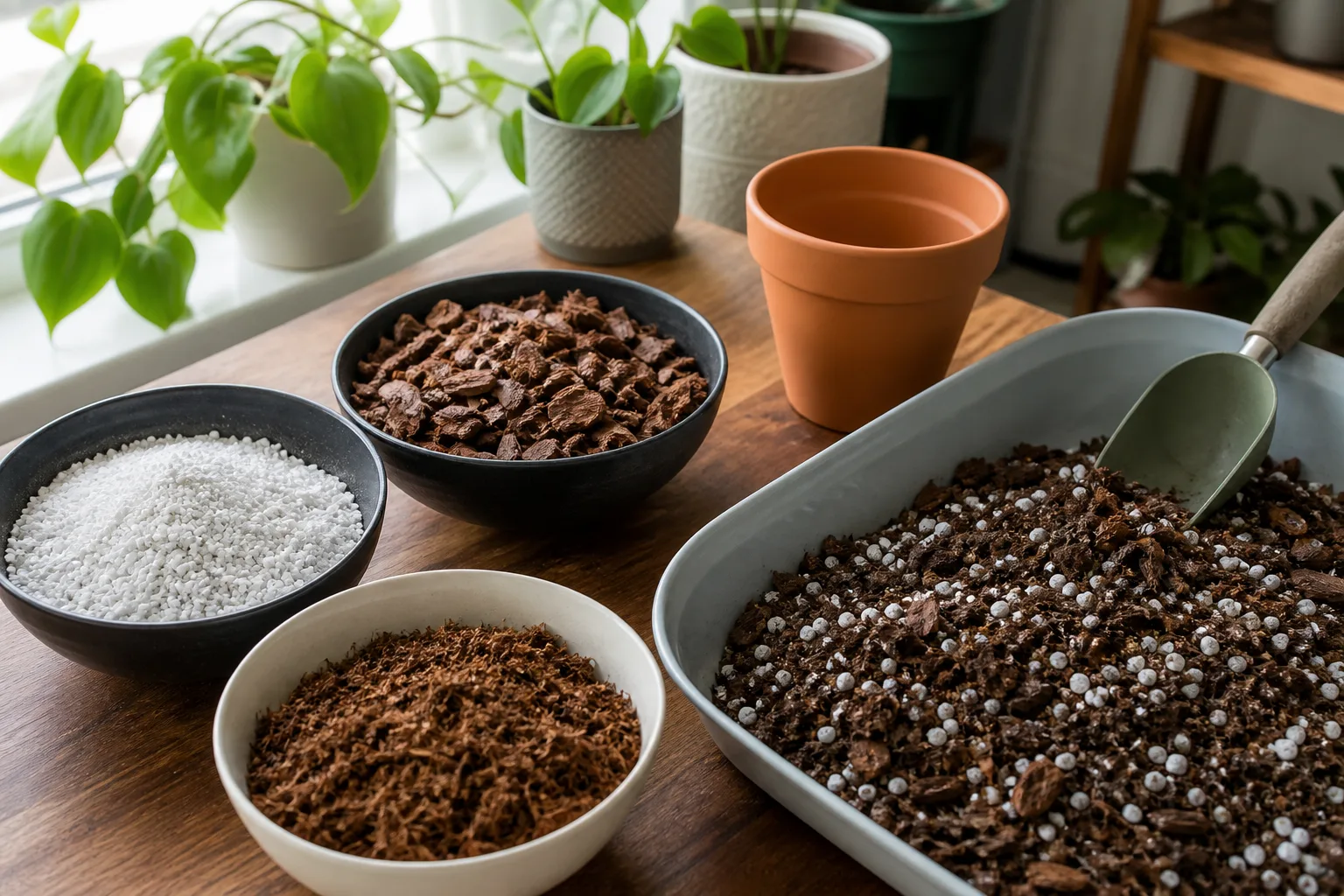
Coco coir is processed coconut husk fiber sold loose or in compressed bricks. It expands when wetted and provides a moisture-holding base; peat moss also holds water but is naturally more acidic. Coir is not automatically ready just because it has been rehydrated: some products can contain soluble salts from processing, so follow the package directions and rinse and drain it if it is not labeled washed or buffered. UF/IFAS Extension and Clemson both flag this salt issue for coir.
Choose coir when you want a peat-free base that is easy to rewet, or use a quality peat-based potting mix if that is what you have. Peat-based blends may need lime to adjust pH, but do not add lime by guesswork to a small houseplant batch; use a tested recipe or the product label. The RHS discusses the move toward peat-free houseplant media, but the best choice still depends on ingredient quality, availability, and how the finished mix behaves in your home.
Bark, perlite, pumice, and vermiculite shape texture
Small-grade, aged pine bark adds structure and open spaces, while larger bark or coco chips make a blend chunkier. Perlite is a light, porous mineral often used to improve air space and water movement; pumice is heavier and can hold some moisture within its pores. Either can serve as the aerating ingredient in the recipes, but match the particle size to the pot and roots: very large pieces leave small root balls poorly supported.
Vermiculite is different from perlite. It is useful when you need more moisture retention, but it is not the first choice for making a fast-drying cactus mix. Coarse horticultural sand can add weight and mineral texture, but fine sand can fill air spaces and make a blend dense; avoid beach sand and unspecified construction sand. UConn Extension’s ingredient guide and UF/IFAS distinguish these materials by their water-holding, aeration, and weight effects.
Compost and worm castings add nutrients, not structure alone
Finished compost and worm castings can contribute nutrients and organic matter, but they also hold water and vary with their source. For a small indoor batch, they are optional rather than mandatory. If you use them, choose mature, screened material and start with no more than about one-quarter part per four parts of base mix; a heavy handful can make a small pot stay wet longer than expected.
Many commercial potting mixes already include a starter fertilizer, while a homemade coir-and-bark blend may have little immediately available nutrition. Check the package, then follow the fertilizer label and the needs of the plant instead of adding several amendments at once. Fine Gardening’s container recipes and Savvy Gardening’s DIY mixes illustrate how recipes change with the plants and nutrient goals; that variation is a reason to adjust deliberately, not to add every ingredient to one bucket.
Mix 1: a balanced blend for most leafy houseplants
Combine 2 parts coco coir, 1 part fine pine bark, and 1 part perlite or pumice. This gives moisture-holding material, smaller structural pieces, and a porous mineral component without making compost the entire nutrient plan. Use fine bark intended for potting or orchid mixes, not fresh landscape mulch that may be oversized or insufficiently aged.
This is a sensible starting point for many Pothos, Peace Lilies, Aglaonema, and other foliage plants that prefer even moisture and a root zone that can drain. If your plant dries out very quickly in a warm, bright room, increase the coir slightly or use a finer bark grade. If the mix remains wet for days in a cool, dim room, increase the perlite or pumice in a small trial batch and check that the pot drains freely.
Do not add compost automatically. If your ingredients contain no fertilizer and you want a small organic nutrient contribution, mix in a modest amount of screened, mature compost or worm castings, then watch how quickly the pot dries. You can also keep the recipe simple and provide nutrition separately during active growth according to the plant’s care needs and the fertilizer label.
Mix 2: a chunkier blend for aroids
Combine 2 parts coco coir, 2 parts small-grade pine bark, 1 part perlite or pumice, and 1 part coco chips. The extra bark and chips create a visibly coarser texture than the balanced recipe. That can suit thick-rooted Monstera and Philodendron in a warm, bright spot, where a fine, compact mix may stay wet too long.
“Chunky” is a texture, not a guarantee of healthier roots. If the pieces are so large that the root ball has little contact with the mix, the plant may be unstable and water may race through without wetting the coir evenly. Use small chips for small pots, and break apart any compressed coir or bark clumps so the components distribute through the batch rather than settling into layers.
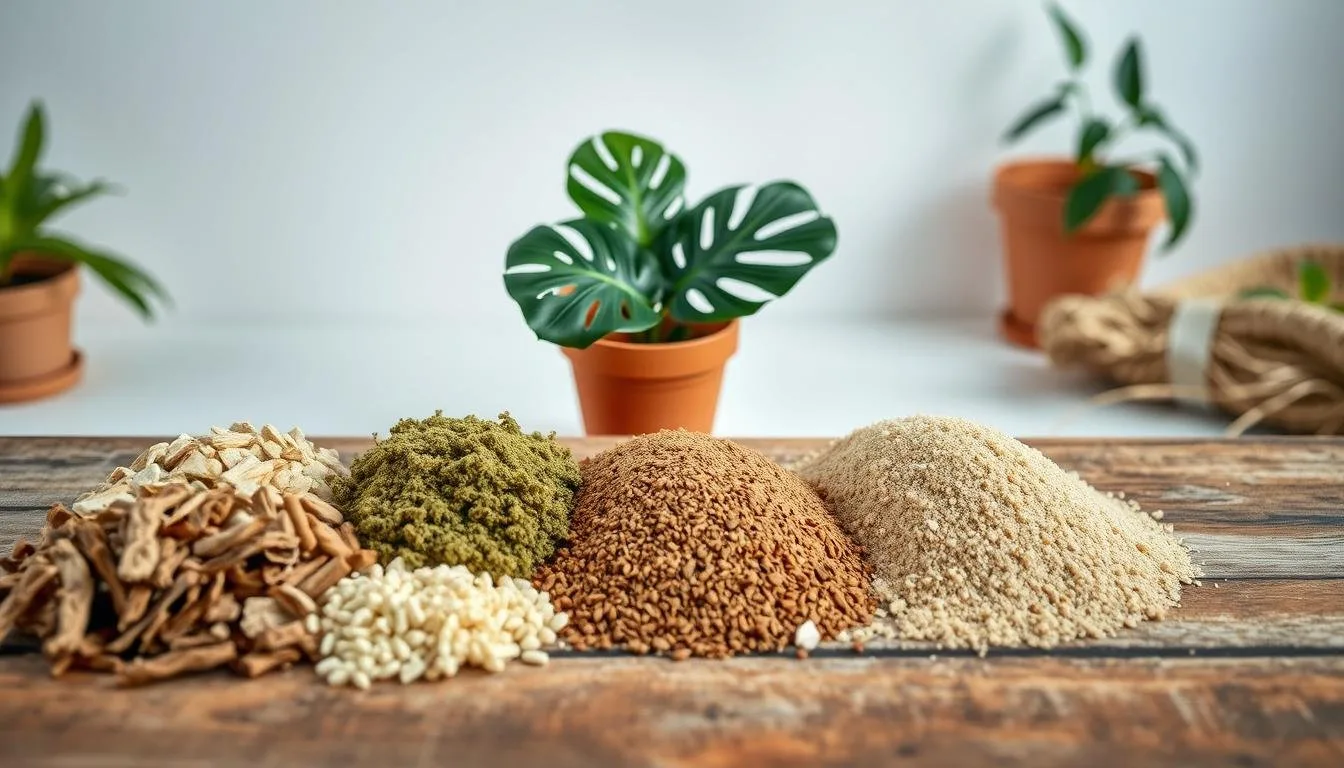
If you water infrequently, your room is cool, or the plant is a small aroid with fine roots, start with one part bark and one-half part chips, replacing the removed volume with coir. Conversely, if a mature plant is in a warm, humid room and its mix stays soggy, make a test batch with a little more bark or pumice. The RHS notes that thicker-rooted plants can use chunkier media, while its houseplant guidance also makes clear that plants such as ferns may need finer spaces around their roots.
Mix 3: a faster-drying blend for cacti and dry-climate succulents
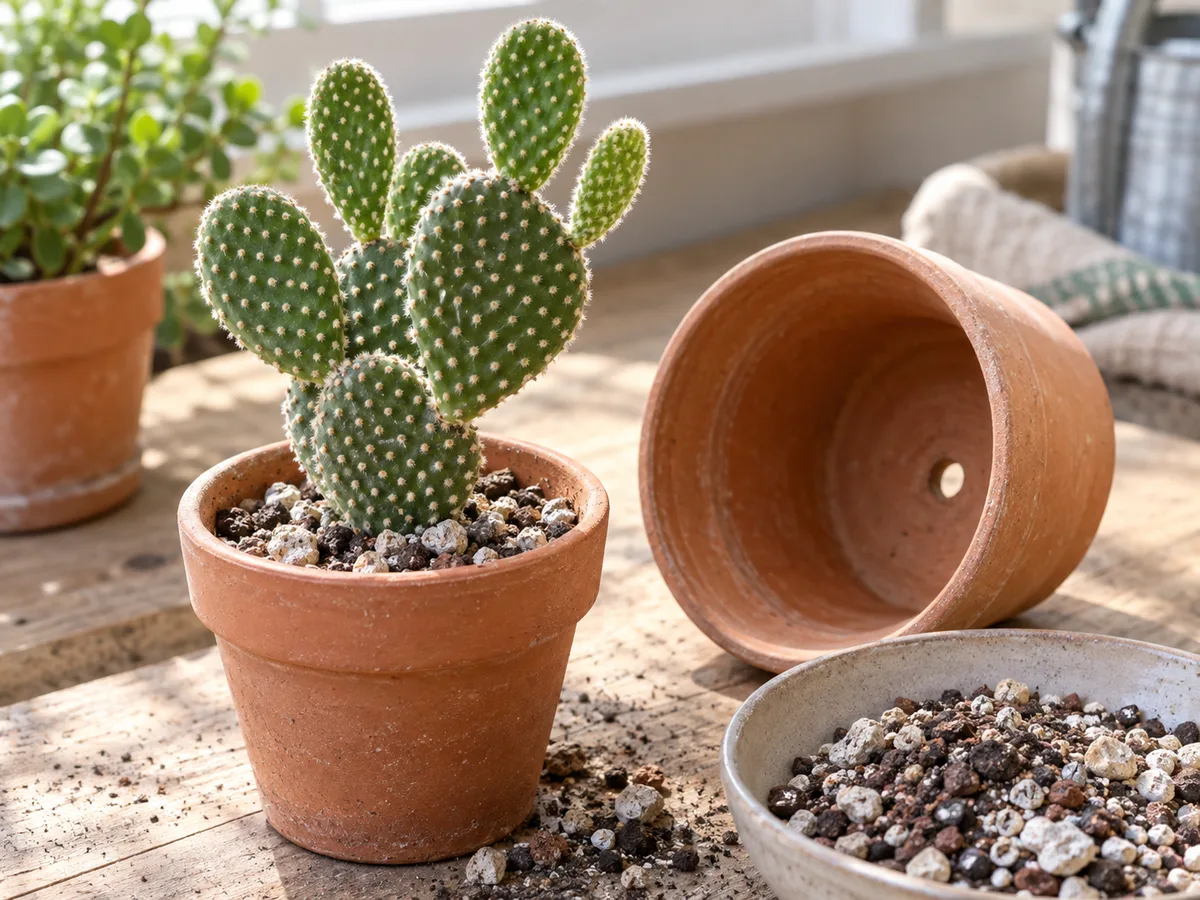
Combine 1 part coco coir, 1 part fine bark or plain potting mix, and 2 parts pumice or coarse perlite. This recipe puts more porous mineral material in the blend, so it generally dries faster than the first two. For cacti in humid homes or for a grower who tends to water generously, try 1 part coir to 3 parts pumice instead, then test it before repotting.
This is a starting point for many desert cacti, Haworthia, Aloe, and similar plants that store water in their leaves or stems. It is not ideal for every succulent: Holiday Cactus and other forest-growing succulents need more moisture than desert cacti, so use the balanced mix or make this blend less mineral-heavy. A plant’s common label alone does not tell you whether it comes from a dry desert or a humid forest.
Avoid using ordinary garden soil as the moisture base. It can be too dense for containers and may compact as it is repeatedly watered. Coarse horticultural sand is an optional weighty ingredient, but do not substitute fine beach or play sand; a small amount of fine material can fill spaces that would otherwise help water and air move through the mix.
How to scale and mix a batch
Use a scoop, cup, or small bucket as your “part,” and keep the same measure for every ingredient. For example, the balanced recipe can be made with two cups of coir, one cup of bark, and one cup of perlite; a larger batch simply uses a larger scoop at the same ratio. Measure loosely without pressing the material down, because packed coir or bark changes the proportions.
If using a compressed coir brick, rehydrate only what you need in a clean tub and fluff it apart. Lightly dampen dusty ingredients before mixing, then combine everything until the color and particle distribution look even; do not add water until the mix is muddy. UConn Extension recommends moistening potting media before use because dry organic components can repel water and leave uneven moisture pockets.
Make a small batch first, especially if you changed the recipe or bought a new brand. Keep notes about the ingredients and the pot size, then change only one component at a time if the trial remains too wet or dries too fast. This is more useful than repeatedly adding handfuls of several amendments, because you will know which adjustment made the difference.
Test the mix before repotting
First, squeeze a handful of the premoistened mix. It should hold together briefly when pressed, then fall apart when you touch it; a glossy, muddy clump suggests too much fine or wet material, while a handful that will not hold any moisture may be too coarse for a moisture-loving plant. This simple check is a comparison tool, not a lab test or a substitute for checking the plant’s needs.
Next, fill a small pot with drainage holes and water it slowly from the top. Water should soak into the mix rather than bead and run down the sides, and excess should leave through the drainage holes without the mix collapsing into a dense block. After it drains, lift the pot or feel the surface over the next few days to learn how quickly that combination of mix, pot, and room dries.
If the surface is dry but the lower mix is still heavy and cool, do not assume the whole root ball needs water. If the entire pot dries unusually quickly, add a little more coir or use a finer component; if it stays wet too long, add a little more pumice/perlite or small bark and confirm the pot has open drainage. The purpose is not to force a particular number of dry-down days, but to find a steady watering rhythm for your setting.
Adjust texture to the plant and room
The same plant can need a different blend in a bright, warm room than it does beside a cool north-facing window. Higher light, warmer air, air movement, a porous clay pot, and a crowded root system can all shorten dry-down; lower light, cooler temperatures, a large pot, and a plastic or glazed container can keep the mix wet longer. Recipe labels cannot account for every combination.
Make the mix finer or coarser by changing one ingredient
If a moisture-loving plant dries too quickly, add coir or substitute a finer bark grade for some of the coarse pieces. If a cactus or succulent stays wet, raise the proportion of pumice or coarse perlite and use a pot that drains; do not just place stones under the mix. For a plant with delicate, fine roots, screen out the largest bark and chips so the roots can make contact with the medium.
Change the blend in small steps. Replacing one-quarter of a batch with an amendment is easier to evaluate than doubling every aerating ingredient at once, and the adjustment can be reversed if the new mix dries too quickly. When using a new coir source, rehydrate and rinse it as directed before deciding that the recipe itself needs more or less moisture retention.
Pot size, material, light, and watering change dry-down
A pot that is much wider than the root ball holds a larger volume of wet mix than the plant can use quickly. Choose a container only modestly larger than the roots and make sure water can escape; a nursery pot inside a cachepot is fine if you empty the outer pot after watering. Drainage holes and a suitable blend work together, while neither can compensate for constantly leaving roots in standing water.
After repotting, water the whole root zone until excess drains, then let the plant’s normal cues guide the next watering. Do not switch to a calendar schedule just because you changed the recipe. Check moisture at the depth of the roots with a finger or a wooden stick, and adjust frequency as the plant grows or the season changes.
Mistakes that cause trouble after repotting
Using garden soil straight from the yard is a common shortcut that can leave an indoor pot heavy and compacted. Extension guidance treats container mixes as a distinct growing medium designed to balance support, water, and air; if you do not have a tested soil-based formula, use potting mix or the recipes above rather than scooping outdoor soil into a houseplant pot.
Treating all white or brown amendments as interchangeable is another trap. Perlite and pumice both add porosity, but they differ in weight and water behavior; vermiculite retains more water, while coarse bark adds structure. Choose by the job you need, not by color or the assumption that every bagged amendment makes a mix drain faster.
Adding too much compost, sand, or fertilizer can change moisture and nutrition more than expected. Compost varies in texture and nutrient content, fine sand can crowd out larger air spaces, and fertilizer products have different concentrations. Start with a simple base recipe, check whether the ingredients already contain fertilizer, and apply any additional product at its label rate.
Repotting into a mix that is bone-dry or packed tightly can also cause uneven watering. Dry coir and peat can resist wetting, while tamping the pot firmly can collapse the spaces you were trying to create. Pre-moisten the blend, settle it around the roots with a light tap, and water through after planting.
Store leftovers and handle old mix carefully
Keep unused ingredients sealed in their original bags or clean lidded containers, in a cool, dry place off the floor. Label the container with the blend and date so you do not mistake a cactus mix for a moisture-retentive tropical blend later. If the mix becomes wet, develops a sour or moldy smell, or shows insects, do not put it around healthy houseplant roots.
Leftover mix from a clean batch can be reused for another plant with similar needs if it has been stored dry and has not supported a diseased or pest-infested plant. Old potting media can lose structure as organic particles break down, so refresh it with new ingredients rather than assuming last season’s texture is unchanged. When in doubt, use fresh mix for a valuable or vulnerable plant.
Conclusion
Start with the balanced 2:1:1 coir, fine-bark, and perlite-or-pumice blend for many leafy houseplants. Shift toward more bark and chips for thick-rooted aroids, or increase porous mineral ingredients for cacti and many desert succulents; keep forest-growing succulents and moisture-loving plants on a finer, more retentive side.
Mix by volume, premoisten, and test a small pot before using a new recipe across your collection. If you remember one rule, make it this: change the texture to match the plant and the way your home dries a pot, rather than adding every amendment or expecting one homemade blend to suit every root system.