Easter Cactus Care: Light, Water, Soil & Spring Blooms
Learn how to grow Easter cactus with healthy roots and spring flowers: identify it correctly, adjust water by season, and set buds with cool, dark nights.
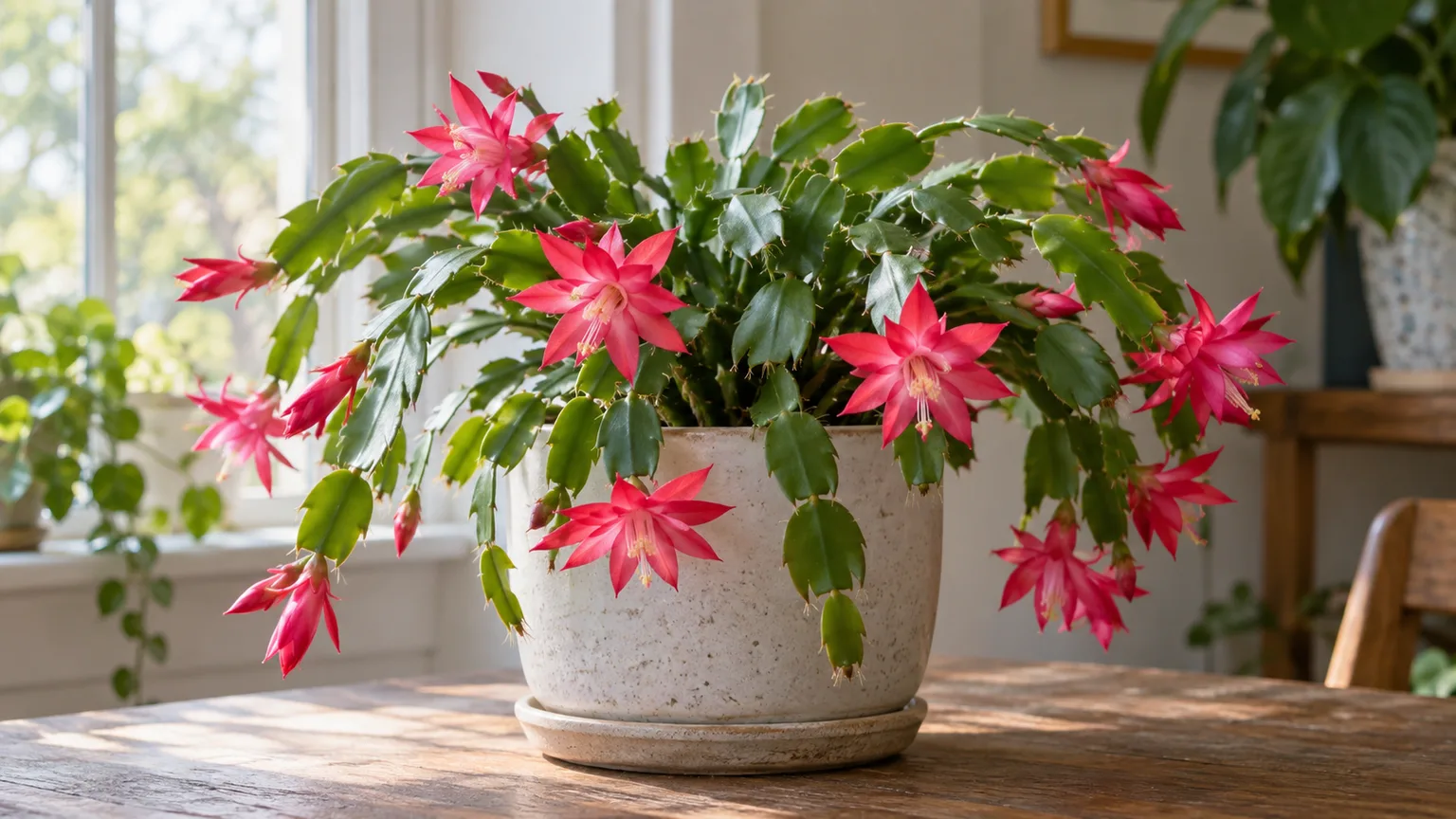
An Easter cactus can live for years in a bright room and flower again when its seasonal cues are met, without being treated like a desert cactus. The key is to identify it correctly, keep its shallow roots in an airy mix that stays lightly moist while it grows, and give it a cooler, darker seasonal stretch before spring. Its common name points to a usual bloom window—not a promise that flowers will open on Easter Sunday.
The plant is usually labeled Rhipsalidopsis gaertneri or Hatiora gaertneri. It is a Brazilian forest epiphyte with flat, jointed stems and wide, star-shaped flowers. That makes it a different horticultural subject from the Thanksgiving and Christmas cacti most often sold as Schlumbergera. Care overlaps in a few places, but their segment shapes and flowering cues are not interchangeable.
Identify Easter cactus—and separate it from the other holiday cacti
The names around holiday cacti have changed over time. This guide uses Rhipsalidopsis gaertneri, also commonly called Hatiora gaertneri. NC State Extension lists the latter and several other historical names, while the Royal Horticultural Society files the plant under Schlumbergera gaertneri and lists Rhipsalidopsis gaertneri as a synonym. The taxonomy differs across references, but the practical point is clear: an Easter cactus is not simply a Christmas cactus that bloomed late. Its spring-flowering form is distinct from the Thanksgiving and Christmas plants generally sold under Schlumbergera names. (NC State Extension; Royal Horticultural Society)
Look at the stem joints and flowers together rather than relying on a sales tag or bloom month alone. The stem segments are flattened and fleshy, with rounded scallops and tiny bristles near their tips; the flowers open broadly into a star rather than hanging as long, narrow tubes. NC State Extension describes the Easter cactus flowers as short-tubed and star-shaped, typically red, pink, or white, and its segments as rounded with bristles at the ends. (NC State Extension)
| Holiday cactus | Segment edges | Typical flower form | Usual flowering season |
|---|---|---|---|
| Thanksgiving cactus (Schlumbergera truncata) | Noticeably pointed, claw-like teeth | Tubular flowers often held more horizontally | Fall into early winter |
| Christmas cactus (Schlumbergera hybrids, including S. × buckleyi) | Softer, rounded scallops | Longer, pendulous tubular flowers | Late fall into winter |
| Easter cactus (Rhipsalidopsis/Hatiora gaertneri group) | Rounded scallops, often with tiny tip bristles | Broad, radially open, star-shaped flowers | Usually spring |
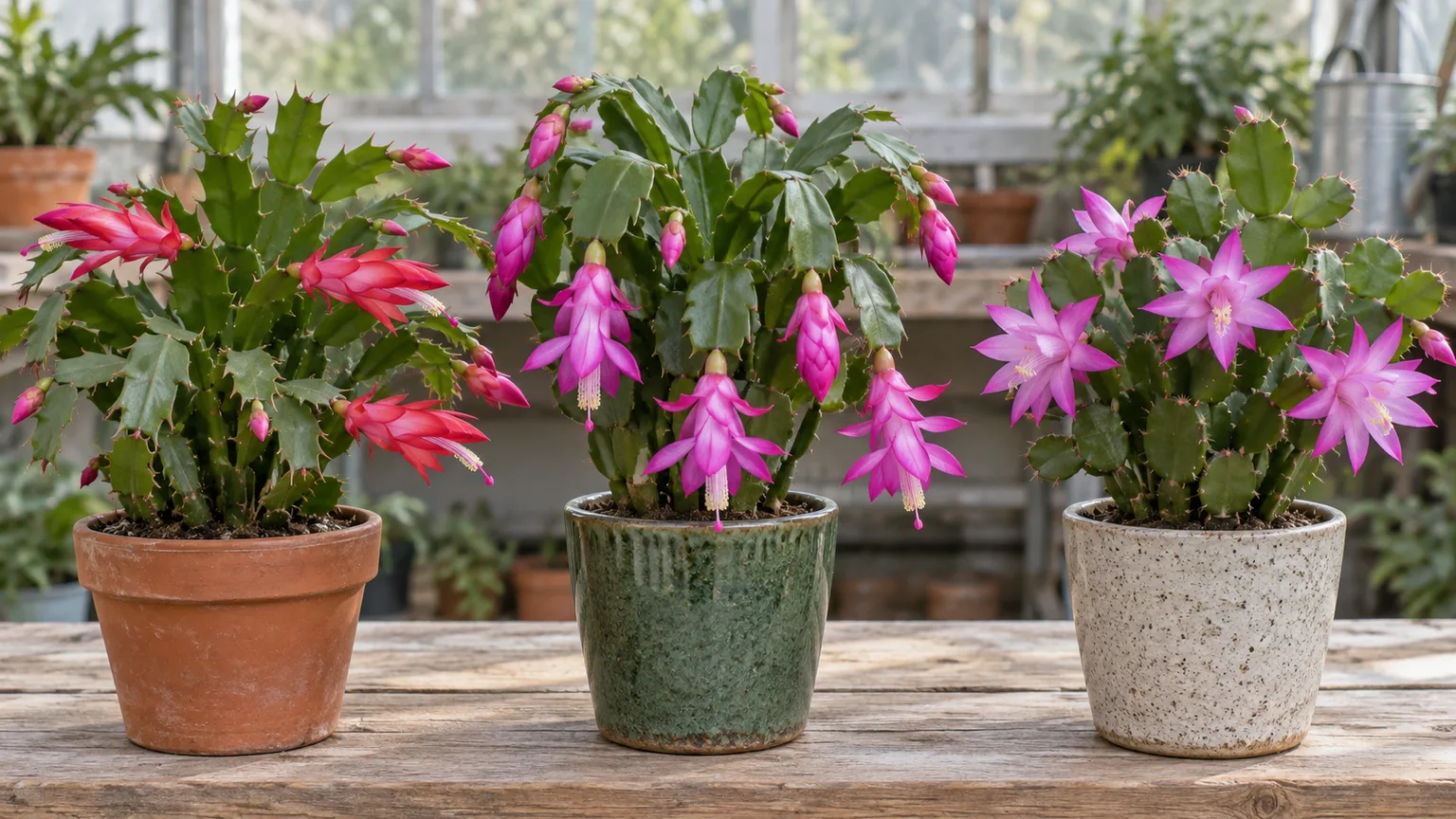
Bloom timing helps confirm an identification, but it is not a botanical test. Greenhouse conditions, cultivar, hemisphere, and a plant’s indoor light and temperature can shift flowering; a shop-bought plant may also be sold with buds outside the natural home schedule. A photo of the margins and the open flower is more useful than the calendar by itself.
Easter cactus care at a glance
Place the plant in bright, filtered light and protect it from long stretches of harsh midday sun. Use a pot with an open drainage hole and a loose, organic mix that retains some moisture but does not compact around the roots. Water thoroughly when the upper mix has begun to dry, then empty the saucer; reduce watering when cool conditions slow growth rather than following a fixed weekly interval.
During active growth, keep the plant comfortably warm, feed lightly, and allow the stems to mature. Before its typical spring bloom, give it long, uninterrupted nights and cooler conditions if you can do so safely. Once buds are visible, leave the pot in a stable place and keep the mix evenly—not constantly—moist. These cues are a starting framework; the pot material, room temperature, mix, and cultivar all change how quickly it dries.
Why its epiphytic roots change the care routine
Easter cactus is a cactus by family, not by desert lifestyle. In its native southern Brazilian coastal mountains, it grows on trees as an epiphyte, where its roots sit in pockets of organic debris rather than deep, mineral soil. NC State Extension describes it as a forest-growing epiphytic houseplant and recommends bright indirect light and moist, well-drained mix. (NC State Extension)
That origin explains two common care errors. A dense all-purpose mix in a large pot can remain wet too long around fine roots, while a very gritty desert-cactus blend may dry so quickly that the plant wilts during active growth. Aim for air and drainage without stripping away all moisture-holding material. The goal is not to keep roots wet; it is to avoid the extremes of a swampy pot and a bone-dry root ball.
The stems are also a better moisture indicator than the word “cactus” on a label might suggest. Firm, full green segments are the normal target. If they wrinkle or feel unusually limp, do not immediately pour water onto the plant: first check whether the mix is dry or whether it is wet and the roots may be struggling to take up water.
Give it bright, filtered light
Choose a bright window with a sheer curtain, a position a little back from a sunny south- or west-facing pane, or an east-facing exposure with gentle morning light. Bright filtered light supports compact new growth and flower-bud development; direct midday sun through glass can bleach or scorch the fleshy segments. A plant kept too far into a dim room may stay alive yet grow weakly and set fewer buds.
Use the plant’s response to fine-tune placement. Healthy new segments should emerge green and firm, not stretched, pale, or dramatically smaller than older growth. If the plant leans toward one side, rotate the pot a quarter turn every few weeks while it is growing. Stop rotating or relocating it once buds are opening if that would change its light or temperature abruptly.
Outdoor summer light is not the same as indoor window light. If you move the plant outside, start in deep shade and acclimate it gradually to a brighter sheltered location; a direct jump into afternoon sun can burn the segments. NC State Extension lists partial shade for the species and warns that direct sun can scorch it. (NC State Extension)
Water by the mix, not by the calendar
Water when the upper layer of mix feels dry and the pot has become noticeably lighter, then wet the root ball evenly until water drains from the bottom. Let it finish draining and empty any cachepot or saucer. If the center of a dense pot remains wet for days, correct the mix, container, or light before trying to solve the problem with a more complicated watering schedule.
The exact interval depends on season and setup. A small plastic pot in a warm bright room can dry much faster than a larger clay pot in a cool room; bark and perlite also dry differently from fine peat. Checking the soil surface and pot weight prevents the common mistake of watering every two weeks simply because that interval worked for someone else. NC State Extension advises keeping the growing medium moist while avoiding overwatering, and Penn State Extension recommends watering holiday cacti again when the medium becomes dry. (NC State Extension; Penn State Extension)
During spring and summer growth, do not let the entire root ball stay dry for long. In a cooler, slower winter rest, reduce frequency because the plant uses less water, but do not impose a prolonged drought. If the mix is still damp several centimeters down, wait; if it is dry through most of the pot and the segments are losing firmness, water thoroughly. Little sips repeated every day wet only the surface and can leave the inner root zone dry.
Water quality is usually less important than the drainage and frequency, unless the local supply is very hard or the plant develops a persistent mineral crust. If salts accumulate, flush the mix with clean water and allow it to drain, or use rainwater or filtered water if practical. Do not leave the pot standing in water to increase humidity; that deprives roots of air rather than improving the air around the stems.
Build an airy soil mix and choose a modest pot
Use an epiphytic cactus or forest-cactus mix, not a dense, fast-drying desert blend. A practical home recipe is a quality indoor potting mix loosened with fine orchid bark and perlite or pumice. The precise ratio is less important than what happens after watering: excess should escape quickly, the mix should not collapse into a muddy mass, and some moisture should remain around the roots as the surface begins to dry. The RHS recommends an epiphytic cactus compost; NC State Extension specifies a moist, well-drained cactus mix. (Royal Horticultural Society; NC State Extension)
Choose a container with at least one clear drainage hole and only a little more room than the root ball needs. An oversized pot holds a large volume of wet mix around a relatively small root system, so it can remain damp for too long after watering. A heavier clay pot can dry faster than plastic, but it is not automatically better if your room is already dry or the plant is small. Match the material to how quickly your mix dries.
Balance temperature and humidity
Normal comfortable indoor temperatures suit active growth. Protect the plant from hot radiators, cold window glass, heating vents, and abrupt drafts. NC State Extension gives a broad preferred range of about 60–75°F and notes that cooler conditions near 50°F in late winter can encourage flowering. Treat that cooler figure as a possible seasonal cue, not a requirement to chill the root ball or expose the plant to frost. (NC State Extension)
Moderate humidity can help the stems stay firm, especially in heated winter rooms, but high humidity cannot compensate for stagnant wet soil. If indoor air is very dry, group plants together or run a room humidifier; keep air moving gently and avoid leaving water trapped between crowded pots. A pebble tray may modestly raise humidity close to the plant, but the pot base must sit above the waterline and remain dry.
Temperature stability becomes more important after buds appear. A sharp swing from cool nights to a heater-blasted window, a drafty doorway, or repeated trips between rooms can stress buds. If the plant is healthy and has set buds, choose one bright, stable location and resist “optimizing” it every few days.
Follow a year-round care cycle
After the spring flowers fade, the plant can return to active growth. Remove spent flowers, resume regular watering as the mix dries, and begin light feeding once fresh segments appear. Give it bright filtered light through the growing season, and let new growth mature rather than constantly pruning the tips.
As growth slows toward late summer and autumn, taper fertilizer and let the mix dry a little farther between waterings. If the plant spent summer outdoors, bring it in before cold weather and inspect the joints and pot for pests. For a bloom cue, provide long, genuinely dark nights and cooler conditions for several weeks; household lamps that shine on the plant overnight can interrupt the dark period. Exact requirements vary, and sources do not give one universal temperature-and-duration recipe for every cultivar. Penn State Extension notes that Easter cactus needs a longer period of darkness and cool than the familiar winter holiday cacti, while Epic Gardening describes 12–14 hours of darkness as a practical starting range. (Penn State Extension; Epic Gardening)
When buds become visible, return to normal bright daytime light and maintain a steadier moisture level without waterlogging the pot. Keep the plant away from drafts and sudden hot or cold blasts. If your home cannot provide a cool room, do not force the plant outdoors in risky weather; natural short days and a slightly cooler bright room may be enough for some plants, and a missed bloom does not mean the plant is failing.
Feed during growth, then pause
Feed lightly while the plant is actively producing new segments, beginning after flowering rather than while it is in full bloom or resting. A balanced, water-soluble houseplant fertilizer at the label’s lower recommended strength, about monthly during growth, is a conservative routine. Water the mix first if it is very dry, and do not let fertilizer solution pool in the saucer. NC State Extension recommends monthly fertilization during active growth. (NC State Extension)
Stop feeding as growth slows and the plant enters its seasonal rest. Fertilizer is not a bloom trigger by itself, and extra feeding while buds are developing can add salts without solving insufficient darkness, excessive warmth, or weak light. If the plant is in fresh nutrient-rich mix, you can be even more conservative. Resume after the flowers fade and new growth begins.
Encourage spring flowers without forcing a date
Easter cactus commonly blooms in spring, often from late March into May in the Northern Hemisphere. NC State Extension gives late March through May as the usual period and notes that buds form as days begin to lengthen; plants in other climates, cultivars, and greenhouse schedules can flower outside that window. In the Southern Hemisphere, local seasons reverse, and indoor conditions matter more than the name of the holiday. (NC State Extension)
Flowering responds to a combination of day length and temperature, not a single secret trick. A healthy plant needs enough bright light during the day, an extended uninterrupted dark period, and a cooler seasonal phase; then stable conditions as buds mature. Some growers use 12–14 hours of darkness as a starting cue, while NC State Extension notes cooler late-winter temperatures near 50°F can promote bloom. Those are guidance points, not a guarantee that every plant will flower on schedule. (Epic Gardening; NC State Extension)
If your plant has not bloomed, check the simplest variables in order: Is it getting bright daytime light? Are nights truly dark, or does a nearby lamp stay on? Has it had a cooler stretch, or does it sit in a consistently warm room? Is it growing well enough to support flowering, or has it been stressed by dry roots, saturated mix, or a recent move? Correct one factor at a time and give the plant a full seasonal cycle; changing light, water, fertilizer, and temperature all at once makes the result hard to interpret.
Once buds form, avoid moving the pot to chase a better display. Do not rotate it repeatedly, repot it, or let the mix swing from bone-dry to saturated. Flower color and exact bloom date vary by cultivar and growing conditions, so aim for a healthy plant and a likely spring display rather than a florist’s fixed-date result.
Prune after bloom and remove spent flowers carefully
Pruning is optional. If the plant has become lopsided or you want a fuller outline, wait until flowering finishes and the next growth cycle begins. Twist or snip a few terminal segments at their joints with clean fingers or sanitized scissors. Each removed tip may branch, creating more growing points over time, but pruning cannot make an unhealthy plant flower more heavily and it removes potential growth if done before buds open.
Spent flowers can be pinched off once they fade, or left to drop naturally. Avoid pulling hard on a stem; hold the joint below the bloom so you do not tear a whole segment away. Do not shape the plant in autumn or winter if the tips may already be forming buds.
Propagate from stem segments
Stem cuttings are the easiest way to make another Easter cactus. After flowering, choose a firm, healthy branch and separate a short length of three to five joined segments at a natural joint. Penn State Extension recommends three-to-five-segment cuttings for holiday cacti and says roots usually form in several weeks under bright indirect light; a small cutting does not need a large pot or a complicated propagation station. (Penn State Extension)
Let the broken end dry briefly in a shaded, airy place so it is no longer wet, then set the bottom segment into barely moist, free-draining mix. Keep it upright and warm, with bright indirect light; do not bury the whole cutting or keep the medium soaked. A loose clear cover can hold humidity if the room is very dry, but vent it and remove it if condensation stays heavy or the mix turns persistently wet.
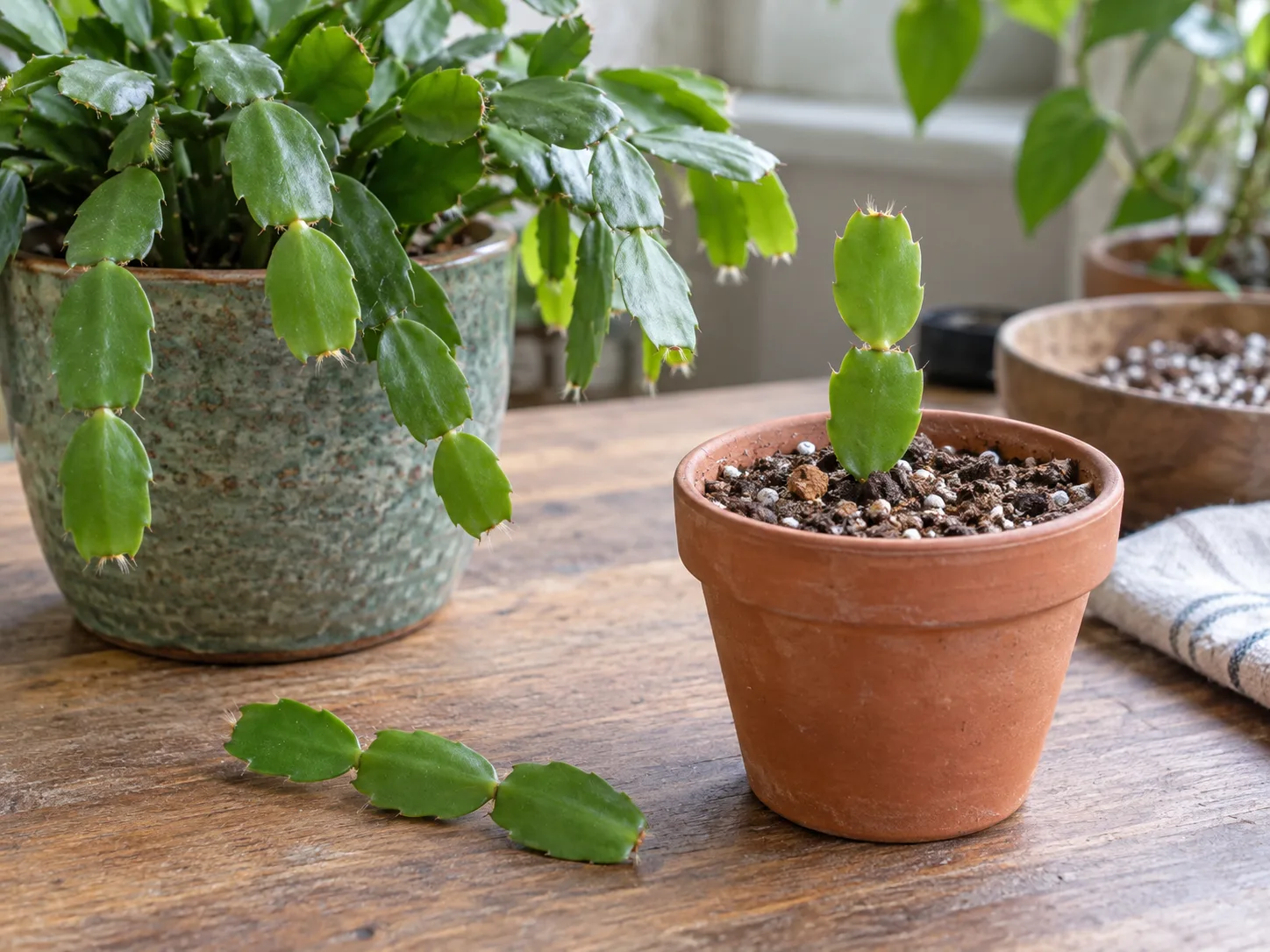
New growth is a better sign of establishment than tugging on the cutting to test for roots. Once it is stable and growing, water and feed it as you would a young plant, increasing the pot size only when roots have filled the current container. Seed propagation is possible but slower and less predictable for home growers; use cuttings when you want a clone of a particular flower color or growth habit.
Repot only when the plant or mix needs it
Repot after flowering, not while the plant is carrying open flowers or fragile buds. Look for roots circling densely, mix that has broken down or stays wet far longer than it used to, or roots emerging through the drainage hole. A healthy plant with workable mix can remain in the same container; there is no need to move it to a larger pot every year.
When you do repot, loosen only enough old mix to inspect the roots and remove any soft, dark, damaged sections with a clean tool. Move into a modestly larger pot with drainage and fresh airy mix, set the plant at the same depth, and water lightly enough to settle the medium without leaving it saturated. Keep it out of direct sun while it adjusts, and wait for renewed growth before fertilizing.
Watch for pests and root disease
Inspect the stem joints, undersides, and new growth when watering. Mealybugs look like small white cottony clusters; scale appears as fixed bumps, and spider mites can leave fine webbing or stippled segments. NC State Extension lists spider mites, aphids, mealybugs, and scale among Easter-cactus pests and notes that root rot and gray mold can also occur. (NC State Extension)
Isolate a plant with visible pests before treating it. Wipe or rinse what you can see, then recheck nearby joints over the next few weeks; use a houseplant-safe insecticidal soap only according to its label and test a small area first. Avoid spraying blooms or applying products in strong sun. For root problems, changing the wet conditions and damaged mix matters more than adding fertilizer or repeatedly spraying the stems.
Soft, dark tissue at the base, a sour smell from the pot, or a plant that wilts while the mix remains wet points to a root-zone problem. Remove the plant from its pot and inspect the roots. Healthy roots are firm; trim away soft, collapsing tissue with a clean blade, discard the saturated old mix, and repot into a clean container with drainage. If rot has moved through most of the stem base, take firm unaffected tip cuttings as a last-resort way to preserve the plant.
Troubleshoot dropped buds, limp segments, and weak growth
Symptoms overlap, so start by checking the mix and the recent environment rather than treating one visual clue as a diagnosis. A shriveled plant may be thirsty, but it can also be unable to take up water because roots are damaged. The table gives a first check and a low-risk next step.
| What you see | Check first | What to do |
|---|---|---|
| Buds shrivel or fall | Recent move, temperature swing, overnight light, or dry/wet extremes | Leave the pot stable; restore even moisture and uninterrupted nights; avoid fertilizer as a rescue treatment |
| Segments are limp and the mix is dry | How far down the mix has dried | Water thoroughly, drain, and recheck firmness over several days rather than adding daily sips |
| Segments are limp but the mix is wet | Drainage, pot size, root smell, and soft tissue | Pause watering; improve airflow and drainage; inspect roots if the pot stays wet or the plant worsens |
| Segments bleach or turn bronze on the window side | Direct sun or a sudden move outdoors | Shift to filtered light and acclimate gradually; damaged tissue may not turn green again |
| Growth is thin, stretched, or leaning | Light level and how long the plant has been in that spot | Move it closer to bright filtered light gradually and rotate during active growth |
| No flowers after a healthy growing season | Night interruption, warmth, low daytime light, or a recent stress event | Improve daytime light and allow a naturally longer, cooler, darker seasonal stretch; reassess next cycle |
Bud drop is especially frustrating because a plant can look healthy until the moment it is moved or its room conditions change. Once buds are present, stability is often more useful than adding a new treatment. If only a few buds fall, the plant may still open the rest; keep its root zone steady and do not strip off healthy segments.
Grow it outdoors only in a suitable sheltered climate
In warm, frost-free climates, Easter cactus can spend part of the year on a shaded patio or sheltered porch. NC State Extension lists it for USDA hardiness zones 10a through 12b and describes partial shade; in cooler zones, treat it as a portable container houseplant and bring it indoors before cold weather. (NC State Extension)
Acclimate it over several days to outdoor light and wind, keep it under cover from heavy rain, and check the pot after storms so it is not left standing in water. Inspect the undersides and joints before bringing it back inside. Outdoor warmth and natural night length can support growth and bud formation, but frost, sudden sun, and pests can undo that benefit quickly.
Conclusion
Grow Easter cactus as a forest epiphyte: bright filtered light, an airy but moisture-holding mix, thorough watering followed by drainage, and less water and fertilizer when growth slows. Identify it by its rounded, bristled stem tips and open star-shaped spring flowers—not by a holiday label alone. For repeat blooms, let the plant grow strongly after flowering, give it a stable cool-dark seasonal cue, and resist changing its conditions once buds appear. With those basics in place, its calendar can vary without its care having to become complicated.