How to Use Eggshells as Fertilizer in Your Garden
Learn how to use eggshells in garden soil or compost, what powdered shells can—and can’t—do, and when a soil test or another amendment makes more sense.
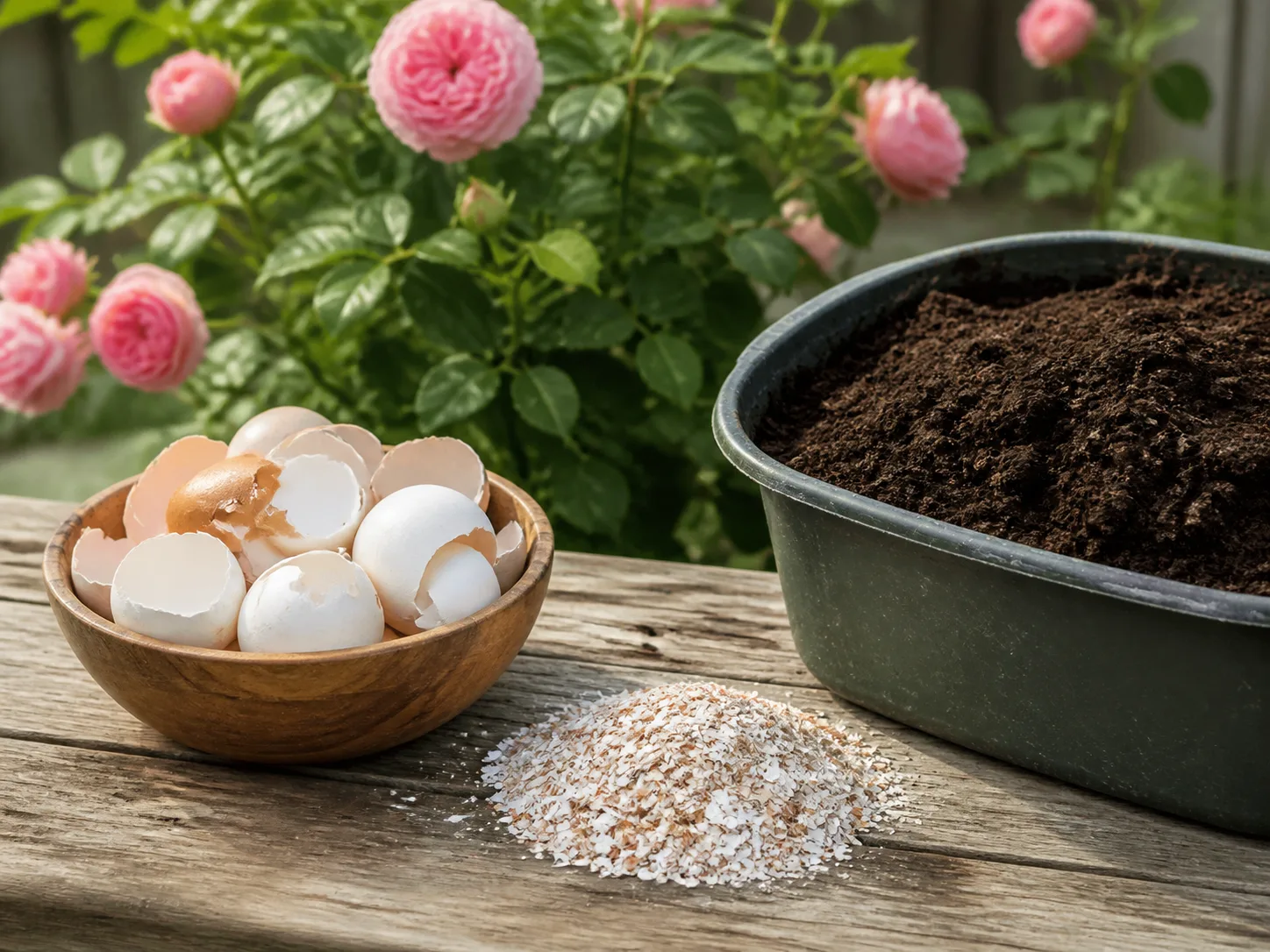
Eggshells are useful in a garden, but calling them a fertilizer can set the wrong expectation. They are mostly calcium carbonate: a slow, narrow soil amendment, not a balanced food that supplies the nitrogen, phosphorus, and potassium a growing bed may need.
For most gardeners, the sensible move is to rinse, dry, and crush shells before adding a modest amount to compost. Put them directly into garden soil only when a soil test or a reliable crop-specific recommendation gives you a reason; shells do not quickly fix a plant symptom, and there is no dependable “number of shells per plant” dose.
Quick answer: think slow calcium, not plant food
Eggshells can eventually contribute calcium to soil. The shell material has to break down and dissolve before roots can take up much of that calcium, so whole shells or coarse fragments are slow, while a fine powder exposes more surface area and can react sooner. Even ground shells are not an instant liquid feed.
That makes eggshells best viewed as a small kitchen-scrap reuse option, not a treatment every garden needs. If you do not know your soil’s calcium level or pH, composting the shells spreads them through a larger mix of finished organic matter and avoids concentrating an unknown amount beside one plant.
What eggshells add to soil
The hard shell is mainly calcium carbonate, the same broad mineral compound found in agricultural limestone. Plants need calcium for growing tissues, but the useful question is not simply whether a shell contains calcium; it is whether the soil needs more, whether the calcium can become available, and whether roots can move it to the part of the plant that needs it.
Carbonate can also neutralize acidity as it dissolves. That effect depends on the amount and fineness of the shell, soil pH, moisture, and the soil’s capacity to resist pH change. Because kitchen shells have no standardized grind or neutralizing value, they are much less predictable than a soil-test-recommended lime product.
Why eggshells are not a complete fertilizer
A complete fertilizer supplies a useful, labeled balance of nitrogen, phosphorus, and potassium. Eggshells do not provide those nutrients in a predictable, balanced amount, and they do little to solve common garden problems such as low organic matter, compacted soil, poor drainage, or a bed that needs nitrogen.
Treating shells as general plant food can distract from the real limitation. A pale tomato may need a diagnosis, not calcium; a poor crop may need more light or water; and a depleted bed may benefit from finished compost or a fertilizer selected from a soil report. For the broader distinction between calcium products and soil conditions, see our guide to adding calcium to soil.
| Material | Main role | What it does not do |
|---|---|---|
| Eggshell powder | Slow calcium-carbonate input; may reduce acidity gradually | Supply a balanced N-P-K program or a predictable quick dose |
| Finished compost | Add organic matter and a varied, modest nutrient supply | Correct every nutrient deficiency at a known rate |
| Labeled fertilizer | Supply stated nutrients at a stated analysis and rate | Fix drainage, pH, root damage, or watering on its own |
Will eggshells prevent blossom-end rot?
Not reliably, especially once affected fruit is already growing. Blossom-end rot is linked to calcium not reaching rapidly developing fruit, but the plant can have calcium in the soil and still fail to deliver enough when water supply, roots, or salt conditions interrupt uptake. Adding dry shell pieces at the base does not correct an erratic root-zone water supply.
North Carolina Cooperative Extension explains that eggshell calcium is not available quickly enough to prevent an active blossom-end-rot problem, which is often associated with uneven watering. UGA Extension’s tomato-focused eggshell comparison also stresses that the soil’s existing calcium and pH matter; test soil before adding a calcium amendment, and keep moisture reasonably even as fruit develops.
If you see a dark, sunken patch on the blossom end, remove badly affected fruit and check the soil several inches down. Correct dry-to-soggy swings, make sure water reaches the root zone, and investigate damaged roots or fertilizer-salt buildup if the problem continues. A soil test can tell you whether calcium is actually low; eggshells will not repair fruit that has already developed the disorder.
Choose the right method for the job
Your best method depends on why you are saving shells. If the goal is simply to reuse food scraps, compost is the easiest default; if the soil report identifies a calcium or acidity need, follow its recommendation rather than guessing from a pile of shells.
Compost them for the safest default
Rinsed, dried, crushed shells can go into a home compost pile or an accepted food-scrap collection program. Mix them into the ordinary flow of kitchen scraps and dry carbon-rich materials such as leaves or shredded paper; shells are mineral material, not a substitute for compost “browns.”
Fine grinding helps the pieces become less conspicuous, but a finished pile can still contain white fragments. Gardener’s Path describes finding eggshells in otherwise finished compost and recommends drying and pulverizing them when a finer finished product matters. If shells remain visible, screen them out or leave them to break down in the next compost cycle; they do not mean the entire pile has failed.
Apply finished compost as a modest surface dressing around the root zone rather than burying a thick pocket of shell powder beside a stem. The compost distributes mineral material more broadly, while the finished organic matter improves the soil in ways shells alone cannot. A compost pile is still not a calibrated calcium fertilizer, so use a soil test if you are trying to correct a measured deficiency.
Put them directly in garden soil only with a reason
Direct application makes sense only when you have a reason to add calcium carbonate and the soil’s pH can tolerate it. A lab test that finds low calcium and recommends liming is a stronger basis than a fruit or leaf symptom; the report may call for a measured agricultural product rather than home-ground shells because the product’s rate is known.
If you choose shells as a slow supplemental source, grind them finely, distribute them evenly over the relevant bed area, and mix them into the upper root zone during normal bed preparation. Avoid piling powder against stems, putting a handful into every transplant hole by habit, or applying it repeatedly on a calendar. Those practices concentrate an unmeasured material in one small spot.
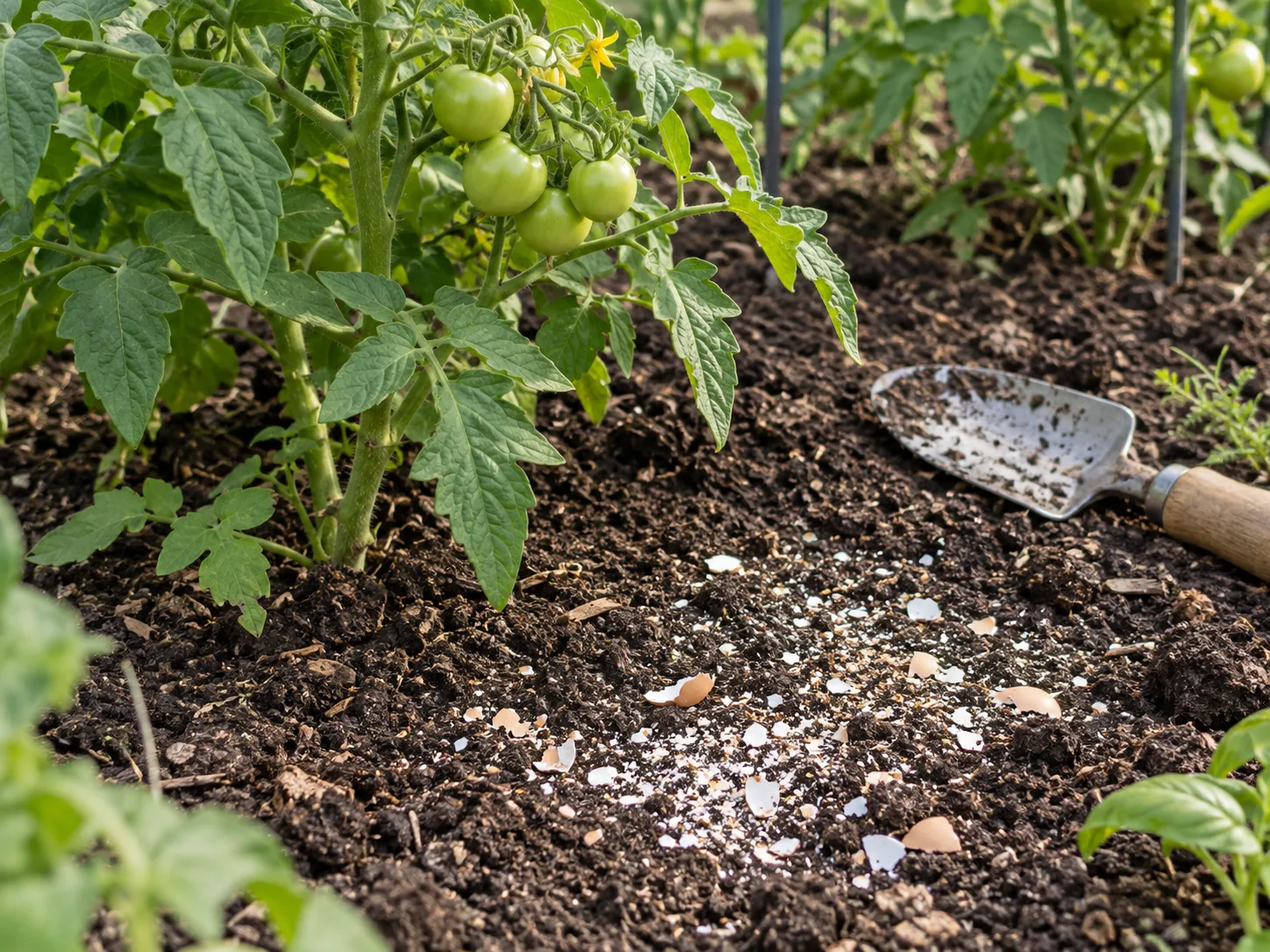
Bob Vila’s gardening overview of eggshell use likewise notes that lightly crushed shells break down slowly and that soil calcium and the plants’ pH preferences determine whether the addition is useful. For a container, use a potting mix and fertilizer formulated for the plant instead of treating the small volume of mix like an outdoor bed; a small pot can be altered more easily by repeated amendments.
Use a small amount in a worm bin
Some vermicomposters add a little finely crushed shell as grit in the bin. Treat it as an optional minor ingredient, not a worm food, bedding material, or substitute for the moist carbon-rich bedding and varied scraps that keep the bin functioning.
Use only clean, dry shells and mix them through the bin rather than laying down a thick crust. If you do not keep worms, there is no need to start a separate shell routine; put the shells in regular compost or the food-waste system available in your area.
Prepare shells for soil or compost
Preparation changes cleanliness, storage, and particle size. It does not change eggshells into a complete fertilizer, and no kitchen step can provide a known nutrient analysis for a handful of shells.
Rinse and dry before storing
Rinse away visible egg white or yolk soon after cracking the egg, then let the shells air-dry fully on a clean tray. Removing wet residue helps prevent odors while you collect a batch and makes the shells easier to crush; store only dry shells in a clean container so moisture does not make them clump or smell.
You do not need to boil shells to release calcium or bake them to improve their fertilizer value. If you handle shells that still have raw egg residue, wash your hands and the equipment you use, as you would after any raw-food handling. Once the shells are completely dry, process a small batch at a time.
Grind finer when speed matters
For ordinary composting, small flakes are usually enough. For direct soil use, a coffee grinder reserved for garden materials, sturdy blender, or mortar and pestle can turn dry shells into a coarse meal or fine powder; the finer the particles, the more surface area soil moisture can act on.
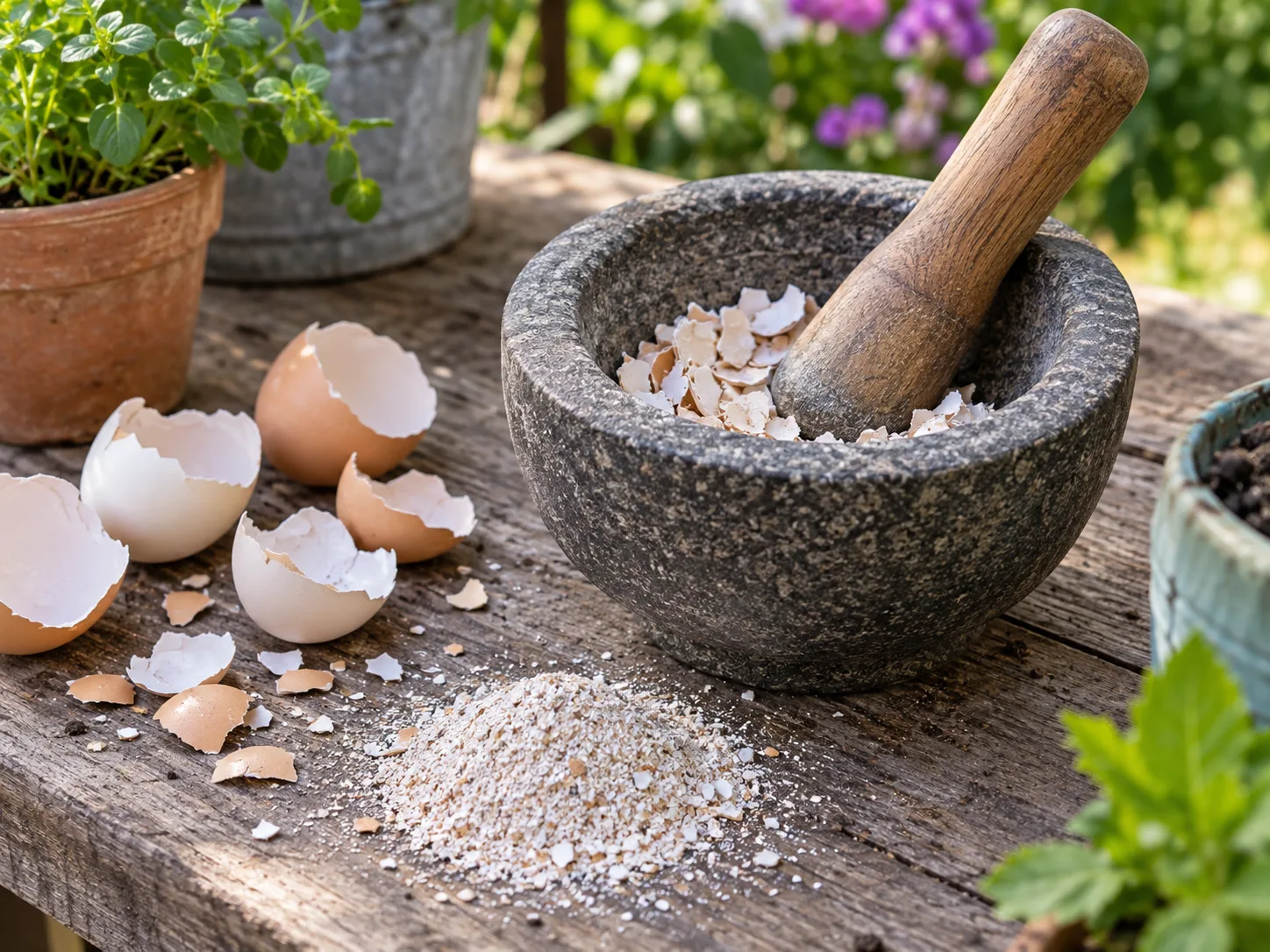
Work gently and avoid breathing airborne dust. Keep the grinder clean and dry afterward, and label a dedicated appliance if it will not return to kitchen use. Both Bob Vila and Gardener’s Path describe pulverizing shells for faster breakdown, while UGA Extension’s small comparison found a greater soil-calcium change from ground shells than from crumbled pieces or shell tea.
How much should you use?
There is no reliable universal count of shells per tomato, rose, or square foot. Shells vary in size and grind, and the right amount depends on the starting calcium, pH, soil type, crop, and area; without those values, an exact-looking dose is still a guess.
UGA Extension’s Fulton County blog compared eggshell tea, crumbled shells, and ground shells in samples from one depleted potting mix, using roughly one-quarter cup of material per sample, then tested them about two weeks later. The ground treatment showed the largest reported increase in soil calcium and tea the smallest, but it was a small demonstration using one starting mix—not a replicated field study, a test of plant growth, or a recommended garden rate. It supports the practical point that form matters; it does not tell you how much to spread over your bed.
Use this decision rule:
- If calcium and pH are already in range for the crop, skip direct shell applications.
- If a soil test recommends lime, follow the measured lime rate instead of trying to convert it into eggshell counts.
- If you have no test and only want to reuse shells, add a modest amount to compost.
- If you suspect a deficiency, test representative soil before adding calcium or other amendments.
This is especially important in a small raised bed or container, where repeated additions can accumulate in a limited root zone. Keep a note of what you applied and when so a future soil test can be interpreted against the actual amendment history.
Does eggshell tea feed plants?
Hot water can leach a little soluble material from shells, but a jar of eggshell water is not a standardized liquid fertilizer. The calcium carbonate in the shell does not dissolve freely in plain water, and a recipe based on “ten shells per gallon” does not tell you the concentration that reaches the plant or whether the soil needs that calcium.
In UGA Extension’s small comparison, shell tea produced the smallest measured calcium increase among the tested shell forms. That result does not mean no calcium ever enters the water; it means the tea was less effective than adding solid shells in that particular soil test. The article did not measure plant uptake or fruit yield, so it cannot support a recurring two-week feeding schedule.
If you enjoy using the cooled water, treat it as ordinary irrigation water and do not count it as your fertilizer program. For a true nutrient deficiency, use a soil-test recommendation or a labeled product with a known analysis; for kitchen-scrap reuse, compost the shells instead.
Which plants should get eggshells?
Every plant needs calcium, but that does not mean every plant benefits from more. Tomatoes, peppers, eggplants, and squash are often named because their fruit can show blossom-end rot, yet the visible disorder is not proof that soil calcium is low. These crops are better served by a soil test, steady moisture, healthy roots, and a fertilizer program that fits the soil.
Be cautious around plants that depend on acidic soil, especially blueberries, azaleas, and rhododendrons. Because eggshells contain calcium carbonate, repeated additions can nudge soil pH upward over time; that can move an acid-loving plant away from the root conditions it needs. If the soil report does not call for a pH increase, compost those shells elsewhere.
For roses, houseplants, herbs, and other ornamentals, the same rule applies: choose by soil conditions, not by a list of plants said to “love” shells. A container with fresh potting mix rarely needs an extra calcium source just because eggshells are available, and fine powder in a small pot gives you less room to correct an unwanted pH change. Our broader guide to eggshells in the garden covers the benefits and limits across common garden uses.
When is the best time to apply them?
For compost, add clean shells whenever you collect them, after they are dry enough to store or crush. For direct application, the timing is secondary to the test result and particle size; incorporating a recommended amendment during bed preparation gives it contact with soil, but does not make it fast-acting.
Do not wait until a tomato has damaged fruit, a plant is wilting, or leaves look pale and then expect shells to correct the problem that week. Check soil moisture, drainage, roots, fertilizer history, and light first. When the same issue returns, test the soil and use the result to plan for the next planting or growing cycle.
Common eggshell mistakes to avoid
Scattering large pieces and expecting a quick result. A few coarse fragments may still be visible after a season. Crush or grind them if faster breakdown matters, and remember that a finer grind changes the release rate but does not create a measured dose.
Adding shells to every planting hole. A transplant hole is a small pocket, not a whole-bed soil test. Concentrated shell powder can be unnecessary, and placing it in the hole cannot guarantee that the developing roots will receive calcium when they need it.
Using shells to treat blossom-end rot or weak growth by symptom alone. Uneven water, root injury, excess salts, unsuitable pH, or a different nutrient problem can produce poor growth. Diagnose the root zone before adding a material that changes calcium and soil chemistry.
Assuming shells will stop slugs. Eggshell rings are a popular barrier idea, but in a six-week Royal Horticultural Society lettuce trial, there was no difference in damage between lettuce protected with crushed eggshells and unprotected lettuce. GrowVeg also reports slugs crossing eggshell barriers. Do not leave seedlings exposed on the strength of a shell ring; for more practical options, see our guide to slug signs and control in the garden.
Putting shells around acid-loving plants or in every indoor pot. The carbonate may push pH in the wrong direction, and a pot contains far less soil to buffer repeated additions. Use a plant-appropriate potting mix, then feed according to the product label and plant’s active growth rather than adding kitchen scraps by default.
Use the amendment that fits your soil test
If a lab finds low calcium and low pH, the recommendation may be agricultural lime, which supplies calcium while also raising pH. If calcium is needed but pH should not rise as much, a local recommendation may point to gypsum or another product; these materials are not interchangeable, and none is a universal fix for compaction or poor drainage.
Finished compost is a better choice when the goal is to improve organic matter and general soil structure. A balanced or crop-specific fertilizer is more appropriate when the soil needs nutrients listed on its analysis. Eggshells fit best when you want to reuse scraps or provide a slow, modest calcium input—not when you need a quick, measured correction.
Take a representative sample from the area you plan to amend and follow the testing lab’s sampling depth and instructions. If a result is confusing, ask the lab or your local Extension office to interpret calcium, pH, and the crop recommendation together. That is more reliable than adding multiple home remedies and then trying to guess which one changed the soil.
Conclusion
Use eggshells as a slow calcium-containing amendment, not as a complete fertilizer or a quick plant rescue. Rinse and dry them, grind them finer when you want faster breakdown, and send most untested kitchen shells to compost; apply them directly only when the soil and crop give you a reason.
If a garden problem is what prompted the search, check water, roots, drainage, pH, and soil-test results before adding calcium. Shells can be a worthwhile way to reuse a small waste stream, but a measured soil recommendation is the better tool when a bed actually needs correction.