Do Indoor Houseplants Really Repel Pests?
Do indoor houseplants repel pests? Learn what mint, basil, lavender, and rosemary may deter, why results are limited, and how to prevent real infestations.
Fragrant herbs can make a room smell fresh, but they do not create an invisible force field around a plant shelf. Some aromatic plants contain volatile compounds that discourage particular insects in particular situations. That is a narrower claim than “this plant repels bugs,” and it is the distinction that keeps a pleasant experiment from replacing real pest prevention.
The practical answer is yes, some indoor plants may deter some pests—but no, they are not a dependable stand-alone control for a houseplant collection. Mint, basil, lavender, and rosemary are reasonable plants to grow for their scent and culinary value. They may add a little deterrence near a sunny window or doorway. They will not reliably clear aphids from a neighboring philodendron, stop fungus-gnat larvae in wet potting mix, or prevent a newly purchased plant from bringing thrips home.
The short answer: sometimes, but not reliably
Think of a pest-repelling plant as a low-strength behavioral nudge. An insect may avoid a concentrated scent, leave a treated surface, or choose a different host when alternatives are available. Indoors, however, the effect is diluted by room volume, airflow, open windows, heating, and the plant’s own growth. A small pot does not release the same amount of aroma as a dense outdoor planting, crushed foliage, or a formulated repellent—and you should not compensate by covering a room in essential oil.
The evidence is also uneven. Laboratory tests may show that a volatile compound affects an insect when the dose, exposure time, and distance are controlled. A living herb on a shelf is a different system. It may be stressed, barely releasing scent, or positioned several feet from the plant an insect is already feeding on. The honest recommendation is to treat aromatic plants as one small part of prevention, not as treatment.
What “repel” means in a houseplant collection
Deterrence is not extermination
Repellency means an insect is less likely to land, feed, settle, or follow a scent trail. It does not mean the plant kills the insect, destroys eggs, reaches hidden larvae, or removes a colony. A mint pot cannot undo an aphid population that is already tucked into new growth. Lavender fragrance cannot dry out fungus-gnat larvae living below the surface. Rosemary scent cannot reach a spider-mite web on the far side of a crowded plant.
There is another important distinction: a plant can be unattractive to one insect while still being a host for another. Rosemary is aromatic, yet stressed rosemary can develop spider-mite or aphid problems. Basil may be discussed as a whitefly deterrent, but a basil plant can also become an aphid host. The plant’s health, the insect species, and the physical distance between plants all matter.
How aromatic plants may influence insects
Plants produce volatile organic compounds for many reasons, including communication, defense, and attracting pollinators. Strong-smelling herbs release compounds such as menthol and other terpenes from leaves and stems. Insects use smell to locate hosts, mates, food, and shelter, so a strong or unfamiliar odor can alter that search behavior.
That mechanism is plausible without being a promise. In a home, the most useful result may be local: a pot of mint near a screened entry could make the immediate area less attractive to some flying insects, while a fragrant plant beside an infested begonia may do nothing. Scent also changes with light, temperature, watering, pruning, and plant stress. A plant that smells strongly when you brush its leaves is not necessarily producing a constant, room-wide concentration.
The effect is usually more relevant to mobile adults than to pests already attached to a plant or living in soil. Aphids, whiteflies, and thrips can move between hosts, but their eggs and immature stages may remain protected. Fungus gnats are especially poor targets for an aromatic-plant strategy because the damaging larvae develop in damp potting mix. For general houseplant pest prevention, University of Minnesota Extension recommends inspecting plants and using isolation and sanitation as core steps, not relying on companion scent alone.
Four indoor plants worth considering
These plants are worth growing because they are useful, attractive, and potentially discouraging to some insects. Choose them for their care fit first. A struggling “repellent” plant is not helping your collection and may become another pest source.
Mint
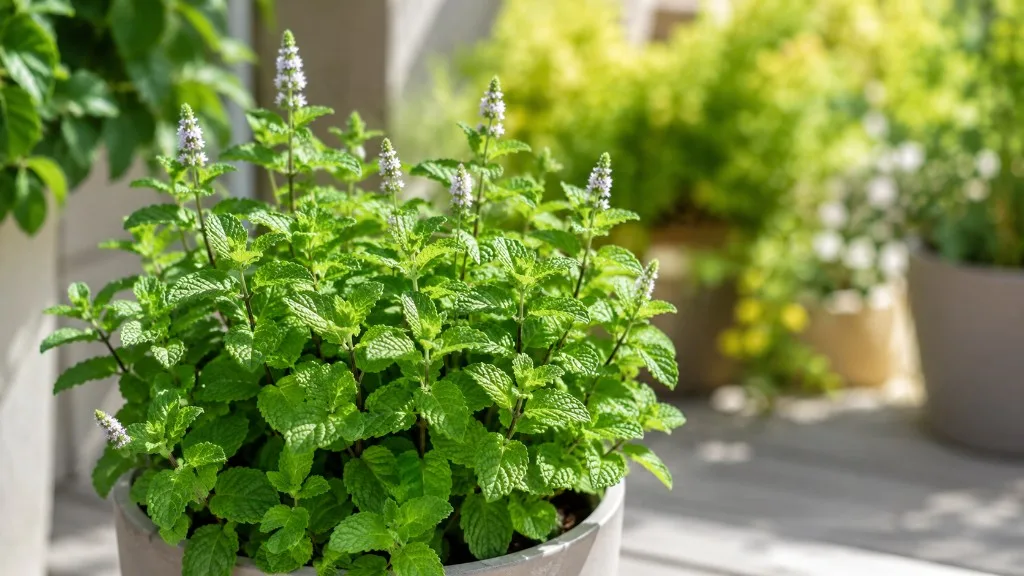
Mint is the most practical candidate for many homes because it tolerates some afternoon shade and releases a noticeable aroma when touched. Menthol-rich types such as peppermint and spearmint are often associated with deterring aphids, whiteflies, and ants. That does not make mint a proven shield for nearby plants, but it can be a reasonable pot to place near a bright entry or kitchen window.
Its biggest drawback is growth. Mint spreads quickly, roots readily from pieces of stem, and can become crowded in a small pot. Keep it in its own container, trim it regularly, and do not allow the soil to remain constantly soggy. Check the plant’s undersides for aphids and whiteflies before placing it beside other houseplants. A pesty mint pot is not a prevention tool; it is a new quarantine decision.
Basil
Basil gives the strongest return when you already have a bright, warm window and will use the leaves. Its scent may discourage some flying insects, including whiteflies, but basil is not a broad-spectrum pest barrier. It needs strong light, consistent moisture without waterlogged roots, and frequent harvesting to stay compact. Low light produces weak, stretched growth that is less useful and more difficult to inspect.
Keep basil away from a plant that is actively infested until you have inspected it. Aphids often gather on tender new growth, exactly where basil produces its softest leaves. If the herb is grown for food, use only products labeled for edible plants and follow the label’s harvest interval. Do not improvise a concentrated soap, oil, or essential-oil spray on leaves you plan to eat.
Lavender
Lavender has a strong fragrance and may discourage moths, flies, and some other insects, but it is one of the harder “repellent” plants to keep happy indoors. It wants intense light, excellent drainage, and a dry-down between waterings. A dim room and wet pot are a fast route to weak growth or root problems.
Use lavender as a sunny-window plant or seasonal container near a bright, ventilated entrance—not as a reason to overwater a dark corner. The scent is most noticeable when foliage or flowers are gently brushed, so a small plant across the room is unlikely to protect an entire collection. Dried lavender sachets and a living lavender plant are also different exposures; neither should be treated as a universal insect control.
Rosemary
Rosemary is another strongly scented herb that may make a location less appealing to some flies and mosquitoes. It needs more light and airflow than many common houseplants, and its narrow leaves can make early pest detection difficult. Let the top layer of mix dry before watering, provide a sunny window or grow light, and avoid packing it tightly among other plants.
Rosemary can still host aphids or spider mites, especially when light is poor and the plant is stressed. Inspect new growth and leaf undersides weekly. If you bring rosemary indoors from a patio or garden, quarantine it first; outdoor plants can carry pests that were hard to see in a larger planting.
Match the plant to its growing conditions
The best aromatic plant is the one that stays vigorous in your home. Bright-light herbs that are constantly declining will produce less new growth, become difficult to inspect, and may attract pests through stress. Use this quick comparison:
| Plant | Best indoor position | Possible deterrence role | Main limitation |
|---|---|---|---|
| Mint | Bright indirect light to some gentle sun | May discourage some aphids, whiteflies, and ants nearby | Spreads quickly and can carry aphids |
| Basil | Bright sun or a strong grow light | May make some flying pests less interested | Needs warmth, light, and frequent inspection |
| Lavender | Very bright light, fast-draining mix | Strong scent may discourage some flies and moths | Often fails indoors from low light or overwatering |
| Rosemary | Bright sun, good airflow | May make a local area less attractive to some flies | Stressed plants can host mites or aphids |
Do not put a high-light herb in a dim plant corner simply because it appears on a “pest-repelling” list. A healthy, correctly placed non-aromatic plant is usually a better neighbor than a fragrant plant that is yellowing, dropping leaves, and staying wet.
Why fragrant plants cannot protect every houseplant
Pests do not make decisions based on scent alone. They respond to host-plant chemistry, leaf texture, humidity, temperature, light, shelter, and proximity. An aphid population already feeding on a plant is not waiting for a mint plant to give it permission to leave. A thrips larva inside a leaf is not exposed to the aroma coming from a pot several feet away.
Indoor conditions also create separate microclimates. A crowded shelf can have still air and high humidity around one plant, while a sunny window dries another quickly. Fungus gnats are driven more by persistently damp media than by what herb sits nearby. Spider mites often become more troublesome in hot, dry, dusty conditions. A scent-based approach cannot correct those underlying conditions.
Finally, some fragrant plants attract people and pollinators outdoors because their flowers or foliage are valuable resources. “Repels pests” is never a complete description of a plant’s ecology. It is safer to ask: which pest, at what life stage, at what distance, under what conditions, and for how long?
The pest-prevention routine that works better
Quarantine new arrivals
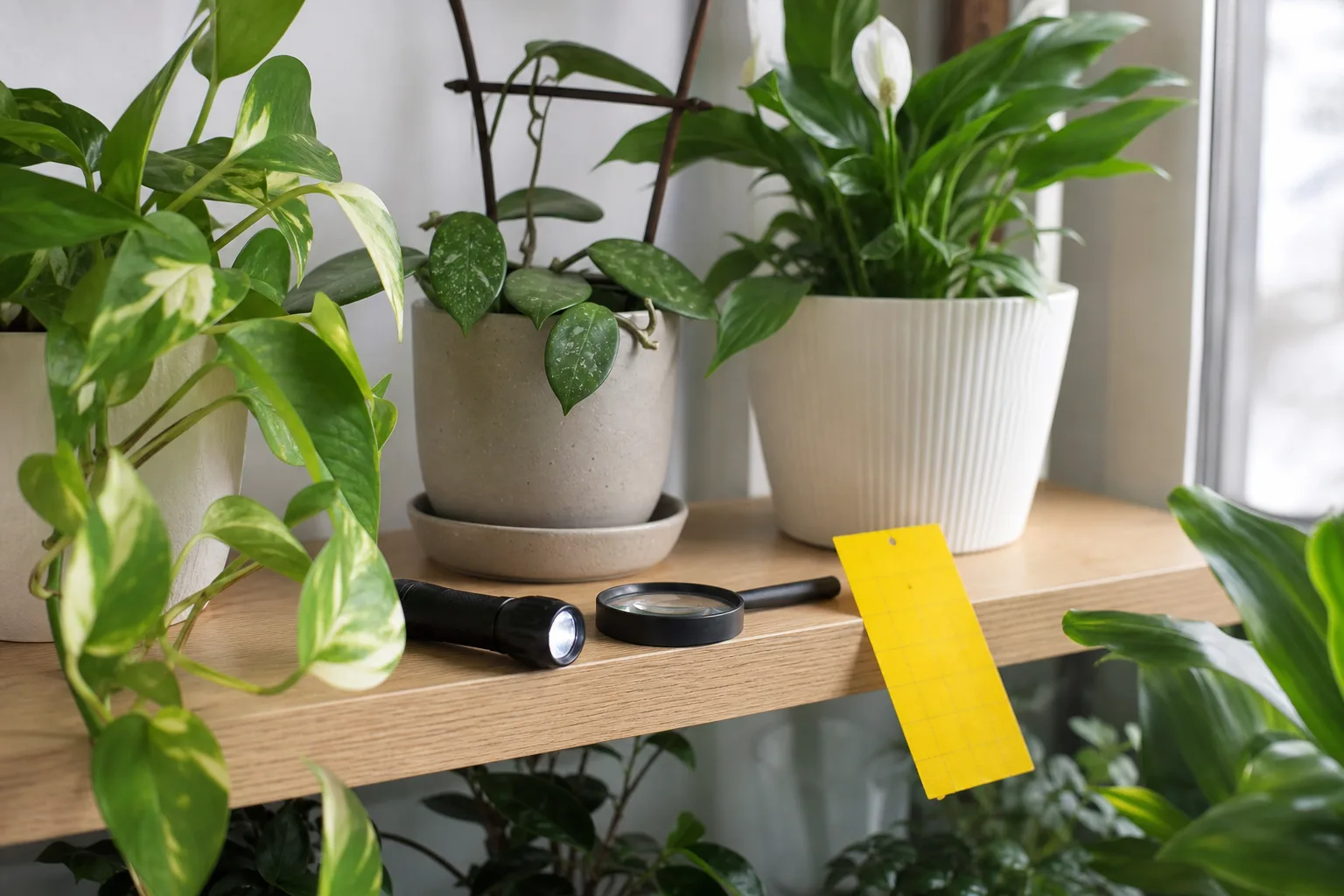
Quarantine is more dependable than buying a second plant with a strong smell. Keep new plants away from the collection for at least two weeks while checking leaf axils, undersides, stems, soil surface, and pot rims. A hand lens reveals early scale crawlers, mites, thrips, and aphids that are easy to miss at arm’s length.
Do not share saucers, pruning tools, or watering cans between a questionable plant and the rest of the room without cleaning them. Remove dead leaves from the soil surface, and avoid bringing an outdoor plant directly onto an indoor shelf. If the new plant has a confirmed infestation, extend isolation while you treat and recheck it.
Inspect, clean, and manage moisture
Once a week, inspect the newest growth and the undersides of leaves. Sticky residue can indicate honeydew from aphids, scale, or whiteflies. Fine webbing can point to spider mites. Tiny black flies around the pot often suggest fungus gnats, especially when the mix stays wet.
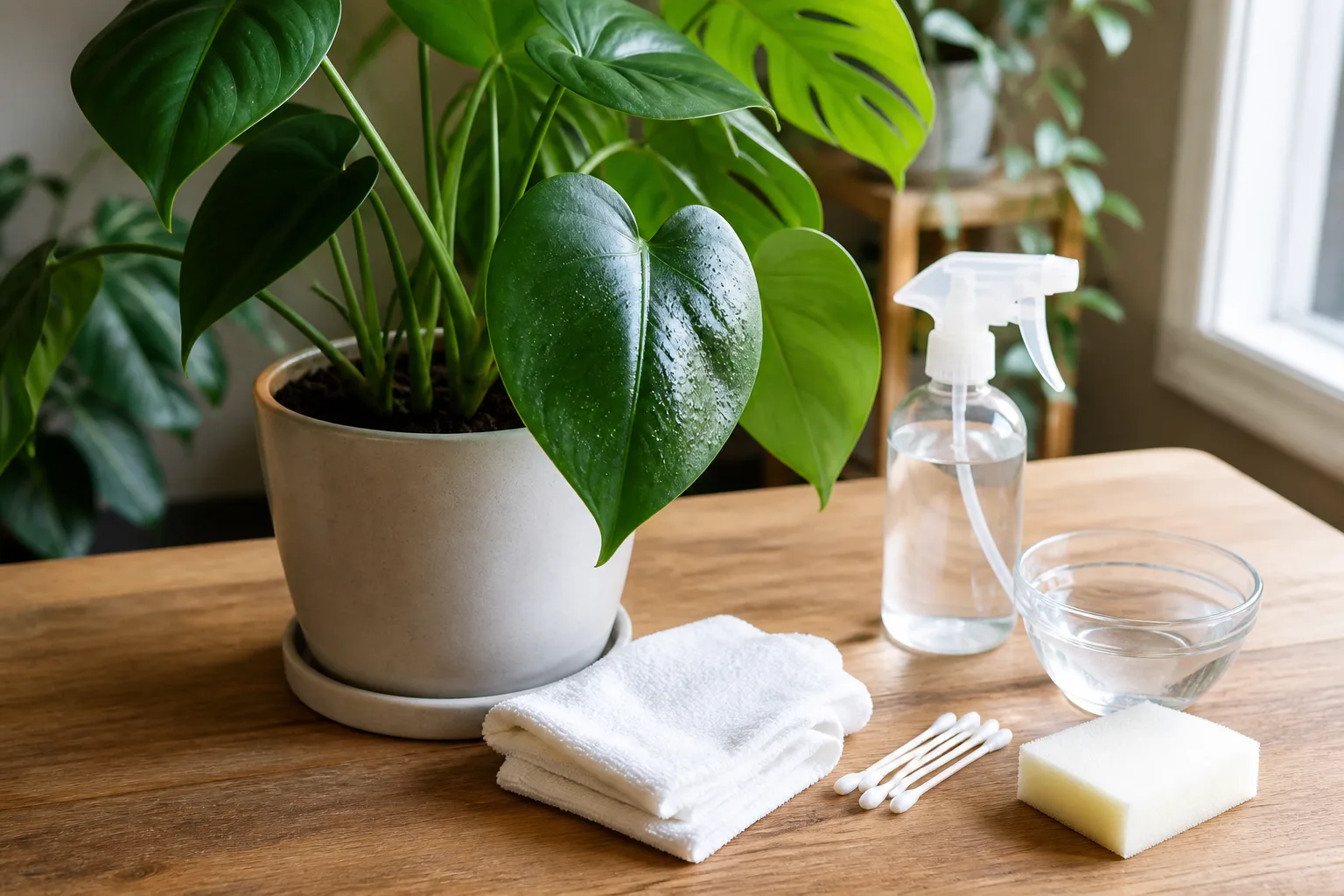
Water according to the plant’s root-zone needs, not a fixed calendar. Let the appropriate portion of the mix dry before watering again, and make sure excess water drains freely. Better airflow and fewer wet surfaces reduce the conditions that let some pests and diseases build quickly. Wipe dusty leaves when the plant tolerates it; clean foliage is easier to inspect and photosynthesizes more effectively.
For a broader treatment framework, UC Integrated Pest Management’s houseplant guidance emphasizes identification, cultural controls, and targeted action. The sequence matters: diagnosis first, then the smallest intervention that fits.
What to do when pests are already present
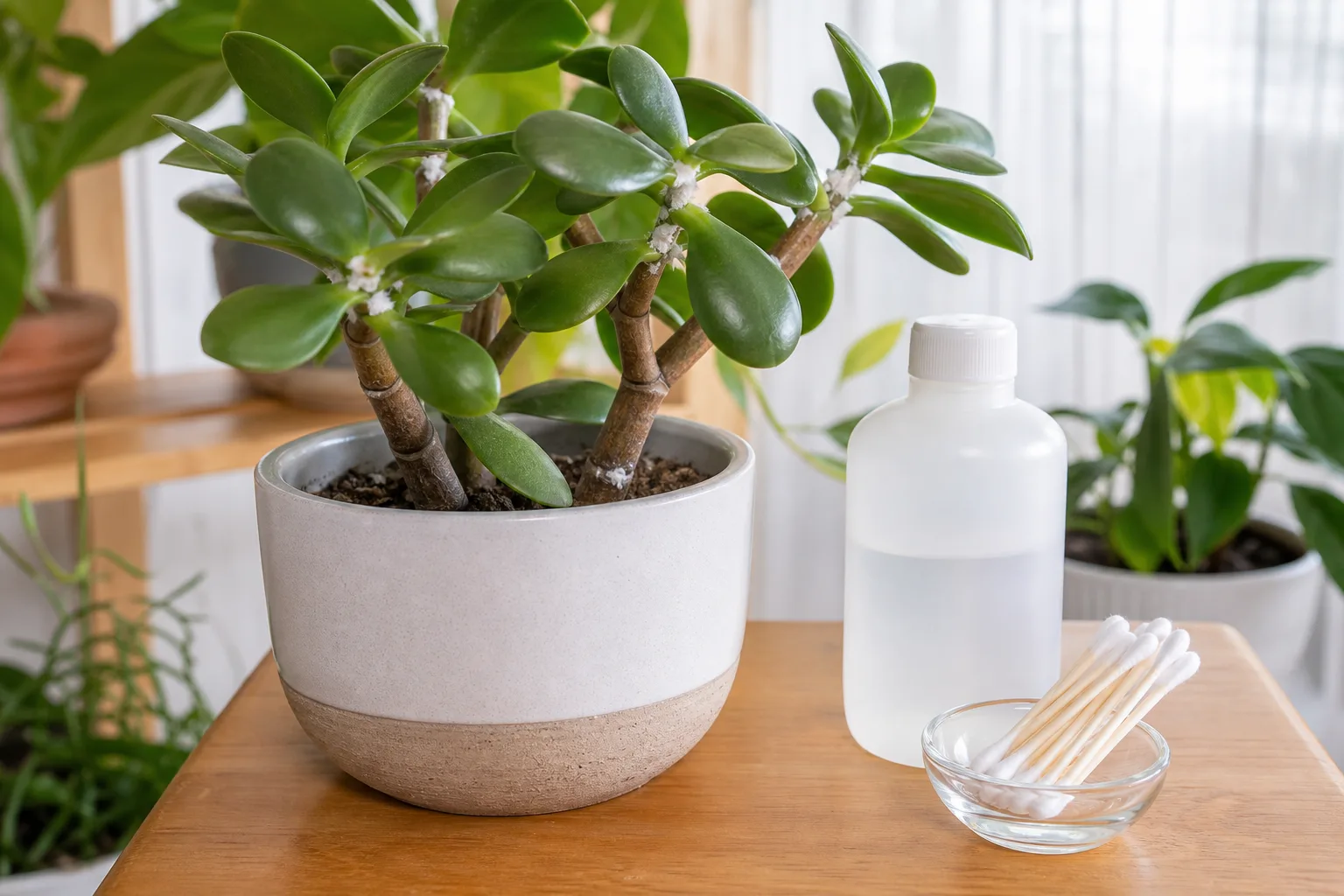
Move the plant away from the collection before treating it. Remove heavily infested leaves if the plant can spare them, or use a firm stream of water outdoors or in a sink for sturdy foliage. Cotton swabs can lift individual mealybugs or scale, but they are tedious for a large infestation. Yellow sticky cards help monitor flying adults; they do not solve the larval stage of fungus gnats or eliminate a hidden colony.
For soft-bodied pests, insecticidal soap or horticultural oil can be useful when the product is labeled for the plant and pest. Coverage matters, especially on leaf undersides, and repeat applications are often necessary because eggs may survive the first treatment. Test a small area first, wait for a reaction, and never assume a dish detergent is equivalent to a labeled insecticidal soap. Colorado State University Extension explains why houseplant pesticides must be applied carefully and according to the label.
Fungus gnats require a different plan: allow the mix to dry to the plant’s safe limit, remove decaying debris, and monitor adults. Treating the foliage with a fragrant herb or a leaf spray will not reach larvae below the surface. Thrips, mites, and scale may need repeated monitoring and a different labeled active ingredient. If a plant is severely infested, declining, or impossible to isolate, discarding it can protect a valuable collection.
Common mistakes that make pest problems worse
The first mistake is buying a scented plant instead of identifying the pest. A pot of mint beside a plant with thrips adds maintenance but does not remove eggs hidden in leaves. The second is spraying essential oils directly on foliage. Concentrated oils can injure leaves, irritate skin and airways, and create a pet-exposure concern without providing reliable control.
Another mistake is overwatering a lavender, rosemary, or mint plant in an attempt to keep it “strong.” Root stress makes any plant harder to maintain and can create fungus-gnat habitat. Likewise, placing every plant tightly together reduces airflow and lets a pest move from leaf to leaf.
Do not use a broad-spectrum insecticide just because ants, flies, or one aphid appeared. Broad treatments can remove natural enemies and still miss pests in protected locations. Read the product label, confirm the crop or houseplant use, follow dilution and ventilation directions, and keep children and pets away from wet surfaces. The National Pesticide Information Center is a useful safety reference when you are unsure how a pesticide should be handled.
Pet and people safety around aromatic plants and sprays
“Natural” is not a safety category. Mint, basil, lavender, and rosemary are commonly grown herbs, but pets can react differently depending on the species, amount eaten, and product used. The ASPCA advises contacting animal poison control or a veterinarian if a pet consumes a potentially harmful plant or product; its Animal Poison Control resource should be your reference for an exposure rather than a guess based on a plant list.
Keep concentrated essential oils, homemade extracts, and pesticide concentrates secured. Do not aerosolize oils in a poorly ventilated room. If you treat foliage, let it dry fully before allowing pets access, and avoid treating plants that an animal routinely chews unless the product label and a veterinarian support that use. Wash edible herbs before harvest, and follow any label-specific waiting period.
Conclusion: use fragrant plants as helpers, not shields
Indoor aromatic plants can contribute a little to pest prevention, especially when they are healthy, strongly scented, correctly placed, and matched to a specific insect’s behavior. Mint, basil, lavender, and rosemary are worthwhile plants for light, fragrance, and culinary use. Their possible deterrence is a bonus—not a substitute for quarantine, inspection, clean tools, appropriate watering, airflow, and targeted treatment.
If you are deciding what to do today, inspect the plants you already own before buying another one. Find the pest, isolate the source, correct the condition that favors it, and choose a treatment that reaches the pest’s life stage. Then grow a fragrant herb because it belongs in your home, not because its pot promises an insect-proof collection.